
P-579 - AN UNUSUAL CASE OF CYCLICAL PAIN - VILLAR’S NODULE
Unidade Local de Saúde de Castelo Branco, Castelo Branco.
Introduction: Endometriosis is a common and benign condition characterized by the presence of endometrial-like tissue implants outside the uterus. Umbilical endometriosis is a rare form, accounting for 0.5% to 1% of all extrapelvic endometriosis cases. Villar's nodule refers to umbilical endometriosis without a prior or concurrent diagnosis of pelvic endometriosis, and its etiopathogenesis remains unclear.
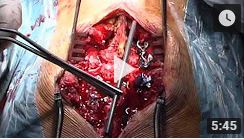
Case report: A 48-year-old female with no significant past medical history and no chronic medications was referred for a surgical consultation due to an umbilical nodule with cyclical malodorous bleeding and pain for the past nine months. There was no history of metrorrhagia, dysmenorrhea, or dyspareunia. The patient reported a normal menstrual cycle. Clinical examination revealed a coarsely pigmented, firm, irreducible, non-pulsating umbilical nodule approximately 1 cm in diameter, which was tender to palpation. An umbilical hernia was also noted during the clinical examination. A computed tomography scan was performed to evaluate for other endometriosis foci, none of which were found. The patient underwent elective excision of the nodule and surrounding skin, followed by hernioplasty and neo-omphaloplasty. The diagnosis of umbilical endometriosis was confirmed. She experienced no postoperative complications and was discharged on the first postoperative day, with scheduled follow-up appointments. Histological examination of the surgical specimen revealed an irregular nodule measuring 2.3 × 1.5 × 2.1 cm, with central foci of dispersed endometriosis and some inflammatory tissue.
Discussion: Although a rare condition, the cyclical nature of pain and accompanying bleeding from an umbilical nodule should strongly suggest the diagnosis of an umbilical endometriosis nodule. However, the definitive diagnosis is histological. While recurrences and malignant transformation are rare, this pathology significantly impacts patients' quality of life, and surgical treatment should not be delayed.