




Inflammatory bowel disease (IBD), encompassing Crohn's disease and ulcerative colitis, arises from complex interactions among genetics, immunity, environmental triggers, and, critically, the gut microbiome. Dysbiosis – marked by a loss of beneficial microbes and expansion of pro-inflammatory taxa – plays a pivotal role in disease pathogenesis. This review highlights the central role of gut microbiota in IBD and explores evidence-based nutritional interventions aimed at restoring microbial balance and immune regulation. Dietary fiber, prebiotics, and fermented foods promote short-chain fatty acid production and barrier integrity, while omega-3 fatty acids and polyphenols modulate inflammatory pathways. Exclusive enteral nutrition (EEN), especially in Crohn's disease, alters microbial profiles and reduces mucosal inflammation. Targeted micronutrient supplementation addresses common deficiencies impacting immune function. Through the lens of microbiota modulation, dietary therapy emerges not merely as supportive care, but as a primary therapeutic tool in IBD management. Microbiome-directed nutrition offers promising adjunctive strategies to induce and maintain remission.
La Enfermedad Inflamatoria Intestinal (EII), que incluye la enfermedad de Crohn y la colitis ulcerosa, surge de interacciones complejas entre factores genéticos, inmunológicos, desencadenantes ambientales y, de manera crítica, el microbioma intestinal. La disbiosis—caracterizada por la pérdida de microorganismos beneficiosos y la expansión de taxones proinflamatorios—desempeña un papel clave en la patogénesis de la EII. Esta revisión resalta el rol central del microbiota intestinal en la EII y examina intervenciones nutricionales basadas en evidencia destinadas a restaurar el equilibrio microbiano y la regulación inmunológica. La fibra dietética, los prebióticos y los alimentos fermentados promueven la producción de ácidos grasos de cadena corta y la integridad de la barrera intestinal, mientras que los ácidos grasos omega-3 y los polifenoles modulan las vías inflamatorias. La nutrición enteral exclusiva (NEE), especialmente en la enfermedad de Crohn, modifica los perfiles microbianos y reduce la inflamación mucosa. La suplementación dirigida de micronutrientes aborda deficiencias comunes que afectan la función inmune. Desde la perspectiva de la modulación del microbioma, la terapia nutricional surge no solo como un cuidado complementario, sino como una herramienta terapéutica primaria en el manejo de la EII. La nutrición dirigida al microbioma ofrece estrategias adyuvantes prometedoras para inducir y mantener la remisión.
Inflammatory bowel disease (IBD) is a chronic, immune-mediated disorder of the gastrointestinal (GI) tract, encompassing two major conditions: Crohn's disease (CD) and ulcerative colitis (UC). Both conditions are characterized by periods of exacerbation and remission, significantly impacting patients’ quality of life.1 Despite similarities, CD and UC have distinct pathophysiological features and clinical presentations. CD can affect any part of the digestive tract from the mouth to the anus but most commonly involves the terminal ileum and colon. It is distinguished by transmural inflammation, which can lead to complications such as strictures, fistulas, and abscess formation.2 In contrast, UC is confined to the colon and rectum, with inflammation limited to the mucosal layer. The disease typically progresses in a continuous manner from the rectum proximally, often presenting with symptoms such as bloody diarrhea and abdominal discomfort.2 The exact etiology of IBD remains unclear, though it is widely recognized as a multifactorial disease resulting from a complex interplay between genetic predisposition, environmental triggers, gut microbiota alterations, and immune dysregulation.3,4 Advances in research have also highlighted the critical role of diet in modulating gut inflammation, either exacerbating or alleviating symptoms, making dietary management an essential component of IBD treatment strategies.5 Diets rich in fiber, omega-3 fatty acids, and polyphenols may have protective effects by promoting a healthy gut microbiome and reducing inflammation.6 Exclusive enteral nutrition (EEN) has also been shown to induce remission in pediatric CD, highlighting the potential of targeted dietary interventions.7 The aim of this review is to critically evaluate and synthesize current evidence on how dietary interventions modulate the gut microbiome and influence immune responses in the context of IBD. By focusing on the mechanistic links between specific nutrients, microbial composition, and inflammatory pathways, this review highlights how targeted nutritional strategies can restore microbial balance, strengthen gut barrier function, and reduce disease activity.
Pathophysiology of IBD and dietary interactionsRole of gut microbiota and dysbiosisThe gut microbiota plays a fundamental role in maintaining intestinal homeostasis and immune regulation (Table 1).8 In IBD, dysbiosis – an imbalance in the composition and function of gut microorganisms – has been identified as a key factor contributing to chronic intestinal inflammation.9 Dysbiosis in IBD is characterized by a reduction in microbial diversity and an imbalance between protective and pathogenic bacteria. Studies have consistently reported a decrease in beneficial bacteria such as Firmicutes and Bacteroidetes and an expansion of pro-inflammatory taxa, particularly Proteobacteria and Enterobacteriaceae.10 This microbial shift leads to increased production of inflammatory mediators and impairs the gut barrier, allowing microbial antigens to trigger aberrant immune responses.11 A dysfunctional gut microbiome also affects the production of key microbial metabolites, such as short-chain fatty acids (SCFAs), which play an anti-inflammatory role in gut health. In IBD, there is a notable reduction in SCFA-producing bacteria, leading to compromised intestinal barrier integrity and heightened immune activation.12 Moreover, alterations in bacterial metabolites disrupt regulatory T-cell functions, further exacerbating inflammation.13 Given the strong association between dysbiosis and IBD, therapeutic strategies targeting the gut microbiota have gained attention. Approaches such as probiotics, prebiotics, fecal microbiota transplantation (FMT), and dietary modifications have shown promise in restoring microbial balance and improving disease outcomes.14
Gut microbiota in IBD and associated immune mechanisms.
| Microbiota group | Bacterial genera/species | Immune mediators and mechanisms | Effects on IBD |
|---|---|---|---|
| Pathogenic (pro-inflammatory) microbiota (dysbiosis-associated) | |||
| Proteobacteria | Escherichia coli (adherent-invasive E. coli – AIEC) | Upregulation of TNF-α, IL-6, IL-1β, IFN-γ; activates NF-κB and induces reactive oxygen species (ROS) | Promotes gut inflammation, adheres to epithelial cells, increases intestinal permeability |
| Fusobacterium | Fusobacterium nucleatum | Induces IL-1β, IL-8, and TNF-α secretion; disrupts tight junction proteins; enhances neutrophil recruitment | Worsens gut barrier dysfunction, promotes inflammation |
| Enterobacteriaceae | Salmonella, Klebsiella | Activates pattern recognition receptors (PRRs) like TLR4; increases macrophage-driven inflammation | Aggravates mucosal immune activation, promotes chronic inflammation |
| Ruminococcus gnavus | Ruminococcus gnavus | Produces pro-inflammatory polysaccharides, activates dendritic cells (DCs) leading to Th17 response | Exacerbates colonic inflammation, increases susceptibility to flares |
| protective (anti-inflammatory) microbiota (eubiosis-associated) | |||
| Firmicutes | Faecalibacterium prausnitzii | Produces butyrate, suppresses NF-κB, increases IL-10 secretion, reduces IL-6 and TNF-α | Strengthens gut barrier, decreases inflammation, supports remission |
| Bifidobacterium | Bifidobacterium longum, B. bifidum | Stimulates regulatory T cells (Tregs), enhances SCFA production, inhibits pro-inflammatory cytokines | Supports immune tolerance, improves gut homeostasis |
| Lactobacillus | Lactobacillus plantarum, L. reuteri | Modulates dendritic cells (DCs) and macrophages to suppress Th1/Th17 responses, increases IL-10 | Reduces inflammation, strengthens gut barrier |
| Akkermansia | Akkermansia muciniphila | Enhances mucus production, strengthens gut barrier, reduces IL-6 and TNF-α | Protects intestinal epithelial integrity, improves gut homeostasis |
The intestinal barrier plays a crucial role in maintaining gut homeostasis by regulating the selective absorption of nutrients while preventing the entry of harmful pathogens and antigens. In IBD, this barrier becomes compromised, leading to increased intestinal permeability, which facilitates the translocation of microbial products and triggers immune activation.15 Intestinal barrier dysfunction in IBD is characterized by alterations in tight junction proteins, increased apoptosis of epithelial cells, and heightened immune responses. Tumor necrosis factor-alpha (TNF-α) and interleukin (IL)-13 have been identified as key cytokines responsible for disrupting epithelial integrity, contributing to increased permeability and inflammation (Fig. 1). Studies in experimental colitis models have demonstrated that targeted epithelial dysfunction alone can induce mucosal immune activation, indicating that barrier disruption is a primary contributor to disease pathogenesis rather than a secondary consequence of inflammation.16 The interaction between a weakened intestinal barrier and the immune system creates a self-perpetuating cycle of inflammation. The increased permeability allows luminal antigens to enter the mucosa, activating innate immune responses, including macrophages and dendritic cells, which in turn promote the production of pro-inflammatory cytokines such as interferon-gamma (IFN-γ) and TNF-α.17 This immune activation exacerbates epithelial damage, leading to a chronic inflammatory state that drives disease progression. Therapeutic strategies aimed at restoring intestinal barrier integrity are gaining attention as potential treatments for IBD. Experimental studies have shown that activation of the pregnane X receptor (PXR) can attenuate barrier dysfunction by reducing cytokine-induced myosin light-chain kinase (MLCK) expression, thereby stabilizing tight junction proteins.18 Additionally, interventions such as probiotics, dietary modifications, and prebiotic supplementation have shown promise in modulating gut barrier function and reducing inflammation.

Immune dysregulation and increased intestinal permeability in inflammatory bowel disease. On the left, the normal intestinal environment maintains homeostasis through a balanced interaction between immune cells, regulatory T cells, and anti-inflammatory cytokines (TGF-β, IL-10). The intestinal epithelial barrier remains intact, preventing bacterial invasion and inflammation. On the right, in IBD, there is a loss of the protective mucus layer, leading to increased epithelial permeability and bacterial entry. This triggers an immune dysregulation, where elevated pro-inflammatory cytokines (TNF-α, IL-12, IL-23) drive an overactive immune response. The recruitment of immune cells, including activated macrophages and neutrophils, sustains a chronic inflammatory cycle. This results in an expanded lamina propria, excessive chemokine and cytokine production, and ongoing intestinal damage. This dysregulated immune response underlies the chronic inflammation characteristic of IBD, contributing to disease progression and symptoms.
Diet plays a significant role in modulating inflammation in IBD by influencing immune responses, gut microbiota composition, and epithelial barrier integrity. The Western diet, characterized by high fat, refined sugar, and low fiber, has been linked to increased intestinal inflammation and disease progression. In contrast, fiber-rich and anti-inflammatory diets have demonstrated protective effects by reducing pro-inflammatory cytokine production and maintaining gut homeostasis.19 High-fat diets, particularly those rich in saturated and trans fats, can promote gut inflammation by altering the microbiome and increasing intestinal permeability. Studies have shown that excessive dietary fat stimulates the release of pro-inflammatory cytokines such as TNF-α and IL-6, which exacerbate mucosal inflammation.20 Additionally, a high-fat diet promotes dysbiosis by increasing the abundance of Proteobacteria, a bacterial phylum associated with inflammation, while reducing beneficial Firmicutes species that produce anti-inflammatory metabolites like SCFAs.21 Similarly, diets high in refined sugar have been associated with increased intestinal permeability and endotoxemia, leading to heightened immune activation. Simple carbohydrates can fuel pathogenic gut bacteria and reduce microbial diversity, contributing to a pro-inflammatory gut environment.22 Moreover, high-sugar intake has been linked to reduced mucin production in the gut lining, which weakens the protective mucus barrier and makes the intestine more susceptible to bacterial invasion and inflammation.23 In contrast, fiber-rich diets have been shown to have protective effects against IBD by promoting gut barrier integrity and fostering the growth of beneficial bacteria that produce SCFAs, such as Faecalibacterium prausnitzii.24 SCFAs, including butyrate and propionate, have anti-inflammatory properties, reducing cytokine production and strengthening tight junctions in the intestinal epithelium. Diets emphasizing whole foods, such as the Mediterranean diet and anti-inflammatory diets like the inflammatory bowel disease anti-inflammatory diet (IBD-AID), have demonstrated effectiveness in reducing inflammatory markers and improving clinical symptoms.24,25 Furthermore, polyphenol-rich foods such as berries, green tea, and turmeric have shown potential in modulating immune responses and reducing oxidative stress in IBD patients. These bioactive compounds inhibit nuclear factor-kappa B (NF-κB) signaling, a key pathway in inflammatory responses, thereby reducing the secretion of pro-inflammatory cytokines.26 Omega-3 fatty acids, found in fatty fish and flaxseeds, also exhibit anti-inflammatory effects by modulating eicosanoid pathways and reducing the production of pro-inflammatory prostaglandins and leukotrienes.27
Foods beneficial for IBD: mechanistic and clinical evidenceFiber and prebioticsDietary fiber and prebiotics play a significant role in gut health, particularly in IBD. While fiber has historically been avoided by IBD patients due to concerns about symptom exacerbation, emerging evidence suggests that specific types of fiber and prebiotics can have anti-inflammatory effects by modulating gut microbiota and enhancing intestinal barrier function.28 Dietary fiber exerts its beneficial effects primarily through fermentation by gut microbiota, producing SCFAs such as butyrate, acetate, and propionate. These metabolites promote mucosal healing, maintain intestinal barrier integrity, and regulate immune responses.29 Butyrate, in particular, has been shown to inhibit nuclear factor-kappa B (NF-κB) signaling, a major inflammatory pathway in IBD, while also promoting the production of regulatory T cells that suppress excessive immune activation.30 Prebiotics, a subset of dietary fiber found in foods such as bananas, onions, garlic, asparagus, and whole grains, selectively stimulate the growth of beneficial bacteria like Bifidobacterium and Lactobacillus, which play a role in reducing gut inflammation.31 Additionally, resistant starch, a fermentable fiber present in foods like legumes and cooked-and-cooled potatoes, has been shown to increase SCFA production and support colonic health.32 Despite the known benefits of fiber, IBD patients tend to consume inadequate amounts, often due to misconceptions about fiber exacerbating symptoms. A multicenter cross-sectional study found that only 38% of IBD patients met the recommended fiber intake, with prebiotic fiber consumption being particularly low.32 Another study highlighted that fiber intake in pediatric IBD patients was significantly lower than in non-IBD controls, underscoring the need for dietary interventions to improve fiber consumption.31 Experimental models further support the benefits of fiber in IBD. A study using a murine colitis model demonstrated that a high-fiber diet provided protection against acute and chronic colitis when administered as a preventive strategy. However, fiber supplementation after disease onset was less effective, suggesting that fiber may be more beneficial for maintaining remission rather than treating active disease.33
Probiotics and fermented foodsProbiotics and fermented foods have gained increasing attention as potential dietary interventions for managing IBD. Since IBD is characterized by gut dysbiosis and chronic intestinal inflammation, probiotics – live microorganisms that confer health benefits – may help restore microbial balance and modulate immune responses.34 Fermented foods, such as yogurt, kefir, sauerkraut, and kimchi, naturally contain probiotics and bioactive compounds that may support gut health. Probiotics exert their beneficial effects in IBD through multiple mechanisms. They enhance gut barrier integrity by stimulating mucus production and strengthening tight junction proteins, which reduces intestinal permeability and prevents bacterial translocation.35 Probiotics also produce SCFAs, particularly butyrate, which has anti-inflammatory properties and supports the health of colonic epithelial cells.36 Additionally, probiotics modulate the immune system by shifting the balance toward anti-inflammatory responses. Certain strains, such as Lactobacillus plantarum and Bifidobacterium, can reduce levels of pro-inflammatory cytokines like TNF-α and IL-6 while promoting the production of IL-10, an anti-inflammatory cytokine.37 Meanwhile, fermented foods naturally contain probiotics, organic acids, and bioactive peptides that may help modulate gut microbiota and inflammation. Studies suggest that fermented milk products, such as kefir and yogurt, may improve symptoms in IBD patients by increasing the abundance of beneficial bacteria like Faecalibacterium and Lactobacillus (or Lactiplantibacillus), which produce SCFAs.36 Additionally, certain fermented plant-based foods, such as kimchi and sauerkraut, contain polyphenols and bioactive peptides that exhibit anti-inflammatory effects.34,38 Clinical trials suggest that probiotics can be effective in UC, particularly in maintaining remission. A systematic review of randomized human clinical trials found that probiotic formulations containing lactic acid bacteria and Bifidobacterium improved symptoms and prolonged remission in UC patients, though their effects in CD were less clear.39 Another study found that probiotic supplementation significantly reduced gut inflammation and improved intestinal microbiota composition in patients with IBD-associated pouchitis.40 However, while probiotics show promise, their efficacy depends on the specific bacterial strains used. The multi-strain probiotic formulation VSL#3 has demonstrated efficacy in inducing and maintaining remission in UC, but its benefits in CD remain inconclusive.41 Some studies indicate that probiotic therapy alone may not be sufficient for treating active disease but can be beneficial when used as an adjunct to standard therapies.42
Omega-3 fatty acidsOmega-3 polyunsaturated fatty acids (PUFAs), found in fatty fish (e.g., salmon, mackerel, sardines) and plant-based sources such as flaxseeds and walnuts, have been widely studied for their anti-inflammatory properties. These fatty acids include eicosapentaenoic acid (EPA) and docosahexaenoic acid (DHA), which serve as precursors to specialized lipid mediators that modulate immune responses and promote gut homeostasis.43 Omega-3 fatty acids reduce inflammation by competing with omega-6 fatty acids, particularly arachidonic acid (AA), for incorporation into cell membranes. This competition leads to a shift from the production of pro-inflammatory eicosanoids, such as prostaglandins and leukotrienes, to anti-inflammatory lipid mediators known as resolvins, protectins, and maresins.44 These mediators actively resolve inflammation, reducing the recruitment of immune cells and promoting tissue healing. Additionally, omega-3 fatty acids have been shown to lower oxidative stress and reduce intestinal permeability, key factors contributing to IBD pathogenesis. A Mendelian randomization study demonstrated a causal relationship between higher omega-3 levels and a decreased risk of IBD, with a particularly strong protective effect against CD. This study suggested that maintaining a balanced omega-6 to omega-3 ratio is essential for modulating intestinal inflammation.45 The clinical impact of omega-3 fatty acid supplementation in IBD remains a subject of debate. A systematic review of randomized controlled trials found that omega-3 supplementation was associated with a reduction in pro-inflammatory cytokines and improved quality of life in Crohn's disease patients.43 Similarly, a meta-analysis suggested that omega-3 intake might help reduce the risk of IBD relapse and inflammation markers such as C-reactive protein (CRP) and erythrocyte sedimentation rate (ESR).46 However, some studies have reported conflicting results. A large review analyzing omega-3 supplementation in IBD concluded that while these fatty acids have clear anti-inflammatory effects, their clinical benefits in inducing remission or preventing relapse remain inconsistent due to variations in dosage, formulation, and patient characteristics.47 Recent research has also explored the role of dietary sources of omega-3s, such as fish and flaxseeds, rather than supplements. Observational studies suggest that regular fish consumption is associated with a lower risk of IBD development, likely due to the consistent intake of EPA and DHA from whole foods.48,49
Curcumin and polyphenolsCurcumin and polyphenols, bioactive compounds found in turmeric, green tea, berries, and other plant-based foods, have demonstrated significant anti-inflammatory and antioxidant effects in IBD. These natural compounds target multiple inflammatory pathways, helping to modulate immune responses and oxidative stress, which are central to IBD pathogenesis.50 Curcumin, the active component of turmeric (Curcuma longa), is known for its ability to inhibit key pro-inflammatory pathways, including NF-κB, cyclooxygenase-2 (COX-2), and TNF-α.51 By downregulating these pathways, curcumin helps reduce intestinal inflammation and oxidative damage, which are hallmarks of IBD. Additionally, curcumin promotes gut barrier integrity by enhancing tight junction protein expression, reducing intestinal permeability.52 Polyphenols found in green tea (epigallocatechin gallate, EGCG) and berries (anthocyanins, quercetin) exhibit similar anti-inflammatory properties by modulating cytokine expression and suppressing reactive oxygen species (ROS).53 These compounds have been shown to shift immune responses from a pro-inflammatory Th1/Th17 profile to a more regulatory Th2 profile, thereby mitigating disease severity. Several clinical trials have assessed curcumin's efficacy in IBD management. A meta-analysis of randomized controlled trials found that curcumin supplementation significantly improved clinical remission rates and reduced endoscopic inflammation in UC patients.54 Another study demonstrated that curcumin treatment effectively suppressed colonic inflammation in a mouse model of IBD, supporting its potential as a therapeutic agent.55 Green tea polyphenols have also shown promising results. A clinical study found that EGCG supplementation improved intestinal barrier function and reduced inflammatory markers in IBD patients.50 Additionally, anthocyanins from berries have demonstrated protective effects against colitis by modulating gut microbiota and increasing levels of beneficial bacteria like Lactobacillus and Bifidobacterium.53 Despite these promising findings, challenges remain in translating curcumin and polyphenol research into clinical practice. Curcumin's poor bioavailability limits its effectiveness, though novel formulations such as nanoparticles and liposomal curcumin aim to enhance its absorption.56
Vitamins and minerals in IBDPatients with IBD are at a heightened risk of vitamin and mineral deficiencies due to chronic inflammation, malabsorption, altered dietary intake, and the effects of medications such as corticosteroids and immunosuppressants.57 Deficiencies in essential micronutrients can exacerbate IBD symptoms, impair immune function, and increase the risk of complications such as osteoporosis and anemia. Vitamin D plays a crucial role in modulating immune responses and maintaining gut barrier integrity. Studies indicate that vitamin D deficiency is highly prevalent in IBD patients, with 38.1% of CD and 31.6% of UC patients exhibiting low levels.58 Vitamin D supplementation has been shown to help regulate inflammatory cytokines and may reduce disease activity.59 Next, chronic intestinal bleeding, reduced dietary intake, and impaired absorption contribute to iron deficiency anemia (IDA) in IBD. It is estimated that up to 50% of IBD patients suffer from anemia, with iron deficiency being the leading cause.60 Iron supplementation, either oral or intravenous, is often required, though oral supplementation may be poorly tolerated due to gastrointestinal side effects. Vitamin B12 deficiency is more common in CD patients, particularly those with ileal involvement or resection, as the terminal ileum is the primary site of B12 absorption.61 Folate deficiency may occur due to malabsorption or long-term use of sulfasalazine and methotrexate. Zinc plays a crucial role in immune function and wound healing. Up to 40% of IBD patients have zinc deficiency, which has been linked to increased disease severity and delayed mucosal healing.61 Additionally, long-term corticosteroid use and chronic inflammation increase the risk of osteoporosis in IBD patients. Vitamin D and calcium supplementation are recommended to prevent bone loss, while vitamin K deficiency has been linked to increased inflammatory activity in CD.62 While supplementation is necessary to correct deficiencies, indiscriminate use of multivitamins may not always be beneficial. A randomized controlled trial found that over-the-counter multivitamin and mineral supplements did not significantly reduce infection risk in IBD patients on immunosuppressive therapy.63 However, targeted supplementation for specific deficiencies, such as vitamin D, iron, and zinc, has shown clear clinical benefits in disease management. A study on pediatric IBD patients found that supplement adherence was relatively poor (32–44%), and those with a better understanding of supplementation's purpose were more likely to follow recommendations.64 This highlights the need for patient education regarding the importance of vitamins and minerals in IBD management.
Exclusive enteral nutrition in Crohn's diseaseEEN is a well-established first-line therapy for inducing remission in pediatric CD and is gaining recognition for its potential role in adult patients. EEN involves the complete replacement of regular food with a nutritionally complete liquid formula for a set duration, usually 6–8 weeks, with the goal of reducing intestinal inflammation and promoting mucosal healing.65 The precise mechanisms by which EEN induces remission in CD are not fully understood, but several key pathways have been identified. EEN is believed to reduce inflammation by altering gut microbiota composition, decreasing intestinal permeability, and suppressing pro-inflammatory cytokines. Studies have shown that EEN promotes a shift in gut microbiota, reducing levels of Proteobacteria and increasing beneficial Firmicutes, which contribute to gut homeostasis.66 Additionally, EEN has been shown to modulate the immune system by reducing the levels of circulating effector memory CD8+ T cells, which play a role in the chronic inflammation characteristic of CD.67 This immune modulation helps dampen the inflammatory response within the gastrointestinal tract, leading to symptom improvement and mucosal healing. Another potential mechanism involves the reduction of dietary antigens that may trigger immune activation. By eliminating whole foods, EEN removes potential dietary triggers of inflammation, leading to a decrease in gut permeability and improved barrier function.68 EEN is widely used in pediatric CD, with studies showing remission rates of up to 80% in children following an 8-week course.65 In addition to inducing remission, EEN also supports nutritional status and growth, making it a preferred therapy over corticosteroids in pediatric populations. In adults, the evidence for EEN is more mixed. While some studies suggest that EEN can be effective in inducing remission, adherence remains a significant challenge due to the restrictive nature of the diet.69 A study exploring patient experiences with EEN in adults found that while initial adherence was difficult, participants reported symptom improvement over time, with social and health system support playing a crucial role in adherence.69 Another study assessed the impact of EEN on health-related quality of life in adults with active CD. Patients who underwent a 4-week EEN treatment experienced significant improvements in bowel symptoms, systemic symptoms, and emotional well-being, with 84.6% achieving clinical remission.70 However, adherence to EEN was a key limitation, with some patients struggling with the monotony of a liquid-only diet.
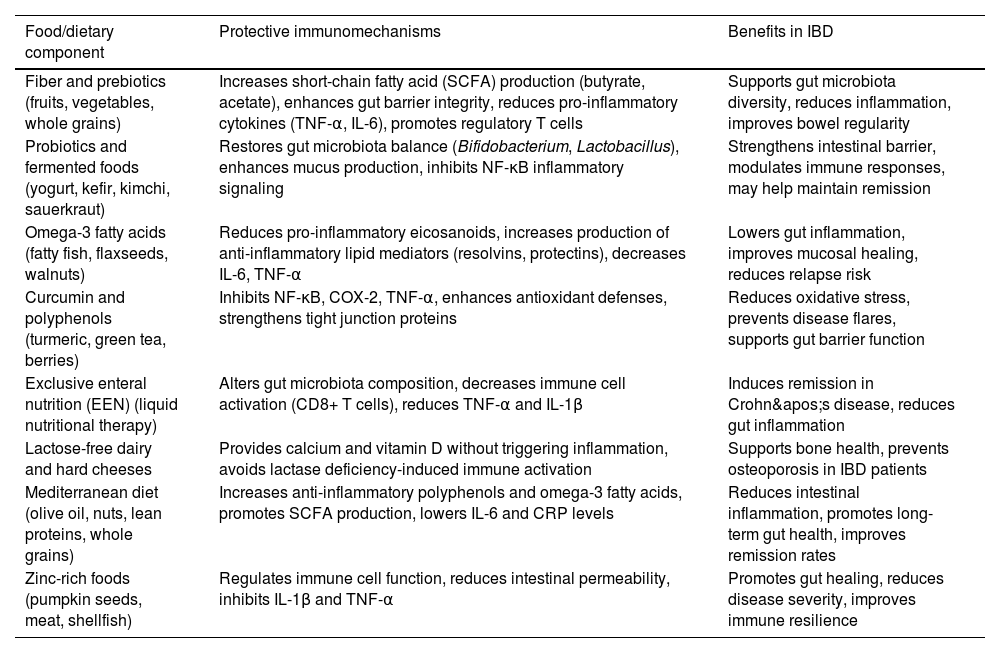
Despite its effectiveness, EEN is underutilized in adult patients due to issues related to compliance and palatability. A review examining EEN use in adults found that non-adherence was a major barrier, with many patients struggling to maintain the diet for extended periods.71 Strategies to improve adherence, such as partial enteral nutrition (PEN) or combining EEN with dietary guidance, are being explored to make the therapy more acceptable.72 Additionally, research is needed to optimize EEN formulations to enhance compliance and effectiveness. The development of palatable and nutritionally balanced formulas, as well as better patient education and support systems, could increase the feasibility of EEN in adults.68 Recommended dietary components for IBD patients and their underlying immunomechanisms are listed in Table 2.
Nutritional interventions supporting IBD management.
| Food/dietary component | Protective immunomechanisms | Benefits in IBD |
|---|---|---|
| Fiber and prebiotics (fruits, vegetables, whole grains) | Increases short-chain fatty acid (SCFA) production (butyrate, acetate), enhances gut barrier integrity, reduces pro-inflammatory cytokines (TNF-α, IL-6), promotes regulatory T cells | Supports gut microbiota diversity, reduces inflammation, improves bowel regularity |
| Probiotics and fermented foods (yogurt, kefir, kimchi, sauerkraut) | Restores gut microbiota balance (Bifidobacterium, Lactobacillus), enhances mucus production, inhibits NF-κB inflammatory signaling | Strengthens intestinal barrier, modulates immune responses, may help maintain remission |
| Omega-3 fatty acids (fatty fish, flaxseeds, walnuts) | Reduces pro-inflammatory eicosanoids, increases production of anti-inflammatory lipid mediators (resolvins, protectins), decreases IL-6, TNF-α | Lowers gut inflammation, improves mucosal healing, reduces relapse risk |
| Curcumin and polyphenols (turmeric, green tea, berries) | Inhibits NF-κB, COX-2, TNF-α, enhances antioxidant defenses, strengthens tight junction proteins | Reduces oxidative stress, prevents disease flares, supports gut barrier function |
| Exclusive enteral nutrition (EEN) (liquid nutritional therapy) | Alters gut microbiota composition, decreases immune cell activation (CD8+ T cells), reduces TNF-α and IL-1β | Induces remission in Crohn's disease, reduces gut inflammation |
| Lactose-free dairy and hard cheeses | Provides calcium and vitamin D without triggering inflammation, avoids lactase deficiency-induced immune activation | Supports bone health, prevents osteoporosis in IBD patients |
| Mediterranean diet (olive oil, nuts, lean proteins, whole grains) | Increases anti-inflammatory polyphenols and omega-3 fatty acids, promotes SCFA production, lowers IL-6 and CRP levels | Reduces intestinal inflammation, promotes long-term gut health, improves remission rates |
| Zinc-rich foods (pumpkin seeds, meat, shellfish) | Regulates immune cell function, reduces intestinal permeability, inhibits IL-1β and TNF-α | Promotes gut healing, reduces disease severity, improves immune resilience |
The gut microbiome plays a central role in the pathogenesis and progression of IBD, and its modulation through targeted nutritional strategies offers a promising adjunct to conventional therapies. Evidence-based dietary interventions – such as high-fiber and prebiotic-rich diets, probiotics and fermented foods, omega-3 fatty acids, polyphenols, and EEN – have demonstrated beneficial effects in restoring microbial balance, enhancing gut barrier integrity, and attenuating mucosal inflammation. Additionally, correcting micronutrient deficiencies is essential for supporting immune function and improving clinical outcomes. While more personalized and mechanistically guided nutritional approaches are needed, current findings underscore the importance of integrating microbiome-focused diet therapy into the broader management of IBD. Future research should aim to refine these interventions, identify biomarkers of response, and translate microbiome science into practical dietary guidelines for both pediatric and adult IBD populations.
CRediT authorship contribution statementDeasy Fetarayani: Conceptualization, writing – original draft, writing – review & editing.
Amie Vidyani: Writing – original draft, writing – review & editing.
Henry Sutanto: Conceptualization, methodology, formal analysis, investigation, resources, writing – original draft, writing – review & editing, visualization.
FundingThis research receives no external funding.
Conflict of interestThe authors declare no conflict of interest.


