


metricas

Medicina de Familia. SEMERGEN

Sugerencias
Medicina de Familia. SEMERGEN Suicidal ideation during the perinatal period: An umbrella review of prevalence ...
Información de la revista
Vol. 51. Núm. 7.
(Octubre 2025)
Cita
Cita
Compartir
Descargar PDF
Más opciones de artículo
Visitas
823
Vol. 51. Núm. 7.
(Octubre 2025)
Review
Acceso a texto completo

Suicidal ideation during the perinatal period: An umbrella review of prevalence and risk factors

Ideación suicida durante el período perinatal: una revisión paraguas sobre la prevalencia y los factores de riesgo
Visitas
823
R.A. Peinado-Molinaa, A. Ballesta-Castillejosb,
Autor para correspondencia
ana.ballesta@uclm.es

Corresponding author.
, J.M. Martinez-Galianoa,d, N. Cano-Ibáñezc,d,e, K.S. Khanc,d, S. Martínez-Vazqueza
a Department of Nursing of University of Jaen, Jaén, Spain
b Department of Nursing, Faculty of Nursing of Albacete, University of Castilla-La Mancha, Facultad de Enfermería de Albacete, Edificio Benjamín Palencia, Campus Universitario, s/n, 02007 Albacete, Spain
c Department of Preventive Medicine and Public Health Faculty of Medicine, University of Granada, Av. Doctor Jesús Candel Fábregas, 11, 18016 Granada, Spain
d CIBER Epidemiología y Salud Pública (CIBERESP), Instituto de Salud Carlos III (ISCIII), Av. Monforte de Lemos, 3-5, 28029 Madrid, Spain
e Instituto de Investigación Biosanitaria de Granada (ibs.GRANADA), Av. de Madrid, 15, Beiro, 18012 Granada, Spain
Este artículo ha recibido
Información del artículo
Resumen
Texto completo
Bibliografía
Descargar PDF
Estadísticas
Figuras (2)
fig0005
fig0010
Tablas (2)
Table 1. The main characteristics of the studies included in this umbrella review.
Tablas
Table 2. The main characteristics of the studies on Perinatal Suicide included in this umbrella review.
Tablas
Material adicional (1)
Abstract

The perinatal period involves significant psychological changes that increase women's vulnerability to mental health disorders, including suicidal ideation. This umbrella review, registered in PROSPERO (CRD42024596880), aimed to synthesize evidence on the prevalence of suicidal ideation during this period and its associated risk factors. A search was conducted up to November 2024. Systematic reviews focusing on suicidal ideation and attempts during the perinatal period were included. Methodological quality was assessed using the AMSTAR-2 tool, and overlap was measured using the Corrected Covered Area (8.31%). Ten reviews were analyzed. Prevalence of suicidal ideation ranged from 7.2% to 12%, and suicide attempts from 4% to 5.1%. Common risk factors included poor sleep quality, intimate partner violence, low socioeconomic status, prior mental health disorders, and limited social support. Standardized screening and targeted interventions are important for improving maternal mental health outcomes.

Keywords:
Umbrella review
Perinatal period
Postpartum
Pregnancy
Suicidal ideation
Suicidal risk
Resumen

El periodo perinatal conlleva importantes cambios psicológicos que aumentan la vulnerabilidad de las mujeres a trastornos mentales, incluida la ideación suicida. Esta revisión tipo paraguas registrada en PROSPERO (CRD42024596880), tuvo como objetivo sintetizar la evidencia sobre la prevalencia de la ideación suicida en este periodo y sus factores de riesgo. Se realizó una hasta 2024. Se incluyeron revisiones sistemáticas sobre ideación y tentativa suicidas en este periodo. La calidad metodológica se evaluó mediante AMSTAR-2 y la superposición con el Corrected Covered Area (8.31%). Se analizaron 10 revisiones. La prevalencia de ideación suicida osciló entre 7,2% y 12% y los intentos de suicidio entre 4% y 5,1%. Los factores de riesgo más frecuentes fueron: mala calidad del sueño, violencia de pareja, bajo nivel socioeconómico, antecedentes de trastornos mentales y escaso apoyo social. Se recomienda activar intervenciones específicas estandarizadas.

Palabras clave:
Revisión paraguas
Período perinatal
Postparto
Embarazo
Ideación suicida
Riesgo suicida
Texto completo
Introduction

The perinatal period, defined as the time spanning from pregnancy through the first year after birth, is characterized by profound physiological and psychosocial changes.1 During this period, mental disorders are common and represent one of the most frequent complications of pregnancy, associated with increased maternal and fetal morbidity and mortality.2 The World Health Organization (WHO) estimates that globally, between 10% and 16% of pregnant women, and between 13% and 20% of postpartum women, experience some form of mental disorder.3 As there has been growing attention given to perinatal mental health issues, research has traditionally focused on postpartum depression and puerperal psychosis, leaving other conditions, such as suicidal ideation, relatively unexplored.4 Suicidal ideation refers to thoughts about suicide and is distinct from self-harm or non-suicidal self-injury, which aim to alleviate suffering rather than to end one's life.5,6 Given its strong association with subsequent suicide attempts and completions, evaluating suicidal ideation during the perinatal period should be a clinical priority. Utilizing validated screening tools offers an opportunity for timely interventions that can prevent more severe suicidal behaviors,7 as the presence of suicidal ideation not only increases the risk of suicide and self-harm but is also linked to adverse obstetric outcomes, such as miscarriage, preterm birth, and fetal death.8,9

Contrary to the belief that pregnancy protects against suicide,10,11 evidence suggests that suicidal ideation may be more prevalent in pregnant women than in the general population. Studies report a prevalence of suicidal thoughts during pregnancy in 33% of women, compared to 5–15% postpartum.9 Given the high comorbidity with depression and potential consequences, universal screening and preventive interventions are urgently needed to support at-risk pregnant women.3 Identified risk factors for suicidal ideation during the perinatal period include poor sleep quality,12 domestic violence and childhood abuse,13 substance use,14,15 low socioeconomic status,16 and prior pregnancy loss.17 These risk factors are consistent across different published systematic reviews; however, to date, no umbrella review has been conducted to consolidate this evidence.

Due to the significant impact on both mothers and newborns, there has been a growing body of literature addressing suicidal ideation during the perinatal period. However, existing systematic reviews vary widely in scope, methodology, and population focus, leading to fragmented and sometimes inconsistent findings. To address these gaps and provide a higher-level synthesis of the available evidence, this study aims to perform an umbrella review that consolidates and critically analyzes existing reviews, offering a comprehensive overview of the prevalence and influencing factors of suicidal ideation during the perinatal period.

Material and methods

This umbrella review was registered in PROSPERO (registration Number: CRD42024596880) and conducted in accordance with the relevant guidelines18 and was conducted in accordance with the relevant guidelines, specifically adhering to the reporting guidelines for overviews of reviews of healthcare interventions (PRIOR).19

Search strategy and selection criteria

A comprehensive search of the literature was conducted without language restrictions in electronic databases: PubMed, Scopus, and Web of Science, from inception until November 2024. A combination of keywords and free-text terms was used, including “pregnant,” “antenatal,” “prenatal,” “postnatal,” “postpartum,” “perinatal,” “suicidal behav*,” “suicide attempt*,” “suicide,” “suicidal ideation,” “systematic review,” and “meta-analysis”. All citations were exported to RefWorks, where duplicates were removed. Two reviewers (SMV and RAP) independently conducted the search strategy using electronic databases and manual searches, reviewing all abstracts and titles. Full-text versions of selected articles were retrieved and reviewed to assess their eligibility. Any disagreements between the reviewers were resolved by a third reviewer (ABC). Systematic reviews (SR) with or without meta-analyses (MA) addressing the prevalence of suicidal ideation, suicide attempts, and suicide during the perinatal period, as well as articles identifying associated risk factors, were included.

Data extraction, methodological quality assessment and evidence grading

Data extraction and methodological quality assessment were independently performed by two reviewers (SMV and RAP) after reviewing the full text of the selected articles. A predefined data collection form was used, which included the first author's name, publication date, study time period, geographical location, number and type of primary studies included, population characteristics, and whether suicide, suicidal ideation, or suicide attempts were the primary outcome. Additionally, reported outcomes, and whether the authors performed a meta-analysis, along with global suicide prevalence and associated risk factors, were recorded.

The quality of systematic reviews (SR) was assessed using a modified version of the AMSTAR-2 tool to determine the risk of bias.20 It uses a 16-item checklist covering important aspects such as study design, thorough search for information and potential bias. Each item is rated ‘yes’, ‘no’ or ‘not applicable’, and the overall score determine the review's quality. There are critical domains, such as registering the protocol before the start of the review (item 2), the adequacy of the literature search (item 4), justifying the exclusion of studies (item 7) and the risk of bias. Studies included (item 9), meta-analytic methods appropriateness (item 11), risk of bias in results interpretation (item 13), and publication bias assessment (item 15). Disagreements between reviewers were resolved by consulting a third reviewer (ABC). Each review was assigned a global quality rating of high, moderate, low, or critically low based on 16 potential deficiencies. High and moderate ratings indicated the presence of one or fewer non-critical weaknesses, while low and critically low ratings reflected one or more critical weaknesses (Appendix A).

Data synthesis

The corrected covered area (CCA) was calculated to quantify the degree of overlap between SRs. Analysis of overlap was performed by groups of SRs determined by: (a) the prevalence of suicidal ideation, suicide attempts, and suicide during the perinatal period, and (b) the suicide associated risk factors.

CCA was expressed as a percentage and calculated using the formula (Nr)/(rcr), where N represents the total number of publications included in the evidence synthesis, r is the number of rows, and c is the number of columns. A CCA below 5% indicated slight overlap, a CCA greater than 5% and up to 10% indicates moderate overlap, a CCA greater than 10% and up to 15% indicates high overlap, and a CCA greater than 15% indicates very high overlap.21 The findings of selected SRs were tabulated.

ResultsStudy selection and quality assessment

A total of 398 articles were identified. After excluding those that were non-SRs or MAs, 348 articles met the eligibility criteria. Full texts were retrieved for 22 articles, which were then reviewed. Articles on statements, recommendations, protocols, or unrelated populations were excluded, resulting in 10 articles included in the final analysis. Fig. 1 presents the PRISMA22 flow diagram of the selection process.

Figure 1.

Flow chart. Selected umbrella review studies on the prevalence of suicide, suicidal ideation, and associated risk factors.

Characteristics of the included systematic reviews

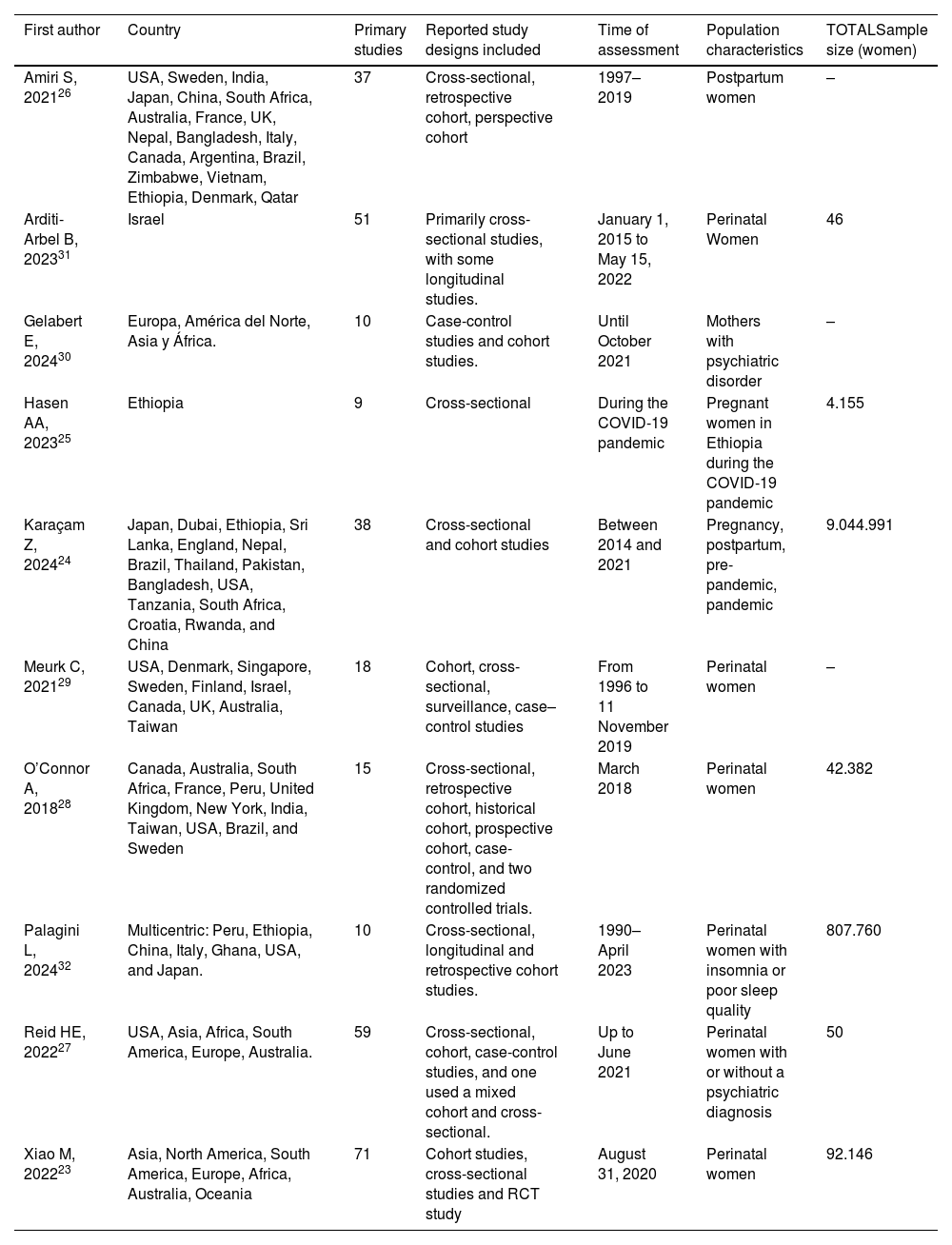
Table 1 outlines the main characteristics of the studies included in this umbrella review, and Table 2 provides a summary of the characteristics associated with perinatal suicides from those same studies.

Table 1.

The main characteristics of the studies included in this umbrella review.

First author  Country  Primary studies  Reported study designs included  Time of assessment  Population characteristics  TOTALSample size (women) 
Amiri S, 202126  USA, Sweden, India, Japan, China, South Africa, Australia, France, UK, Nepal, Bangladesh, Italy, Canada, Argentina, Brazil, Zimbabwe, Vietnam, Ethiopia, Denmark, Qatar  37  Cross-sectional, retrospective cohort, perspective cohort  1997–2019  Postpartum women  – 
Arditi-Arbel B, 202331  Israel  51  Primarily cross-sectional studies, with some longitudinal studies.  January 1, 2015 to May 15, 2022  Perinatal Women  46 
Gelabert E, 202430  Europa, América del Norte, Asia y África.  10  Case-control studies and cohort studies.  Until October 2021  Mothers with psychiatric disorder  – 
Hasen AA, 202325  Ethiopia  Cross-sectional  During the COVID-19 pandemic  Pregnant women in Ethiopia during the COVID-19 pandemic  4.155 
Karaçam Z, 202424  Japan, Dubai, Ethiopia, Sri Lanka, England, Nepal, Brazil, Thailand, Pakistan, Bangladesh, USA, Tanzania, South Africa, Croatia, Rwanda, and China  38  Cross-sectional and cohort studies  Between 2014 and 2021  Pregnancy, postpartum, pre-pandemic, pandemic  9.044.991 
Meurk C, 202129  USA, Denmark, Singapore, Sweden, Finland, Israel, Canada, UK, Australia, Taiwan  18  Cohort, cross-sectional, surveillance, case–control studies  From 1996 to 11 November 2019  Perinatal women  – 
O’Connor A, 201828  Canada, Australia, South Africa, France, Peru, United Kingdom, New York, India, Taiwan, USA, Brazil, and Sweden  15  Cross-sectional, retrospective cohort, historical cohort, prospective cohort, case-control, and two randomized controlled trials.  March 2018  Perinatal women  42.382 
Palagini L, 202432  Multicentric: Peru, Ethiopia, China, Italy, Ghana, USA, and Japan.  10  Cross-sectional, longitudinal and retrospective cohort studies.  1990–April 2023  Perinatal women with insomnia or poor sleep quality  807.760 
Reid HE, 202227  USA, Asia, Africa, South America, Europe, Australia.  59  Cross-sectional, cohort, case-control studies, and one used a mixed cohort and cross-sectional.  Up to June 2021  Perinatal women with or without a psychiatric diagnosis  50 
Xiao M, 202223  Asia, North America, South America, Europe, Africa, Australia, Oceania  71  Cohort studies, cross-sectional studies and RCT study  August 31, 2020  Perinatal women  92.146 
Table 2.

The main characteristics of the studies on Perinatal Suicide included in this umbrella review.

First author  Meta-analysis (Y/N)  Prevalence of suicidality (Y/N)  Prevalence of suicidal ideation (Y/N)  Prevalence of attempt (Y/N)  Outcomes  Associated factors 
Amiri S, 202126  4%  12% (95% CI: 11–14)  4% (95% CI: 1–7)  Prevalence of postpartum suicidal ideation, suicide attempts, and suicide mortality  Depression 
Arditi-Arbel B, 202331  Risk factors for suicidal ideation and behavior  - Sleep disturbances- Psychopathology (depression, anxiety, etc.)- Low social support- Medical conditions (such as HIV)- Adverse childhood experiences- Intimate partner violence 
Gelabert E, 202430  Risk factors for suicidal attempts  - Sociodemographic: (Marital status, education level, age)- Clinical (Mood disorders, history of suicidal behavior)- Obstetric and neonatal (cesarean delivery, low birth weight, perinatal loss). 
Hasen AA, 202325  11% (95% CI: 0.09, 0.13).  Prevalence of suicidal ideation  - Depression- Intimate partner violence- Age (≥30 years)- Stress- Poor sleep quality- Substances 
Karaçam Z, 202424  5.1% (95% CI, 0.01–1.53)  7.8% (95% CI: 0.06–0.11)  1% (95% CI: 0.00–0.07)  Prevalence and frequency of suicidal behavior, frequency of suicidal behavior in the pre- and post-COVID-19  - Mental health problems- Insomnia- Various forms of violence- Younger age- Being unmarried- Low education and income- Unplanned pregnancy- History of abortion, trauma, and lack of social support- The presence of VIH 
Meurk C, 202129  Risk factors for suicidal behavior  - Mental health- Pregnancy and Health- Interpersonal relationships and intimate partner violence- Health service utilization 
O’Connor A, 201828  Risk factors for suicidal ideation  - Low socioeconomic status- Prior mental health disorders- Intimate partner violence- Smoking, history of abuse- Migraine headaches. 
Palagini L, 202432  Risk factors for suicidal ideation  - Insomnia- Poor sleep quality 
Reid HE, 202227  Risk factors for suicidal ideation  - Negative life events (childhood maltreatment only or adverse childhood experiences; maltreatment at any time in life (childhood and/or adulthood): adult maltreatment only or intimate partner violence (IPV); and stress (e.g. stress during pregnancy or postpartum; exposure to traumatic life events; post-traumatic stress symptoms and first-degree relative suicide).- Social factors (risk factors related to mother–child bonding and mother-child interactions; social support and loneliness)- Cognitive factors (guilt, shame and worthlessness – personality and individual differences (self-esteem/self-efficacy) 
Xiao M, 202223  10% in pregnancy and 7% in the postpartum.  Prevalence of suicidal ideation  – 

Abbreviations: Y: yes, N: no, CI: confident interval.

A total of 10 SRs were analyzed, of which 6 incorporated MAs. All reviews were published between 2018 and 2024. 4/10 (40%) SRs assessed the prevalence of suicide, suicide attempts, or suicidal ideation.23–26 8/10 (80%) SRs examined risk factors associated with these conditions24,25,27–32; of these, 2/8 (25%) also included information on prevalence.24,25

Methodological quality assessment and overlap of evidence

Using the AMSTAR 2 tool (Fig. 2), the methodological quality of the studies was assessed. One study (10%) was rated as low quality (30), while four studies (40%) were rated as critically low quality.27,31 Five studies (50%) received a high-quality rating.23,32 The most frequently identified critical weaknesses in the AMSTAR-2 criteria were related to items 2, 9, and 13, which address protocol review, risk of bias (RoB) assessment, and the consideration of RoB in interpreting results. Additionally, item 7, concerning the justification for excluded studies, was also commonly noted.

Figure 2.

Methodological quality of 10 Systematic reviews included in the umbrella review of Suicidal Ideation During the Perinatal Period: Prevalence and Risk Factors. Quality assessment according to the 16 items of AMSTAR 2. Item 1: Research questions and inclusion criteria include PICO components; Item 2: Previous protocol review; Item 3: Explaining decision about the study designs to include in the review; Item 4: Adequate literature search; Item 5: Study selection performed in duplicate; Item 6: Data extraction performed in duplicate; Item 7: Excluded studies justification; Item 8: Describing included studies with sufficient detail; Item 9: Bias risk of individual studies included; Item 10: Reporting the sources of funding for the studies included in the review; Item 11: Appropriate meta-analysis methods; Item 12: Assessing the potential impact of bias risk on results; Item 13: Consideration of the bias risk in the interpretation of the review results; Item 14: Satisfactory explanation and discussing any observed heterogeneity in the review results; Item 15: Assessment of the presence and probable impact of publication bias; and Item 16: Potential sources of conflict including any funding received. *Critical items: 2, 4, 7, 9, 11, 13 and 15; Non-critical items: 1, 3, 5, 6, 8, 10, 12, 14 and 16.

A degree of overlap was observed between SRs, with a CCA of 8.31% (Appendix B.1). The overlap in SRs addressing the prevalence of suicidal ideation, suicide attempts, and suicide during the perinatal period was 3.66% (Appendix B.2). The overlap for SRs analyzing suicide-associated risk factors was 6.40% (Appendix B.3).

Discussion

This umbrella review provides a comprehensive synthesis of the prevalence and risk factors of suicidal ideation during the perinatal period. The findings showed a varied prevalence of suicidal ideation with associated key risk factors, including poor sleep quality, intimate partner violence, and limited social support.

This umbrella review presents several strengths, first, the inclusion of a comprehensive search strategy across multiple databases without language restrictions. Second, the adherence to PRIOR guidelines. Third, the evaluation of methodological quality using AMSTAR-2, and finally the assessment of overlap. However, certain limitations should be acknowledged. The small number of SRs and the heterogeneity among them, especially regarding definitions, methodological quality, and geographical contexts, limit the comparability of results and reduce the overall consistency of the evidence. Additionally, potential regional biases exist, as most studies originate from specific geographic areas, which may affect the global representativeness of the findings. These limitations underscore the need for future research with more homogeneous methodologies and greater geographic diversity.

Of the 10 studies reviewed, only four provide specific data on the prevalence of suicidal ideation and suicide attempts. In these studies, the prevalence of suicidal ideation ranged from 7.2%24 to 12%,26 while the prevalence of suicide attempts ranged from 4% to 5.1%.24,26 Only one of the studies looked at the prevalence of completed suicide, which was estimated to be 4%.26

This pattern shows that the percentages of suicidal ideation are higher than those of attempted or completed suicide, which may be explained by the progressive nature of the suicidal process. This process usually begins with suicidal ideation, followed by planning, communication of suicidal thoughts, and ultimately suicide attempts, which may be fatal.33,34 This process tends to be longer in women, which increases the probability of risk factors manifesting in the intermediate stages.33 In our review, we found that the prevalence of suicidal ideation in the perinatal period (7–12%)24,26 is significantly higher than the 5.28%35 prevalence of suicidal ideation in the general European population. However, data from women and girls in South Asia show an even higher prevalence of 17%.36 Regarding suicide attempts, our prevalence estimate (4–5.1%)24,26 is in line with the prevalence observed in South Asia (5%)36 and globally (0.4–5.1%).37 In contrast, data from the European population show a significantly lower prevalence of suicidal behavior (2.88%).35 These differences may be influenced by cultural and social differences in different contexts.

The main risk factors associated with increased suicidal ideation identified included sleep disturbance, exposure to abusive situations, domestic violence, lack of social support, and pre-existing medical conditions. Lack of adequate and restful sleep significantly increases the risk of suicidal ideation, according to our findings, and is closely related to mental health problems.38 This may be because some mental health problems, such as depression, can lead to sleep problems.12 On the other hand, lack of adequate sleep can lead to emotional lability, confusion, distorted self-perception, and abnormal neural responses,38,39 affecting both the emotional and physical well-being of the mother, which increases the risk of suicidal ideation.40

A personal history of abuse, both in childhood and adulthood, has been identified as a risk factor for the development of suicidal ideation in the perinatal period, a finding that was already recognized in the general population.41 Recent studies have shown that physical abuse in adulthood increases the likelihood of developing suicidal ideation by up to 27 times, while sexual abuse increases this risk by a factor of five.41 If the abuse occurred during childhood, it is associated with a 2.4 times higher risk of suicidal ideation.42 In particular, childhood sexual abuse has been consistently associated with suicidal behavior and is considered a significant risk factor for attempted suicide.43

Domestic violence (IPV) also increases the likelihood of developing suicidal ideation in the perinatal period. This finding is consistent with previous studies,44 which estimate that 42.9% of women who experience IPV have suicidal ideation.45 In turn, IPV has been considered by some authors to be a risk factor for depression, which increases the probability of suicidal ideation.46 These findings are consistent with those of a recent MA of women in the general population who had experienced IPV.47

Similar to domestic violence, lack of social support has been identified as a factor that facilitates the development of suicidal ideation. Lack of social support is associated with higher rates of anxiety and depression, both prenatally and postnatally.48,49 In contrast, high levels of social support are associated with better overall mental health, including significant reductions in depressive symptoms.50 Some studies even suggest that strong social support may play a protective role against the development of mental illness during pregnancy.51–53

Not only social factors play an important role in suicidal ideation, but also the presence of pre-existing medical conditions, particularly those related to mental health problems, predisposes to suicide.44,54 This is consistent with previous research showing that disorders such as anxiety, stress, depression, and even post-traumatic stress disorder are strongly associated with increased risk.46,55 Overall, women with mental health problems during pregnancy are three times more likely to develop suicidal ideation than women without mental health problems during pregnancy.56 Although an increased risk has also been found in women with physical illnesses such as cancer or epilepsy, this is much lower than the risk associated with psychiatric disorders.57

Suicidal ideation and postpartum depression affect a mother's ability to deal with the stress of parenting, interfere with her interactions with her baby, and affect the mother-child bond.58,59 This bond has a major impact on the mother's self-concept and emotional well-being, and its deterioration may affect the mother's ability to respond appropriately to her baby's needs, leading to neglectful or inappropriate behavior.59

It is imperative to recognize the significance of the perinatal period in maternal well-being, particularly the potential for the mitigation of risk factors that contribute to suicidal ideation. To support mother's mental health during this time, health professionals are essential in recognizing and addressing these factors. The identification of modifiable risk factors such as poor sleep quality, intimate partner violence, or limited social support offers concrete opportunities to improve clinical practice. These findings underscore the importance of routinely integrating psychosocial screening into perinatal care. Healthcare professionals should be trained to assess sleep disturbances, detect signs of interpersonal violence and evaluate the presence or absence of support networks during both prenatal and postnatal visits. Early identification can facilitate timely referral to mental health services and allow for the implementation of more targeted interventions.

Implementing focused public health policies that prioritize maternal mental health screening and intervention is therefore vital. The adoption of these strategies within a multidisciplinary care model can strengthen health systems’ ability to prevent mental health disorders during this vulnerable period. Future studies should concentrate on clarifying the mechanisms underlying these risk factors and evaluate effective preventive interventions. Clinically, both mothers and their newborns can benefit from routine perinatal care that incorporates comprehensive mental health support.

Conclusion

The perinatal period is a critical window for maternal mental health, with suicidal ideation being influenced by modifiable risk factors. Health professionals play a vital role in identifying and addressing these factors in order to support the mental well-being of mothers during this time.

Funding

This research did not receive any specific grant from funding agencies in the public, commercial, or not-for-profit sectors.

Conflict of interest

The authors declare that they have no conflict of interest.

Appendix A
Supplementary data

The followings are the supplementary data to this article:

Icono mmc1.doc

References
[1]
G. Apter, E. Devouche, M. Gratier.
Perinatal mental health.
J Nerv Ment Dis, 199 (2011), pp. 575-577
[2]
A. Stein, R.M. Pearson, S.H. Goodman, E. Rapa, A. Rahman, M. McCallum, et al.
Effects of perinatal mental disorders on the fetus and child.
Lancet, 384 (2014), pp. 1800-1819
[3]
World Health Organization (WHO) MHBH and SU (MSD).
WHO guide for integration of perinatal mental health in maternal and child health services.
(2022),
[4]
L.M. Howard, H. Khalifeh.
Perinatal mental health: a review of progress and challenges.
World Psychiatry, 19 (2020), pp. 313-327
[5]
E.D. Klonsky, A.M. May, B.Y. Saffer.
Suicide attempts, and suicidal ideation.
Annu Rev Clin Psychol, 12 (2016), pp. 307-330
[6]
C.M. McAuliffe.
Suicidal ideation as an articulation of intent: a focus for suicide prevention?.
Arch Suicide Res, 6 (2002), pp. 325-338
[7]
J.M. Martínez-Galiano, S. Martínez-Vázquez, R.A. Peinado-Molina, A. Hernández-Martínez.
Validation of the Paykel Suicide Scale and the Plutchik Suicide Risk Scale in Spanish women during the perinatal period.
Depress Anxiety, 2024 (2024),
[8]
A. Duarte, M. Ribeiro, J. Lopes, S. Oliveira, P. Martins.
Risk of suicide during pregnancy and postpartum period.
Eur Psychiatry, 65 (2022), pp. S854-S855
[9]
B. Gelaye, S. Kajeepeta, M.A. Williams.
Suicidal ideation in pregnancy: an epidemiologic review.
Arch Womens Ment Health, 19 (2016), pp. 741-751
[10]
P.M. Marzuk, K. Tardiff, A.C. Leon, C.S. Hirsch, L. Portera, N. Hartwell, et al.
Lower risk of suicide during pregnancy.
Am J Psychiatry, 154 (1997), pp. 122-123
[11]
L. Appleby.
Suicide during pregnancy and in the first postnatal year.
[12]
L. Palagini, G. Cipollone, I. Masci, M. Novi, D. Caruso, D.A. Kalmbach, et al.
Stress-related sleep reactivity is associated with insomnia psychopathology and suicidality in pregnant women: preliminary results.
Sleep Med, 56 (2019), pp. 145-150
[13]
Islam MdJ, L. Broidy, P. Mazerolle, K. Baird, N. Mazumder, K.M. Zobair.
Do maternal depression and self-esteem moderate and mediate the association between intimate partner violence after childbirth and postpartum suicidal ideation?.
Arch Suicide Res, 24 (2020), pp. 609-632
[14]
K.M. Tabb, A.R. Gavin, Y. Guo, H. Huang, K. Debiec, W. Katon.
Views and experiences of suicidal ideation during pregnancy and the postpartum: findings from interviews with maternal care clinic patients.
Women Health, 53 (2013), pp. 519-535
[15]
K.M. Tabb, A.R. Gavin, A. Faisal-Cury, N. Nidey, Y.-F. Chan, T. Malinga, et al.
Prevalence of antenatal suicidal ideation among racially and ethnically diverse WIC enrolled women receiving care in a midwestern public health clinic.
J Affect Disord, 256 (2019), pp. 278-281
[16]
J. Martini, M. Bauer, U. Lewitzka, C. Voss, A. Pfennig, D. Ritter, et al.
Predictors and outcomes of suicidal ideation during peripartum period.
J Affect Disord, 257 (2019), pp. 518-526
[17]
F. Gressier, V. Guillard, O. Cazas, B. Falissard, N.M.-C. Glangeaud-Freudenthal, A.-L. Sutter-Dallay.
Risk factors for suicide attempt in pregnancy and the post-partum period in women with serious mental illnesses.
J Psychiatr Res, 84 (2017), pp. 284-291
[18]
E. Aromataris, R. Fernandez, C.M. Godfrey, C. Holly, H. Khalil, P. Tungpunkom.
Summarizing systematic reviews: methodological development conduct and reporting of an umbrella review approach.
Int J Evid Based Healthc, 13 (2015), pp. 132-140
[19]
M. Gates, A. Gates, D. Pieper, R.M. Fernandes, A.C. Tricco, D. Moher, et al.
Reporting guideline for overviews of reviews of healthcare interventions: development of the PRIOR statement.
[20]
B.J. Shea, B.C. Reeves, G. Wells, M. Thuku, C. Hamel, J. Moran, et al.
AMSTAR 2: a critical appraisal tool for systematic reviews that include randomised or non-randomised studies of healthcare interventions, or both.
[21]
D. Pieper, S.-L. Antoine, T. Mathes, E.A.M. Neugebauer, M. Eikermann.
Systematic review finds overlapping reviews were not mentioned in every other overview.
J Clin Epidemiol, 67 (2014), pp. 368-375
[22]
M.J. Page, J.E. McKenzie, P.M. Bossuyt, I. Boutron, T.C. Hoffmann, C.D. Mulrow, et al.
The PRISMA 2020 statement: an updated guideline for reporting systematic reviews.
[23]
M. Xiao, Y. Hu, S. Huang, G. Wang, J. Zhao, J. Lei.
Prevalence of suicidal ideation in pregnancy and the postpartum: a systematic review and meta-analysis.
J Affect Disord, 296 (2022), pp. 322-336
[24]
Z. Karaçam, E. Sarı, R. Yüksel, H. Arslantaş.
The prevalence of suicidal behavior and ideation during pregnancy and postpartum period its variation in the COVID-19 pandemic, and the related factors: a systematic review and meta-analysis of observational studies.
Eur J Psychiatry, 38 (2024), pp. 100248
[25]
A.A. Hasen, A.A. Seid, A.A. Mohammed.
Poor sleep quality and suicidal ideation among pregnant women during COVID-19 in Ethiopia: systematic review and meta-analysis.
PeerJ, 11 (2023), pp. e16038
[26]
S. Amiri, S. Behnezhad.
The global prevalence of postpartum suicidal ideation suicide attempts, and suicide mortality: a systematic review and meta-analysis.
Int J Ment Health, 50 (2021), pp. 311-336
[27]
H.E. Reid, D. Pratt, D. Edge, A. Wittkowski.
Maternal suicide ideation and behaviour during pregnancy and the first postpartum year: a systematic review of psychological and psychosocial risk factors.
Front Psychiatry, (2022), pp. 13
[28]
A. O’Connor, S. Geraghty, D.G. Doleman, A. De Leo.
Suicidal ideation in the perinatal period: a systematic review.
Ment Health Prev, 12 (2018), pp. 67-75
[29]
C. Meurk, L. Wittenhagen, J. Lucke, R. Barker, S. Roberts, K. Moss, et al.
Suicidal behaviours in the peripartum period: a systematic scoping review of data linkage studies.
Arch Womens Ment Health, 24 (2021), pp. 579-593
[30]
E. Gelabert, A. Plaza, A. Roca-Lecumberri, A. Bramante, V. Brenna, L. Garcia-Esteve, et al.
Suicide attempts during pregnancy and postpartum: a systematic review and meta-analysis.
Matern Child Health J, 28 (2024), pp. 1443-1453
[31]
B. Arditi-Arbel, S. Hamdan, M. Winterman, Y. Gvion.
Suicidal ideation and behavior among perinatal women and their association with sleep disturbances medical conditions, and known risk factors.
Front Psychiatry, (2023), pp. 13
[32]
L. Palagini, E. Cipriani, M. Miniati, A. Bramante, A. Gemignani, P.A. Geoffroy, et al.
Insomnia poor sleep quality and perinatal suicidal risk: a systematic review and meta-analysis.
J Sleep Res, (2024), pp. 33
[33]
D.L. Schrijvers, J. Bollen, B.G.C. Sabbe.
The gender paradox in suicidal behavior and its impact on the suicidal process.
J Affect Disord, 138 (2012), pp. 19-26
[34]
B.S. Runeson, J. Beskow, M. Waern.
The suicidal process in suicides among young people.
Acta Psychiatr Scand, 93 (1996), pp. 35-42
[35]
M.C. Castillejos, P. Huertas, P. Martín, B. Moreno Küstner.
Prevalence of suicidality in the European general population: a systematic review and meta-analysis.
Arch Suicide Res, 25 (2021), pp. 810-828
[36]
A.B. Khoso, A. Noureen, Z. Un Nisa, A. Hodkinson, A. Elahi, U. Arshad, et al.
Prevalence of suicidal ideation and suicide attempts in individuals with psychosis and bipolar disorder in South Asia: systematic review and meta-analysis.
BJPsych Open, 9 (2023), pp. e179
[37]
M.K. Nock, G. Borges, E.J. Bromet, C.B. Cha, R.C. Kessler, S. Lee.
Suicide and suicidal behavior.
Epidemiol Rev, 30 (2008), pp. 133-154
[38]
D. Freeman, B. Sheaves, G.M. Goodwin, L.-M. Yu, A. Nickless, P.J. Harrison, et al.
The effects of improving sleep on mental health (OASIS): a randomised controlled trial with mediation analysis.
Lancet Psychiatry, 4 (2017), pp. 749-758
[39]
C.J. Pope, B. Xie, V. Sharma, M.K. Campbell.
A prospective study of thoughts of self-harm and suicidal ideation during the postpartum period in women with mood disorders.
Arch Womens Ment Health, 16 (2013), pp. 483-488
[40]
B. Gelaye, G. Addae, B. Neway, G.T. Larrabure-Torrealva, C. Qiu, L. Stoner, et al.
Poor sleep quality antepartum depression and suicidal ideation among pregnant women.
J Affect Disord, 209 (2017), pp. 195-200
[41]
J. Calder, A. McVean, W. Yang.
History of abuse and current suicidal ideation: results from a population based survey.
J Fam Violence, 25 (2010), pp. 205-214
[42]
X. Zhang, J. Sun, J. Wang, Q. Chen, D. Cao, J. Wang, et al.
Suicide ideation among pregnant women: the role of different experiences of childhood abuse.
J Affect Disord, 266 (2020), pp. 182-186
[43]
Q.X. Ng, B.Z.J. Yong, C.Y.X. Ho, D.Y. Lim, W.-S. Yeo.
Early life sexual abuse is associated with increased suicide attempts: an update meta-analysis.
J Psychiatr Res, 99 (2018), pp. 129-141
[44]
S. Martínez-Vázquez, R.A. Peinado-Molina, A. Hernández-Martínez, J.M. Martínez-Galiano.
Prevalence and associated factors of perinatal suicide risk in Spanish women.
Arch Suicide Res, (2024), pp. 1-16
[45]
T.A. Supraja, K. Thennarasu, V.A. Satyanarayana, T.K. Seena, G. Desai, K.V. Jangam, et al.
Suicidality in early pregnancy among antepartum mothers in urban India.
Arch Womens Ment Health, 19 (2016), pp. 1101-1108
[46]
A.-M. Bright, O. Doody, T. Tuohy.
Women with perinatal suicidal ideation – a scoping review of the biopsychosocial risk factors to inform health service provision and research.
PLOS ONE, 17 (2022), pp. e0274862
[47]
S.J. White, J. Sin, A. Sweeney, T. Salisbury, C. Wahlich, C.M. Montesinos Guevara, et al.
Global prevalence and mental health outcomes of intimate partner violence among women: a systematic review and meta-analysis.
Trauma Viol Abuse, 25 (2024), pp. 494-511
[48]
J. Milgrom, Y. Hirshler, J. Reece, C. Holt, A.W. Gemmill.
Social support—a protective factor for depressed perinatal women?.
Int J Environ Res Public Health, 16 (2019), pp. 1426
[49]
A. Bedaso, J. Adams, W. Peng, D. Sibbritt.
The relationship between social support and mental health problems during pregnancy: a systematic review and meta-analysis.
Reprod Health, 18 (2021), pp. 162
[50]
Y. Li, Z. Long, D. Cao, F. Cao.
Social support and depression across the perinatal period: a longitudinal study.
J Clin Nurs, 26 (2017), pp. 2776-2783
[51]
K. Stuart-Parrigon, S. Stuart.
Perinatal depression: an update and overview.
Curr Psychiatry Rep, 16 (2014), pp. 468
[52]
L.E. Friedman, B. Gelaye, S.E. Sanchez, M.A. Williams.
Association of social support and antepartum depression among pregnant women.
J Affect Disord, 264 (2020), pp. 201-205
[53]
P. Li, H. Wang, J. Feng, G. Chen, Z. Zhou, X. Gou, et al.
Association between perceived stress and prenatal depressive symptoms: moderating effect of social support.
J Multidiscip Healthc, 14 (2021), pp. 3195-3204
[54]
L. Orsolini, A. Valchera, R. Vecchiotti, C. Tomasetti, F. Iasevoli, M. Fornaro, et al.
Suicide during perinatal period: epidemiology risk factors, and clinical correlates.
Front Psychiatry, (2016), pp. 7
[55]
S. Miksic, M. Miskulin, B. Juranic, Z. Rakosec, A. Vcev, D. Degmecic.
Depression and suicidality during pregnancy.
Psychiatr Danub, 30 (2018), pp. 85-90
[56]
K. Belete, T. Kassew, D. Demilew, T. Amare Zeleke.
Prevalence and correlates of suicide ideation and attempt among pregnant women attending antenatal care services at public hospitals in Southern Ethiopia.
Neuropsychiatr Dis Treat, 17 (2021), pp. 1517-1529
[57]
L. Favril, R. Yu, J.R. Geddes, S. Fazel.
Individual-level risk factors for suicide mortality in the general population: an umbrella review.
Lancet Public Health, 8 (2023), pp. e868-e877
[58]
R. Paris, R.E. Bolton, M.K. Weinberg.
Postpartum depression suicidality, and mother-infant interactions.
Arch Womens Ment Health, 12 (2009), pp. 309-321
[59]
C. Chen, S. Okawa, R. Okubo, K. Hagiwara, T. Mizumoto, N. Higuchi, et al.
Mother-to-infant bonding difficulties are associated with future maternal depression and child-maltreatment behaviors: a Japanese nationwide longitudinal study.
Psychiatry Res, 334 (2024), pp. 115814
Copyright © 2025. Sociedad Española de Médicos de Atención Primaria (SEMERGEN)
asdasdasd
Opciones de artículo
Herramientas
Material suplementario

