
The robotic surgical team in the operating room plays an important role in determining the outcome of a robotic approach. This study aimed to compare the outcomes of 2 hospitals with different levels of expertise in robot-assisted rectal cancer surgery.
MethodsThis retrospective study analyzed 195 patients who underwent robot-assisted rectal resection at 2 referral centers for the treatment of rectal cancer between March 2018 and December 2021.
ResultsIn total, 195 patients had undergone robotic rectal cancer surgery: 95 performed by an expert team, and 100 by a novel team. The expert team performed more low anterior resections (55.8%) than the novel team (33%) (P = 0.001), and the total operative time varied significantly between the groups (P < 0.001). The novel team’s operative time was 135 min longer than the expert team’s. The expert team had no conversions to open surgery, while the novel team had an 8% conversion rate (P = 0.007). In this study, overall morbidity was 45.3% among patients treated by the expert team versus 38% among those treated by the novice team (P = 0.304). Severe complications (Clavien–Dindo grade >IIIB) occurred at a rate of 10% in both groups. Incomplete mesorectal excision was observed in 3.2% of the expert team’s patients versus 4.2% of the novice team’s (P = 0.65).
ConclusionThe expert team achieved a shorter operative time and less conversion to open surgery. However, the morbidity and pathological outcomes were comparable between the teams. The introduction of robotic surgery in a team with early-stage surgical experience was safe.
El equipo quirúrgico robótico en el quirófano desempeña un papel importante en la determinación de resultados. Este estudio tuvo como objetivo comparar los resultados de dos centros con diferentes niveles de experiencia en la cirugía robótica para el cáncer de recto.
MétodosEste estudio retrospectivo analizó a 195 pacientes que se sometieron a resección rectal asistida por robot en dos centros de referencia para el tratamiento del cáncer de recto entre marzo de 2018 y diciembre de 2021.
ResultadosUn total de 195 pacientes se sometieron a cirugía robótica para el cáncer de recto: 95 de un equipo experto y 100 de un equipo novel. El equipo experto realizó más resecciones anteriores bajas (55.8%) en comparación con el equipo novel (33%) (p = 0.001), y el tiempo operatorio total varió significativamente entre los centros (p < 0.001). El tiempo operatorio del equipo novel fue 135 minutos más largo que el del equipo experto. El equipo experto no tuvo conversiones a cirugía abierta, mientras que el equipo novel tuvo una tasa de conversión del 8% (p = 0.007). En este estudio, la morbilidad general fue del 45.3% en el equipo experto y del 38% en el equipo novel (p = 0.304). Las complicaciones graves (clasificación Clavien-Dindo > IIIB) ocurrieron a una tasa del 10% en ambos grupos. Se observó una escisión mesorrectal incompleta en el 3.2% de los pacientes del equipo experto y en el 4.2% del equipo novel (p = 0.65).
ConclusiónEl equipo experto logró un menor tiempo operatorio y menos conversiones a cirugía abierta. Sin embargo, la morbilidad y los resultados patológicos fueron comparables entre los equipos. La introducción de la cirugía robótica en un equipo con experiencia quirúrgica temprana fue segura.
Surgery has undergone a remarkable transformation with the emergence of robotic technology. This technology has the potential to revolutionize surgical procedures and significantly enhance patient outcomes.1–5 Despite the costs associated with its acquisition and maintenance, the use of robot-assisted surgery has increased.6
Robot-assisted surgery (RAS) is considered a complex surgical intervention, and correct technological, organizational and clinical management are paramount successfully implement this technology and subsequently achieve good outcomes.7
Several retrospective single-center studies have suggested that robotic surgery is a feasible, safe technique.8,9 RAS is associated with increased cost and operation time, but lower conversion rates than the laparoscopic approach.10–14
The impact of surgical team experience in RAS has been a subject of interest in surgical research. However, few studies have investigated the association between the experience of the surgical team and the use of robotic technology and its effects on patient outcomes.15,16
As robotic surgery is a relatively new technology, thorough research is essential to evaluate its safety and efficacy before it can be widely adopted. This study aimed to assess the impact of robotic surgery on colorectal procedures by comparing perioperative outcomes and pathological results between 2 surgical teams with different levels of experience. The goal was to determine whether robotic surgery offers measurable benefits in terms of patient safety and clinical outcomes across varying levels of expertise.
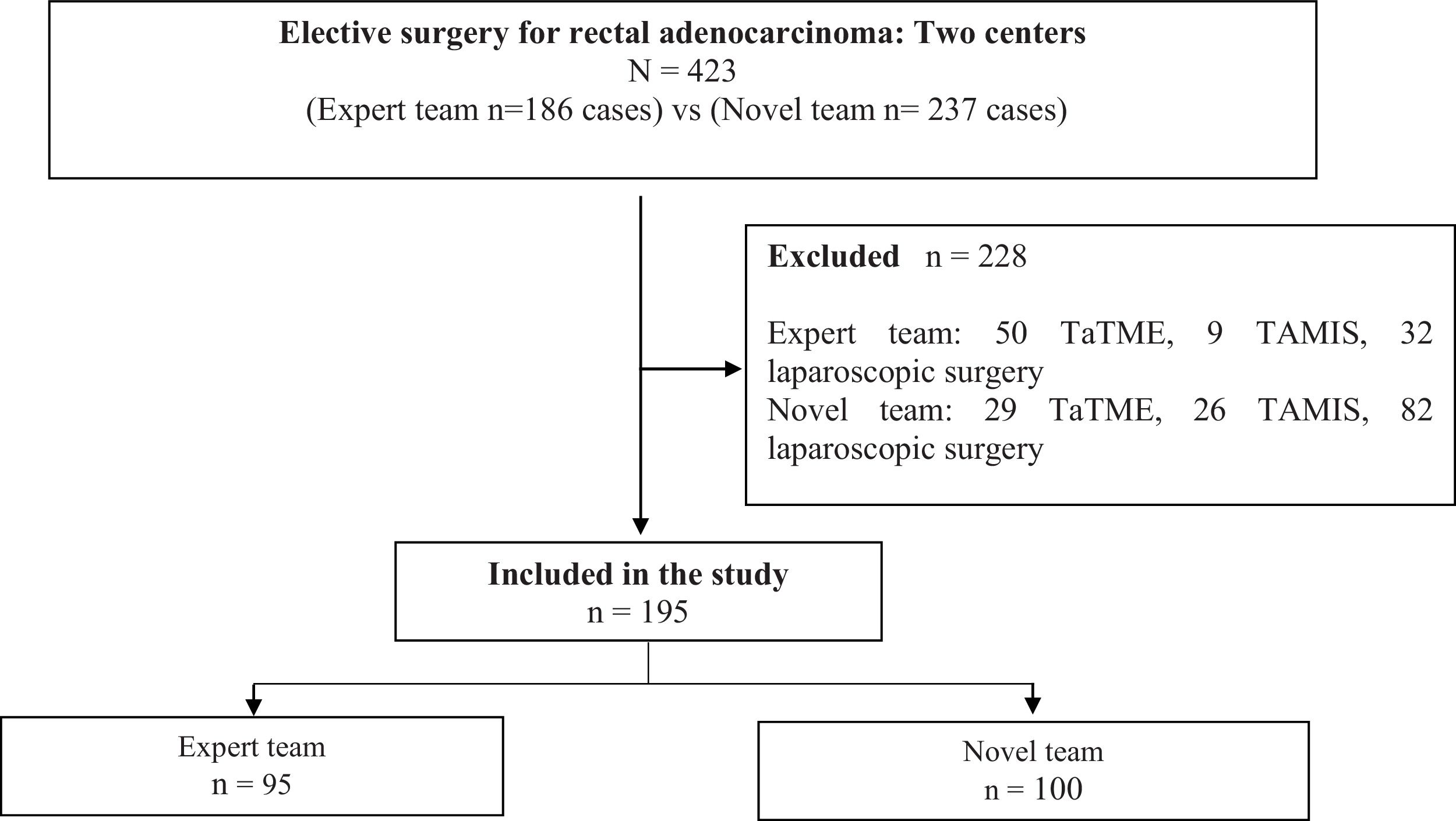
MethodsStudy designBetween March 2018 and December 2021, 423 patients underwent rectal cancer resection. Data from patients diagnosed with rectal cancer who had undergone robotic surgery were analyzed, and 195 consecutive patients were included in the study. A flowchart of the study is presented in Fig. 1.
ParticipantsEligible participants were adults aged ≥18 years with rectal cancer who had undergone radical resection. Patients who underwent TAMIS, TaTME, abdominal perineal resection, or laparotomy were excluded from the study (Fig. 1).
OutcomesThe primary endpoint aimed to evaluate perioperative outcomes for both teams.
The secondary endpoint focused on assessing pathological outcomes between the teams.
DefinitionsSurgical team: the surgical team consisted of one consultant surgeon, a surgical assistant, a scrub nurse, an anesthesiologist and a circulating nurse.
Novel team: a surgical team with experience in robotic surgery of their initial 100 cases of rectal cancer resections, utilizing the Da Vinci® Xi with Intuitive Surgical®.
Expert team: a surgical team from a pioneer center that started robotic surgery using the Da Vinci Surgical System in November 2010 and has performed more than 500 rectal resections before the study period, employing a single-console, 4-arm robotic system (Da Vinci® Si, Intuitive Surgical®).
Both teams were accredited by the Spanish Coloproctology Association (AECP), demonstrating their expertise and receiving certifications indicating their dedication to excellence in this field. Both teams had extensive experience in laparoscopic colorectal surgery.
Additionally, both centers have implemented enhanced recovery after surgery (ERAS) protocols and have similar policies concerning perioperative management and stoma creation, ensuring group comparability and reducing any potential management bias.
Ethical considerationsThis study was conducted in accordance with the principles of the Declaration of Helsinki and the Good Clinical Practice guidelines. The ethics committee of our hospital approved this study (No. 2023.164).
VariablesThe collected baseline characteristics consisted of the following demographic and clinical variables: sex, age, body mass index (BMI), American Society of Anesthesiologists (ASA) score, tumor size, presence of metastasis, and neoadjuvant treatment.
Peri- and postoperative variablesData on the surgical technique, conversion rate to open surgery, anastomosis, stoma formation, and total procedure time (TPT) per case (in minutes) were collected as perioperative variables. TPT consisted of the time from the draping of the robot, anesthesia-controlled time (induction and emergence phases), surgeon-controlled time (duration of the operation, including patient positioning, docking and undocking times), and length of hospital stay were also collected as perioperative variables.
All postoperative complications during the first 30 days of the postoperative period were recorded and stratified according to the Clavien–Dindo classification as minor (grades I–II) and severe (grades III–IV). We specifically accessed the anastomotic leakage rate. Postoperative mortality was defined as death within 30 days of surgery or before hospital discharge.
Histological variablesResected specimens were evaluated according to the recommendations of the Association of Directors of Surgical Pathology from pathological reports. Circumferential and distal resection margin involvement (<1 mm and <1 cm, respectively), length of the distal and proximal margins, mesorectal quality, tumor staging, number of harvested lymph nodes, and tumor regression grade were reviewed.
Statistical analysisContinuous data were expressed as mean and SD when normally distributed, or otherwise as the median and IQR. Student’s t-test was used for continuous variables with normal distributions and the Mann–Whitney U for those with non-normal distributions.
Categorical data were expressed in the form of numbers and percentages and were analyzed using the Fisher exact test or χ2 test. Statistical analyses were performed using IBM SPSS (version 24) with a significance level of .05.
ResultsThis study included 95 consecutive patients from Marqués de Valdecilla University Hospital (expert team) and 100 consecutive patients from Dr. Josep Trueta University Hospital (novel team) who had undergone elective robotic rectal cancer surgery between March 2018 and December 2021.
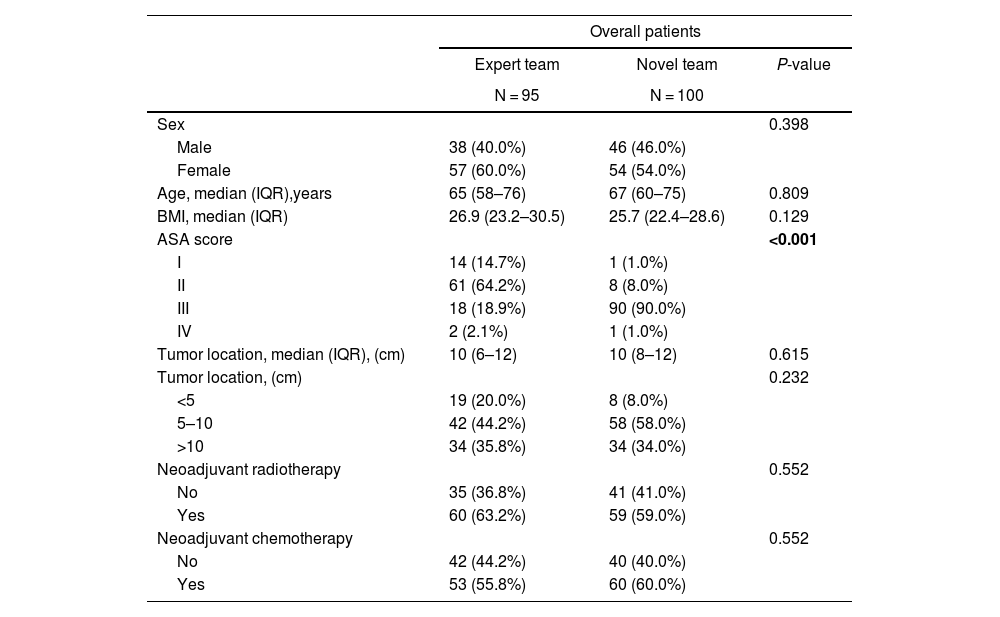
Baseline characteristics, such as sex, age, BMI, tumor location and preoperative treatment were similar between groups, with the exception of the ASA classification (P < 0.001) (Table 1).
Baseline characteristics.
| Overall patients | |||
|---|---|---|---|
| Expert team | Novel team | P-value | |
| N = 95 | N = 100 | ||
| Sex | 0.398 | ||
| Male | 38 (40.0%) | 46 (46.0%) | |
| Female | 57 (60.0%) | 54 (54.0%) | |
| Age, median (IQR),years | 65 (58–76) | 67 (60–75) | 0.809 |
| BMI, median (IQR) | 26.9 (23.2–30.5) | 25.7 (22.4–28.6) | 0.129 |
| ASA score | <0.001 | ||
| I | 14 (14.7%) | 1 (1.0%) | |
| II | 61 (64.2%) | 8 (8.0%) | |
| III | 18 (18.9%) | 90 (90.0%) | |
| IV | 2 (2.1%) | 1 (1.0%) | |
| Tumor location, median (IQR), (cm) | 10 (6–12) | 10 (8–12) | 0.615 |
| Tumor location, (cm) | 0.232 | ||
| <5 | 19 (20.0%) | 8 (8.0%) | |
| 5–10 | 42 (44.2%) | 58 (58.0%) | |
| >10 | 34 (35.8%) | 34 (34.0%) | |
| Neoadjuvant radiotherapy | 0.552 | ||
| No | 35 (36.8%) | 41 (41.0%) | |
| Yes | 60 (63.2%) | 59 (59.0%) | |
| Neoadjuvant chemotherapy | 0.552 | ||
| No | 42 (44.2%) | 40 (40.0%) | |
| Yes | 53 (55.8%) | 60 (60.0%) | |
Abbreviations: BMI, body mass index; ASA, American Society of Anesthesiologists; IQR, interquartile range; cm, centimeter; data are number (percentage) N (%), unless stated otherwise.
Bold P values indicate significance.
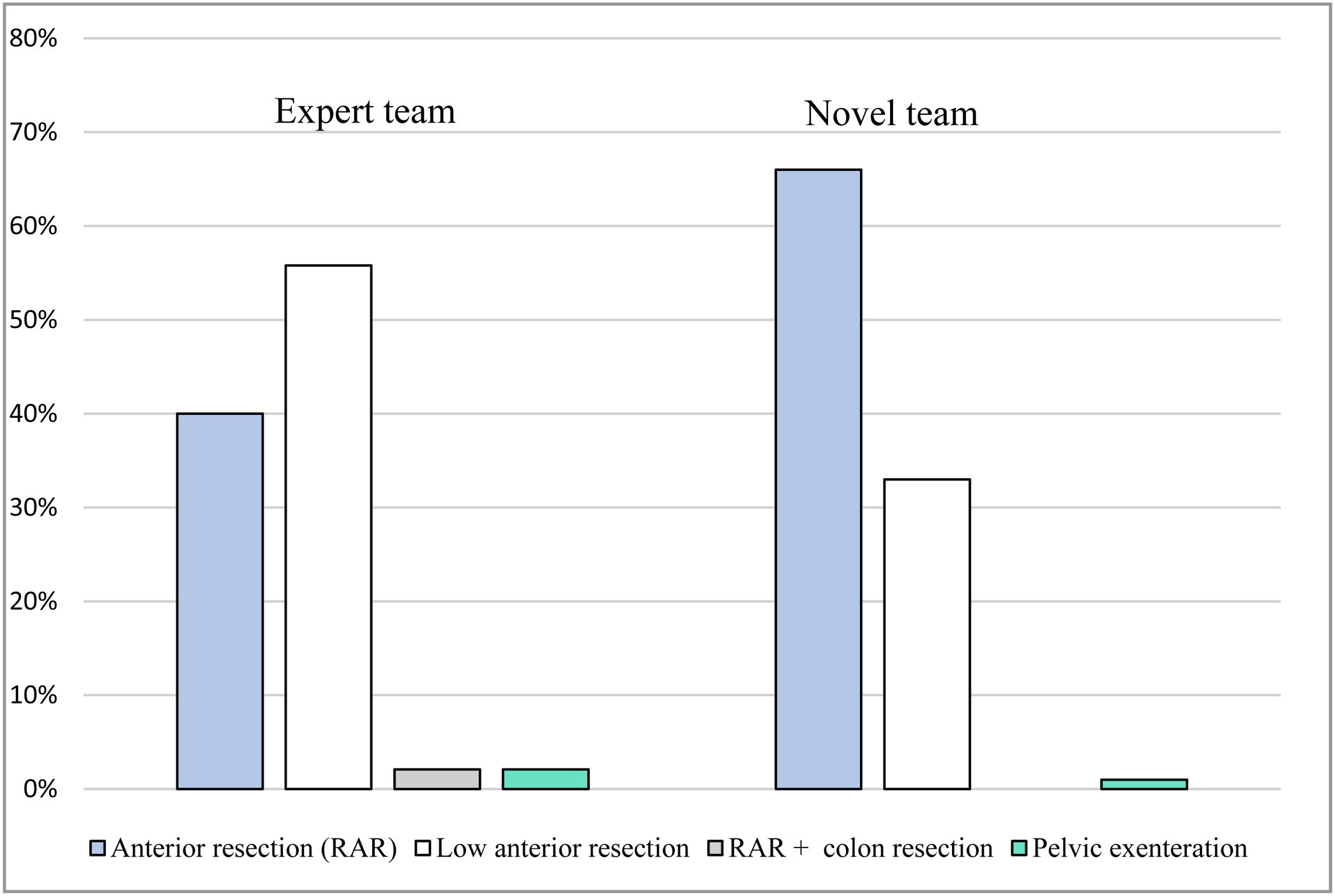
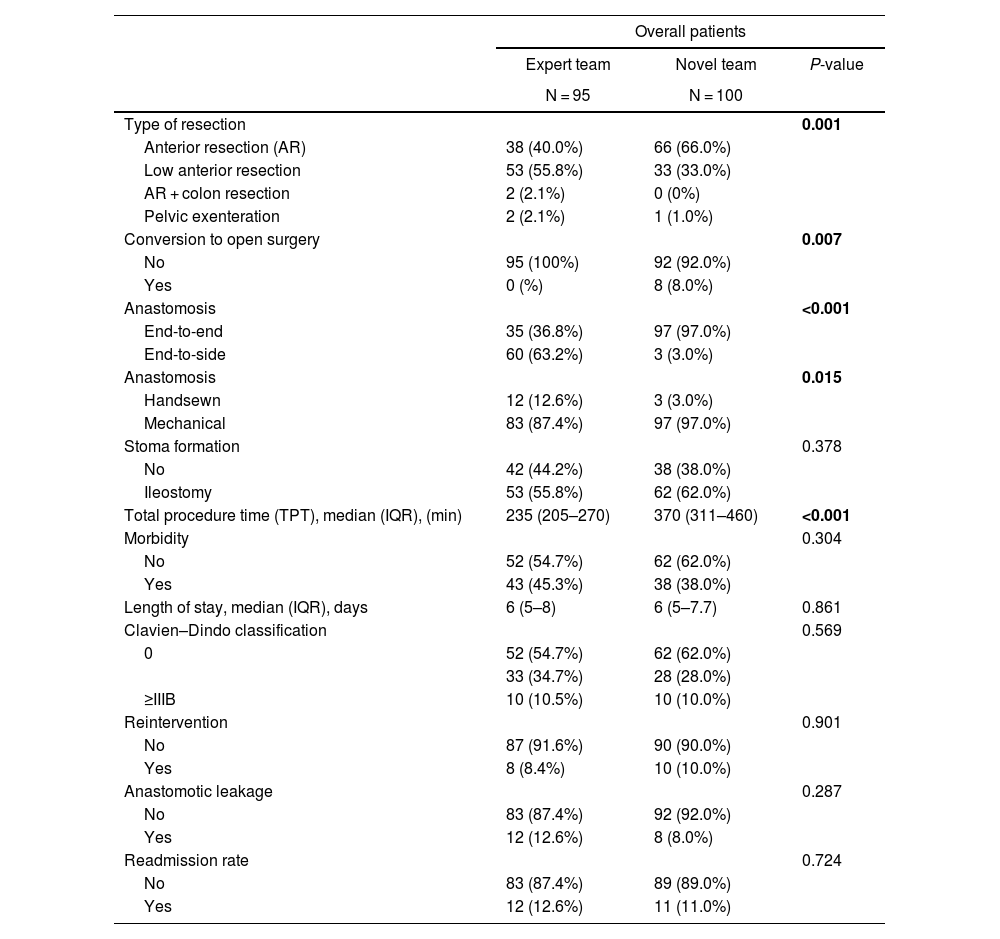
The expert team performed more low anterior resection surgeries than the novel team (55.8% vs 33.0%, P = 0.001) (Fig. 2). This comparison was likely due to the expert team’s surgical experience and the more selective case judgment of the novel team during the implementation phase. The perioperative and short-term outcomes of the patients in both groups are shown in Table 2.
Perioperative outcomes.
| Overall patients | |||
|---|---|---|---|
| Expert team | Novel team | P-value | |
| N = 95 | N = 100 | ||
| Type of resection | 0.001 | ||
| Anterior resection (AR) | 38 (40.0%) | 66 (66.0%) | |
| Low anterior resection | 53 (55.8%) | 33 (33.0%) | |
| AR + colon resection | 2 (2.1%) | 0 (0%) | |
| Pelvic exenteration | 2 (2.1%) | 1 (1.0%) | |
| Conversion to open surgery | 0.007 | ||
| No | 95 (100%) | 92 (92.0%) | |
| Yes | 0 (%) | 8 (8.0%) | |
| Anastomosis | <0.001 | ||
| End-to-end | 35 (36.8%) | 97 (97.0%) | |
| End-to-side | 60 (63.2%) | 3 (3.0%) | |
| Anastomosis | 0.015 | ||
| Handsewn | 12 (12.6%) | 3 (3.0%) | |
| Mechanical | 83 (87.4%) | 97 (97.0%) | |
| Stoma formation | 0.378 | ||
| No | 42 (44.2%) | 38 (38.0%) | |
| Ileostomy | 53 (55.8%) | 62 (62.0%) | |
| Total procedure time (TPT), median (IQR), (min) | 235 (205–270) | 370 (311–460) | <0.001 |
| Morbidity | 0.304 | ||
| No | 52 (54.7%) | 62 (62.0%) | |
| Yes | 43 (45.3%) | 38 (38.0%) | |
| Length of stay, median (IQR), days | 6 (5–8) | 6 (5–7.7) | 0.861 |
| Clavien–Dindo classification | 0.569 | ||
| 0 | 52 (54.7%) | 62 (62.0%) | |
| 33 (34.7%) | 28 (28.0%) | ||
| ≥IIIB | 10 (10.5%) | 10 (10.0%) | |
| Reintervention | 0.901 | ||
| No | 87 (91.6%) | 90 (90.0%) | |
| Yes | 8 (8.4%) | 10 (10.0%) | |
| Anastomotic leakage | 0.287 | ||
| No | 83 (87.4%) | 92 (92.0%) | |
| Yes | 12 (12.6%) | 8 (8.0%) | |
| Readmission rate | 0.724 | ||
| No | 83 (87.4%) | 89 (89.0%) | |
| Yes | 12 (12.6%) | 11 (11.0%) | |
Abbreviations: AR, anterior resection; IQR, interquartile range; data are number (percentage) N (%) unless stated otherwise.
Bold P values indicate significance.
Significant differences were observed in the conversion rates. In the expert team, no cases of conversion to open surgery were reported, whereas the conversion rate for the novel team was 8% (P = 0.007).
A significant difference was found in the type of anastomosis performed at the 2 centers in the overall analysis of all patients (P < 0.001). These differences were related to the preferences of the surgeons of each team.
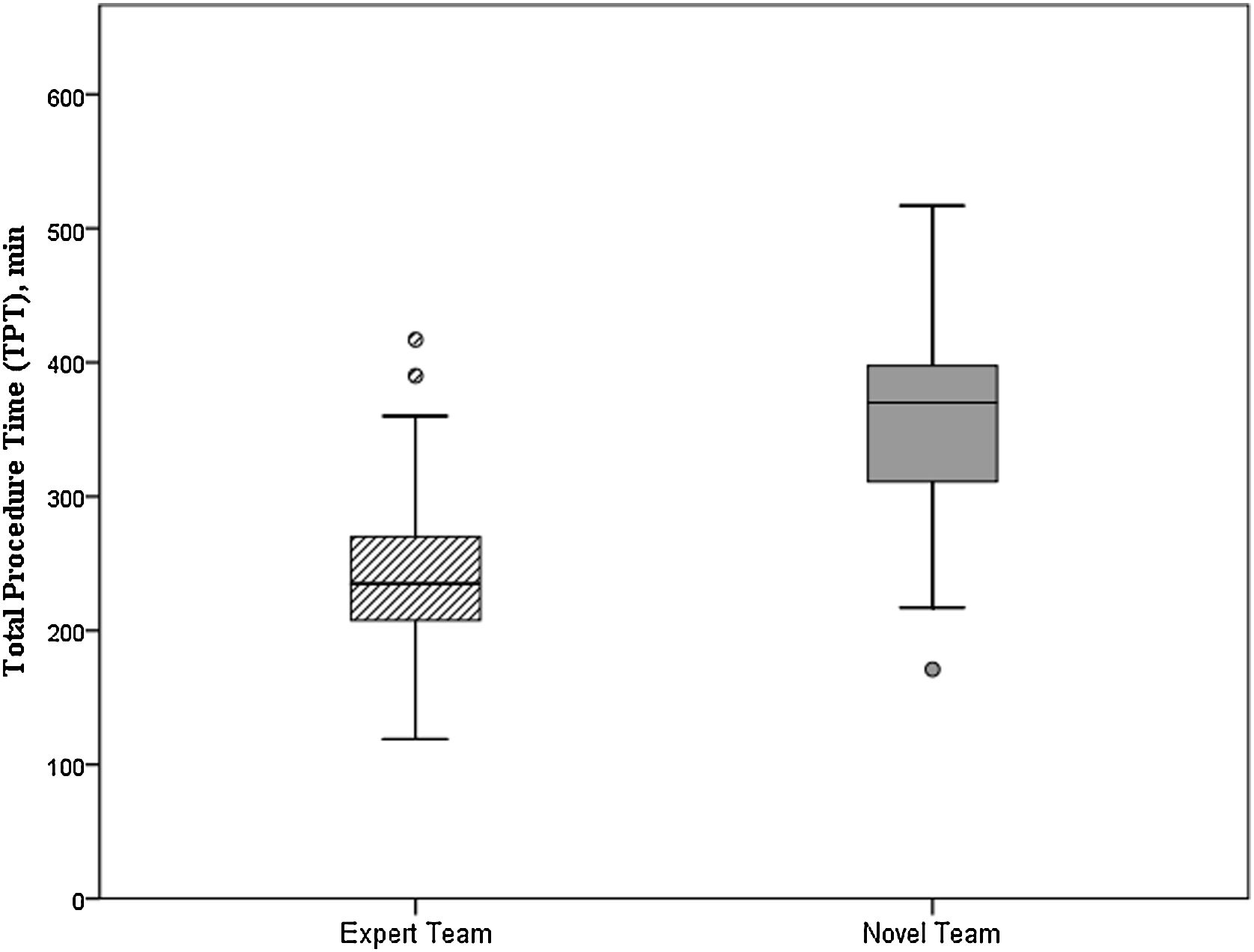
However, a significant difference was observed in the total procedure time (TPT) per case between the 2 groups in the overall analysis of all patients, with 235 min in the expert center and 370 min in the novel center (P < 0.001) (Fig. 3).
Overall morbidity was observed in 43 (45.3%) patients treated by the expert team and 38 (38%) patients treated by the novel team (P = 0.304). In terms of severe complications (Clavien–Dindo grades >IIIB), 10% of severe complications were observed in both groups. Furthermore, no statistically significant differences were observed in other outcomes, such as length of hospital stay, reoperation rate, anastomotic leakage, and readmission rate.
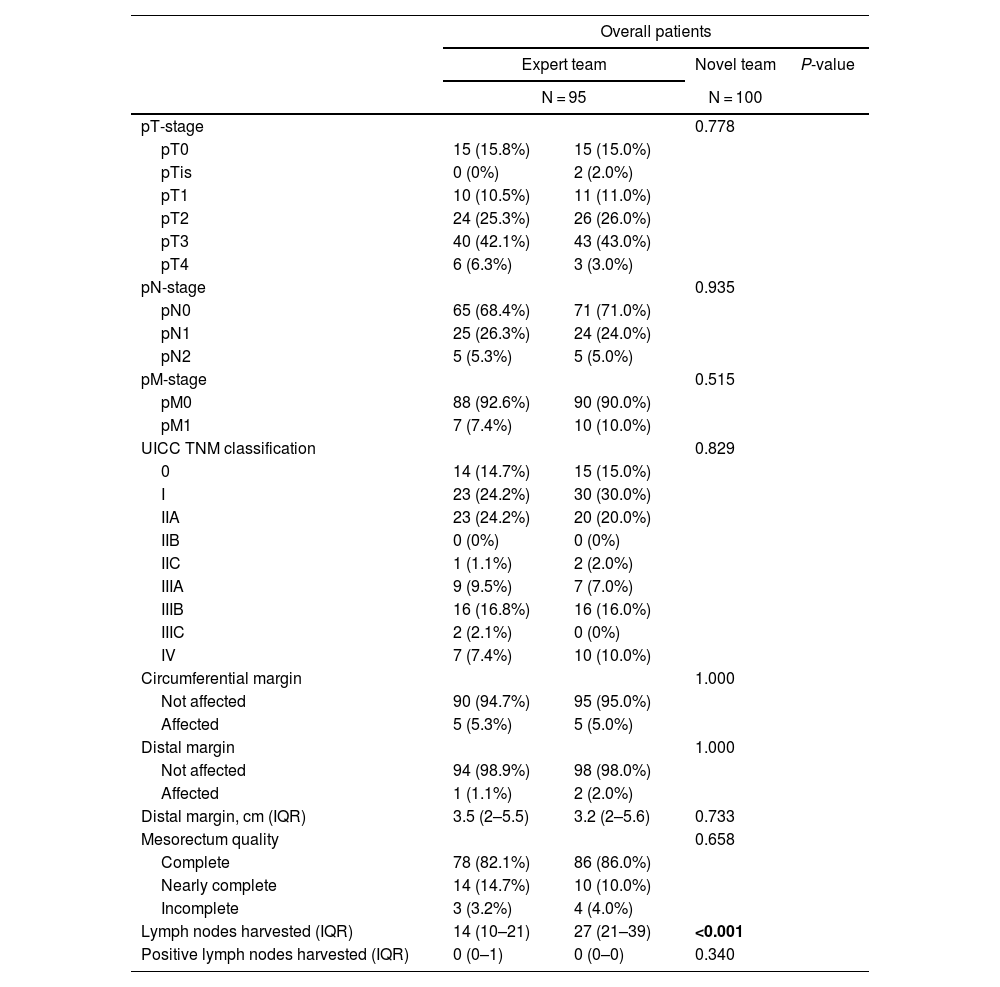
Comparison of pathological outcomesThe rates of circumferential margins affected in both teams were 5% (P = 1.000). Incomplete mesorectal quality was observed in 3.2% of patients treated by the expert team and 4.2% treated by the novice team, without showing statistically significant differences between groups. The only differences were found in the number of collected lymph nodes, with the novel center yielding a greater number of harvested lymph nodes (P < 0.001) (Table 3).
Pathological results.
| Overall patients | ||||
|---|---|---|---|---|
| Expert team | Novel team | P-value | ||
| N = 95 | N = 100 | |||
| pT-stage | 0.778 | |||
| pT0 | 15 (15.8%) | 15 (15.0%) | ||
| pTis | 0 (0%) | 2 (2.0%) | ||
| pT1 | 10 (10.5%) | 11 (11.0%) | ||
| pT2 | 24 (25.3%) | 26 (26.0%) | ||
| pT3 | 40 (42.1%) | 43 (43.0%) | ||
| pT4 | 6 (6.3%) | 3 (3.0%) | ||
| pN-stage | 0.935 | |||
| pN0 | 65 (68.4%) | 71 (71.0%) | ||
| pN1 | 25 (26.3%) | 24 (24.0%) | ||
| pN2 | 5 (5.3%) | 5 (5.0%) | ||
| pM-stage | 0.515 | |||
| pM0 | 88 (92.6%) | 90 (90.0%) | ||
| pM1 | 7 (7.4%) | 10 (10.0%) | ||
| UICC TNM classification | 0.829 | |||
| 0 | 14 (14.7%) | 15 (15.0%) | ||
| I | 23 (24.2%) | 30 (30.0%) | ||
| IIA | 23 (24.2%) | 20 (20.0%) | ||
| IIB | 0 (0%) | 0 (0%) | ||
| IIC | 1 (1.1%) | 2 (2.0%) | ||
| IIIA | 9 (9.5%) | 7 (7.0%) | ||
| IIIB | 16 (16.8%) | 16 (16.0%) | ||
| IIIC | 2 (2.1%) | 0 (0%) | ||
| IV | 7 (7.4%) | 10 (10.0%) | ||
| Circumferential margin | 1.000 | |||
| Not affected | 90 (94.7%) | 95 (95.0%) | ||
| Affected | 5 (5.3%) | 5 (5.0%) | ||
| Distal margin | 1.000 | |||
| Not affected | 94 (98.9%) | 98 (98.0%) | ||
| Affected | 1 (1.1%) | 2 (2.0%) | ||
| Distal margin, cm (IQR) | 3.5 (2–5.5) | 3.2 (2–5.6) | 0.733 | |
| Mesorectum quality | 0.658 | |||
| Complete | 78 (82.1%) | 86 (86.0%) | ||
| Nearly complete | 14 (14.7%) | 10 (10.0%) | ||
| Incomplete | 3 (3.2%) | 4 (4.0%) | ||
| Lymph nodes harvested (IQR) | 14 (10–21) | 27 (21–39) | <0.001 | |
| Positive lymph nodes harvested (IQR) | 0 (0–1) | 0 (0–0) | 0.340 | |
Abbreviations: IQR, interquartile range; pT, pathological tumor-stage; pN, pathological node-stage; pM, pathological metastases-stage; UICC TNM, Union for International Cancer Control TNM Classification; data are number (percentage) N (%) unless stated otherwise.
Bold P values indicate significance.
This study explored the importance of surgical team experience on the short-term outcomes of RAS in rectal cancer. The expert team performed more complex resections (low anterior resection) than the novice team and had a lower conversion rate to open surgery when compared to the novel team. The operative time was 135 min longer for the novel than the expert team. Both teams had comparable outcomes in terms of morbidity and quality of the pathology specimen.
To successfully implement robotic surgery, a motivated and dedicated robotic surgical team is necessary, along with additional support staff.15 Furthermore, the learning curve is substantial, not only for the surgeon but also for the entire team engaged in robotic surgery.15 Therefore, it is essential to have training programs specifically tailored to optimize teamwork, make workflow efficient and learn needs in order to ensure successful integration and optimal outcomes. In our research, both teams had accreditation in RAS before starting their robotics program at each hospital.
Araujo et al. published a systematic review of 32 studies looking at the clinical and oncological outcomes of robotic rectal cancer surgery.3 They noted a mean conversion rate of 0%–9.4% in this study.3,9,16 These results paralleled the findings in our study, where the conversion rate of the novel team was 8%, and 0% for the expert team. Our results support the use of robotic surgery as a viable approach option, even for technically challenging procedures such as low anterior resection. The low conversion rate of the expert team to open surgery further reinforces the strengths of a robotic approach when compared to the laparoscopic approach.
Total procedure time (TPT) is a metric used to evaluate the efficient use of operating rooms (OR) and is crucial for determining the adaptability and efficiency of a new surgical technique.17 Increased experience of the surgical team can lead to shorter setup and docking times,15 resulting in operative times similar to those of conventional laparoscopy. Our study found a significant difference in the TPT between experts and novel teams. Jiménez-Rodríguez et al. demonstrated a progressive decrease in operative time and robotic time as surgeons gained experience.18,19 Other studies by D’Annibale et al. and other author’s showed similar findings.20–23 With increased experience and proper port placement, the robotic operating time can be further reduced, as observed in the expert team with shorter TPT. Although a longer operative time is still a common argument against robotic TME, our study showed that this time was reduced by the surgical team experience, even in instances where older technology was used (Si vs Xi).
In contrast, the expert center had a low complication rate despite treating more complex cases, whereas the novice center did not experience increased complications during the implementation phase. Unlike the adoption of other techniques, where initial cases are often associated with high morbidity and mortality, resulting in severe consequences, the use of robotic surgery does not pose such risks,18,19 indicating the safety of robot-assisted surgery (RAS) in rectal cancer procedures.
Both surgical teams showed acceptable oncological outcomes in terms of margin and mesorectal quality. Some studies have reported a higher rate of complete mesorectal resection in RAS,24,25 but further research is required to confirm these findings. Reviews of the available evidence suggest that there is no significant difference in lymph node retrieval between RAS and other surgical approaches.26,27 However, our study found differences in lymph node harvest. It is important to note that the number of reported lymph nodes can vary depending on the pathologist, although there were no differences in the number of affected lymph nodes harvested between the surgical teams.
The retrospective cohort design of this study, which involved a comparison of surgical teams with varying levels of experience and technology, is a key limitation. Furthermore, our evaluation of the total procedure time, which encompassed draping, docking, and undocking times, may have obscured the definition of the institutional learning curve owing to the diverse robotic platforms used. To gain a more refined understanding of the learning curve, separate analyses of docking and console times might have been beneficial. Despite these limitations, our study offers valuable insights into the impact of team experience and technology on surgical outcomes of robotic rectal cancer surgery. Further research is necessary to optimize robotic surgical approaches and improve patient care.
ConclusionsExpert surgical teams exhibit superior performance in terms of reduced operative time and low conversion rates, even in complex procedures, when compared to novice teams. However, morbidity rates and pathological outcomes were found to be comparable between the 2 groups. These findings suggest that robot-assisted surgery, when performed by surgeons possessing substantial surgical expertise, yields optimal outcomes in rectal cancer cases.
CRediT authorship contribution statementErnesto Barzola: study conception and design, literature review, acquisition of data, data analysis and interpretation, drafting of the manuscript, and critical revision and final approval of the manuscript.
Pere Planellas: study conception and design, literature review, acquisition of data, data analysis and interpretation, drafting of the manuscript, critical review and final approval of the manuscript.
Lidia Cornejo: data analysis and interpretation, critical review and final approval of the manuscript.
Nuria Gómez: data analysis and interpretation, critical review and final approval of the manuscript.
David Julià: data analysis and interpretation, critical review and final approval of the manuscript.
Kelly-Ann Bobb: analysis and interpretation of data, critical review and final approval of the manuscript.
Ramon Farrés: study concept and design, literature review, data analysis and interpretation, critical review and final approval of the manuscript.
Marcos Gómez: study concept and design, literature review, data analysis and interpretation, critical review and final approval of the manuscript.
All authors agree to be held accountable for all aspects of this paper.
Ethics approvalThis study was approved by the hospital’s ethics committee and was carried out in accordance with the 1964 Helsinki Declaration and its later amendments. (N °2023.006).
Informed consentAll patients provided written informed consent to be able to collect data and authorize the analysis of results.
FundingThe study was funded by the department's research budget; there is no specific funding to declare.
We thank the collaboration of the researchers who have also contributed to this work.
The datasets generated during and/or analysed during the current study are available from the corresponding author on reasonable request. All data generated or analysed during this study are included in this published article.