



metricas

Cirugía Española

Sugerencias
Cirugía Española Laparoscopic approach for rectal cancer surgery: triumph of reason or necessity ...
Información de la revista
Vol. 103. Núm. 5.
Páginas 255-334 (Mayo 2025)
Visitas
736
Vol. 103. Núm. 5.
Páginas 255-334 (Mayo 2025)
Special article
Acceso a texto completo

Laparoscopic approach for rectal cancer surgery: triumph of reason or necessity of evolution?

Abordaje laparoscópico para la cirugía del Cáncer de Recto: ¿triunfo de la razón o necesidad de la evolución?
Visitas
736
Alessio Lucarinia,b, Andrea Martina Guidaa,c, Yves Panisa,
Autor para correspondencia
yves.panis@gmail.com

Corresponding author.
a Colorectal Surgery Center, Groupe Hospitalier Privé Ambroise Paré-Hartmann, Neuilly sur Seine, France
b Surgical and Medical Department of Translational Medicine, Sant'Andrea Hospital, Sapienza University of Rome, Via di Grottarossa, 1035, 00189 Rome, Italy
c Department of Surgical Science, University Tor Vergata, Viale Oxford 81, 00133, Rome, Italy
Este artículo ha recibido
Información del artículo
Resumen
Texto completo
Bibliografía
Descargar PDF
Estadísticas
Tablas (1)
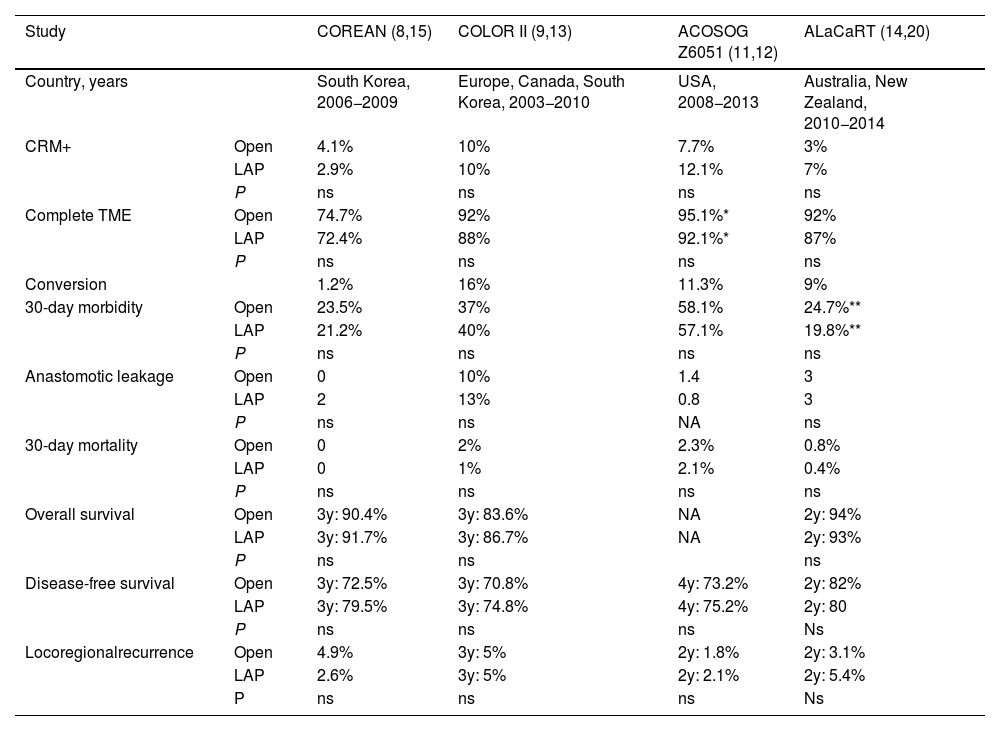
Table 1. Clinical trials comparing laparoscopic versus open approaches for TME with long-term follow-up.
Tablas
Suplemento especial
Este artículo forma parte de:
Tratamiento del cáncer rectal: El futuro ya es presente

Editado por: Dr. Calos Cerdán
Cirugía General y Aparato Digestivo. Unidad de Cirugía Digestiva. Hospital Universitario de la Princesa. Madrid
Dr. Matteo Frasson
Cirugía general. Hospital Universitario y Politécnico La Fe. Valencia

Última actualización: Enero 2026

Más datos
Abstract

The role of laparoscopy in rectal cancer surgery has evolved considerably since the early 2000s. Initial randomized trials, such as COLOR II and COREAN, indicated that laparoscopic approaches offered similar pathological outcomes with better postoperative recovery than open surgery. In contrast, trials like ACOSOG Z6051 and ALaCaRT suggested noninferiority could not be established. Variability in trial outcomes, focusing on either disease-free survival or pathological measures, initially hindered consensus. Long-term analyses have shown no significant difference in disease-free survival between laparoscopic and open approaches. Meta-analyses have reinforced the benefits of laparoscopic surgery, with reduced mortality and similar oncologic effectiveness to open surgery. However, new techniques like transanal TME (TaTME) and robotic approaches have introduced alternatives, though each presents unique challenges, from recurrence rates in TaTME to costs in robotics. While laparoscopy remains the preferred method due to accessibility and outcomes, robotic surgery is expected to gain traction in high-volume centers.

Keywords:
Rectal cancer
Colorectal surgery
Laparoscopy
Minimally invasive surgery
Resumen

El papel de la laparoscopia en la cirugía del cáncer de recto ha evolucionado considerablemente desde principios de la década de 2000. Los ensayos clínicos iniciales, como COLOR II y COREAN, indicaron que el abordaje laparoscópico ofrecía resultados patológicos similares con una mejor recuperación posoperatoria que la cirugía abierta. Por el contrario, ensayos como ACOSOG Z6051 y ALaCaRT sugirieron que no se podía establecer la no inferioridad. La variabilidad en los resultados de los ensayos, centrados en la supervivencia libre de enfermedad o en medidas patológicas, inicialmente obstaculizó la aceptación de la laparoscopia en cirugía rectal. Los análisis a largo plazo no han mostrado diferencias significativas en la supervivencia libre de enfermedad entre los abordajes laparoscópicos y abiertos. Los metanálisis han reforzado los beneficios de la cirugía laparoscópica, con una mortalidad reducida y una eficacia oncológica similar a la de la cirugía abierta. Sin embargo, nuevas técnicas como Transanal TME (TaTME) y los enfoques robóticos han introducido alternativas, aunque cada una presenta desafíos únicos, desde las tasas de recurrencia en TaTME hasta los costos en robótica. Si bien la laparoscopia sigue actualmente siendo el método preferido en cirugía rectal, debido a su accesibilidad y resultados, se espera que la cirugía robótica gane terreno en los centros con mayor volumen.

Palabras clave:
Cáncer de recto
Cirugía colorrectal
Laparoscopia
Cirugía mínimamente invasiva
Texto completo

The role of laparoscopy in colonic surgery gained interest in the early 2000s due to its short- and long-term advantages compared to open surgery, as proven by several randomized controlled trials (RCT) and meta-analysis.1,2 When it comes to rectal cancer, the consensus over the years was not straightforward, mainly due to the technical and anatomical constraints that rectal resection requires. Differently from colonic cancer, the outcome after treatment of rectal cancer is an intersection of neo- and adjuvant oncologic treatment, surgical resection, tumor characteristics and functional outcome.3–7 Different RCT comparing open and laparoscopic approaches were developed in the first decade of the 2000s focusing on rectal cancer approach, the most famous being the COLOR II, ALaCaRT, ACOSOG Z6051 and COREAN,8–11 reporting mixed results. The early results of these trials12–15 were discordant: the COLOR II and the COREAN trials concluded that the use of laparoscopic surgery for rectal cancer has similar pathological outcomes and improved postoperative recovery; on the other hand, the ACOSOG Z6051 and the ALaCaRT concluded that noninferiority of laparoscopic surgery was not established. It must be said that the primary outcome of the first 2 trials was 3-year disease-free survival (DFS), while the other 2 used a composite outcome of circumferential, radial margin, and total mesorectal excision (TME) quality. The different outcomes (oncological versus pathological) have limited the power and the penetrance of the American and Australian trials in the surgical oncologist community.

Furthermore, as time passed, the long-term results began to be published: all studies indicated no difference in 2- or 3-year disease-free survival (Table 1).8–11

Table 1.

Clinical trials comparing laparoscopic versus open approaches for TME with long-term follow-up.

Study    COREAN (8,15)  COLOR II (9,13)  ACOSOG Z6051 (11,12)  ALaCaRT (14,20) 
Country, years    South Korea, 2006−2009  Europe, Canada, South Korea, 2003−2010  USA, 2008−2013  Australia, New Zealand, 2010−2014 
CRM+Open  4.1%  10%  7.7%  3% 
LAP  2.9%  10%  12.1%  7% 
P  ns  ns  ns  ns 
Complete TMEOpen  74.7%  92%  95.1%*  92% 
LAP  72.4%  88%  92.1%*  87% 
P  ns  ns  ns  ns 
Conversion    1.2%  16%  11.3%  9% 
30-day morbidityOpen  23.5%  37%  58.1%  24.7%** 
LAP  21.2%  40%  57.1%  19.8%** 
P  ns  ns  ns  ns 
Anastomotic leakageOpen  10%  1.4 
LAP  13%  0.8 
P  ns  ns  NA  ns 
30-day mortalityOpen  2%  2.3%  0.8% 
LAP  1%  2.1%  0.4% 
P  ns  ns  ns  ns 
Overall survivalOpen  3y: 90.4%  3y: 83.6%  NA  2y: 94% 
LAP  3y: 91.7%  3y: 86.7%  NA  2y: 93% 
P  ns  ns    ns 
Disease-free survivalOpen  3y: 72.5%  3y: 70.8%  4y: 73.2%  2y: 82% 
LAP  3y: 79.5%  3y: 74.8%  4y: 75.2%  2y: 80 
P  ns  ns  ns  Ns 
LocoregionalrecurrenceOpen  4.9%  3y: 5%  2y: 1.8%  2y: 3.1% 
LAP  2.6%  3y: 5%  2y: 2.1%  2y: 5.4% 
ns  ns  ns  Ns 

*Complete and nearly complete; **: only Clavien-Dindo 3-4 LAP: laparoscopy; NA: not available; ns: non-significant tab.

Recently, the short-term results of a new trial from China were published in JAMA Oncology,16 confirming the pathological outcomes of the previous trial. It must be said that the main outcome of this new trial was 3-year DFS, so the long-term results are being awaited before any conclusions can be drawn.

The different design and follow-up data make it impossible to meta-analyze these results without bias. A meta-analysis from 2014 by Arezzo et al17 that included 9 RCT and 19 non-RCT with a total of 10 861 patients (4472 laparoscopic, 6362 open) concluded that “the short-term benefit and oncological adequacy of laparoscopic rectal resection appear to be equivalent to open surgery”. However, there was an elevated risk of bias due to the nature of the studies included, as well as the high heterogeneity amongst studies. Another meta-analysis published in 2021 by Creavin et al.18 focused on oncological outcomes and included 12 RCT with a total of 3744 patients (2133 laparoscopic, 1611 open), concluding that “Well performed surgery (laparoscopic or open) achieves excellent oncological outcomes, with very little difference between the two modalities”.

Concerning operative mortality, although similar results were observed between open and laparoscopic approaches, due to the relatively small number of included patients in each randomized study, some national surveys including our study from France19 suggested that operative mortality is significantly lower, representing another advantage of laparoscopy over open surgery in rectal cancer surgery.

The latest meta-analysis in the literature20 published on JAMA Network Open in 2022 includes 10 RCT with a total of 3709 patients. The authors conclude that “A similar DFS but significantly better OS were found for patients who have undergone laparoscopic surgery compared with open surgery for rectal cancer. These findings address concerns regarding the effectiveness of laparoscopic surgery and support the routine use of laparoscopic surgery for patients with rectal cancer,” giving more strength and evidence to previous studies and probably closing the debate on the advantages of laparoscopy when performing TME.

Given the results of these trials with long-term follow-up and the subsequent meta-analysis, there is no longer any reason to debate whether to choose an open approach over a minimally invasive technique for rectal cancer (Table 1).

Laparoscopy versus other techniques

However, while the open approach is no longer a preferred option for rectal cancer management —except in specific cases, such as patients with multiple previous laparotomies or T4 tumors invading the bladder and/or the prostate— laparoscopic surgery now faces competition from transanal TME (TaTME) and the robotic approach.

TaTME

Some authors suggest using the TaTME technique to overcome the technical difficulties of a narrow pelvis or voluminous low-laying tumors, especially in male and obese subjects. The addition of this transanal technique to a laparoscopic transabdominal approach seemed to offer a lower rate of open conversion, easier mesorectal dissection, and a higher rate of negative CRM with a bottom-up approach. However, after a period of enthusiasm for this new technique, where good or even better results were reported by non-randomized studies from expert centers, as suggested in our recent meta-analysis,21 the bad results reported nationally in Norway and Netherlands, with significantly higher rates of local recurrences than after the laparoscopic approach, raised some question about the potential risk of the procedure.

The Norwegian moratorium, published in 2019, found an early recurrence rate of 9.5% after a median of 11 months. These recurrences had a peculiar pattern (rapid, multifocal growth in the pelvic cavity and sidewalls), different from what is typically observed after conventional surgery.22 Data from the Norwegian Colorectal Cancer Registry, however, revealed only a 3.4% rate of local recurrence following conventional surgery.

Over the years, most studies validating TaTME have focused on surgical and pathological outcomes,23–26 such as specimen quality, mesorectal integrity, circumferential resection margin (CRM) involvement, etc. These pathological outcomes do not reflect, or perhaps only partially reflect, the oncological adequacy of this technique, which is still unclear. Likewise from Norway, a 5-year follow-up of patients undergoing open, laparoscopic and transanal TME has been recently published, reporting a mean overall survival (OS) of 91.9 months (95% C.I. 87.4–96.4) in the Laparoscopic TME cohort, 88.2 months (95% C.I. 82.5–93.9) in the Open TME cohort, and 73.5 months (67.3–79.7) in the TaTME cohort (P = .174).27 Although statistical significance has not been reached, a detrimental effect of TaTME on 5-year OS might be easily noted.

Another significant challenge with TaTME is its learning curve, which is estimated to require around 50–70 cases to master.28,29 Considering the strict indications of TaTME (low rectal cancer, narrow pelvis, high BMI, etc), this volume of cases is difficult to reach in a short period, even in a very high-volume center; therefore, the learning curve may be hampered by this obstacle. Moreover, a pattern of urological complications (almost unknown in trans-abdominal low rectal resections) has been observed even in the hands of surgeons with high expertise in TaTME.30

The use of TaTME for fashioning Transanal Transection and Single-Stapled Anastomosis (TTSS), as recently suggested,31 is not an argument because TTSS can be done whatever the technique chosen for TME (ie, open, laparoscopic, robotic, or TaTME).

Today, even if some surgeons continue to use TaTME for rectal cancer surgery, the real oncological adequateness of this technique remains to be determined.

Robotic TME

Concerning the robotic approach, another paper in the same issue of this journal will discuss the possible benefits over the laparoscopic approach; hence, it will not be discussed extensively in this paper.

The robotic approach undoubtedly offers several advantages, including enhanced surgeon comfort at the operating console, a smoother learning curve, and a lower conversion rate to open procedures, as demonstrated by the first trial on robotic rectal resection, the ROLARR trial.32

When it comes to oncological outcomes (such as OS or DFS), we currently have no high-quality data to state that the robotic approach has a clear benefit over other techniques. To date, the only trial that aims to assess the oncological adequacy of robotic platforms is the REAL trial,33 whose primary outcome is 3-year locoregional recurrence, but the long-term results have not yet been published.

When it comes to pathological outcomes (usually used as a derivate of oncological adequateness) such as CRM, R0 resection, and mesorectal integrity, a possible (yet small) benefit has been demonstrated by the RCT available.32–34

The future long-term oncological results from these trials will establish whether the different approach provides any sort of advantage to patient survival.

A new wave of publications on the robotic single-port technique rolled out in late 2023 with the advent of the robotic platform DaVinci Single Port (Da Vinci SP®, Sunnyvale, CA, USA).35,36 This new platform may overcome the technical constraints of single-port laparoscopy by incorporating EndoWrist® technology in a single-port robotic access, resolving the problem of triangulation present with the previous technology and reducing the aesthetical burden of this procedure.

Technical evolutionIndocyanine green dye

Concerning the evolution of laparoscopy in rectal cancer management, indocyanine green (ICG) dye is now routinely used to try to reduce anastomotic leaks. Nowadays, most camera systems come with immunofluorescence optics technology, which allows angiography to be performed using ICG to assess the vascularization of the anastomotic complex. The use of ICG reduces the relative risk of AL of 4.5%, as highlighted in our recent meta-analysis.37

This unique result is only applicable to rectal cancer surgery. In a recent paper published in 2024, no benefits of ICG have been demonstrated in colon surgery.38

2D versus 3D

A few years ago, the implementation of 3D video instead of 2D was also proposed for laparoscopy. In 2019, a meta-analysis focused specifically on 3D vs 2D rectal resection39 included only 4 studies. No statistical differences were found for postoperative complications, conversion rate (3D was slightly favored), or harvested lymph nodes (2D was slightly favored). A significant difference in favor of 3D was found for CRM (3.5% vs 11.3%; odds ratio 0.28; P .02), operative time (weighted mean difference [WMD] 11.33; P < .00001) and intraoperative blood loss (WMD: 7.09; P = .02). Despite the promising results, 3D surgery has not spread worldwide due to several constraints, such as the need for 3D lenses, continuous focusing/defocusing when moving the eyes across the operating room (especially for the scrub nurse), need for exclusive equipment for 3D alone, and the declining interest of the manufacturer after the first commercial expansion in the early 2010s due to the “Avatar effect”.40

Single port

The laparoscopic single-port technique gained a lot of interest in the early 2010s. This technique promised to reduce the incisional wound, leading to better aesthetic outcomes, fewer adherences to the abdominal wall, less pain, and a lower incidence of ventral hernias. Despite these promising results, which have been highlighted by different retrospective studies,41–43 RCT44,45 and meta-analysis,46 interest has almost been completely lost in single-port surgery over the years, mainly due to the technical difficulties and constraints of this procedure. For the Miles procedure, a single-port approach on the site of the definitive colostomy has been proposed to minimize the wound to nearly zero.44 The RCT by Bulut et al.45 concluded that, “Although C-reactive protein levels were lower at some time-points, results of the present randomized pilot study suggest that the trauma-induced inflammatory response of single-port operations may be similar to the trauma-induced inflammatory response of conventional laparoscopic surgery.”

Potential challenges

Rectal cancer requires dedicated management, which is complex and not always straightforward. It requires careful preoperative staging and multidisciplinary (MDT) management to individualize treatment options.4,47,48 The anatomical constraints inside the pelvis make it a technically challenging operation for surgeons. An association between hospital volume and postoperative mortality remains widely debated, with a range of results reported.49,50 The rationale for high-volume centers is that high volume brings more standardization, compliance with guidelines, and increased surgeon expertise.51 Some studies, however, suggest that the individual surgeon’s case volume is more important than the overall hospital volume.52,53

Moreover, laparoscopic TME is considered one of the most challenging procedures in colorectal surgery. The learning curve for this procedure is rarely completed during the residency program; therefore, it is burdened by a high range of pitfalls that might be overcome with a dedicated coaching protocol specific to TME.54

Despite the major benefits of laparoscopic surgery for rectal cancer over the open approach, the real-world implementation of this technique is not as widespread as it may seem. A national survey from Italy by Elmore et al55 demonstrated that only one out of 4 (23.5%) rectal cancer procedures is approached with a minimally invasive technique.

A similar study of a national database from the United States found an implementation rate for laparoscopy of ∼45% in colorectal surgery.56 The real adoption rate for low anterior resection is not specified, but it is assumed to be consistent with the findings of the Italian study.

In conclusion, we can affirm that laparoscopy remains the preferred approach for rectal cancer management over the open approach, as it offers equivalent oncologic outcomes but improved postoperative results. In coming years, laparoscopy is likely to remain the preferred approach in most hospitals due to the higher cost of robotic surgery. However, there is no doubt that, especially in high-volume medical centers and with the development of more affordable robotic systems, the robotic approach will soon take a predominant position in rectal cancer surgery.

CRediT authorship contribution statement

Conceptualization Y.P.; methodology Y.P.; software A.L.; validation A.M.G.; formal analysis A.M.G. and A.L; execution A.L; acquisition of data A.M.G.; data curation A.L. and A.M.G.; writing—original draft preparation A.L.; writing—review and editing Y.P.; supervision Y.P.

All authors have read and agreed to the published version of the manuscript.

Funding

No funding has been received for the preparation of this manuscript.

References
[1]
A.M. Lacy, J.C. García-Valdecasas, S. Delgado, A. Castells, P. Taurá, J.M. Piqué, et al.
Laparoscopy-assisted colectomy versus open colectomy for treatment of non-metastatic colon cancer: a randomised trial.
Lancet., 359 (2002), pp. 2224-2229
[2]
M. Theophilus, C. Platell, K. Spilsbury.
Long-term survival following laparoscopic and open colectomy for colon cancer: a meta-analysis of randomized controlled trials.
Colorectal Dis., 16 (2014),
[3]
E.M. Muttillo, A. La Franca, A. Coppola, F.S. Li Causi, M. Checchelani, A. Ceccacci, et al.
Low Anterior Resection Syndrome (LARS) after surgery for rectal cancer: an inevitable price to pay for survival, or a preventable complication?.
J Clin Med., 12 (2023), pp. 5962
[4]
A. Lucarini, G.M. Garbarino, P. Orlandi, E. Garofalo, L. Bragaglia, G.G. Laracca, et al.
From “Cure” to “Care”: the role of the multidisciplinary team on colorectal cancer patients’ satisfaction and oncological outcomes.
J Multidiscip Healthc., 15 (2022), pp. 1415-1426
[5]
E. Hain, G. Manceau, L. Maggiori, C. Mongin, J. Prost à laDenise, et al.
Bowel dysfunction after anastomotic leakage in laparoscopic sphincter-saving operative intervention for rectal cancer: a case-matched study in 46 patients using the Low Anterior Resection Score.
Surgery., 161 (2017), pp. 1028-1039
[6]
G. Argilés, J. Tabernero, R. Labianca, D. Hochhauser, R. Salazar, T. Iveson, et al.
Localised colon cancer: ESMO Clinical Practice Guidelines for diagnosis, treatment and follow-up†.
Annals of Oncology., 31 (2020), pp. 1291-1305
[7]
E. Hain, L. Maggiori, G. Manceau, C. Mongin, et al.
Oncological impact of anastomotic leakage after laparoscopic mesorectal excision.
Br J Surg., 104 (2017), pp. 288-295
[8]
S.Y. Jeong, J.W. Park, B.H. Nam, S. Kim, S.B. Kang, S.B. Lim, et al.
Open versus laparoscopic surgery for mid-rectal or low-rectal cancer after neoadjuvant chemoradiotherapy (COREAN trial): survival outcomes of an open-label, non-inferiority, randomised controlled trial.
Lancet Oncol., 15 (2014), pp. 767-774
[9]
H.J. Bonjer, C.L. Deijen, G.A. Abis, M.A. Cuesta, M.H.G.M. van der Pas, E.S.M. de Lange-de Klerk, et al.
A randomized trial of laparoscopic versus open surgery for rectal cancer.
[10]
A.R.L. Stevenson, M.J. Solomon, C.S.B. Brown, J.W. Lumley, P. Hewett, A.D. Clouston, et al.
Disease-free Survival and local recurrence after laparoscopic-assisted resection or open resection for rectal cancer: the Australasian laparoscopic cancer of the rectum randomized clinical trial.
Ann Surg., 269 (2019), pp. 596-602
[11]
J. Fleshman, M.E. Branda, D.J. Sargent, A.M. Boller, V.V. George, M.A. Abbas, et al.
Disease-free survival and local recurrence for laparoscopic resection compared with open resection of stage II to III rectal cancer: follow-up results of the ACOSOG Z6051 randomized controlled trial.
Ann Surg., 269 (2019), pp. 589-595
[12]
J. Fleshman, M. Branda, D.J. Sargent, A.M. Boller, V. George, M. Abbas, et al.
Effect of laparoscopic-assisted resection vs open resection of stage II or III rectal cancer on pathologic outcomes: the ACOSOG Z6051 randomized clinical trial.
JAMA., 314 (2015), pp. 1346-1355
[13]
M.H.G.M. van der Pas, E. Haglind, M.A. Cuesta, A. Fürst, A.M. Lacy, W.C.J. Hop, et al.
Laparoscopic versus open surgery for rectal cancer (COLOR II): short-term outcomes of a randomised, phase 3 trial.
Lancet Oncol., 14 (2013), pp. 210-218
[14]
A.R.L. Stevenson, M.J. Solomon, J.W. Lumley, P. Hewett, A.D. Clouston, V.J. Gebski, et al.
Effect of laparoscopic-assisted resection vs open resection on pathological outcomes in rectal cancer: the ALaCaRT randomized clinical trial.
JAMA., 314 (2015), pp. 1356-1363
[15]
S.B. Kang, D.W. Kim, J.W. Park, H.S. Choi, D.Y. Kim, H.J. Chang, et al.
Open versus laparoscopic surgery for mid or low rectal cancer after neoadjuvant chemoradiotherapy (COREAN trial): short-term outcomes of an open-label randomised controlled trial.
Lancet Oncol., 11 (2010), pp. 637-682
[16]
W.Z. Jiang, J.M. Xu, Xing J. Di, H.Z. Qiu, Z.Q. Wang, L. Kang, et al.
Short-term outcomes of laparoscopy-assisted vs open surgery for patients with low rectal cancer: the LASRE randomized clinical trial.
JAMA Oncol., 8 (2022), pp. 1607-1615
[17]
A. Arezzo, R. Passera, A. Salvai, S. Arolfo, M.E. Allaix, G. Schwarzer, et al.
Laparoscopy for rectal cancer is oncologically adequate: a systematic review and meta-analysis of the literature.
Surg Endosc., 29 (2015), pp. 334-348
[18]
B. Creavin, M.E. Kelly, J. Ryan, O.K. Ryan, D.C. Winter.
Oncological outcomes of laparoscopic versus open rectal cancer resections: meta-analysis of randomized clinical trials.
Br J Surg [Internet], 108 (2021), pp. 469-476
[19]
Y. Panis, L. Maggiori, G. Caranhac, F. Bretagnol, E. Vicaut.
Mortality after colorectal cancer surgery: a French survey of more than 84,000 patients.
Ann Surg., 254 (2011), pp. 738-743
[20]
M. Kong, H. Chen, K. Shan, H. Sheng, L. Li.
Comparison of survival among adults with rectal cancer who have undergone laparoscopic vs open surgery: a meta-analysis.
JAMA Netw Open., 5 (2022),
[21]
M. Aubert, D. Mege, Y. Panis.
Total mesorectal excision for low and middle rectal cancer: laparoscopic versus transanal approach—a meta-analysis.
Surg Endosc., 34 (2020), pp. 3908-3919
[22]
S.G. Larsen, F. Pfeffer, H. Kørner, Group on behalf of the NCC.
Norwegian moratorium on transanal total mesorectal excision.
Br J Surg [Internet], 106 (2019), pp. 1120-1121
[23]
H. Liu, Z. Zeng, H. Zhang, M. Wu, D. Ma, Q. Wang, et al.
Morbidity, mortality, and pathologic outcomes of transanal versus laparoscopic total mesorectal excision for rectal cancer short-term outcomes from a multicenter randomized controlled trial.
Ann Surg [Internet], 277 (2023), pp. 1
[24]
B. Ma, P. Gao, Y. Song, C. Zhang, C. Zhang, L. Wang, et al.
Transanal total mesorectal excision (taTME) for rectal cancer: a systematic review and meta-analysis of oncological and perioperative outcomes compared with laparoscopic total mesorectal excision.
BMC Cancer [Internet], 16 (2016),
[25]
M. Penna, R. Hompes, S. Arnold, G. Wynn, R. Austin, J. Warusavitarne, et al.
Incidence and risk factors for anastomotic failure in 1594 patients treated by transanal total mesorectal excision: results from the international TaTME registry.
[26]
C.L. Deijen, S. Velthuis, A. Tsai, S. Mavroveli, E.S.M. de Lange-de Klerk, C. Sietses, et al.
COLOR III: a multicentre randomised clinical trial comparing transanal TME versus laparoscopic TME for mid and low rectal cancer.
[27]
R.N. Riis, M.H. Riis, J. Ratė, Š Benth, K.M. Augestad, R.N. Riis.
Beyond the transanal total mesorectal excision moratorium: local and distant recurrence among patients operated for low rectal tumours-5-year follow-up from a Norwegian University Hospital.
[28]
R. Persiani, A. Agnes, F. Belia, D. D’Ugo, A. Biondi.
The learning curve of TaTME for mid-low rectal cancer: a comprehensive analysis from a five-year institutional experience.
[29]
S.E. Van Oostendorp, H.J. Belgers, J.C. Hol, P.G. Doornebosch, E.J.T. Belt, S.J. Oosterling, et al.
The learning curve of transanal total mesorectal excision for rectal cancer is associated with local recurrence: results from a multicentre external audit.
Colorectal Dis [Internet], 23 (2021), pp. 2020
[30]
P. Sylla, J.J. Knol, A.P. D’andrea, R.O. Perez, S.B. Atallah, M. Penna, et al.
Urethral injury and other urologic injuries during transanal total mesorectal excision: an international collaborative study.
Ann Surg., 274 (2021), pp. E115-25
[31]
A. Spinelli, C. Foppa, M. Carvello, M. Sacchi, F. De Lucia, G. Clerico, et al.
Transanal Transection and Single-Stapled Anastomosis (TTSS): a comparison of anastomotic leak rates with the double-stapled technique and with transanal total mesorectal excision (TaTME) for rectal cancer.
Eur J Surg Oncol., 47 (2021), pp. 3123-3129
[32]
D. Jayne, A. Pigazzi, H. Marshall, J. Croft, N. Corrigan, J. Copeland, et al.
Effect of robotic-assisted vs conventional laparoscopic surgery on risk of conversion to open laparotomy among patients undergoing resection for rectal cancer: the ROLARR randomized clinical trial.
JAMA., 318 (2017), pp. 1569-1580
[33]
Q. Feng, W. Yuan, T. Li, B. Tang, B. Jia, Y. Zhou, et al.
Robotic versus laparoscopic surgery for middle and low rectal cancer (REAL): short-term outcomes of a multicentre randomised controlled trial.
Lancet Gastroenterol Hepatol., 7 (2022), pp. 991-1004
[34]
J.S. Park, S.M. Lee, G.S. Choi, S.Y. Park, H.J. Kim, S.H. Song, et al.
Comparison of laparoscopic versus robot-assisted surgery for rectal cancers: the COLRAR randomized controlled trial.
Ann Surg., 278 (2023), pp. 31-38
[35]
K. Zhang, Z. Yuan, Y. Lu, L. Chen, C. Lu.
Totally robotic surgery for rectal cancer with the daVinci® single-port platform.
Br J Surg., 110 (2023), pp. 1890
[36]
H.J. Kim, G.S. Choi, S.H. Song, J.S. Park, S.Y. Park, S.M. Lee, et al.
Single-port robotic intersphincteric resection for the treatment of rectal cancer.
Surg Laparosc Endosc Percutan Tech., 33 (2023), pp. 249-255
[37]
A. Lucarini, A.M. Guida, M. Orville, Y. Panis.
Indocyanine green fluorescence angiography could reduce the risk of anastomotic leakage in rectal cancer surgery: a systematic review and meta-analysis of randomized controlled trials.
Colorectal Dis., 26 (2024), pp. 408-416
[38]
R.A. Faber, R.P.J. Meijer, D.H.M. Droogh, J.J. Jongbloed, O.D. Bijlstra, F. Boersma, et al.
Indocyanine green near-infrared fluorescence bowel perfusion assessment to prevent anastomotic leakage in minimally invasive colorectal surgery (AVOID): a multicentre, randomised, controlled, phase 3 trial.
Lancet Gastroenterol Hepatol [Internet], 9 (2024), pp. 924-934
[39]
L. Li, X. Gao, Y. Guo, Y. Luo, Y. Luo, X. Yang, et al.
Comparison of three-dimensional versus two-dimensional laparoscopic surgery for rectal cancer: a meta-analysis.
Int J Colorectal Dis., 34 (2019), pp. 1577-1583
[40]
Avatar: How James Cameron’s 3D film could change the face of cinema forever | Daily Mail Online.
[41]
I. Sourrouille, F. Dumont, D. Goéré, C. Honoré, D. Elias.
Resection of rectal cancer via an abdominal single-port access: short-term results and comparison with standard laparoscopy.
Dis Colon Rectum., 56 (2013), pp. 1203-1210
[42]
M. Tei, M. Wakasugi, H. Akamatsu.
Comparison of short-term surgical results of single-port and multi-port laparoscopic rectal resection for rectal cancer.
Am J Surg., 210 (2015), pp. 309-314
[43]
M. Tei, M. Otsuka, Y. Suzuki, K. Kishi, M. Tanemura, H. Akamatsu.
Safety and feasibility of single-port laparoscopic low anterior resection for upper rectal cancer.
Am J Surg., 216 (2018), pp. 1101-1106
[44]
J. Tang, J. Yang, Yang J. Song, Lai J. Xiong, Ye P. Cheng, X. Hua, et al.
Stoma-site approach single-port laparoscopic versus conventional multi-port laparoscopic Miles’s procedure for low rectal cancer: a prospective, randomized controlled trial.
Asian J Surg, 46 (2023),
[45]
O. Bulut, K.K. Aslak, K. Levic, C.B. Nielsen, E. Rømer, S. Sørensen, et al.
A randomized pilot study on single-port versus conventional laparoscopic rectal surgery: effects on postoperative pain and the stress response to surgery.
Tech Coloproctol., 19 (2015), pp. 11-22
[46]
M. Tei, T. Sueda, T. Matsumura, H. Furukawa, C. Koga, M. Wakasugi, et al.
Systematic review of single-port vs. multi-port surgery for rectal cancer.
Mol Clin Oncol., 14 (2021), pp. 1-6
[47]
R. Glynne-Jones, L. Wyrwicz, E. Tiret, G. Brown, C. Rödel, A. Cervantes, et al.
Rectal cancer: ESMO Clinical Practice Guidelines for diagnosis, treatment and follow-up.
Annals of Oncology., 28 (2017), pp. iv22-40
[48]
L. Lorenzon, R. De Luca, G. Santoro, D. Parini, D. Rega, A. Mellano, et al.
Pathologic stage of ypT0N+ rectal cancers following neo-adjuvant treatment: clinical interpretation of an orphan status.
Pathol Res Pract., 237 (2022),
[49]
L.H. Iversen, H. Harling, S. Laurberg, P. Wille-Jørgensen.
Influence of caseload and surgical speciality on outcome following surgery for colorectal cancer: a review of evidence. Part 1: short-term outcome.
[50]
F.H.W. Jonker, J.A.W. Hagemans, J.W.A. Burger, C. Verhoef, W.A.A. Borstlap, P.J. Tanis, et al.
The influence of hospital volume on long-term oncological outcome after rectal cancer surgery.
Int J Colorectal Dis [Internet], 32 (2017), pp. 1741-1747
[51]
N.A. Dundon, A.H. Al Ghazwi, M.G. Davey, W.P. Joyce.
Rectal cancer surgery: does low volume imply worse outcome-a single surgeon experience.
[52]
J.D.W. Choi, T. Shepherd, A. Cao, T. El-Khoury, N. Pathma-Nathan, J.W.T. Toh.
Is centralization for rectal cancer surgery necessary?.
Colorectal Dis., 26 (2024), pp. 1753-1757
[53]
W.C. Cirocco.
Rectal resection following neoadjuvant therapy in a Midwest community hospital setting: the case for standardization over centralization as the means to optimize rectal cancer outcomes in the United States.
[54]
I. Montroni, G. Mari, L. Boni, D. Maggioni, J. Crippa, E. Cocozza, et al.
Surgical coaching applied to laparoscopic TME for continuous professional development in rectal surgery: proof of concept.
[55]
U. Elmore, A. Vignali, R. Rosati, A. Valeri, G. Silecchia, M. Amisano, et al.
SICE national survey: current state on the adoption of laparoscopic approach to the treatment of colorectal disease in Italy.
[56]
D.S. Keller, T.R. de Paula, J. Qiu, R.P. Kiran.
The trends in adoption, outcomes, and costs of laparoscopic surgery for colorectal cancer in the elderly population.
J Gastrointestinal Surg., 25 (2021), pp. 766-774
Opciones de artículo
Herramientas
