

This study aimed to determine the time to normalisation of postoperative parathyroid hormone levels after successful parathyroid surgery and to analyse the pathophysiology of postoperative normocalcaemic hyperparathyroidism.
MethodAn observational retrospective study was conducted on a cohort of 186 patients who had undergone parathyroidectomy for primary hyperparathyroidism over a 5-year period. Demographic characteristics, surgical and histopathological data, bone densitometry (pre-and postoperative pharmacological treatment), creatinine plasma levels, and pre-and postoperative parathyroid hormone, calcium and vitamin D levels were recorded as predictive variables. The time to normalisation of the postoperative parathyroid hormone levels was recorded as the output variable. A univariate analysis was performed to investigate the factors related to the time to normalisation of parathyroid hormone levels.
ResultsThe final study sample was comprised of 176 patients, 46 of which (26.1%) had elevated postoperative parathyroid hormone levels and normocalcaemia. The median time to normalisation of the postoperative parathyroid hormone levels was 6 months. The cumulative probability of having normal parathyroid hormone levels 30 months after surgery was 89%. The time to normalisation was associated only with preoperative parathyroid hormone levels (P = .007; HR: 0.998). Vitamin D and creatinine levels were not associated with time to normalisation of parathyroid hormone levels (P = .744).
ConclusionsPersistently elevated postoperative parathyroid hormone levels with normocalcaemia may occur in one-quarter of patients after parathyroidectomy. Parathyroid hormone levels normalise in up to 90% of cases by 30 months. A high preoperative parathyroid hormone level is predictive of postoperative normocalcaemic hyperparathyroidism, and vitamin D deficiency does not seem to influence the pathogenic mechanism.
El objetivo del estudio fue determinar el tiempo hasta la normalización de los niveles postoperatorios de hormona paratiroidea después de una paratiroidectomía exitosa y analizar la fisiopatología del hiperparatiroidismo normocalcémico postoperatorio.
MétodosSe realizó un estudio observacional retrospectivo en una cohorte de 186 pacientes sometidos a paratiroidectomía por hiperparatiroidismo primario durante 5 años. Datos quirúrgicos, densitometría ósea, tratamiento farmacológico, niveles plasmáticos de creatinina; y niveles pre y postoperatorios de hormona paratiroidea, calcio y vitamina D se analizaron como variables predictivas. El tiempo hasta la normalización de los niveles de hormona paratiroidea postoperatoria se registró como variable principal, realizándose un análisis univariante para investigar los factores relacionados.
ResultadosLa muestra final del estudio incluyó 176 pacientes. De estos, 46 pacientes (26,1%) tenían niveles postoperatorios de hormona paratiroidea elevados y normocalcemia. La mediana del tiempo transcurrido hasta la normalización de los niveles de hormona paratiroidea fue de 6 meses. La probabilidad acumulada de tener niveles normales de hormona paratiroidea a los 30 meses fue del 89%. El tiempo hasta la normalización se asoció sólo con los niveles preoperatorios de hormona paratiroidea (p = 0,007; HR: 0,998). No se encontró asociación con los niveles plasmáticos de vitamina D ni de creatinina (p = 0,744).
ConclusionesUna cuarta parte de los pacientes intervenidos de paratiroidectomía pueden presentar elevación postoperatoria de la hormona paratiroidea con normocalcemia, normalizándose en el 90% de los casos a los 30 meses. Un nivel alto de hormona paratiroidea preoperatoria predice el hiperparatiroidismo normocalcémico postoperatorio. La deficiencia de vitamina D no parece influir en el mecanismo patogénico.
Primary hyperparathyroidism (P-HPT) is the most common cause of hypercalcaemia in outpatient settings.1,2 The elevation of serum calcium is due to the autonomic hyperproduction of parathyroid hormone (PTH). In classic hyperparathyroidism, both serum calcium and PTH levels are elevated. However, in normocalcaemic hyperparathyroidism (NC-HPT), serum calcium levels are normal and PTH levels are elevated,1 which is considered a precursor to classic hyperparathyroidism, as a percentage of these patients develop hypercalcaemia over time.
After parathyroidectomy for P-HPT, the postoperative course is characterised by a rapid decline in serum calcium and PTH levels. However, approximately 8%–40% of these patients have persistently elevated postoperative PTH with normal calcaemia levels.3 PTH levels may or may not normalise in the early postoperative period, and a normal PTH concentration is not required to define a cure.4 Therefore, after successful parathyroidectomy, postoperative NC-HPT may occur, which has an uncertain clinical significance.5
This study aimed to determine the cumulative probability of time elapsed from surgery to normalisation of PTH levels. In addition, we analysed whether this persistent postoperative elevation of PTH could be considered postoperative secondary hyperparathyroidism due to vitamin D deficiency, renal failure, or postoperative hyperparathyroidism due to other intercurrent pathophysiological mechanisms.
MethodsStudy designThis observational retrospective study was conducted on a cohort of 186 patients who had undergone parathyroidectomy for P-HPT in our tertiary hospital setting between 2015 and 2020. This study was approved by the ethics committee of the hospital (Code 170122).
ParticipantsAll patients included in the study were diagnosed with classic P-HPT based on the presence of high levels of calcaemia (>10.5 mg/dL) and high levels of intact PTH (>68.20 pg/mL) in the plasma. Patients with secondary hyperparathyroidism, non-operated patients, and those with incomplete or unavailable clinical records or follow-ups were excluded.
Management of the patientThe location of the parathyroid gland or glands responsible for P-HPT was determined using cervical ultrasound and Tc-Sestamibi scintigraphy. In some cases, cervical computed tomography was performed. Patients with solitary adenomas underwent focused parathyroidectomy. Unilateral exploration was performed if preoperative imaging indicated the presence of more than one affected gland on one side. Bilateral exploration was performed in patients without preoperative localisation of the adenoma, preoperative findings suggesting the existence of more than one abnormal gland on both sides, and in patients whose intraoperative PTH did not meet the criteria for adequate parathyroidectomy.
Intraoperative measurement of PTH was determined immediately before gland removal (baseline level), and at 10 and 20 min after gland excision. A decrease in intraoperative PTH by 50% from the baseline blood sample and/or a decrease to a level within the designed normal range (<68.2 pg/mL) was used to indicate a successful parathyroidectomy.6 Intraoperative pathological examination was performed on all the removed parathyroid tissue to verify that the abnormal glands were excised.
After surgery, calcium, PTH, and vitamin D levels were measured at regular intervals during the first postoperative year, or longer if these parameters were found to be altered. PTH levels were repeated only when they were found to be high.
Data analysedData were collected from the computerised database of the hospital, and all medical records were reviewed. The following variables were analysed:
Demographic data: age and gender.
Preoperative biochemical status: intact PTH (14.5–68.20 pg/mL), serum calcium (8.20–10.50 mg/dL), plasma creatinine (0.60–1.17 mg/dL), and serum vitamin D (30–80 ng/mL).
Surgical data: focused parathyroidectomy, unilateral or bilateral exploration. Weight of resected parathyroid tissue. Intraoperative PTH levels 20 min after parathyroid gland removal. Postoperative complications and operative mortality.
Postoperative biochemical status: intact PTH, serum calcium, and vitamin D. Normocalcaemic postoperative PTH elevation: defined as elevated serum PTH levels (>68.2 pg/mL) with normal serum calcium levels after parathyroidectomy.
Time to normalisation of postoperative PTH levels: time elapsed from surgery until the normalisation of PTH levels was considered as the output variable.
Perioperative treatment and preoperative bone densitometry: pre- and postoperative vitamin D intake, preoperative Cinacalcet intake, pre- and postoperative bisphosphonates intake, and postoperative calcium intake.
Statistical analysisThe statistical software package SPSS 27.0 for Windows (IBM Corporation, Armonk, NY, USA) was used to analyse the data. First, we performed a descriptive analysis of the sample. Categorical variables were expressed as frequencies and percentages.
Continuous quantitative variables were expressed as means and standard deviations (SD) when the data followed a normal distribution or medians and interquartile ranges (IQR = 25th–75th percentile) when they did not. The cumulative probability of time to normalisation of postoperative PTH levels was calculated using the Kaplan-Meier method. The time elapsed from surgery until the normalisation of postoperative PTH levels was considered the output variable. The univariate analysis was performed using the Cox regression analysis for continuous variables. Differences between survival curves were tested using the log-rank test. Hazard ratios and 95% confidence intervals (CI) were calculated as association measurements using Cox regression. Statistical significance was defined as P < .05.
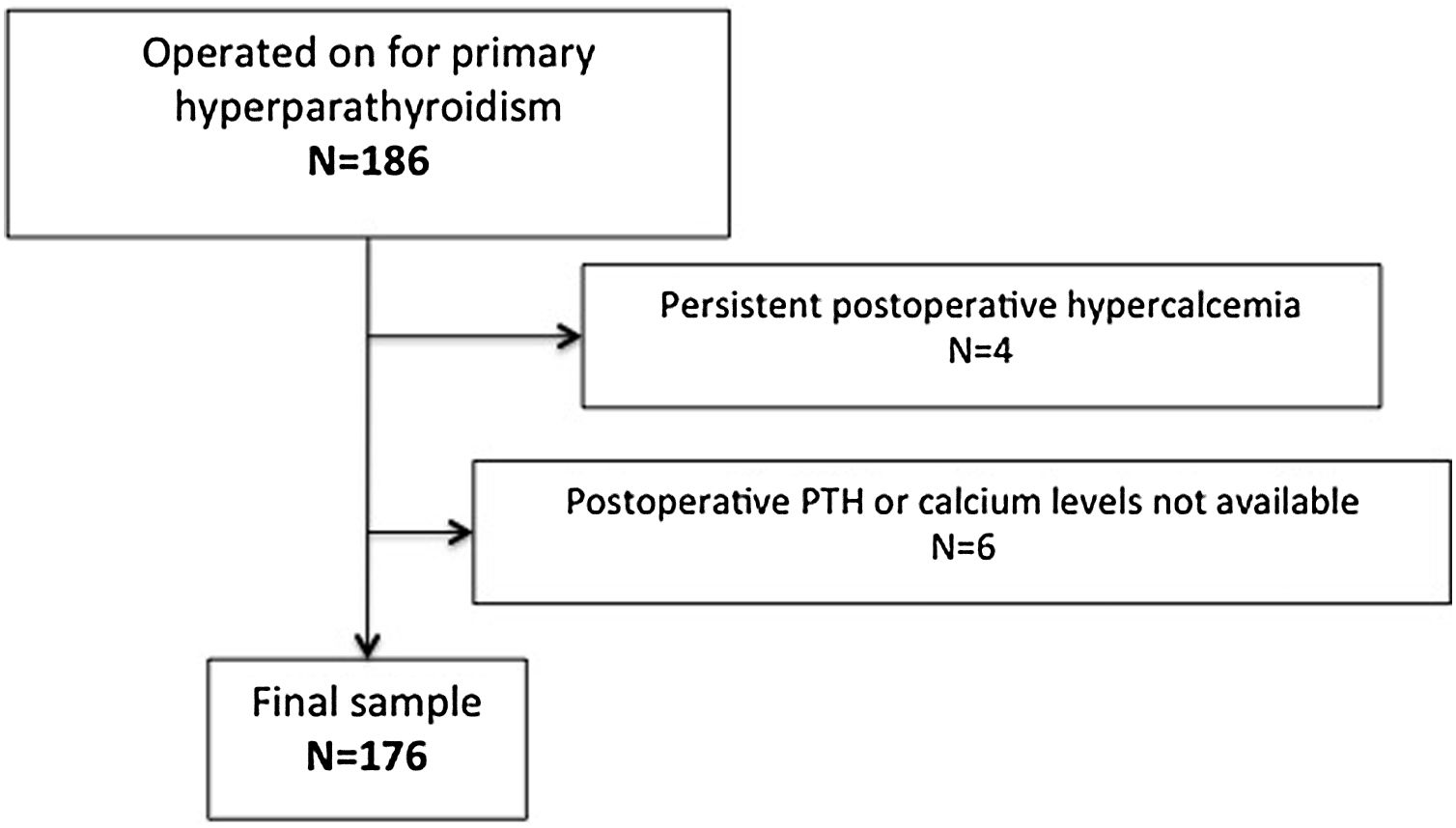
ResultsOut of the 186 patients with P-HPT operated on initially, 4 (2.2%) were excluded from the study due to persistent postoperative hypercalcaemia, as well as 6 cases in which postoperative levels of PTH and calcium in plasma were not available (Fig. 1).
Thus, the final study sample consisted of 176 patients, specifically 144 (81.8%) women and 32 (18.2%) men (P < .001), with a mean age of 60.6 (±11) years.
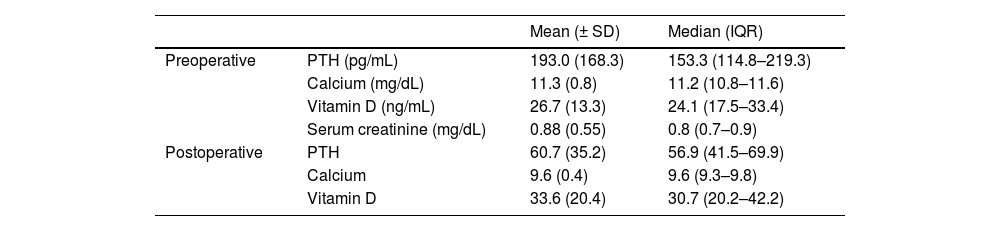
Preoperative biochemical statusPreoperative PTH, calcium and vitamin D levels are shown in Table 1.
Preoperative and postoperative biochemical status of the entire sample (n = 176).
| Mean (± SD) | Median (IQR) | ||
|---|---|---|---|
| Preoperative | PTH (pg/mL) | 193.0 (168.3) | 153.3 (114.8–219.3) |
| Calcium (mg/dL) | 11.3 (0.8) | 11.2 (10.8–11.6) | |
| Vitamin D (ng/mL) | 26.7 (13.3) | 24.1 (17.5–33.4) | |
| Serum creatinine (mg/dL) | 0.88 (0.55) | 0.8 (0.7–0.9) | |
| Postoperative | PTH | 60.7 (35.2) | 56.9 (41.5–69.9) |
| Calcium | 9.6 (0.4) | 9.6 (9.3–9.8) | |
| Vitamin D | 33.6 (20.4) | 30.7 (20.2–42.2) |
SD: standard deviation.
IQR: interquartile range.
In 15 (8.5%) patients, 2 parathyroid glands were removed, in 4 (2.3%) patients 3 parathyroids, and in 2 patients (1.1%) 4 parathyroids. Bilateral cervical exploration was performed in 41 (23.3%) cases, and unilateral or focused parathyroidectomy was performed in the remainder. Mean weight of the excised glands was 1.05 gr (SD: ±1.3). Twenty minutes after parathyroid excision, the mean PTH level was 55.9 pg/mL (SD: ±53.1), and the median PTH level was 37.0 pg/mL (IQR: 26.9–57.5).
Postoperative complications and operative mortalityObserved complications included persistent hypocalcaemia (4 patients), wound haematoma that did not require reintervention (2 patients), and transient recurrent paralysis (2 patients). Operative mortality was not observed. Mean hospital stay was 1.8 (±0.9) days.
Postoperative biochemical statusPostoperative PTH, serum calcium, and serum vitamin D levels from the whole sample (n = 176) are shown in Table 1. Postoperative biochemical status of patients with persistently elevated postoperative PTH levels is presented in Table 2 (n = 46). Postoperative vitamin D levels were below normal in 57 (44.2%) of the 129 patients for whom vitamin D levels had been determined.
Normocalcaemic postoperative PTH elevationDuring the postoperative follow-up, 46 patients (26.1%) had persistently elevated PTH levels with normocalcaemia.
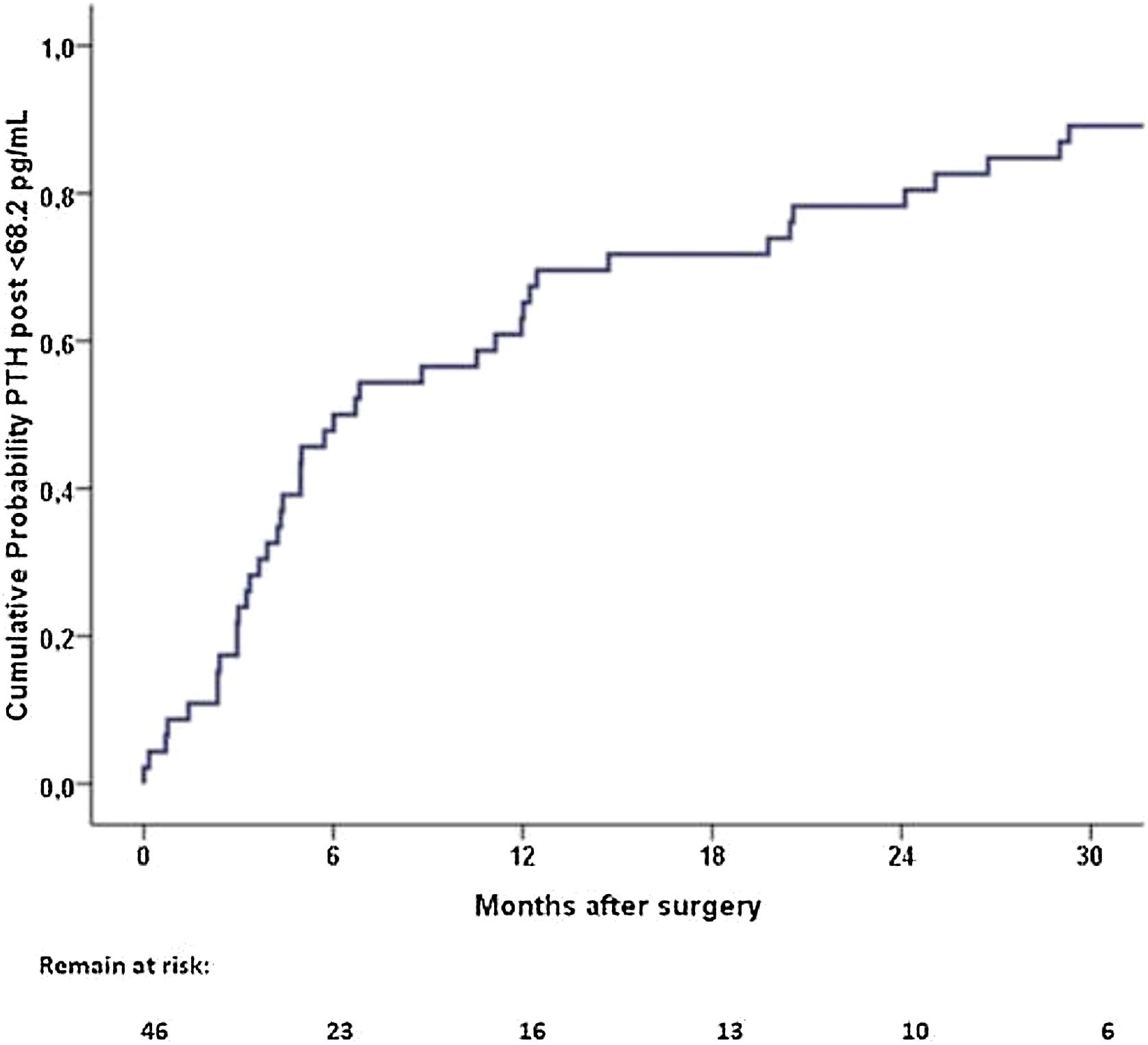
Time to normalisation of postoperative PTHThe median time to normalisation of the postoperative PTH levels was 6 months. The cumulative probabilities of having normal PTH levels after surgery at 6, 12, 24 and 30 months were 50%, 63%, 78% and 89%, respectively (Fig. 2).
Perioperative treatment and preoperative bone densitometryPreoperative bone densitometry was performed in 114 (64.8%) patients. Forty-four (38.6%) cases were normal and 70 (61.4%) pathological. Preoperatively, 18 (10.2%) patients were taking cinacalcet, 61 (34.7%) vitamin D, and 18 (10.2%) bisphosphonates. Postoperatively, 91 (51.7%) patients were taking vitamin D, 34 (19.3%) calcium, and 21 (11.9%) bisphosphonates.
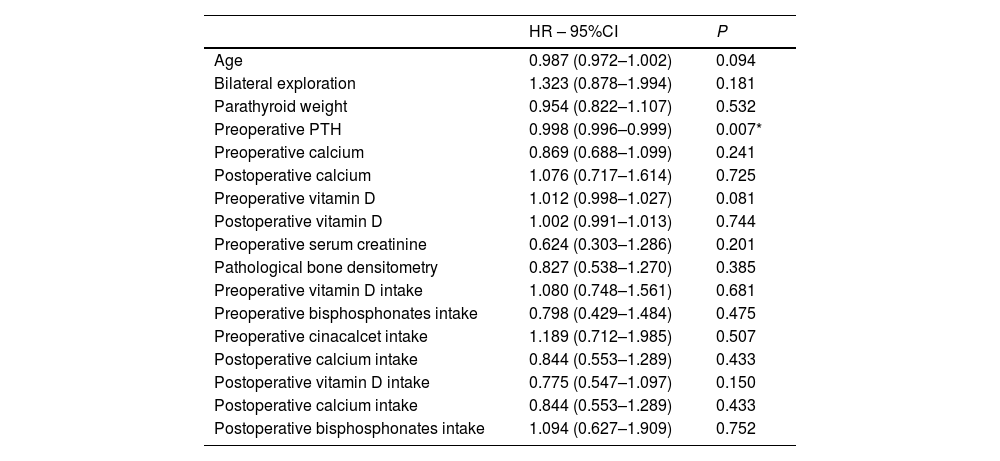
Univariate analysisThe results of the analysis of the time to normalisation of postoperative PTH levels are shown in Table 3. The time to normalisation of postoperative PTH levels was only associated with preoperative PTH levels (P = .007). For each unit in which the preoperative PTH level increased above normality, the probability that the postoperative PTH level was elevated increased 9.98 times.
Univariate analysis of time to PTH normalization in patients with elevated postoperative PTH.
| HR – 95%CI | P | |
|---|---|---|
| Age | 0.987 (0.972–1.002) | 0.094 |
| Bilateral exploration | 1.323 (0.878–1.994) | 0.181 |
| Parathyroid weight | 0.954 (0.822–1.107) | 0.532 |
| Preoperative PTH | 0.998 (0.996–0.999) | 0.007* |
| Preoperative calcium | 0.869 (0.688–1.099) | 0.241 |
| Postoperative calcium | 1.076 (0.717–1.614) | 0.725 |
| Preoperative vitamin D | 1.012 (0.998–1.027) | 0.081 |
| Postoperative vitamin D | 1.002 (0.991–1.013) | 0.744 |
| Preoperative serum creatinine | 0.624 (0.303–1.286) | 0.201 |
| Pathological bone densitometry | 0.827 (0.538–1.270) | 0.385 |
| Preoperative vitamin D intake | 1.080 (0.748–1.561) | 0.681 |
| Preoperative bisphosphonates intake | 0.798 (0.429–1.484) | 0.475 |
| Preoperative cinacalcet intake | 1.189 (0.712–1.985) | 0.507 |
| Postoperative calcium intake | 0.844 (0.553–1.289) | 0.433 |
| Postoperative vitamin D intake | 0.775 (0.547–1.097) | 0.150 |
| Postoperative calcium intake | 0.844 (0.553–1.289) | 0.433 |
| Postoperative bisphosphonates intake | 1.094 (0.627–1.909) | 0.752 |
HR: hazard ratio.
95% CI: 95% confidence interval.
There were no significant differences in vitamin D deficiency prevalence between patients with elevated (52.9%) and normal (41.1%) postoperative PTH levels (P = .231).
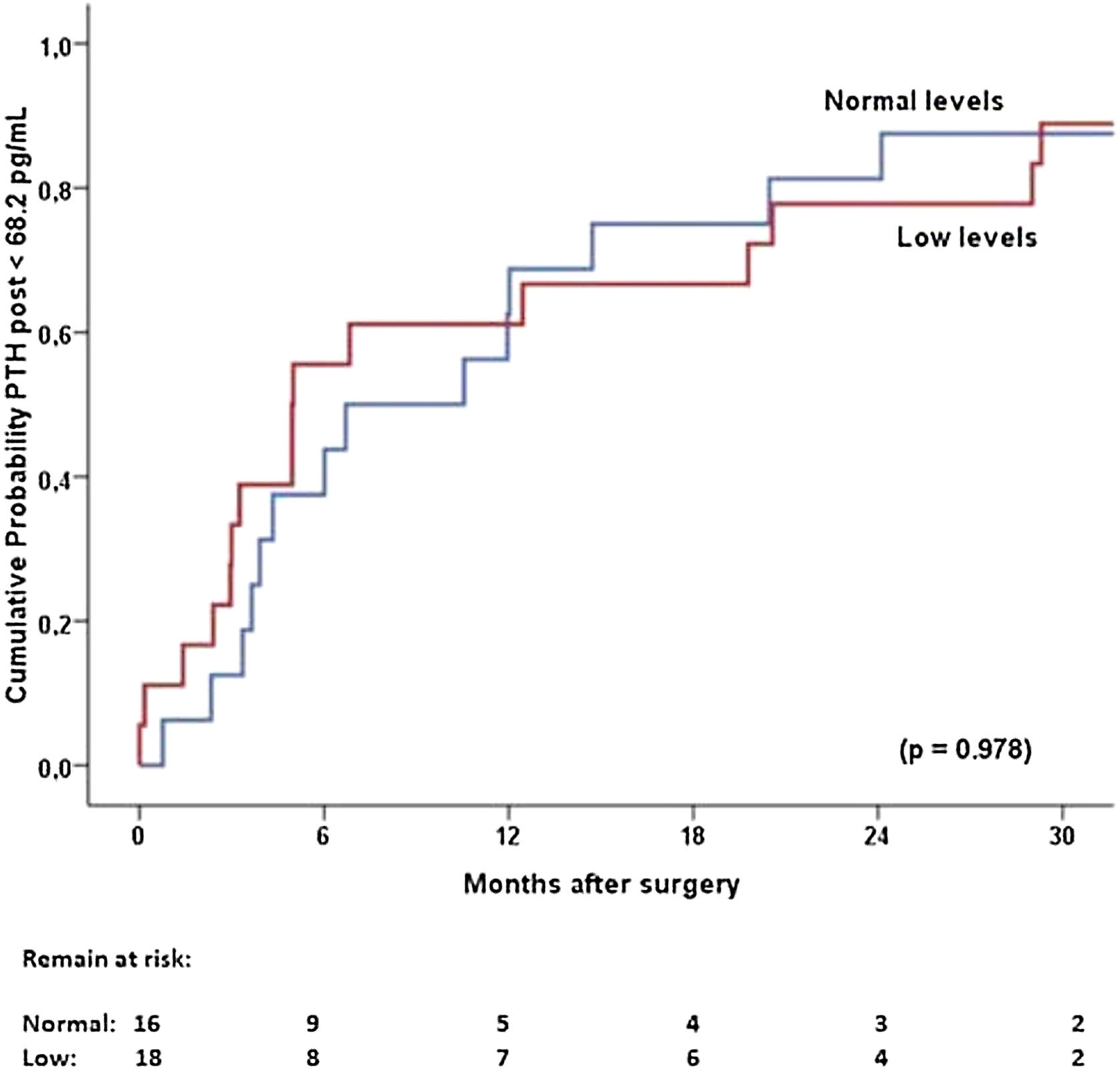
Considering the variable postoperative vitamin D categorised as normal versus low levels, the median time to PTH normalisation in patients with normal levels of vitamin D was 6.7 months (IQR: 14.7–3.7), whereas in patients with low levels of vitamin D it was 5.0 months (IQR: 20.6–3.0) (P = .978) (Fig. 3).
DiscussionAfter parathyroidectomy for P-HPT, 8%–40% of patients will continue to have elevated PTH levels despite the normalisation of calcium levels.3 In our series, postoperative NC-HPT occurred in 26.1% of patients, which is consistent with previous studies.3 Some authors report percentages above 40% in their series.7–10
Currently, there is no consensus on the significance of this postoperative anomaly, and it is considered by most authors a transient phenomenon with no clinical significance.7,11 The prevalence of this disorder declines progressively.3,12 In this study, we determined the cumulative probability of normalising postoperative PTH levels in patients with elevated PTH levels after parathyroidectomy. Within 6 months of surgery, elevated postoperative PTH levels normalised in approximately 50% of the patients, and within 2 years of surgery almost 80% of the patients had normal levels. Only 6 patients from our series had persistent elevated PTH and eucalcaemia 30 months after surgery. It has been reported that this phenomenon can persist for more than 4 years with normal calcium levels.7
Other authors3,5,13–15 have suggested that NC-HPT is not transient and increases the risk of recurrent disease, especially when postoperative calcium is ≥9.7 mg/dL. It has been postulated that P-HPT is a biochemically dynamic disease16,17 and that NC-HPT may represent a precursor to classic hyperparathyroidism.1 However, it is uncertain whether these postulates can be extrapolated to the postoperative period after successful parathyroidectomy. In our series, we have not detected any progression to classic hyperparathyroidism after more than two years of follow-up. Nevertheless, in some series, the follow-up period was longer.14 Therefore, whether postoperative NC-HPT has pathological consequences remains unknown.2
The pathogenesis of postoperative NC-HPT is still not fully understood. More than 37 factors have been associated with it,3,12,18 and preoperative PTH levels have shown the strongest association,2,3,8,10,12,19–22 which is in line with our study. However, a statistically significant correlation between postoperative PTH level and other demographic or clinical characteristics was not observed in our series. Other reported associations with NC-HPT are old age5,21,23 and high adenoma weight.3,9,22
Regarding the type of surgery performed (four-gland exploration versus limited neck exploration), different studies have shown contradictory results.11,18,21,24 In our study, no significant differences were found between the 2 patient groups. Therefore, postoperative NC-HPT does not appear to represent insufficient surgery.
Many studies support that postoperative NC-HPT may be secondary to a “mild” form of hungry bone syndrome,10,12,22,25 which has been associated with preoperative levels of alkaline phosphatase and osteocalcin.5,8,10,12,25–27 Other authors, however, question this mechanism.13
Secondary hyperparathyroidism has also been proposed to explain this condition. Vitamin D deficiency has been associated with postoperative NC-HPT,3,7–9,11,12,18 but the effects of supplementation are controversial.19,28 In our series, we have found vitamin D deficiency in patients with normal and elevated postoperative PTH levels, finding no association with the time to normalisation of postoperative PTH. Furthermore, vitamin D deficiency affects almost 50% of the global population.29 Therefore, we believe it does not play an important role in NC-HPT pathophysiology.
It has been suggested that NC-HPT may be a response to diminished calcium reserves from excessive bone demineralisation, renal impairment, or osteomalacia.7 Normalisation of PTH levels in these patients after oral calcium load has been demonstrated, suggesting that elevated postoperative PTH is related to decreased calcium absorption.5,9,24,25 In addition, calcium and vitamin D supplementation in the first postoperative period appears to significantly reduce the incidence of NC-HPT.21,30 However, no controlled studies have reported that supplementation is associated with resolution of this condition. In our study, no association was found between supplementation and time to normalisation of PTH.
It is known that renal dysfunction influences parathyroid function, and prolonged hypercalcaemia reduces glomerular filtration rate.8 However, in the present study, serum creatinine levels did not differ between patients with or without postoperative NC-HPT and were normal in all cases.
Thus, some of these patients could have vitamin D or calcium deficiency, and renal dysfunction may play a role in certain cases. However, in our opinion, secondary hyperparathyroidism does not explain NC-HPT in all patients.
More interesting is the possible peripheral resistance to PTH or decreased sensitivity of the calcium-sensing receptor.2 An attenuated calcaemic response has been shown in patients with NC-HPT compared to those with normal PTH levels after infusion of PTH.31 This resistance to PTH occurs in the kidneys7 and is higher in patients with vitamin D deficiency or renal insufficiency.8
Resistance to PTH is probably due to a prolonged period of preoperative hyperparathyroidism, which results in downregulation of peripheral PTH receptors.20 This could explain why NC-HPT was closely related to high preoperative PTH levels, as observed in our patients. This renal resistance to PTH may be aggravated by vitamin D deficiency or renal insufficiency, which could explain the frequently observed association between vitamin D deficiency and postoperative NC-HPT.
Another proposed mechanism for postoperative NC-HPT is the reduction in the number of calcium-sensing receptors in the residual parathyroid tissue, which has been extensively studied in primary hyperparathyroidism32–34 but not in patients with postoperative NC-HPT.
The consequences of postoperative NC-HPT are unclear. Published studies have shown contradictory results regarding its effect on bone mineral density.25,35 However, increased cardiovascular risk has been demonstrated in patients with postoperative NC-HPT.36,37 Therefore, lifelong monitoring and medical intervention is required. More studies are needed to evaluate the long-term effects of postoperative NC-HPT.
In patients with maintained elevated PTH levels after surgery, it is important to rule out persistent or recurrent hyperparathyroidism. In persistent P-HPT, postoperative serum calcium levels never normalise. Therefore, we excluded 4 cases from the initial sample. In recurrent P-HPT, serum calcium levels normalise after surgery, but the patient becomes hypercalcaemic again for more than 6 months after surgery.4 In addition, the causes of secondary hyperparathyroidism should be investigated, which may include dietary deficiencies, malabsorption syndromes and chronic kidney failure.2,12,30 Early supplementation with calcium and vitamin D appears to reduce the likelihood of this condition.30
These patients require long-term follow-up,5,12,37 as hyperparathyroidism recurrences have been registered up to 17 years after surgery.14
This study had some limitations. It was retrospective and conducted in a single centre, which may have resulted in selection bias. Additionally, the follow-up period in this study was relatively short. Finally, some data for the vitamin D values were incomplete, but we think that this may not have influenced the statistical analysis. Despite this, we consider the rest of the data to be of high quality and that the results obtained in this study could be generalised to all patients with postoperative NC-HPT. In addition, no studies have been previously published in which the cumulative probability of PTH normalisation time after surgery was analysed.
In summary, NC-HPT may occur in approximately one-quarter of patients who undergo successful parathyroidectomy for P-HPT. PTH levels normalise within 30 months in up to 90% of cases. A high preoperative PTH level is predictive of postoperative NC-HPT. Our results do not support the pathogenic mechanisms underlying vitamin D deficiency and/or renal failure. A form of pseudo-hyperparathyroidism due to peripheric resistance to PTH should be considered the main cause of this disorder.31
Funding/supportThis research did not receive any specific grant from funding agencies in the public, commercial, or non-profit sector.