
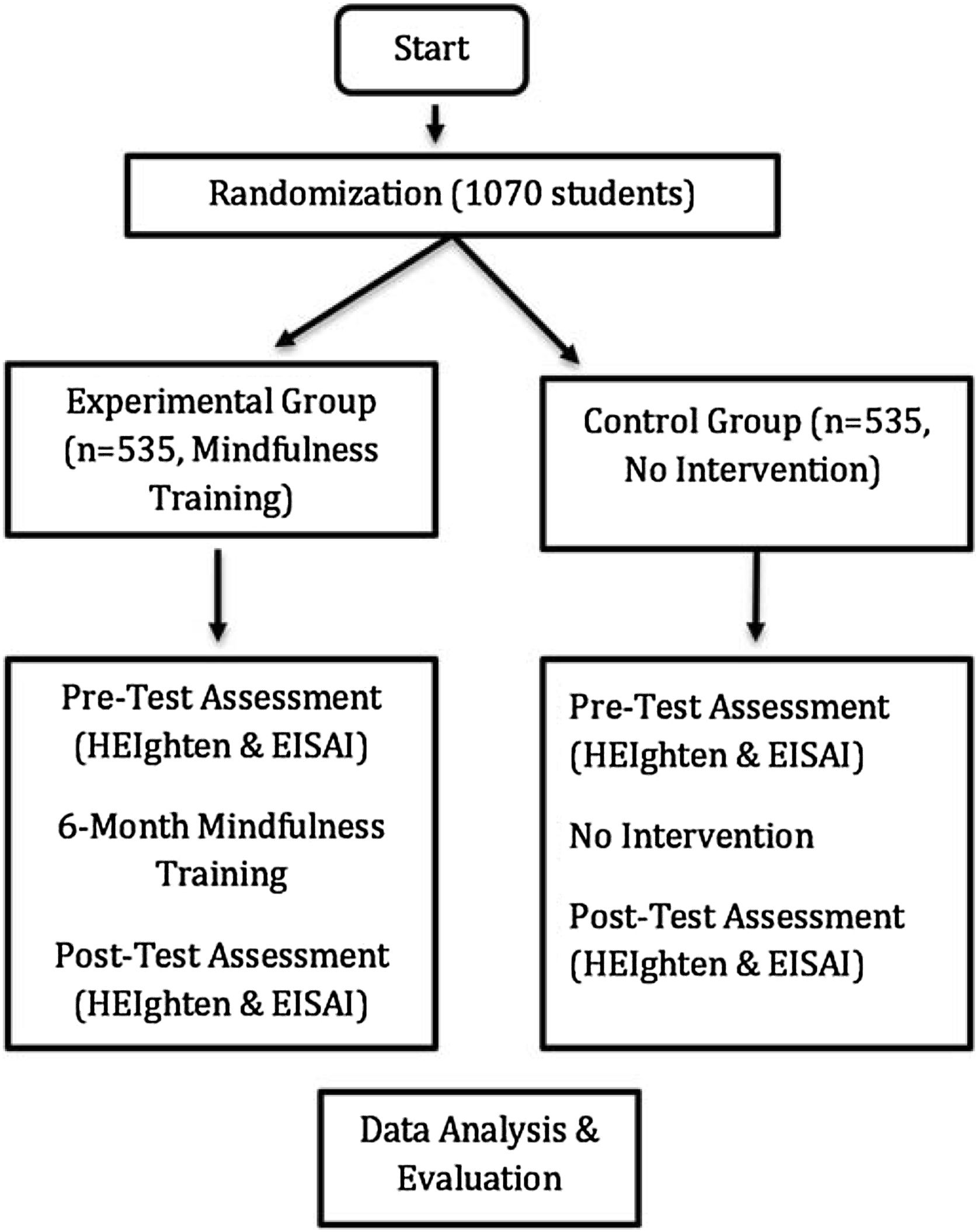
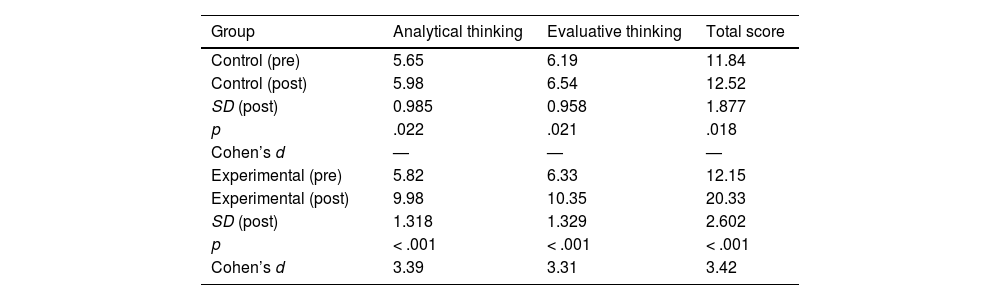
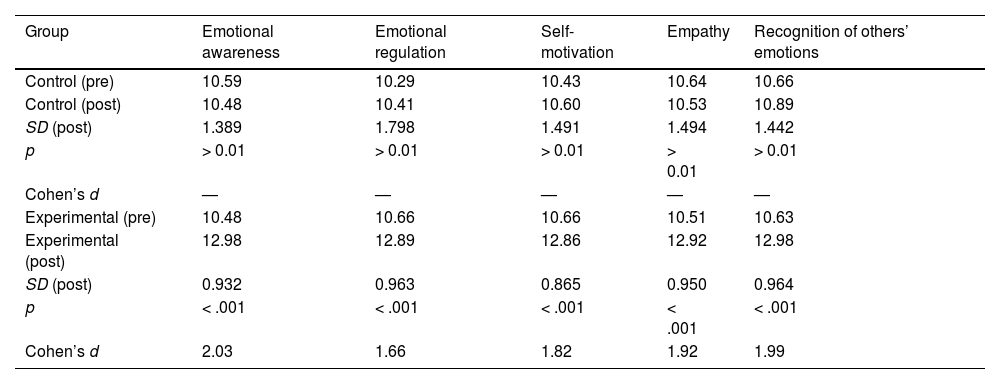


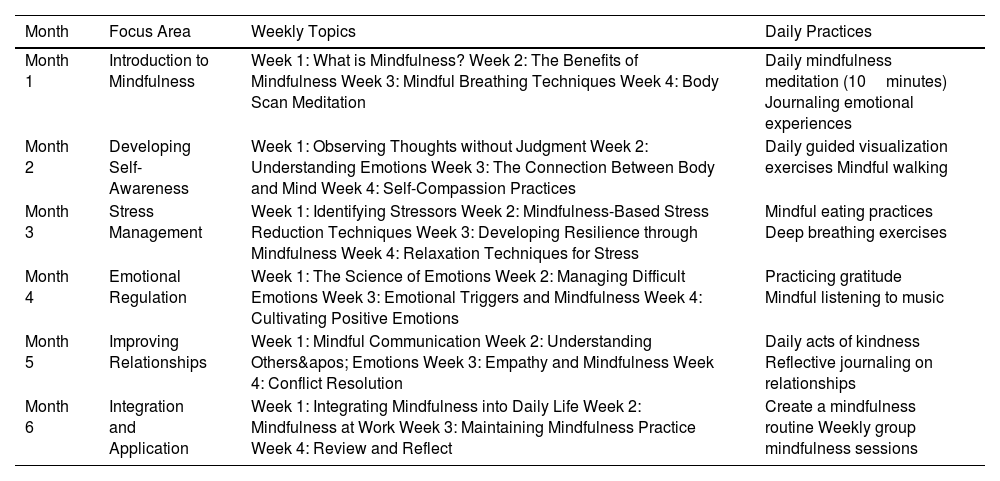
The primary aim of the research is to ascertain how mindfulness training influences the development of critical thinking and emotional intelligence among students. The participants in the study comprise students from grades 5-11 at Alihan Bokeykhanov Secondary School, located in the Jambyl Region of the Republic of Kazakhstan, totaling 1070 individuals. A controlled experimental design has been employed to assess the impact of a six-month mindfulness training program on a sample of middle and high school students. Participants are divided into an experimental group, which undergoes mindfulness training, and a control group, which receives no intervention. Both groups use the HEIghten critical thinking test and the Emotional Intelligence Self-Assessment Inventory (EISAI). The statistical analysis involved the application of paired and independent t-tests alongside linear mixed-effects models (LMMs) to compare group outcomes and to evaluate changes over time. Participants in the mindfulness training group demonstrate enhanced abilities to analyze and evaluate information, along with increased emotional awareness, regulation, and empathy. The LMM analysis confirmed a significant interaction between group and time factors, indicating substantial improvements in critical thinking and emotional intelligence within the experimental group. These findings suggest that mindfulness training can be a valuable addition to educational programs. The integration of mindfulness practices into the educational system has the potential to transform the traditional learning environment, supporting the development of well-rounded individuals better equipped to navigate the complexities of modern society.
El objetivo principal de esta investigación es determinar cómo el entrenamiento en mindfulness influye en el desarrollo del pensamiento crítico y la inteligencia emocional entre los estudiantes. Los participantes han sido estudiantes de los grados 5 a 11 de la Escuela Secundaria Alihan Bokeykhanov, ubicada en la Región de Jambyl de la República de Kazajistán, con un total de 1070 individuos. Se ha empleado un diseño experimental controlado para evaluar el impacto de un programa de entrenamiento en mindfulness de seis meses en una muestra de estudiantes de secundaria y preparatoria. Los participantes se han dividido en un grupo experimental, que ha recibido el entrenamiento en mindfulness, y un grupo de control, que no ha recibido ninguna intervención. Ambos grupos han utilizado la prueba de pensamiento crítico HEIghten y el Inventario de Autoevaluación de Inteligencia Emocional (IAIE). El análisis estadístico ha empleado pruebas t pareadas e independientes junto con modelos lineales de efectos mixtos (LMM) para comparar los resultados entre grupos y evaluar los cambios a lo largo del tiempo. Cabe destacar que los participantes en el entrenamiento de mindfulness han mostrado una mayor capacidad para analizar y evaluar información, así como una mayor conciencia emocional, regulación y empatía. El modelo lineal de efectos mixtos (LMM) ha confirmado una interacción significativa entre los factores de grupo y tiempo, lo que indica una mejora notable del pensamiento crítico y la inteligencia emocional en el grupo experimental. Estos hallazgos sugieren que el entrenamiento en mindfulness puede ser una valiosa incorporación a los programas educativos. La integración de estas prácticas en el sistema educativo tiene el potencial de transformar el entorno de aprendizaje tradicional, apoyando el desarrollo de individuos más íntegros y mejor preparados para enfrentar las complejidades de la sociedad moderna.