






La Atención Primaria atiende a personas dependientes en sus domicilios y apoya a sus cuidadores principales. Con la pandemia por covid-19 esta atención se alteró.
ObjetivosAnalizar el nivel de cansancio que produce el rol de cuidador informal durante los primeros meses de la pandemia por covid-19 y estudiar su percepción sobre el apoyo recibido.
MétodosDiseño secuencial explicativo, combinando diferentes metodologías. Primero, un estudio cuantitativo longitudinal retrospectivo para valorar las características de las personas atendidas a domicilio y la sobrecarga de sus cuidadores informales pre- y pospandemia de covid-19 entre marzo de 2020 y diciembre de 2021. Segundo, con base en estos datos, se seleccionó para el estudio cualitativo posterior a los 12 informantes con un mayor empeoramiento de la sobrecarga. Se realizaron entrevistas en profundidad para conocer la percepción de su sobrecarga.
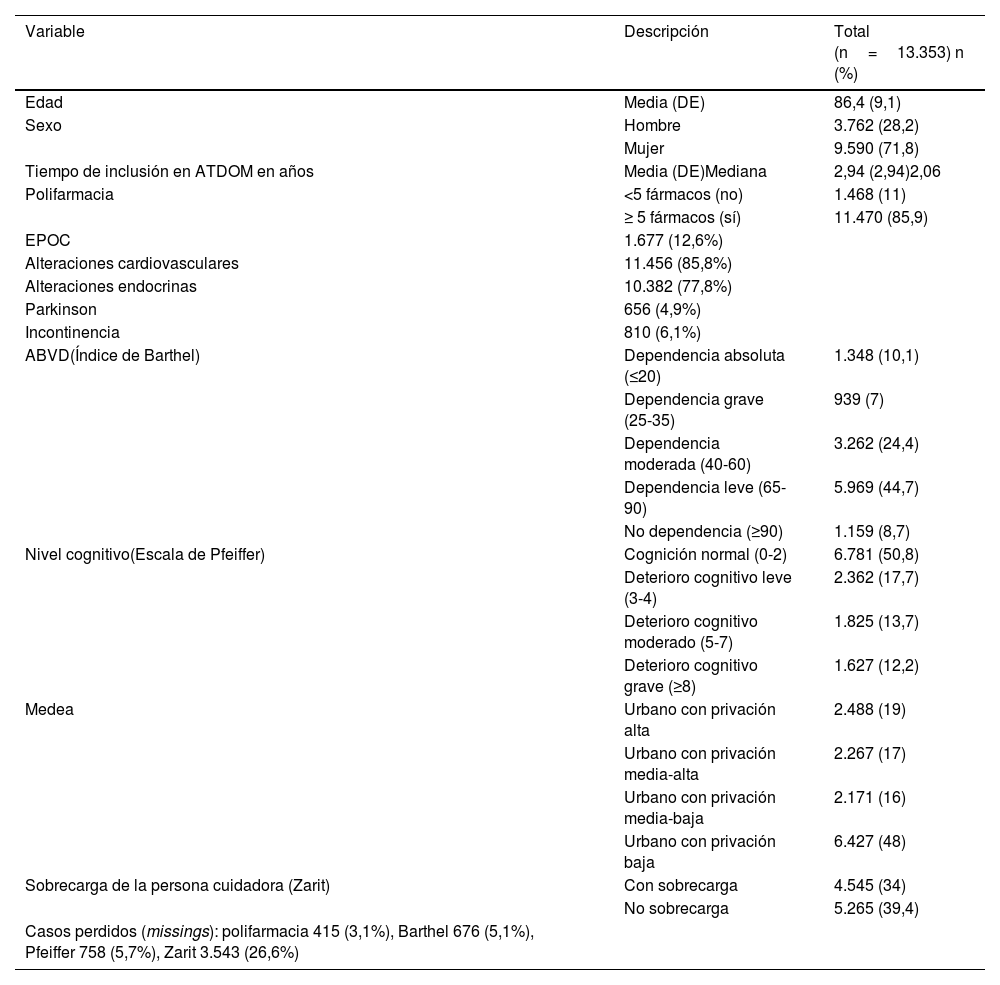
ResultadosSe analizaron 13.353 personas atendidas a domicilio para el estudio cuantitativo, con una edad media de 86,4 años (DE: 9,1), de las que el 71,8% eran mujeres Un 34% de sus cuidadores presentaban sobrecarga, que aumentó en un 2,5% (p<0,001) durante la pandemia. Con las 12 entrevistas del estudio cualitativo, se concluyó que no hubo un impacto relevante del confinamiento en el paciente atendido a domicilio, que sí se habría dado en los cuidadores, por la incertidumbre y la falta de interacción social. Los informantes resaltaron la dificultad del acceso telefónico a Atención Primaria y la insatisfacción por la pérdida de presencialidad; valoraron la longitudinalidad y el seguimiento telefónico.
ConclusionesSe hace necesario reforzar las estrategias de apoyo en la atención del cuidador informal para reducir la sobrecarga evidenciada.
Primary Care cares for dependent people in their homes, and also supports their main caregivers. With the covid-19 pandemic, this care was altered.
AimTo analyze the level of burden in the informal caregiver role during the first months of the covid-19 pandemic; and study their perception of the support received during the pandemic by Primary Care.
MethodsExplanatory sequential design, combining different methodologies. First, a retrospective longitudinal quantitative study to assess the characteristics of people cared at home and the overload of their informal caregivers before and after the covid-19 first months between March 2020 and December 2021. Secondly, based on these data, 12 informal caregivers with a greater worsening of overload were selected for the qualitative study. In-depth interviews were conducted to find out their perception of their burden.
ResultsA total of 13,353 people receiving home care were analyzed for the quantitative study, with a mean age of 86.4 years (SD: 9.1), of which 71.8% were women, 34% of the caregivers were overloaded, which increased by 2.5%(P<0.001). This overload increased significantly during the covid-19 pandemic. With the 12 interviews of the qualitative study, it was concluded that there was no relevant impact of confinement on the patient that received home care, which would have occurred on the caregivers, due to uncertainly or the lack of social interaction. The informants highlighted the difficulty of telephone access to the Primary Care center and dissatisfaction with the loss of face-to-face contact, although they valued the longitudinality and the telephone follow-up carried out.
ConclusionIt is necessary to reinforce support strategies in the care of informal caregivers within the receiving home care program to reduce the burden seen.

