


metricas

Medicina de Familia. SEMERGEN

Sugerencias
Medicina de Familia. SEMERGEN Ethics and consent in randomized clinical trial integrity: A scoping systematic ...
Información de la revista
Visitas
487
Vol. 51. Núm. 9.
(Diciembre 2025)
Original
Acceso a texto completo

Ethics and consent in randomized clinical trial integrity: A scoping systematic review

Evaluación ética, consentimiento informado e integridad de los ensayos clínicos aleatorizados: Una revisión sistemática de la literatura
Visitas
487
M. AlaaEldein Elsuitya,b, F.A. Buttc,
Autor para correspondencia
furqanab.phd@gmail.com

Corresponding author.
, K. Saeed Khanc,d, M. Fawzyb, M. Martín-Díaze, P.F.W. Chienf, J. Perez de Rojasc, M. Núñez-Núñezd,g, M.M. Rashwanb,h, A. Bueno-Cavanillasc,d,i
a Department of Dermatology, Venereology and Andrology, Sohag University, Egypt
b IbnSina (Sohag), Banon (Asyut), Qena (Qena), Amshaj (Sohag) IVF Centres, Egypt
c Department of Preventive Medicine and Public Health, University of Granada , Granada, Spain
d Epidemiology and Public Health Networking Biomedical Research Centre (CIBERESP), Madrid, Spain
e General Surgery Department, Hospital Santa Ana, Motril, Granada, Spain
f Department of Obstetrics & Gynecology, RCSI & UCD Malaysia Campus, Penang, Malaysia
g Department of Pharmacy, San Cecilio University Hospital, Granada, Spain
h Department of Forensic Medicine and Clinical Toxicology, Faculty of Medicine, Sohag University, Sohag, Egypt
i Instituto de Investigación Biosanitaria de Granada (ibs.GRANADA), Granada, Spain
Ver más
Este artículo ha recibido
Información del artículo
Resumen
Texto completo
Bibliografía
Descargar PDF
Estadísticas
Figuras (2)
fig0005
fig0010
Tablas (1)
Table 1. Main characteristics of articles included in the scoping review of ethics and consent in randomized clinical trial integrity.
Tablas
Material adicional (5)
Abstract
Objectives

This scoping systematic review aimed to collate and synthesize available evidence on research ethics and consent aspects related to research integrity standards in RCTs. Prospective registration (https://osf.io/gxryb).

Materials and methods

We searched PubMed and Scopus databases from January 2018 to August 2023, using combinations of terms related to research ethics, approval, and informed consent. We included full academic articles relevant to the scope of the review without language restriction, including primary research articles, systematic reviews, scoping reviews, and narrative reviews. Two teams of four reviewers independently assessed the full text to select articles and extract data, performing the tasks independently and any disagreements were resolved through arbitration. A descriptive synthesis of the included articles main characteristics and findings were performed.

Results

Sixty-nine articles were selected, covering RCT-related ethics and consent issues in 141 countries, including 89 (63%) low or middle-income ones. The extracted data fell into nine domains: general issues (30 articles; 43%), journals’ instructions and policies (one article; 1.4%), research institutions and funders’ policies (three articles; 4.3%), ethics committee regulations (five articles; 7.2%), ethics committee evaluation and approval (12 articles; 17%), informed consent and related procedures (six articles; 8.7%), monitoring of trials for compliance (three articles; 4.3%), post-publication concerns on ethics and consent (five articles; 7.2%), and recommendations for future research (four articles; 5.8%).

Conclusions

The key areas include standardization of ethics committee approval processes and enhancement of informed consent procedures. There were notable deficiencies in trial registration and reporting concerning ethics and consent. The observed variability in ethics and consent practices across RCTs globally needs to be addressed through an international expert consensus.

Keywords:
Research ethics
Consent
Scoping review
Systematic review
Research integrity
Resumen
Objetivos

Esta revisión sistemática tuvo como objetivo recopilar y sintetizar la evidencia disponible sobre la relación entre los aspectos éticos de la investigación y las condiciones del consentimiento informado con los estándares de integridad de la investigación en ECA.

Materiales y métodos

Tras el registro del protocolo (https://osf.io/gxryb), se realizaron búsquedas en las bases de datos PubMed y Scopus desde enero de 2018 hasta agosto de 2023, utilizando combinaciones de términos relacionados con la ética de la investigación, la aprobación y el consentimiento informado. Se incluyeron artículos académicos completos relevantes para el alcance de la revisión sin restricción de idioma, incluyendo artículos de investigación primaria, revisiones sistemáticas y revisiones narrativas. Dos equipos de cuatro revisores evaluaron de forma independiente el texto completo para seleccionar los artículos y extraer los datos, realizando las tareas de forma independiente y cualquier desacuerdo se resolvió mediante arbitraje. Se realizó una síntesis descriptiva de las principales características y hallazgos de los artículos incluidos.

Resultados

Se seleccionaron 69 artículos que abordaban cuestiones éticas y de consentimiento relacionadas con los ECA en 141 países, incluyendo 89 (63%) de ingresos bajos o medios. Los datos extraídos se dividieron en nueve áreas: cuestiones generales (30 artículos; 43%), instrucciones y políticas de las revistas (un artículo; 1,4%), políticas de las instituciones de investigación y agencias financiadoras (tres artículos; 4,3%), reglamentos de los comités de ética (cinco artículos; 7,2%), evaluación y aprobación de los comités de ética (12 artículos; 17%), consentimiento informado y procedimientos relacionados (seis artículos; 8,7%), monitorización del cumplimiento de los ensayos (tres artículos; 4,3%), inquietudes posteriores a la publicación sobre ética y consentimiento (cinco artículos; 7,2%) y recomendaciones para futuras investigaciones (cuatro artículos; 5,8%).

Conclusiones

Los puntos clave incluyeron la estandarización de los procesos de aprobación de los comités de ética y la mejora de los procedimientos de obtención del consentimiento informado. Se observaron deficiencias notables en el registro y la notificación de ensayos clínicos en relación con la ética y el consentimiento. La variabilidad observada en las prácticas éticas y de consentimiento en los ECA a nivel mundial debe abordarse mediante un consenso internacional de expertos.

Palabras clave:
Ética de la investigación
Consentimiento
Revisión de alcance
Revisión sistemática
Integridad de la investigación
Texto completo
Introduction

Randomized clinical trials (RCTs), regarded as the gold standard evidence source to inform clinical practice,1 are incorporated in healthcare decision-making through meta-analyses, systematic reviews, practice committee opinions, societal guidelines, etc. Drug and device approval processes (e.g., by the U.S. Food and Drug Administration) heavily rely on data derived from RCTs.2,3 Consequently, the integrity of RCTs has a direct and substantial impact on healthcare. Over the years, the perceived usefulness of RCTs has been challenged in part on account of concerns related to transparency.4 There has also been a rise in the number of retracted RCT articles.5,6 Integrity breaches jeopardize the RCT findings, potentially compromising patient safety and well-being, not just the validity of the scientific record.

Approval of research and informed consent by the Ethics Committee is fundamental to the integrity of RCTs.7,8 Ethical principles, such as respect, beneficence, non-maleficence and justice, ensure the protection of trial participants’ rights, minimizing potential risks and maximizing benefits.9 Institutions conducting RCTs must, by law, foster an environment that promotes ethical conduct, through rigorous oversight. Exactly how they should achieve this has been the subject of research but no RCT-specific guidance or overview exists. Few systematic reviews have attempted to address ethics and consent issues in RCTs.10–12 A previous statement on RCT integrity emphasized that ethics approval should be obtained for all trials, including those using de-identified data, and informed consent should be developed with patient (or their representative) and public involvement.13

Recognizing the importance of research ethics and consent in the integrity of RCTs, and the gaps that exist in evidence synthesis, we conducted a systematic scoping review to collate and synthesize available evidence with a view to providing an information base for developing integrity standards in RCTs.

Methods

This scoping review was prospectively registered (Center for Open Science, https://osf.io/gxryb), conducted using a recommended methodology,3,14 and reported according to the PRISMA-ScR guidelines15 (Appendix S1).

Search strategy, data sources and study selection

Two reviewers (FAB and JPR) searched PubMed and Scopus databases for relevant articles on August 21st, 2023, using combinations of the following terms: “ethic*”, “research”, “approval”, and “informed consent” (Appendix S2). Those terms were developed through an iterative process, including several pilot searches to capture various research ethics issues and consent implementation aspects concerning integrity standards in human clinical trials. No language restriction was applied to the search. We only included articles within the last five years (2018–2023). An online tool specifically designed to help with systematic literature review (https://www.rayyan.ai/) was used to screen articles and remove duplicates.

We included any full academic article relevant to the scope of this review, including primary research articles, systematic reviews, scoping reviews, and narrative reviews. We excluded editorials, correspondence, and conference abstracts. After removing duplicates, three reviewers (FAB, ABC, and JPR) screened titles and abstracts of retrieved articles for potential inclusion. Four reviewers (FAB, JPR, MAE, and MMR) worked in two teams to independently assess the full text of potentially suitable articles for inclusion or exclusion, with each article independently assessed by at least two reviewers. One senior reviewer (ABC, MMD, or MF) assessed any disagreement between two reviewers and arbitrated to reach a final decision. Another senior reviewer (KSK) independently examined the included articles list. Any disagreement between KSK and the other senior reviewers was resolved through consensus. Reasons for article exclusion included: out of scope of review question, not related to ethics and consent, and not applicable to RCTs.

Data extraction and categorization

Four senior reviewers (KSK, ABC, MMD, and MF) agreed upon the items to be extracted from the included articles. Four reviewers (ABC, MMD, KSK, and FAB) constructed the data extraction sheet (Appendix S3). Four reviewers (FAB, JPR, MAE, and MMR) worked in two teams of two reviewers each to independently extract data from included articles. One senior reviewer (ABC, MMD, or MF) examined the extracted data and resolved any disagreement between the independent reviewers through arbitration. Then, two reviewers (KSK and ABC) examined the extracted articles’ main findings, and categorized them into domains. The nine domains were (a) general issues; (b) journals’ instructions and policies; (c) research institutions and funders’ policies; (d) ethics committee regulations; (e) ethics committee evaluation and approval; (f) informed consent and related procedures; (g) monitoring of trials for compliance; (h) post-publication concerns on ethics and consent; (i) and recommendations for future research. One reviewer (MAE) retrieved the study design, focus, and main finding from the data extraction sheet into a separate supplementary file (Appendix S4) and categorized the findings under the proposed domains. All other reviewers (KSK, PC, ABC, MMD, MF, FAB, JPR, MNN, and MMR) reviewed the retrieved and categorized findings.

Data synthesis

We used Posit Cloud16 to perform a descriptive analysis of the included articles’ main characteristics including the study design, the year of publication, the topic being addressed, and the study domain. Continuous data was expressed as median (range) and binary data was expressed as n (%). The main findings of each article were tabulated.

ResultsStudy selection

Database search revealed a total of 5128 citations (976 citations from PubMed and 4152 citations from Scopus) (Fig. 1). We assessed the titles and abstracts of 3933 citations after automatic removal of duplicates using Rayyan. We identified and fully assessed 105 articles potentially related to the scope of this review within the last five years. We finally included 69 articles12,17–84 (Appendix S4) and excluded a total of 36 (27 articles not related to RCTs,85–111 three articles not related to research ethics,112–114 three articles without qualitative or quantitative data,115–117 two articles manually identified as duplicates,47,114 and one article118 similar to an included one75).

Figure 1.

Flowchart of the literature retrieval process.

Study characteristics and overview of main findings

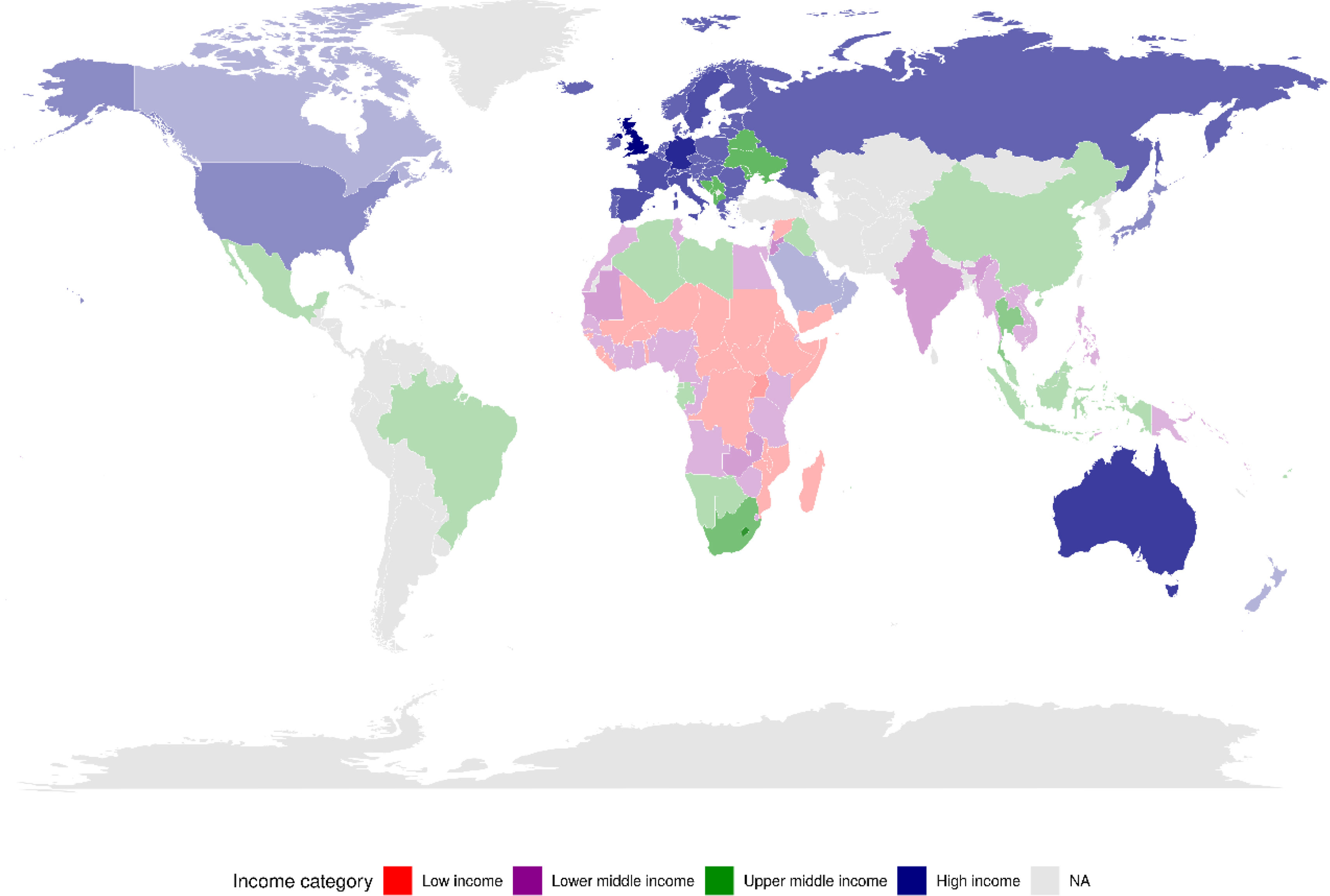
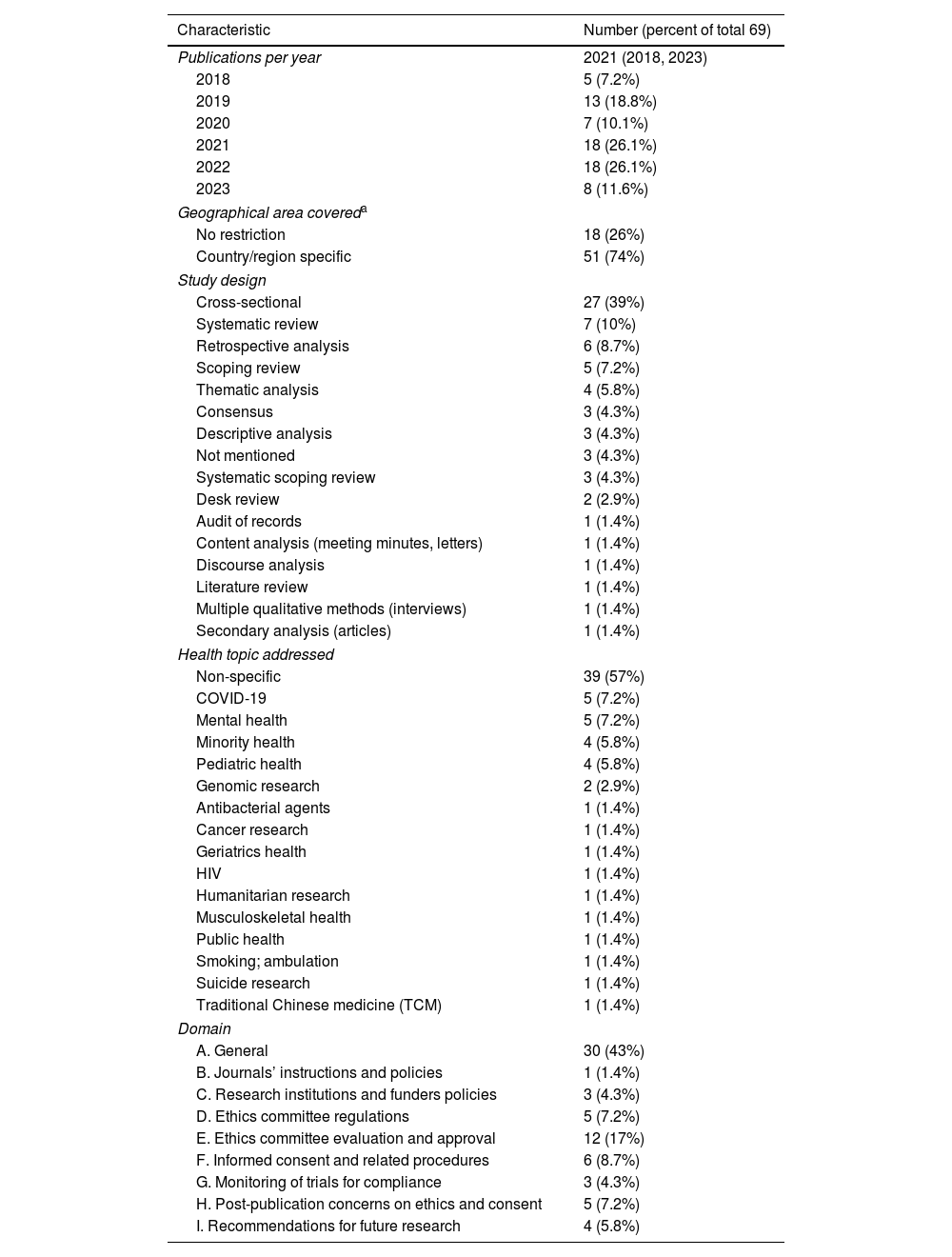
Table 1 summarizes the main characteristics of the included studies. Most studies (51 articles; 74%) addressed ethics and consent issues related to a certain country or geographical region. Fig. 2 and Table S1 show 141 countries addressed in this scoping review categorized by their income and the relative number of studies per country. Of those 141 countries, 52 (36.9%) were high-income, 64 (45.4%) were middle-income and 25 (17.8%) were low-income countries. Most included studies were cross-sectional (39%), systematic reviews (10%), retrospective analyses (8.7%), and scoping reviews (10%). Fig. S1 shows detailed types and subtypes of included studies. Most studies (57%) did not address a specific health topic. COVID-19 (7.2%), mental health (7.2%), minority health (5.8%), and pediatric health (5.8%) were the most addressed health topics. Fig. S2 shows detailed topics and subtopics of included studies. Most included studies (43%) fell under the “general” domain, while “ethics committee evaluation and approval” (17%) and “informed consent and related procedures” (8.7%) were the next most commonly covered domains (Table 1).

Table 1.

Main characteristics of articles included in the scoping review of ethics and consent in randomized clinical trial integrity.

Characteristic  Number (percent of total 69) 
Publications per year  2021 (2018, 2023) 
2018  5 (7.2%) 
2019  13 (18.8%) 
2020  7 (10.1%) 
2021  18 (26.1%) 
2022  18 (26.1%) 
2023  8 (11.6%) 
Geographical area covereda
No restriction  18 (26%) 
Country/region specific  51 (74%) 
Study design
Cross-sectional  27 (39%) 
Systematic review  7 (10%) 
Retrospective analysis  6 (8.7%) 
Scoping review  5 (7.2%) 
Thematic analysis  4 (5.8%) 
Consensus  3 (4.3%) 
Descriptive analysis  3 (4.3%) 
Not mentioned  3 (4.3%) 
Systematic scoping review  3 (4.3%) 
Desk review  2 (2.9%) 
Audit of records  1 (1.4%) 
Content analysis (meeting minutes, letters)  1 (1.4%) 
Discourse analysis  1 (1.4%) 
Literature review  1 (1.4%) 
Multiple qualitative methods (interviews)  1 (1.4%) 
Secondary analysis (articles)  1 (1.4%) 
Health topic addressed
Non-specific  39 (57%) 
COVID-19  5 (7.2%) 
Mental health  5 (7.2%) 
Minority health  4 (5.8%) 
Pediatric health  4 (5.8%) 
Genomic research  2 (2.9%) 
Antibacterial agents  1 (1.4%) 
Cancer research  1 (1.4%) 
Geriatrics health  1 (1.4%) 
HIV  1 (1.4%) 
Humanitarian research  1 (1.4%) 
Musculoskeletal health  1 (1.4%) 
Public health  1 (1.4%) 
Smoking; ambulation  1 (1.4%) 
Suicide research  1 (1.4%) 
Traditional Chinese medicine (TCM)  1 (1.4%) 
Domain
A. General  30 (43%) 
B. Journals’ instructions and policies  1 (1.4%) 
C. Research institutions and funders policies  3 (4.3%) 
D. Ethics committee regulations  5 (7.2%) 
E. Ethics committee evaluation and approval  12 (17%) 
F. Informed consent and related procedures  6 (8.7%) 
G. Monitoring of trials for compliance  3 (4.3%) 
H. Post-publication concerns on ethics and consent  5 (7.2%) 
I. Recommendations for future research  4 (5.8%) 
a

See Fig. 2. There were 141 countries covered.

Figure 2.

Countries included in the scoping review of ethics and consent in randomized clinical trial integrity categorized per their income (the color intensity proportionates to the number of related studies; grey (NA) countries were not included. For example, deep blue means high income and coverage by several studies, while light blue means high income and coverage by a low number of studies).

Ethical issues and domains

Appendix S4 shows details, domains, and main findings of the included studies.12,17–84 In the “general” domain, gaps in research ethics education were identified across various disciplines and regions.26,64,75 Several studies discussed health issues at country or region levels.20,27,44,48,51,52,54,62,74,84 Four studies attempted to establish a consensus or guidelines for research ethics-related issues.18,31,36,46 Other studies investigated ethical issues of certain health topics including COVID-19,61 rheumatoid arthritis,72 dementia,79 and longitudinal health problems.37 Two studies highlighted the importance of research ethics consultation73,74 and one study acknowledged significant variations in understanding fundamental concepts like equipoise.83

In the “journals’ instructions and policies” domain, published cases of research ethics violations were found to be dominated by prominent biomedical cases, potentially skewing perceptions across disciplines.19 One study in the “research institutions and funders’ policies” domain highlighted that approaches to fostering research ethics vary between institutions in Thailand, where larger institutions tend to establish more regulatory mechanisms than smaller ones.33 Another UK study explored novel funding models such as “Plutocratic Proposal” and their ethical implications,23 and a third study encouraged the implementation of an Ethics and Society Review Board as a precondition for research funding.47

The “ethics committee regulations” domain discussed the underrepresentation of community members in Research ethics committees (RECs) in some countries66 and resource constraints in others.77 REC administrators often play diverse roles beyond administration, yet many lack formal ethics training.28 Progress has been made in incorporating Indigenous knowledge into research ethics governance in some regions, but this is not uniform.57 Registered institutional RECs in India outweighed independent ones, with skewed distribution and supervision of regulatory clinical trials among the country states.34

Research on “ethics committee evaluation and approval” processes revealed a complex landscape marked by variability across institutions and countries.63,81 Committees face criticism for creating research barriers due to lengthy approval times,60,78 while also struggling with increased workloads, particularly during the COVID-19 pandemic.65 Common issues in RCTs applications included inadequate patient information and consent forms, as well as methodological concerns.32,35,59,68 Recommendations for improvement focused on streamlining processes and balancing participant protection with research facilitation.60 There was also a call for capacity building, especially in low and middle-income countries.29,40 Perspectives on ethics review requirements often differ between committee members, researchers, and community,49,78 highlighting the need for ongoing dialogue. In international research, differing national practices complicate multi-country study approvals,63 emphasizing the need for greater harmonization of ethics review processes globally.

The “informed consent and related procedures” domain addressed unique ethical challenges in various contexts, such as pediatric critical care,25 acute ischemic stroke trials,45 and research involving adolescents in HIV studies.42 The COVID-19 pandemic has highlighted the importance of maintaining ethical standards in informed consent, even during health crises.58 Electronic informed consent is an emerging area, with specific criteria needed for ethics review.39 There is an ongoing debate about when informed consent might be waived, particularly in pragmatic randomized controlled trials.17

The “monitoring of trials for compliance” domain highlighted significant discrepancies in the registration and reporting of clinical trials. An audit in the UK found that 20% of trials approved by ethics committees were not registered publicly.67 Analysis of COVID-19 studies revealed inconsistencies between different trial registries and a lack of essential ethical information.30 Less than two-thirds of medical theses included in a German study declared obtaining of ethics approval.70 Similarly, the “post-publication concerns on ethics” domain highlighted the failure of many published RCTs to report ethical approval and/or informed consent.12,41,55,69,71 Key areas identified in the “recommendations for future research” domain included increasing Indigenous-led studies,82 improving inclusivity in cancer research designs,56 and addressing ethical considerations in emerging fields like brain–computer interface.50

DiscussionMain findings

This scoping systematic review captured a diverse array of studies examining research ethics and consent in RCTs. The review's broad scope, evident in its inclusion of 69 articles, covered ethics and consent issues related to RCTs in 141 countries. The literature collated spanning various study designs, health topics, and ethical domains. A notable finding is that approximately two-thirds (63%) of the countries involved in this review were low-middle-income countries. The review revealed several interconnected themes across various domains of ethics and consent in RCTs. General issues highlighted significant gaps in research ethics education, emphasizing the need for more comprehensive training across disciplines and regions. In the realm of ethics committee evaluation and approval, the review uncovered considerable variability in processes, with common challenges including lengthy approval times and increased workloads, particularly during the COVID-19 pandemic. These findings underscore the need to balance rigorous ethical oversight with efficient review procedures. The domain of informed consent brought to light unique challenges in specific contexts, such as pediatric critical care and HIV research involving adolescents. Emerging areas like electronic informed consent and debates around consent waivers in pragmatic RCTs indicate the evolving nature of ethics and consent in the field of research involving humans. Monitoring and compliance issues were evident in the discrepancies found in the registration and reporting of RCTs. Post-publication concerns highlighted a troubling trend of published RCTs failing to adequately report ethics committee approval and informed consent procedures, suggesting a need for more stringent reporting requirements and editorial oversight. Looking to the future, recommendations for further research emphasized the importance of increasing indigenous-led research, improving inclusivity in research designs, and addressing ethical considerations in emerging fields such as brain–computer interface research. These interrelated themes collectively paint a picture of a field grappling with complexity and challenges while striving for improvement and adaptation to the evolving human research landscape.

Strengths and limitations

Our scoping systematic review contained a wide literature search on two electronic databases on various article types ranging from cross-sectional studies and retrospective analysis to systematic reviews. We included a wide range of study articles in this review to collate and synthesize available evidence on research ethics and consent aspects related to research integrity standards in RCTs. We first piloted the search strategy and refined it to target a large number and variety of articles which applied to ethics and consent in RCTs. The full text of screened articles was first piloted for inclusion or exclusion into the review. This made certain that the criteria used for this purpose were reproducible. Subsequently, a minimum of two independent reviewers selected the articles for review which minimizes selection bias. At least two senior researchers resolved any dispute over the selection of articles among the two reviewers to ensure the arbitration of the dispute. Senior reviewers also reviewed the initial list of domains generated in the review for their viability. Sometimes the study design in the original article can be missing, have errors or be confusing.119 We tried to allocate each study to its appropriate study type to the best of our judgment (Fig. S1).

One downside to our review may be that our literature search did not include grey literature. As most RCTs are published as research papers, we targeted only bibliographic databases. We may have missed some articles which were not published as research papers. We have reported our results by its registered methods. While this study's temporal scope was confined to publications from the past five years, this limitation was mitigated by preliminary analyses of earlier literature that demonstrated comparable thematic patterns and findings to those within our selected timeframe. Yet another possible flaw in our review methodology could be that we did not conduct a risk of bias assessment of the articles included in our review. This is less of a concern within our work as no effect size was estimated. A wide range of article types of methodologies were included, so applying a single instrument for quality assessment would not be viable. The purpose of our review was to collate and synthesize the current evidence of articles applied to ethics and consent in RCTs so it can be justified that a quality assessment of the included articles is not required. Scoping reviews typically do not deploy risk of bias assessments.120

Implications

Our findings point to the need for improvement in research transparency and accountability. Citizens as stakeholders have a major role in improving ethics and consent in RCTs as open science gains momentum. Journals must also ensure that ethics approval and patients’ consent are documented when reviewing submitted manuscripts for publication. Informed consent is well established as it is a fundamental part of the ethical conduct of RCTs. However, there are still barriers towards its implementation. One barrier to providing informed consent across all diseases is low literacy and numeracy among patients.121 The risks to generalizability of RCTs are also an ethical concern when marginalized groups are excluded. A study of 15 randomized placebo-controlled secondary prevention trials of statins found that only 23% of 31,683 patients were female.122 To improve the ethical standards of RCTs, investigators must have a solid foundation in ethical considerations including diversity issues in the RCT design. The inclusion of studies addressing ethics and consent issues in low-middle income regions reflects an increasing awareness of current challenges in the developing world and a willingness to improve research practices. This trend is encouraging, as it suggests a growing global commitment to enhancing the ethical conduct of RCTs, particularly in regions where research infrastructure and ethical oversight may have been historically less robust.123

We have previously published an international multi-stakeholder consensus statement on RCT integrity,13 for which an umbrella review was performed to identify statements and in which stakeholders underwent an anonymized two-round Delphi survey to reach a consensus.124 This focused on the transparency required at various stages of their planning, execution and reporting. On the same lines, we intend to use the findings from this review to generate a set of statements for a subsequent consensus on ethics and consent relating to research integrity in RCTs. This review itself supports the need to consolidate the current evidence on research ethics and consent related to research integrity standards in RCTs. Ethics and consent issues occur with frequency on a regular basis, e.g. when clinical trials are raised as a treatment option and when patients are eligible for more than one trial at the time of evaluation.125 Investigators have to use their best judgment to reach an independent collegial consensus. Participants have the right to obtain equitable treatment at a given time point.125 Currently, the role of the involvement of research ethics committees on these issues needs clarification.

While most countries have guidelines and regulations or laws related to human research,126 there has to be an ongoing concern about the protection of participants in RCTs as we face new ailments. More needs to be done for better understanding and wider dissemination of ethics and consent principles to all stakeholders including the public, participants, researchers, members of ethical committees, sponsors, institutions, regulators, charities, funders and policymakers. An international multi-stakeholder consensus on ethics and consent in RCTs deploying the findings of this scoping review can be used as the basis for creating implementation plans and policies at stakeholder institutions and organizations to help promote and protect research integrity.

Conclusion

This scoping review synthesized evidence on research ethics and consent in RCTs, highlighting variability in ethics committee practices and informed consent procedures. Priority areas for improvement include streamlining ethics committee reviews, addressing consent challenges in specific populations, enhancing trial registration and reporting to cover ethics and consent, and strengthening editorial oversight to ensure ethical reporting. The representation of low and middle-income countries indicates growing global awareness of ethics and consent issues in diverse research settings. Moving forward, the research community should focus on harmonizing global research ethics standards while respecting local contexts. There is a need to develop robust RCT integrity policies that cross borders with respect to ethics and consent, reducing exploitation, fostering collaboration, and promoting transparency. By addressing these challenges, we can strengthen the ethical foundation of RCTs, ultimately enhancing the integrity and impact of clinical research worldwide.

CRediT authorship contribution statement

KSK and MF: Conceptualization, project administration. ABC, MMD: Investigation, methodology. FAB, JPR, MNN, MAE, MMR, MMD, MF, KSK, ABC: data curation, validation. MAE: formal analysis. MAE, FAB: writing – original draft, writing – review and editing. KSK, PC, ABC, MMD, MF: supervision.

Funding

This review was conducted without any funding.

Conflict of interest

The authors declare that they have no conflict of interest.

Acknowledgments

M.N.N. is granted a research contract by the Carlos III Research Institute (Juan Rodés JR23/00025).

K.S.K. was funded by the Beatriz Galindo (senior modality) Program grant given to the University of Granada by the Ministry of Science, Innovation and Universities of the Spanish Government.

Appendix B
Supplementary data

The following are the supplementary data to this article:

Icono mmc1.doc
Icono mmc2.doc
Icono mmc3.xls
Icono mmc4.doc
Icono mmc5.docx

References
[1]
A.K. Akobeng.
Understanding randomised controlled trials.
Arch Dis Child, 90 (2005), pp. 840-844
[2]
N.S. Downing, J.A. Aminawung, N.D. Shah, H.M. Krumholz, J.S. Ross.
Clinical trial evidence supporting FDA approval of novel therapeutic agents, 2005–2012.
JAMA, 311 (2014), pp. 368-377
[3]
J.P.T. Higgins.
Cochrane handbook for systematic reviews of interventions [Internet].
Cochrane, (2023),
[4]
J.P. Ioannidis.
Why most clinical research is not useful.
PLoS Med, 13 (2016), pp. e1002049
[5]
F. Hesselmann, V. Graf, M. Schmidt, M. Reinhart.
The visibility of scientific misconduct: a review of the literature on retracted journal articles.
Curr Sociol, 65 (2017), pp. 814-845
[6]
M. Núñez-Núñez, N. Cano-Ibáñez, J. Zamora, A. Bueno-Cavanillas, K.S. Khan.
Assessing the integrity of clinical trials included in evidence syntheses.
Int J Environ Res Public Health, 20 (2023),
[7]
E.J. Emanuel, D. Wendler, C. Grady.
What makes clinical research ethical?.
JAMA, 283 (2000), pp. 2701-2711
[8]
C. Grady, S.R. Cummings, M.C. Rowbotham, M.V. McConnell, E.A. Ashley, G. Kang.
Informed consent.
N Engl J Med, 376 (2017), pp. 856-867
[9]
Department of Health, Education, and Welfare, National Commission for the Protection of Human Subjects of Biomedical and Behavioral Research.
The Belmont Report. Ethical principles and guidelines for the protection of human subjects of research.
J Am Coll Dent, 81 (2014), pp. 4-13
[10]
L.Q. Trung, M.E. Morra, N.D. Truong, T. Turk, A. Elshafie, A. Foly, et al.
A systematic review finds underreporting of ethics approval, informed consent, and incentives in clinical trials.
J Clin Epidemiol, 91 (2017), pp. 80-86
[11]
C. Wu, N. Wang, Q. Wang, C. Wang, Z. Wei, Z. Wu, et al.
Participants’ understanding of informed consent in clinical trials: a systematic review and updated meta-analysis.
[12]
G.M. Weissinger, C.M. Ulrich.
Informed consent and ethical reporting of research in clinical trials involving participants with psychotic disorders.
Contemp Clin Trials, 84 (2019), pp. 105795
[13]
K.S. Khan, Cairo Consensus Group on Research Integrity.
International multi-stakeholder consensus statement on clinical trial integrity.
BJOG, 130 (2023), pp. 1096-1111
[14]
E. Aromataris, R. Fernández, C.M. Godfrey, C. Holly, H. Khalil, P. Tungpunkom.
Summarizing systematic reviews: methodological development, conduct and reporting of an umbrella review approach.
Int J Evid Based Healthc, 13 (2015), pp. 132-140
[15]
A.C. Tricco, E. Lillie, W. Zarin, K.K. O’Brien, H. Colquhoun, D. Levac, et al.
PRISMA Extension for Scoping Reviews (PRISMA-ScR): checklist and explanation.
Ann Intern Med, 169 (2018), pp. 467-473
[16]
Posit Team.
RStudio: Integrated Development Environment for R [Internet].
Posit Software, PBC, (2023),
[17]
R. Dal-Ré, C. Avendaño-Solà, A. de Boer, S.K. James, F.R. Rosendaal, R. Stephens, et al.
A limited number of medicines pragmatic trials had potential for waived informed consent following the 2016 CIOMS ethical guidelines.
J Clin Epidemiol, 114 (2019), pp. 60-71
[18]
B. Speich, A. Odutayo, N. Peckham, A. Ooms, J.R. Stokes, R. Saccilotto, et al.
A longitudinal assessment of trial protocols approved by research ethics committees: the Adherance to SPIrit REcommendations in the UK (ASPIRE-UK) study.
[19]
A.C.V. Armond, B. Gordijn, J. Lewis, M. Hosseini, J.K. Bodnar, S. Holm, et al.
A scoping review of the literature featuring research ethics and research integrity cases.
BMC Med Ethics, 22 (2021), pp. 50
[20]
N.H. Germán, B. Rosemarie.
A survey in México about ethics dumping in clinical research.
BMC Med Ethics, 20 (2019), pp. 38
[21]
M.A. Mulondo, J.M. Tsoka-Gwegweni, P. LenkaBula, P. Chikobvu.
A survey to determine the capacity development needs of research ethics committee administrators in South Africa.
J Empir Res Hum Res Ethics, 17 (2022), pp. 84-93
[22]
W. Bruno, R.J. Haar.
A systematic literature review of the ethics of conducting research in the humanitarian setting.
Confl Health, 14 (2020), pp. 27
[23]
K. Shearman, A. Masters, D. Nutt, S. Bowman, H. Draper.
Acceptability of donor funding for clinical trials in the UK: a qualitative empirical ethics study using focus groups to elicit the views of research patient public involvement group members, research ethics committee chairs and clinical researchers.
BMJ Open, 12 (2022), pp. e055208
[24]
D.M. Rouse, A. Tynan.
Actual and perceived knowledge of research ethics guidelines in a sample of public health clinicians.
Intern Med J, 51 (2021), pp. 1840-1846
[25]
K. O’Hearn, F. Cayouette, S. Cameron, D.A. Martin, A. Tsampalieros, K. Menon, et al.
Assent in pediatric critical care research: a cross-sectional stakeholder survey of Canadian Research Ethics Boards, research coordinators, pediatric critical care researchers, and nurses.
Pediatr Crit Care Med, 24 (2023), pp. e179-e189
[26]
G. Chongwe, B. Sikateyo, L. Kampata, J. Ali, K. Hallez, A.A. Hyder, et al.
Assessing training needs in health research ethics: a case study from the University of Zambia School of Medicine.
Glob Bioeth, 31 (2020), pp. 155-163
[27]
R. Pysar, C.K. Wallingford, J. Boyle, S.B. Campbell, L. Eckstein, R. McWhirter, et al.
Australian human research ethics committee members’ confidence in reviewing genomic research applications.
Eur J Hum Genet, 29 (2021), pp. 1811-1818
[28]
M.A. Mulondo, J.M. Tsoka-Gwegweni, P. LenkaBula, P. Chikobvu.
Capacity development of research ethics administrators: scoping review.
J Empir Res Hum Res Ethics, 17 (2022), pp. 515-524
[29]
D. Atallah, M. Moubarak, N. El Kassis, S. Abboud.
Clinical research ethics review process in Lebanon: efficiency and functions of research ethics committees – results from a descriptive questionnaire-based study.
[30]
B. Buruk, M.D. Guner, P.E. Ekmekci, A.S. Celebi.
Comparison of COVID-19 studies registered in the clinical trial platforms: a research ethics analysis perspective.
Dev World Bioeth, 22 (2022), pp. 217-230
[31]
S.M. Hoover, S. Tiwari, J. Kim, M. Green, A. Richmond, M. Wynn, et al.
Convergence despite divergence: views of academic and community stakeholders about the ethics of community-engaged research.
Ethn Dis, 29 (2019), pp. 309-316
[32]
S.C. Gotz, G. Marckmann, J. Hasford, R.J. Jox.
Critical evaluation of the new legal regulation of pharmaceutical trials with adults who lack decision-making capacity: a survey of human research ethics committees in Germany.
Bundesgesundheitsblatt Gesundheitsforschung Gesundheitsschutz, 63 (2020), pp. 465-474
[33]
R. Phoomirat, T. Kerdsomboon, P. Palittapongarnpim.
Current status of approaches of universities in fostering research ethics in Thailand.
Account Res, 31 (2022), pp. 456-478
[34]
T.B. Nishandar, A.R. Birajdar, N.J. Gogtay, U.M. Thatte.
Current status of standardized, quality and ethical oversight of clinical research in the country: an audit of the Central Drugs Standard Control Organization (registration of ethics committees) and national accreditation board for hospital and healthcare providers (accreditation) databases.
Perspect Clin Res, 10 (2019), pp. 84-90
[35]
E. Bergstraesser, D. Nadal, H. Ozgu, P. Kleist.
Deficiencies in paediatric research applications delaying ethics committee approval.
Swiss Med Wkly, 150 (2020),
[36]
V. Tomic, I. Buljan, A. Marusic.
Development of consensus on essential virtues for ethics and research integrity training using a modified Delphi approach.
Account Res, 31 (2024), pp. 327-350
[37]
R. Twine, G. Lewando Hundt, K. Kahn.
Dilemmas of ethics in practice in longitudinal health research: identifying opportunities for widening participation of residents.
Front Sociol, 4 (2019), pp. 33
[38]
S.D. Halpern, M. Chowdhury, B. Bayes, E. Cooney, B.L. Hitsman, R.A. Schnoll, et al.
Effectiveness and ethics of incentives for research participation: 2 randomized clinical trials.
JAMA Intern Med, 181 (2021), pp. 1479-1488
[39]
M. Yusof, C.H. Teo, C.J. Ng.
Electronic informed consent criteria for research ethics review: a scoping review.
BMC Med Ethics, 23 (2022), pp. 117
[40]
N.K. Sewankambo, P. Kutyabami.
Empowering local research ethics review of antibacterial mass administration research.
Infect Dis Poverty, 11 (2022), pp. 103
[41]
J. Laothavorn, P. Wongwai, S.P. Dumre, P. Kongjam, K. Na-Bangchang, J. Karbwang.
Ethical approval and informed consent reporting in ASEAN journals: a systematic review.
Curr Med Res Opin, 35 (2019), pp. 2179-2186
[42]
K.R. MacDonald, L.A. Enane, M.S. McHenry, N.L. Davis, E.C. Whipple, M.A. Ott.
Ethical aspects of involving adolescents in HIV research: a systematic review of the empiric literature.
[43]
E. Barnard, G. Dempster, K. Krysinska, L. Reifels, J. Robinson, J. Pirkis, et al.
Ethical concerns in suicide research: thematic analysis of the views of human research ethics committees in Australia.
BMC Med Ethics, 22 (2021), pp. 41
[44]
J. Kaewkungwal, P. Adams.
Ethical consideration of the research proposal and the informed-consent process: an online survey of researchers and ethics committee members in Thailand.
Account Res, 26 (2019), pp. 176-197
[45]
T. Bellomo, J. Fokas, N. Tsao, C. Anderson, C. Becker, R. Gioscia-Ryan, et al.
Ethical considerations during the informed consent process for acute ischemic stroke in international clinical trials.
Ethics Hum Res, 44 (2022), pp. 14-25
[46]
S. Cruz Rivera, O.L. Aiyegbusi, J. Ives, H. Draper, R. Mercieca-Bebber, C. Ells, et al.
Ethical considerations for the inclusion of patient-reported outcomes in clinical research: the PRO Ethics Guidelines.
JAMA, 327 (2022), pp. 1910-1919
[47]
M.S. Bernstein, M. Levi, D. Magnus, B.A. Rajala, D. Satz, Q. Waeiss.
Ethics and society review: ethics reflection as a precondition to research funding [Internet].
Proc Natl Acad Sci U S A, 118 (2021),
[48]
I. De Waele, D. Wizel, L. Puljak, Z. Koporc.
Ethics appraisal procedure in 79,670 Marie Sklodowska-Curie proposals from the entire European HORIZON 2020 research and innovation program (2014–2020): a retrospective analysis.
[49]
L.J. Burchill, A. Kotevski, D.L. Duke, J.E. Ward, M. Prictor, K.E. Lamb, et al.
Ethics guidelines use and Indigenous governance and participation in Aboriginal and Torres Strait Islander health research: a national survey.
Med J Aust, 218 (2023), pp. 89-93
[50]
L. Specker Sullivan, J. Illes.
Ethics in published brain–computer interface research.
[51]
A.M. Sibai, T. Arawi, W. Al Faisal, J. Makhoul, H.Y. Hussain, S. Haddad, et al.
Ethics reporting practices in aging research from the Arab region.
J Appl Gerontol, 40 (2021), pp. 105-109
[52]
S. El Zoghbi, A. Jannot, C. Delacourt, R. Abou Taam, M. Mamzer.
French pediatricians’ views on industry-sponsored clinical trials: toward stronger research on ethics?.
Arch Pediatr, 28 (2021), pp. 459-463
[53]
M. Ogura, R. Takehira, T. Watanabe, E. Arita.
How community pharmacists perceive ethics in clinical research: a qualitative study [Internet].
Healthcare (Basel), 9 (2021),
[54]
M. Mac-Seing, L. Ringuette, K. Zinszer, B. Godard, C. Zarowsky.
How to navigate the application of ethics norms in global health research: reflections based on qualitative research conducted with people with disabilities in Uganda.
BMC Med Ethics, 22 (2021), pp. 140
[55]
H. Zhao, J. Zhang, F. Yang, L. Tan.
Improve the ethical review of clinical trials on traditional medicine: a cross-sectional study of clinical trial registration, ethical review, and informed consent in clinical trials of Traditional Chinese Medicine.
Medicine (Baltimore), 97 (2018), pp. e13062
[56]
M. Behring, K. Hale, B. Ozaydin, W.E. Grizzle, S.O. Sodeke, U. Manne.
Inclusiveness and ethical considerations for observational, translational, and clinical cancer health disparity research.
Cancer, 125 (2019), pp. 4452-4461
[57]
E. Lovo, L. Woodward, S. Larkins, R. Preston, U.N. Baba.
Indigenous knowledge around the ethics of human research from the Oceania region: a scoping literature review.
Philos Ethics Humanit Med, 16 (2021), pp. 12
[58]
K. Voit, T. Skuban-Eiseler, M. Orzechowski, F. Steger.
Informed consent in COVID-19-research: an ethical analysis of clinical studies performed during the pandemic.
Healthcare (Basel), 11 (2023),
[59]
A.E. Butler, K. Vincent, M. Bluebond-Langner.
Insights into the perception that research ethics committees are a barrier to research with seriously ill children: a study of committee minutes and correspondence with researchers studying seriously ill children.
Palliat Med, 34 (2020), pp. 413-423
[60]
H. Snooks, A. Khanom, R. Ballo, P. Bower, K. Checkland, J. Ellins, et al.
Is bureaucracy being busted in research ethics and governance for health services research in the UK? Experiences and perspectives reported by stakeholders through an online survey.
BMC Public Health, 23 (2023), pp. 1119
[61]
T. Burgess, S. Rennie, K. Moodley.
Key ethical issues encountered during COVID-19 research: a thematic analysis of perspectives from South African research ethics committees.
BMC Med Ethics, 24 (2023), pp. 11
[62]
B. Azakir, H. Mobarak, S. Al Najjar, A.A. El Naga, N. Mashaal.
Knowledge and attitudes of physicians toward research ethics and scientific misconduct in Lebanon.
BMC Medical Ethics, 21 (2020), pp. 39
[63]
A. Tridente, P.A.H. Holloway, P. Hutton, A.C. Gordon, G.H. Mills, G.M. Clarke, et al.
Methodological challenges in European ethics approvals for a genetic epidemiology study in critically ill patients: the GenOSept experience.
BMC Med Ethics, 20 (2019), pp. 30
[64]
W.S. Ahmed, A. Ahmed, K.H. Alzoubi, C. Nebeker.
Perceptions of pharmacy graduate students toward research ethics education: a cross-sectional study from a developing country.
Sci Eng Ethics, 28 (2022), pp. 47
[65]
A. Moleras-Serra, R. Morros-Pedros, M. Monteagudo, C. Vedia-Urgell, A. Gómez-Lumbreras.
Primary health care research in COVID-19: analysis of the protocols reviewed by the ethics committee of IDIAPJGol, Catalonia.
BMC Prim Care, 24 (2023), pp. 91
[66]
E.P. de Veras Santos, I.C.Z. Guerriero.
Professional and academic profile of the Brazilian research ethics committees.
BMC Med Ethics, 23 (2022), pp. 109
[67]
C. Denneny, S. Bourne, S.E. Kolstoe.
Registration audit of clinical trials given a favourable opinion by UK research ethics committees.
[68]
G. Benfatto, F. Drago.
Regulatory, scientific, and ethical issues arising from institutional activity in one of the 90 Italian Research Ethics Committees.
BMC Med Ethics, 22 (2021), pp. 40
[69]
K. Asplund, K. Hulter Asberg.
Reporting ethical approval in health and social science articles: an audit of adherence to GDPR and national legislation.
BMC Med Ethics, 22 (2021), pp. 92
[70]
M. Zenz, J. Zenz, M. Grieger.
Reporting ethics board approval in German medical theses and journals.
Bundesgesundheitsblatt Gesundheitsforschung Gesundheitsschutz, 61 (2018), pp. 857-863
[71]
Y. Wu, M. Howarth, C. Zhou, M. Hu, W. Cong.
Reporting of ethical approval and informed consent in clinical research published in leading nursing journals: a retrospective observational study.
BMC Med Ethics, 20 (2019), pp. 94
[72]
M. Stolt, E. Kielo-Viljamaa, A.M. Laitinen, R. Suhonen, H. Leino-Kilpi.
Reporting of research ethics in studies focusing on foot health in patients with rheumatoid arthritis – a systematic review.
J Empir Res Hum Res Ethics, 17 (2022), pp. 39-51
[73]
C. Kane, S. Sakaguchi, M. Chuma, K. Yagi, K. Takechi, Y. Aoe, et al.
Research ethics consultation in nursing studies.
J Empir Res Hum Res Ethics, 17 (2022), pp. 63-69
[74]
H. Yanagawa, R. Katashima, C. Sato, K. Takechi, H. Nokihara, C. Kane, et al.
Research ethics consultation: an attempt and 5-year experience in a Japanese University Hospital.
BMC Res Notes, 11 (2018), pp. 665
[75]
S. Bockhold, J. McNulty, E. Abdurakman, P. Bezzina, N. Drey, A. England, et al.
Research ethics training, challenges, and suggested improvements across Europe: radiography research ethics standards for Europe (RRESFE).
Radiography (Lond), 28 (2022), pp. 1016-1024
[76]
A. Cumyn, K. Ouellet, A.M. Côté, C. Francoeur, C. St-Onge.
Role of researchers in the ethical conduct of research: a discourse analysis from different stakeholder perspectives.
Ethics Behav, 29 (2018), pp. 621-636
[77]
I. Chaudhry, V. Thurtle, E. Foday, A.J.M. Leather, M. Samai, H. Wurie, et al.
Strengthening ethics committees for health-related research in sub-Saharan Africa: a scoping review.
BMJ Open, 12 (2022), pp. e062847
[78]
A.M. Scott, I. Chalmers, A. Barnett, A. Stephens, S.E. Kolstoe, J. Clark, et al.
The ethics approval took 20 months on a trial which was meant to help terminally ill cancer patients. In the end we had to send the funding back: a survey of views on human research ethics reviews.
J Med Ethics, 47 (2021), pp. e90
[79]
T.G. Gotzelmann, D. Strech, H. Kahrass.
The full spectrum of ethical issues in dementia research: findings of a systematic qualitative review.
[80]
N.A. Tarboush, Z. Alkayed, K.H. Alzoubi, W.K. Al-Delaimy.
The understanding of research ethics at health sciences schools in Jordan: a cross-sectional study.
BMC Med Educ, 20 (2020), pp. 121
[81]
N.N. Dudi-Venkata, D.R.A. Cox, N. Marson, L. Tan, P. Pockney, V. Muralidharan, et al.
Variation in Human Research Ethics Committee and governance processes throughout Australia: a need for a uniform approach.
ANZ J Surg, 91 (2021), pp. 2263-2268
[82]
J. Bryant, M. Freund, N. Ries, G. Garvey, A. McGhie, A. Zucca, et al.
Volume, scope, and consideration of ethical issues in Indigenous cognitive impairment and dementia research: a systematic scoping review of studies published between 2000–2021.
Dementia (London), 21 (2022), pp. 2647-2676
[83]
B. Dewar, S. Chevrier, J. De Meulemeester, M. Fedyk, R. Rodriguez, S. Kitto, et al.
What do we talk about when we talk about ‘equipoise’? Stakeholder interviews assessing the use of equipoise in clinical research ethics.
[84]
S. Paramasivan, P. Davies, A. Richards, J. Wade, L. Rooshenas, N. Mills, et al.
What empirical research has been undertaken on the ethics of clinical research in India? A systematic scoping review and narrative synthesis [Internet].
[85]
R.M.J.P.A. Janssens, W.E. van der Borg, M. Ridder, M. Diepeveen, B. Drukarch, G.A.M. Widdershoven.
A qualitative study on experiences and perspectives of members of a Dutch Medical Research Ethics Committee.
HEC Forum, 32 (2020), pp. 63-75
[86]
P. Ainembabazi, B. Castelnuovo, S. Okoboi, W.J. Arinaitwe, R. Parkes-Ratanshi, P. Byakika-Kibwika.
A situation analysis of competences of research ethics committee members regarding review of research protocols with complex and emerging study designs in Uganda.
BMC Med Ethics, 22 (2021), pp. 132
[87]
Z.Z. Oo, M. Wun, Y.T.N. Oo, K.S. Mya, H.J. Silverman.
Assessing research ethics committees in Myanmar: results of a self-assessment tool.
Asian Bioeth Rev, 12 (2020), pp. 37-49
[88]
K. de Albuquerque Rocha, S.M.R. Vasconcelos.
Compliance with national ethics requirements for human-subject research in non-biomedical sciences in Brazil: a changing culture?.
Sci Eng Ethics, 25 (2019), pp. 693-705
[89]
M. Ienca, A. Ferretti, S. Hurst, M. Puhan, C. Lovis, E. Vayena.
Considerations for ethics review of big data health research: a scoping review.
[90]
A. Falcó-Pegueroles, A. Bosch-Alcaraz, S. Terzoni, F. Fanari, E. Viola, G. Via-Clavero, et al.
COVID-19 pandemic experiences, ethical conflict and decision-making process in critical care professionals (Quali-Ethics-COVID-19 research part 1): an international qualitative study.
J Clin Nurs, 32 (2023), pp. 5185-5200
[91]
H.A. Taylor, K.M. Porter, C. Sullivan, J.B. McCormick.
Current landscape of research ethics consultation services: national survey results.
J Clin Transl Sci, 6 (2023), pp. e148
[92]
A. Ballantyne, A. Moore.
Data and tissue research without patient consent: a qualitative study of the views of research ethics committees in New Zealand.
AJOB Empir Bioeth, 9 (2018), pp. 143-153
[93]
C. Zhen, W. Zonghua, L. Yu, M. Huijuan, T. Jing, Z. Suofei, et al.
Development and application of an online learning platform for nursing ethics: a teaching practice research.
Nurse Educ Today, 112 (2022),
[94]
F. Ursin, C. Timmermann, M. Orzechowski, F. Steger.
Diagnosing diabetic retinopathy with artificial intelligence: what information should be included to ensure ethical informed consent?.
Front Med (Lausanne), 8 (2021), pp. 695217
[95]
M. Eichler, J. Schmitt, M.K. Schuler.
Duration and variation of the ethics approval process in Germany – an example from a non-interventional study with 44 participating centers.
Z Evid Fortbild Qual Gesundhwes, 146 (2019), pp. 15-20
[96]
S. Moeini, M. Shahriari, M. Shamali.
Ethical challenges of obtaining informed consent from surgical patients.
Nurs Ethics, 27 (2020), pp. 527-536
[97]
A. Wexler, R.J. Choi, A.G. Ramayya, N. Sharma, B.J. McShane, L.Y. Buch, et al.
Ethical issues in intraoperative neuroscience research: assessing subjects’ recall of informed consent and motivations for participation.
AJOB Empir Bioeth, 13 (2022), pp. 57-66
[98]
R. IJkema, M.J.P.A. Janssens, J.A.M. van der Post, C.M. Licht.
Ethical review of COVID-19 research in the Netherlands; a mixed-method evaluation among medical research ethics committees and investigators.
[99]
P. Gooding, T. Kariotis.
Ethics and law in research on algorithmic and data-driven technology in mental health care: scoping review.
JMIR Ment Health, 8 (2021), pp. e24668
[100]
J.M. Zulu, J. Ali, K. Hallez, N. Kass, C. Michelo, A.A. Hyder.
Ethics challenges and guidance related to research involving adolescent post-abortion care: a scoping review.
[101]
H.F. Lynch, M. Abdirisak, M. Bogia, J. Clapp.
Evaluating the quality of research ethics review and oversight: a systematic analysis of quality assessment instruments.
AJOB Empir Bioeth, 11 (2020), pp. 208-222
[102]
G. Lasco, V.G. Yu, L. Palileo-Villanueva.
How ethics committees and requirements are structuring health research in the Philippines: a qualitative study.
[103]
S. Taplin, J. Chalmers, J. Brown, T. Moore, A. Graham, M. McArthur.
Human research ethics committee experiences and views about children's participation in research: results from the MESSI study.
J Empir Res Hum Res Ethics, 17 (2022), pp. 70-83
[104]
C. Duplancic, T. Crough, S.C. Bell, Australian Non-tuberculous Mycobacteria in Cystic Fibrosis Study Group.
Multi-centre ethics and research governance review can impede non-interventional clinical research.
Intern Med J, 49 (2019), pp. 722-728
[105]
L.G. Casimiro, S. Pereira, S. Pires, J. Mourão.
Obtenção de Consentimento Informado para Anestesia em Cirurgia Eletiva num Hospital Terciário: Práticas e Contexto Ético-Legal.
Acta Med Port, 32 (2019), pp. 53-60
[106]
M. Noroozi, B. Larijani, S. Nedjat, K. Aramesh, P. Salari.
Priority setting for research in the field of medical ethics in the Islamic Republic of Iran: a Delphi study.
East Mediterr Health J, 26 (2020), pp. 531-538
[107]
A. Falcó-Pegueroles, E. Viola, S. Poveda-Moral, D. Rodríguez-Martín, G. Via-Clavero, S. Barello, et al.
Protective factors of ethical conflict during a pandemic-Quali-Ethics-COVID-19 research part 2: an international qualitative study.
J Clin Nurs, 32 (2023), pp. 6677-6689
[108]
S. Driessen, P. Gervasoni.
Research projects in human genetics in Switzerland: analysis of research protocols submitted to cantonal ethics committees in 2018.
Swiss Med Wkly, 151 (2021), pp. w20403
[109]
S. Happo, T. Keränen, A. Halkoaho, S.M. Lehto.
Risk assessment of medical study procedures in the documents submitted to a research ethics committee.
J Empir Res Hum Res Ethics, 15 (2020), pp. 396-406
[110]
H.M. Cassell, E.S. Rose, T.D. Moon, H. Bello-Manga, M.H. Aliyu, W. Mutale.
Strengthening research capacity through an intensive training program for biomedical investigators from low- and middle-income countries: the Vanderbilt Institute for Research Development and Ethics (VIRDE).
BMC Med Educ, 22 (2022), pp. 97
[111]
V. Gloy, S. McLennan, M. Rinderknecht, B. Ley, B. Meier, S. Driessen, et al.
Uncertainties about the need for ethics approval in Switzerland: a mixed-methods study.
Swiss Med Wkly, 150 (2020), pp. w20318
[112]
I. Fuentes Camps, A. Rodríguez, A. Agustí.
Non-commercial vs. commercial clinical trials: a retrospective study of the applications submitted to a research ethics committee.
Br J Clin Pharmacol, 84 (2018), pp. 1384-1388
[113]
M.M. Flege, S.F. Thomsen.
Sample size estimation practices in research protocols submitted to Danish scientific ethics committees.
Contemp Clin Trials Commun, 11 (2018),
[114]
A.V. Seyferth, S.M. Wood, R.L. Kane, K.C. Chung.
Representation of ethics in COVID-19 research: a systematic review.
Plast Reconstr Surg, 149 (2022), pp. 1237-1244
[115]
M. Yarborough.
Do we really know how many clinical trials are conducted ethically? Why research ethics committee review practices need to be strengthened and initial steps we could take to strengthen them.
J Med Ethics, 47 (2021), pp. 572-579
[116]
M.N. Aung, V. Murray, R. Kayano.
Research methods and ethics in Health Emergency and Disaster Risk Management: the result of the Kobe expert meeting.
Int J Environ Res Public Health, 16 (2019), pp. 770
[117]
K.M. Porter, M. Danis, H.A. Taylor, M.K. Cho, B.S. Wilfond, Clinical Research Ethics Consultation Collaborative Repository Group.
The emergence of clinical research ethics consultation: insights from a national collaborative.
Am J Bioeth, 18 (2018), pp. 39-45
[118]
S. Bockhold, J. McNulty, E. Abdurakman, P. Bezzina, N. Drey, A. England, et al.
Research ethics systems, processes, and awareness across Europe: radiography research ethics standards for Europe (RRESFE).
Radiography (Lond), 28 (2022), pp. 1032-1041
[119]
P.F.W. Chien, M.A. Elsuity, M.M. Rashwan, M. Núñez-Núñez, K.S. Khan, J. Zamora-Romero, et al.
Post-publication research integrity concerns in randomized clinical trials: a scoping review of the literature.
Int J Gynaecol Obstet, 166 (2024), pp. 984-993
[120]
Z. Munn, M.D.J. Peters, C. Stern, C. Tufanaru, A. McArthur, E. Aromataris.
Systematic review or scoping review? Guidance for authors when choosing between a systematic or scoping review approach.
BMC Med Res Methodol, 18 (2018), pp. 143
[121]
J.J. Majersik.
Ethics and bias in clinical trial enrollment in stroke.
Curr Cardiol Rep, 21 (2019), pp. 49
[122]
S. Bandyopadhyay, A.J. Bayer, M.S. O’Mahony.
Age and gender bias in statin trials.
QJM, 94 (2001), pp. 127-132
[123]
J. Ana, T. Koehlmoos, R. Smith, L.L. Yan.
Research misconduct in low- and middle-income countries.
[124]
M. Núñez-Núñez, M. Maes-Carballo, L.E. Mignini, P.F.W. Chien, Y. Khalaf, M. Fawzy, et al.
Research integrity in randomized clinical trials: a scoping umbrella review.
Int J Gynaecol Obstet, 162 (2023), pp. 860-876
[125]
M. Paquette, J. Kelecevic, L. Schwartz, R. Nieuwlaat.
Ethical issues in competing clinical trials.
Contemp Clin Trials Commun, 14 (2019), pp. 100352
[126]
V. Muthuswamy.
Ethical issues in clinical research.
Perspect Clin Res, 4 (2013), pp. 9-13
Copyright © 2025. Sociedad Española de Médicos de Atención Primaria (SEMERGEN)
Opciones de artículo
Herramientas
Material suplementario

