

El dolor neuropático (DN) es un trastorno prevalente y complejo, con una notable variabilidad en la respuesta al tratamiento farmacológico. El objetivo de este estudio fue identificar las características basales de buena respuesta al parche de capsaicina al 8% en los pacientes con dolor neuropático periférico (DNP) de etiología traumática.
Materiales y métodosSe realizó un estudio prospectivo, longitudinal, abierto en 31 pacientes con DNP tratados con 1-3 aplicaciones del parche de capsaicina al 8% durante 52 semanas. La respuesta al tratamiento se definió como una reducción en la puntuación de la escala visual analógica (EVA) en comparación con el valor inicial. Se realizaron análisis comparativos entre respondedores y no respondedores el primer y duodécimo mes. La regresión logística identificó los factores predictivos de la respuesta al tratamiento.
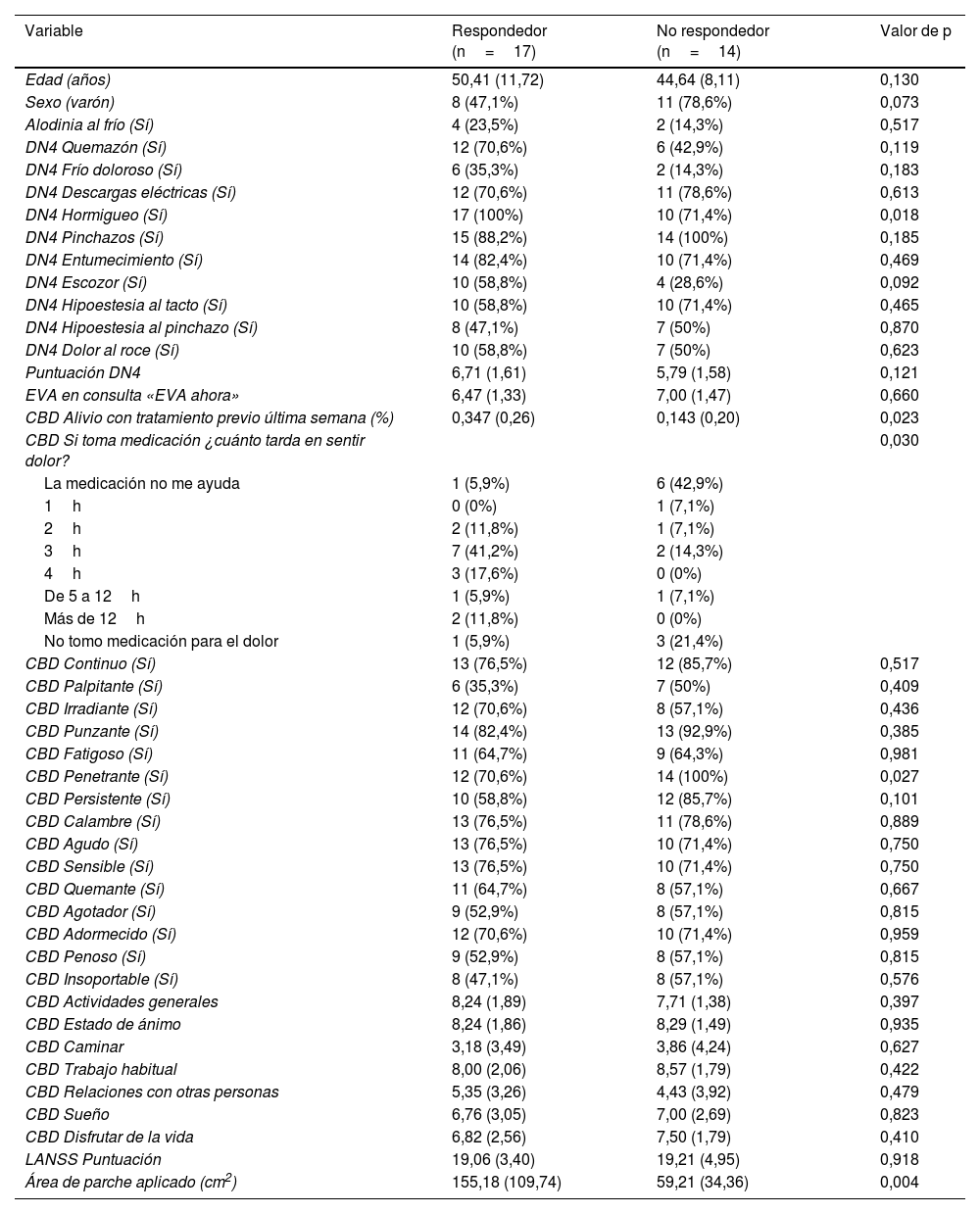
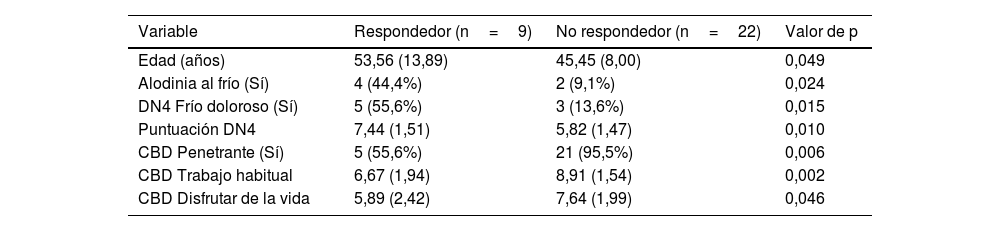
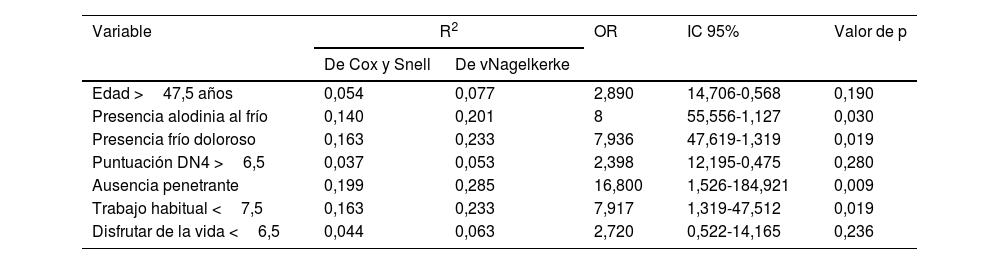
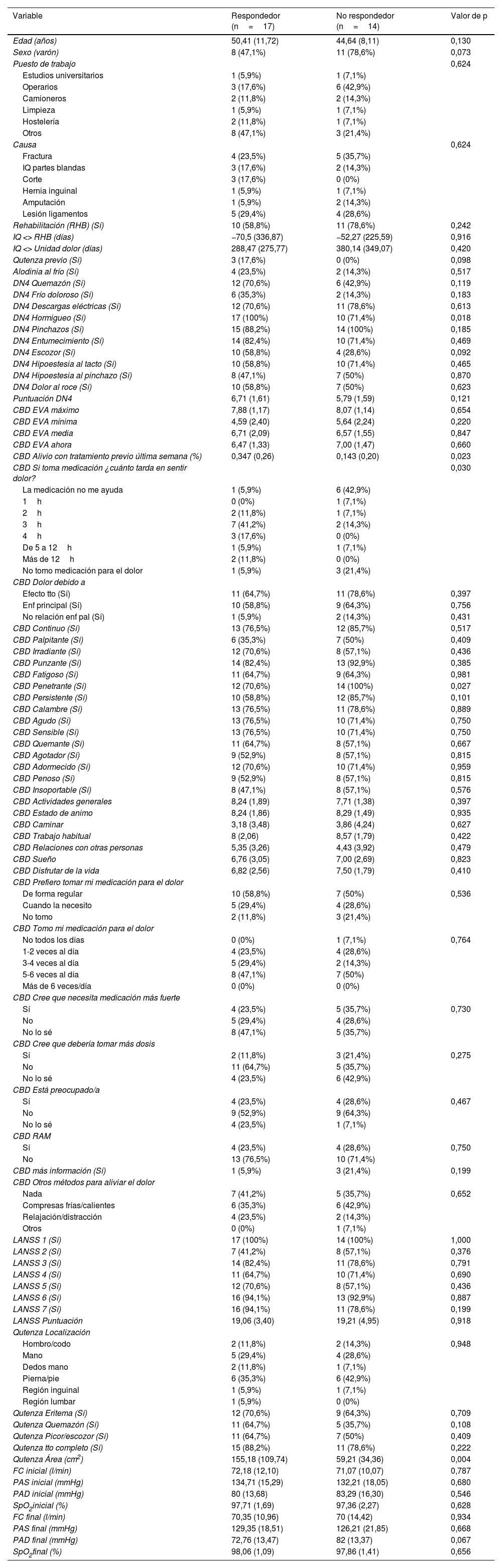
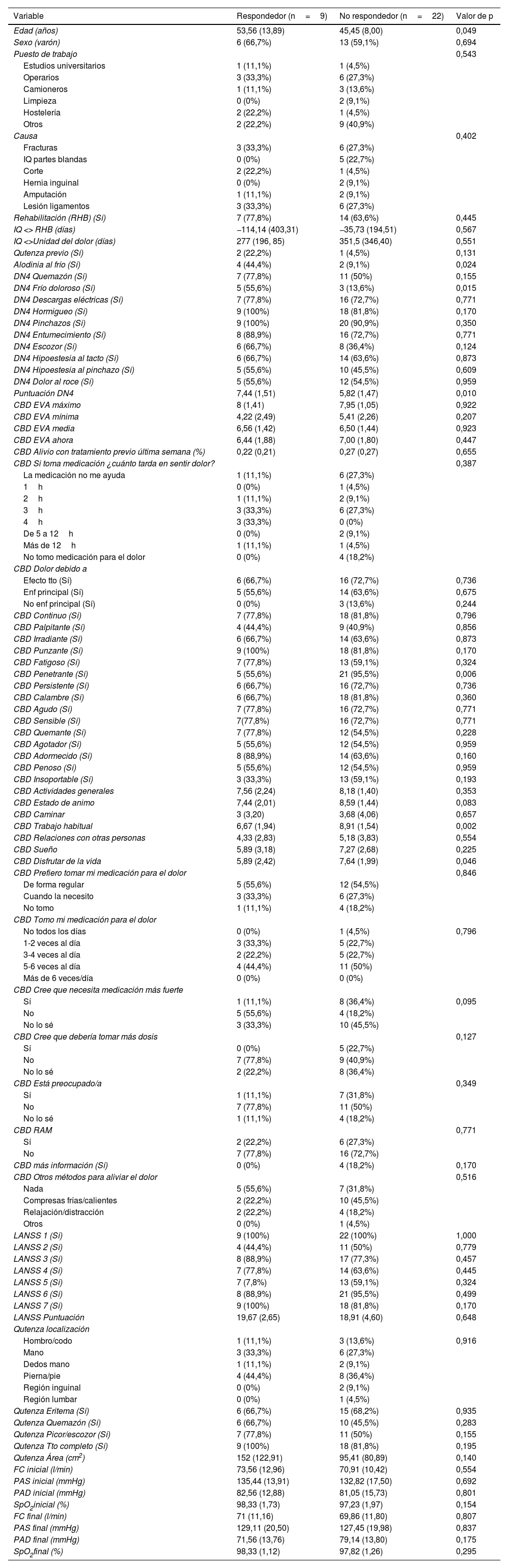
ResultadosEl primer mes, los pacientes que respondieron (n=17) tenían áreas de tratamiento significativamente mayores (155,18 vs. 59,21 cm2; p=0,004) y un mayor alivio del dolor con tratamientos previos en el cuestionario breve de dolor (34,7 vs. 14,3%; p=0,023). A los 12 meses, los predictores significativos incluían la alodinia al frío (OR: 8; p=0,030), sensación de frío doloroso del cuestionario DN4 (OR: 7,936; p=0,019), ausencia de dolor penetrante (OR: 16,800; p=0,009) y una puntuación de interferencia del dolor para el trabajo <7,5 (OR: 7,917; p=0,019).
ConclusionesEl presente estudio aporta una contribución significativa en el manejo del DNP postraumático, proporcionando herramientas para personalizar el tratamiento y optimizar los recursos disponibles.
Neuropathic pain (NP) is a widespread, complex disorder that responds differently to pharmacological treatment. The aim of this study was to identify the baseline characteristics of good response to capsaicin 8% patch in patients with trauma-induced peripheral neuropathic pain (PNP).
Materials and methodsWe performed a prospective, longitudinal, open-label study in 31 patients with PNP treated with 1-3 applications of the capsaicin 8% patch for 52 weeks. Response to treatment was defined as a reduction in the Visual Analogue Scale (VAS) score compared to baseline. Data from responders and non-responders were compared at the start (month 1) and end (month 12) of treatment. Logistic regression was used to identify predictors of treatment response.
ResultsAt month 1, responders (n=17) had significantly larger treatment areas (155.18 cm2 vs. 59.21 cm2; P=.004) and reported greater pain relief with treatments received in the previous week in the brief pain questionnaire (34.7% vs. 14.3%; P=.023). At month 12, significant predictors included cold allodynia (OR 8; P=.030), positive for painful cold in the DN4 questionnaire (OR 7.936; P=.019), no penetrating pain (OR 16.800; P=.009), and pain interference with work score <7.5 (OR 7.917; P=.019).
ConclusionsThis study makes a significant contribution to the management of post-traumatic peripheral neuropathic pain by providing tools to personalize treatment and optimize available resources.