
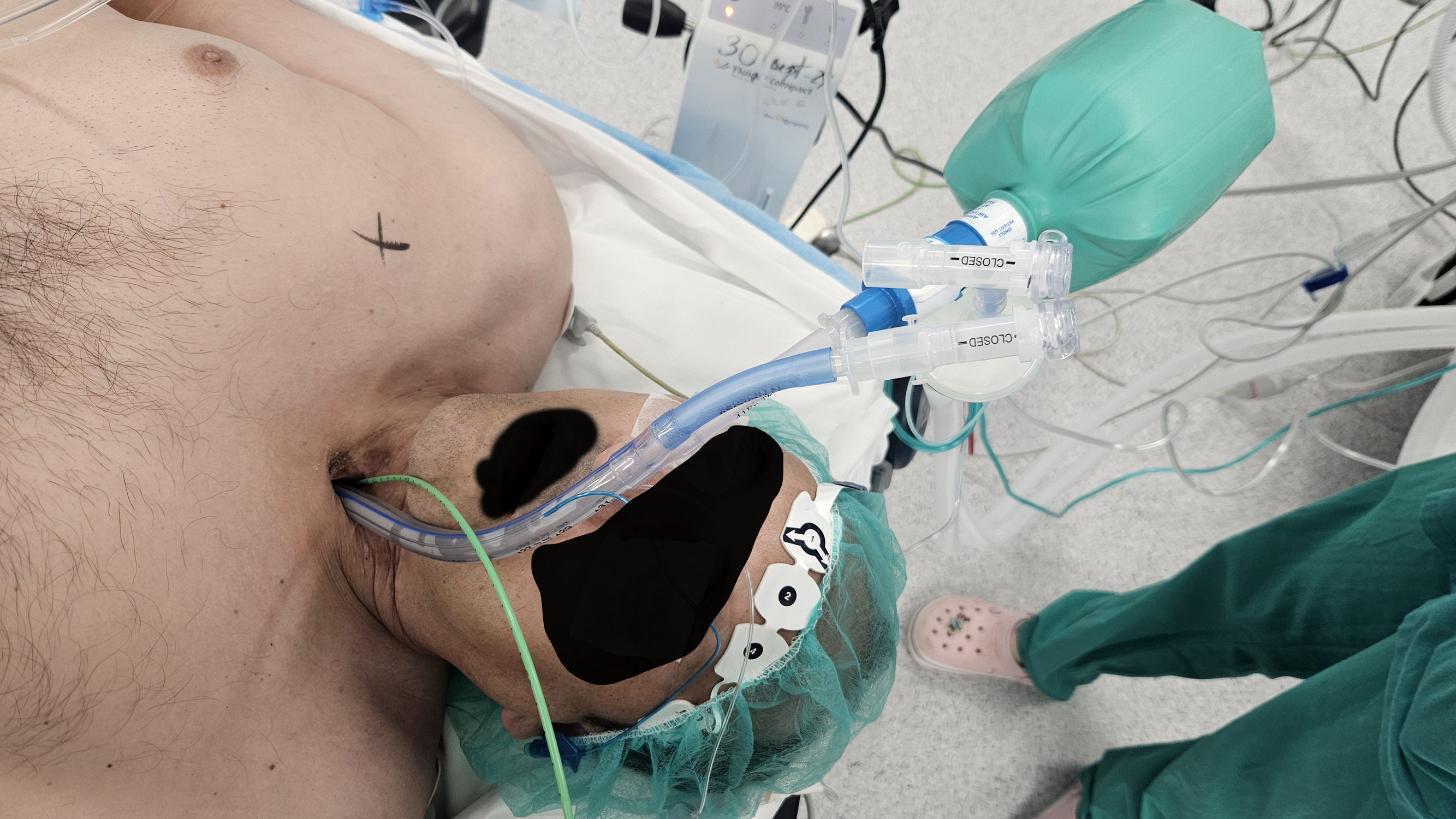
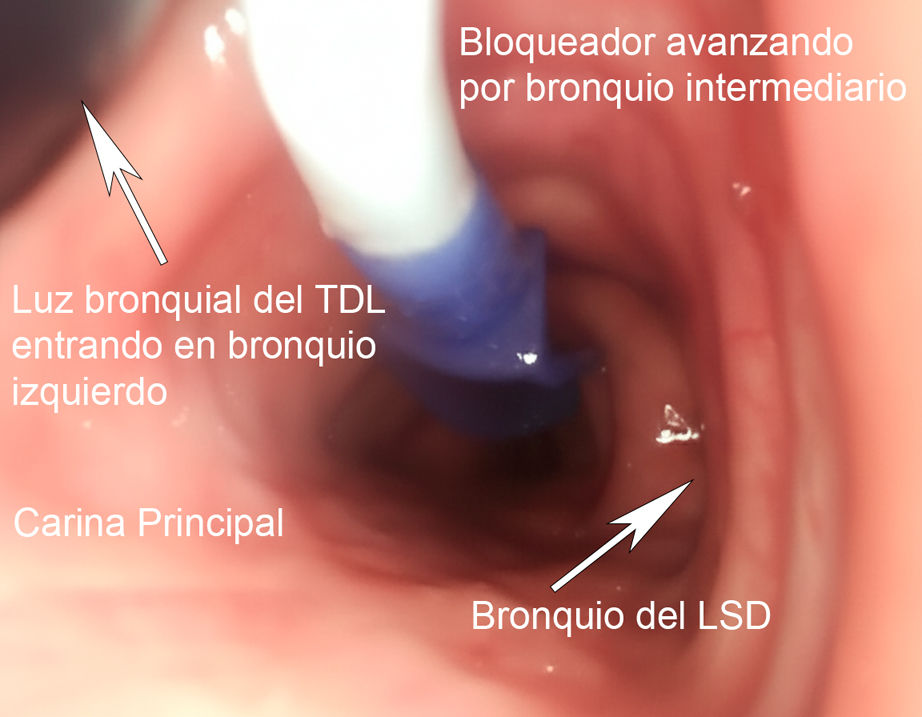
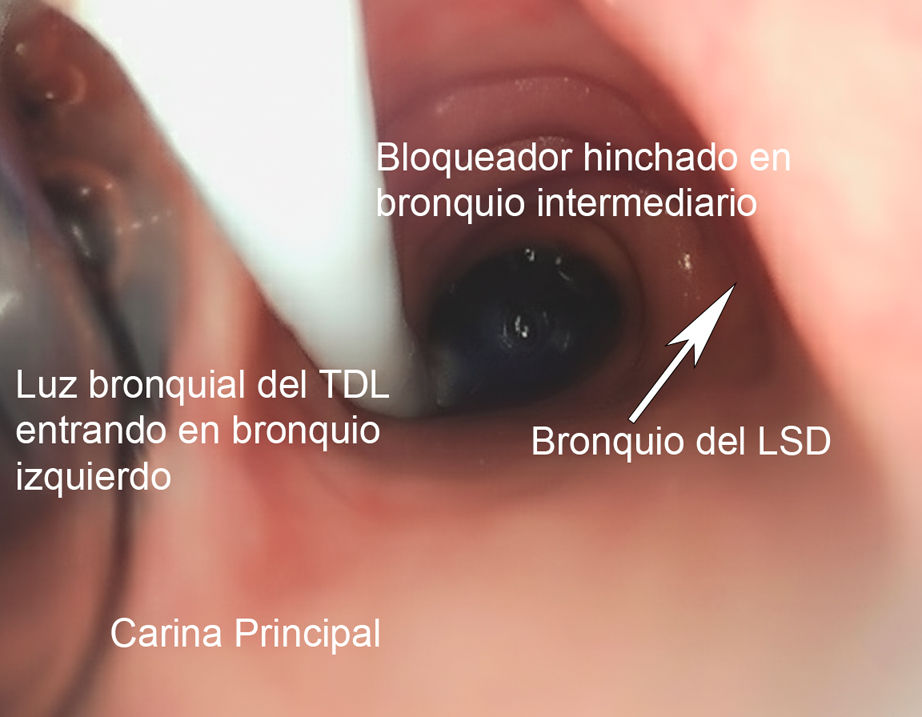
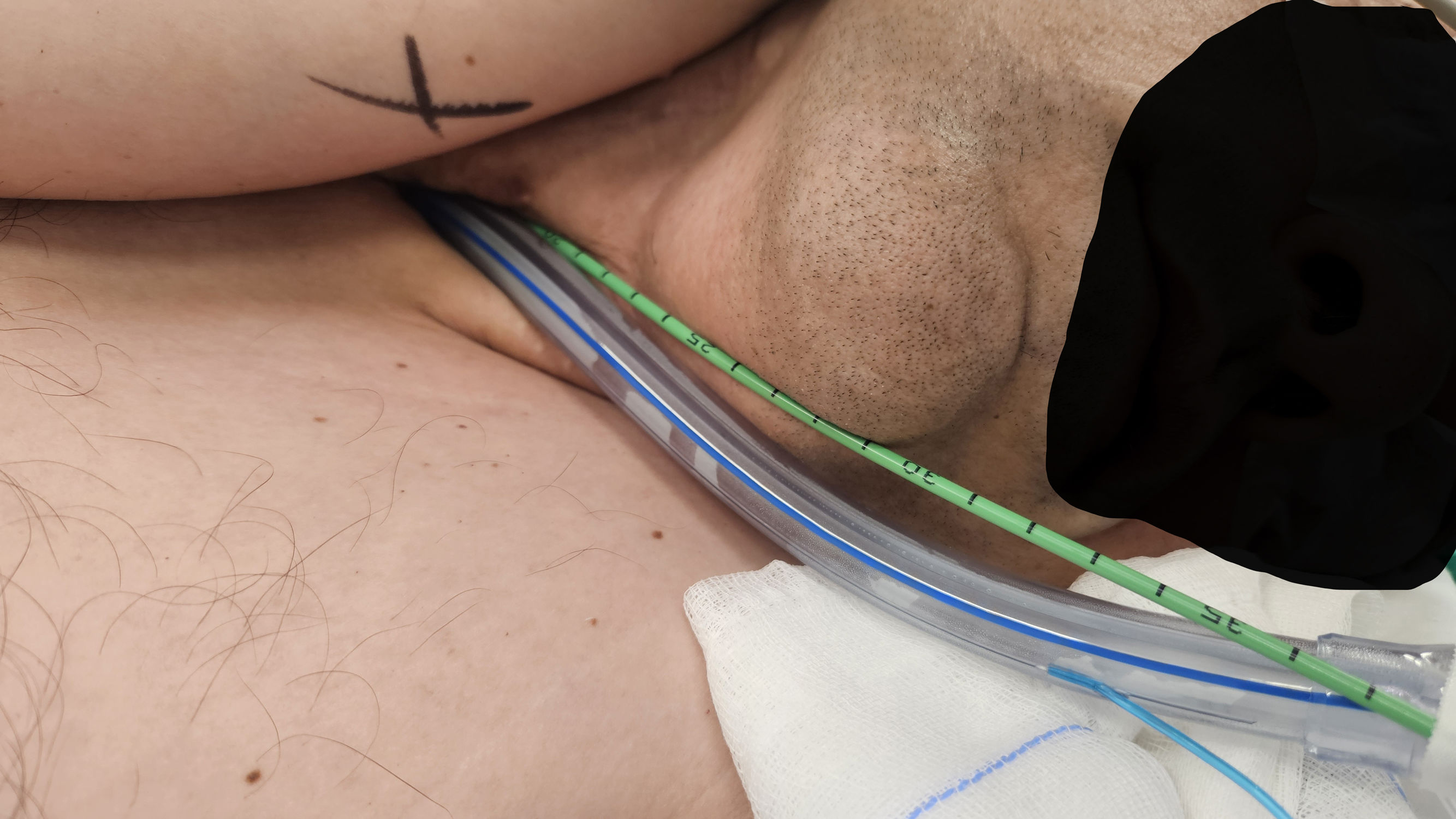
La resección de un lóbulo pulmonar mediante cirugía torácica videoasistida (VATS), habitualmente requiere el colapso del pulmón intervenido y la ventilación únicamente del pulmón restante. La dificultad del manejo anestésico en estos procedimientos se ve incrementada en función de las características y afecciones concomitantes de los pacientes. Presentamos el caso de un paciente programado para lobectomía inferior derecha mediante VATS entre cuyos antecedentes destacan una lobectomía inferior izquierda previa y una laringuectomía total con traqueotomía permanente por neoplasia glótica. Se decidió el empleo simultáneo de un tubo de doble luz izquierdo y un bloqueador bronquial por si una eventual hipoxemia intraoperatoria hacía necesario recurrir a ventilar el lóbulo superior derecho.
Pulmonar lobectomy by video-assisted thoracoscopic surgery (VATS) usually requires collapse of the operative lung and ventilation of the contralateral lung only. The complexity of anaesthetic management in such procedures is further increased by patient comorbidities and previous pathologies. We report the case of a patient scheduled for right lower lobectomy by VATS with a history of previous left lower lobectomy and total laryngectomy with permanent tracheostomy after a glottic carcinoma. A left-sided double-lumen tube was used in combination with a bronchial blocker in order to allow selective ventilation of the right upper lobe should intraoperative hypoxaemia occur.