


There is uncertainty about the role of triple inhaled therapy with LAMA/LABA/ICS (long-acting muscarinic antagonist/long-acting β2-agonist/inhaled glucocorticoids) in chronic obstructive pulmonary disease (COPD) on cardiovascular mortality. We estimated the effect of triple inhaled therapy (TT) compared with dual inhaled therapy (DT, including either LAMA/LABA or LABA/ICS) on all-cause and cardiovascular mortality in an evidence synthesis,
MethodsFollowing prospective registration (https://osf.io/gtfvm), a comprehensive search strategy of PubMed, Scopus, and Embase was performed, without language or time restrictions until September 30, 2024. All randomized clinical trials (RCTs) evaluating TT vs. DT and reporting cardiovascular or all-cause mortality were included. We assessed risk of bias and conducted a random effect meta-analysis estimating summary relative risk (RR) with 95% confidence intervals (CI), evaluating heterogeneity using I2. A network meta-analysis (NMA) was undertaken to hierarchically rank the therapies using P-score.
ResultsFrom 781 citations, 5 RCTs were selected. There were 3 three-arm RCTs comparing TT vs. LABA/ICS vs. LAMA/LABA, 1 two-arm RCT comparing TT vs. LABA/ICS, and 1 two-arm RCT comparing TT vs. LAMA/LABA (total of 7855 patients receiving TT, 7003 LABA/ICS and 5059 LAMA/LABA). The risk of bias was moderate in 2 (40%), and low in 3 (60%) RCTs. TT reduced cardiovascular mortality by 48% vs. LAMA/LABA (RR 0.52, 95% CI 0.32–0.86, 3 RCTs, I2=0%) and by a non-significant 11% vs. LABA/ICS (RR 0.89, 95% CI 0.57–1.37, 3 RCTs, I2=0%). TT reduced all-cause mortality by 34% vs. LAMA/LABA (RR 0.66, 95% CI 0.48–0.90, 4 RCTs, I2=23.7%) and by 10% vs. LABA/ICS (RR 0.90, 95% CI 0.71–1.13, 4 RCTs, I2=0%). For both cardiovascular and all-cause mortality, NMA P-score showed that TT ranked first (81%/91%), LABA/ICS ranked second (58%/57%) and LAMA/LABA ranked last (11%/<1%) in effectiveness.
ConclusionsIn patients with moderate to very severe COPD and previous exacerbations, TT inhaled significantly reduces cardiovascular and all-cause mortality compared to LAMA/LABA dual therapy, but not when compared to LABA/ICS.
No está claramente definido el efecto sobre las complicaciones cardiovasculares de la triple terapia inhalada (TT) con LAMA/LABA/ICS (antagonista muscarínico de acción prolongada/agonista β2 de acción prolongada/glucocorticoides inhalados) en la enfermedad pulmonar obstructiva crónica (EPOC). Para ello realizamos una revisión sistemática y metaanálisis para estimar el efecto de la TT en comparación con la doble terapia inhalada (DT) sobre la mortalidad cardiovascular y la mortalidad por todas las causas.
MétodosTras el registro prospectivo (https://osf.io/gtfvm), se realizó una estrategia de búsqueda exhaustiva en PubMed, Scopus y Embase, sin restricciones de idioma o tiempo hasta el 30 de septiembre de 2024. Se incluyeron todos los ensayos clínicos aleatorizados (ECA) que evaluaron TT frente a DT simultáneamente y que disponían de datos de mortalidad cardiovascular y por cualquier causa. Se evaluó el riesgo de sesgo y se realizó un metaanálisis de efectos aleatorios estimando el riesgo relativo (RR) con intervalos de confianza (IC) del 95%, evaluando la heterogeneidad mediante I2. Se realizó un metaanálisis de red (NMA) para clasificar jerárquicamente los tratamientos.
ResultadosDe 781 citas, se seleccionaron 5 ECA. Tres ECA de 3 brazos que compararon TT frente a LABA/ICS y LAMA/LABA, un ECA de 2 brazos que comparó TT frente a LABA/ICS y un ECA de 2 brazos que comparó TT frente a LAMA/LABA (un total de 7855 pacientes recibieron TT, 7003 LABA/ICS y 5059 LAMA/LABA). El riesgo de sesgo de los ECA fue moderado en 2 (40%) y bajo en 3 (60%) ECA. La TT redujo la mortalidad cardiovascular en un 48% frente a LAMA/LABA (RR 0,52; IC 95% 0,32-0,86; 3 ECA; I2=0%) y en un 11% no estadísticamente significativo frente a LABA/ICS (RR 0,89; IC 95% 0,57-1,37; 3 ECA; I2=0%). La TT redujo la mortalidad por todas las causas en un 34% frente a LAMA/LABA (RR 0,66; IC 95% 0,48-0,90; 4 ECA; I2=23,7%) y en un 10% frente a LABA/ICS (RR 0,90; IC 95% 0,71-1,13; 4 ECA; I2=0%). Tanto para la mortalidad cardiovascular como para la mortalidad por todas las causas, la TT fue jerárquicamente más eficiente (81%/91%, respectivamente), LABA/ICS la segunda (58%/57%) y LAMA/LABA la tercera (11%/<1%).
ConclusionesEn pacientes con EPOC de moderada a muy severa y con exacerbaciones previas, la TT reduce significativamente la mortalidad cardiovascular y por cualquier causa en comparación con la terapia dual LAMA/LABA, pero no cuando se compara con LABA/ICS.
Chronic obstructive pulmonary disease (COPD), the fourth leading cause of mortality in the world,1 predisposes to cardiovascular morbidity and mortality2–5 with heart failure as the main cause of second and subsequent admissions in these patients.6 In the past, studies with dual inhaled therapy were not shown to reduce all-cause mortality possibly partly due to the increased incidence of pneumonia and results were divergent for cardiovascular mortality.7,8 In the last years, the development of triple inhaled therapy with LAMA/LABA/ICS (long-acting muscarinic antagonist/long-acting β2-agonist/inhaled glucocorticoids) has modified the natural course of COPD. While the primary objective of triple inhaled therapy has been the reduction of exacerbations compared with dual inhaled therapy,9–12 the evidence on how triple inhaled therapy affects mortality is variable. In two studies triple inhaled therapy reduced all-cause mortality as secondary objective,13,14 however the results on cardiovascular mortality have not been consistent. One randomized clinical trial (RCT) comparing triple with dual inhaled therapy suggested possible cardiovascular benefits of triple inhaled therapy15 in contrast to other study which showed a neutral effect.16 Attempting to clarify these uncertainties through evidence syntheses is relevant for clinical practice.17
Existing meta-analyses analyze all-cause mortality associated with triple inhaled therapy.18,19 In an extensive review of the bibliography, we did not find meta-analysis comparing the effect of triple inhaled therapy with both types of dual inhaled therapy (LAMA/LABA and LABA/ICS), on cardiovascular mortality and all-cause mortality in RCTs evaluating inhaled treatments with more than 6 months duration. To this end, we developed the present evidence synthesis for meta-analytically estimating the effect of triple inhaled therapy (LAMA/LABA/ICS) compared with dual inhaled therapy subtypes (LAMA/LABA and LABA/ICS) on cardiovascular mortality and all-cause mortality. In addition, adverse effects related to pneumonia were analyzed.
Material and methodsProspective registration and designThis systematic review was conducted following prospective registration (Center for Open Science, https://osf.io/gtfvm) on April 12, 2023 as amended on April 16, 2023 (https://doi.org/10.17605/OSF.IO/GTFVM). The review followed recommended methodology for collating and synthesizing all eligible RCTs.20,21 This manuscript was written using the recommended methodology for reporting systematic reviews and meta-analyses.22
Literature search and selectionA comprehensive literature search strategy covering major electronic databases was performed to retrieve citations from PubMed, Scopus, and Embase, without language or time restrictions until September 30, 2024. The final search combined the keywords and word variations of the following terms: “Chronic obstructive pulmonary disease”, “COPD”, “mortality”, “cardiovascular mortality”, “all-cause mortality”, triple inhaled therapy, dual inhaled therapy, “randomized clinical trials”, “inhaled therapy”, “dual” and “triple”. The complete search strategy is detailed in supplement material (Appendix S1). Mendeley software was used to manage retrieved citations. No language or time restrictions were applied.
Eligibility criteria for the studies were as follows: randomized double-blind clinical trial (RCTs) assessing the effect of triple inhaled therapy with LABA/LAMA/ICS (long-acting beta-agonists/long-acting muscarinic antagonists/corticosteroids) compared with and any dual inhaled therapy (a) LABA/LAMA (long-acting beta-agonists/long-acting muscarinic antagonists) or (b) LABA/ICS (long-acting beta-agonists/inhaled corticosteroids) providing cardiovascular and all-cause mortality data on patients with moderate to very severe COPD. Inhaled therapy (triple and dual) had to be administrated in a single device and with a duration of more than 12 months as the most common minimum follow-up period to analyze cardiovascular fatal events.23 Non-eligible citations were classified into three categories: not RCT; not cardiovascular mortality reported; outside the scope of review.
Studies were selected through a multi-step approach, including deletion of exact and inexact duplicates, reading titles and abstracts, and assessment of full-texts performed independently by two investigators. To ensure interobserver variability, a pilot study was performed before with 50 studies that showed a 95% level of agreement. Initially, all the studies that met the inclusion criteria were selected, followed by the detection of duplicate studies and the discarding of those that did not meet the eligibility criteria using the title and abstracts. Subsequently, with the remaining studies, the full manuscripts were analyzed in depth to discard those that did not strictly meet the selection criteria. Three investigators performed the data extraction. Discrepancies between them were resolved by consensus by revising the original or by arbitration by a fourth reviewer.
Data extraction and study quality assessmentData were extracted independently by three investigators from the original publications. Data collected for the analysis included: authorship, publication year, inhaled therapy drugs, baseline clinical and sociodemographic data with special focus for cardiovascular history such as: major adverse cardiovascular events (MACE), moderate and severe exacerbations, exacerbations during follow-up/treatment (see classification criteria for exacerbations in Appendix S2), pneumonia, cardiovascular and all-cause mortality. Included RCTs were critically appraised by three investigators using the risk-of-bias tool for randomized trials (RoB 2)24 and a sensitivity analysis was performed (see Appendix S7). Data for the IMPACT and ETHOS studies were extracted both from the original publication11,12 and from the substudies of all-cause mortality and cardiovascular mortality.13,14 The data for the other three studies were obtained from the original articles.9,10,25 In the studies with multiple comparisons (ETHOS and IMPACT), data were extracted independently for the LAMA/LABA and LABA/ICS dual therapy combinations. In the case of the ETHOS study, only budesonide 320 dose data were used for analysis because it is the dose available and recommended in clinical practice.26
Data synthesisThe primary objective was to analyze the effect of inhaled triple therapy compared to inhaled dual therapy on cardiovascular mortality and all-cause mortality as endpoints. Analyses of both variables were performed for the set of dual inhaled therapies (LAMA/LABA and LABA/ICS) as well as for each one separately to evaluate the possible impact of inhaled corticosteroids on cardiovascular mortality. Additionally, the incidence of adverse effects related to non-severe pneumonia (without hospitalization) and severe pneumonia (with hospitalization) was analyzed between both types of treatment.
Data on cardiovascular mortality and all-cause mortality extracted separately from each included study among patients with COPD were used to estimate relative risks along with 95% confidence intervals (CI). Meta-analyses were conducted using a random effects model. Heterogeneity among studies was assessed using Q test and I-squared (I2) statistic, and was graphically expressed in forest plots. We assumed that an I2 >50% indicated substantial heterogeneity and I2 >75% considerable heterogeneity. We performed a subgroup analysis based on the different treatment types LAMA/LABA and LABA/ICS to identify potential sources of heterogeneity and to analyze potential differences in the estimates according to subgroups. We planned to use funnel plots to detect potential reporting biases. We evaluated the ranking of effectiveness using network meta-analysis, combining indirect comparisons where available with direct comparisons. Network meta-analyses were carried out using a common effects model (Mantel–Haenszel method) to hierarchically rank the therapies using the netrank P-score.27 In addition, as sensitivity analysis, a Bayesian network meta-analyses was carried out evaluating the ranking using surface under the cumulative ranking curve (SUCRA) statistic.28 All statistical analyses were conducted using R software.
ResultsCharacteristics of the selected studiesOf the total of 781 citations, five met the selection criteria for analysis (Fig. 1 and Appendix S3). Briefly, the patients included (7855 patients receiving TT, 7003 LABA/ICS and 5059 LAMA/LABA) were adults older than 40 years, predominantly male, smokers or ex-smokers with moderate to very severe COPD severity and 52 weeks of exposure to inhaled therapy (Appendix S4). In four of the studies, the inclusion criteria included a history of previous exacerbations in the last year (at least one moderate or severe COPD exacerbation if their FEV1 was <50% of the predicted normal value or at least two moderate or at least one severe COPD exacerbation if their FEV1 was ≥50% of the predicted normal value). From the point of view of cardiovascular risk, between 51% and 60% had hypertension, 13%–19% were diabetic, 13%–26% had a history of coronary disease, 0.09–0.13 was the annual rate of severe exacerbations during the follow-up period, and 5%–10% had a history of heart failure (Appendix S4).
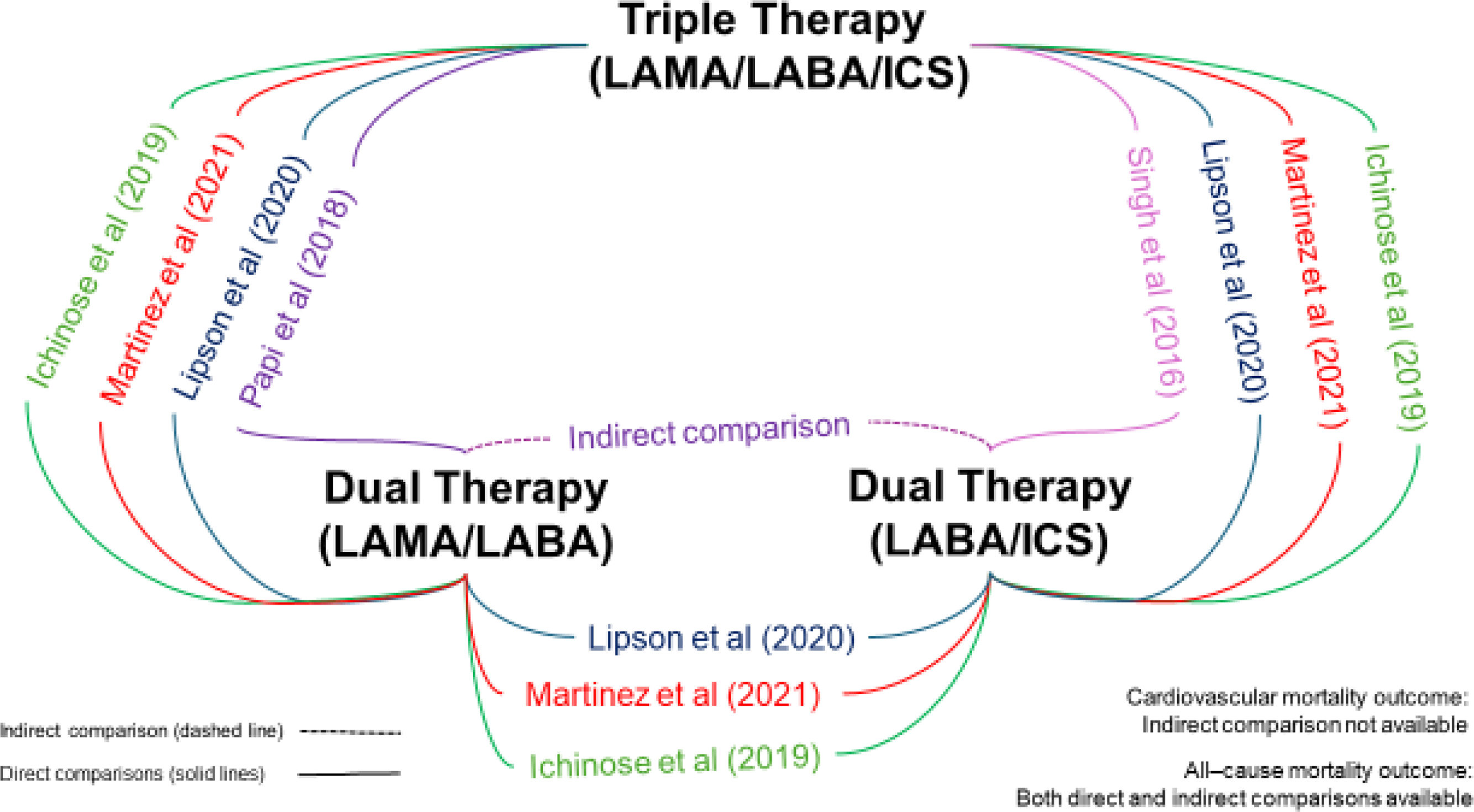
In the treatment network, there were three three-arm RCTs comparing triple therapy directly vs. LABA/ICS and LAMA/LABA dual therapies,11,12,25 one two-arm RCT comparing it directly vs. LABA/ICS dual therapy,10 and one two-arm RCT comparing it directly vs. LAMA/LABA dual therapy9 (total of 7855 patients receiving triple therapy, 7003 LABA/ICS and 5059 LAMA/LABA) (Fig. 2).
Risk of biasThe results of the bias analysis of the included studies showed the absence of relevant data in two of the studies (40%) in relation to cardiovascular mortality but not with respect to all-cause mortality (Fig. 3). Of the five included studies, two (40%) showed a low risk of bias while three were considered to be at moderate risk of bias (Appendix S5).
A total of 6404 patients in the triple inhaled therapy group, 6326 for LABA/ICS group and 4301 for LAMA/LABA group from the three studies were included in the analysis.13,14,25 Triple inhaled therapy reduced cardiovascular mortality by 48% vs. LAMA/LABA (RR 0.52, 95% CI 0.32–0.86, 3 RCTs, I2=0%) and by a non-significant 11% vs. LABA/ICS (RR 0.89, 95% CI 0.57–1.37, 3 RCTs, I2=0%) (Fig. 4). In network meta-analysis combining direct evidence (3 studies), the P-score showed that triple therapy ranked first (81%), LABA/ICS ranked second (58%) and LAMA/LABA ranked last (11%) (Appendix S6).
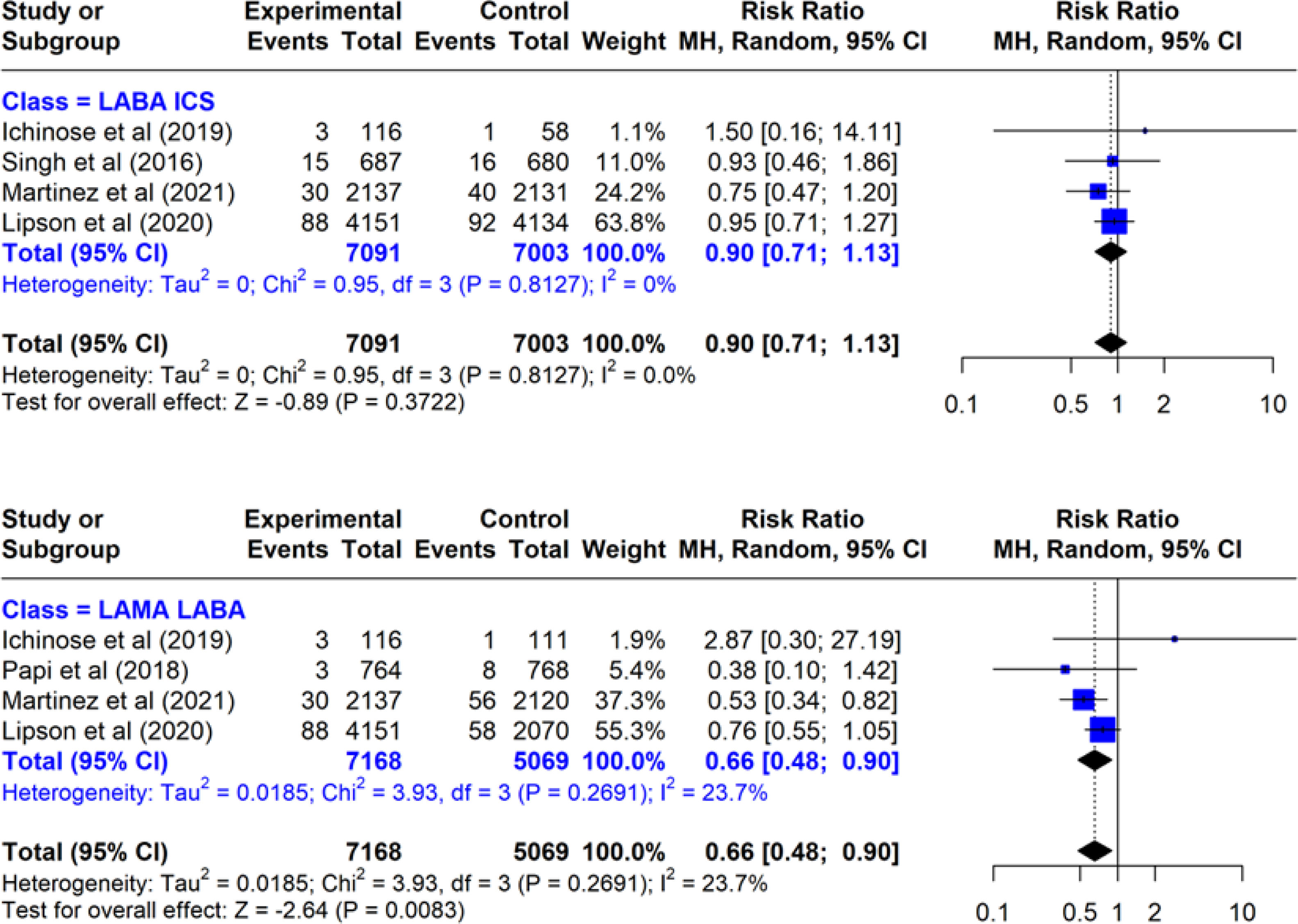
All-cause mortalityA total of 7091 patients for LABA/ICS comparisons and 7168 patients for LAMA/LABA comparisons in the triple inhaled therapy group, 7003 in LABA/ICS group and 5089 in LAMA/LABA group from the five studies were included in the analysis.9,25 Triple therapy reduced all-cause mortality by 34% vs. LAMA/LABA (RR 0.66, 95% CI 0.48–0.90, 4 RCTs, I2=23.7%) and by a non-significant 10% vs. LABA/ICS (RR 0.90, 95% CI 0.71–1.13, 4 RCTs, I2=0%) (Fig. 5). The netrank P-score in network meta-analysis combining both direct and indirect evidence (5 studies, Fig. 2) showed that triple therapy ranked first (91%), LABA/ICS ranked second (57%) and LAMA/LABA ranked last (<1%) in effectiveness (Appendix S6).
Pneumonia as adverse eventNon-severe pneumonia was 62% more frequent in triple therapy group compared with LAMA/LABA group (RR 1.62, 95% CI 1.36–1.95, 3 RCTs, I2=0%) (Appendix S7). Regarding severe pneumonia defined as those requiring hospitalization, they were more frequent in patients with triple therapy compared to LAMA/LABA (RR 1.71, 95% CI 1.36–2.15, 3 RCTs, I2=32.7%) and compared with LABA/ICS (RR 1.25, 95% CI 1.04–1.49, 3 RCTs, I2=32.7%) (Fig. 6). With respect to fatal pneumonia, only two studies report data, and there is no difference between inhaled triple therapy and any of the two inhaled dual therapies (Appendix S4).
Sensitivity analysisThe hierarchical ranking for all-cause mortality based on P-score was consistent with SUCRA statistic as triple therapy ranked first (87%), LABA/ICS ranked second (57%) and LAMA/LABA ranked last (4%), but not for cardiovascular mortality as with SUCRA in this case LABA/ICS ranked first (86%), triple therapy ranked second (63%) and LAMA/LABA ranked last (10%) (Appendix S6). The standard meta-analytic results were not sensitive to the risk of bias in the included studies (Appendix S7), Egger's test indicated no evidence of bias (Appendix S8).
DiscussionThe results of the present meta-analysis specifically designed to evaluate cardiovascular mortality showed that triple inhaled therapy reduced cardiovascular mortality relatively by a half vs. LAMA/LABA and by a non-significant one-tenth vs. LABA/ICS. Likewise, triple inhaled therapy also reduced all-cause mortality relatively by a third compared to the LAMA/LABA combination and by a non-significant one-tenth vs. LABA/ICS. Triple therapy ranked first, LABA/ICS second and LAMA/LABA last in effectiveness. However, this benefit was associated with an increased rate of non-fatal pneumonia.
The main strength of the meta-analysis is that compares the effect of triple vs. dual inhaled therapy on cardiovascular mortality in studies where both therapeutic strategies are evaluated simultaneously. This allows comparison of the effect on similar populations in terms of sociodemographic characteristics, COPD severity and cardiovascular risk. Likewise, only studies with a treatment and follow-up period of 12 months were included, because 12 months is the most common minimum follow-up period to analyze cardiovascular fatal events.23 The results show low heterogeneity among the included studies.
In terms of weaknesses, the study has some limitations that should be taken into account when interpreting it. The statistical aspects need consideration in light of the small number of studies and outcome events in the included studies. Two of the studies11,12 contributed more than 90% of the weight in the meta-analytic results (Figs. 4 and 5). The limited number of studies also precluded the interpretation of funnel plots and biases (Appendix S8). The numbers of deaths of cardiovascular origin were low, and there was a percentage of cases in which the cause of death could not be defined. Despite the risk of imprecision due to the sparsity of outcome events, the effect of triple therapy against LABA/ICS was statistically significant. Also of note is the conversion of trials with three-arm comparisons into two-arm comparisons for performing standard meta-analyses. This meant, e.g. in Figs. 4 and 5, repetition of the triple therapy data when comparing it separately with the two double therapies. Repetition of the same data in analyses tends to add spurious precision. The network meta-analysis was performed by deploying published data from the few studies available, limiting the possibility of examining advanced statistical aspects of this approach. We used the P-score for formally ranking the three available options to add value to the standard meta-analyses. The interpretation should be cautious, as the findings of the P-score ranking was consistent with the SUCRA ranking for all-cause mortality, but not for cardiovascular mortality. This discrepancy is likely due to the small number of studies available. Individual participant data meta-analysis will, in the future, offer a more appropriate statistical analysis. Furthermore, it is not possible from our analysis to predict which patients might have a greater benefit from triple inhaled therapy in the population studied. Such questions would be best addressed with prediction modelling when individual participant data becomes available. Finally, the results should only be interpreted with a proviso placed on generalizability, which should be limited to the moderate and very severe COPD population with previous exacerbations.
The effect of triple inhaled therapy on cardiovascular mortality has not been specifically evaluated so far in a randomized clinical trial, although there is an ongoing study whose results will initially be published in 2028.29 Epidemiological evidence30,31 and more recent clinical trials13,14 with triple inhaled therapy have shown how cardiovascular events are by far the leading cause of mortality in patients with moderate to very severe COPD and prior exacerbations. The meta-analysis by Lee et al.19 published in 2019 found no difference in cardiovascular mortality when comparing triple inhaled therapy with any of the dual inhaled therapy combinations. It should be noted that the ETHOS study showed a favorable trend in reducing cardiovascular mortality15 and was not included in Lee's meta-analysis because it was, like IMPACT which showed a neutral effect,16 published later. In another meta-analysis by Korai et al.,18 which only compared inhaled triple therapy vs. LAMA/LABA and included a study with a follow-up of less than 6 months, the reduction in cardiovascular mortality was slightly higher (RR 0.50, 95% CI 0.31–0.80), which is consistent with the results of the present study.
The results of the present meta-analysis comparing inhaled triple therapy with the two most common combinations of inhaled dual therapy provide information on the possible mechanisms involved in the possible cardiovascular protection of triple therapy. First, the reduction in cardiovascular mortality of inhaled triple therapy vs. the LAMA/LABA combination and not vs. the LABA/ICS combination suggests a possible protective effect of inhaled corticosteroids on cardiovascular complications. Several studies show the mechanisms by which inhaled corticosteroids may have a beneficial effect on cardiovascular mortality.32,33 Recently, the ICSLIFE study, a pragmatic randomized clinical trial comparing after hospitalization the association of an inhaled corticosteroid to long-acting bronchodilators (LAMA or LAMA/LABA) vs. no inhaled corticosteroid in patients with moderate to severe COPD and previous cardiovascular complications, found a reduction in cardiovascular mortality of 27.4% (4.5% vs. 6.2% respectively) without increasing the incidence of pneumonia.34 It is also relevant to consider how the type of inhaled glucocorticoid and dose may influence cardiovascular mortality.35 A recent meta-analysis by Hong-Chen et al., which included 103,034 patients with COPD, found a reduction in all-cause mortality when inhaled corticosteroids were used especially in triple therapy compared to bronchodilator therapies without inhaled corticosteroids. The most relevant predictors were duration time, mean corticosteroid doses and whether the corticosteroid was budesonide.36 In this regard, in the ETHOS study whose results suggest a reduction in cardiovascular mortality, the corticosteroid used was budesonide. Furthermore, only the 320μg dose showed benefit compared to the 160μg dose, suggesting a dose-dependent effect. Secondly, triple inhaled therapy reduces moderate and severe exacerbations9–12 predisposing factors for cardiovascular complications, especially atherosclerotic ones.3,5 Thirdly, triple therapy could have a more diversified effect on the different pathophysiological mechanisms involved in COPD and cardiovascular complications, such as lung compliance, lung function, hypoxemia and atherosclerosis.37,38
The 34% reduction in all-cause mortality compared to the LAMA/LABA combination found in the present meta-analysis is in agreement with other studies. In the meta-analysis of Lee et al.19 they found a 46% reduction, in that of Korai et al.18 they obtained a 34% reduction and in that of Long et al.39 a 30% reduction, in all cases vs. LAMA/LABA. Both in the cited meta-analyses and in our study, triple inhaled therapy compared to the LAMA/LABA combination reduced severe exacerbations, which are a risk factor for all-cause mortality and cardiovascular mortality. In the NMA conducted, triple therapy shows a superior benefit compared to dual therapy, especially LAMA/LABA in the efficacy of reducing all-cause mortality (91% vs. <1%), which is highly relevant in terms of clinical implications. This is consistent with the recent GOLD 2025 recommendations for mortality reduction in COPD patients.40 Additionally, the impact of cardiovascular mortality on all-cause mortality can be at least partially understood from the results of the ETHOS and IMPACT studies. The results of the reduction in all-cause mortality were of greater magnitude in the ETHOS study compared to IMPACT, which could be explained in part by the greater benefit of ETHOS on cardiovascular mortality,13,14 the main culprit of all-cause mortality in both studies. Similarly, we found no differences in all-cause mortality between triple therapy and the LABA/ICS combination, which could be at least partially explained by the lack of benefit on cardiovascular mortality.
One aspect of interest when assessing the indications for triple inhaled therapy was the incidence of pneumonia as a relevant respiratory adverse effect. The risk of pneumonia was higher in triple inhaled therapy compared to the LAMA/LABA combination and 71% higher for pneumonia with hospitalization (Fig. 6). Also, triple therapy increased the incidence of severe pneumonia by 25% compared to LABA/ICS. These results showing an increase in pneumonia in treatments including inhaled corticosteroids are consistent with the results of other meta-analyses.18,19,39 However, when evaluating fatal pneumonia, we found no differences with respect to any of the dual inhaled therapies. The incidence of fatal pneumonia in both the IMPACT and ETHOS studies was very low, without affecting all-cause mortality (Appendix S4).
ImplicationsThe results of the present meta-analysis may condition the inhaled therapeutic strategy for patients with moderate to very severe COPD and previous exacerbations. Until relatively recently, the main goal of inhaled therapy was to improve quality of life, lung function and reduce exacerbations. The results of the present meta-analysis suggest that the therapeutic strategy should be redirected and individualized towards a reduction in cardiovascular mortality and consequently a reduction in all-cause mortality. The present meta-analysis should be updated when the ongoing trial29 are completed also, there is a need to perform a network meta-analysis.
ConclusionInhaled triple therapy, compared to inhaled LAMA/LABA dual therapy, reduced cardiovascular and all-cause mortality in patients with moderate to very severe COPD and previous exacerbations, but not when compared to LABA/ICS. For both cardiovascular and all-cause mortality, inhaled triple therapy ranked first in comparison with LAMA/LABA and LABA/ICS, which must be taken into account when individualizing the treatment of these patients.
CRediT authorship contribution statementThe roles of the authors are detailed according to the Contributor Roles Taxonomy (CRediT):
ACM conceived the study and, together with MNN and KSK led the development of the protocol and provided supervision and mentorship. ACM and KSK conceptualization. ACM, MGF and CCF investigation, data curation. KSK, MNN, MEGV and MJ methodology and statistical analysis. ACM writing-original draft and KSK and MNN supervision, writing-review and editing. All authors critically reviewed successive drafts of the manuscript, provided important intellectual input, and approved the final version for publication.
Ethical approvalEthical review and approval was not required for this study because the review relies on retrieving and synthesizing data from existing published RCTs.
FundingThis research received no pharmaceutical funding. Fundación Semergen provided funding for methodological support.
Conflicts of interestThe authors declare no conflict of interest.
KS-K was a distinguished investigator at the University of Granada funded by the Beatriz Galindo (senior modality) program of the Spanish Ministry of Education. MN-N is on research grant program funded by the Research Institute Carlos III (Juan Rodes JR23/0025).



