

We conducted this study to systematically review and assess the current clinical practice guidelines (CPGs) related to the diagnosis and treatment of Helicobacter pylori (H. pylori) infection. The aim was to evaluate the quality of these included CPGs and provide clinicians with a convenient and comprehensive reference for updating their own CPGs. We searched four databases to identify eligible CPGs focusing on H. pylori diagnosis and treatment recommendations. The results were presented using evidence mappings. Quality and clinical applicability were assessed comprehensively using AGREE-II and AGREE-REX. Statistical tests, specifically Bonferroni tests, were employed to compare the quality between evidence-based guidelines and consensus. A total of 30 eligible CPGs were included, comprising 17 consensuses and 13 guidelines. The quality showed no statistical significance between consensuses and guidelines, mainly within the moderate to low range. Notably, recommendations across CPGs exhibited inconsistency. Nevertheless, concerning diagnosis, the urea breath test emerged as the most frequently recommended method for testing H. pylori. Regarding treatment, bismuth quadruple therapy stood out as the predominantly recommended eradication strategy, with high-dose dual therapy being a newly recommended option. Our findings suggest the need for specific organizations to update their CPGs on H. pylori or refer to recently published CPGs. Specifically, CPGs for pediatric cases require improvement and updating, while a notable absence of CPGs for the elderly was observed. Furthermore, there is a pressing need to improve the overall quality of CPGs related to H. pylori. Regarding recommendations, additional evidence is essential to elucidate the relationship between H. pylori infection and other diseases and refine test indications. Clinicians are encouraged to consider bismuth quadruple or high-dose dual therapy, incorporating locally sensitive antibiotics, as empirical radical therapy.
.
Hemos realizado este estudio para revisar y evaluar sistemáticamente las guías de práctica clínica (GPC) actuales sobre las recomendaciones de diagnóstico y tratamiento de la infección por Helicobacter pylori (H. pylori), así como valorar la calidad de las GPC incluidas. Esperamos que esto facilite a los clínicos el diagnóstico al igual que el tratamiento y proporcione una referencia para la actualización de las GPC. Se realizaron búsquedas en cuatro bases de datos para encontrar GPC elegibles sobre recomendaciones de diagnóstico y tratamiento de H. pylori y los resultados se presentaron en mapeos de evidencia. Se emplearon la Appraisal of Guidelines, Research and Evaluation Colaboration (AGREE) II y la AGREE-Recommendation EXcellence (REX) para evaluar rotundamente la índole y la aplicabilidad clínica. La calidad entre las guías basadas en la evidencia y los consensos se comparó mediante pruebas estadísticas de Bonferroni. Se incluyeron 30 GPC elegibles, de las cuales 17 eran consensos y 13 guías. La calidad no tuvo significación estadística entre consensos y guías, siendo en su mayoría moderada o incluso baja. Las recomendaciones de las GPC presentaban incoherencias. Sin embargo, en cuanto al diagnóstico, la prueba del aliento con urea fue el método más recomendado para detectar H. pylori. Y en cuanto al tratamiento, la terapia cuádruple con bismuto fue la estrategia de erradicación más utilizada, mientras el método dual a dosis altas es la recomendada recientemente. Nuestros hallazgos sugieren la necesidad de que organizaciones específicas actualicen sus GPC sobre H. pylori o se remitan las publicadas recientemente. Las GPC para niños deberían mejorarse y actualizarse, y faltan también las de ancianos. Además, es necesario mejorar la calidad de las GPC sobre H. pylori. En cuanto a las recomendaciones, se necesitan más pruebas que ilustren la relación entre la infección por H. pylori y otras enfermedades para perfeccionar las indicaciones de las pruebas, y los clínicos podrían elegir la terapia cuádruple con bismuto o la dual a dosis altas con antibióticos localmente sensibles como tratamiento radical empírico.
Helicobacter pylori (H. pylori) is a gram-negative, spiral-shaped bacterium, and it is estimated that approximately half of the world's population is infected with this pathogen. However, reported infection rates vary across regions, with higher prevalence in developing countries than in developed countries.1,2 According to a 2022 meta-analysis examining H. pylori infection in children, the overall global prevalence of H. pylori infection in this population was 32.3%.3H. pylori infection stands as one of the most common infections affecting humans, leading to chronic gastritis, peptic ulcers, and various other gastrointestinal ailments. It has also been associated with conditions such as iron deficiency anemia (IDA) and primary immune thrombocytopenia (ITP).4–7 Notably, H. pylori infection is the primary etiological factor for gastric cancer (GC), with 75% of global GC cases attributed to this infection. Globally, 5.5% of malignant tumors are linked to inflammation and injury caused by H. pylori infection.8–10 Recognizing its significance, the World Health Organization (WHO) classified H. pylori as a class-I carcinogen in 2017.10,11
Eradication therapy for H. pylori infection has been proven to be significantly associated with a reduced risk of developing GC when administered to asymptomatic and otherwise healthy patients.12,13 Furthermore, H. pylori eradication therapy is the most cost-effective and efficient treatment for H. pylori-associated functional dyspepsia (FD). It proves highly beneficial in preventing ulcer recurrence and reducing deaths associated with ulcers.14,15 Additionally, successfully eradicating H. pylori lowers the risk of infection transmission, helping avoid the financial burden of this infection.1
Clinical practice guidelines (CPGs) statements of H. pylori can guide clinicians in managing H. pylori infection and its associated clinical manifestations.9 However, CPGs from various organizations may present conflicting recommendations, potentially causing confusion among readers.16,17 Additionally, assessing the quality of CPGs becomes crucial, as low-quality CPGs may prove ineffective and even lead to poor patient outcomes if their recommendations are derived from incomplete or scientifically inaccurate information and are disseminated.18
Evidence mapping is an emerging rapid review method that involves systematic search and characterization of existing research on topics of interest to identify gaps between current knowledge and future research needs.19 The Appraisal of Guidelines for Research and Evaluation (AGREE) II is one of the most widely used tools for assessing methodological quality assessment in guideline development. It comprises 23 items organized into six domains.20,21 However, AGREE-II has limitations in thoroughly assessing guideline recommendations. To supplement this, the AGREE-Recommendation EXcellence (AGREE-REX) evaluation tool is adopted, particularly for clinical credibility, reliability, and implementability.22,23
This study presented the most recent CPGs issued by various organizations regarding recommendations for the diagnosis and therapeutic strategies of H. pylori infection. It also highlighted existing conflicts in these CPGs and evaluated their quality. The goal was to offer clinicians helpful resources for diagnosing and treating H. pylori infection while identifying deficiencies. This, in turn, aims to provide a meaningful reference value for future research.
Methods and materialsData sources and search strategyWe conducted literature research using four databases, Embase.com, PubMed, Web of Science, and China National Knowledge Infrastructure (CNKI), initially on October 14, 2022, and updated on February 5, 2023. Simultaneously, we explored guideline databases, including the World Gastroenterology Organisation (WGO), the Guidelines International Network (GIN), the Scottish Intercollegiate Guidelines Network (SIGN), the National Institute for Health and Care Excellence (NICE), and Medlive.cn. Additionally, we examined references within guidelines and retrieved relevant studies from search engines. The search strategy and results details are presented in Supplementary Table S1. There were no language restrictions or limitations on publication year; however, only the latest version of each eligible piece of literature was included.
Inclusion and exclusion criteriaEligible studies had to meet the following criteria: (1) the study types were guidelines or consensus; (2) they included recommendations on the diagnosis and/or treatment of H. pylori infection. The exclusion criteria are as follows: (1) not the latest versions; (2) summaries of CPGs; (3) interpreted versions of CPGs; (4) draft CPGs.
Study selection and data extractionThe retrieved records were initially imported into EndNote X9 (Thomson Reuters (Scientific) LLC Philadelphia, PA, US) for deduplication. Subsequently, two reviewers independently examined titles and abstracts to identify potential records based on the inclusion and exclusion criteria. Finally, the full texts were screened to determine the eligibility of the studies. Any conflicts between the two reviewers were resolved through discussion with a third investigator.
Data extractionTwo authors independently extracted data from the original reports using a pre-designed extraction sheet that could be revised. The extracted basic contents included the organization, publication time, the source of the included study, research topic, funding, whether the form of CPGs adopted systematic search, the method of forming recommendations, and the grading system. Additionally, the codes of evidence and recommendations were extracted, including the evidence level and the recommendations’ strengths. We also summarized the recommendations regarding diagnostic indications, approaches, and therapeutic regimens for H. pylori infection. Any disagreements were resolved through discussion or by consulting a third reviewer.
Quality assessmentThe methodological quality of each CPG was independently evaluated by four trained evaluators, as recommended in the AGREE-II instructions, to ensure reliability.20 Additionally, the same four evaluators and another evaluator independently completed the evaluation using the AGREE-REX tool (which recommends a minimum of five evaluators).24 Any conflicts were resolved through discussion.
AGREE-II consists mainly of six domains, which include “scope and purpose,” “stakeholder involvement,” “rigor of development,” “clarity of presentation,” “applicability,” and “editorial independence”.20 On the other hand, AGREE-REX is primarily composed of three domains: “clinical applicability,” “values and preferences,” and “implementability”.24 AGREE-II and AGREE-REX tools were rated using a 7-point Likert scale, ranging from 1 (strongly disagree) to 7 (strongly agree). The score of each domain was calculated by adding the scores of each item and then standardizing the scores from 0% to 100% using the formula: (total obtained score−minimum possible score)/(maximum possible score−minimum possible score)*100%.22
Synthesis of resultsSPSS software (version 26, IBM Corporation, Armonk, NY, USA) was utilized for statistical analysis. The mean (±standard deviation, SD) was calculated for descriptive analysis. Additionally, we computed the intraclass correlation coefficient (ICC) based on the initial literature screening and quality evaluation results to assess the consistency among the evaluators.25
Depending on the preparation method, recommendations for the disease fall into two categories: guidelines and consensus. Consensus statements reflect synthesized opinions from an organized group of experts purposed to describe customary and expected care. Guidelines, considered more methodologically rigorous, are typically developed through a systematic review of available evidence. They then report an explicit set of recommendations based on acquired evidence, sometimes including a formal evaluation of the benefits and drawbacks of available treatment options.26,27 We divided the included studies into two groups (guideline and consensus groups). We used Origin software (version 21, Electronic Arts Inc, USA) to compare the quality differences between the two groups with the Bonferroni method, presented via boxplot.
Microsoft Excel 2019 (Microsoft Corp, Redmond, WA, www.microsoft.com) was employed to create tables, a lollipop chart, a bubble plot, and heatmaps to present the basic characteristics and outcomes of included studies. The lollipop chart was adopted to present indications recommended by included CPGs for testing for H. pylori infection and positive eradication. The bubble plot displayed the source of CPGs and the publication year. The heatmaps were produced to exhibit each domain's methodological quality, including CPG and treatment regions recommended for H. pylori infection and their corresponding recommendation conditions.
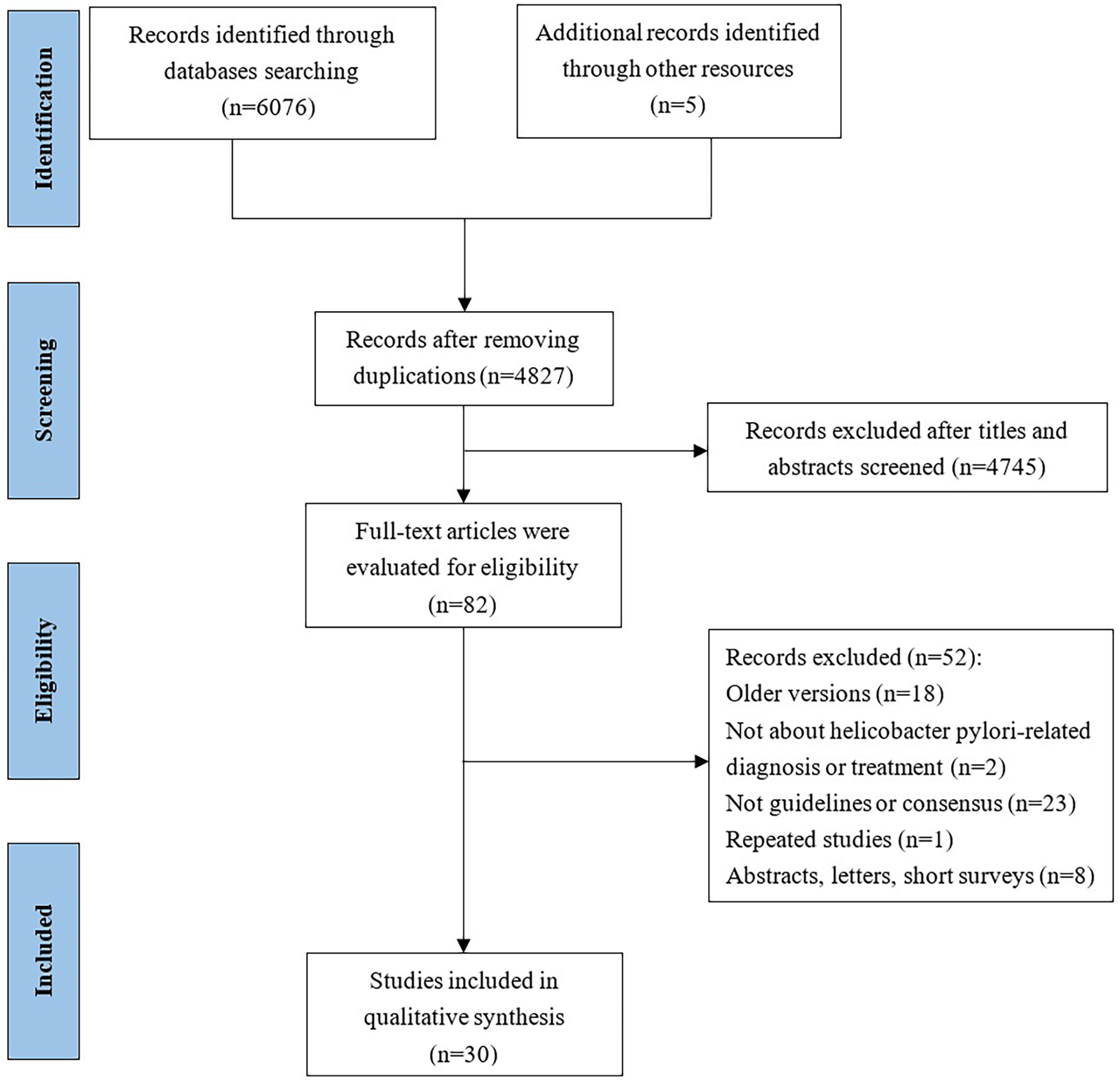
ResultsStudy selection and characteristics of included studiesThe detailed flowchart of the study selection is presented in Fig. 1. A total of 6081 records were initially retrieved by searching databases and identifying additional sources. There were 30 studies9,16,17,28–54 that met the eligibility criteria and were finally included for qualitative analysis.

Among these 30 CPGs, the publication dates ranged from 2013 to 2022, and the organizations were from 21 countries/alliances. China published the most H. pylori CPGs, with four16,28,30,52 produced by the Chinese mainland and two35,45 produced by Taiwan, China. Japan published three CPGs36,38,53 in 2015, 2019, and 2020 by different organizations. The United States produced two studies,31,40 and one guideline46 was jointly created by the European and North American Society for Pediatric Gastroenterology, Hepatology and Nutrition (ESPGHAN&NASPGHAN). The remaining countries/alliances each published one study. Detailed information is presented in Fig. 2.

Bubble plot of several studies published by country or alliance/year. Note: X-axis: publication year of study; Y-axis: the country or alliance that organization of guideline formulation came from (bubble colors); bubble size: corresponding number of studies (number of bubble label) (sources of CPGs were country or alliance because experts from just one country do not produce some CPGs, e.g. “NASPGHAN” organization come from several countries in Europe, so Europe replaced the source).
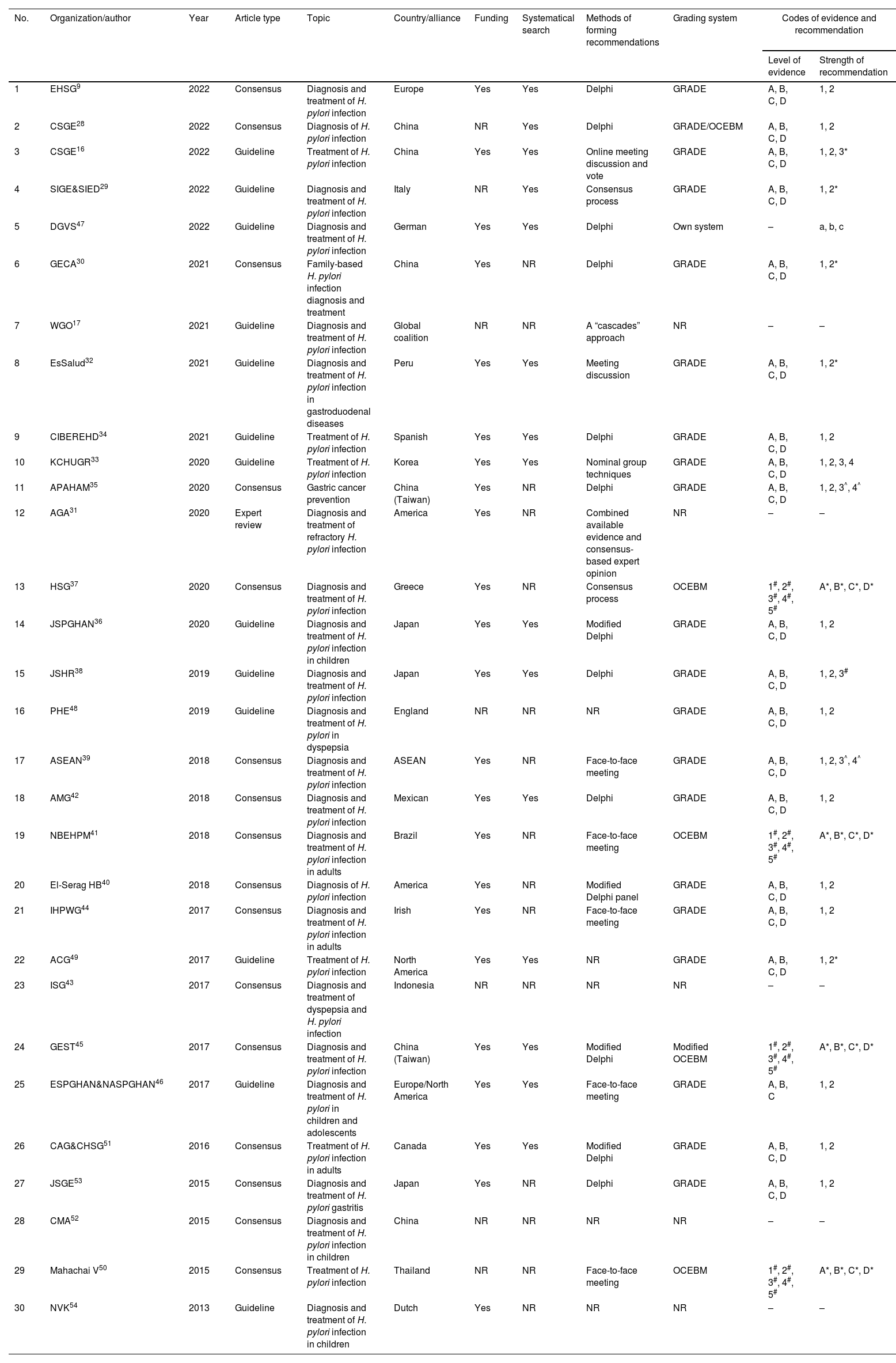
Regarding publication type, 56.66% (17/30) of the studies included were consensuses, and 43.34% (13/30) were guidelines. Among these 30 CPGs, three studies41,44,51 focused on adults, three studies36,52,54 focused on children, one guideline46 concentrated on children and adolescents, and the remaining CPGs9,16,17,28–35,37–40,42,43,45,47–50,53 did not have explicit statements. Half of the included studies performed a systematic search, and 66.67% (20/30) of included CPGs used the Grades of Recommendations, Assessment, Development, and Evaluation system (GRADE) as the evidence grading system. Only 13.33% (4/30) used the Oxford Centre for Evidence-Based Medicine (OCEBM) system. Detailed essential characteristics are presented in Table 1.
Basic information of included studies.
| No. | Organization/author | Year | Article type | Topic | Country/alliance | Funding | Systematical search | Methods of forming recommendations | Grading system | Codes of evidence and recommendation | |
|---|---|---|---|---|---|---|---|---|---|---|---|
| Level of evidence | Strength of recommendation | ||||||||||
| 1 | EHSG9 | 2022 | Consensus | Diagnosis and treatment of H. pylori infection | Europe | Yes | Yes | Delphi | GRADE | A, B, C, D | 1, 2 |
| 2 | CSGE28 | 2022 | Consensus | Diagnosis of H. pylori infection | China | NR | Yes | Delphi | GRADE/OCEBM | A, B, C, D | 1, 2 |
| 3 | CSGE16 | 2022 | Guideline | Treatment of H. pylori infection | China | Yes | Yes | Online meeting discussion and vote | GRADE | A, B, C, D | 1, 2, 3* |
| 4 | SIGE&SIED29 | 2022 | Guideline | Diagnosis and treatment of H. pylori infection | Italy | NR | Yes | Consensus process | GRADE | A, B, C, D | 1, 2* |
| 5 | DGVS47 | 2022 | Guideline | Diagnosis and treatment of H. pylori infection | German | Yes | Yes | Delphi | Own system | – | a, b, c |
| 6 | GECA30 | 2021 | Consensus | Family-based H. pylori infection diagnosis and treatment | China | Yes | NR | Delphi | GRADE | A, B, C, D | 1, 2* |
| 7 | WGO17 | 2021 | Guideline | Diagnosis and treatment of H. pylori infection | Global coalition | NR | NR | A “cascades” approach | NR | – | – |
| 8 | EsSalud32 | 2021 | Guideline | Diagnosis and treatment of H. pylori infection in gastroduodenal diseases | Peru | Yes | Yes | Meeting discussion | GRADE | A, B, C, D | 1, 2* |
| 9 | CIBEREHD34 | 2021 | Guideline | Treatment of H. pylori infection | Spanish | Yes | Yes | Delphi | GRADE | A, B, C, D | 1, 2 |
| 10 | KCHUGR33 | 2020 | Guideline | Treatment of H. pylori infection | Korea | Yes | Yes | Nominal group techniques | GRADE | A, B, C, D | 1, 2, 3, 4 |
| 11 | APAHAM35 | 2020 | Consensus | Gastric cancer prevention | China (Taiwan) | Yes | NR | Delphi | GRADE | A, B, C, D | 1, 2, 3^, 4^ |
| 12 | AGA31 | 2020 | Expert review | Diagnosis and treatment of refractory H. pylori infection | America | Yes | NR | Combined available evidence and consensus-based expert opinion | NR | – | – |
| 13 | HSG37 | 2020 | Consensus | Diagnosis and treatment of H. pylori infection | Greece | Yes | NR | Consensus process | OCEBM | 1#, 2#, 3#, 4#, 5# | A*, B*, C*, D* |
| 14 | JSPGHAN36 | 2020 | Guideline | Diagnosis and treatment of H. pylori infection in children | Japan | Yes | Yes | Modified Delphi | GRADE | A, B, C, D | 1, 2 |
| 15 | JSHR38 | 2019 | Guideline | Diagnosis and treatment of H. pylori infection | Japan | Yes | Yes | Delphi | GRADE | A, B, C, D | 1, 2, 3# |
| 16 | PHE48 | 2019 | Guideline | Diagnosis and treatment of H. pylori in dyspepsia | England | NR | NR | NR | GRADE | A, B, C, D | 1, 2 |
| 17 | ASEAN39 | 2018 | Consensus | Diagnosis and treatment of H. pylori infection | ASEAN | Yes | NR | Face-to-face meeting | GRADE | A, B, C, D | 1, 2, 3^, 4^ |
| 18 | AMG42 | 2018 | Consensus | Diagnosis and treatment of H. pylori infection | Mexican | Yes | Yes | Delphi | GRADE | A, B, C, D | 1, 2 |
| 19 | NBEHPM41 | 2018 | Consensus | Diagnosis and treatment of H. pylori infection in adults | Brazil | Yes | NR | Face-to-face meeting | OCEBM | 1#, 2#, 3#, 4#, 5# | A*, B*, C*, D* |
| 20 | El-Serag HB40 | 2018 | Consensus | Diagnosis of H. pylori infection | America | Yes | NR | Modified Delphi panel | GRADE | A, B, C, D | 1, 2 |
| 21 | IHPWG44 | 2017 | Consensus | Diagnosis and treatment of H. pylori infection in adults | Irish | Yes | NR | Face-to-face meeting | GRADE | A, B, C, D | 1, 2 |
| 22 | ACG49 | 2017 | Guideline | Treatment of H. pylori infection | North America | Yes | Yes | NR | GRADE | A, B, C, D | 1, 2* |
| 23 | ISG43 | 2017 | Consensus | Diagnosis and treatment of dyspepsia and H. pylori infection | Indonesia | NR | NR | NR | NR | – | – |
| 24 | GEST45 | 2017 | Consensus | Diagnosis and treatment of H. pylori infection | China (Taiwan) | Yes | Yes | Modified Delphi | Modified OCEBM | 1#, 2#, 3#, 4#, 5# | A*, B*, C*, D* |
| 25 | ESPGHAN&NASPGHAN46 | 2017 | Guideline | Diagnosis and treatment of H. pylori in children and adolescents | Europe/North America | Yes | Yes | Face-to-face meeting | GRADE | A, B, C | 1, 2 |
| 26 | CAG&CHSG51 | 2016 | Consensus | Treatment of H. pylori infection in adults | Canada | Yes | Yes | Modified Delphi | GRADE | A, B, C, D | 1, 2 |
| 27 | JSGE53 | 2015 | Consensus | Diagnosis and treatment of H. pylori gastritis | Japan | Yes | NR | Delphi | GRADE | A, B, C, D | 1, 2 |
| 28 | CMA52 | 2015 | Consensus | Diagnosis and treatment of H. pylori infection in children | China | NR | NR | NR | NR | – | – |
| 29 | Mahachai V50 | 2015 | Consensus | Treatment of H. pylori infection | Thailand | NR | NR | Face-to-face meeting | OCEBM | 1#, 2#, 3#, 4#, 5# | A*, B*, C*, D* |
| 30 | NVK54 | 2013 | Guideline | Diagnosis and treatment of H. pylori infection in children | Dutch | Yes | NR | NR | NR | – | – |
Hp, Helicobacter pylori; GRADE, Grades of Recommendations, Assessment, Development, and Evaluation system; OCEBM, Oxford Centre for Evidence-Based Medicine; EHSG, European Helicobacter and Microbiota Study group; CSGE, Chinese Society of Gastroenterology; SIGE&SIED, Italian Society of Gastroenterology and the Italian Society of Digestive Endoscopy; DGVS, Deutsche Gesellschaft für Gastroenterologie, Verdauungs-und Stoffwechselkrankheitenonly; GECA, Gastrointestinal Early Cancer Prevention & Treatment Alliance of China; WGO, World Gastroenterology Organisation; EsSalud, Peruvian Health Social Security; CIBEREHD, Centro de Investigación Biomédica en Red de Enfermedades Hepáticas y Digestivas; KCHUGR, Korean College of Helicobacter and Upper Gastrointestinal Research; APAHAM, Asian Pacific Alliance on Helicobacter and Microbiota; AGA, American Gastroenterological Association; HSG, Hellenic Society of Gastroenterology; JSPGHAN, Japanese Society for Pediatric Gastroenterology, Hepatology and Nutrition; JSHR, Japanese Society for Helicobacter Research; PHE, Public Health England; ASEAN, Association of Southeast Asian Nations; AMG, Asociación Mexicana de Gastroenterología; NBEHPM, Núcleo Brasileiro para Estudo do Helicobacter pylori e Microbiota; IHPWG, Irish Helicobacter pylori Working Group; ACG, American College of Gastroenterology; ISG, Indonesian Helicobacter pylori Study Group; GEST, Gastroenterological Society of Taiwan; ESPGHAN&NASPGHAN, European Society for Paediatric Gastroenterology, Hepatology and Nutrition (ESPGHAN) and North American Society for Pediatric Gastroenterology, Hepatology and Nutrition (NASPGHAN); CAG&CHSG, Canadian Association of Gastroenterology (CAG) and Canadian Helicobacter Study Group (CHSG); JSGE, Japanese Society of Gastroenterology; CMA, Chinese Medical Association; NVK, Nederlandse Vereniging voor Kindergeneeskunde; NR, Not report.
In grading system “GRADE”, using “A, B, C, D” represent “Level of evidence”: A, High; B, Moderate; C, Low; D, Very low; about “Strength of recommendation”: 1, Strong recommendation; 2, Weak recommendation; 3, Against; 4, No recommendation; Number* (2*, 3*), Conditional recommendation; 3#, Insufficient recommendation; 3^, Weak against; 4^, Strong against. When using “OCEBM” as grading system, adopting “1#, 2#, 3#, 4#, 5#” represent “Level of evidence”; about “Strength of recommendation”: A*, Strong for using; B*, Weak for using; C*, Weak against using; D*, Strong against using.
The ICC for the quality assessment using the AGREE-II tool among the four evaluators was 0.89 (95% CI: 0.87–0.90), and the ICC among the five evaluators using the AGREE-REX tool was 0.81 (95% CI: 0.77–0.84).
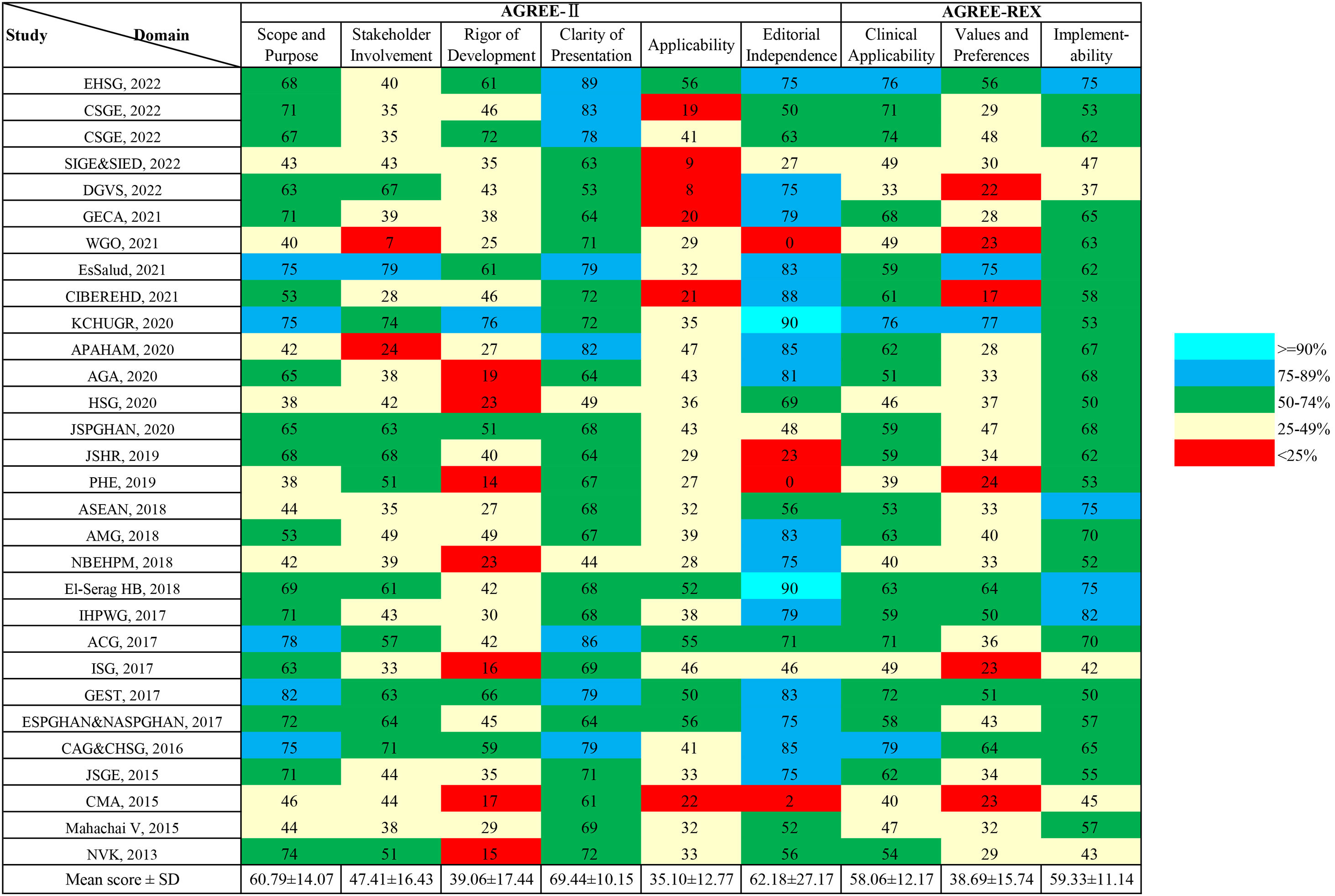
AGREE-IIFig. 3 displays the scores of each included CPG in relevant domains. In the domain of “scope and purpose,” which pertains to the guidelines’ primary purpose and target population, the mean fulfilled percentage was 60.79% (±14.07%). Only five CPGs32,33,45,49,51 scored equal to or higher than 75% of the criteria. The study from the Gastroenterological Society of Taiwan (GEST)45 scored the highest, achieving 82% of the criteria. However, CPGs from the Hellenic Society of Gastroenterology (HSG)37 and Public Health England (PHE)48 fulfilled only 38%.

Heatmap showing an overview of the final AGREE-II and AGREE-REX scores on H. pylori infection CPGs (the horizontal axis represented domain types of assessment tools, the direct axis displayed included CPGs, and the color represented the grade of quality scores, which was graded as five groups from 0% to 100%, and the specific scores were also presented).
In the domain of “stakeholder involvement,” which focused on whether the production of CPGs involves stakeholders and represents the views of their expected users, the mean fulfilled percentage was 47.41% (±16.43%). The CPG from the Peruvian Health Social Security (EsSalud)32 achieved the highest score with 79%, while over half of the included CPGs scored less than 50%.
In the domain “rigor of development,” which concerns the guideline development method, the mean fulfilled percentage was 39.06% (±17.44%). 24 CPGs did not present the process of updating guidelines or whether the guidelines were externally reviewed by experts before publication. A study from the Korean College of Helicobacter and Upper Gastrointestinal Research (KCHUGR)33 achieved the highest score with 76% of the criteria. In comparison, CPG from PHE48 acquired the lowest score, only 14%.
For the domain “clarity of presentation,” which pertains to the exhibition and clarity of the recommendations, the mean fulfilled percentage was 69.44% (±10.15%). There were only two CPGs from HSG37 and the Núcleo Brasileiro para Estudo do Helicobacter pylori e Microbiota (NBEHPM)41 independently obtained the lowest scores, with 44% and 49%, respectively. Most of the CPGs achieved a score over 60%.
In the domain of “applicability,” which concerns the implementation of guidelines, the mean fulfilled percentage was 35.10% (±12.77%). All CPGs achieved results of less than 60%, with CPGs from the Italian Society of Gastroenterology and the Italian Society of Digestive Endoscopy (SIGE&SIED)29 and the Deutsche Gesellschaft für Gastroenterologie, Verdauungs-und Stoffwechselkrankheitenonly (DGVS)47 acquiring 9% and 8%, respectively.
Regarding the domain “editorial independence,” the mean fulfilled percentage was 62.18% (±27.17%). Most included CPGs clearly described the funders and competing interests of the experts, scoring equal to or more than 75% of the criteria. However, two CPGs from WGO17 and PHE48 did not present this domain in their studies.
AGREE-REXIn the domain of “clinical applicability,” which assesses whether guidelines are produced based on evidence and applied to target users, the mean fulfilled percentage was 58.06% (±12.17%). The CPG from the Canadian Association of Gastroenterology and the Canadian Helicobacter Study Group (CAG&CHSG)51 achieved the highest score with 79%, while the study from DGVS47 received only 33%.
Regarding the domain of “values and preferences,” which examines whether the guidelines’ recommendations consider the values of target users and policymakers, the mean fulfilled percentage was 38.69% (±15.74%). Most CPGs achieved a score of less than 50% of the criteria, while CPG from KCHUGR33 obtained the highest score with 77%.
The mean fulfilled percentage domain for “implementability” was 59.33% (±11.14%), and the criteria scores ranged from 37% to 82%. Detailed information is presented in Fig. 3.
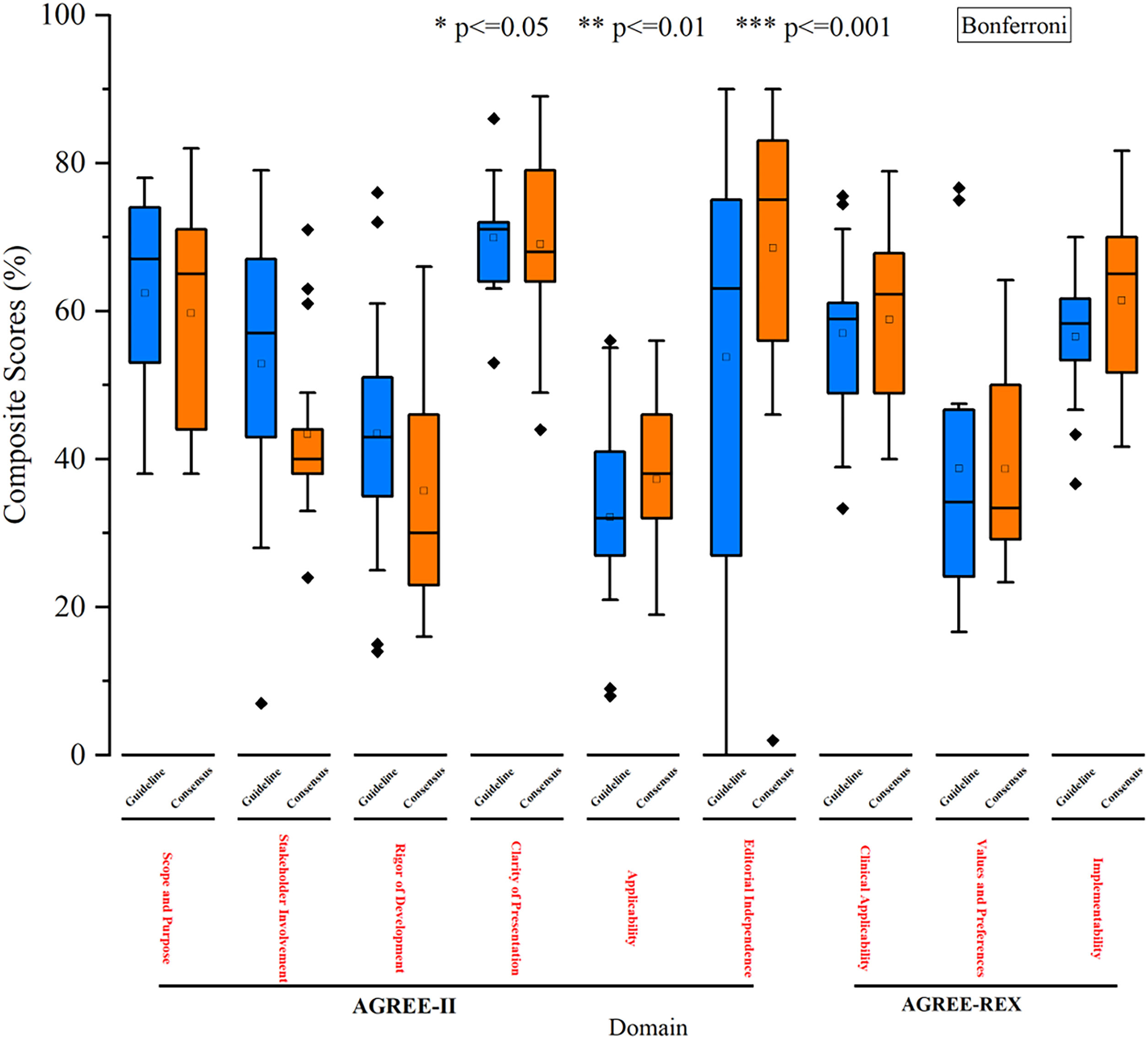
Quality comparison between consensuses and guidelinesFig. 4 displays the quality comparison results between 17 consensuses and 13 guidelines in each domain. There was no statistical significance between included consensuses and guidelines in composite scores, either in six domains of AGREE-II or three domains of the AGREE-REX tool.
Diagnosis of H. pylori infectionIndications for testing H. pylori
Increasing evidence has suggested that H. pylori infection is associated with gastrointestinal diseases such as GC, peptic ulcer disease (PUD), and uninvestigated FD.7,10,15 Additionally, H. pylori infection involves many extra-gastric diseases, primarily hematological diseases, including idiopathic thrombocytopenic purpura (ITP), IDA, and vitamin B12 deficiency anemia.55–58 Therefore, current guidelines list several indications for which H. pylori testing and positive eradication are recommended when present.
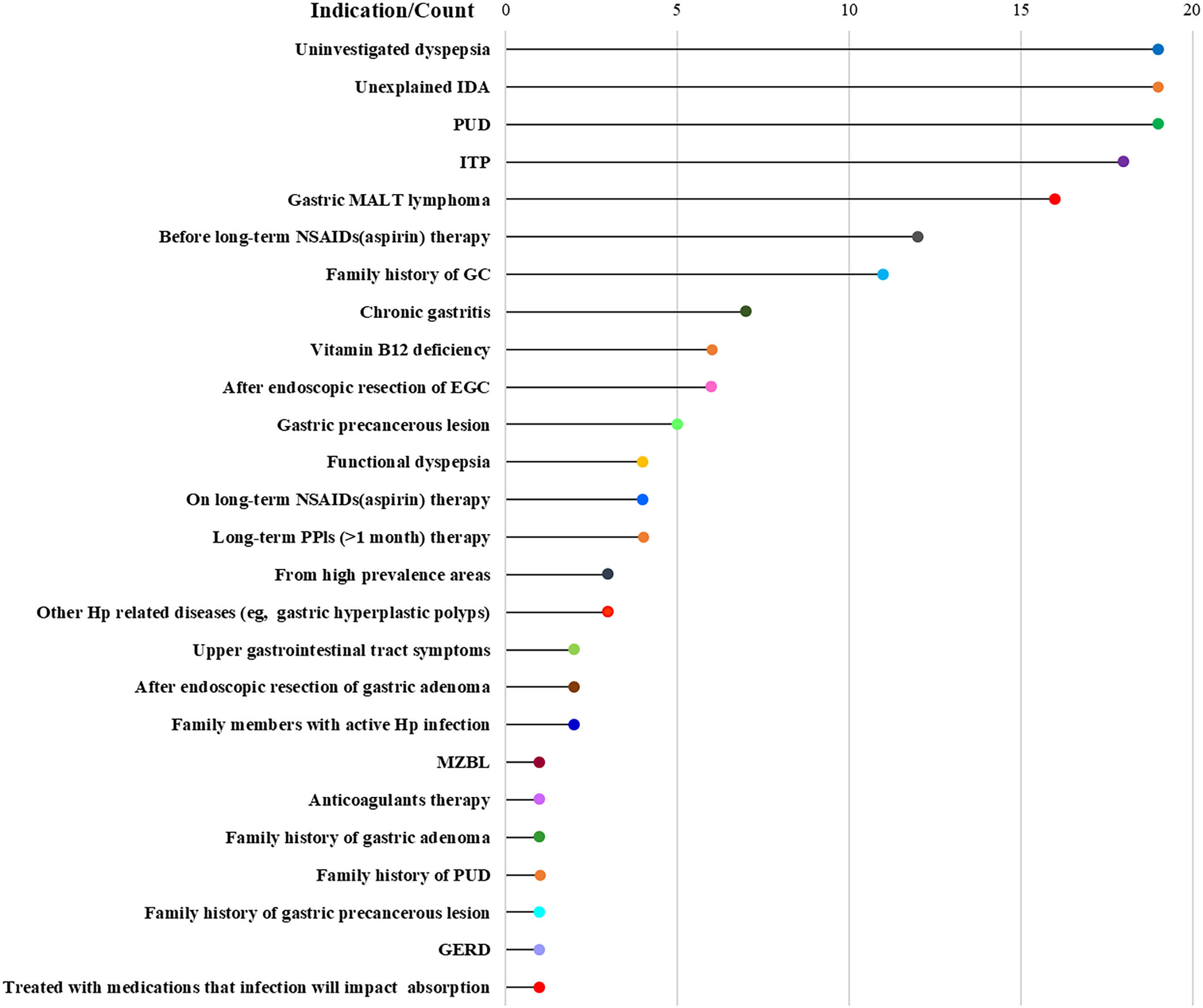
Fig. 5 illustrates that 19 CPGs recommended uninvestigated dyspepsia, unexplained IDA, and PUD as indications for testing H. pylori, while 18 suggested ITP, and 16 endorsed gastric mucosa-associated lymphoid tissue (MALT) lymphoma. Before long-term nonsteroidal anti-inflammatory drugs (NSAIDs), including aspirin therapy, 12 studies supported testing H. pylori and positive eradication, and four studies proposed testing H. pylori even during long-term NSAIDs therapy. There are 11 CPGs that mention that H. pylori testing is recommended when there is a family history of GC, and six uphold testing H. pylori after endoscopic resection of early GC. There are seven studies advocated chronic gastritis, and six studies advised vitamin B12 deficiency as an indication for H. pylori testing. Besides, H. pylori testing was suggested by four studies, indicating that long-term (over one month) proton-pump inhibitors (PPIs) therapy is needed. Other indications, such as upper gastrointestinal tract symptoms and anticoagulant therapy, were recommended in fewer than four CPGs. In contrast, some indications, such as gastroesophageal reflux disease (GERD), were controversial and needed further research.
Testing methods for diagnosis of H. pylori infection
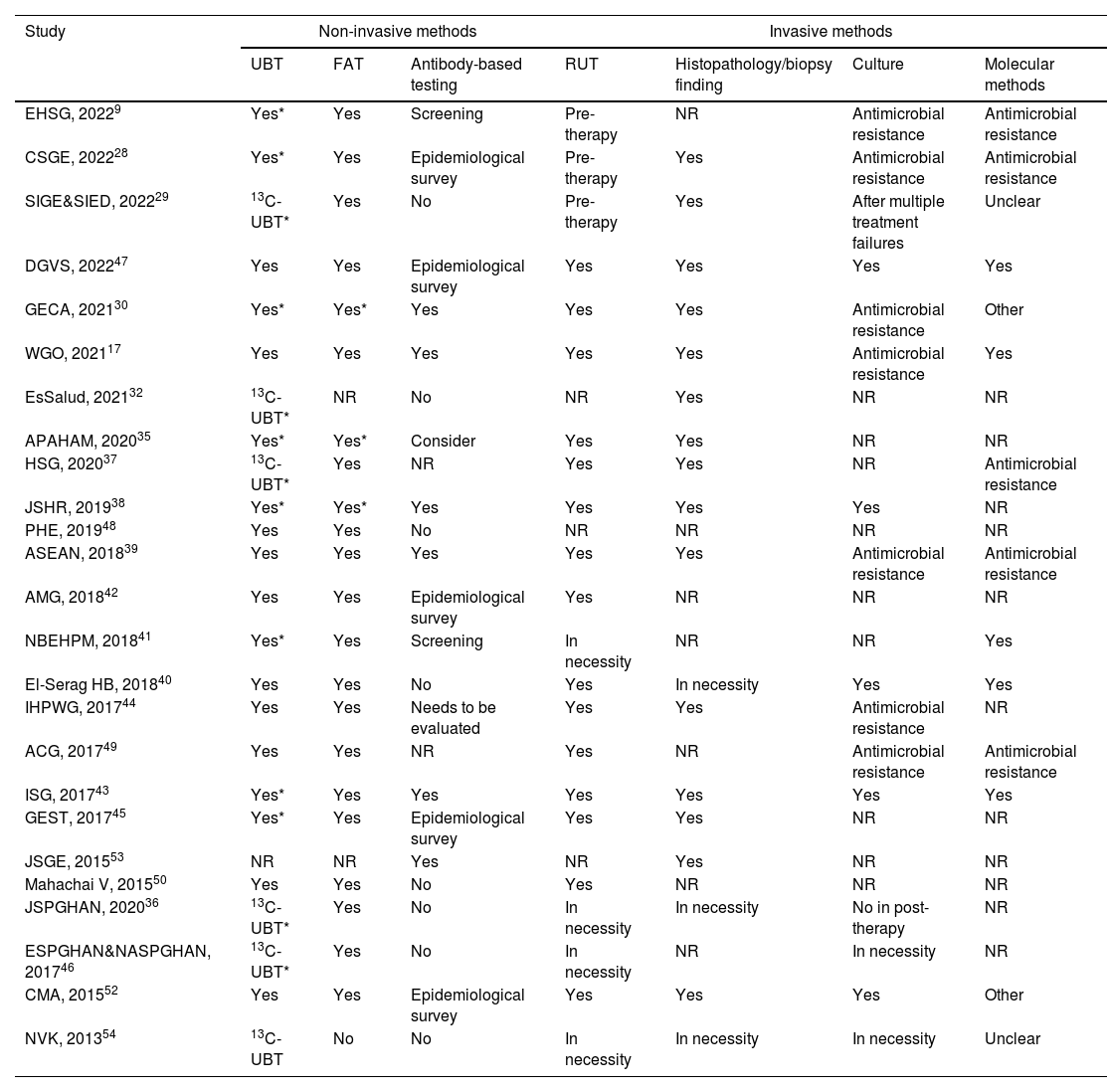
Table 2 summarizes recommendations from included CPGs for diagnosis methods of H. pylori, encompassing non-invasive and invasive methods.
A summary of recent CPGs for individual methods for diagnosis.
| Study | Non-invasive methods | Invasive methods | |||||
|---|---|---|---|---|---|---|---|
| UBT | FAT | Antibody-based testing | RUT | Histopathology/biopsy finding | Culture | Molecular methods | |
| EHSG, 20229 | Yes* | Yes | Screening | Pre-therapy | NR | Antimicrobial resistance | Antimicrobial resistance |
| CSGE, 202228 | Yes* | Yes | Epidemiological survey | Pre-therapy | Yes | Antimicrobial resistance | Antimicrobial resistance |
| SIGE&SIED, 202229 | 13C-UBT* | Yes | No | Pre-therapy | Yes | After multiple treatment failures | Unclear |
| DGVS, 202247 | Yes | Yes | Epidemiological survey | Yes | Yes | Yes | Yes |
| GECA, 202130 | Yes* | Yes* | Yes | Yes | Yes | Antimicrobial resistance | Other |
| WGO, 202117 | Yes | Yes | Yes | Yes | Yes | Antimicrobial resistance | Yes |
| EsSalud, 202132 | 13C-UBT* | NR | No | NR | Yes | NR | NR |
| APAHAM, 202035 | Yes* | Yes* | Consider | Yes | Yes | NR | NR |
| HSG, 202037 | 13C-UBT* | Yes | NR | Yes | Yes | NR | Antimicrobial resistance |
| JSHR, 201938 | Yes* | Yes* | Yes | Yes | Yes | Yes | NR |
| PHE, 201948 | Yes | Yes | No | NR | NR | NR | NR |
| ASEAN, 201839 | Yes | Yes | Yes | Yes | Yes | Antimicrobial resistance | Antimicrobial resistance |
| AMG, 201842 | Yes | Yes | Epidemiological survey | Yes | NR | NR | NR |
| NBEHPM, 201841 | Yes* | Yes | Screening | In necessity | NR | NR | Yes |
| El-Serag HB, 201840 | Yes | Yes | No | Yes | In necessity | Yes | Yes |
| IHPWG, 201744 | Yes | Yes | Needs to be evaluated | Yes | Yes | Antimicrobial resistance | NR |
| ACG, 201749 | Yes | Yes | NR | Yes | NR | Antimicrobial resistance | Antimicrobial resistance |
| ISG, 201743 | Yes* | Yes | Yes | Yes | Yes | Yes | Yes |
| GEST, 201745 | Yes* | Yes | Epidemiological survey | Yes | Yes | NR | NR |
| JSGE, 201553 | NR | NR | Yes | NR | Yes | NR | NR |
| Mahachai V, 201550 | Yes | Yes | No | Yes | NR | NR | NR |
| JSPGHAN, 202036 | 13C-UBT* | Yes | No | In necessity | In necessity | No in post-therapy | NR |
| ESPGHAN&NASPGHAN, 201746 | 13C-UBT* | Yes | No | In necessity | NR | In necessity | NR |
| CMA, 201552 | Yes | Yes | Epidemiological survey | Yes | Yes | Yes | Other |
| NVK, 201354 | 13C-UBT | No | No | In necessity | In necessity | In necessity | Unclear |
*First choice; UBT, urea breath test; FAT, fecal antigen test; RUT, rapid urease test; EHSG, European Helicobacter and Microbiota Study group; CSGE, Chinese Society of Gastroenterology; SIGE&SIED, Italian Society of Gastroenterology and the Italian Society of Digestive Endoscopy; DGVS, Deutsche Gesellschaft für Gastroenterologie, Verdauungs-und Stoffwechselkrankheitenonly; GECA, Gastrointestinal Early Cancer Prevention & Treatment Alliance of China; WGO, World Gastroenterology Organisation; EsSalud, Peruvian Health Social Security; APAHAM, Asian Pacific Alliance on Helicobacter and Microbiota; HSG, Hellenic Society of Gastroenterology; JSPGHAN, Japanese Society for Pediatric Gastroenterology, Hepatology and Nutrition; JSHR, Japanese Society for Helicobacter Research; PHE, Public Health England; ASEAN, Association of Southeast Asian Nations; AMG, Asociación Mexicana de Gastroenterología; NBEHPM, Núcleo Brasileiro para Estudo do Helicobacter pylori e Microbiota; IHPWG, Irish Helicobacter pylori Working Group; ACG, American College of Gastroenterology; ISG, Indonesian Helicobacter pylori Study Group; GEST, Gastroenterological Society of Taiwan; ESPGHAN&NASPGHAN, European Society for Paediatric Gastroenterology, Hepatology and Nutrition (ESPGHAN) and North American Society for Pediatric Gastroenterology, Hepatology and Nutrition (NASPGHAN); JSGE, Japanese Society of Gastroenterology; CMA, Chinese Medical Association; NVK, Nederlandse Vereniging voor Kindergeneeskunde; NR, not report.
Non-invasive H. pylori tests comprise the urea breath test (UBT), fecal antigen test (FAT), and antibody-based testing such as serological tests. UBT includes 13C-UBT and 14C-UBT, and all included CPGs recommended UBT for H. pylori testing. Among them, 40% (12/30) of CPGs prioritize the use of UBT, and 20% (6/30) recommend 13C-UBT instead of 14C-UBT due to its non-radioactive nature,37 particularly in children.36,46,52 There were 27 CPGs that recommended FAT, while one CPG on H. pylori infection in children, published in 2013, advised against FAT. Antibody-based testing is suggested for screening or epidemiological surveys in eight CPGs, but eight CPGs express disagreement.
Invasive methods are recommended when there is an indication for endoscopy and no contraindication for biopsy.59 These methods include the rapid urease test (RUT), histopathology/biopsy, the culture of H. pylori strains, and molecular techniques such as polymerase chain reaction (PCR). There were three newly published CPGs in 2022 that recommended that RUT be used for diagnosing H. pylori infection before eradication therapy rather than verifying successful eradication after treatment. There were four CPGs explicitly recommended adopting RUT when necessary, and 50% (15/30) of CPGs endorsed RUT as a detection method. Histopathology/biopsy is also recommended by 50% of the included CPGs for H. pylori testing. Concerning the culture of H. pylori strains, 21 CPGs recommended it, and seven suggested testing for antimicrobial resistance. Regarding molecular methods, PCR is the most frequently recommended, with five CPGs endorsing it for diagnosing H. pylori and five supporting it for testing antimicrobial resistance.
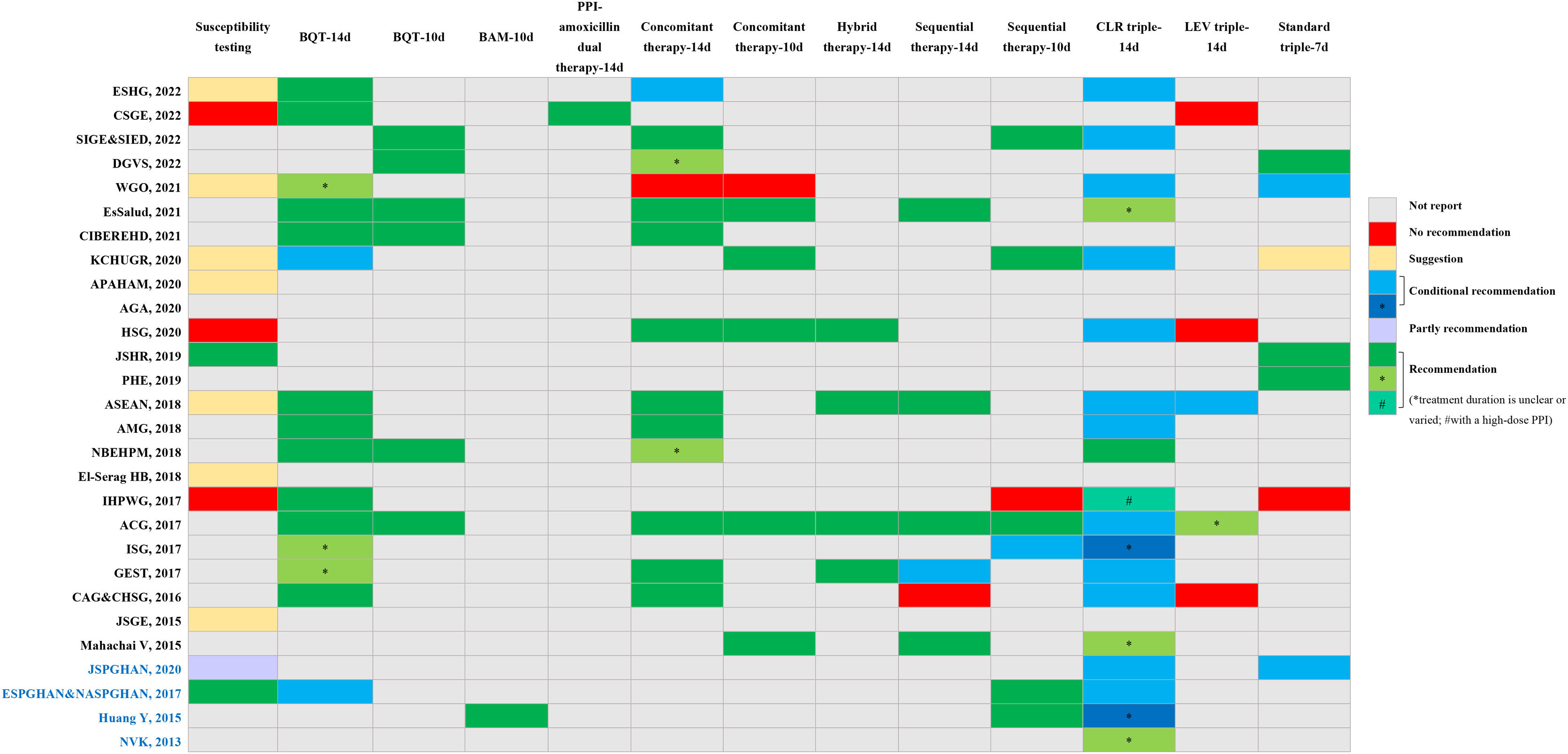
Treatment of H. pylori infectionFirst-line therapyThere were 28 CPGs presenting first-line therapy recommendations for H. pylori infection eradication, with four CPGs36,46,52,54 explicitly focusing on recommendations for children. Seven CPGs suggested susceptibility testing rather than formal recommendation before initiating first-line therapy, while the CPGs from the Japanese Society for Helicobacter Research (JSHR)38 and ESPGHAN&NASPGHAN46 explicitly advocated for it. Bismuth quadruple therapy (BQT) received explicit support from 15 CPGs without many conditional limitations, with a therapy duration of 14 days being more commonly endorsed. Concomitant therapy was advised by 14 CPGs, although the CPG from WGO17 opposed its usage. Only four CPGs promoted hybrid therapy with a 14-day duration as first-line therapy, and eight CPGs upheld sequential therapy, while two CPGs objected to utilizing it. Concerning clarithromycin (CLR) triple therapy, 14 CPGs only proposed it in regions with a low resistance rate to CLR (<15%). However, levofloxacin (LEV) triple therapy was explicitly recommended against first-line therapy in three CPGs.16,37,51 It is worth mentioning that CPG from the Helicobacter pylori study group of the Chinese Society of Gastroenterology (CSGE), published in 2022, recommended high-dose dual therapy (P-CAB/PPI+amoxicillin) as first-line therapy for H. pylori infection patients without penicillin allergy. Notably, the therapy duration of 14 days was more commonly prescribed. Examining the timeline, CPGs published in the last two years were more inclined to recommend quadruple therapy, especially BQT. Detailed information can be found in Fig. 6, and the specific drugs used in the recommended treatment regimens are presented in Supplementary Table S4.

Heatmap presenting an overview of recommended first-line therapeutic strategies on H. pylori infection CPGs (the horizontal axis represented the treatment regions of H. pylori infection; the direct axis displayed the study with a therapeutic regions recommendation of H. pylori infection; different kinds of color systems exhibited different recommendation situation; different colors of the same color system with special symbols means some particular situation or requirement, which were also remarked beside the legend).
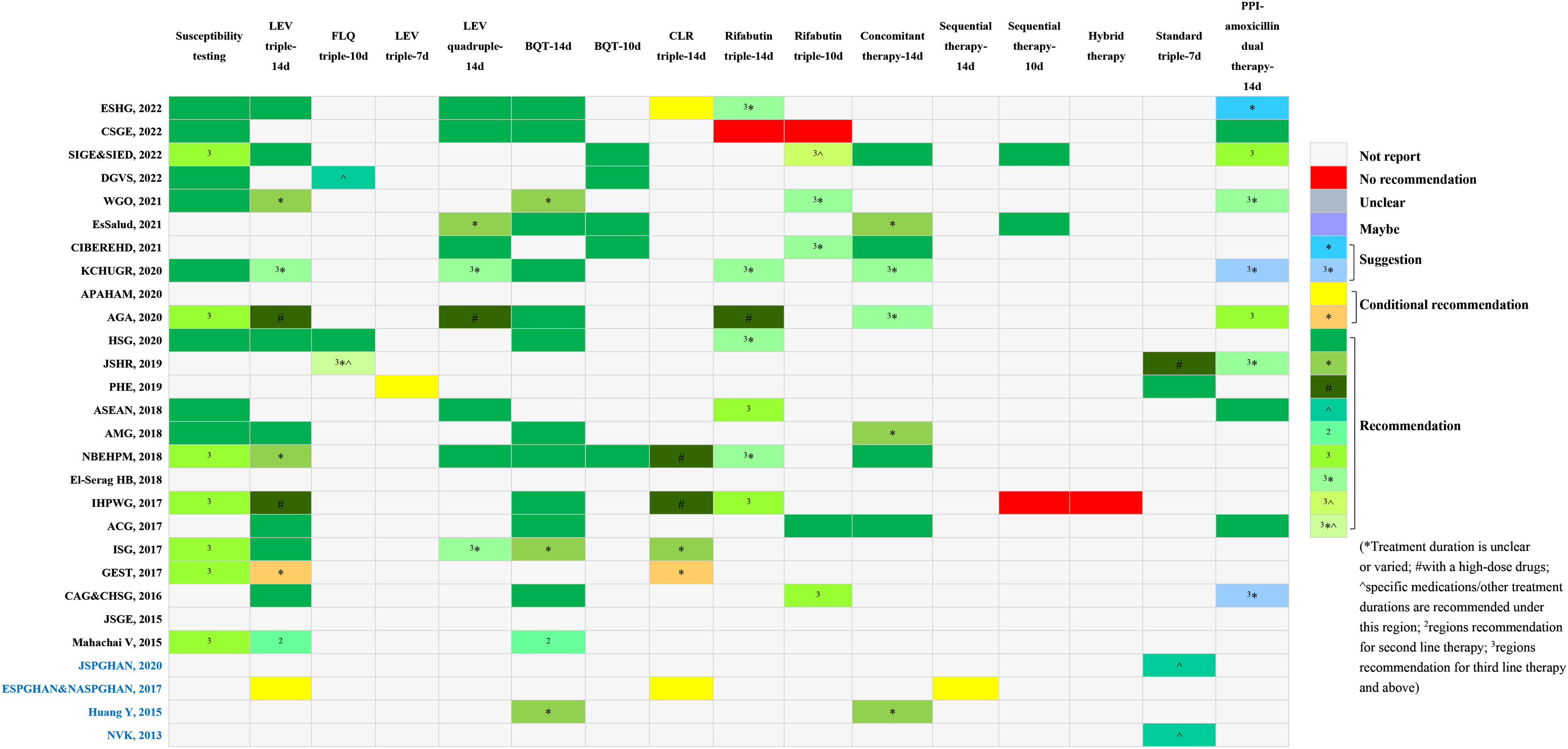
There were 15 CPGs that explicitly endorsed treatment selections for third-line and above therapy. Only one CPG exhibited regions for second-line regimens, while the remaining strategies singularly advocate for rescue therapy. Fig. 7 presents the detailed regions for rescue therapy recommended by the CPGs.

Heatmap showing an overview of recommended rescue therapeutic strategies on H. pylori infection CPGs (the heatmap presented information in four facets, same as Fig. 6).
BQT remained the most supported regimen in rescue therapy, with 15 CPGs advocating for its use, while only one study explicitly upheld second-line treatment.
Concerning recommended regions for third-line and above therapy, seven CPGs endorsed susceptibility testing to guide drug selection. Rifabutin triple therapy was recommended for third-line and above therapy by four studies, while one study from China argued against its use. Concomitant therapy was advised by two CPGs as a third-line region, while one CPG44 cautioned against the use of either sequential therapy or hybrid therapy in rescue therapy. High-dose dual treatment was recommended by a total of eight CPGs and considered a suggestion in three CPGs for rescue therapy. There are six CPGs proposed after at least two failed eradication therapies.
When the heatmap is examined from the bottom up, following the timeline, the frequency of recommendations for triple regimens, concomitant therapy, and sequential therapy for rescue treatment has declined in the last two years compared to CPGs published in earlier years. However, high-dose dual treatment was proposed in three of the four CPGs published in 2022.
Adding probioticsEarlier, four CPGs supported the addition of probiotics in therapy regions to reduce adverse events, and one even advocated for increasing eradication rates. However, CPGs published in recent years rarely mention it. There is one CPG16 from China published in 2022 that conditionally suggested augmenting probiotics in BQT. Nevertheless, a study from the Centro de Investigación Biomédica en Red de Enfermedades Hepáticas y Digestivas (CIBEREHD)34 disagreed with augmenting probiotics to reduce adverse events of therapy.
DiscussionOwing to the growing concern regarding the diagnosis and treatment of H. pylori infection, many organizations have produced CPGs to guide the management of H. pylori infection. This study evaluates the quality of the aforementioned published CPGs. It comprehensively presents essential recommendations, aiming to assist clinicians or policymakers in diagnosing and treating H. pylori infection. The aim is to identify deficiencies in existing CPGs for future improvement.
Concerning the diagnosis of H. pylori infection, mounting evidence suggests its association not only with diverse gastric diseases, including gastric ulcers, chronic progressive gastritis, dyspepsia, and GC, but also associated with some extra-gastric diseases, such as unexplained IDA, ITP, and vitamin B12 deficiency.60,61 Therefore, clinicians should consider the possibility of H. pylori infection in these patients when facing these clinical conditions. The study revealed that dyspepsia, IDA, and PUD were the most frequently recommended indications for testing and eradicating H. pylori infection, with ITP ranking second. Further research is necessary to investigate these associations.
Concerning methods for diagnosing H. pylori infection, the UBT emerged as the most recommended non-invasive testing method, with 13C-UBT being deemed the most reliable and non-radioactive. FAT, utilizing monoclonal antibodies, was a secondary recommendation and may serve as an excellent alternative to UBT, especially in countries with a high prevalence of H. pylori infection.62 Although some CPGs30,53 published before 2022 recommended antibody-based testing for diagnosis of H. pylori infection, it was more often suggested for epidemiological investigations as it does not represent current infection. Invasive tests were recommended when endoscopy is necessary. The newly published “Maastricht VI/Florence consensus”9 and “Sixth Chinese National Consensus”28 suggest the RUT before eradication treatment but not post-eradication, aiming to minimize false negatives. PCR for detecting H. pylori infection was not endorsed in newly published CPGs, possibly due to nonspecific primers and the risk of false positives.62 Similarly, the culture of H. pylori was considered complicated, making both more recommended for antibiotic resistance detection.
Regarding the treatment of H. pylori infection, this study identified similarities and differences in these CPGs: (a) BQT with a 14-day duration was the most recommended strategy in both first-line therapy and rescue therapy (with a preference to avoid previously used antibiotics). In contrast, CLR triple therapy was mainly recommended for areas with low CLR resistance in first-line therapy (<15%). (b) Some CPGs recommended attempting four-drug therapies containing a PPI, amoxicillin, CLR, and metronidazole, called sequential, concomitant, and hybrid for first-line therapy, even in rescue therapy, but some did not. Regional differences in antibiotic resistance rates and bismuth not being resistant to H. pylori may be the main reasons for this inconformity. Although many factors could affect the outcome of H. pylori eradication, including elements related directly to the therapy regimens like drug dose, duration of therapy, formulations, administration concerning meals, and host factors, especially drugs whose metabolism is affected by genotype status, as well as factors like race that affect the host's ability to secrete acid,63 it is currently believed that one of the most important factors is the presence of antimicrobial resistance, a major cause of eradication failure. Intragastric PH value should not have a small impact on efficacy, which may be why the latest guidelines recommended P-CAB combined regions.
Concerning regional variations in antibiotic susceptibility, it was observed that primary CLA resistance in H. pylori from 2006 to 2016 exceeded 15% in the European region, reaching ≥33% in the Eastern Mediterranean region and Western Pacific region. In the WHO regions, secondary resistance reached 15–67%.64,65 This may explain the relatively uniform approach of many CPGs toward CLA triple therapy. However, some CPGs recommended sequential, concomitant, and hybrid therapy for first-line therapy, even in regions containing CLA. This could be because these regions have achieved better eradication results based on past monitoring. Additionally, based on the publication timeline of included CPGs, quadruple therapy was more frequently recommended in the latest guidelines. This may also be closely related to the global increase in antibiotic resistance, especially CLA, necessitating the addition of extra antibiotics to combat drug resistance and provide better efficacy. This might be another reason why some CPGs continued to support sequential, concomitant, and hybrid therapy, even if they were older. Regular monitoring of antibiotic resistance rate is essential to guide the clinical choice of antibiotics in regimens, and timely updates to CPGs are necessary.
Regarding treatment plans containing rifabutin, it was deemed an encouraging strategy, and some CPGs recommended it for patients who had failed previous (usually multiple) eradication regimens. However, the CPG from CSGE suggested against it, as it might further increase the drug resistance in people with tuberculosis.66 It is important to note that before starting a rifabutin-based eradication regimen, testing for mycobacterium tuberculosis infection should be thorough.67
Regarding high-dose dual therapy (HDDT), it was recommended by three newly published CPGs, possibly considering that H. pylori's resistance to amoxicillin has remained rare in many regions.64 Some studies have shown that the eradication rate of HDDT is neither significantly inferior nor superior to the recommended regimens such as BQT and non-BQT. Still, it has a lower incidence of adverse reactions.68 With the advent of P-CAB, which provides more potent acid inhibition and is unaffected by genotype status like CYP2C19, HDDT is the next preferred option. However, in practice, the superiority of HDDT is controversial.69 The CPG from CSGE16 endorsed HDDT as the initial and rescue eradication treatment for people with H. pylori infection. Concurrently, the Maastricht VI/Florence consensus suggested HDDT only for rescue therapy. More studies are required to assess the efficacy of HDDT, particularly P-CAB (vonoprazan or other new drugs) dual therapy.
Regarding age groups, CPGs for children lack comprehensive and updated details, having been last updated several years ago. Therefore, there is a need for more extensive, meticulous, and updated guidelines with the latest evidence to guide the diagnosis and treatment of H. pylori infection in children. Additionally, there is currently a lack of guidelines for the elderly. The management of H. pylori infection in older patients is controversial due to the unique characteristics of the aged population. However, considering that the elderly represent a higher group with H. pylori infection, with approximately 53–73% of elderly PUD patients being infected with H. pylori,70 there is a growing body of evidence supporting the eradication of H. pylori in the elderly population.71,72 Therefore, specific guidelines may be necessary to guide the diagnosis and treatment of H. pylori infection in the elderly.
Arguably, this study holds significance for clinical practice and research. First, our study systematically summarized the indications recommended by CPGs for testing H. pylori and subsequent eradication if the infection is confirmed positive. When clinicians encounter these indications, they should consider the possibility of H. pylori infection. However, as growing evidence reveals that H. pylori may be related to numerous extra gastric diseases, CPGs must be regularly updated to reflect the latest findings.
Second, we presented testing methods recommended by CPGs for diagnosing H. pylori. We found that UBT was mostly recommended as an invasive method, with 13C-UBT being the preferred non-invasive method. FAT may be an alternative to UBT due to its high accuracy and sensitivity in diagnosing H. pylori, making it a convenient option.73 Further research is needed to investigate its clinical implications, benefits, and cost-effectiveness. Additionally, new molecular techniques are emerging,74 facilitating low-cost, rapid, and high-throughput detection of H. pylori.
Third, it is necessary to guide clinical treatment regimens following guidelines and expert consensus recommendations. We have provided evidence mappings to outline the treatment regions CPGs recommended, offering clinicians convenience. Moreover, given the significant impact of antibiotic resistance on H. pylori eradication, we suggested that clinicians choose antibiotics according to local antibiotic resistance. It is essential to gather information on antibiotic history to make informed decisions.
Ultimately, our study utilized the AGREE-II and AGREE-REX tools to assess the quality of CPGs, revealing significant differences among domains. Within AGREE-II, domains including “scope and purpose,” “clarity of presentation,” and “editorial independence” acquired higher scores, indicating that most CPGs have clear objectives and target populations and provide explicit recommendations, with better prevention of conflicts of interest. However, the scores were notably lower in “stakeholder involvement” and “rigor of development.” The complexity of the guideline development process requires input from experts in various disciplines to enhance the quality of CPGs, and involving target groups may promote the application of recommendations.22 Therefore, developers should consider enhancing and incorporating the participation of professionals and target groups in the future. The low score in the “rigor of development” domain was attributed to the absence of systematic evidence reviews in most included consensuses and a lack of clarification on external review processes or guidelines updates. These components are crucial for maintaining guideline reliability and recommendation validity.75 In addressing “applicability,” CPGs should illustrate the advantages and disadvantages of guideline application, considering potential resource inputs to enhance practicality. As for AGREE-REX, the domain “values and preferences” predominantly achieved lower scores. While considering the values and preferences of users, patients, policymakers, and developers theoretically enhances guidelines’ implementability and acceptance, practical challenges such as resource limitations, recruitment difficulties, and lack of professional knowledge make this challenging.22,76 Successful engagement of stakeholders requires multiple efforts.
Furthermore, our study observed that the production of guidelines, which is typically more rigorous and of higher quality than consensus, did not exhibit a significant difference in overall quality between the two. Although some guidelines demonstrated superior quality, this finding was somewhat surprising. Overall, the quality of included CPGs needs improvement, and future guideline development may benefit from referencing AGREE-II items to enhance their quality.
Strengths and limitationsThis study marks the first instance of adopting the evidence mapping method to comprehensively illustrate the recommendations provided by CPGs concerning the diagnosis and treatment of H. pylori infection. This approach facilitates clinicians in reviewing and applying appropriate recommendations while pinpointing gaps within the existing guidelines. Additionally, we integrated two guideline quality evaluation tools to assess the quality of the included CPGs, thus identifying deficiencies in the current guidelines.
However, certain limitations are inherent in this study. Despite our thorough literature retrieval efforts, it is possible that some CPGs were overlooked if studies did not contain our keywords in titles or abstracts. Moreover, the presentation of the strength of recommendations was omitted due to variations in grading systems, such as GRADE and OCEBM, being used to classify the evidence quality and the strength of recommendations. This discrepancy makes it challenging to compare recommendations of the same type and conduct further research.
ConclusionsCertain organizations should update their CPGs to account for changes, such as antibiotic resistance and technological advancements over the years, or consider referencing recently published CPGs. Additionally, there is a need to enhance and update recommendations for H. pylori infection in children and address the current lack of CPGs tailored for the elderly. Moreover, efforts should be directed toward improving the overall quality of CPGs related to H. pylori. Regarding recommendations, the testing methods for H. pylori infection are generally consistent among organizations. However, additional evidence is essential to confirm the practicality of less recommended eradication indications in the CPGs or introduce new ones. Regarding treatment strategies, empirical treatment, such as bismuth quadruple treatment, is widely recommended, and high-dose dual therapy has gained endorsement in newly published guidelines. Clinicians can choose between these two therapies, employing local sensitive antibiotics for empirical radical therapy. Our study aims to facilitate the clinical diagnosis and treatment of H. pylori infection while encouraging the development of reliable CPGs for H. pylori infection.
Ethical approvalNot applicable.
Informed consentWritten informed consent for publication was obtained from all authors.
Authors’ contributionsML, LW, and DZ planned and designed the study. ML and XM developed search strategies. XM and HX screened potential eligible studies. ML, XM, HX, MH, and LG extracted data from the included studies and evaluated the quality of CPGs. ML, XM, and MH managed the data and performed the statistical analysis as well as the qualitative analysis. HD, LW, and DZ conducted the arbitration when disagreement existed and ensured that there were no errors. XM, HX, HD, DZ, and LW provided methodological support and helped interpret the findings. ML wrote the first draft. LW and DZ revised the draft. All authors approved the final version of the manuscript.
FundingThis study was funded by the Upper Gastrointestinal Cancer Screening Project in Minority Areas of Gansu Province, China (Public welfare projects) and the Science and Technology Program of Lanzhou, China (2018-3-65). Sponsors had no role in the study design, data acquirement and analysis, or manuscript preparation.
Conflict of interestThe authors have neither financial interests nor any other conflicts of interest related to this study.
The authors thank all investigators and supporters involved in this study.
The following are the supplementary data to this article: