
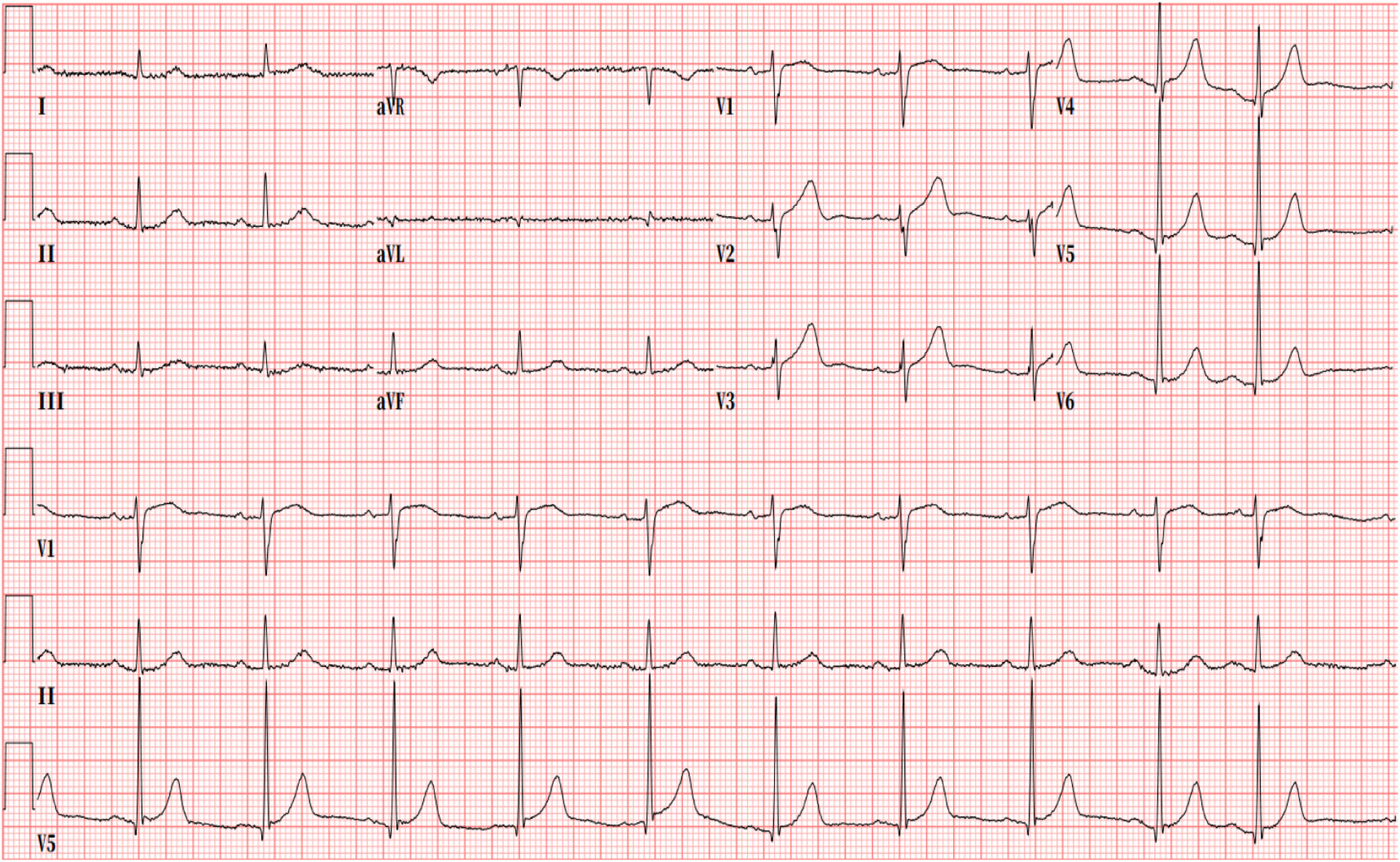


Cardiovascular disease (CVD) is the leading cause of death in patients with type 2 diabetes mellitus (T2DM), and left ventricular diastolic dysfunction (LVDD) is considered one of the earliest markers of myocardial dysfunction. Fragmented QRS (fQRS) and microalbuminuria (MAU) are important biomarkers of cardiac electrophysiological changes and CVD, but their relationship with LVDD in T2DM remains unclear. This study aims to explore the impact of fQRS and MAU on LVDD in T2DM patients and to analyze whether the association between fQRS and LVDD differs across varying MAU statuses.
MethodsA total of 374 patients with T2DM were ultimately enrolled in this study. Twelve-lead electrocardiography (ECG) and echocardiography were performed, and the patients’ baseline characteristics, laboratory results, and echocardiographic parameters were collected. Univariate and multivariate logistic regression analyses were conducted to assess the association between fQRS, MAU, and LVDD in T2DM patients. A stratified analysis was performed to examine the relationship between fQRS and LVDD across different MAU statuses.
ResultsThe mean age of the T2DM patients was 57.19±12.47 years, and 62.57% were male. fQRS, MAU, and age were independent risk factors for LVDD in patients with T2DM. The risk of developing LVDD was 3.72 times higher in patients with fQRS compared to those without fQRS [95% CI=2.125–6.513, P<0.0001]. The risk of LVDD was 4.05 times higher in patients with MAU compared to those without MAU [95% CI=2.252–7.282, P<0.0001]. For each additional year of age, the risk of LVDD increased by 5.2% [95% CI=1.022–1.084, P=0.001]. Stratified analysis based on MAU status revealed that in patients without MAU, the association between fQRS and LVDD was stronger [OR=7.084, 95% CI=3.255–15.419, P<0.0001]. However, in patients with MAU, the relationship between fQRS and LVDD was no longer significant [OR=1.499, 95% CI=0.603–3.722, P=0.383].
ConclusionsOur study found that both fQRS and MAU are independent risk factors for LVDD in patients with T2DM. The presence of fQRS increased the risk of LVDD by 3.72 times, while MAU increased the risk by 4.05 times. Stratified analysis further revealed that in patients without MAU, the association between fQRS and LVDD was significantly stronger (OR=7.084, P<0.0001), while in patients with MAU, this association was no longer significant (P=0.383). These findings suggest that combining the detection of fQRS and MAU may provide valuable information for cardiovascular risk assessment in T2DM patients, helping to develop personalized intervention strategies and ultimately improving patient prognosis.
La enfermedad cardiovascular (ECV) es la principal causa de muerte en pacientes con diabetes mellitus tipo 2 (DM2), y la disfunción diastólica del ventrículo izquierdo (LVDD) se considera uno de los marcadores más tempranos de disfunción miocárdica. El QRS fragmentado (fQRS) y la microalbuminuria (MAU) son biomarcadores importantes de cambios electrofisiológicos cardíacos y de ECV, pero su relación con la LVDD en la DM2 sigue sin estar clara. Este estudio tiene como objetivo explorar el impacto de fQRS y MAU en LVDD en pacientes con DMT2 y analizar si la asociación entre fQRS y LVDD difiere en los diferentes estados de MAU.
MaterialesUn total de 374 pacientes con DM2 se inscribieron finalmente en este estudio. Se realizó electrocardiografía (ECG) y ecocardiografía de doce derivaciones, y se recogieron las características basales, los resultados de laboratorio y los parámetros ecocardiográficos de los pacientes. Se realizaron análisis de regresión logística univariados y multivariados para evaluar la asociación entre fQRS, MAU y LVDD en pacientes con DM2. Se realizó un análisis estratificado para examinar la relación entre fQRS y LVDD en diferentes estados de MAU.
ResultadosLa edad media de los pacientes con DM2 fue de 57,19±12,47 años, y el 62,57% eran varones. El fQRS, la MAU y la edad fueron factores de riesgo independientes para LVDD en pacientes con DM2. El riesgo de desarrollar DDVI fue 3,72 veces mayor en los pacientes con QRS f, en comparación con los que no lo tenían [IC 95%=2,125–6,513, p <0,0001]. El riesgo de DDVI fue 4,05 veces mayor en los pacientes con MAU en comparación con los que no lo tenían [IC 95%=2,252–7,282, p <0,0001]. Por cada año adicional de edad, el riesgo de DDVI aumentó en un 5,2% [IC del 95%=1,022-1,084, p=0,001]. El análisis estratificado basado en el estado de MAU reveló que en los pacientes sin MAU, la asociación entre fQRS y LVDD fue más fuerte [OR=7,084, IC 95%=3,255-15,419, P <0,0001]. Sin embargo, en los pacientes con MAU, la relación entre el fQRS y la DDVI ya no era significativa [OR=1,499, IC 95%=0,603-3,722, P=0,383].
ConclusionesNuestro estudio encontró que tanto el fQRS como el MAU son factores de riesgo independientes para LVDD en pacientes con DM2. La presencia de fQRS aumentó el riesgo de LVDD en 3,72 veces, mientras que la MAU aumentó el riesgo en 4,05 veces. El análisis estratificado reveló además que en los pacientes sin MAU, la asociación entre fQRS y LVDD fue significativamente más fuerte (OR=7,084, P <0,0001), mientras que en los pacientes con MAU, esta asociación ya no fue significativa (P=0,383). Estos hallazgos sugieren que la combinación de la detección de fQRS y MAU puede proporcionar información valiosa para la evaluación del riesgo cardiovascular en pacientes con DM2, ayudando a desarrollar estrategias de intervención personalizadas y, en última instancia, mejorando el pronóstico del paciente.