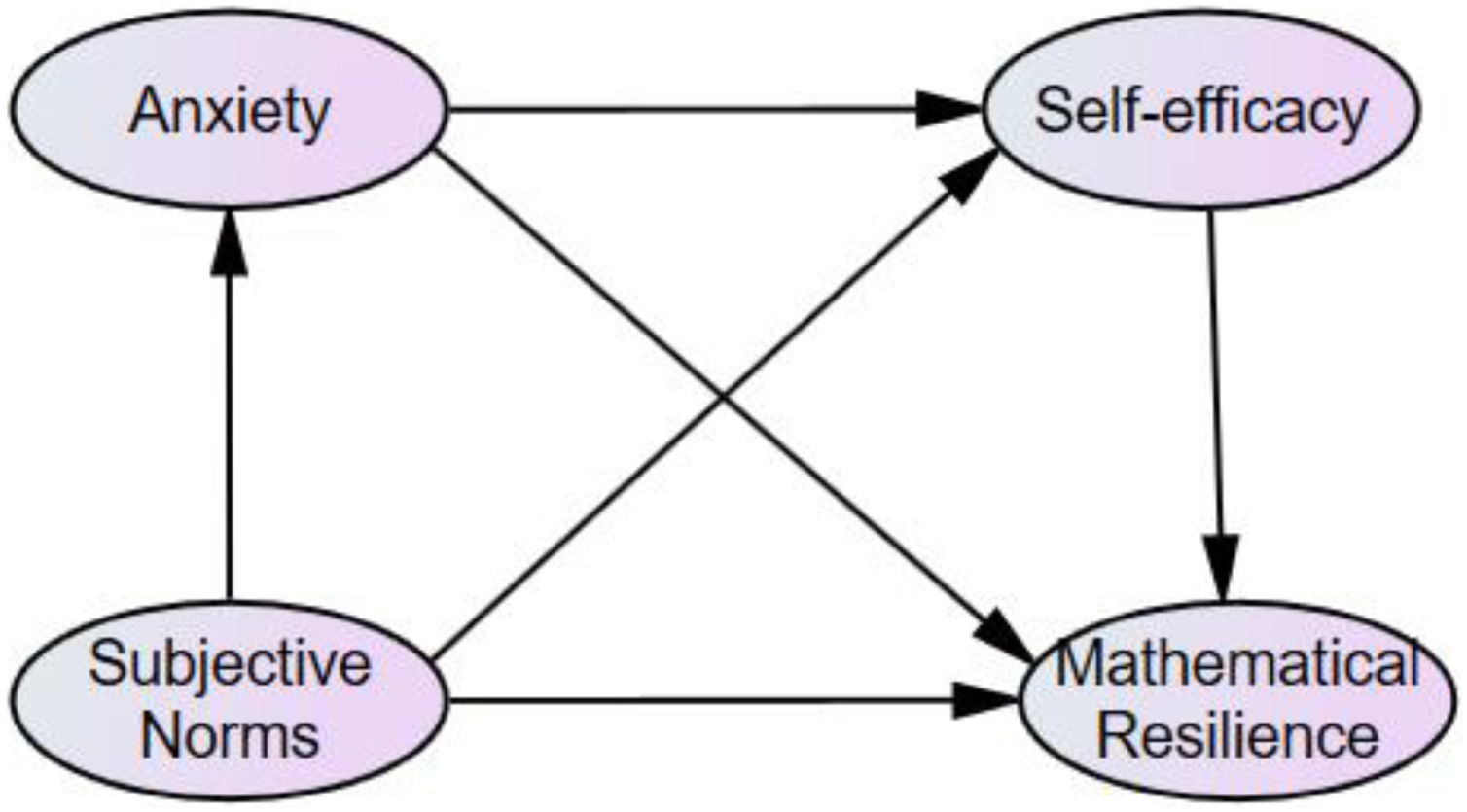
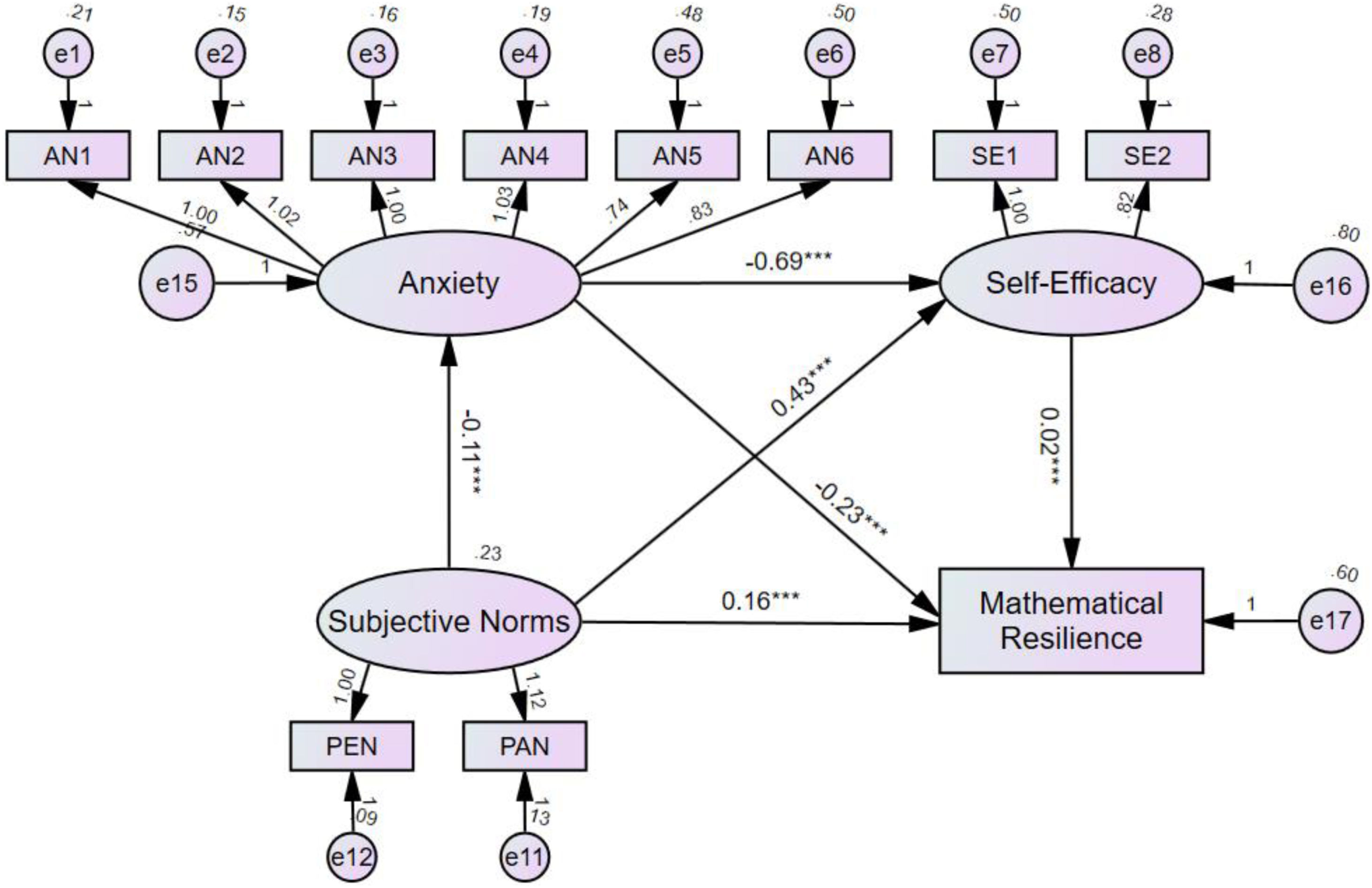

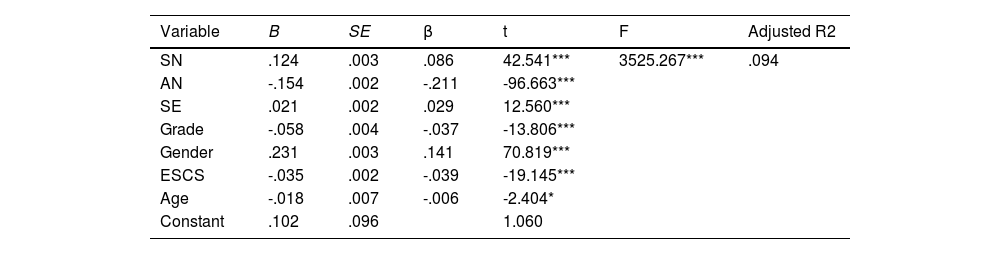
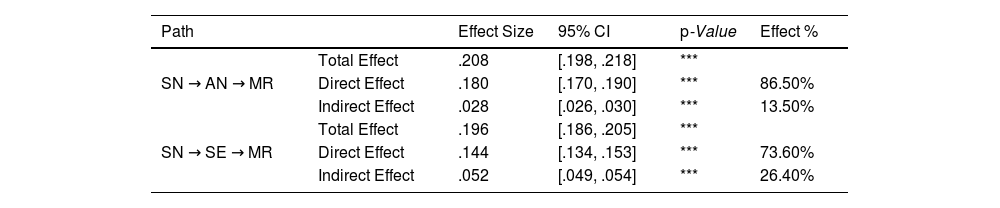
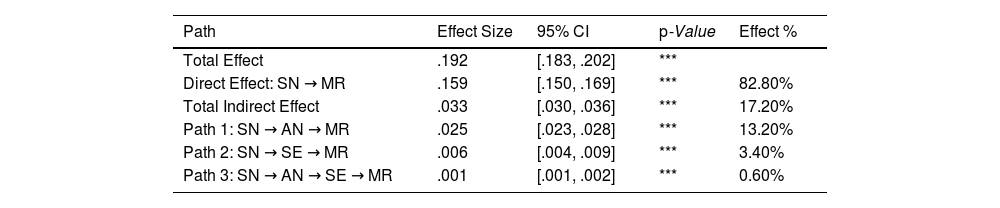
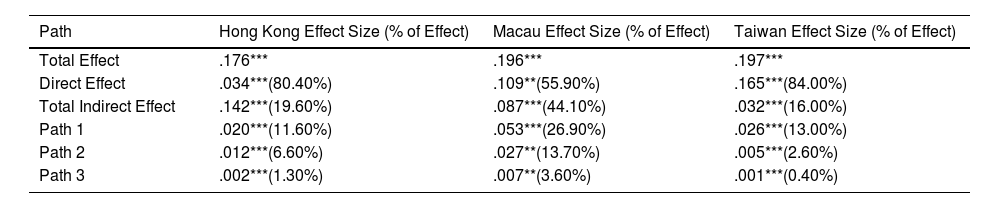
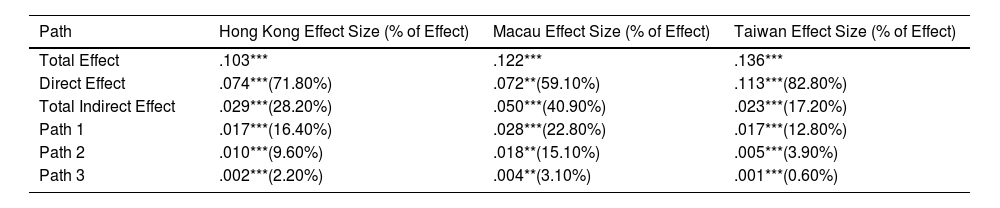
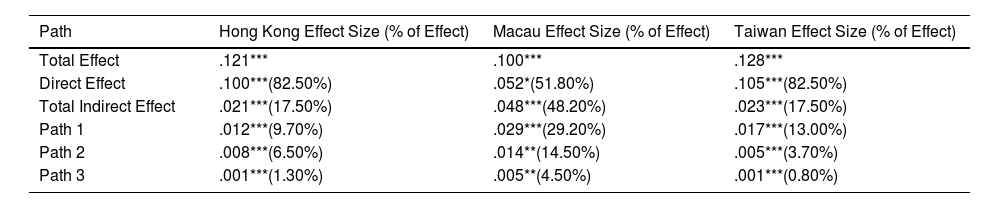
Mathematical resilience (MR), a key psychological trait that enables students to confront the difficulties in the process of learning mathematics, is important for enhancing academic performance and promoting psychological well-being. Drawing on PISA 2022 data, the present study investigates the influence mechanism through which subjective norms (SN), anxiety (AN), and self-efficacy (SE) affect MR among adolescents (N=15,603) in Hong Kong, Macau, and Taiwan. The results indicated that SN, AN, and SE are significantly correlated with MR and can predict MR. Additionally, a significant finding is that SN not only has a direct positive impact on MR, but also exerts influence indirectly through AN and SE, with the indirect effects encompassing both parallel and chain mediation, thereby extending the Theory of Planned Behavior (TPB). Cross-cultural analysis further revealed significant regional variations in the mechanism. To be specific, adolescents in Macau rely mainly on indirect effects, whereas those in Hong Kong and Taiwan depend more on direct effects. To further explore these differences, SN was divided into peer norms and parental norms, pointing that adolescents in Hong Kong are more influenced by parents, and their counterparts in Macau by peers. Such explorations elucidate the psychological mechanisms of how SN affects MR, validate the cross-cultural applicability of the Social Cognitive Theory (SCT), provide empirical evidence for the formulation of differentiated educational policies, and offer practical insights for the development of adolescent psychological health.
La resiliencia matemática (RM), un rasgo psicológico clave que permite a los estudiantes enfrentar las dificultades en el proceso de aprendizaje de las matemáticas, es importante para mejorar el rendimiento académico y promover el bienestar psicológico. Basado en los datos de PISA 2022, el presente estudio ha investigado el mecanismo de influencia mediante el cual las normas subjetivas (NS), la ansiedad (AN) y la autoeficacia (AE) afectan la RM en adolescentes (N=15.603) de Hong Kong, Macao y Taiwán. Los resultados han indicado que la NS, la AN y la AE están significativamente correlacionadas con la RM y pueden predecirla. Además, un hallazgo significativo es que la NS no solo tiene un impacto positivo directo en la RM, sino que también ejerce influencia indirectamente a través de la AN y la AE, con efectos indirectos que abarcan tanto la mediación paralela como la mediación en cadena, ampliando así la Teoría del Comportamiento Planificado (TCP). Un análisis transcultural adicional ha revelado variaciones regionales significativas en el mecanismo. Para ser más específicos, los adolescentes en Macao dependen principalmente de los efectos indirectos, mientras que aquellos en Hong Kong y Taiwán dependen más de los efectos directos. Para explorar aún más estas diferencias, la NS se ha dividido en normas de pares y normas parentales, lo que ha indicado que los adolescentes de Hong Kong están más influenciados por sus padres, mientras que sus homólogos de Macao lo están por sus pares. Estas exploraciones han aclarado los mecanismos psicológicos de cómo la NS afecta la RM, han validado la aplicabilidad transcultural de la Teoría Social Cognitiva (TSC), han proporcionado evidencia empírica para la formulación de políticas educativas diferenciadas y han ofrecido perspectivas prácticas para el desarrollo de la salud psicológica de los adolescentes.