
metricas
covid
Revista de Logopedia, Foniatría y Audiología Self-perception of oropharyngeal cancer patients regarding the impacts of chemor...
Información de la revista
Vol. 45. Núm. 2.
(Abril - Junio 2025)
Compartir
Descargar PDF
Más opciones de artículo
Visitas
19
Vol. 45. Núm. 2.
(Abril - Junio 2025)
Original article
Self-perception of oropharyngeal cancer patients regarding the impacts of chemoradiotherapy treatments on swallowing and voice functions
Autopercepción de los pacientes con cáncer de orofaringe sobre el impacto de los tratamientos de quimiorradioterapia en las funciones de la deglución y la voz
Visitas
19
Daniela Vieiraa,
Autor para correspondencia
dvieira@ufp.edu.pt

Corresponding author.
, Sérgio Barreiraa, Mário Dinis-Ribeirob,c, Eurico Monteirod
a Rede de Investigação em Saúde (RISE-Health), Instituto de Investigação, Inovação e Desenvolvimento (FP-I3ID), Biomedical and Health Sciences Research Unit (FP-BHS), Escola Superior de Saúde Fernando Pessoa, Porto, Portugal
b Gastroenterology Department, Oncology Portuguese Institute of Porto, Portugal
c MEDCIDS, Faculdade de Medicina, Universidade do Porto, CI-IPOP@RISE, Portugal
d University Fernando Pessoa, ENT Department, Oncology Portuguese Institute of Porto, Portugal
Este artículo ha recibido
Información del artículo
Resumen
Texto completo
Bibliografía
Descargar PDF
Estadísticas
Figuras (1)
Tablas (14)
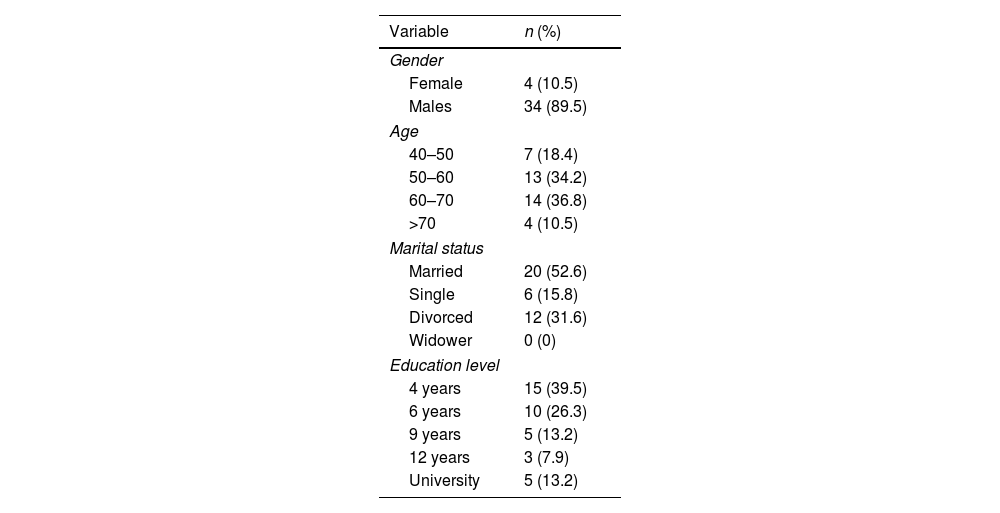
Table 1. Demographic characterization of the sample (n=38).
Tablas
Table 2. Clinical characterization of the sample (n=38).
Tablas
Table 3. Correlations between questionnaire scales and sociodemographic variables.
Tablas
Table 4. Correlation analysis between the EORTC QLQ-C30 questionnaire scales and clinical variables.
Tablas
Table 5. Correlation analysis between the EORTC QLQ-H&N43 questionnaire scales and clinical variables.
Tablas
Table 6. Correlation analysis between the SWAL-QOL and VHI-9i questionnaire scales with clinical variables.
Tablas
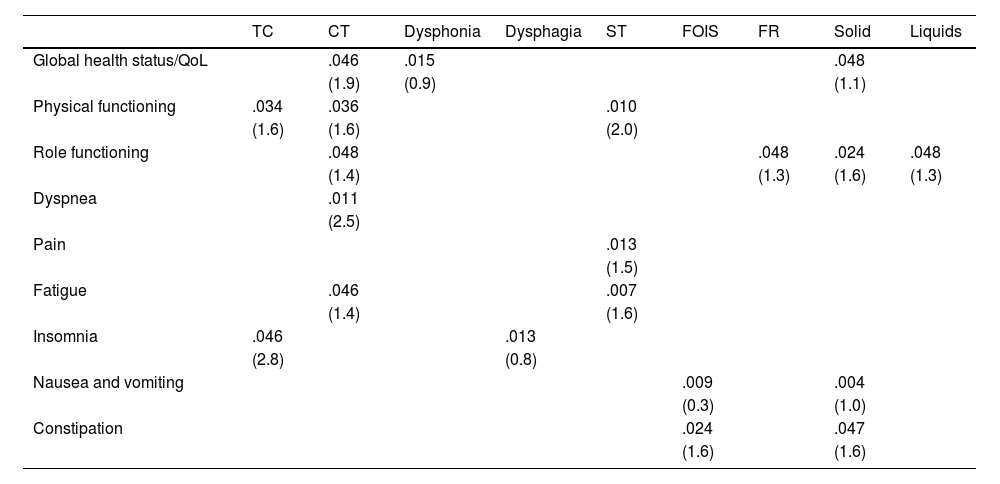
Table 7. Comparison of EORTC QLQ-C30 results between the different classes of the clinical variables (p-values with Cohen's d in parentheses).
Tablas
Table 8. Comparison of EORTC QLQ-H&N43 score results between different classes of sociodemographic and clinical variables (p-values with Cohen's d in parentheses).
Tablas
Table 9. Comparison of SWAL-QOL results between different classes of sociodemographic and clinical variables (p-values with Cohen's d in parentheses).
Tablas
Table 10. Comparison of VHI-9i results between different classes of clinical variables (p-values with Cohen's d in parentheses).
Tablas
Table 11. Correlation analysis between VHI-9i results and QLQ-H&N43 and SWAL-QOL scales.
Tablas
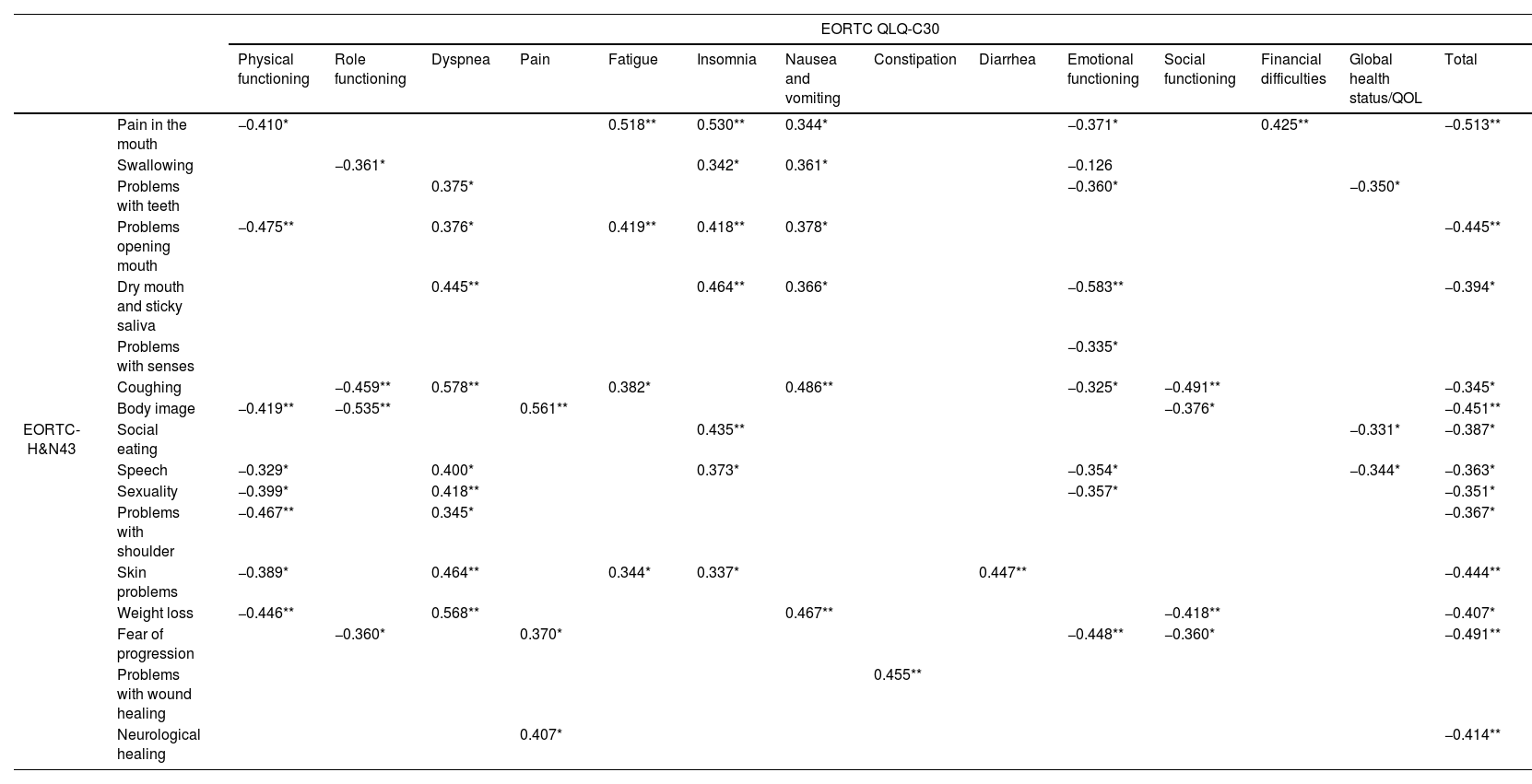
Table 12. Correlation analysis between EORTC QLQ-C30 and QLQ-H&N43.
Tablas
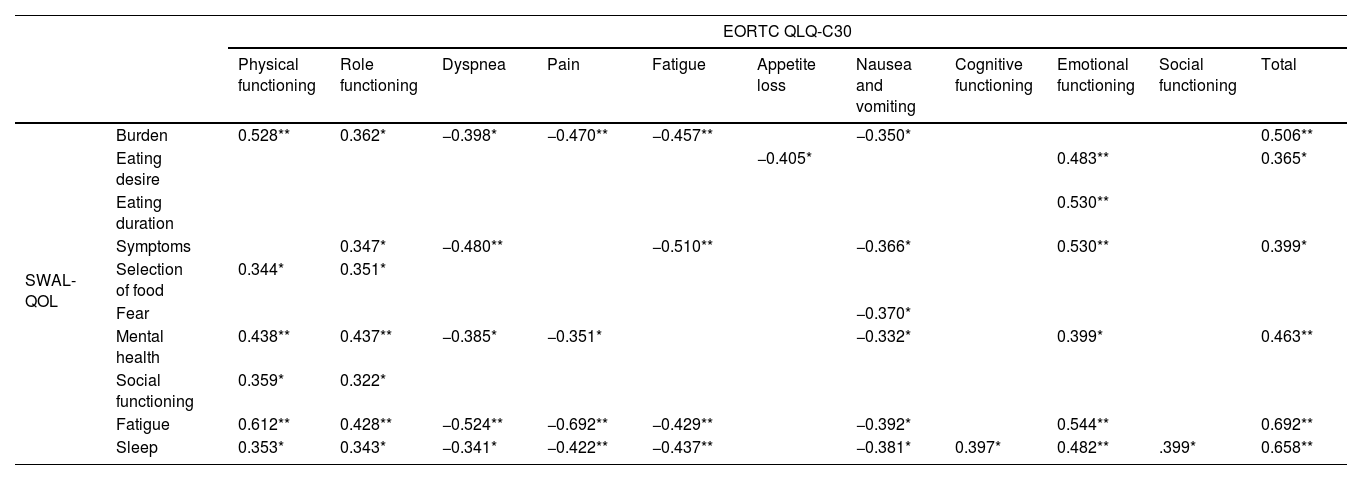
Table 13. Correlation analysis between EORTC QLQ-C30 and SWAL-QOL.
Tablas
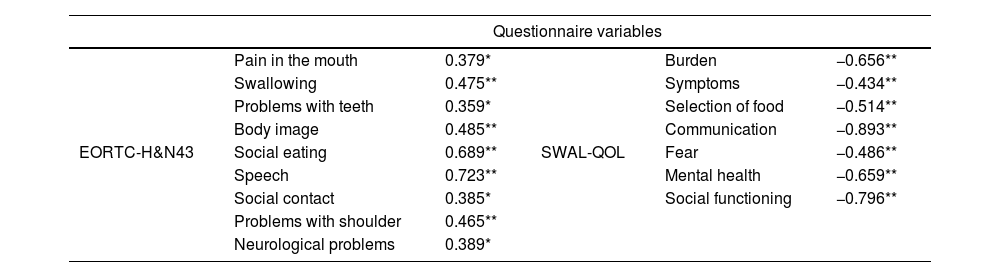
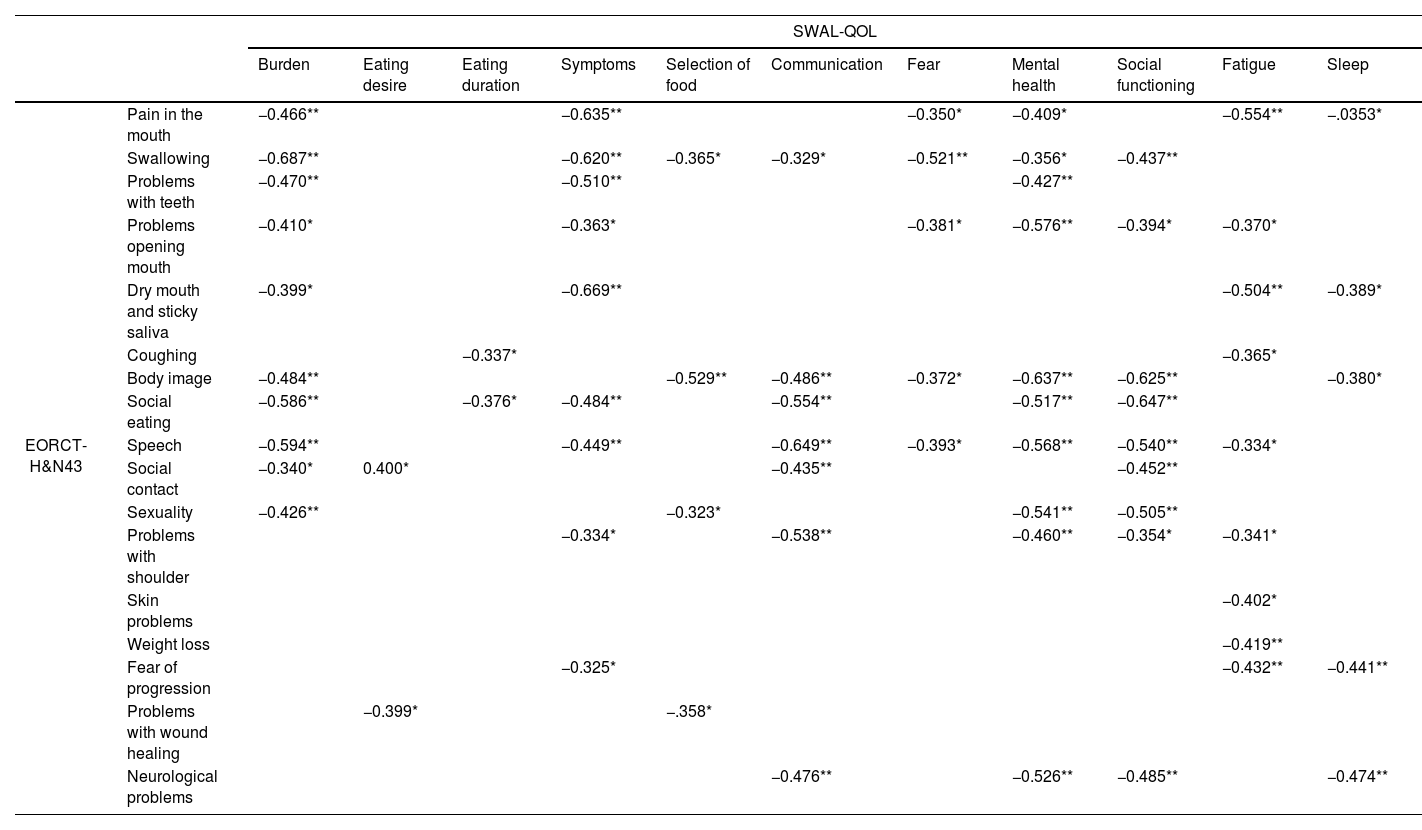
Table 14. Correlation analysis between EORTC QLQ-H&N43 and SWAL-QOL.
Tablas
Mostrar másMostrar menos
Material adicional (1)
Abstract
Objective

Understanding the effects of chemoradiotherapy (CRT) on the swallowing and voice functions of oropharyngeal cancer patients based on their reported perceptions, and how these are related to clinical and sociodemographic variables.

Methods

Thirty-eight oropharyngeal cancer patients treated exclusively with CRT were included. Patients’ perceptions were assessed using the EORTC QLQ-C30, H&N43, VHI-9i, and SWAL-QOL questionnaires. Descriptive, correlational, and inferential analyses were performed.

Results

The results from the QLQ-H&N43, SWAL-QOL, and VHI-9i revealed the existence of functional changes after CRT treatments that agreed with the results of clinical evaluations. Patients’ perceptions were associated with clinical variables such as FOIS, feeding route, solid-food consistency, and liquid consistency. Having undergone tracheostomy or having dysphagia or dysphonia was associated with poorer QLQ-C30, QLQ-H&N43, SWAL-QOL, and VHI-9i scores. In contrast, having undergone speech therapy was associated with having a better QoL as assessed by the QLQ-C30, QLQ-H&N43, and SWAL-QOL. Statistical analysis revealed correlations between scores from the QLQ-H&N43, SWAL-QOL, and VHI-9i, and scores from the QLQ-C30 with QLQ-H&N43 and SWAL-QOL. Statistically significant associations were found between the questionnaires scores and some sociodemographic variables (age, sex, and educational level).

Conclusion

Scores from generic QoL and specific symptom questionnaires were correlated with swallowing and voice function in oropharyngeal cancer patients. In cases with unfavourable scores, patients could benefit from early referral for the assessment of swallowing and voice functions to improve their QoL. The results of this study further indicate that there are certain clinical characteristics that, when present, should initiate this same course of action.

Keywords:
Quality of life
Head and neck cancer
Dysphagia
Dysphonia
Patient's perception
Patient reported outcome measures
Resumen
Objetivo

Comprender los efectos de la quimiorradioterapia (QRT) en las funciones de la deglución y la voz de los pacientes con cáncer de orofaringe en función de sus autopercepciones y cómo estas se relacionan con variables clínicas y sociodemográficas.

Métodos

Se han incluido 38 pacientes con cáncer de orofaringe tratados exclusivamente con QRT. Las percepciones de los pacientes se evaluaron mediante los cuestionarios EORTC QLQ-C30, H&N43, VHI-9i y SWAL-QOL. Se realizaron análisis descriptivos, de correlación e inferenciales.

Resultados

Los resultados del QLQ-H&N43, SWAL-QOL y VHI-9i revelaron la existencia de cambios funcionales tras los tratamientos con QRT, que coincidían con los resultados de las evaluaciones clínicas. Las percepciones de los pacientes se asociaron con variables clínicas, como el FOIS, la ruta de alimentación, la consistencia de los alimentos sólidos y la consistencia líquida. Tener una traqueostomía, o tener disfagia o disfonía se asoció con peores puntuaciones en QLQ-C30, QLQ-H&N43, SWAL-QOL y VHI-9i. Por el contrario, haber recibido logopedia se asoció con una mejor calidad de vida según lo evaluado por QLQ-C30, QLQ-H&N43 y SWAL-QOL. El análisis estadístico reveló correlaciones entre las puntuaciones de QLQ-H&N43, SWAL-QOL y VHI-9i, y las puntuaciones de QLQ-C30 con QLQ-H&N43 y SWAL-QOL. Se encontraron asociaciones estadísticamente significativas entre las puntuaciones de los cuestionarios y algunas variables sociodemográficas (edad, sexo y nivel educativo).

Conclusión

Las puntuaciones de los cuestionarios genéricos de calidad de vida y de síntomas específicos se correlacionaron con las funciones de la deglución y de la voz en los pacientes con cáncer de orofaringe. En los casos con puntuaciones desfavorables, los pacientes podrían beneficiarse de una derivación temprana para la evaluación de las funciones de la deglución y de la voz para mejorar su calidad de vida. Los resultados de este estudio indican, además, que existen ciertas características clínicas que, cuando están presentes, deberían iniciar este mismo curso de acción.


Palabras clave:
Calidad de vida
Cáncer de cabeza y cuello
Disfagia
Disfonía
Percepción del paciente
Medidas de resultado informadas por el paciente

Artículo

Opciones para acceder a los textos completos de la publicación Revista de Logopedia, Foniatría y Audiología
Suscriptor
Suscriptor de la revista

Si ya tiene sus datos de acceso, clique aquí.

Si olvidó su clave de acceso puede recuperarla clicando aquí y seleccionando la opción "He olvidado mi contraseña".
Suscribirse
Suscribirse a:

Revista de Logopedia, Foniatría y Audiología

Comprar
Comprar acceso al artículo

Comprando el artículo el PDF del mismo podrá ser descargado

Comprar ahora
Contactar
Teléfono para suscripciones e incidencias
De lunes a viernes de 9h a 18h (GMT+1) excepto los meses de julio y agosto que será de 9 a 15h
Llamadas desde España
932 415 960
Llamadas desde fuera de España
+34 932 415 960
E-mail
Opciones de artículo
Herramientas
Material suplementario