

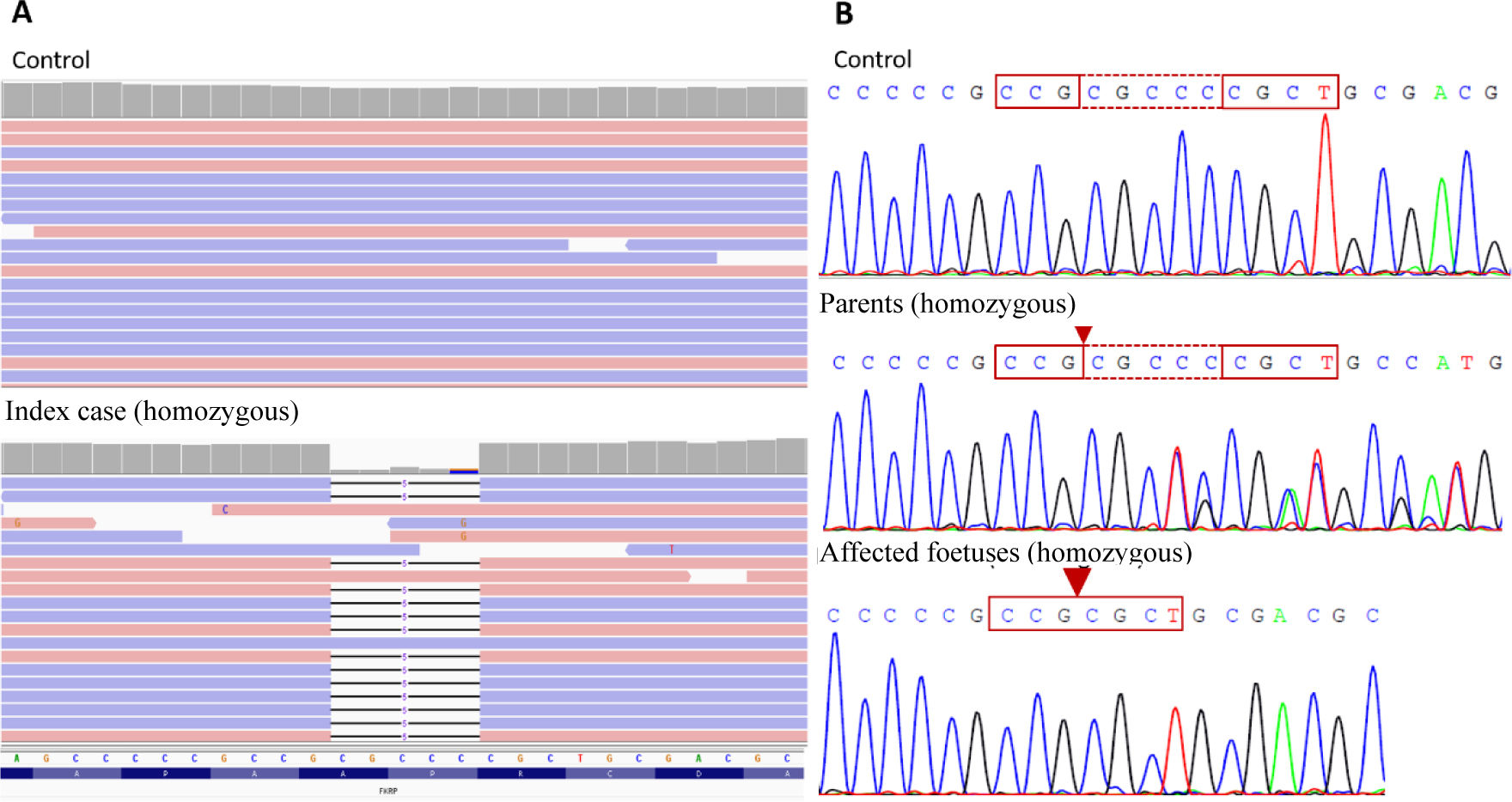
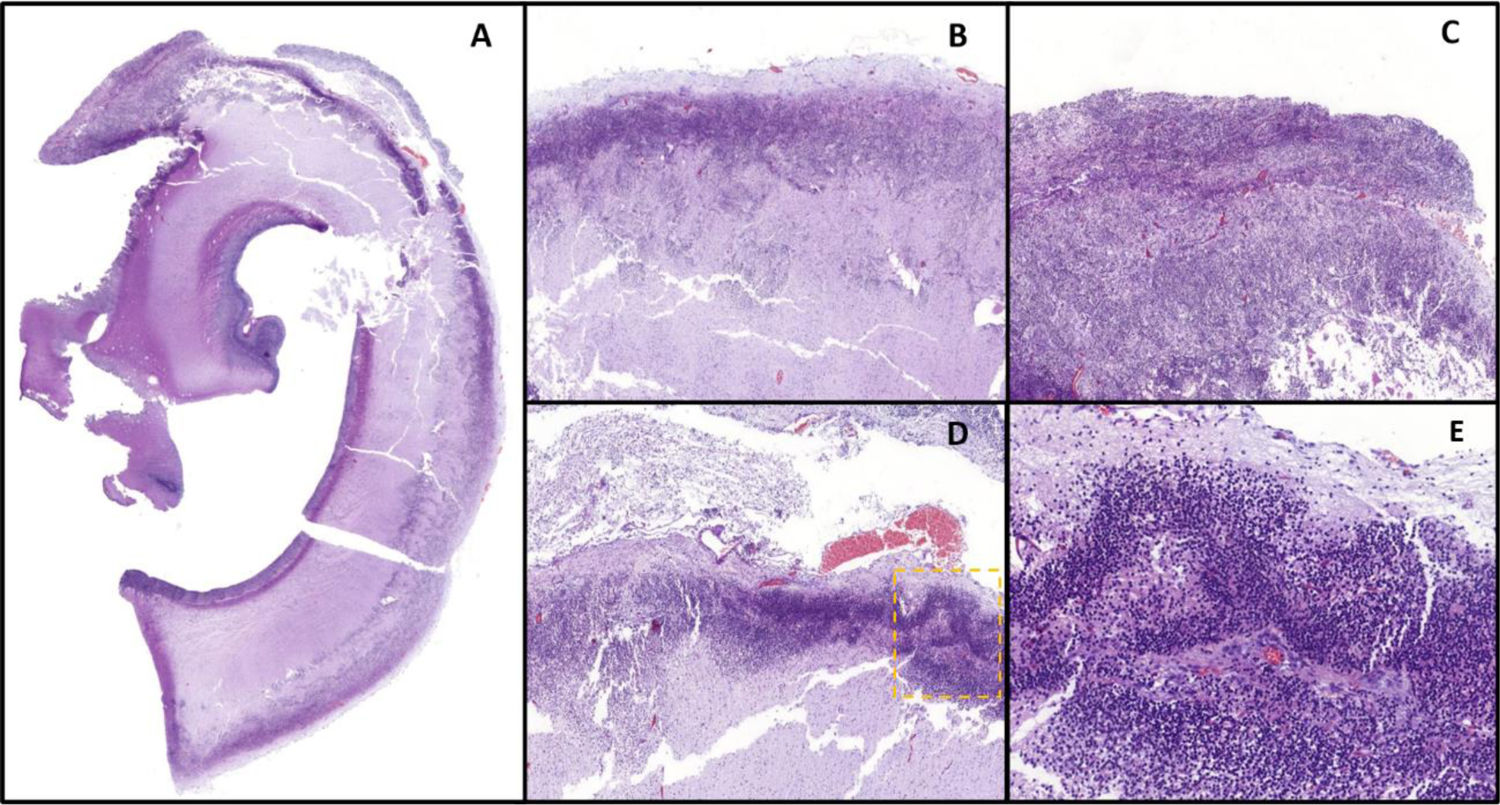
The diagnosis of central nervous system anomalies is a challenge for pathologists, especially in the context of stillbirth. A multidisciplinary approach including gestational data, ultrasound, and genetic tests not only increases diagnostic efficacy, but also enhances the quality of care provided to families. We report the case of a legal termination of pregnancy due to encephalic malformation in a couple with a previous history of multiple miscarriages. The initial foetal autopsy guided the genetic tests, leading to the identification of a pathogenic variant responsible for Walker-Warburg syndrome – an infrequent and relatively unknown syndromic complex. By using a reverse phenotyping strategy, it was possible not only to confirm the diagnosis suggested by the genetic tests in the foetus, but also to identify the same genetic alteration in a previous miscarriage. This provided an unidentified diagnosis and enabled the provision of genetic counselling to the couple.
El diagnóstico de las anomalías del sistema nervioso central supone un reto para los anatomopatólogos, especialmente en casos de muerte fetal. Un enfoque multidisciplinar que incluya datos gestacionales, ecográficos y estudios genéticos incrementa no sólo la eficacia diagnóstica, sino también la calidad de la atención a las familias. Presentamos el caso de una interrupción legal del embarazo debido a una malformación encefálica, en una pareja con historial previo de abortos múltiples. La autopsia fetal inicial orientó el estudio genético, permitiendo identificar una variante patogénica responsable de un complejo sindrómico poco conocido e infrecuente: el síndrome de Walker-Warburg. Mediante la estrategia de fenotipado inverso, fue posible no solo confirmar el diagnóstico sugerido por el estudio genético en el feto, sino también demostrar la misma alteración genética en un aborto anterior, proporcionando un diagnóstico previamente no identificado y ofreciendo asesoramiento genético a la pareja.