



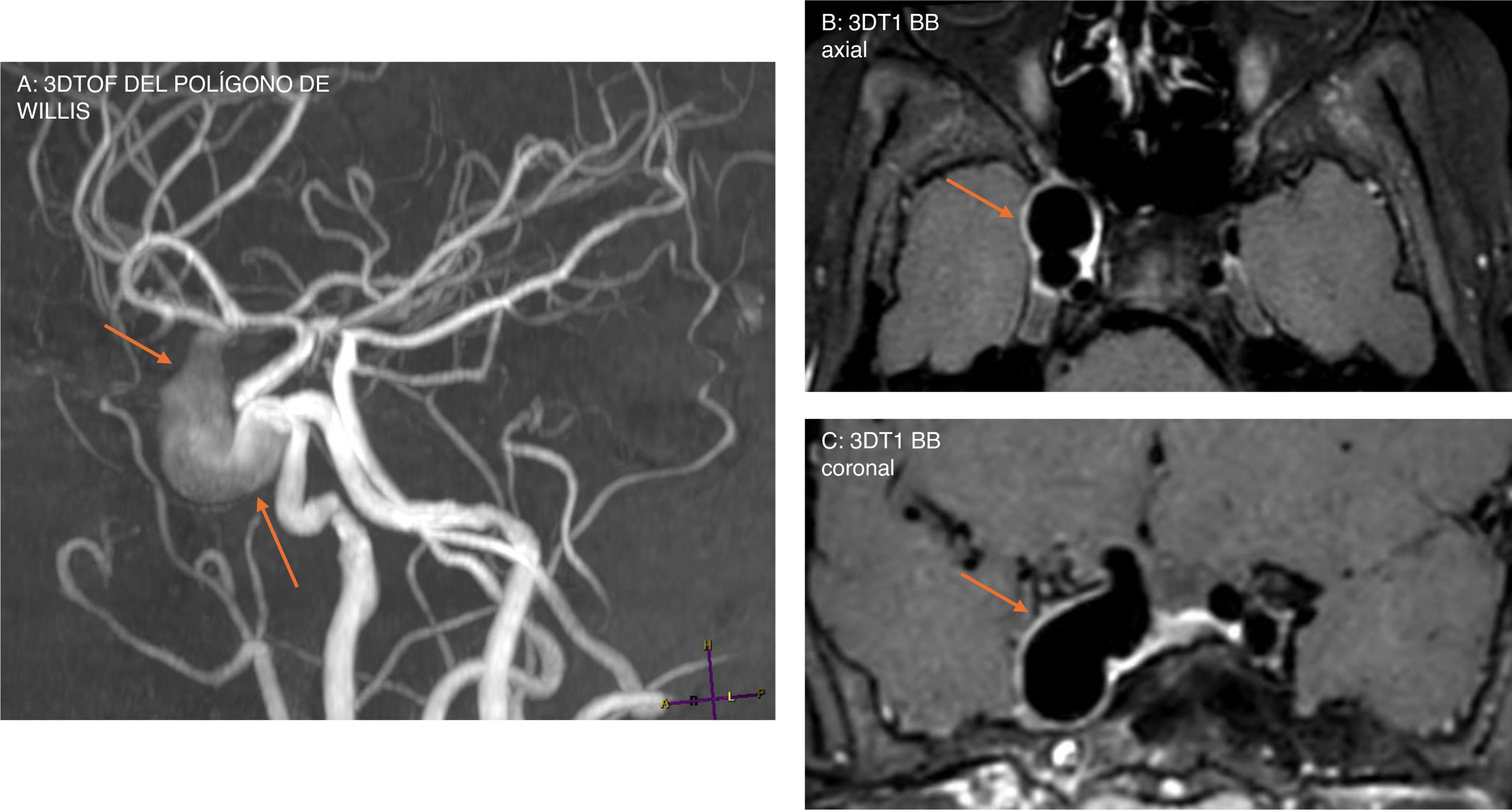
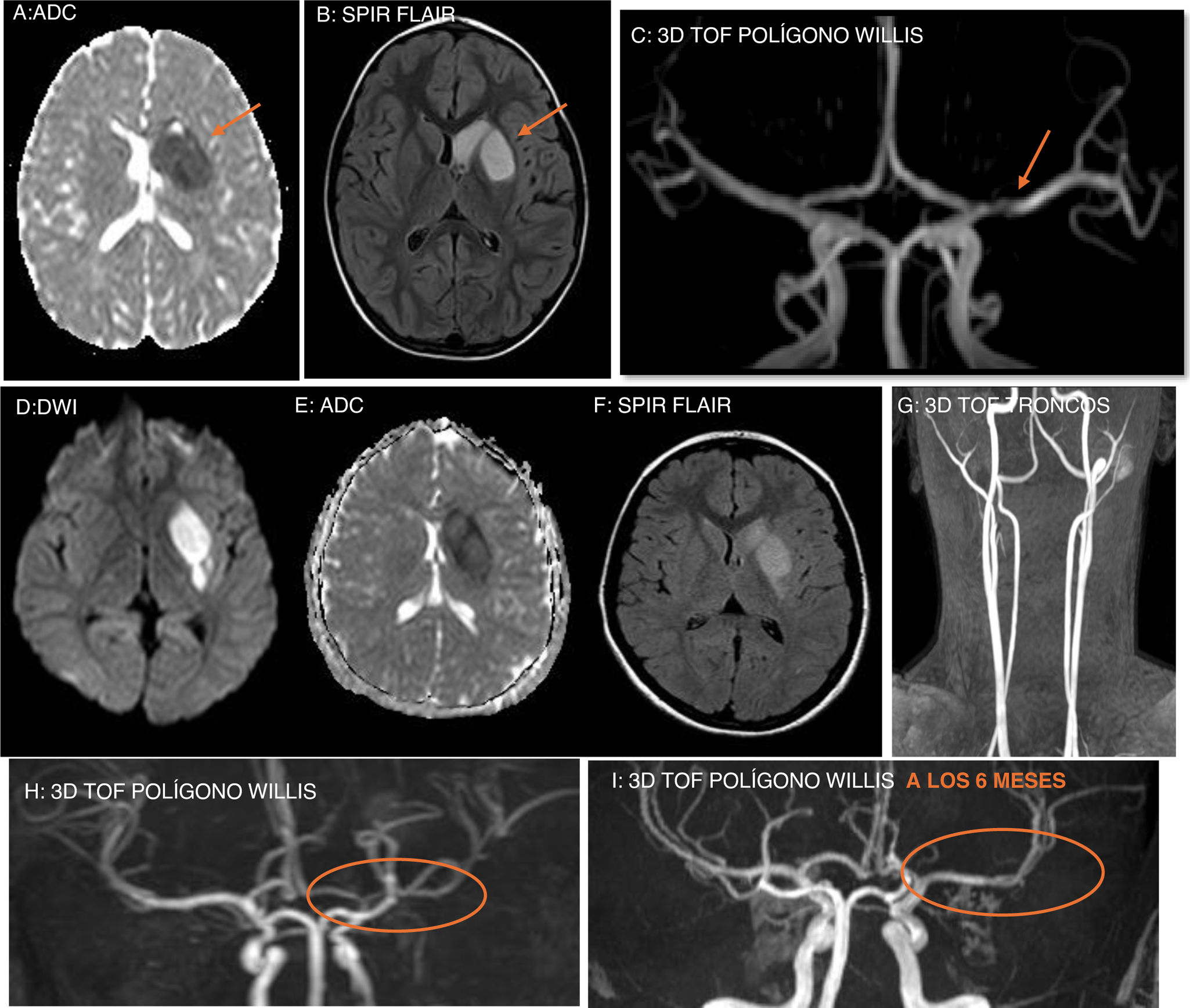
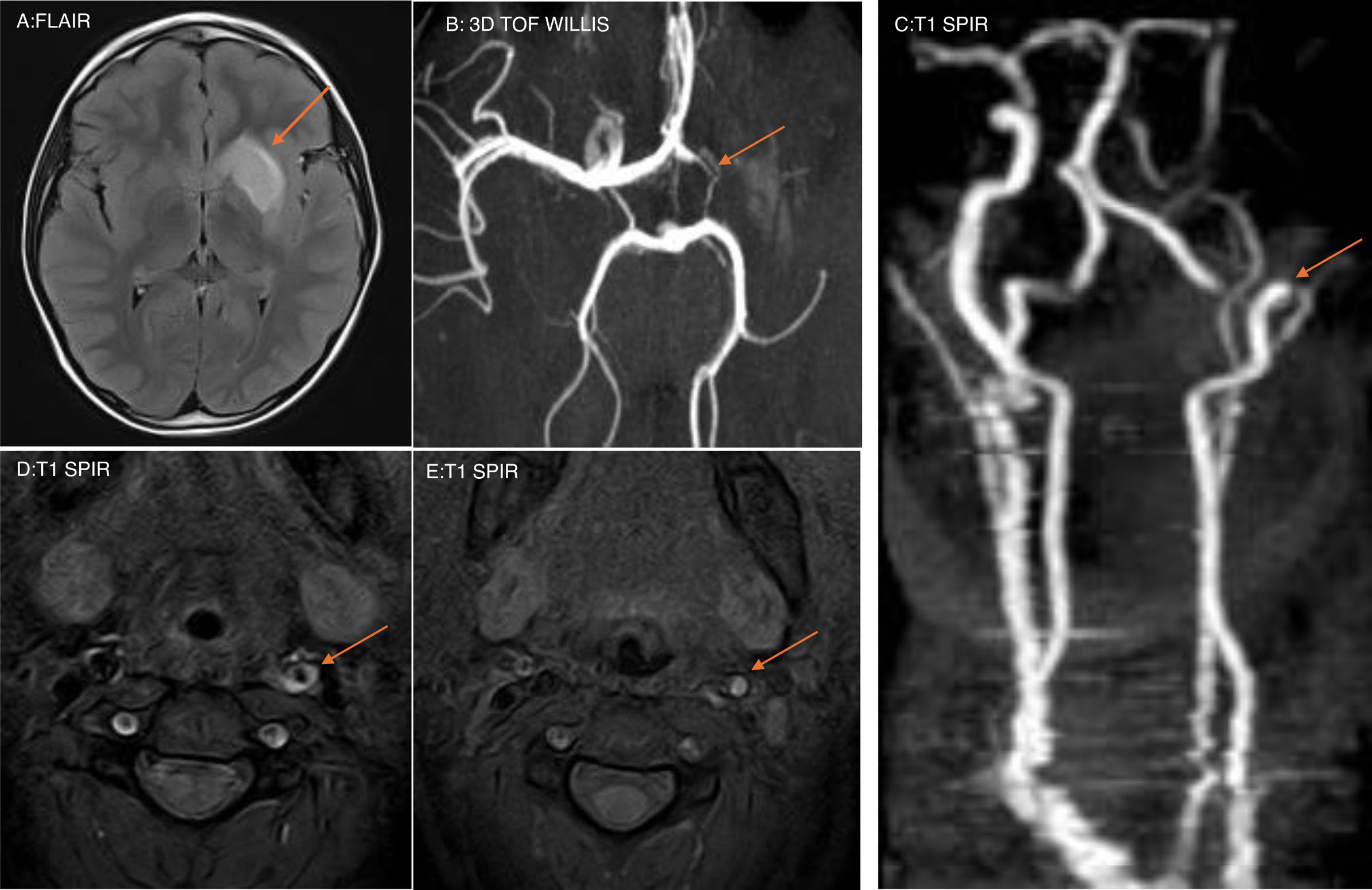
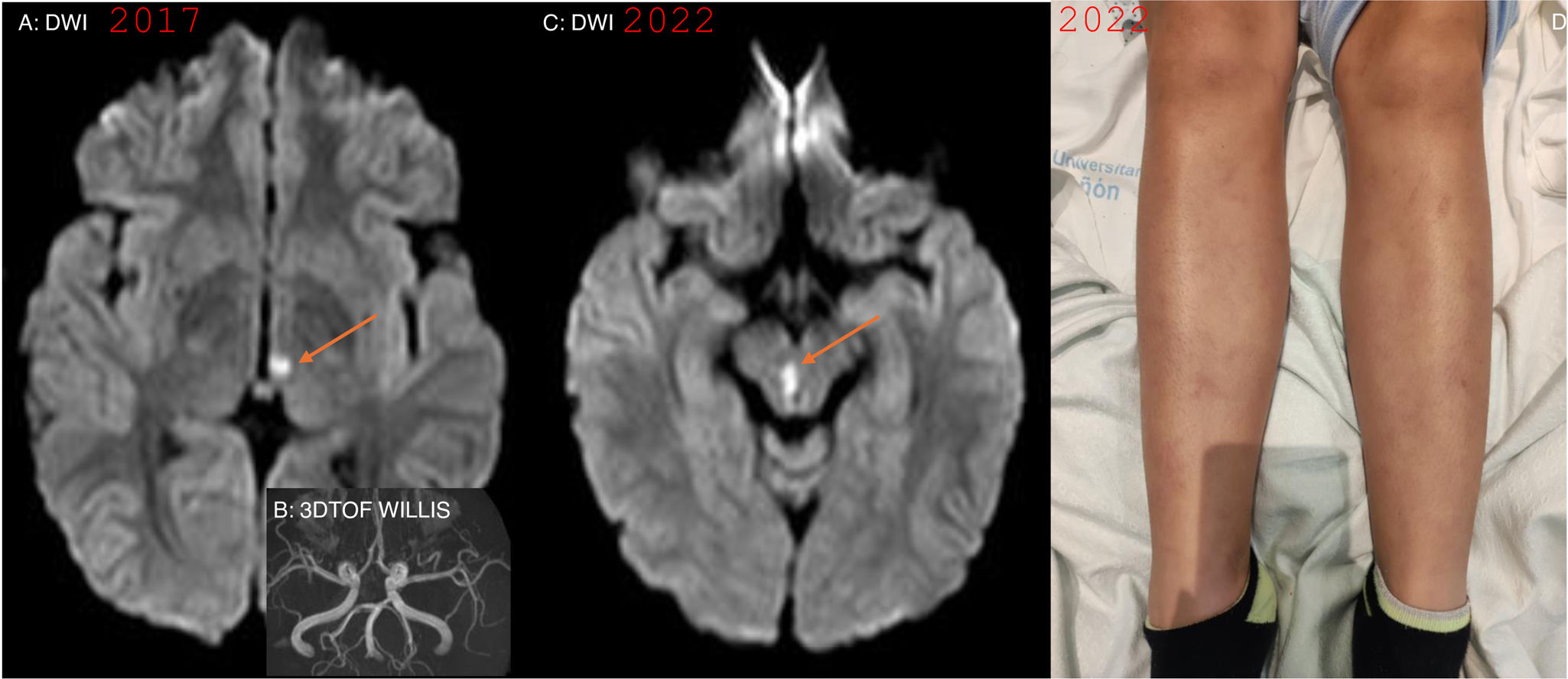
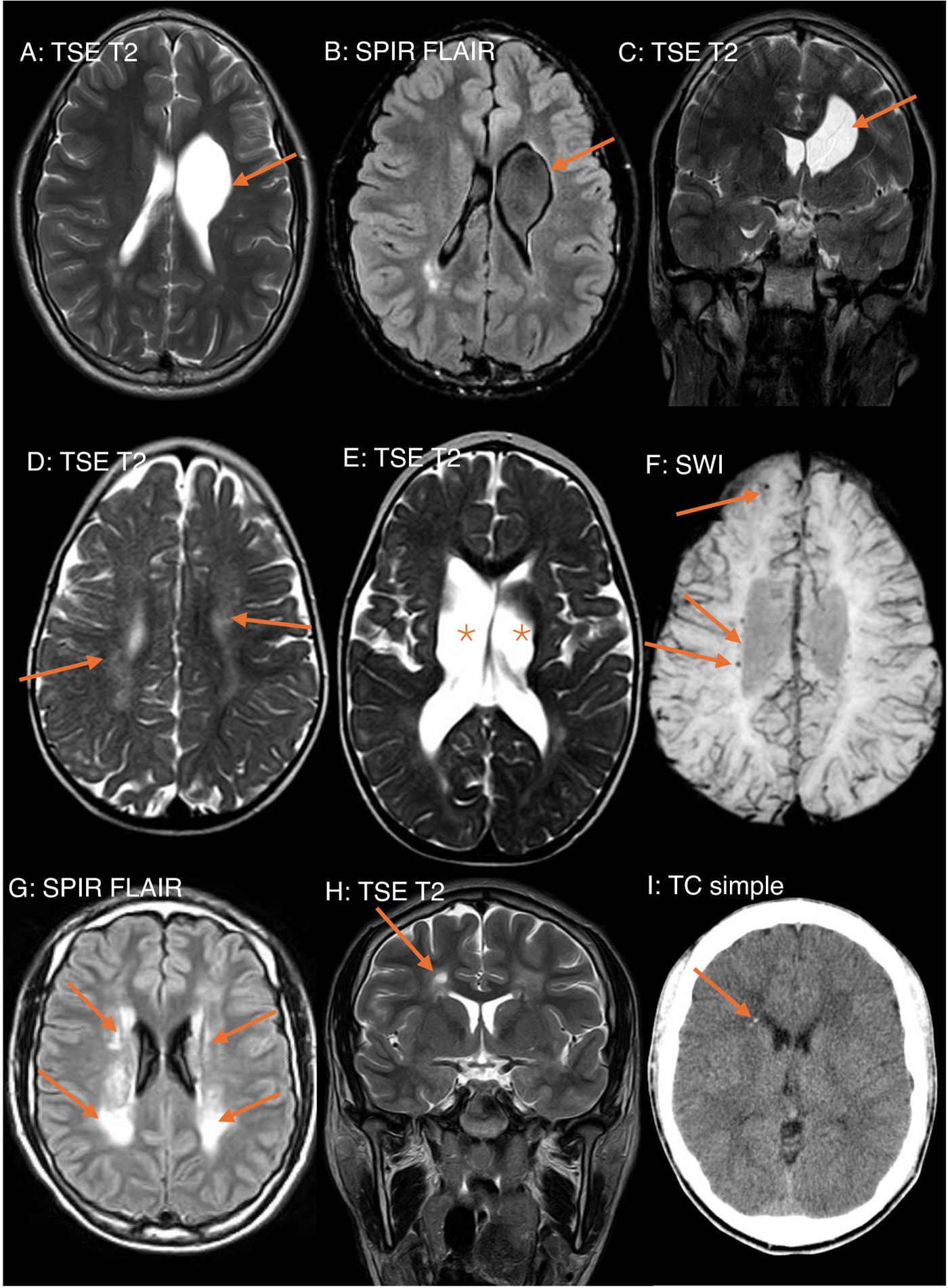
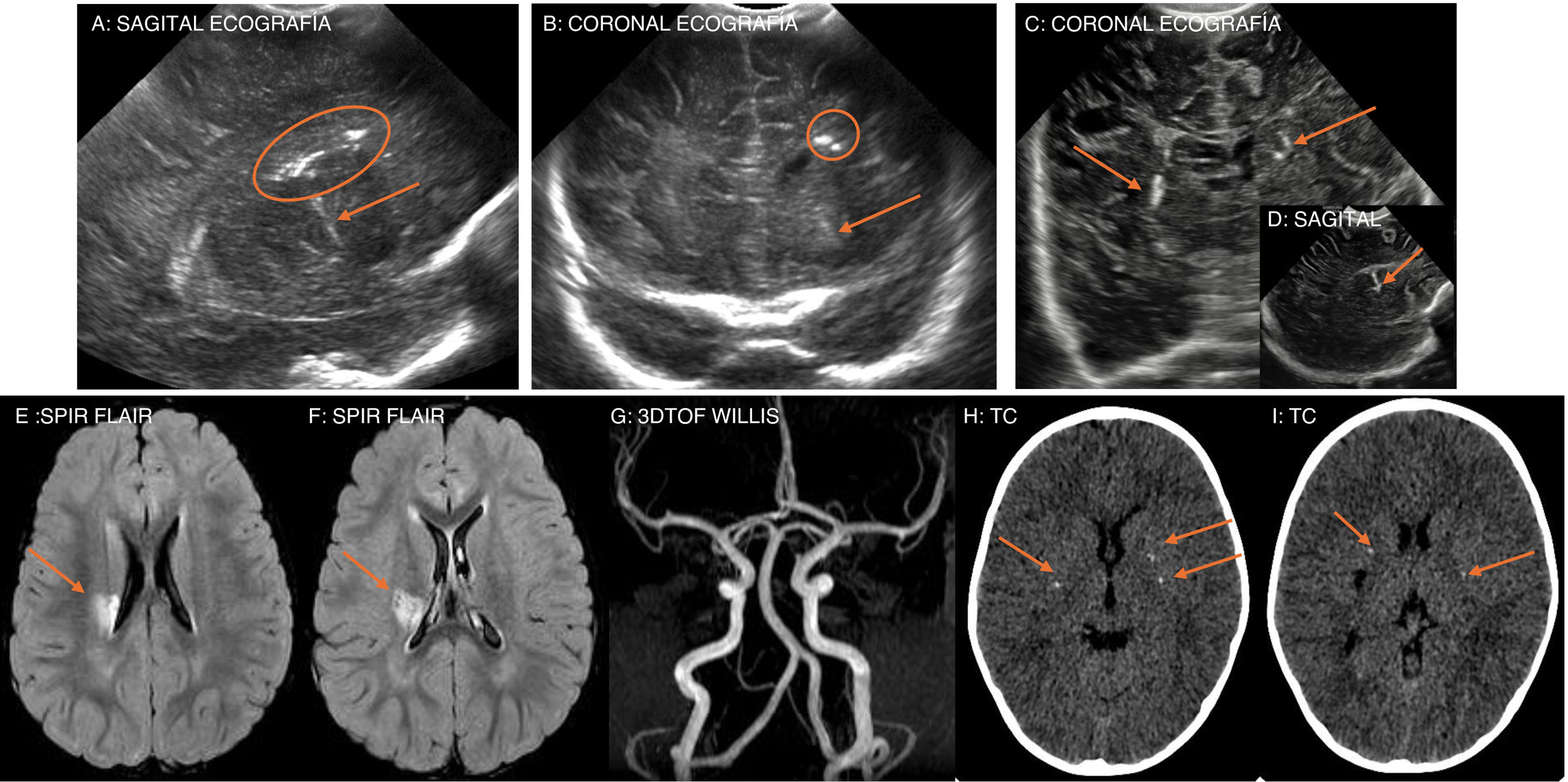


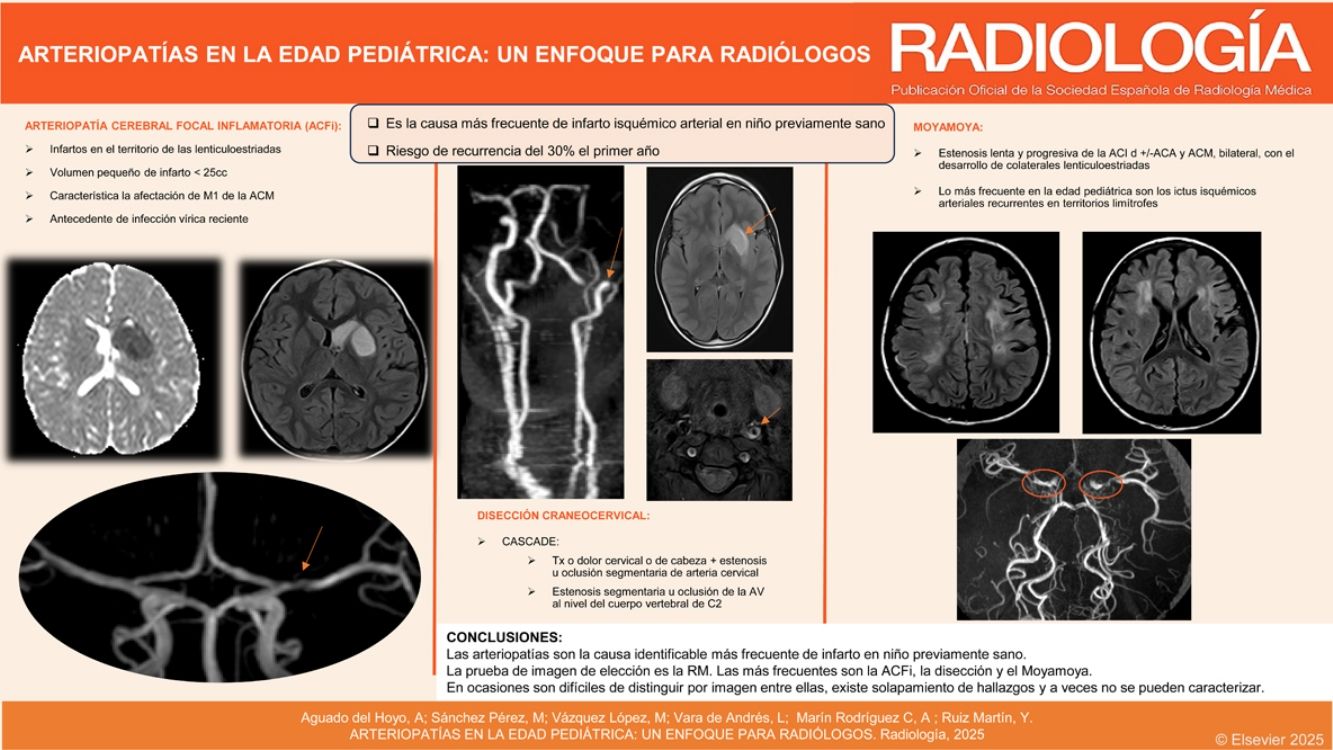
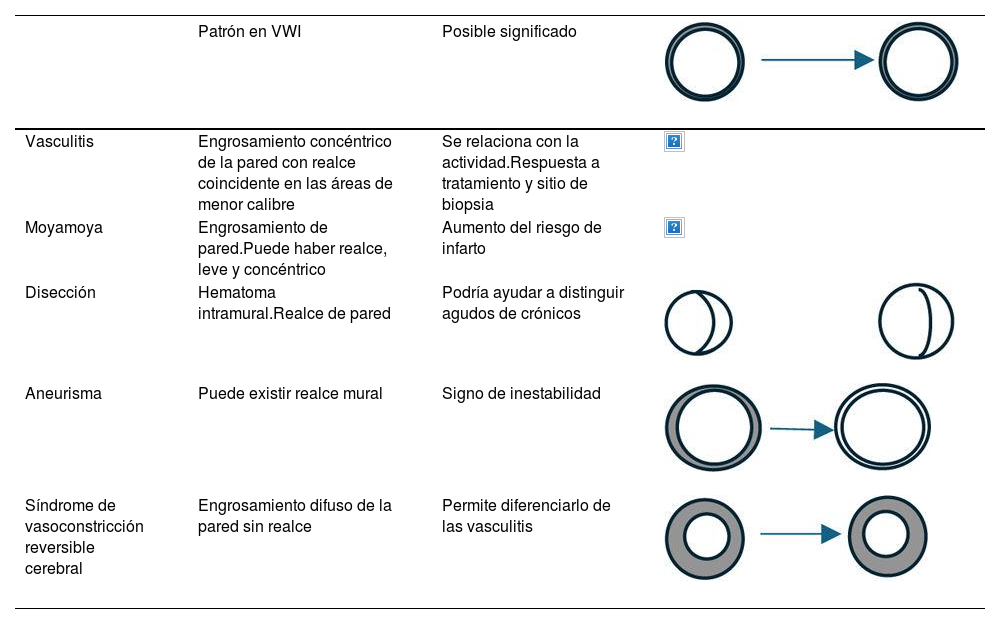
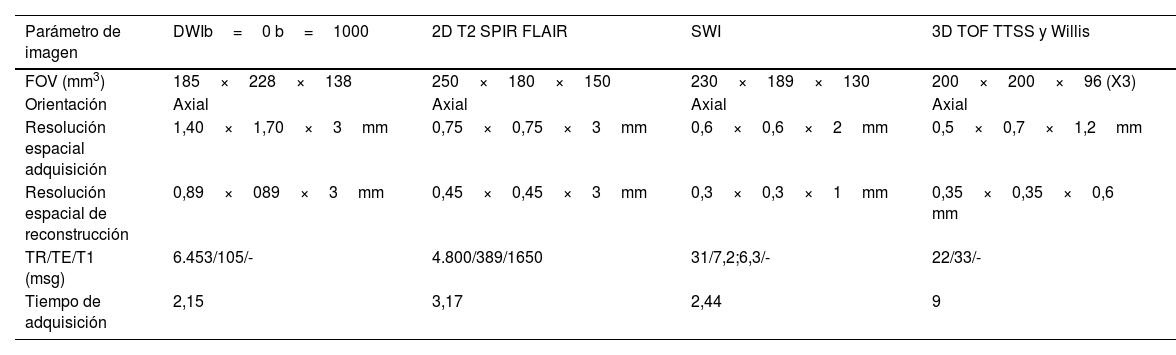
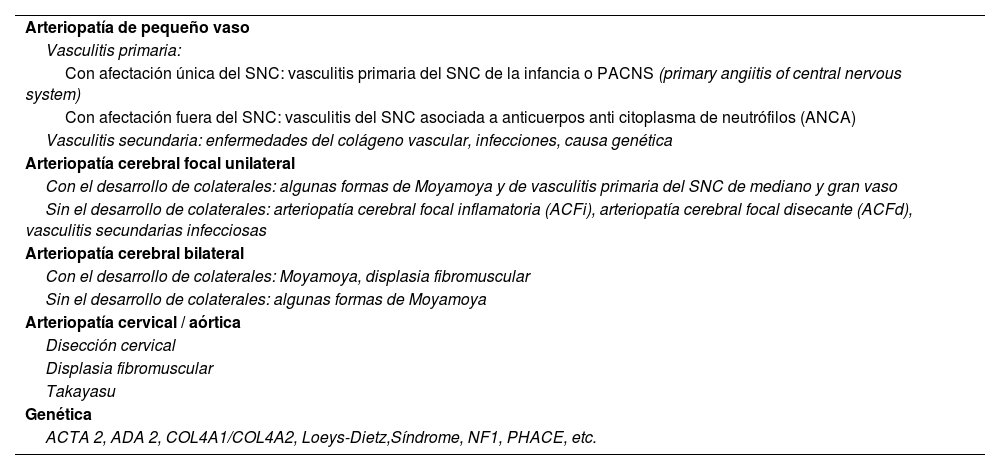
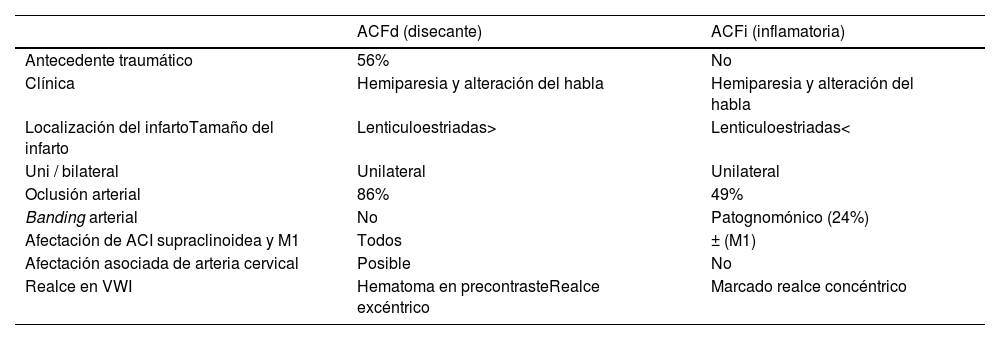
Las arteriopatías son la causa identificable más frecuente de infarto isquémico arterial en la edad pediátrica y tienen como característica importante una alta tasa de recurrencia de infarto. Además, en los últimos años ha cambiado el manejo del infarto arterial en la edad pediátrica y se han aceptado tratamientos de recanalización, que previamente estaban recomendados únicamente en adultos. Este hecho ha determinado la necesidad de establecer un diagnóstico precoz del infarto y de su posible etiología para instaurar el tratamiento y la prevención secundaria más adecuados. Uno de los factores que más ha complicado el estudio de las arteriopatías ha sido la ausencia de una clasificación y nomenclatura común que permitiera diagnosticarlas y agruparlas. En esta exposición se describen las técnicas de imagen que se deben realizar en cada caso, las distintas clasificaciones propuestas y aceptadas, y los hallazgos de imagen más característicos de las entidades más frecuentes.
Arteriopathies are the most commonly identified cause of arterial ischaemic stroke among children and are associated with a high rate of recurrence. Furthermore, in recent years, the management of arterial stroke in children has evolved, with the acceptance of recanalisation treatments that were previously recommended only in adults. This shift has highlighted the need for early diagnosis of both the stroke and its potential underlying cause, in order to initiate the most appropriate treatment and secondary prevention strategies. One of the main challenges in studying arteriopathies has been the lack of a unified classification and nomenclature system to facilitate diagnosis and grouping. This article outlines the imaging techniques required in each scenario, presents the various proposed and accepted classification systems, and describes the characteristic imaging findings of the most common entities.



