









Artificial intelligence (AI) is revolutionising customer relationship management (CRM) across various sectors, fundamentally altering strategic business operations. This study examines the capabilities of AI-powered CRM systems, drawing on empirical evidence arising from thematic analyses of 64 scholarly articles and insights gained from 24 in-depth interviews with CRM experts. The research identifies and systematically categorises three major dimensions and eight sub-dimensions of AI-powered CRM capabilities, providing a structured framework that encapsulates the complex interplay that occurs between these elements. These dimensions include data management, multi-channel integration, and tailored service offerings, each underpinning the nuanced integration of AI into CRM practices. Critically, the study integrates these findings within the theoretical framework of the microfoundations of Dynamic Capabilities (DC), enriching the discourse on how AI can strategically enhance CRM systems and offering a nuanced understanding of the factors driving AI adoption within CRM. By mapping these capabilities against the microfoundations of DC theory, the research delineates the strategic implications for organisations striving to leverage AI to enhance their competitive advantage.
Artificial intelligence (AI) is transforming industries at an unprecedented pace, with profound implications for customer relationship management (CRM) systems (Kumar et al., 2023; Ozay et al., 2024). The integration of cutting-edge AI algorithms with traditional CRM platforms not only augments the capacity for analytical insight and predictive accuracy but also enables organisations to adjust their engagement strategies pre-emptively in the light of emerging customer dynamics (Dwivedi et al., 2021; Kumar et al., 2023; Ozay et al., 2024). This technological infusion is pivotal in elevating the CRM’s role, from being a transactional interface to becoming a strategic asset, significantly enhancing customer experience and, consequently, driving robust business performance (Li & Xu, 2022; Payne & Frow, 2005). Current market projections estimate that the global CRM market will expand from USD 18.1 billion in 2021 to USD 25.7 billion by 2032, growing at a compound annual growth rate (CAGR) of 3.2 % over this period (Business Research Insights, 2024). Despite these promising forecasts, a dichotomy exists, as numerous organisations continue to struggle to harness the full potential of these advanced systems.
Parallel to these technological advancements, scholarly discourse on CRM has evolved considerably, mirroring the transition towards sophisticated, technology-driven practices that underscore the strategic imperative for nurturing deep, meaningful customer relationships (Chatterjee et al., 2022a; Liu et al., 2020; Nicolescu & Rîpa, 2024). In contemporary settings, AI-powered CRM systems emerge as formidable enablers, facilitating the nuanced collection, analysis and personalisation of customer data, consequently facilitating automated marketing initiatives and providing personalised customer interactions (Campbell et al., 2020; Chen & Jai, 2021; Chung et al., 2016).
Moreover, the integration of Einstein GPT into the Salesforce CRM platform has led to the automation of tasks and generated consistent AI-driven responses, providing significant benefits to both the company and its clients (Nieva, 2023). By leveraging these AI-powered CRM capabilities, organisations can optimise and revolutionise their customer interactions and acquire precious insights that will help them to clarify the broad patterns within customer behaviour, enhancing their operational efficiency and informed decision-making processes (Kozinets & Gretzel, 2021; Lahiri, 2023). Despite its advantages, research has shown that implementing AI-powered CRM presents considerable practical challenges for businesses (Chatterjee et al., 2021d; Guerola-Navarro et al., 2021). One prominent challenge arises from the heavy reliance on customer data to customise individuals’ preferences and personalise their experiences (Ameen et al., 2021). Nonetheless, the increasing number of data breaches, particularly those that affect popular companies such as Facebook (O'Flaherty, 2021), AT&T (Knutsson, 2023) and T-Mobile (Hale, 2023), among others, have increased the concerns among customers about sharing their personal information, making establishing trust and rapport in the digital age a progressively complex challenge (Martin et al., 2017; Strazzullo, 2024). This challenge is further illustrated by cases like the Consumer Financial Protection Bureau (CFPB) and the U.S. Bank, where banks have been illegally accessing customer reports for their own advantage (Hrushka, 2022). This apprehension about sharing personal data may significantly impact customers’ expectations and loyalty, and hinder the assessment of their emotions and preferences, diminishing any potential offerings (Abid et al., 2022; Cuthbertson & Laine, 2004; Jenneboer et al., 2022). Additionally, data quality issues, including inaccurate, duplicated and outdated information, also impact AI-powered CRM systems (Martin et al., 2017).
Several studies have focused on AI-driven CRM capabilities across diverse contexts. For instance, Libai et al. (2020) discuss two main AI-CRM capabilities: the ability to leverage big customer data and the ability to communicate as humans do. Chaudhuri et al. (2023) explore AI-powered CRM capabilities within family businesses during crises, comprising their sensing, seizing and transforming capabilities. Kumar et al. (2023) outline three primary capabilities in AI-infused CRM within the healthcare sector: clinical, service and AI-engagement capabilities. Rahman et al. (2023) examine AI-powered CRM capability in relation to B2B firms' technology readiness and relationship performance.
Despite previous research on AI-powered CRM capabilities in niche industries, the specific dimensions and sub-dimensions of these capabilities across broader organisational contexts remain underexplored. This gap persists, despite significant advances in AI-powered CRM systems, as many organisations continue to face challenges regarding their successful implementation due to organisational resistance (Gaczek et al., 2023), risk of customer data exploitation (Dwivedi et al., 2021), ethical concerns and integration complexities that hinder seamless adoption (Ledro et al., 2023). Studies have shown that CRM failure rates can range from 18 % to 69 %, with some executives reporting failure rates as high as 90 % when systems fail to drive business growth (Edinger, 2018), often due to a misalignment with the organisational infrastructure, technology integration and data governance (Batista et al., 2020; Ledro et al., 2023; Wang et al., 2019).
Nonetheless, the broader digital revolution has fundamentally reshaped how businesses engage with customers’ experiences, shifting the emphasis towards digital channels (Kaur et al., 2021). This transition accelerated dramatically during the COVID-19 pandemic, as customers quickly adapted their behaviour, leading to a marked shift towards digital banking services and increased adoption of AI-powered CRM systems to maintain customer engagement and operational continuity (Chatterjee et al., 2023; Naeem & Ozuem, 2021). While the pandemic reinforced the importance of incorporating advanced technological innovations into customer management systems (Shin & Kang, 2020), a critical gap remains in terms of understanding and optimising AI-powered CRM capabilities (Chatterjee et al., 2023).
Given these gaps, this study explores the dimensions and sub-dimensions of AI-powered CRM capabilities. As organisations increasingly deploy AI-powered CRM systems, there is an urgent need to clarify the distinct capabilities that these systems offer. Such an exploration can provide valuable insights into how AI-powered CRM systems are perceived and implemented, potentially informing strategies for enhancing their adoption and functionality within diverse organisational contexts. The research question guiding this study is:
RQ: What are the dimensions and sub-dimensions of the AI-powered CRM capabilities and how do these capabilities inform and extend the existing theoretical frameworks?
To answer this question, this research explores in depth the AI-powered CRM systems capabilities within organisations, leveraging the microfoundations of dynamic capabilities (DC) theory. The novelty of this study lies in the development of an AI-powered CRM capability framework by employing an exploratory research methodology that combines a six-step scoping review with thematic analysis and in-depth interviews. This scoping literature review builds upon the semi-systematic literature review conducted by Alnofeli et al. (2023) and existing systematic literature reviews (Ledro et al., 2022; Nguyen et al., 2022; Ozay et al., 2024). This study is particularly distinguished by its integration of insights and opinions from industry experts regarding the capabilities of AI-powered CRM systems. A scoping review is essential for identifying and mapping the available evidence on a specific topic, which is especially advantageous in fields where the research is still emerging and/or the concepts are not yet well-defined (Grant & Booth, 2009; Rumrill et al., 2010). This approach enables researchers to clarify key concepts, identify any knowledge gaps, and lay the groundwork for more focused and comprehensive systematic reviews, ensuring that future research efforts are well-informed and appropriately directed (Munn et al., 2018). This method will help researchers to comprehend the complexities and identify potential benefits for academic research and professional practice, fostering informed decision-making in the digital age (Gewurtz et al., 2016; Levac et al., 2010). This study explores eight microfoundations of AI-powered CRM under three major dimensions, to extend the DC theory. It aligns participants’ perspectives with the industry landscape and addresses a key research question about AI-driven marketing practices.
The paper is structured as follows: the next section examines relevant AI-powered CRM literature and explores pertinent theories within this context. Section three discusses the research methodology and presents the data that were subjected to the analysis. Section four presents the findings from the scoping reviews and interviews, explains the dimensions and sub-dimensions, and proposes a conceptual model. Finally, section five discusses the theoretical and practical contributions, limitations and future research directions.
Literature reviewAI-powered CRM contextIn today's digital era, the imperative utilisation of generative AI plays a pivotal role for organisations seeking to create fresh value. Simultaneously, evolving customer expectations demand more efficient solutions and seamless personalised experiences (Mondal et al., 2023; Wenninger et al., 2022). This growing demand for enhanced customer experiences highlights the significance of implementing AI-powered CRM systems to manage and analyse the vast amount of customer data that is generated by various channels effectively (Chatterjee et al., 2022a; Chaudhuri et al., 2023; Kumar et al., 2023; Ledro, 2021; Li & Xu, 2022; Rahman et al., 2023; Youn & Jin, 2021; Yum et al., 2022).
While there is great potential for applying AI to CRM, many companies have struggled to realise the full value of this (Mikalef et al., 2023). The challenges include a lack of successful AI projects, limited business gains and potential negative consequences, such as user control and monitoring, data bias, privacy issues and loss of expertise (Dwivedi et al., 2021). The implementation of AI in CRM raises questions regarding the interplay between the social values (e.g., ownership, privacy, autonomy) and economic values of the AI designers and companies (Monod et al., 2022).
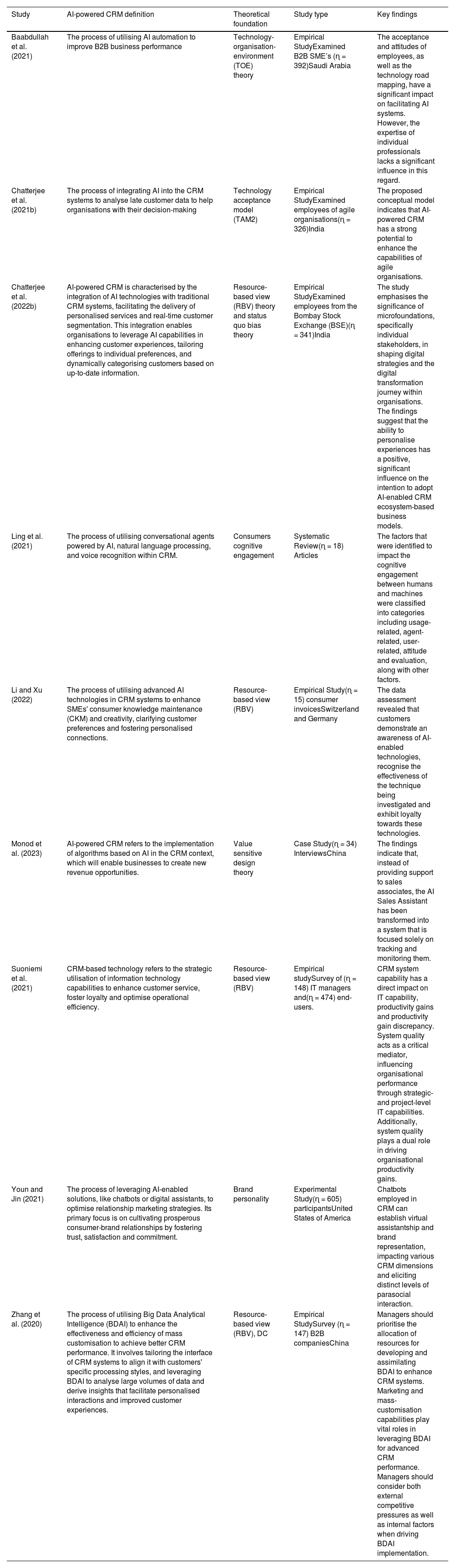
AI-powered CRM platforms integrate advanced analytics and robust data management practices, which has revolutionised customer service and operational efficiency across industries such as banking, healthcare, hospitality, airlines, retail and many others (Chiang, 2019; Jha, 2022; Kumar et al., 2023; Omoge et al., 2022; Talón-Ballestero et al., 2018; Wang & Hajli, 2017). These platforms enable organisations to leverage data analytics, a critical component of AI-powered CRM, to extract actionable insights from vast customer data sets (De Caigny et al., 2020; Gupta et al., 2020; Holmlund et al., 2020). By effectively managing and analysing this data, organisations can optimise their service offerings, deliver personalised experiences and enhance customer satisfaction (Chatterjee et al., 2022a; Story et al., 2017; Wang et al., 2011). Moreover, the integration of AI-powered CRM facilitates multichannel integration, enabling seamless customer interactions across various touchpoints, such as online platforms, mobile applications and physical stores (Awasthi & Sangle, 2012; Chang & Zhang, 2016; Gao et al., 2020; Hossain et al., 2020b). This integration ensures a consistent, cohesive customer experience, fostering customer loyalty and driving business growth (Chen & Jai, 2021; Prentice & Nguyen, 2020; Tuguinay et al., 2022). Table 1 outlines the existing literature on AI-powered CRM.
Relevant studies on AI-powered CRM stream.
| Study | AI-powered CRM definition | Theoretical foundation | Study type | Key findings |
|---|---|---|---|---|
| Baabdullah et al. (2021) | The process of utilising AI automation to improve B2B business performance | Technology-organisation-environment (TOE) theory | Empirical StudyExamined B2B SME’s (ɳ = 392)Saudi Arabia | The acceptance and attitudes of employees, as well as the technology road mapping, have a significant impact on facilitating AI systems. However, the expertise of individual professionals lacks a significant influence in this regard. |
| Chatterjee et al. (2021b) | The process of integrating AI into the CRM systems to analyse late customer data to help organisations with their decision-making | Technology acceptance model (TAM2) | Empirical StudyExamined employees of agile organisations(ɳ = 326)India | The proposed conceptual model indicates that AI-powered CRM has a strong potential to enhance the capabilities of agile organisations. |
| Chatterjee et al. (2022b) | AI-powered CRM is characterised by the integration of AI technologies with traditional CRM systems, facilitating the delivery of personalised services and real-time customer segmentation. This integration enables organisations to leverage AI capabilities in enhancing customer experiences, tailoring offerings to individual preferences, and dynamically categorising customers based on up-to-date information. | Resource-based view (RBV) theory and status quo bias theory | Empirical StudyExamined employees from the Bombay Stock Exchange (BSE)(ɳ = 341)India | The study emphasises the significance of microfoundations, specifically individual stakeholders, in shaping digital strategies and the digital transformation journey within organisations. The findings suggest that the ability to personalise experiences has a positive, significant influence on the intention to adopt AI-enabled CRM ecosystem-based business models. |
| Ling et al. (2021) | The process of utilising conversational agents powered by AI, natural language processing, and voice recognition within CRM. | Consumers cognitive engagement | Systematic Review(ɳ = 18) Articles | The factors that were identified to impact the cognitive engagement between humans and machines were classified into categories including usage-related, agent-related, user-related, attitude and evaluation, along with other factors. |
| Li and Xu (2022) | The process of utilising advanced AI technologies in CRM systems to enhance SMEs' consumer knowledge maintenance (CKM) and creativity, clarifying customer preferences and fostering personalised connections. | Resource-based view (RBV) | Empirical Study(ɳ = 15) consumer invoicesSwitzerland and Germany | The data assessment revealed that customers demonstrate an awareness of AI-enabled technologies, recognise the effectiveness of the technique being investigated and exhibit loyalty towards these technologies. |
| Monod et al. (2023) | AI-powered CRM refers to the implementation of algorithms based on AI in the CRM context, which will enable businesses to create new revenue opportunities. | Value sensitive design theory | Case Study(ɳ = 34) InterviewsChina | The findings indicate that, instead of providing support to sales associates, the AI Sales Assistant has been transformed into a system that is focused solely on tracking and monitoring them. |
| Suoniemi et al. (2021) | CRM-based technology refers to the strategic utilisation of information technology capabilities to enhance customer service, foster loyalty and optimise operational efficiency. | Resource-based view (RBV) | Empirical studySurvey of (ɳ = 148) IT managers and(ɳ = 474) end-users. | CRM system capability has a direct impact on IT capability, productivity gains and productivity gain discrepancy. System quality acts as a critical mediator, influencing organisational performance through strategic- and project-level IT capabilities. Additionally, system quality plays a dual role in driving organisational productivity gains. |
| Youn and Jin (2021) | The process of leveraging AI-enabled solutions, like chatbots or digital assistants, to optimise relationship marketing strategies. Its primary focus is on cultivating prosperous consumer-brand relationships by fostering trust, satisfaction and commitment. | Brand personality | Experimental Study(ɳ = 605) participantsUnited States of America | Chatbots employed in CRM can establish virtual assistantship and brand representation, impacting various CRM dimensions and eliciting distinct levels of parasocial interaction. |
| Zhang et al. (2020) | The process of utilising Big Data Analytical Intelligence (BDAI) to enhance the effectiveness and efficiency of mass customisation to achieve better CRM performance. It involves tailoring the interface of CRM systems to align it with customers' specific processing styles, and leveraging BDAI to analyse large volumes of data and derive insights that facilitate personalised interactions and improved customer experiences. | Resource-based view (RBV), DC | Empirical StudySurvey (ɳ = 147) B2B companiesChina | Managers should prioritise the allocation of resources for developing and assimilating BDAI to enhance CRM systems. Marketing and mass-customisation capabilities play vital roles in leveraging BDAI for advanced CRM performance. Managers should consider both external competitive pressures as well as internal factors when driving BDAI implementation. |
The table presented above provides an overview of the extant scholarly works that employ the resource-based view (RBV) framework. Primarily, these studies concentrate on the firm's capacity to manage valuable resources and their alignment with the firm's resource base as fundamental components for achieving a competitive advantage (Chatterjee et al., 2022a; Suoniemi et al., 2021). Several studies acknowledge the significance of the technology-organisation-environment (TOE) framework, the technology acceptance model 2 (TAM2) and the concept of DC in facilitating success, performance improvement and the delivery of superior value during technology implementation (Baabdullah et al., 2021; Chatterjee et al., 2021b). The study reveals a notable gap in the existing research pertaining to AI-powered CRM capabilities. Consequently, leveraging the microfoundations of the DC Theory, this study aims to construct a conceptual model tailored to AI-powered CRM capabilities, with a specific focus on the marketing domain.
Microfoundations of dynamic capabilities (DC) theoryMicrofoundations encompass the underlying individual and group-level actions that shape strategic decision-making and organisational structure, ultimately contributing to the development of DC (Bojesson & Fundin, 2021; Teece, 2007). These microfoundations serve as the building blocks for superior organisational performance, as they establish the foundation for effective coordination, resource integration and adaptation to changing environments (Dixon et al., 2014). DC is conceptualised as the organisational capacity to integrate, cultivate and reconfigure efficiently the internal and external competencies to respond effectively to and navigate the rapidly changing, dynamic business environment (Ambrosini & Bowman, 2009; Teece et al., 1997; Wang & Ahmed, 2007; Zahra et al., 2006). The microfoundations of DC refer to the underlying, individual-level processes and practices that enable organisations to develop, integrate and reconfigure their resources and capabilities to adapt to changing environments and achieve sustained performance improvement (Magistretti et al., 2021; Teece, 2007).
A critical emphasis within the microfoundations concept is the importance of understanding how the behaviour and decision-making of individual actors, such as managers and employees, contribute to the development of DC at the organisational level (Akter et al., 2021). This includes examining how individuals acquire and share knowledge, coordinate activities and manage resources to support the organisation's ability to change and improve over time (Chen et al., 2023). Despite the significance of individual actors, the majority of studies in the AI-powered CRM context primarily concentrate on organisational-level concerns, often overlooking the significant role played by managers and individuals in this context of research (Hallikainen et al., 2020). A recent study by Chatterjee et al. (2022b) adopted the RBV theory to explore the role of microfoundations in understanding the actions of individual actors in identifying opportunities for developing reconfiguring capabilities, particularly in relation to utilising AI-CRM technology to gain a competitive advantage.
The research presented in this paper aims to clarify the micro-level mechanisms driving the development of DC, including the absorptive capacity, organisational learning and resource allocation processes (Hutton et al., 2021). The aim is to clarify how the microfoundations of DC evolve and transform within organisations, as well as to explore potential strategies for fostering and improving AI-powered CRM capabilities.
The use of the microfoundations of DC theory in the literature review provides a relevant theoretical framework for contextualising this study within the broader landscape of dynamic organisational processes. This framework is crucial for examining how firms develop capabilities at the micro-level (Helfat & Peteraf, 2015; Teece, 2007). By investigating these processes, this study aims to explore how AI-powered CRM capabilities evolve and transform within organisations, focusing on the key capabilities that underpin AI-powered CRM systems and how these are manifested across different organisational contexts.
The integration of AI into CRM has been explored in relation to the dynamic capability view (DCV), yet the existing studies remain largely macro-level and fail to capture the microfoundational processes that enable firms to develop AI-powered CRM capabilities. While AI-powered CRM systems are widely studied in terms of their technological advancements and organisational benefits, their role in shaping and evolving AI-powered CRM capabilities remains relatively underexamined (Borges et al., 2021; Hallikainen et al., 2020). Chatterjee et al. (2021c) link AI-CRM adoption to system compatibility, CRM quality and organisational readiness, but fail to discuss how employees and managers interact with AI-powered CRM systems in the day-to-day operational context. Similarly, while Gaczek et al. (2023) focus on Explainable AI (XAI) as a strategy for reducing the resistance to AI-powered CRM adoption, and Ledro et al. (2023) highlight organisational barriers such as a lack of AI expertise and employee resistance, these researchers fail to explore how firms cultivate AI-powered CRM capabilities at a micro level over time. Additionally, Khneyzer et al. (2024) reveal that AI-powered CRM tools, such as chatbots, streamline operations but pose challenges in certain industries, reinforcing the need for a deeper inquiry into how firms adapt these capabilities to support complex decision-making.
Given that the success of AI-powered CRM depends not solely on technological sophistication but also on the adaptive behaviour and strategic decisions of individual actors (Akter et al., 2021; Chen et al., 2023), microfoundations remain underexplored in terms of understanding how firms develop, integrate and sustain their AI-powered CRM capabilities (Chatterjee et al., 2022b; Magistretti et al., 2021). Further investigation is needed into how organisations can leverage microfoundations to drive their AI-powered CRM effectiveness and long-term competitive advantage (Dixon et al., 2014; Hutton et al., 2021). This study aims to address this gap by exploring how AI-powered CRM capabilities contribute to and evolve through the microfoundations of DC theory. Table 1 outlines the existing theoretical framework in the AI-powered CRM context, illustrating the lack of research that explicitly integrates the microfoundations of DC theory into the AI-CRM literature.
Research methods (scoping review framework)This section outlines the framework and methodology employed to conduct a scoping literature review of AI-powered CRM capabilities. The adoption of a scoping review approach helps to achieve several objectives, including mapping the existing literature to identify common patterns and themes within it (Arksey & O'Malley, 2005; Fowler & Thomas, 2023; Munn et al., 2018). Thus, a foundational framework is established for the research, providing valuable insights to inform future studies (Grant & Booth, 2009; Munn et al., 2018; Rumrill et al., 2010). This approach is particularly advantageous when dealing with complex, emerging topics, such as AI-powered CRM capabilities (Rumrill et al., 2010). A scoping review offers distinct advantages, as it allows the comprehensive inclusion of both qualitative and quantitative studies, as well as the incorporation of insights from experts, even where the body of literature is diverse in nature (Pham et al., 2014; Rumrill et al., 2010). Moreover, it places a strong emphasis on transparency and replicability, contributing to a robust approach to organising the literature related to AI-powered CRM (Fowler & Thomas, 2023; Levac et al., 2010). This study adopts a six-stage scoping review framework, drawing on the work of Arksey and O'Malley (2005) and Fowler and Thomas (2023). These stages encompass the examination of the theories used in the AI-powered CRM literature, the methodological approaches and the research context.
Stage 1: identifying the research questionThe scoping review process began by identifying the research question. Scoping reviews are particularly effective when there exists a wealth of information but a lack of conceptual clarity with regard to a particular research area (Rumrill et al., 2010). As previously noted, the central research question guiding this research study is: "What are the dimensions and sub-dimensions of AI-powered CRM capabilities and how do these capabilities inform and extend the existing theoretical frameworks?" This question creates the foundation for the research objectives, which aim to identify the existing knowledge about AI-powered CRM and explore its key thematic threads.
Stage 2: identifying relevant studiesThe second stage of the scoping review entails the systematic identification and screening of potentially relevant studies within the AI-powered CRM domain, with the aim of developing a comprehensive overview of the existing literature (Arksey & O'Malley, 2005). Four databases were selected, including Business Source Complete, ProQuest, Scopus and Web of Science. The search string employed for the research combined keywords such as “AI” AND “CRM” or “artificial intelligence” AND “customer relationship management” in the article title, subject terms or abstract. Furthermore, additional searches were conducted, using the terms "automation and CRM", "technological innovation and CRM" and "CRM analytics", to expand the scope of the research. The search was limited to English-language articles published up to the start/end of 2023, to ensure that the review captures current practices. The initial search, that was conducted in December 2022 and updated in November 2023, resulted in the identification of 1,055 relevant article citations across the four databases.
Stage 3: study selectionThe third stage of the scoping review involved eliminating irrelevant studies that failed to address the main research question. This process focused on selecting studies that were closely aligned with the research objectives and question (Arksey & O'Malley, 2005). The search was refined to include peer-reviewed journals in order to enhance the scientific rigour, in alignment with the established literature review practices (Fowler & Thomas, 2023). A total of 1,055 potential articles were identified and exported to EndNote20. By applying the inclusion and exclusion criteria, the selection process refined the identified articles. This process involved the removal of 724 duplicate articles, facilitated by an inbuilt function within EndNote (Page et al., 2021).
Subsequently, an additional 292 articles, that were not directly linked to the theme of AI-powered CRM in the marketing context, were eliminated. This was necessary because the term "CRM" implied other concepts, such as the coefficient of residual mass (Ziggah et al., 2023), compensatory reserve metric (Convertino et al., 2022) and the Community Readiness Model (Arambula Solomon et al., 2023). Thirty-nine papers were downloaded and reviewed, which were found to contribute to the understanding of the AI-powered CRM narrative. Furthermore, five additional articles were identified following an updated search that was conducted in November 2023, while an additional 20 were deemed suitable based on cross-referencing. The culmination of this rigorous screening process was a subset of 64 articles, all published within the last 20 years and sourced from a diverse range of 36 journals. The article identification and screening process followed the PRISMA (Preferred Reporting Items for Systematic Reviews and Meta-Analyses) framework, which ensures a structured, transparent approach to literature selection (Moher et al., 2009; Page et al., 2021), as depicted visually in Fig. 1.

Prisma flowchart illustrating the study selection process (Page et al., 2021).
The PRISMA flow diagram outlines the multi-stage process of identification, screening, eligibility assessment, and elimination (Moher et al., 2009; Page et al., 2021), which ultimately culminated in the final selection of 64 articles for review. The first stage involved assessing the quality and relevance of the journals, while the second stage entailed a more detailed examination of the articles’ abstracts to ascertain their direct relevance to this study. A selection criterion was employed based on the journal’s ranking to ensure comprehensive coverage of the literature. Journals were selected with a minimum rank of C to A* by the Australian Business Deans Council (ABDC), Q3 and above in the SCImago Journal Ranking, and two and above in the Journal Quality List of the Association of Business Schools. In total, 64 articles from 36 journal outlets were selected, with the majority of articles originating from business, management and marketing journals (Paul & Criado, 2020). This robust methodology ensured the systematic exploration of AI-powered CRM capabilities, providing a strong foundation for the research (see Table 2).
List of journals included in the sample.
The fourth stage of the scoping review entailed the systematic organisation of the collected data (Arksey & O'Malley, 2005; Fowler & Thomas, 2023). Studies published from 2002 onwards that directly addressed topics pertinent to AI-powered CRM, were included. Conference proceedings, reviews and opinion pieces were excluded from the selection. Additionally, studies that focused solely on CRM without the integration of AI, innovation or technology, and/or explored AI outside the scope of CRM were also excluded. In addition to these inclusion and exclusion criteria, various essential details were systematically extracted and documented from the selected articles, including the citation data, theoretical frameworks employed, the purpose of the study, the research methods, and the key findings within the AI-powered CRM domain, following best practices for structured reviews (Booth, 2016). To substantiate further the insights gleaned from the existing literature and unearth fresh perspectives regarding AI-powered CRM, this study conducted a rigorous qualitative examination, incorporating in-depth interviews with experts in the field, thereby ensuring a multifaceted exploration of the topic. This aspect will be discussed in the following section.
Stage 5: qualitative explorationA qualitative research design was adopted at this stage of the research, with in-depth intereviews serving as the primary data collection method. The main objective was to acquire a nuanced understanding of AI-powered CRM systems and their core capabilities, drawing insights from 24 experts in the field. This approach was selected in order to obtain insightful perspectives, enabling the exploration of the theoretical constructs based on a rich empirical dataset (Yan et al., 2022).
The decision to adopt a qualitative approach was made after careful consideration, as it avoided imposing preconceived assumptions on the participants, thereby facilitating a deeper understanding of the diverse viewpoints held by the experts (Lauzi et al., 2023). During the interviews, a semi-structured approach was adopted, to provide the participants with the flexibility to elaborate on their responses if they wished (Schmitt et al., 2021). Within this qualitative exploration, the study applied the microfoundations of DC approach, which makes it possible to grasp emerging phenomena by exploring the experiences of the participants, thereby uncovering previously unrealised solutions and insights (Magistretti et al., 2021).
SampleThe study employed a purposive sampling strategy to identify participants who met the predefined criteria, particularly those with over two years of experience of using AI-powered CRM systems (Agyei et al., 2022; Mero et al., 2023). As purposive sampling is a non-probability sampling approach, this criterion was selected to ensure that the participants possessed sufficient expertise to provide valuable insights that were relevant to the study’s objectives (Agyei et al., 2022). To enhance the diversity of the sample and minimise any potential bias, snowball sampling was also utilised. This approach enabled the inclusion of participants from a wide array of regions and backgrounds, ensuring that the sample represented the overall population more comprehensively while simultaneously reducing the potential for bias (Schmitt et al., 2021; Truong et al., 2012). While purposive sampling ensured that the study targeted individuals with the necessary experience, snowball sampling allowed the research to tap into a wider network of professionals, thus expanding the pool of participants by leveraging existing contacts to identify additional respondents who possessed the relevant expertise.
The researchers initiated communication with 239 potential candidates across various regions via LinkedIn. Of these, 14 candidates agreed to participate, using the purposive sampling technique, while 71 individuals declined or expressed a disinterest, and 154 failed to respond. Subsequently, utilising the snowball technique, the participants were asked if they could recommend others who might be willing to participate in the research, leading to the recruitment of 13 additional participants and the achievement of data saturation. In total, 24 qualified participants were recruited, with three participants later being excluded due to their lack of expertise on AI-powered CRM systems. While the majority of responses came from only two countries, it is worth noting that the participants represented various industries and diverse nationalities. This restricted representation may compromise the overall representativeness of the data, potentially leading to conclusions that inadequately reflect the views or behaviour of the broader population, and impacting the validity of the findings (McKnight, 2007). The study purposefully selected participants who had been utilising AI-powered CRM systems for at least two years. These individuals, identified through LinkedIn and referrals, had rich experience, ranging from two to ten years, and were willing to participate in this research by sharing their expertise. The participants selected for this study were AI-powered CRM experts in the field, including employees who had utilised AI-powered CRM systems for at least two years, including CRM Managers, Marketing Managers, Data Analysts, etc. This selection rationale was underpinned by the observation that advanced AI-powered CRM system adoption is not yet widespread, with greater utilisation often observed in larger, tech-focused organisations, that prioritise innovation (Albert, 2019). In total, 24 AI-powered CRM experts agreed to participate in this research. Appendix B presents the details of the participants. For reasons of privacy, the identities of the interviewees remain confidential.
Data collectionThe empirical data was collected by conducting comprehensive, in-depth interviews, recorded via Zoom, each of which lasted between 45 minutes and an hour (refer to Appendix A for the interview guide and questions). The interview questions were developed by extracting relevant concepts from the AI-powered CRM literature. The key topics included AI-powered CRM’s functionalities, benefits and challenges, together with the essential features required to address the issues that exist within these systems. Specifically, insights from Robson (2002) guided both the structure of the questions and the scheduling of the semi-structured, in-depth interviews. To ensure the relevance and applicability of the questions to the current AI-powered CRM landscape, feedback was solicited from industry professionals with extensive experience of AI-powered CRM implementation, thus ensuring practical alignment with the industry’s needs.
Some of the participants consented to provide written responses rather than having their interview audio recorded, in which case the researchers took every possible measure to respect the participants' preferences and privacy, fully safeguarding their rights in accordance with the ethical research guidelines (Merriam & Merriam, 2009). All of the interviews were conducted in English. In-depth interviews are appropriate for verifying empirical qualitative research, as they make it possible to explore the experiences of the participants (Crossman & Bordia, 2021). This approach is in line with the assertion of Merriam and Merriam (2009) that it is crucial to acknowledge and address human biases and subjectivities to ensure the integrity of the data interpretation process.
Ethical considerations remained paramount throughout the data collection process. Signed consent was obtained from each participant, assuring them of confidentiality (Wiles, 2012). The current study's data collection process was limited solely to the information gathered for the purpose of developing AI-powered CRM capabilities. In total, 27 responses were examined; of which, three responses were deemed to lack context or be incomplete and were therefore excluded from the analysis. Hence, there were 24 usable responses (see Table 3).
Demographic analysis of the respondents.
The final stage of the scoping review involved compiling, summarising and discussing the gathered results in depth. This process also involved identifying the emerging themes derived from the collected data, applying thematic analysis to identify AI-powered CRM’s dimensions, and conducting a qualitative analysis based on in-depth interviews to validate the findings from the literature. This involved undertaking a comparative analysis of the insights gleaned from the existing literature with those provided by experts on the AI-powered CRM field, thus enabling the discovery of patterns, recurrent themes, knowledge gaps and potential future research directions (Cassell & Symon, 2004; Giovannetti et al., 2022). The qualitative data, that was collected through the in-depth interviews, was analysed using a thematic approach, following an inductive method (Braun & Clarke, 2006), as this allows the identification of patterns within qualitative data, enabling a structured yet flexible interpretation of the participants’ experiences regarding AI-powered CRM adoption, in alignment with the research objectives. This involved manually coding the data to identify the patterns, themes and sub-themes that emerged naturally while maintaining the quality of the data obtained and ensuring that the analysis was not constrained by pre-existing frameworks (Byrne, 2022). The coding process ensured deep engagement with the data while preserving the richness of the participants' insights. The data collection process concluded once data saturation was achieved, meaning that no new significant insights were emerging from additional interviews (Saunders et al., 2018). At this stage, further data gathering was unlikely to add substantial value to the findings. To ensure the validity and trustworthiness of the findings, the researchers adhered to the guidelines proposed by Denzin and Lincoln (2008), which recommend strategies such as triangulation, peer review and participant validation to enhance the accuracy and reliability of the research process and outcomes. This rigorous process continued until a consensus was reached among the team members, ensuring the accuracy and comprehensiveness of the findings. The culmination of these findings and the ensuing insights led to the development of the conceptual framework, which will be presented next.
ResultsThis section presents the results of the comprehensive analysis that integrated the thematic elements extracted from 64 existing literature sources with the insights derived from the 24 key informant interviews. The analysis began by examining the interview transcripts to identify the key themes and responses. These themes were then used to validate and refine the dimensions of AI-powered CRM capabilities that were identified in the literature. Recurring themes within the validated dimensions were further examined through a collaborative coding process with two academic professionals, ensuring rigorous and consistent interpretation of the data. Inter-rater reliability was assessed through a rigorous interpretation of the data, ensuring consistency regarding theme identification and consensus-building (Cole, 2024). This collaborative approach enhances the credibility of thematic analysis by reducing subjective bias and ensuring coding reliability (Braun & Clarke, 2006). As a result, the thematic analysis identified three primary dimensions that structure AI-powered CRM capabilities (Data management, multi-channel integration and service offerings), together with eight sub-dimensions. These dimensions emerged as the most prevalent in the context of AI-powered CRM. A detailed breakdown of these dimensions and sub-dimensions, as derived from the scoping literature review and thematic analysis, is provided in Table 4 and will be further elaborated upon in the following sections.
Themes and patterns extracted from the current literature in the context of AI (including technology, innovation and analytics) and CRM.
| Data management | Multichannel integration | Service offerings | ||||||
|---|---|---|---|---|---|---|---|---|
| Author(s) | Data governance | Data analysis | Privacy & security | Content consistency | Process consistency | Personalisation | Automation | Meaningfulness & novelty |
| Wamba et al. (2017) | X | X | ||||||
| Zerbino et al. (2018) | X | X | ||||||
| Troisi et al. (2020) | X | X | X | X | ||||
| Hosseini et al. (2022) | X | |||||||
| Gregory (2011) | X | X | X | X | ||||
| Yallop and Seraphin (2020) | X | X | X | X | X | |||
| Akter et al. (2022) | X | X | X | X | X | |||
| Chatterjee et al. (2022a) | Automated decision making | |||||||
| Mero et al. (2020) | Information systems infrastructure | X | X | Marketing automation | ||||
| Huang and Rust (2018) | Analytical Intelligence | Mechanical intelligence | Intuitive Intelligence | |||||
| Chatterjee et al. (2020) | X | |||||||
| Kumar et al. (2023) | X | X | AI-engagement capability | Service capability | X | |||
| Chaudhuri et al. (2023) | X | |||||||
| Chatterjee et al. (2022c) | X | X | X | |||||
| Siu et al. (2013) | Service newness & meaningfulness | |||||||
| Payne and Frow (2004) | X | Channel Consistency | Channel Consistency | X | ||||
| Akter et al. (2023b) | X | X | ||||||
| Saura et al. (2021) | X | X | X | |||||
| Lee et al. (2019) | X | X | ||||||
Data serves as the cornerstone of AI-powered CRM systems, encompassing the process of employing AI and ML systematically to store, secure and efficiently manage sensitive customer information, to prevent the potential loss, unauthorised dissemination, disclosure, or compromise of this sensitive data (Wamba et al., 2017). The advantages of effective data management extend beyond operational efficiency, as it is crucial for extracting valuable knowledge to improve customer satisfaction, increase sales performance and acquire a competitive edge (Zerbino et al., 2018). The strategic management of data within AI-powered CRM systems is a foundational aspect that significantly influences the quality of the insights and outcomes. One interviewee pointed out the paramount importance of data quality in the AI landscape, as follows:
“The biggest component would be the way the business uses AI-based CRM applications data, so like data collection and data storage. We say that good AI comes from good data [..] So, you have to have your data right, That's the main thing because all these machine learning algorithms learn from the data. So, if the data is bad, the predictions that it will give you will be bad as well.” (Interviewee #17, Male 34).
This quotation highlights the critical role of accurate, high-quality data in enabling AI algorithms to generate reliable predictions and insights, thus emphasising the foundational significance of data management within AI-powered CRM systems. By prioritising data management in AI-powered CRM, businesses can unlock the full potential of their customer data and gain a significant advantage in the fiercely competitive market by engaging in a data-driven decision-making process (Troisi et al., 2020). Nevertheless, recent advancements in data warehousing systems, the enhanced computational capabilities and the complex business landscape have facilitated the accumulation of extensive customer data, empowering organisations effectively to manage and capture multiple attributes of each customer (Florez-Lopez & Ramon-Jeronimo, 2009). Effective data management forms the basis of AI-powered CRM systems, playing a pivotal role in the production of accurate insights and reliable outcomes. An interviewee highlighted this foundational importance, stating: “The first and most crucial one is underlying data. If the underlying data isn’t right and it isn’t filled in correctly, then the whole thing falls over.” (Interviewee #19, Male 54).
Hence, these viewpoints emphasise the pivotal role of effective data management in AI-powered CRM applications.
This quotation underlines the essential role of accurate, well-structured underlying data as the main hub for the successful operation of AI-powered CRM systems, further highlighting the strategic significance of data management. Although AI-powered CRM software offers a robust platform for managing customer interactions, the true potential of AI-powered CRM systems lies in their effective data management, which has a profound impact on the business outcomes (Hosseini et al., 2022). Therefore, a strategic alignment between the structure of the data source and the derived insights will facilitate the process of knowledge dissemination throughout the organisation (Kearns & Sabherwal, 2006). This paper has identified three sub-dimensions of data management capability, namely, intelligent data governance, data analytics and, finally, data privacy and security, which will be described next.
Data governanceData governance is a critical aspect of managing and effectively utilising data management capability in the AI-powered CRM context. Data governance encompasses the strategic implementation and management of policies, processes and technologies to safeguard valuable data assets across the entire organisation (Gregory, 2011). Due to the rapid growth and increasing importance of AI technologies within CRM systems, organisations must establish robust data governance practices to ensure the quality, security and ethical use of customer data (Yallop & Seraphin, 2020). Furthermore, the increased reliance on AI platforms and algorithms from large technology companies makes businesses more vulnerable, as any changes made by these companies can have adverse effects on their operations (Kozinets & Gretzel, 2021). In other words, the business's stability and performance are increasingly at risk due to its reliance on external technology providers. Other major challenges involve determining the accuracy and reliability of the external data. Tableau adopts a cautious approach to GPT technology and company data, as it carefully considers which data is selected for its Tableau platform (Koetsier, 2023). A key insight emerges when considering the pivotal role of data governance in AI, as emphasised by one of the interviewees: “The main thing is data definitely [is] the single source of truth for AI. Without data and learning from that data, is very much important. Even if you have data, and if you take no particular action, it's of no use.” (Interviewee #3, Male 30).
Thus, the effective management and utilisation of data become imperative in harnessing the full potential of AI applications. According to Akter et al. (2022), data governance refers to the overall capability of effectively accessing, integrating and processing data assets across the various organisational channels. Without proper data governance, organisations may face challenges related to ensuring data accuracy, protecting customer privacy and complying with the relevant regulations, as many CRM programs fail due to poor data quality (Edinger, 2018). According to the recent findings of the IBM Data Breach Report, an alarming 83 % of organisations encountered multiple data breaches throughout 2022 (Huang et al., 2023). Data governance helps to ensure the ethical use of customer data, so a failure to comply with the data policies and regulations will lead to major company losses (Hill, 2009, p. 117). The following quote emphasises the importance of data with regard to the functionality of AI-powered CRM. “Having a dataset is imperative, because that dataset is what we need to work with and is what AI uses to help us to extract the information that we need to serve customers [..], And then translating that information into something that’s easily digestible for our team to use and to execute and take action on, and have an outcome that is beneficial for the customer and for the business, and also builds engagement with the customer going forward.” (Interviewee #8, Male 40).
The above quote underscores the pivotal role of data within AI-powered CRM systems, emphasising the necessity for a well-structured dataset to serve as the foundation upon which AI relies in order to extract valuable customer insights. This data-driven understanding is then translated into actionable strategies that mutually benefit both the customers and businesses. Moreover, it acknowledges that these data-driven actions not only address the immediate customer needs but also help to foster long-term customer engagement. Additionally, the quote inherently encompasses the essential processes required for structuring and processing data assets within the broader context. Thus, the implementation of robust data governance practices is integral for companies that are seeking to maximise the value of their customer data while simultaneously ensuring data accuracy, privacy and ethical utilisation (Tallon et al., 2013).
Data analyticsData analytics, also referred to as analytical intelligence (Huang & Rust, 2018), plays a crucial role in AI-powered CRM systems, encompassing the capability systematically to access, collect, explore, interpret and extract valuable insights from data (Akter et al., 2020a). This practice enables businesses to analyse customers’ behaviour patterns (Yin et al., 2023), preferences and purchasing history in order to personalise their marketing campaigns and improve their customer segmentation (Florez-Lopez & Ramon-Jeronimo, 2009). Consequently, by leveraging data analytics within AI-powered CRM, organisations can gain a deeper understanding of their customers, enhance their customers’ experiences and drive better business outcomes (Holmlund et al., 2020). A reflective viewpoint offers an insight into the evolving landscape of data analytics, as one interviewee mentioned: “When we started in 2014, there was still a lot of emphasis on analytical teams and the need to analyse datasets, select populations, create content, create messages and ultimately create the experience.” (Interviewee #24, Male 42).
Therefore, this perspective highlights the diverse role that analytical teams play in shaping data-driven experiences, showcasing the dynamic nature of data analytics over time. Ernst & Young’s (EY) study further reinforces the significance of data and analytics, with 93 % of companies planning to increase investments in this area due to the positive impact of AI on the generation of insights (Gusher, 2022). According to Fantini and Narayandas (2023), there are three approaches to analytics; namely, descriptive business intelligence (What happened? e.g., initial product pricing), predictive prediction engines (What will happen? e.g., CRM segmentation) and prescriptive decision automation (what should I do now? e.g., risk optimisation). For example, through employing data analytics, businesses can identify customer trends, forecast demand and uncover valuable insights that can inform their strategic decision-making processes (Li & Xu, 2022). An interviewee explored the transformative impact of predictive analytics on AI-powered CRM applications, highlighting its advanced capabilities:
“Predictive analytics is one of the new functionalities that has transformed CRM applications. Predictive analytics uses AI algorithms to analyse customer data and identify patterns and trends in customer behaviour. This helps businesses to anticipate customer needs and preferences, allowing them to tailor their marketing, sales and customer service strategies accordingly.” (Interviewee #4, Male 42). This underscores the transformative potential of predictive analytics in AI-powered CRM applications, ushering in an era of tailored strategies.
Data privacy and securityData privacy and security are vital factors that require careful attention within the realm of data management capability (Akter et al., 2020b; Chatterjee et al., 2020). AI-powered CRM capability relies heavily on data to gain insights into consumers’ needs and preferences (Libai et al., 2020), but simply having access to vast amounts of data alone is not enough. Organisations must establish robust data protection measures to safeguard customer information and ensure the quality, security and ethical use of customer data to leverage the rapid growth and importance of AI technologies in CRM systems (Chen & Jai, 2021). Furthermore, organisations must comply with privacy regulations such as the General Data Protection Regulation (GDPR). This includes implementing data access controls, encryption techniques and anonymisation methods to protect sensitive customer data (Abouelmehdi et al., 2018; Schweigert & Geyer-Schulz, 2019). A succinct but powerful statement highlights a prevalent concern within the AI industry: “Data privacy and data breaches are very common issue in the AI industry.” (Interviewee #3 Male 30).
This statement emphasises the significance of data privacy and the security challenges that persistently affect the AI landscape, prompting organisations to prioritise robust measures to safeguard sensitive information. For instance, in November 2022, a significant data breach occurred, affecting approximately 37 million T-Mobile members (Hale, 2023). A criminal hacked into customers' sensitive information, including their personal details, such as their names, billing addresses and dates of birth (Goldman, 2023). By placing a strong emphasis on data privacy and security, companies can establish trust with their customers and adhere to regulations like the GDPR (Labadie & Legner, 2023). This approach ensures the maintenance of loyalty, trust and confidence in AI-powered CRM systems, fostering enduring customer relationships (Chen & Jai, 2021). A comprehensive viewpoint sheds light on the ethical and privacy considerations associated with data usage: “With digital devices, smart watches, knowing heart rates and things. knowing that the technology will probably know you are at risk of a heart attack before you do. And there’s a whole lot of potential ethical issues there with the data showing that [name] is at risk of a heart attack, we should cancel his insurance premiums. Things like that, there’s a real danger that the data and information could actually be used against you.” (Interviewee #19 Male 54).
This perspective highlights the complex balance between technological capabilities and ethical concerns, highlighting the need for the careful consideration of data privacy and security to mitigate potential misuse and protect individuals' rights. As AI continues to advance, there is a growing concern about its impact on data privacy, data security and bias (Chiusano et al., 2022). Companies must ensure that their AI-powered CRM systems are transparent and fair, and comply with legal and ethical standards (MSV, 2018). Based on these insights, the research proposes that:
Proposition 1 The presence of intelligent data governance, data analytics and data privacy and security dimensions within the data management capability significantly influences the AI-powered CRM Capability.
Payne and Frow (2004) identify the significance of multichannel integration into CRM systems, emphasising the need for consistent communication across various channels to ensure a seamless customer experience. Multichannel integration encompasses the strategic alignment and harmonisation of the diverse communication channels employed by an organisation, aiming to deliver a cohesive, unified experience for customers across various touchpoints (Awasthi & Sangle, 2012; Payne & Frow, 2004; Saura et al., 2021). According to Fortune Business Insights (2023), integrating multichannel capabilities within AI-powered CRM systems can provide customer solutions, enhance the effectiveness of marketing campaigns and increase the conversion rates. An insightful perspective highlights the key aspect of achieving a unified customer view across various channels: “It's the integration of that single customer view across multiple channels, that's where it gets really clever.” (Interviewee #19 Male 54).
This statement emphasises the strategic significance of achieving seamless multichannel integration for unlocking the potential to harness comprehensive customer insights and optimise the engagement strategies across diverse touchpoints. According to Hossain et al. (2019), multichannel integration entails organising, executing, designing and evaluating different channels to enhance customer value through CRM systems. Therefore, multichannel integration is a business strategy that aims to enhance an organisation's value proposition by facilitating seamless customer interactions across multiple channels (Saura et al., 2021). This involves executing a range of key activities through various channels, while simultaneously gaining insights into the customers’ preferences and experiences to align with the overall business goals (Lee et al., 2019). Recent research has identified content consistency and process consistency as the two primary capabilities of multichannel integration (Hossain et al., 2019; Lee et al., 2019). However, there has been limited exploration of the role of multichannel integration capability within AI-powered CRM systems’ capabilities. This integration capability introduces two reflective sub-dimensions of channel integration, contributing to the cohesive and synchronised delivery of communication across various channels.
Content consistencyContent consistency refers to the extent to which AI adeptly synchronises cohesive, coherent information, ensuring seamless, uninterrupted customer experiences across diverse channels of interaction (Hossain et al., 2020b; Lee et al., 2019; Sun et al., 2020). Content consistency enables consumers to receive consistent responses to their inquiries, irrespective of whether these originate from physical or online channels (Chatterjee et al., 2021a). This aspect assumes significance for organisations as they strive to create a seamless, valuable experience for their customers. According to Simpson (2019), Techipedia highlights that brands that exhibit consistent messaging are valued 20 % higher compared to those with inconsistent messaging. Consequently, any lack of consistency within brands’ content quality, quantity or scheduling has the potential to confuse customers (Li et al., 2018). In summary, within the realm of AI-powered CRM, the channel integration capability necessitates the presence of content consistency in order to ensure a coherent, harmonised customer experience across diverse channels.
Process consistencyProcess consistency within the context of multi-channel integration refers to the establishment of a system that maintains uniformity and comparability across all service delivery channels, facilitating a seamless user experience and interaction (Hossain et al., 2020a; Lee et al., 2019). In the context of AI-powered CRM, process consistency is imperative for ensuring two key aspects: firstly, that the processes exhibit functional uniformity and familiarity across diverse channels; and, secondly, that, even when the services change, the logical flow of transactions remains the same due to the utilisation of identical processes (Kotorov, 2002). According to Hossain et al. (2019), process consistency encompasses the alignment of the overall processes, allowing seamless customer navigation across various platforms (online, mobile or offline). When the process is highly consistent, this enhances the smoothness of the consumers' experience, improves the efficiency of the service operations and increases consumers' perception of the services' usefulness (Chai & Wang, 2022). The degree of process consistency has a direct impact on the uniformity, reliability and stability of channel integration in AI-powered CRM systems. Following these insights, the research puts forward:
Proposition 2 The incorporation of process consistency and content consistency dimensions within the multichannel integration capability is expected to exert a substantial influence on the AI-powered CRM capability.
Service offerings are a strategic process that entails the deliberate development and provision of services intending to create mutual value and facilitate value constellations (Saura et al., 2020). Jain et al. (2002) found that the incorporation of customisation and personalisation strategies plays a pivotal role in shaping the service offerings. This strategic approach aims to foster organisational growth, maximise profitability and gain a distinctive competitive advantage by leveraging service-oriented capabilities (Story et al., 2017). An insightful perspective illuminates the landscape of service offerings and their integration with AI-powered CRM advancements: “A service offering refers to technical support, education, hosted/outsourcing services, cloud services, consulting services, advanced customer support services, or other services which you have ordered. Basically, if AI-based CRM advanced to making both sales and customer experience a very interesting one, yes!! A service offering can be AI-based too.” (Interviewee #20, Female).
This statement highlights the dynamic relationship between AI-powered CRM advancements and the potential extension of AI into the sphere of service offerings. The integration of AI into service offerings signifies the innovative evolution of customer-centric strategies within the modern business landscape.
Three distinct sub-dimensions of service offerings were identified within the context of AI-powered CRM capabilities; namely, personalisation (Lin et al., 2022), as demonstrated in the study by Huang and Rust (2021), along with aspects of automation and finally, meaningfulness and novelty.
PersonalisationAccording to McCoy and Hargie (2007), personalisation refers to the avoidance of mass production and the creation of messages that are tailored to appear individualised or customised. This capability involves the use of AI algorithms that observe customer behaviour and adapt to their preferences and needs over time (Chung et al., 2016). The participants’ insights reveal the instrumental role of personalisation in driving customer satisfaction and loyalty, as highlighted by an interviewee: “The more personalised the content you can create, the higher the chances that your customers will be happy with what you’re going to present to them, loyalty will increase, so they’ll probably come back to you, and be more likely to purchase your product or services.” (Interviewee #17, Male 34)
This perspective emphasises the strategic importance of personalised content in nurturing customer relationships by leveraging data analysis to identify individual customer preferences and provide customised services. Loebbecke et al. (2020) emphasised a notable challenge associated with AI-powered CRM, which revolves around the potential substitution of human interactions by automated processes, leading to a loss of personalisation and empathy in customer interactions (Huang & Rust, 2021). Companies must balance the benefits of AI with the importance of maintaining human interactions and emotional intelligence (Paschen et al., 2020; Prentice et al., 2020).
Nonetheless, personalisation is a crucial aspect of modern marketing, that involves the use of customer segmentation techniques to group customers based on common characteristics and so more accurately target marketing campaigns, identify customer needs and offer personalised preferences (Karwatzki et al., 2017).
AutomationAnother important theme that emerged was the automation process, designed to enhance efficiency. The automation of processes was also identified as a critical capability of AI-powered CRM systems. Marketing automation can help to develop effective strategies (Huang & Rust, 2022), build loyal relationships (Tuguinay et al., 2022) and generate high quality sales through content personalisation and behavioural targeting (Järvinen & Taiminen, 2016). Automation, in the marketing sphere, refers to the utilisation of technological solutions to enhance the effectiveness and efficiency of marketing operations by automating, personalising, and utilising analytics-driven activities (Mero et al., 2020). According to a comprehensive analysis conducted by McKinsey & Company, the adoption and utilisation of AI, robotics and other forms of smart automation offer significant prospects for considerable economic expansion, with the potential to automate a range up to 30 % of the total global working hours by 2030 (Manyika et al., 2017). However, the advantages of automation rely heavily on the strategic transformation of organisational structures and processes, as well as a customer-centric culture, that govern the use of automation and promote dynamic interaction (Heimbach et al., 2015). Automation in AI-powered CRM systems presents a transformative potential for streamlining complex business processes and enhancing operational efficiency. An interviewee offered a specific illustration of this transformative capability in action: “A basic example of the AI capability of the dynamic CRM ‘power automate’ is one of them, where you can automate the business processes across the different tools in this platform like a SharePoint CRM or other tools that are provided.” (Interviewee #21, Male 48).
This example illustrates how AI-powered automation can seamlessly integrate various tools within a CRM platform, demonstrating its potential to revolutionise the process efficiency and coordination. The adoption of an AI-powered CRM system, wherein the automated system can accurately manage and analyse vast volumes of customer data without human involvement, may help to create stronger relationships with firms and enhance the operational efficiency (Chatterjee et al., 2022a).
Meaningfulness and noveltyMeaningfulness pertains to how far customers perceive a product to be appropriate, relevant, suitable and useful (Im et al., 2020; Siu et al., 2013). According to Akter et al. (2023b), meaningfulness is the level of relevance that a new service or product has for customers in comparison to its competitors, while novelty denotes the extent to which a new product is perceived as exhibiting unique, distinct characteristics, compared to its competitors in the market (Im et al., 2020). It is the capacity to think creatively and adapt effectively to novel situations, which Huang and Rust (2018) refer to as intuitive intelligence. In the context of AI-powered CRM, meaningfulness plays a critical role in providing customers with valuable experiences, ensuring the relevance and suitability of the services or products on offer. On the other hand, novelty introduces unique, distinctive elements in order to differentiate AI-powered CRM solutions from their competitors, enhancing customer perceptions and engagement (Kim et al., 2013). When a service or product offering exhibits low levels of novelty and meaningfulness, resulting in a weak market position, it is unlikely to spark an increase in demand and sales (Lee, 2023). The importance of meaningfulness and novelty in AI-powered CRM lies in their ability to enhance customer satisfaction, sustain loyalty and provide competitive offerings (Stock & Zacharias, 2013). An interviewee elucidated this point as follows: “Customers are demanding so we never have enough. We’re always looking for that one who is giving us a better service or a better product for the same price, better design, so that can be a value added.” (Interviewee #10, Female 52).
However, a key challenge is striking the right balance between customisation and privacy concerns. For example, personalised recommendations based on user data can be valuable, but the improper handling of customer information can lead to privacy breaches and the ensuing erosion of trust (Bansal & Zahedi, 2015). Thus, the study puts forward:
Proposition 3 The inclusion of personalisation, automation, meaningfulness and novelty components within the service offerings capability is expected to have a substantial impact on the AI-powered CRM capability.
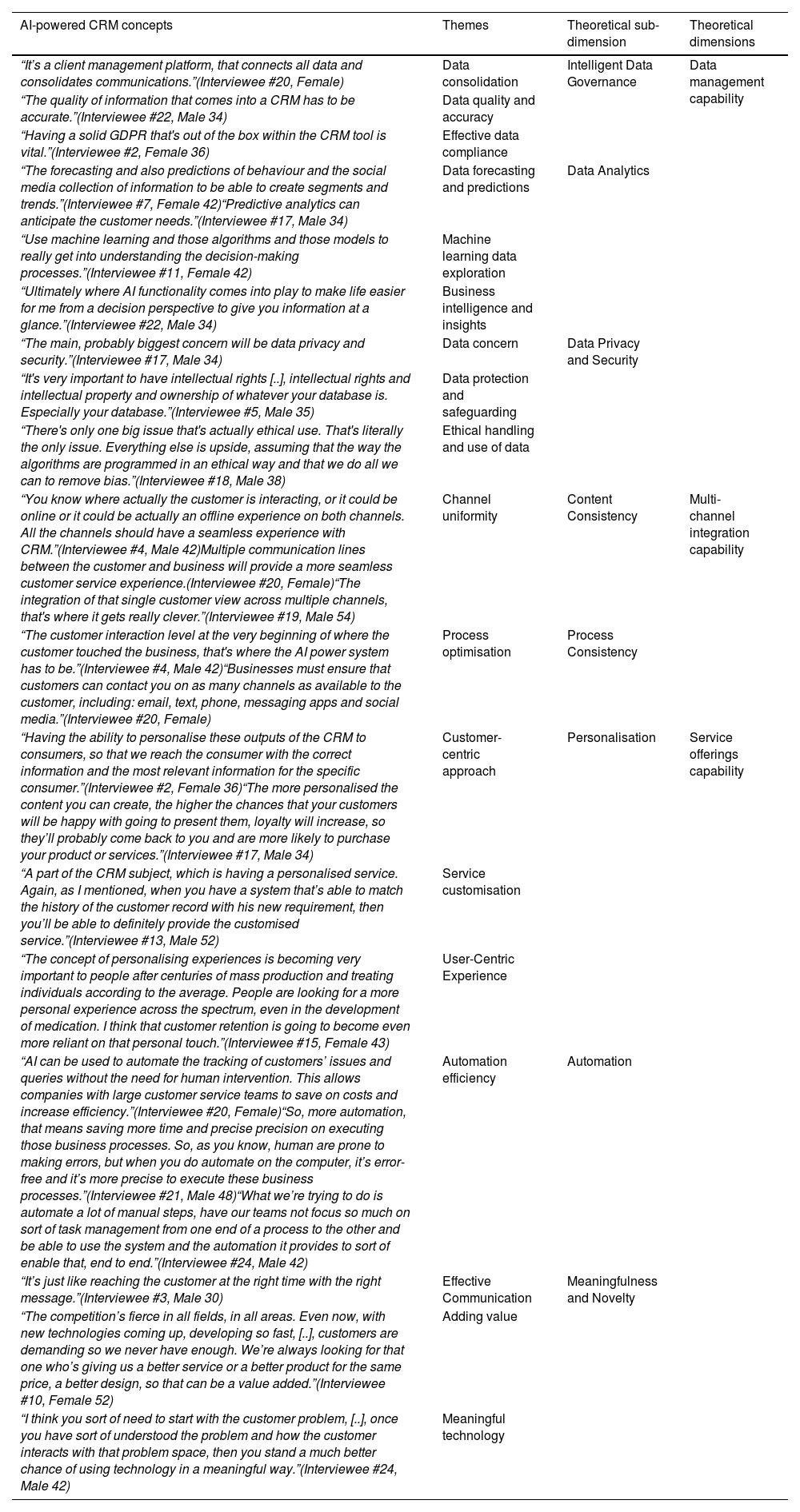
Table 5 provides an overview of the data structure, representing the three levels of the theoretical dimensions derived from the experts’ insights that were gathered for this research.
Data structure.
This study, drawing on both the existing literature and insights gained from the in-depth interviews with experts who actively utilise AI-powered CRM systems, identifies AI-powered CRM to be a complex, multidimensional construct, that is structured hierarchically. The primary themes extracted from this comprehensive analysis are visually represented in Fig. 2: AI-powered CRM multidimensional conceptual framework.
Discussion
The findings from this study reveal that AI-powered CRM is underpinned by three pivotal capabilities: data management, multi-channel integration and service offerings. These capabilities were identified through a rigorous, inductive, qualitative scoping review that included semi-structured interviews and thematic analysis, providing a granular understanding of the essential dimensions and sub-dimensions of AI-powered CRM.
A data management capability is critical for ensuring robust governance and enabling precise analysis while at the same time safeguarding privacy and security. This foundation enhances trust and compliance within CRM systems, as highlighted by Akter et al. (2022) and Yallop and Seraphin (2020). A multi-channel integration capability plays a key role in maintaining consistency across various customer interaction touchpoints, facilitating seamless customer experiences and operational coherence, which are essential for customer satisfaction and engagement, as noted by Lee et al. (2019) and Payne and Frow (2004). Lastly, a service offerings capability drives personalisation and automation within CRM practices, allowing organisations to tailor innovative solutions that meet individual customer needs, thereby enhancing customer value and organisational competitiveness, as supported by the findings of Akter et al. (2023b), Kumar et al. (2023) and Saura et al. (2021). Collectively, these capabilities form a robust framework for deploying AI within CRM systems, significantly enhancing their effectiveness and strategic value. The integration of these capabilities supports operational enhancements and makes substantial contributions, which will be discussed next.
Theoretical implicationsThis study explores the microfoundations of the AI-powered CRM capabilities framework by examining how the insights and experiences of individual field experts influence their inclination to adopt AI-driven CRM systems. The advent of AI-powered CRM systems marks a significant theoretical advancement, particularly in the contexts of CRM and DC (Maklan & Knox, 2009; Ngo et al., 2018). Traditionally, the CRM theories have emphasised the importance of managing and nurturing customer relationships through historical data and reactive strategies (Alshawi et al., 2011; Verhoef et al., 2010). AI-powered CRM, however, introduces a paradigm shift by transforming these systems into proactive, data-driven platforms that not only respond to customer behaviour but also predict and shape it (Alnofeli et al., 2023; Chatterjee et al., 2019; Li & Xu, 2022). This shift necessitates an expansion of the CRM theories to incorporate the role of predictive analytics (Cho et al., 2003; Dalvi et al., 2016; He, 2022), machine learning (Ledro et al., 2022; Singh et al., 2020; Wang et al., 2020), and real-time data processing (Gupta & Kumar, 2022; Li & Xu, 2022; Shukla & Pattnaik, 2019), thereby enhancing the theoretical understanding of how customer relationships can be managed and optimised in an increasingly complex and dynamic market environment.
While prior studies have focused on the RBV approach (Chatterjee et al., 2022b; Li & Xu, 2022; Suoniemi et al., 2021; Zhang et al., 2020) and DC theory (Chatterjee et al., 2022c; Chaudhuri et al., 2023; Kumar et al., 2023; Rahman et al., 2023) within AI-driven CRM contexts, the specific microfoundations related to AI capabilities have often been overlooked. This research addresses this oversight by enriching the microfoundational dimension of DC theory, offering deeper insights into how organisations can cultivate and leverage their AI-powered CRM capabilities. Utilising a qualitative methodology comprising a scoping review and interviews with 24 industry experts, this study delineates three critical dimensions: data management, multi-channel integration, and service offerings. These dimensions are integral to the effective integration of AI into CRM practices and foundational for developing DC.
Moreover, this research extends the framework proposed by (Teece, 2007) by connecting microfoundations with the development of DC through a comprehensive conceptual framework. This framework not only fills the existing research gaps but also contributes a nuanced understanding of the role that microfoundations play in enabling organisations to adjust adeptly and deploy their resources at an individual level, thereby influencing the broader organisational outcomes (Akter et al., 2021; Chen et al., 2023). The adaptability fostered by these capabilities enables organisations to respond swiftly to market changes and enhance their business performance effectively (Baabdullah et al., 2021; Magistretti et al., 2021).
Practical implicationsThe practical contribution lies in the micro-dynamic reshaping of resources and competencies, which has become a viable strategy for organisations seeking to navigate the market shifts effectively and drive improved outcomes. Despite the substantial investments by organisations in AI-powered CRM systems, industry experts have identified critical areas where these systems tend to underperform, particularly in sectors requiring high customer interactions, such as retail and tourism (Hossain et al., 2020a; Khneyzer et al., 2024). By acknowledging the importance of AI-powered CRM capabilities, experts highlight that addressing foundational elements is key to maximising their potential. For example, AI-powered CRM tools enhance customer engagement and operational efficiency, but their effectiveness depends on their appropriate implementation and user adoption. This practical insight highlights the need for a focused approach to aligning the organisational strategies with the capabilities necessary for successful AI-powered CRM implementation.
Additionally, the study's importance is heightened as it explores the microfoundational capabilities underpinning the use of AI-integrated CRM systems. By recognising the key factors that influence these capabilities, the study provides practical examples drawn from the findings, demonstrating how organisations can enhance the AI-powered CRM systems’ capabilities. This is explored across three key dimensions:
Understanding the microfoundations of data management capability is crucial for effectively harnessing the potential of data-driven decision-making (Troisi et al., 2020). For example, companies leveraging AI-powered CRM for personalised marketing must ensure that they implement strong data protection and validation measures to prevent customer biases and safeguard customer data. To achieve this, organisations can establish a robust data governance framework to ensure data integrity, address security concerns and adhere to the compliance requirements.
In terms of a multichannel integration capability, recognising these factors becomes pivotal in creating seamless customer experiences across various touchpoints (Hossain et al., 2019). For example, unifying customer interactions across multiple channels, such as websites and mobile apps, requires a seamless backend integration strategy that synchronises AI-driven insights across all platforms, ensuring a consistent, accurate customer experience. Managers can strategically embrace a customer-centric approach, aimed at integrating diverse communication channels, ensuring that customer interactions are unified across the different channels.
Moreover, in terms of service offerings capability, a grasp of microfoundational capabilities is essential to optimise the delivery of services and enhance customer satisfaction (Stock & Zacharias, 2013). Organisations can leverage data and analytics to offer personalised, customised service offerings, tailoring products and services to meet individual customer preferences.
Nonetheless, this research's holistic approach further illuminates the practical pathway toward gaining a competitive advantage through the utilisation of AI-powered CRM systems (Kumar et al., 2023; Rahman et al., 2023). The emphasis on microfoundational capabilities aligns with these dimensions, illustrating that the practical avenue for organisations lies in equipping their micro-level employees with the skills adeptly to identify and respond to opportunities for reconfiguring capabilities. Ultimately, these contributions combine to form a practical framework that empowers organisations to navigate shifts, optimise resources and deliver enhanced value across these three dimensions. Finally, the utilisation of microfoundations perspectives (Bojesson & Fundin, 2021; Hutton et al., 2021; Teece, 2007) facilitates a precise examination of the underlying elements that constitute a capability. This in-depth understanding contributes to the effective development of an AI-powered CRM capability, which is essential for clarifying the underlying factors that contribute to the success of AI-powered CRM.
These findings provide practical value to managers by offering insights for developing comprehensive action plans aimed at achieving a stronger alignment between their business objectives and AI-powered CRM strategies. Furthermore, this study underscores several practical implications for organisations seeking to implement AI-powered CRM systems, highlighting the importance of integrating these systems across various functional domains to harness their capabilities fully. The key practices include providing comprehensive employee training to enhance the interpretation and application of AI-driven insights, maintaining transparency with customers to build trust, establishing iterative feedback loops for continuous improvement, ensuring cross-functional integration to avoid siloed applications. In addition, to maintaining strategic flexibility allows organisations to adapt to emerging technologies and market changes effectively. Ethical considerations must also be at the forefront to address potential biases and maintain public trust. Collectively, these strategies enable organisations to optimise their resources, adapt dynamically to the market conditions and enhance the overall customer engagement and satisfaction.
Limitations and future research directionsThis study, while providing valuable insights, is not without its limitations, which present opportunities for future research. A major limitation is the exclusive focus on the current literature pertaining to AI-powered CRM systems, which inherently restricts the generalisability of our findings. Future research should extend beyond AI-powered CRM systems and examine other AI-powered marketing systems to assess whether the results hold true across different technologies and contexts. By broadening the scope, subsequent studies could provide a more comprehensive understanding of the general applicability of these findings.
A second limitation of this study is its reliance on self-reported data, which carries an inherent risk of response bias (Arnold & Feldman, 1981). Such bias may affect the accuracy and objectivity of the data, as the participants may provide socially desirable responses or misinterpret certain questions (Tourangeau & Yan, 2007). To mitigate this concern and strengthen the validity of future research, observational data or other objective data collection methods should be employed to corroborate and validate the findings (Creswell & Creswell, 2023). This approach would provide a more reliable foundation for understanding the dynamics of AI-powered CRM systems.
Third, the study fails to explore the direct impact of AI-powered CRM systems on the key business outcomes, such as customer equity, operational efficiency and overall financial performance. This omission limits the study’s ability to provide a comprehensive understanding of the tangible business benefits associated with the implementation of AI-powered CRM systems. Future research should address this gap by investigating the causal relationships between AI-powered CRM capabilities and critical business outcomes. Doing so would not only validate the strategic value of these systems but also provide organisations with concrete evidence on how AI-powered CRM capabilities can contribute to measurable improvements in business outcomes.
Finally, scoping reviews cannot be considered as conclusive outputs in themselves, due to their limited rigour, relatively short time span, absence of quality assessment (Arksey & O'Malley, 2005) and the potential introduction of bias, which can limit their suitability as a basis for policy or practice recommendations. However, they are able to inform policymakers, as they shares similar characteristics to systematic literature reviews (Grant & Booth, 2009). This study does not encompass an investigation into the underlying logic of the AI-powered CRM prediction models and their capacity to identify potential leads. Future research might investigate the role of AI-powered CRM in specific industries, such as hospitality, healthcare and finance, which are associated with unique customer needs and regulations. While AI-powered CRM can provide personalised recommendations and proactive services (Libai et al., 2020), it is unclear whether customers prefer AI-powered interactions over human interactions, or if they value a combination of the two.
Additionally, AI-powered CRM systems, particularly chatbots and virtual assistants, may face limitations in industries that require empathetic human interactions, such as healthcare and legal services (Khneyzer et al., 2024). These sectors often demand nuanced emotional intelligence and ethical considerations, that AI-powered systems may struggle to replicate (Gaczek et al., 2023). Future research might also investigate the impact of AI-powered CRM in enhancing creativity (Ihalainen, 2018; Vakratsas & Wang, 2021), awareness (Noreen et al., 2023) and well-being (Akram et al., 2021). Finally, future research might explore the impact of AI-powered CRM on business outcomes, such as revenue, profitability and cost savings, to determine the economic value of AI-powered CRM. In addition, Table 6 not only reveals potential future research directions, as identified through the comprehensive scoping review, but also highlights the possibility of defining elements for future measurement scales. Additionally, it advocates practical investigations and the validation of the model's sub-dimensions in real-life contexts, opening doors for meaningful contributions within academia. To strengthen further the connection between the theoretical framework and future empirical research, Table 6 systematically links each proposition that was developed in the Results section to the key measurement elements. This alignment ensures that the dimensions of data management, multi-channel integration, and service offerings are not only conceptually robust but also empirically operable. By explicitly mapping these propositions to measurable constructs, this framework establishes a foundation for future studies to assess AI-powered CRM capabilities with methodological precision. Such correlations are essential for organisations that are seeking to leverage AI within their CRM systems to enhance both their theoretical understanding and practical application. This enhancement not only strengthens the study's practical and theoretical contributions but also provides a more structured pathway for subsequent validation and application.
Key elements for measuring scales for future research.
| 2nd Order | 1st order | Possible key elements for measurement scale, obtained from the current research, present avenues for future investigation | References | Related proposition(s) |
|---|---|---|---|---|
| Data management capability | Intelligent data governance |
| Akter et al. (2022); Tallon et al. (2013) | Proposition 1 |
| Data analytics |
| Ghasemaghaei et al. (2018); Ghasemaghaei (2019) | ||
| Data privacy and security |
| Hossain et al. (2020b) | ||
| Multi-channel integration capability | Content consistency |
| Lee et al. (2019); Sun et al. (2020) | Proposition 2 |
| Process consistency |
| Lee et al. (2019); Sun et al. (2020) | ||
| Service offerings capability | Personalisation |
| Lin et al. (2022); Shi et al. (2020); | Proposition 3 |
| Automation |
| Merritt et al. (2015); Lin et al. (2022); Yagoda and Gillan (2012) | ||
| Meaningfulness and novelty |
| Akter et al. (2023b) |
As a pioneering effort, this study employed a unique approach by integrating the six stages of a scoping review with semi-structured, in-depth interviews conducted with industry experts for empirical validation. Bridging a gap in the literature, it offers insights into the deployment of AI-powered CRM capabilities across diverse organisational contexts. The data collection process encompasses perspectives from multiple regions, thereby ensuring a comprehensive, uniform examination of this topic. While previous research has primarily emphasised the value provided to customers and the competitive advantage gained by companies through the adoption of AI-powered CRM, this study delves into the fundamental capabilities and current challenges. In particular, the analysis and management of customer data present new prospects for value creation and, when implemented effectively, enables organisations’ employees to make informed offers based on an analysis of relevant trends and events. Overall, the study contributes to the literature by providing insights into the practical implications of AI-powered CRM systems and the challenges that organisations currently face related to their implementation. In the dynamic landscape of AI-powered CRM, this study adds a fresh perspective and sets the stage for further exploration and innovation in this critical field.
CRediT authorship contribution statementKhadija Khamis Alnofeli: Writing – original draft. Shahriar Akter: Supervision. Venkata Yanamandram: Supervision.
We extend our sincere appreciation to all of the CRM experts who graciously participated in our research, contributing significantly to the empirical study presented in this paper. Their commitment in terms of their time and invaluable insights greatly enriched our research findings and we are deeply grateful for their participation.
A. Introduction
- ■
Greet the respondent and introduce Mention names of the investigators (candidate and supervisors) and institution involved.
- ■
In this interview, I will start by collecting some demographic information (such as age, sex, and nationality), and then I would like to ask questions about your experience in Artificial intelligence (AI) applications within customer relationship management (CRM) systems.
- ■
Disclose the purpose of the research:
- ■
The study will collect data using interview responses to confirm the AI-powered CRM dimensions obtained from the literature review.
- ■
The purpose of this study is to investigate your perception of AI-powered CRM capabilities and their respective sub-dimensions, which will help build a better understanding of AI-powered CRM capabilities.
- ■
Ask the respondent if s/he has any questions.
- ■
If you have any questions or concerns, please don’t hesitate to ask, I will be more than happy to address them. If all is okay, then kindly sign the consent form (if they haven’t done it yet) and email us or, using Adobe, sign the consent form and email us back.
- ■
Provide assurance.
- ■
Your response and opinions will be valued; there is no right or wrong answer; it is your insights, events or experiences on AI-powered CRM dimensions that we are interested in and will be taking into consideration.
- ■
Thank the participant for their contribution.
- ■
Thank you for your contribution.
B. Interview Questions
1. Demographic/ Contextual Part
2. Interview Questions
- ■
What does AI-powered CRM mean to you?
- ■
How long have you worked as an expert in the field of AI-powered CRM?
- ■
In your opinion, what are the new functionalities of AI that have transformed CRM applications?
- ■
Name the main components that are essential for the functionality of AI-powered CRM applications.
- ■
Kindly Identify the Benefits of AI-powered CRM systems.
- ■
How can organisations benefit from the development of comprehensive strategies in AI-powered CRM applications?
- ■
Businesses talk about “personalising customer experience to improve customer equity”. What is your opinion on the previous statement? Why?
- ■
What are the advantages and disadvantages of implementing AI-powered CRM Processes?
- ■
What benefits do you think the customers will receive from the AI-powered CRM processes?
- ■
Do you consider any issues that you think might be relevant to discuss under the spectrum of AI-powered CRM capability?
- ■
Is the AI-powered CRM programme being managed by external consultants or by an internal project team?
What AI-powered CRM tools/ systems do you use?
