



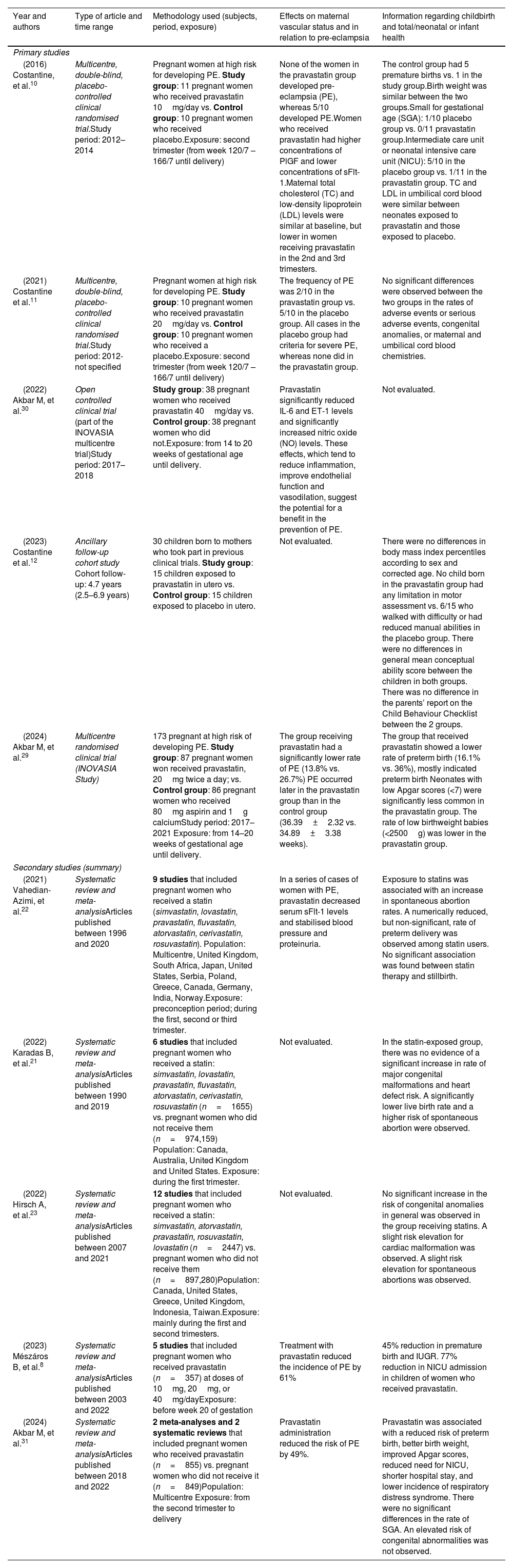
Hypertensive disorders of pregnancy (HDP) affect 5–10% of pregnancies. Preeclampsia (PE) is a severe complication of HDP, associated with high maternal, fetal, and neonatal morbidity and mortality. The pathophysiology of PE involves endothelial dysfunction, vasoconstriction, and impaired placental perfusion, leading to systemic inflammation and multi-organ dysfunction. It has been suggested that statins, traditionally contraindicated during pregnancy, could play a role in this context. Some studies propose that pravastatin, a hydrophilic statin, may not have the same teratogenic effects as lipophilic statins, potentially improving maternal vascular status and significantly reducing the risk of PE. Considering this, the Working Group on Hypertension in Women of the Argentine Society of Hypertension undertook a review of the topic and its current implications.
Los trastornos hipertensivos del embarazo (THE) afectan entre el 5-10% de las gestaciones. La preeclampsia (PE) es una complicación grave de los THE que se asocia con una alta morbimortalidad materna, fetal y neonatal. La fisiopatología de la PE involucra disfunción endotelial, vasoconstricción y alteración en la perfusión placentaria, lo que lleva a un estado de inflamación sistémica con disfunción multiorgánica. Se ha planteado que las estatinas, tradicionalmente contraindicadas durante el embarazo, podrían tener un rol en este escenario. Algunas investigaciones sugieren que la pravastatina, una estatina hidrofílica, podría no causar los mismos efectos teratogénicos que las lipofílicas, mejorando el estatus vascular materno y reduciendo significativamente el riesgo de PE. El Grupo de Trabajo de Hipertensión Arterial en la Mujer de la Sociedad Argentina de Hipertensión Arterial se propuso realizar una revisión sobre este tema y sus implicancias actuales.
