



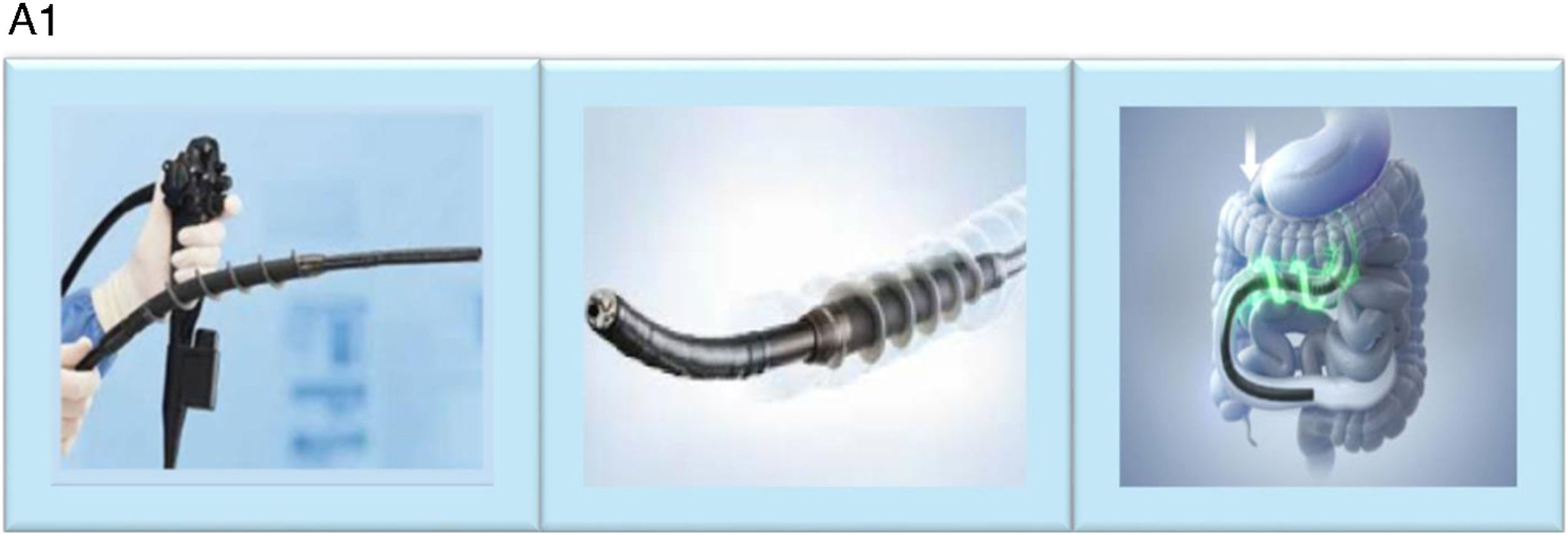
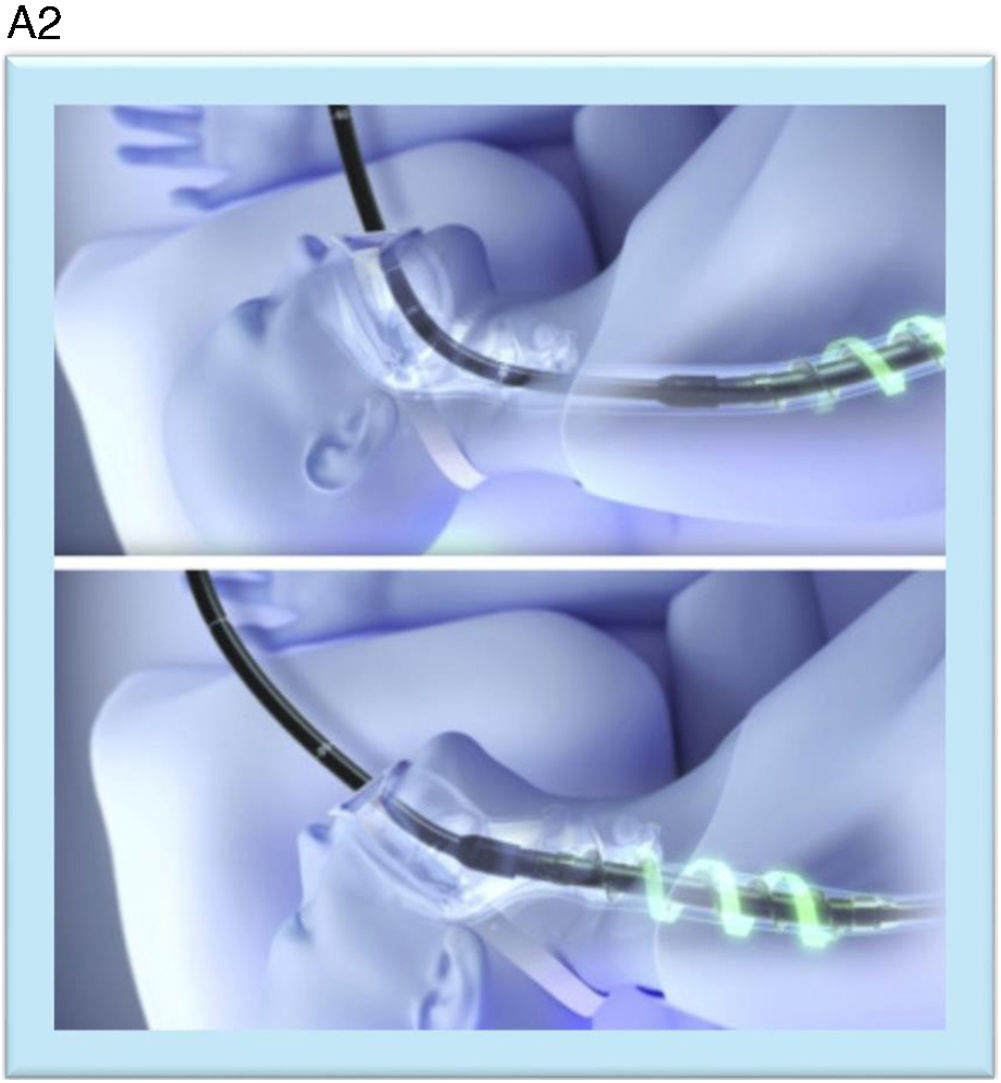


The implementation of motorised spiral enteroscopy (MSE) in digestive endoscopy units required the upgrading of assistencial guidelines to perform general anaesthesia with orotracheal intubation in a systematic and safe manner.
ObjectiveTo describe the anaesthetic management during MSE and to evaluate the incidence of complications during and within 24 h after the procedure. To assess whether there is a relationship between the difficulty of inserting and withdrawing the MSE and the patient’s airway characteristics.
Patients and methodsObservational, prospective study in patients undergoing anterograde MSE under GA in our endoscopy unit between 2021 and 2023. We recorded clinical and demographic, and airway characteristics. We registered the anaesthesia and MSE procedure, as well as the peri-procedure complications within 24 h.
ResultsAfter excluding one patient due to a full stomach, 49 patients were included (mean age 63 ± 14 years, 53% women, 41% ASA III-IV). All underwent total intravenous general anaesthesia and orotracheal intubation, with a 12% incidence of difficult VA. The incidence of anaesthetic complications was 4%, with no serious events. 18% had difficulties in inserting and/or withdrawing the MSE and 33% had difficult airway. During recovery, 46% had sore throat and VAS > 3 in 31%. At 24 h, VAS > 3 persisted in 47% of cases.
ConclusionsMotorized spiral enteroscopy under GA in the endoscopy unit is a safe procedure, with a low incidence of serious complications. Multidisciplinary collaboration and preanesthetic assessment are essential to minimize risk.
La realización de enteroscopia con PowerSpiral (PS) por vía anterógrada ha obligado a actualizar los protocolos asistenciales de las unidades de endoscopia digestiva para realizar anestesias generales (AG) con intubación orotraqueal de forma sistemática y segura.
ObjetivoDescribir el manejo anestésico durante las enteroscopias PS, evaluar la incidencia de complicaciones durante y a las 24 horas del procedimiento. Observar si hay relación entre la dificultad en la inserción y retirada del enteroscopio PS con las características de la vía aérea (VA) del paciente.
Pacientes y métodosEstudio observacional, prospectivo en pacientes sometidos a enteroscopia por vía anterógrada con PS bajo AG en la unidad de endoscopia entre 2021 y 2023. Se realizó un análisis descriptivo de las variables recogidas.
ResultadosSe incluyeron 49 pacientes tras excluir uno por estómago lleno, edad media 63 ± 14 años, 53% mujeres, 41% ASA III-IV. En todos se realizó una anestesia general intravenosa total e intubación orotraqueal, con incidencia de VA difícil de 12%. La incidencia de complicaciones anestésicas fue del 4%, sin eventos graves. El 18% presentó dificultades en la inserción y/o retirada del enteroscopio, de éstos 33% presentaron VA difícil. En la recuperación, el 46 % presentó dolor de garganta y EVA > 3 en el 31%. A las 24 horas, el EVA > 3 persistió en el 47% de los casos.
ConclusionesLa realización de enteroscopia PS bajo AG en la unidad de endoscopia es segura, con baja incidencia de complicaciones graves. La colaboración multidisciplinar y la valoración preanestésica son esenciales para minimizar el riesgo.

