



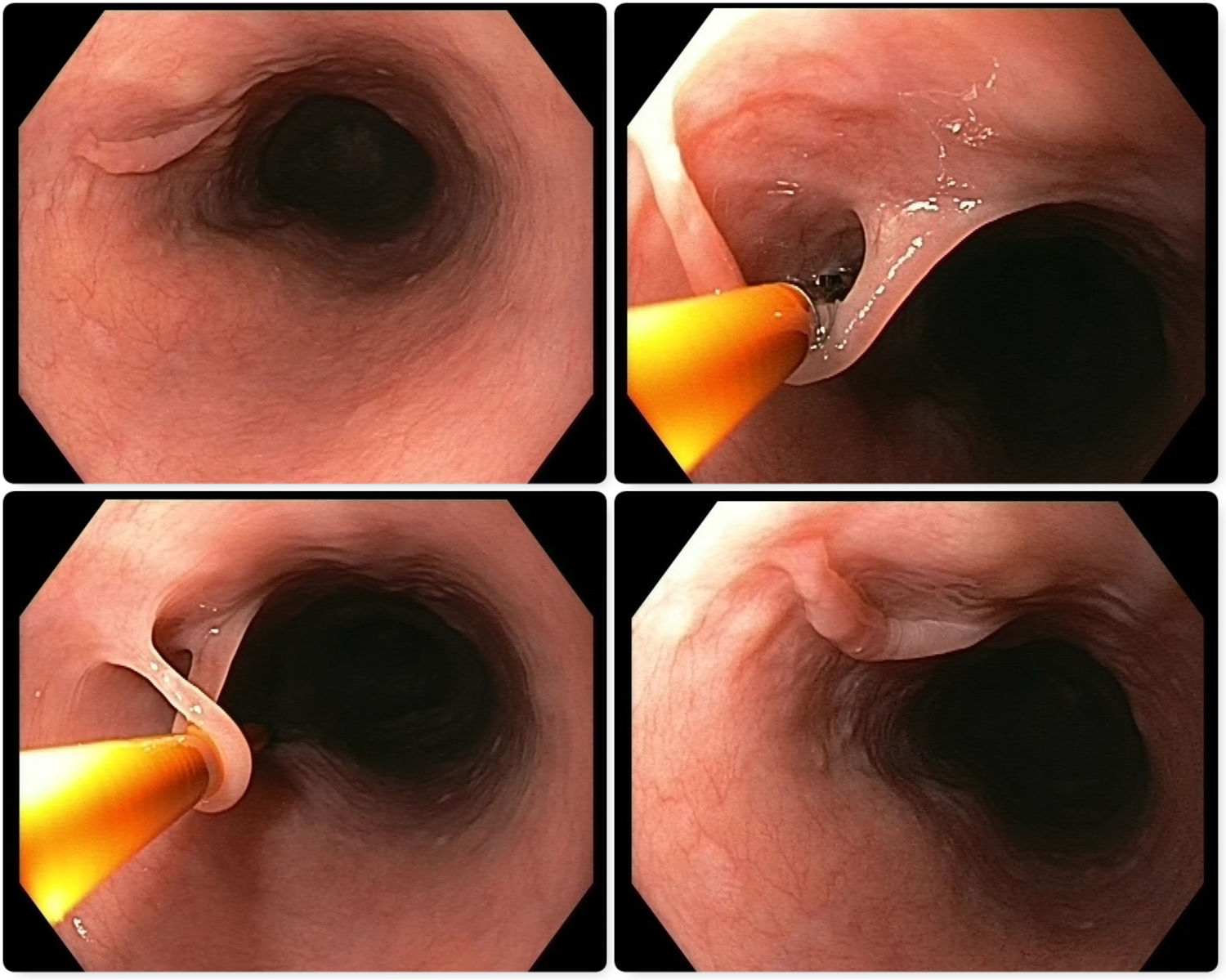
This was a 37-year-old male with gastroesophageal reflux disease (GORD) being treated with lansoprazole. Due to worsening heartburn, an upper gastrointestinal endoscopy was performed, which identified a mucosal bridge (MB) 25 cm from the incisors (Fig. 1). No action was taken in relation to the MB because the patient did not have dysphagia.

MB are elastic structures which connect the walls of the gastrointestinal tract across the lumen. They have been described in the stomach, small intestine, colon and biliary tree.1 They are very rare in the oesophagus. They can cause dysphagia, chest pain or bleeding. The pathophysiology is still subject to debate. They can be congenital or acquired, associated with inflammation. One hypothesis is that it originates from scarring, a response to previous mucosal damage. Cases have been reported secondary to lupus, tuberculosis and Crohn's disease; and also after oesophageal stent placement, sclerotherapy of varicose veins and nasogastric tube insertion.1,2 When symptoms occur, endoscopic treatment with argon plasma coagulation is safe and effective.3
The aetiology in our case is not clear. It could be a congenital anomaly, secondary to GORD, or it could have formed after the traumatic placement of a pH monitoring probe years ago.
Despite it being so rare, it is important to consider this condition in the differential diagnosis of dysphagia, as endoscopic treatment would solve the problem.
Privacy and informed consentWritten informed consent was obtained from the patient for publication of this clinical case and the accompanying images.
FundingNo funding was received for the preparation of this manuscript.

