




Nurse turnover increases the shortfall in coverage of different health services. Research studies have found high quitting intention rates related to low levels of job satisfaction among nurses in different areas, including Intensive Care Units (ICU). The aim of this study was to compare the level of job satisfaction of ICU nurses according to the population of critically ill patients they care for (paediatric vs. adult) and their intention to leave the ICU.
MethodsA cross-sectional descriptive study in which nurses from public ICUs on the island of Gran Canaria, two adult units and one paediatric unit, participated. An electronic questionnaire was sent out, which included questions on socio-demographic and occupational variables, the validated Font Roja job satisfaction survey and a final question on the participant's own intention to leave. Comparative analysis was performed using Chi-square for qualitative variables and Mann Whitney U for quantitative variables.
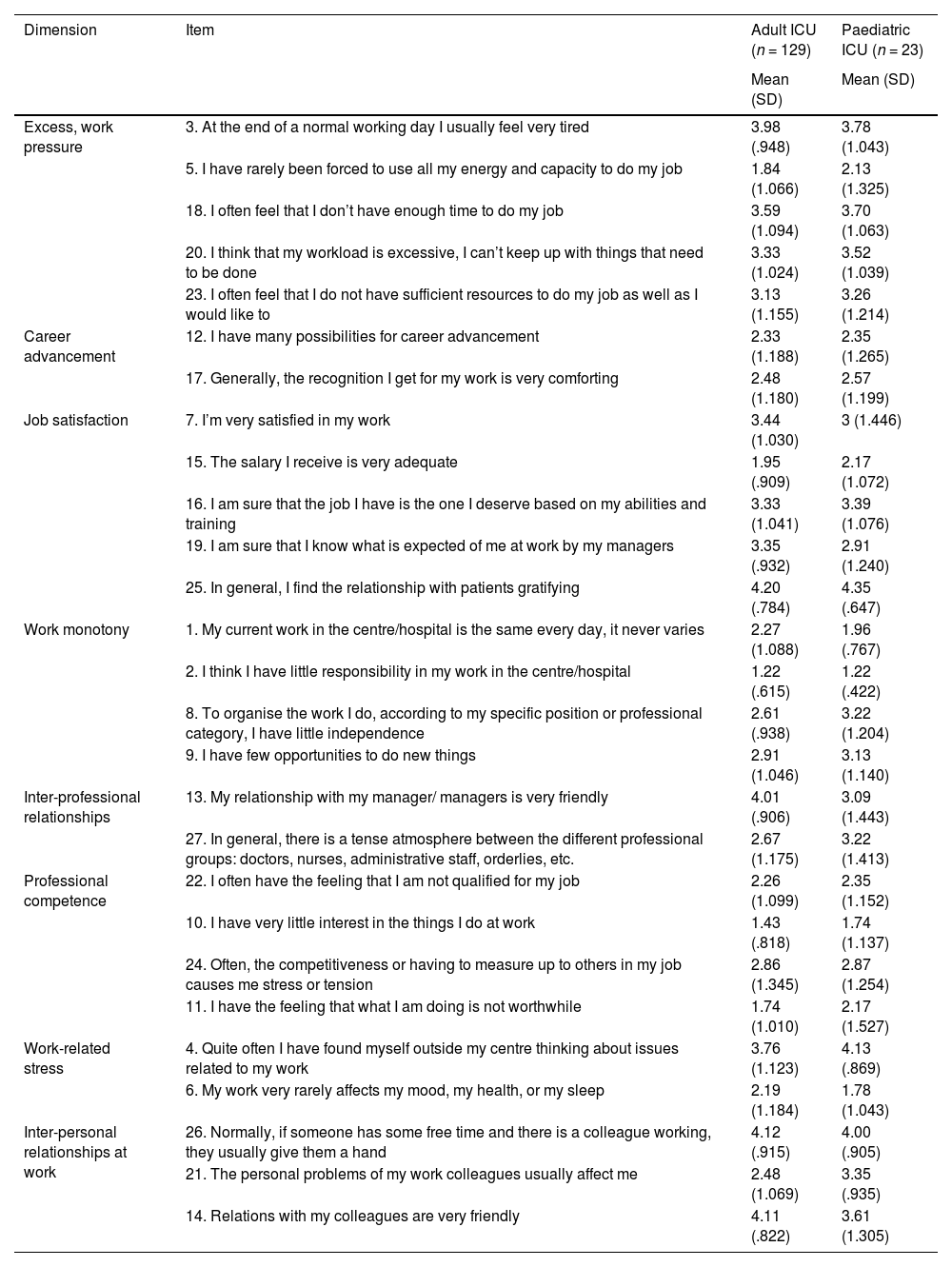
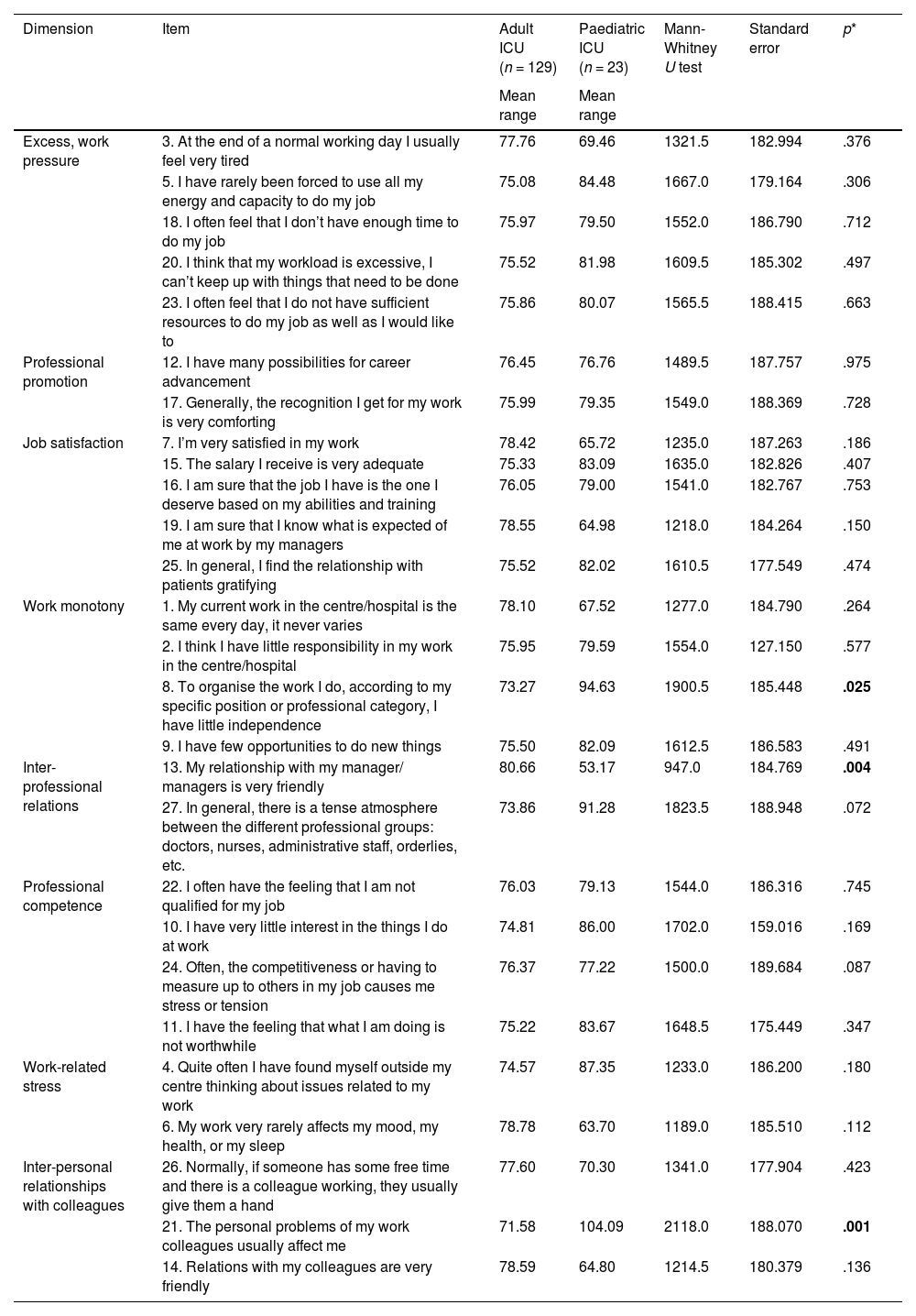
ResultsA total of 152 nurses were recruited, 55.9% of whom expressed their intention to leave the ICU. Although both types of units had a higher number of nurses who wanted to leave the ICU, there was a higher proportion in the paediatric ICU who had this intention in the short period of time (30.4% vs. 7.0%) (χ2 = 11,691; p = .003). Job satisfaction was generally good (3.37/5), being lower among those who did intend to leave (3.97 vs 2.91; p < .001).
ConclusionsThere is a high intention to leave among the professionals consulted. Paediatric ICU nurses had the highest intention to leave the ICU in the short term (<6 months). An inverse relationship was found between intention to leave and job satisfaction.
El abandono del puesto laboral por parte de las enfermeras incrementa el déficit de cobertura de diferentes servicios sanitarios. Estudios de investigación han hallado altas tasas de intención de abandono relacionado con bajos niveles de satisfacción laboral entre las enfermeras de distintas áreas, incluidas las Unidades de Cuidados Intensivos (UCI). El objetivo de este estudio fue comparar el nivel de satisfacción laboral de las enfermeras de UCI según la población de pacientes críticos que atienden (pediátricos vs adultos) y su intención de abandono la UCI.
MétodoEstudio descriptivo transversal en el que participaron enfermeras de las UCIs públicas de la isla de Gran Canaria, dos unidades de adultos y una pediátrica. Se difundió un cuestionario electrónico, en el cual se incluyeron preguntas sobre variables sociodemográficas y laborales, la encuesta de satisfacción laboral validada de Font Roja y una pregunta final sobre la intención de abandono del propio participante. El análisis comparativo fue realizado mediante Chi cuadrado para las variables cualitativas y la U de Mann Whitney para las cuantitativas.
ResultadosSe reclutaron a 152 enfermeras, 55,9% de las cuales manifiesta su intención de abandonar la UCI. En ambos tipos de unidades había una mayor proporción de enfermeras que querían abandonar la UCI, existiendo una mayor proporción en la UCI pediátrica en la intención a corto plazo (30,4% vs 7,0%) (χ2 = 11,691; p = 0,003). La satisfacción laboral total fue de 3,37 sobre 5, siendo menor entre las enfermeras que tenían intención de abandonar la UCI (3,97 vs 2,91; p < 0,001).
ConclusionesLa intención de abandono es predominante entre las profesionales de UCI consultadas. Siendo las enfermeras de la UCI pediátrica las que tienen una mayor intención de hacerlo a corto plazo (<6meses). Se halló una relación inversa entre la intención de abandono y la satisfacción laboral.
Article
Diríjase al área de socios de la web de la SEEIUC, (https://seeiuc.org/mi-cuenta/iniciar-sesion/) y autentifíquese.