


The number of survivors of critical illnesses has increased over the years, resulting in impacts on quality of life and daily activities.
ObjectiveTo investigate which intra-hospital risk factors are associated with worsening quality of life and functionality, through the assessment of basic and instrumental activities of daily living, in survivors of critical illness after hospital discharge.
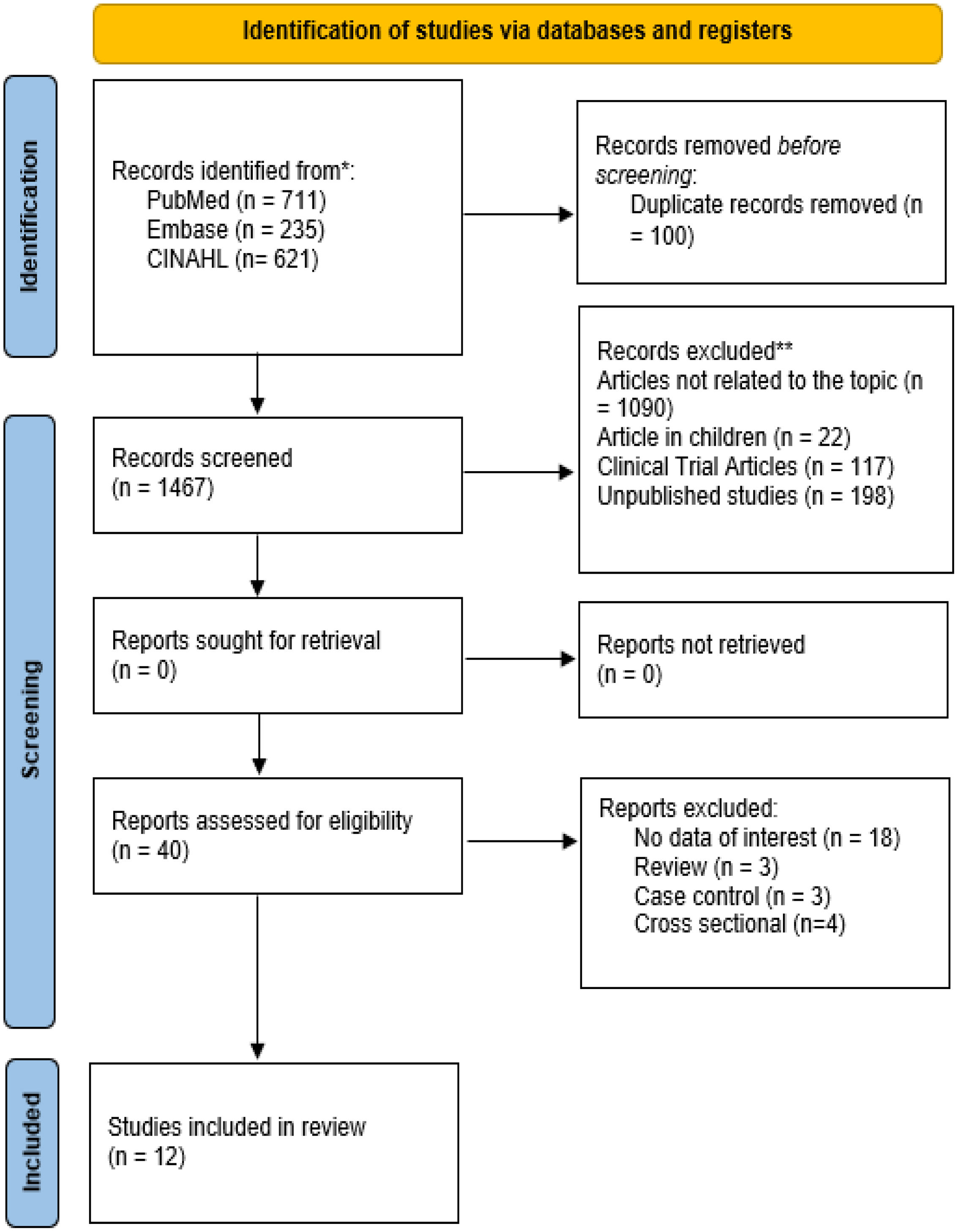
MethodsSystematic literature review carried out from September 2022 to December 2023, informed by a flowchart, following the Preferred Reporting Items for Systematic Reviews and Meta-Analyses (PRISMA) guidelines. Search strategy carried out in the CINAHL, Embase and PubMed databases. The research was carried out by two researchers, without restrictions on language or year of publication. Studies were assessed using the Newcastle–Ottawa Quality Assessment Form for Cohort Studies.
Results12 articles were included, 5 studies provided information on daily and instrumental activities, 7 on quality of life and 1 with all these outcomes. Risk factors such as depression, frailty, prolonged time on mechanical ventilation, and muscle weakness acquired in the ICU were considered factors associated with worsening quality of life. And depression, sepsis, prolonged stay in the ICU, and frailty are factors associated with worsening in the basic and instrumental activities of daily life.
ConclusionSurvivors of critical illness, in the first 3 months after discharge, present changes in quality of life, in basic and instrumental activities of daily living, which may persist for up to 12 months or more. This situation may be associated with risk factors at the time of admission to the intensive care unit.
Los sobrevivientes de enfermedades críticas ha aumentado con los años, lo que resulta en los impactos en la calidad de vida y las actividades diarias.
ObjetivoInvestigar qué factores de riesgo intrahospitalarios están asociados con el empeoramiento de la calidad de vida y la funcionalidad, a través de la evaluación de actividades básicas e instrumentales de la vida diaria, en los sobrevivientes de enfermedades críticas después del alta hospitalaria.
MétodosRevisión sistemática de la literatura realizada desde septiembre de 2022 a diciembre de 2023, informada por un diagrama de flujo, siguiendo las pautas de los Artículos Preferidos para Revisiones Sistemáticas y Meta-Análisis (PRISMA). Estrategia de búsqueda realizada en las bases de datos CINAHL, Embase y PubMed. La investigación fue realizada por 2 investigadores, sin restricciones de idioma o año de publicación. Los estudios fueron evaluados utilizando el Formulario de Evaluación de Calidad de Newcastle-Ottawa para estudios de cohortes.
ResultadosSe incluyeron 12 artículos, 5 estudios proporcionaron información sobre actividades diarias e instrumentales, 7 sobre calidad de vida y uno con todos estos resultados. Factores de riesgo como: depresión, fragilidad, tiempo prolongado en ventilación mecánica y debilidad muscular adquirida en la unidad de cuidados intensivos (UCI) fueron considerados factores asociados con el empeoramiento de la calidad de vida. La depresión, la sepsis, la estancia prolongada en la UCI y la fragilidad son factores asociados con el empeoramiento en las actividades básicas e instrumentales de la vida diaria.
ConclusiónLos sobrevivientes de enfermedades críticas, en los primeros 3 meses después del alta, presentan cambios en la calidad de vida, en actividades básicas e instrumentales de la vida diaria, que pueden persistir hasta 12 meses o más. Esta situación puede estar asociada con factores de riesgo en el momento de la admisión en la UCI.
Article
Diríjase al área de socios de la web de la SEEIUC, (https://seeiuc.org/mi-cuenta/iniciar-sesion/) y autentifíquese.