Nurses represent the largest group of healthcare professionals and are responsible for improving patient safety, including reporting adverse events. However, adverse events are underreported due to the many barriers that compromise patient safety in the hospital setting.
AimThe study aimed to investigate the barriers to reporting adverse events as perceived by nurses working in intensive care units (ICUs).
MethodsThe exploratory sequential mixed-method study design was used. Data were collected between January 2022 and March 2023 in intensive care units of one selected university hospital in the Slovak Republic. The quantitative phase was carried out using a specific instrument to explore barriers to reporting adverse events and included 111 nurses from the ICU. The qualitative phase was conducted using semi-structured face-to-face interviews and consisted of 10 nurses from the ICU.
ResultsIn terms of quantitative aspect, fear of liability, lawsuits, or sanctions was the most significant barrier to reporting adverse events among ICU nurses. As a result of qualitative thematic analysis, four significant barriers to reporting adverse events were identified: negative attitude toward reporting adverse events; lack of knowledge and experience in reporting adverse events; time scarcity; fear.
ConclusionBased on the results of the study, it is evident that only effective and regular reporting of adverse events leads to the minimization of adverse events. To improve patient safety in hospitals, education and management practices must be implemented to overcome barriers to reporting adverse events. The most important approach to overcoming barriers to reporting adverse events is to implement a culture of no blame and a positive culture of patient safety.
Las enfermeras representan el grupo más grande de profesionales de la salud, y son responsables de mejorar la seguridad del paciente, incluida la notificación de eventos adversos. Sin embargo, los eventos adversos se subnotifican debido a las numerosas barreras que comprometen la seguridad del paciente en el entorno hospitalario.
ObjetivoEl estudio secuencial mixto exploratorio tuvo como objetivo investigar las barreras para la notificación de eventos adversos tal como son percibidas por las enfermeras que trabajan en unidades de cuidados intensivos (UCI).
MétodosSe utilizó un diseño de estudio mixto exploratorio secuencial. Los datos se recopilaron entre enero del año 2022 y marzo del año 2023 en UCI de un hospital universitario seleccionado en la República Eslovaca. La fase cuantitativa se llevó a cabo utilizando un instrumento específico para explorar las barreras para informar eventos adversos, e incluyó a 111 enfermeras de cuidados intensivos. La fase cualitativa se realizó mediante entrevistas semiestructuradas cara a cara y contó con la participación de 10 enfermeras de la UCI.
ResultadosBasándonos en la parte cuantitativa, el miedo a la responsabilidad, las demandas legales o las sanciones fue la barrera más significativa para la notificación de eventos adversos entre las enfermeras de la UCI. Como resultado del análisis temático cualitativo, se identificaron 4 barreras significativas para la notificación de eventos adversos: Actitud negativa hacia la notificación de eventos adversos; Falta de conocimiento y experiencia en la notificación de eventos adversos; Escasez de tiempo; Miedo.
ConclusiónBasándonos en los resultados del estudio, es evidente que solo la notificación efectiva y regular de eventos adversos conduce a la minimización de los mismos. Para mejorar la seguridad del paciente en los hospitales, se deben implementar prácticas educativas y de gestión para superar las barreras para la notificación de eventos adversos. El enfoque más importante para superar las barreras en la notificación de eventos adversos es implementar una cultura sin culpas y una cultura de seguridad del paciente positiva.
- •
Nurses represent the largest group of healthcare professionals and are responsible for improving patient safety, including reporting adverse events.
- •
Adverse events are underreported due to the many barriers that compromise patient safety in the hospital setting.
- •
Barriers to reporting adverse events in ICU are well-documented, including fear of liability, lack of knowledge, time constraints, and negative attitudes among nurses.
- •
These barriers hinder effective reporting and highlight the need for cultural and educational interventions to improve patient safety.
- •
Nurses working in ICU need more support from management, which should alter the work environment to foster a culture of blame-free and punishment-free reporting.
Patient safety is a vital aspect of the quality of care provided and is defined as the patient's right not to suffer unnecessary harm or potential harm associated with healthcare.1
Patient safety also involves preventing adverse events during the delivery of healthcare, with the aim of minimizing patient harm and achieving safer healthcare.2 Over the past decades, patient safety has become a significant global issue and priority, with the goal of optimizing healthcare delivery and reducing patient harm.1,2 Insufficient patient safety poses a serious challenge to public health. In addition to being a major public health issue, inadequate patient safety also represents a significant economic burden. Patient safety is most affected by the occurrence of errors and mistakes, with systemic factors playing a role in most adverse events. Within the context of patient safety, the term “adverse events” is frequently used. Adverse events could be considered a central concept in the field of patient safety and represent significant indicators of patient safety levels and quality of care.4 In the literature, many definitions related to adverse events could be find, for example: adverse event is an injury related to medical management, in contrast to complications of disease. Medical management includes all aspects of care, including diagnosis and treatment, failure to diagnose or treat, and the systems and equipment used to provide care. Adverse events may be preventable or non-preventable. An event or incident is also called: “any deviation from usual medical care that causes an injury to the patient or poses a risk of harm. Includes errors, preventable adverse events, and hazards”.5 Evidence also suggests that adverse events include unintentional harm or complications that result in disability, prolong hospitalization in 10% of hospitalized patients, and ultimately lead to death in 7% of patients, all stemming from healthcare management.6,7 The incidence rate of adverse events among hospitalized patients is also a crucial indicator of patient safety, as they not only directly disadvantage patients, but also significantly burden the economic sector associated with the provision of healthcare care provision.6 Ultimately, the results are highly stressful for the healthcare providers involved, who are considered second victims.8 The term second victim was first introduced by Albert Wu in 2000. Since then, the term has been adopted and used by other authors, who have published many research studies. Recently, a second victim has been defined as “any health care worker, directly or indirectly involved in an unanticipated adverse patient event, unintentional healthcare error, or patient injury, and who becomes victimized in the sense that they are also negatively impacted”.9 It is quite clear that adverse events cause more than just psychological distress for healthcare workers, so it is important to focus on strategies to prevent them.
The most effective prevention of adverse events is their reporting. Reporting adverse events is a process in which healthcare workers report any unwanted occurrence that occurs during healthcare care provision.10 The World Health Organization5 states that not only internal reporting of adverse events at the hospital level is important, but also national reporting systems. As important as reporting adverse events, it is also necessary to think about other events such as “near misses” or “close calls” that tend to be underreported. In Slovakia, the National Adverse Event Reporting System is anchored in Methodological Guidance No. 3/2014,11 which focuses on the implementation of error reporting systems, mistakes, and adverse events in institutional healthcare. This directive was issued by the Office for Supervision of Health Care in accordance with Recommendation of the Council of the European Union No. 2009/C151/01 of June 9, 2009, on patient safety, including the prevention and control of hospital-acquired infections.3 Specifically, the recommendation contains information about the complexity of reporting and adverse event reporting systems. According to the methodological guidelines, reporting adverse events is divided into mandatory and voluntary reporting. Mandatory reporting of adverse events falls under reporting systems for adverse events that, according to the law and/or specific directives, require reporting of specific adverse events. This mandatory reporting is focused on reporting serious events related to the provision of healthcare. In the conditions of the Slovak healthcare system, voluntary reporting is more focused on voluntary reporting of errors in healthcare care, which involves anonymous reporting, and healthcare workers themselves record, report, and analyze their own errors, which healthcare providers then voluntarily report.11
In general, the purpose of reporting adverse events is to analyze the circumstances of the event, identify and implement corrective measures, and ultimately derive lessons for the future.12 When adverse events go unreported, it becomes impossible to analyze them and management cannot take preventive action to prevent or minimize the impact of the event on the patient. Reporting of adverse events and near misses to date in a clinical setting is limited. As with patient safety, this is the responsibility of the whole team. However, nurses spend the most time with patients of all healthcare professionals. They are usually the final linchpin in the delivery of nursing care, and their inclusion in many aspects of care means that they usually report adverse events or near-misses are usually reported by them.13 However, nurses tend to often report events that have a visible impact on the patient, such as falls or pressure ulcers. Near misses often go unreported, as their impact on the patient is rarely visible, despite all these events that affect patient safety.10
Non-reporting or inadequate reporting of adverse events is considered a major limitation in ensuring patient safety.12 Non-reporting of adverse events is a global phenomenon. For example, according to Yung et al.,14 the reporting rate of adverse events in the USA is 40–50%, in the United Kingdom 22–39% and in Taiwan 30–48%. Joolaee et al.15 found that the average number of adverse event reports per nurse was 19.5 (over a 3-month period), with an average reporting rate of 1.3 adverse events per nurse. It appears that nurses, who are at higher risk of errors, report insufficiently, often due to significant barriers to reporting adverse events, but also to the consequences they expect.
ICUs are unique in their organization of work, the technical orientation of nurses, and the predominant biomedical model of care. Therefore, given the complexity of specialized procedures, the administration of intravenous therapy, and challenging nursing diagnoses (e.g., impaired mobility, urinary and fecal incontinence, malnutrition, and disturbed sleep patterns) in hospitalized ICU patients, adverse events or near misses are likely to occur at a higher rate than in reality. However, based on the results of international studies, adverse events are minimally reported in ICUs due to the existence of barriers among nurses when reporting adverse events.
Research on barriers to reporting adverse events is notably limited in our setting. Studies in Slovakia focus primarily on nurses’ experiences with adverse events in standard wards,16 while research on barriers to reporting adverse events in intensive care units is entirely absent. These studies used mainly qualitative studies. However, to gain a comprehensive view on the issue of barriers to reporting adverse events, a mixed-method study design could be utilized. Mixed-method studies benefit from both quantitative and qualitative research methods, which allow researchers to explore diverse perspectives.17 Based on the evidence mentioned above, our study aimed to investigate barriers to reporting adverse events perceived by nurses working in intensive care units (ICUs).
MethodsDesignThe exploratory sequential mixed-method study was carried out according to the Good Reporting of a Mixed-Method Study (GRAMMS) Checklist.18 This design was chosen because, to the authors’ knowledge, there is no tool available that reflects barriers in a broader context. Moreover, through qualitative investigation, a deeper understanding of the issue can be reached.
Sample and settingAs part of the selection of the research sample, the university hospital selected in the Žilina region was contacted and asked to participate in the study. Upon obtaining consent for the implementation of the study, we reached out to the nurse managers of the ICU equipped units. After receiving their consent, the next steps in terms of the exploratory sequential mixed-method study were followed, while the sample of respondents was in both cases from a selected hospital.
Within the quantitative part, eight ICUs were approached to participate in the study, while seven of them granted permission. Respondents (nurse) for this part of the investigation were selected from these seven ICUs using the convenience sampling method. The only prerequisite for the inclusion of a nurse in the study was providing informed consent for data processing. A total of 148 questionnaires were distributed, of which 126 were filled out (resulting in a response rate of 85.1%). Based on the completion of the questionnaires by the practical nurses, we had to exclude these and include 111 questionnaires in the subsequent analysis.
In the qualitative part, nurses from these seven ICUs were purposively selected for participation. Nurses were included in the research sample if they: (a) provided informed consent for research participation, (b) worked in a nursing position with advanced experience, and (c) worked in an intensive care unit. Nurses were excluded from the research sample if they: (a) worked on a standard ward, (b) held a managerial position, and (c) participated in quantitative research. The nurse managers of the selected ICUs helped researchers approach nurses who met the predefined criteria. The qualitative research sample consisted of 10 nurses with advanced experience.
Quantitative methodsEmpirical data collection took place between January and March 2022. We used a questionnaire set for data collection consisting of three parts. The first part focused on the frequency of reporting adverse events. This section was adopted from the Hospital Survey on Patient Safety Culture (HSOPS), version 2.0, which is publicly available.19 We used a segment of tool D (frequency of reporting adverse events) and E. The segment D contains two items: reporting errors that were detected and corrected before they could affect the patient; reporting errors that, although not resulting in patient harm in the given situation, could have led to harm. The nurses recorded the responses to these items using a 5-point Likert scale (1 – never; 2 – rarely; 3 – sometimes; 4 – most of the time; 5 – always). This part of the tool also includes a question on the number of adverse events reported by the nurse in the last 12 months (1 – none; 2 – 1 or 2; 3 – between 3 and 5; 4 – between 6 and 10; 5 – 11 or more). The segment E of the questionnaire includes information on the perception of overall patient safety grade (1 – insufficient; 2 – poor; 3 – acceptable; 4 – very good; 5 – excellent). These segments of the HSOPS questionnaire were used for the purposes of our study because they reflect the issue of reporting adverse events to the greatest extent.
The second part of the questionnaire set consisted of the Barriers to reporting adverse events questionnaire,20 which was developed based on the Donabedian Quality of Care Conceptual Framework,21 literature review and semi-structured interviews with nurse administrators. This questionnaire comprises 20 items representing various barriers to reporting adverse events, classified as organizational (11 items) and individual (9 items). For each item, the respondents indicated the likelihood that these factors would act as barriers to reporting adverse events in their workplace. Respondents marked their responses on a Likert scale, where 1 indicated the most likely barrier and 5 indicated the least likely barrier. The third part included selected sociodemographic data: age, education, job position, years of experience as a nurse, years of experience in the current position, perceived adequacy of staff.
We processed the data using descriptive and inferential statistics in SPSS version 25.0. We evaluated the research sample and sections of the HSOPS – Tool D and Barriers to reporting adverse events questionnaire using descriptive statistics (mode, median, mean, standard deviation).
In analysing the data from the questionnaire related to barriers to reporting adverse events, we used descriptive statistics, including the calculation of standardized ordinal variance. This was chosen as a substitute for standard deviation due to its ability to provide a more accurate representation of the variability in the given variables. The standardized ordinal variance is computed using the following formula (where Pi represents the cumulative relative frequency of the category, and K illustrates the number of categories):

The resulting values range from 0 to 1. A value closer to one indicates fewer data concentrations, signifying a more evenly distributed spread across individual categories. If the value is exactly one, it implies an equal distribution of cases across all categories.22
For inferential statistics, we used nonparametric tests. We used the Pearson's χ2 test to compare the overall level of patient safety based on the job position. The predictors of reporting adverse events (frequency of reporting adverse events) were examined using multiple linear regression analysis.
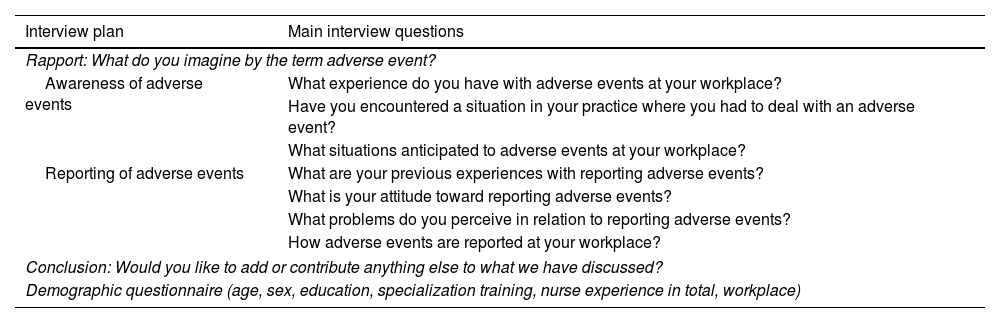
Qualitative methodsThe data collection method used was semi-structured interviews. Through this method, we investigated the barriers perceived by nurses with advanced experience in relation to reporting adverse events. The interview questions were developed based on a literature review.10 The interview protocol consisted of an introduction (initial question), seven core questions that form the main interview section, and a concluding supplementary question (Appendix 1).
The interviews were recorded using audio recording devices and the participants were informed of anonymity and the research process before the interviews began. Participation of nurses was contingent on the obtaining of informed consent. Data collection was carried out from September 2022 to January 2023. The average length of the semi-structured interviews was approximately 30min. Demographic data (workplace, age, sex, education, specialization, years of experience as a nurse) were documented in research-specific documents. Data collection ceased after data saturation was achieved.
For the analysis of data obtained from semi-structured interviews, a verbatim transcription method was used. The interviews were transcribed verbatim using the text editor. The transcription was performed electronically within 48h of the interviews to prevent meaning or interpretation errors. Data analysis used thematic analysis.23 Thematic analysis comprised six stages: familiarization with the data, generating initial codes, searching for themes, reviewing themes, defining, and naming themes, and reporting writing. Atlas.ti software was used in qualitative data analysis.24
Ethical aspectsAll ethical principles were respected according to the Declaration of Helsinki. All participants confirmed their consent to the investigation by signing the consent form. Participants were also informed that they could withdraw from participation at any time. The demographic data of the respondents were processed in accordance with Regulation (EU) 2016/679 of the European Parliament and of the Council of 27 April 2016 on the protection of natural persons regarding the processing of personal data and on the free movement of such data.
Results – quantitativeThe research sample consisted of nurses (N=111) who worked in intensive care units. The largest group of respondents were nurses with a bachelor's degree (54; 48.6%) and an average age of 34.07 (SD=10.69). The average length of experience in the nurse position was 10.97 years (SD=8.74), ranging from 0.5 to 42 years. The average experience in the current position was 8.07 years (SD=5.47), ranging from 0.5 to 41 years. The largest group of respondents perceived staff adequacy during the last shift for 75% of the time (40; 36.0%) and did not intend to leave their current position (87; 79.1%).
Reporting adverse eventsBased on the item-level analysis, we can state that 97.0% of nurses in our sample reported (responses greater than 1 – never) an error or mistake that is identified and corrected before it could impact the patient. Up to 97.0% of nurses reported an error or mistake that, although not causing harm (injury) to the patient in the given situation, could have led to it.
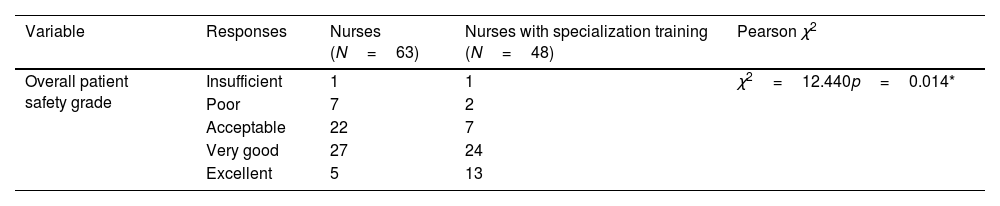
Furthermore, the overall patient safety grade was evaluated as acceptable to very good (3.68±0.91). The comparison of the overall patient safety grade based on the job position is presented in Table 1. The number of adverse events reported in the last 12 months ranged from 1 to 2 (74.7%).
Comparison of the overall patient safety grade based on job position.
| Variable | Responses | Nurses (N=63) | Nurses with specialization training (N=48) | Pearson χ2 |
|---|---|---|---|---|
| Overall patient safety grade | Insufficient | 1 | 1 | χ2=12.440p=0.014* |
| Poor | 7 | 2 | ||
| Acceptable | 22 | 7 | ||
| Very good | 27 | 24 | ||
| Excellent | 5 | 13 |
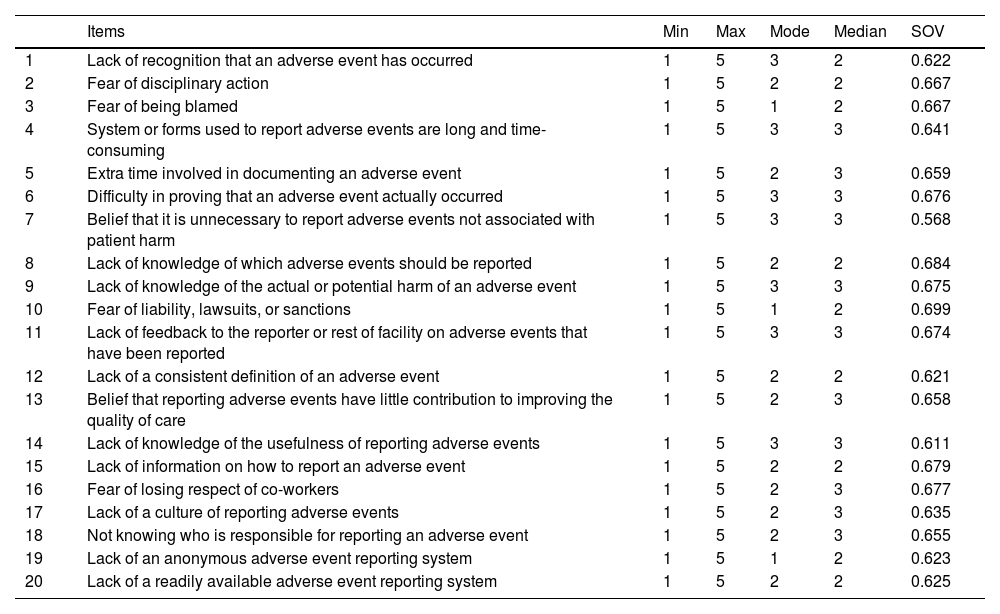
Based on the mean score of the instrument (2.65±0.72), we can conclude that nurses considered the individual barriers to reporting adverse events to be relatively significant (Table 2). The most significant barriers, according to nurses, were fear of responsibility, legal disputes or sanctions, lack of an anonymous reporting system for adverse events, and the absence of a readily accessible reporting system for adverse events.
Barriers to reporting adverse events.
| Items | Min | Max | Mode | Median | SOV | |
|---|---|---|---|---|---|---|
| 1 | Lack of recognition that an adverse event has occurred | 1 | 5 | 3 | 2 | 0.622 |
| 2 | Fear of disciplinary action | 1 | 5 | 2 | 2 | 0.667 |
| 3 | Fear of being blamed | 1 | 5 | 1 | 2 | 0.667 |
| 4 | System or forms used to report adverse events are long and time-consuming | 1 | 5 | 3 | 3 | 0.641 |
| 5 | Extra time involved in documenting an adverse event | 1 | 5 | 2 | 3 | 0.659 |
| 6 | Difficulty in proving that an adverse event actually occurred | 1 | 5 | 3 | 3 | 0.676 |
| 7 | Belief that it is unnecessary to report adverse events not associated with patient harm | 1 | 5 | 3 | 3 | 0.568 |
| 8 | Lack of knowledge of which adverse events should be reported | 1 | 5 | 2 | 2 | 0.684 |
| 9 | Lack of knowledge of the actual or potential harm of an adverse event | 1 | 5 | 3 | 3 | 0.675 |
| 10 | Fear of liability, lawsuits, or sanctions | 1 | 5 | 1 | 2 | 0.699 |
| 11 | Lack of feedback to the reporter or rest of facility on adverse events that have been reported | 1 | 5 | 3 | 3 | 0.674 |
| 12 | Lack of a consistent definition of an adverse event | 1 | 5 | 2 | 2 | 0.621 |
| 13 | Belief that reporting adverse events have little contribution to improving the quality of care | 1 | 5 | 2 | 3 | 0.658 |
| 14 | Lack of knowledge of the usefulness of reporting adverse events | 1 | 5 | 3 | 3 | 0.611 |
| 15 | Lack of information on how to report an adverse event | 1 | 5 | 2 | 2 | 0.679 |
| 16 | Fear of losing respect of co-workers | 1 | 5 | 2 | 3 | 0.677 |
| 17 | Lack of a culture of reporting adverse events | 1 | 5 | 2 | 3 | 0.635 |
| 18 | Not knowing who is responsible for reporting an adverse event | 1 | 5 | 2 | 3 | 0.655 |
| 19 | Lack of an anonymous adverse event reporting system | 1 | 5 | 1 | 2 | 0.623 |
| 20 | Lack of a readily available adverse event reporting system | 1 | 5 | 2 | 2 | 0.625 |
Min – minimum; Max – maximum; SOV – standardized ordinal variance.
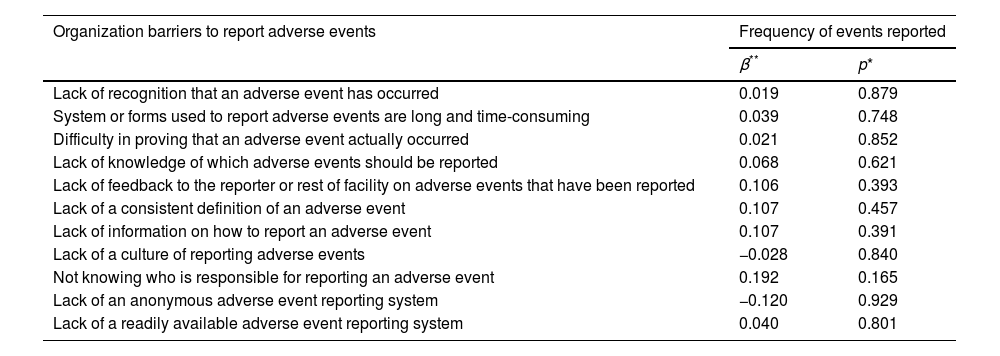
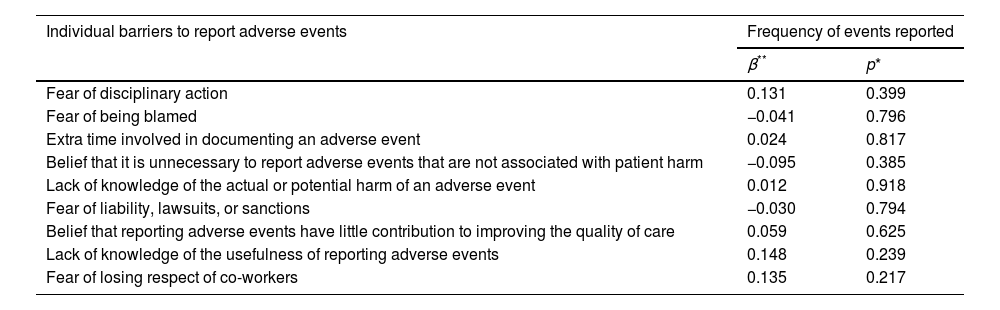
In the subsequent analysis, we focused on the analysis of barriers to reporting adverse events that could predict the reporting of adverse events among nurses working in intensive care units (Tables 3 and 4).
Organizational barriers as predictors of frequency of events reported.
| Organization barriers to report adverse events | Frequency of events reported | |
|---|---|---|
| β** | p* | |
| Lack of recognition that an adverse event has occurred | 0.019 | 0.879 |
| System or forms used to report adverse events are long and time-consuming | 0.039 | 0.748 |
| Difficulty in proving that an adverse event actually occurred | 0.021 | 0.852 |
| Lack of knowledge of which adverse events should be reported | 0.068 | 0.621 |
| Lack of feedback to the reporter or rest of facility on adverse events that have been reported | 0.106 | 0.393 |
| Lack of a consistent definition of an adverse event | 0.107 | 0.457 |
| Lack of information on how to report an adverse event | 0.107 | 0.391 |
| Lack of a culture of reporting adverse events | −0.028 | 0.840 |
| Not knowing who is responsible for reporting an adverse event | 0.192 | 0.165 |
| Lack of an anonymous adverse event reporting system | −0.120 | 0.929 |
| Lack of a readily available adverse event reporting system | 0.040 | 0.801 |
Individual barriers as predictors of frequency of events reported.
| Individual barriers to report adverse events | Frequency of events reported | |
|---|---|---|
| β** | p* | |
| Fear of disciplinary action | 0.131 | 0.399 |
| Fear of being blamed | −0.041 | 0.796 |
| Extra time involved in documenting an adverse event | 0.024 | 0.817 |
| Belief that it is unnecessary to report adverse events that are not associated with patient harm | −0.095 | 0.385 |
| Lack of knowledge of the actual or potential harm of an adverse event | 0.012 | 0.918 |
| Fear of liability, lawsuits, or sanctions | −0.030 | 0.794 |
| Belief that reporting adverse events have little contribution to improving the quality of care | 0.059 | 0.625 |
| Lack of knowledge of the usefulness of reporting adverse events | 0.148 | 0.239 |
| Fear of losing respect of co-workers | 0.135 | 0.217 |
Within the first model, we examine the relationship between reporting adverse events and organizational barriers to reporting adverse events. We found that model 1 (R=0.298; R2=0.089; Adj. R2=−0.013; F=0.869; p=0.573) was not significant, indicating that organizational barriers to reporting adverse events do not predict reporting adverse events.
Within the second model, we analyzed the relationship between reporting adverse events and individual barriers to reporting adverse events. We found that model 2 (R=0.286; R2=0.082; Adj. R2=−0.001; F=0.990; p=0.453) is not significant, indicating that individual barriers to reporting adverse events do not predict the reporting of adverse events.
Reliability of the questionnairesThe Cronbach's alpha coefficient for the Barriers to Reporting Adverse Events questionnaire was 0.904, indicating the tool's reliability. Similarly, we evaluated the HSOPS subscale, Frequency of Reporting Adverse Events. The Cronbach's alpha coefficient reached a value of 0.875, which is also deemed acceptable.
Results qualitativeThe research sample consisted of 10 nurses with advanced practice working in the ICU with a practice duration of 9–36 years. Thematic analysis revealed four main barriers to reporting adverse events from the perspective of ICU nurses: negative attitude toward reporting adverse events; lack of knowledge and experience in reporting adverse events; time scarcity; fear.
Negative attitude toward reporting adverse eventsA negative attitude among nurses is one of the major barriers that hinders reporting of adverse events, directly affecting patient safety. At the same time, nurses are often unaware of the consequences that may arise from not reporting adverse events: “…people, when they do not feel directly threatened, will not report the event…” (S1). Furthermore, when adverse events do occur, nurses feel responsible for their occurrence: “…I think it is quite stressful for nurses…” (S10). The most significant reason behind this negative attitude among nurses is the fact that reporting takes up a considerable amount of time, primarily associated with documentation, preventing them from fully concentrating on the interventions patients require: “…probably because of the time and maybe the reporting, you know, if something needs to be done for the patient, so actually to the doctor… hmm, I prefer when they are not needed, when it is not necessary to address it, those long-winded ones… unnecessarily, when it is being investigated like that…” (S2).
Lack of knowledge and experience in reporting adverse eventsAn important barrier to reporting adverse events could be the incorrect or insufficient interpretation of what constitutes an adverse event, as well as how to report it: “…I can’t really imagine it now, nothing comes to my mind, mainly because we rarely focus on these things…” (S2). According to the nurses’ statements, it can be concluded that this issue does not receive sufficient attention: “… we have not defined everything we should understand as adverse events… Maybe it would be helpful to create a manual about what to consider as an adverse event…” (S7). Participants also mentioned a situation that, while acknowledging the occurrence of an adverse event, also reveals deliberate non-reporting: “… sometimes staff, I mean even students, when something happens, I try to keep it quiet in the sense that it is not that serious, that it will heal on its own for the patient…” (S3). The absence of self-reflection among nurses also creates a significant barrier in the context of reporting adverse events: “…because it doesn’t have to be a mistake in the sense that I prepare something and go to administer it to the patient right away, but even just some self-reflection, and that humility, that I am going to prepare something, I am not sure, I will ask before, am I doing it right…” (S7).
Time scarcityReporting adverse events also occurs in writing through documentation, which is detailed and takes a significant amount of time. The adverse event must be documented by the employee who caused the event while providing healthcare, as it is their legal obligation. Nurses point out a barrier that hinders them from reporting adverse events: “…the problem is probably administrative, some kind of time factor…” (S8). Another barrier in reporting adverse events is that some events are not reported or are reported incorrectly, requiring additional time to address such issues: “…it can happen that some adverse events are not documented. They happen, for example, during a shift, the nurse either documents it incorrectly or doesn’t document it, then another nurse comes the next day and has to deal with it retroactively…” (S9).
FearThe most significant barrier to reporting adverse events is fear. This fear can have various causes. Nurses in our research sample mentioned uncomfortable reactions from supervisors, which could lead to blaming and stigmatization of the nurses themselves: “…then they feel that someone might perceive them negatively…fear that they will not be seen as responsible…” (S4). Other reported barriers included reprimands, financial, and legal repercussions for nurses: “…from certain measures, from consequences imposed by the supervisor…reprimands from management, loss of bonuses, legal action…” (S10). Even during the process of asking questions focused on barriers to reporting adverse events, it was evident that participants had significant apprehensions and fear of answering the questions, often not completing their statements: “…for instance, fear of repercussions… Just that fear, but I think if something like that was established, that healthcare professionals would not be sanctioned or penalized like this…well, I would rather not even say this…” (S5). One of the nurses mentioned how support for nurses in reporting adverse events could alleviate their fear: “…to support us, for example, those who are afraid to report, that nothing bad will happen to them, that they should report it…” (S4).
DiscussionAdverse events significantly jeopardize patient safety in hospitalized patients. However, the reporting of adverse events often remains insufficient or ineffective due to several barriers. Inadequate reporting of adverse events is considered a primary limitation in ensuring patient safety.25 The purpose of this study was to gain a deeper understanding of the barriers to reporting adverse events perceived by ICU nurses through the combination of quantitative and qualitative research methods.
In the first mixed-method phase of the sequential study, the questionnaire on barriers to reporting adverse events was administered to nurses from the ICU. Using the questionnaire, several individual and organizational barriers were considered important in reporting adverse events. ICU nurses considered fear of liability, lawsuits, or sanctions the most significant barrier in the context of reporting adverse events. This primary barrier falls within the realm of individual barriers. Similar results are presented by multiple authors, such as Rutledge et al.26 and Sanghera et al.27 According to these authors, fear is indeed among the spectrum of barriers influenced by the patient's safety culture. This barrier is difficult to eliminate; it takes time and is mainly related to the overall change in the patient's safety culture, hospital internal processes, and the implementation of an effective reporting system. According to Vrbnjak et al.,8 it is also important to create and implement a patient safety culture where nurses will not be afraid to report adverse events, highlighting a culture of blameless reporting. Barriers related to fear were also mentioned in the study by Heard et al.28 Furthermore, the study by Mansouri et al.29 also addressed barriers to reporting adverse events, particularly those related to fear. The authors identified up to nine barriers to reporting adverse events, including fear of blame, the legislative impact of reporting incidents, job loss, financial loss, and lack of management support. In a study conducted in the ICU, the most significant barrier perceived was fear of consequences.30 Nurses perceive that punishment is one of the most significant consequences after reporting an error, particularly in terms of reassignment to other departments, reprimands, resistance in planning changes in care provision, and wage reductions. In general, nurses noted that fear is driven by negative reactions from supervisors, which could lead to blame and stigmatization of nurses themselves,29 reprimands, and financial and legal repercussions.31 Overcoming these barriers requires establishing a blame-free and punishment-free learning culture at the department and organizational levels.10 It should be mentioned that nurses working in facilities with a blame culture are more likely to report adverse events with a low rate.10,29 Another important barrier to reporting adverse events, as perceived by ICU nurses, was related to the organization itself and included the lack of an anonymous reporting system for adverse events and the absence of a readily accessible reporting system for adverse events. This gap in the reporting infrastructure presents a substantial barrier to effectively addressing and preventing adverse events within the ICU environment. Nurses, as first-line caregivers, play an essential role in patient care and safety, making their insights crucial to identifying and rectifying potential problems.32 The lack of an anonymous or accessible reporting system can have several implications. Nurses may hesitate to report adverse events openly due to concerns about possible repercussions or fears of being criticized. This fear-driven environment could hinder the flow of crucial information that is vital to continuous improvement in patient care standards.33 Anonymity in reporting fosters a culture of openness and transparency, allowing nurses to share their observations without the fear of personal consequences.34 It empowers them to report incidents without the burden of blame, allowing a more accurate reflection of the challenges faced in the ICU. An anonymous reporting system acknowledges that errors are often systemic and not solely the result of individual actions. This understanding encourages a collective effort to improve patient safety and clinical practices. Implementing an anonymous reporting system addresses the psychological barrier of fear that might discourage nurses from speaking out about adverse events.35 When nurses can report incidents without revealing their identities, they are more likely to share valuable insights and experiences that can contribute to the improvement of protocols, procedures, and patient outcomes. The absence of an anonymous reporting system for adverse events in the ICU poses a significant challenge perceived by nurses.36,37 Addressing this gap is crucial to fostering a culture of safety, continuous improvement, and patient-centered care. By implementing an anonymous reporting system, healthcare institutions can create an environment in which nurses feel empowered to share their knowledge, leading to improved patient safety, better results, and a more resilient healthcare system overall.35,36
The quantitative phase of the study revealed that both individual and organizational barriers are important in reporting adverse events as perceived by ICU nurses. However, the qualitative phase of the study aimed to better understand barriers related to reporting adverse events. Nurses in interviews mentioned the most dominant barriers that influenced their reporting. One of them was a negative attitude toward reporting such events. The negative attitude of ICU nurses toward reporting adverse events is a complex issue that can significantly impact patient safety and overall quality of care. This phenomenon can be rooted in a variety of factors, including fear of reprisal, concerns about professional reputation, and perceptions of blame.36 Additionally, there may be concerns about how reporting adverse events could affect professional reputation. Nurses may fear that acknowledging errors could tarnish their image as competent and skilled caregivers. This concern can be exacerbated by the high-stress environment of the ICU, where fast-paced decision-making is crucial.37 As a result, some nurses may be inclined to conceal errors rather than risk potential damage to their professional standing. Furthermore, according to Evans et al.38 and Mostafaei et al.,39 a negative attitude toward reporting adverse events may create the impression that reporting is unnecessary because there was no further “investigation” if such an incident occurred, there was a lack of feedback.12,40 Addressing the negative attitude of ICU nurses toward reporting adverse events requires a multifaceted approach. Creating a blame-free reporting culture is essential, where adverse events are viewed as opportunities for learning and improvement rather than avenues for punishment. Implementing anonymous reporting systems can play a crucial role in mitigating these concerns, allowing nurses to report incidents without fear of reprisal or blame. Education and communication also play a key role in changing attitudes. Providing ongoing training on the importance of reporting adverse events, understanding the systemic factors that contribute to errors, and the positive impact of transparent reporting can help change perceptions. Open dialogs between nurses and management can foster an environment where nurses feel comfortable sharing their experiences, insights and concerns.16
Furthermore, the lack of knowledge and experience in reporting adverse events emerged as a significant barrier for nurses, identified by several studies,29,31,39,41 pointing to the ambiguous interpretation of the term ‘adverse event’ and the lack of knowledge and skills of nurses related to reporting such events. Another barrier that hinders nurses from reporting adverse events is the documentation itself, or rather the time demands of documenting such events, as seen in the study by Chiang et al.42 Our qualitative results are consistent with other studies25,31,43 and highlight the barriers related to loss of respect from colleagues, time spent documenting incidents, and the complexity of proving the occurrence of an adverse event. Furthermore, nurses in our study mentioned the need for conditions in which nurses would not be afraid to report adverse events and would have more support from management. Similar results are documented in the study by Mansouri et al.,29 which indicates that a confidential and effective relationship between managers and nurses ensures greater efficiency in reporting undesirable events without consequences. However, perceptions of various reporting barriers can stem from differences in management, effective or ineffective workplace leadership, including inadequate feedback on errors, varied patient safety cultures in healthcare facilities, and differences in nursing education and training across various workplaces, healthcare institutions, and countries.12 Furthermore, insufficient research on barriers to reporting adverse events, incidents, and near misses, coupled with a low awareness of reporting, suggests the need for more research and the development of educational and managerial procedures to overcome these barriers.10,26
In addition to above-mentioned evidence, it is important to consider healthcare providers involved in adverse events as second victims.8 It is evident that adverse events bring about more than just psychological distress for healthcare workers, underscoring the importance of directing attention to strategies for their prevention.10 However, it is also essential to support healthcare providers after such incidences. In the Slovak Republic, no program to support healthcare workers after an adverse event has been implemented so far, despite constant calls from healthcare professionals. One of the support options is the second victim support program that plays a pivotal role in enhancing patient safety culture and influencing professionals’ perceptions of patient safety. These programs recognize that healthcare providers (“second victims”) can experience emotional distress, guilt, and trauma after being involved in adverse events or medical errors. By providing dedicated support for these individuals, these programs contribute to a more resilient and patient-centric healthcare environment.44 Firstly, second victim support programs acknowledge the emotional toll that adverse events can take on healthcare professionals. Dealing with the aftermath of errors or mistakes can lead to feelings of guilt, shame, anxiety, and even post-traumatic stress disorder.45 Addressing these emotional challenges is crucial not only for the well-being of the healthcare providers but also for maintaining a positive patient safety culture. When professionals feel supported and understood, they are more likely to engage in open and transparent communication about errors, fostering a culture of continuous improvement.46 Moreover, these support programs recognize the interconnectedness of healthcare providers’ well-being and patient safety. A healthcare professional struggling with the emotional aftermath of an adverse event might be more prone to future mistakes or hesitant to communicate openly about safety concerns.44,45 By offering timely and comprehensive support, these programs contribute to breaking the silence surrounding errors and encourage a proactive approach to identifying and addressing potential safety issues.47 The positive impact of second victim support programs extends to the overall patient safety culture within healthcare organizations. When professionals feel supported and empowered, they are more likely to engage in safety initiatives, adhere to protocols, and actively participate in error prevention strategies. This, in turn, creates a culture where learning from mistakes is prioritized, and systemic changes are implemented to prevent future errors.45–47
Study limitationsSeveral limitations should be acknowledged. Limitations of the study include the conduct of the research in a single facility and the use of a purposeful sampling method. Within the qualitative phase of the study, nurses were not willing to participate in interviews, as they were afraid to answer questions about reporting practices. Therefore, the length of the interviews was limited, which may influence data saturation.
ConclusionAdverse events represent a global issue that has a significant impact on nurses, but primarily on patients. Reporting plays a crucial role in preventing adverse events and is influenced by various barriers on the part of nurses. We found that there are several barriers to reporting adverse events in the intensive care unit setting, with fear being the most dominant among nurses. This fear was primarily due to concerns that supervisors or other nurses would accuse, stigmatize, or punish them. Based on these findings, we can conclude that nurses need more support from management, which should alter the work environment to foster a culture of blame-free and punishment-free reporting.
Ethics approval statementThe study strictly adhered to ethical principles.
Data availability statementData available on request from the authors – the data that support the findings of this study are available from the corresponding author upon reasonable request.
Conflict of interestAuthors declare no potential conflict of interest.
The authors extend their sincere thanks and gratitude to Pavol Faťun, MSc., RN and Martin Petruščák, BSc., RN for helping in data collection, and to all those who took the time to participate in this study.
| Interview plan | Main interview questions |
|---|---|
| Rapport: What do you imagine by the term adverse event? | |
| Awareness of adverse events | What experience do you have with adverse events at your workplace? |
| Have you encountered a situation in your practice where you had to deal with an adverse event? | |
| What situations anticipated to adverse events at your workplace? | |
| Reporting of adverse events | What are your previous experiences with reporting adverse events? |
| What is your attitude toward reporting adverse events? | |
| What problems do you perceive in relation to reporting adverse events? | |
| How adverse events are reported at your workplace? | |
| Conclusion: Would you like to add or contribute anything else to what we have discussed? | |
| Demographic questionnaire (age, sex, education, specialization training, nurse experience in total, workplace) | |