
metricas

Enfermería Intensiva

Sugerencias
Enfermería Intensiva Nurses’ perceptions of the obstacles and supportive behaviors of end-of-life c...
Información de la revista
Vol. 35. Núm. 1.
Páginas 1-76 (Enero - Marzo 2024)
Visitas
336
Vol. 35. Núm. 1.
Páginas 1-76 (Enero - Marzo 2024)
Original article
Acceso a texto completo

Nurses’ perceptions of the obstacles and supportive behaviors of end-of-life care in intensive care units

Percepciones de los enfermeros sobre los obstáculos y comportamientos de apoyo de la atención al final de la vida en unidades de cuidados intensivos
Visitas
336
Majd T. Mrayyana,
Autor para correspondencia
mmrayyan@hu.edu.jo

Corresponding author.
, Nijmeh Al-Atiyyatb, Ala Ashourb, Ali Alshraifeenb, Abdullah Algunmeeync, Sami Al-Rawashdeha, Murad Sawalhad, Abdallah Abu Khaita, Imad Alfayoumie, Mohammad Sayaheena, Mohammad Odehb
a Department of Community and Mental Health Nursing, Faculty of Nursing, The Hashemite University, P.O. Box 330127, Zarqa 13133, Jordan
b Department of Adult Health Nursing, Faculty of Nursing, The Hashemite University, P.O. Box 330127, Zarqa 13133, Jordan
c Advanced Nursing Department, Faculty of Nursing, Isra University, P.O. Box 33, Amman 11622, Jordan
d Department of Maternal Child and Family Health Nursing, Faculty of Nursing, The Hashemite University, P.O. Box 330127, Zarqa 13133, Jordan
e Basic Nursing Department, Faculty of Nursing, Isra University, P.O. Box 33, Amman 11622, Jordan
Este artículo ha recibido
Información del artículo
Resumen
Texto completo
Bibliografía
Descargar PDF
Estadísticas
Tablas (4)
Table 1. Demographics of the sample (N = 230).
Tablas
Table 2. Perceived intensity scores for obstacles of the EoLC (N = 230).
Tablas
Table 3. Perceived intensity scores for supportive behaviors of the EoLC (N = 230).
Tablas
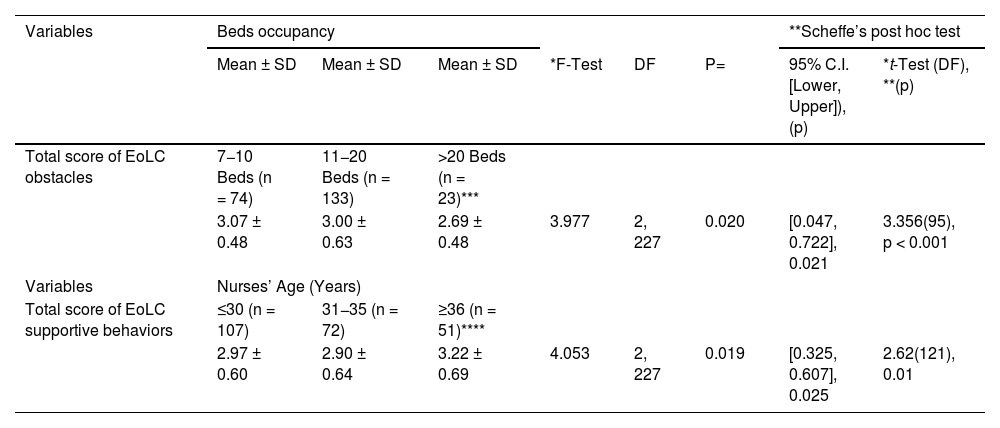
Table 4. Significant differences in perceived obstacles and supportive behaviors of the EoLC using ANOVA and Scheffe’s post hoc test.
Tablas
Abstract
Purpose

This study examined the Jordanian registered nurses’ perceptions of the obstacles and supportive behaviors of End-of-Life Care in Intensive Care Units and examined the differences in the concepts based on the samples’ demographics.

Methods

A cross-sectional and comparative study was conducted using a convenience sample of 230 Intensive Care Unit registered nurses in Jordan. Data were analyzed descriptively, and differences were measured using the independent sample t-test, the one-way Analysis of Variance, and Scheffe’s post hoc test.

Results

The registered nurses’ scored moderately on obstacles (74.98 ± 14.54) and supportive behaviors (69.22 ± 4.84). The commonly perceived obstacle and supportive behaviors to End-of-Life Care in Intensive Care Units s were reported. The perceived obstacles differ based on the registered nurses’ certification as an Intensive Care Units nurse (3.04 ± 0.58 vs. 2.74 ± 0.49, p = 0.008), type of Intensive Care Unit (3.28 ± 0.34 vs. 2.86 ± 0.62, p < 0.001), type of facility (3.16 ± 0.59 vs. 2.77 ± 0.61, p < 0.001), number of beds in the unit (3.07 ± 0.48 vs. 2.69 ± 0.48, p = 0.020), and the number of hours worked per week (3.06 ± 0.56 vs. 2.81 ± 0.60, p = 0.005). In contrast, supportive behaviors only differ based on the registered nurses’ age (3.22 ± 0.69 vs. 2.90 ± 0.64, p = 0.019).

Conclusions

The common End-of-Life Care perceived obstacle in Intensive Care Units was the lack of nursing education and training regarding the studies concept, which warrants immediate intervention such as on-job training. The common End-of-Life Care perceived supportive behavior in Intensive Care Units was when family members accepted that the patient was dying when nurses offered support to family members; motivational interventions are needed to sustain such behavior. Differences in the perceived obstacles and supportive behaviors should be leveraged for the benefit of patients, nurses, and hospitals.

Keywords:
Terminal care
Resource-limited settings
Supportive behaviors
Intensive care units
Nurses
Jordan
Resumen
Propósito

Este estudio examinó las percepciones de las enfermeras registradas jordanas sobre los obstáculos y comportamientos de apoyo de la atención al final de la vida en las Unidades de Cuidados Intensivos y examinó las diferencias en los conceptos basados en la demografía de las muestras.

Métodos

Se realizó un estudio transversal y comparativo utilizando una muestra de conveniencia de 230 enfermeras registradas en la Unidad de Cuidados Intensivos en Jordania. Los datos se analizaron descriptivamente y las diferencias se midieron mediante la prueba t de muestra independiente, el análisis unidireccional de varianza y la prueba post hoc de Scheffe.

Resultados

Las enfermeras registradas obtuvieron una puntuación moderada en obstáculos (74,98 ± 14,54) y comportamientos de apoyo (69,22 ± 4,84). Se informaron los obstáculos comúnmente percibidos y los comportamientos de apoyo a la atención al final de la vida en las Unidades de Cuidados Intensivos. Los obstáculos percibidos difieren según la certificación del enfermero registrado como enfermero de las Unidades de Terapia Intensiva (3,04 ± 0,58 vs. 2,74 ± 0,49, p < 0.001), tipo de Unidad de Cuidados Intensivos (3,28 ± 0,34 vs. 2,86 ± 0,62, p < 0.001), tipo de instalación (3,16 ± 0,59 vs. 2,77 ± 0,61, p < 0.001), número de camas en la unidad (3,07 ± 0,48 vs. 2,69 ± 0,48, p = 0,020), y número de horas trabajadas por semana (3,06 ± 0,56 vs. 2,81 ± 0,60, p = 0,005). En contraste, los comportamientos de apoyo solo difieren según la edad de las enfermeras registradas (3,22 ± 0,69 vs. 2,90 ± 0,64, p = 0,019).

Conclusiones

El obstáculo común percibido en la Atención al Final de la Vida en las Unidades de Terapia Intensiva fue la falta de educación y capacitación de enfermería sobre el concepto de estudios, lo que justifica una intervención inmediata, como la capacitación en el trabajo. El comportamiento de apoyo común percibido en la atención al final de la vida en las Unidades de Cuidados Intensivos fue cuando los miembros de la familia aceptaron que el paciente estaba muriendo cuando las enfermeras ofrecieron apoyo a los miembros de la familia; Se necesitan intervenciones motivacionales para mantener tal comportamiento. Las diferencias en los obstáculos percibidos y los comportamientos de apoyo deben aprovecharse para el beneficio de los pacientes, las enfermeras y los hospitales.

Palabras clave:
Cuidados terminales
Entornos con recursos limitados
Enfoques de apoyo
Unidades de cuidados intensivos
Enfermeras
Jordania
Texto completo

What is known?

End-of-Life Care is founded on recognizing death as an unavoidable and natural part of life. Nurses in Intensive Care Units are on the front lines of caring for dying patients, and nurses are the keys to active participants in interventions needed to improve End-of-Life Care. Intensive Care Units nurses face stressful challenges while providing care.

What it contributes?

Worldwide, End-of-Life Care is still largely ignored in most settings, including Intensive Care Units. This is one of a few recent studies on the obstacles and supportive behaviors of End-of-Life Care among nurses in Intensive Care Units. It will be the first study to compare End-of-Life Care depending on the hospital, unit, and nurse demographics.

Implications of the study

Intensive Care Units nurses face challenges in their work, especially when caring for end-of-life patients. Thus, interventions and supportive behaviors are necessary to help nurses overcome the barriers they face in caring for patients at the end of life. These interventions are the basic milestones to improving End-of-Life Care.

Introduction

End-of-Life Care (EoLC) refers to healthcare provided for patients nearing the end of life, mostly in the advanced stage of a terminal or chronic illness.1–4 Nurses are the keys to active participants in interventions needed to improve EoLC 1,2 in Intensive Care Units (ICUs).3,4 Thus, ICU nurses face stressful challenges such as moral distress while providing care,2–6 because of the high rate of death and aggressive treatments provided on such units.2–4 EoLC patients have many issues, such as physical comfort, mental and emotional needs, spiritual issues, and practical tasks.2–4,7 Here, it comes to EoLC nurses’ roles to flourish. These nurses sometimes are called hospice nurses; they are involved in disease interventions, pain management, and mental and spiritual health at the end of life.1,2 Therefore, the EoLC nurses seek to maintain a dying person’s comfort and good quality of life and care for their families, including after-death support.2–4 EoLC nurses defend patients’ dignity, privacy, and individuality and act as the primary liaison between the healthcare team, patients, and their families.2,5 They also coordinate vital services in life decisions and advocate for a peaceful, dignified death.2,5

Even with the advanced in cancer and palliative care, gaps still exist. Worldwide, EoLC is still largely ignored in most settings, including ICUs.2,5,7,8 In reality, the EoLC in the ICU is becoming increasingly aggressive, even though it is associated with poor clinical outcomes and quality of life.2,5 Little is known about nurses’ experience and practices of EoLC2,5,7 in the ICUs,7,8 and other critical units such as the oncology units. 2,5,7,8 When patients and families are informed of their poor prognosis in ICUs and oncology units, they seek consolation; consequently, the EoLC is established.2,5,7,8

A few recent studies on the obstacles and supportive behaviors of EoLC in ICUs were conducted.5 There is numerous but mostly older, international, and regional research on the obstacles and supportive behaviors of EoLC in ICUs.8,10 Previous studies have identified obstacles to providing appropriate EoLC in ICU settings.2–12 Obstacles include but are not limited to dying patients and their families having insufficient knowledge to understand life-sustaining versus EoLC;2,3,5,7 a lack of nursing education and training related to psychosocial and spiritual needs management;2,5,7,13 and a lack of experienced nurses in EoLC in the ICUs.2,5,7,14 Identifying and removing these roadblocks is critical for ICU nurses to provide high-quality EoLC.2,11

Previous research has identified some supportive behaviors to increase the quality of EoLC in ICUs. These behaviors include teaching and training healthcare providers on pain and symptom management and enhancing communication skills.2,5,7 Other supporting actions include employing skilled palliative nurses and providing a secluded grieving area for families,2,5,7,13,15–17 providing education and training for healthcare providers on effective pain and symptom management, and communicating therapeutically with patients and families.2,5,7 Establishing EoLC policies and procedures, reducing nurses’ work-related stress, increasing patient, family member, and nurse satisfaction,2,5,7,8 hiring experienced palliative care nurses, and providing families with a private grieving space are other examples of EoLC supportive behaviors.8,13,15 These go along with designing patient-centered care and family-partnered interventions to improve EoLC.1 However, these interventions require guidelines and protocols.

In Jordan, neonatal critical care nurses17 and physicians18 were studied, and a single study compared EoLC in nurses versus physicians.7 The current study will include the most recent global correlational or comparative studies on EoLC obstacles and ICU supportive behaviors.5,7,12,16,17 It will be the first study to compare EoLC depending on the hospital, unit, and nurse demographics.

Jordan’s culture and religion play a significant role in EoLC decision-making; it influences healthcare provided to dying patients and their families.7,16–18 For example, in Jordan and other Islamic countries, patients are expected to receive the most therapy possible regardless of their conditions or prognoses.1,19 The EoLC is a relatively new discipline in Jordan7,17,18 and other Arab countries.19 Jordan’s EoLC has gradually improved, yet, serious challenges to full EoLC status remain.17–25 As a result, the current study sought to 1) identify nurses’ perceived obstacles and supportive behaviors to providing EoLC in ICUs and 2) investigate differences in nurses’ perceived obstacles and supportive behaviors scores depending on the sample’s demographics.

Promoting the aforementioned supportive behaviors will result in positive outcomes that will assist patients, families, nurses, and care facilities in overcoming obstacles and provide high-quality EoLC.2,5,7,8 These behaviors will also assist nurses in minimizing work-related stress and improve patient, family, and nurse satisfaction.2,5,7,8 The current study results would help design interventions and supportive behaviors to help decrease or eliminate obstacles to EoLC.

MethodsResearch design, sample, and settings

The study employed a descriptive cross-sectional and comparative design. The hospitals were selected purposively based on the researchers’ knowledge that ICUs are available in the hospitals and they provide EoLC. The current study’s target population was all full-time Jordanian registered nurses (RNs) who work and provide EoLC in ICUs in Jordanian hospitals. It is important to mention that palliative care nurses were not working in the selected ICUs. Palliative care units are located in major oncology departments in selected specialized hospitals in Jordan, such as King Hussein Cancer Center; however, these palliative units were not selected in the current research. The sample size was calculated using power analysis; the sample size was calculated using the power primer;26 200 subjects were required. Oversampling was used to understand better and overcome participant attrition; the final sample size was 230, with a 66.00% response rate.

The instrument

The National Survey of Critical Care Nurses Regarding End-of-Life Care Care Questionnaire27,28 assessed nurses’ perceptions of obstacles and supportive behaviors to providing EoLC in ICUs. The instrument consists of a 48-item Likert scale, with (25) items representing the obstacle subscale and (23) supporting subscale. The responses range from 0 to 5, with 0 indicating no obstacle or help and 5 indicating a considerable obstacle or help. The summed total score of the obstacle subscales ranges from 0 to 125. A higher score on the scale indicated that the obstacle was more. The total score for the supportive behaviors subscale ranges from 0 to 115. Again, a higher score indicated more supportive behaviors. The original instrument was reported to have content validity and reliability.27,28 The content validity of original items of the scale was identified by a focus group formed to identify EoLC issues.27,28 The reliability of the original instrument was analyzed using Cronbach’s alpha, which was reported to be 0.86 for the 25 obstacle items and 0.8228 for the 23 supporting items,28 and 0.84, and 0.87 consecutively in the current study. The demographics of the sample collected were sex, age, level of education, years of experience as RNs, years of ICU experience, the number of ICU patients assigned to the nurse to receive EoLC over the entire nursing career, type of ICU, type of facility, position held, number of beds in the ICU, number of hours worked per week as RNs, and the certification as an ICU RN.

Data collection

After conducting a pilot to assess the instrument’s suitability for Jordanian hospitals, where no revisions were needed, nurses in the selected hospitals were sent letters inviting them to participate in the study. Nurses’ perceptions of obstacles and supportive behaviors to providing EoLC in ICUs were collected from late August to late September 2022, using the English version of the National Survey of Critical Care Nurses Regarding End-of-Life Care Care Questionnaire27,28; English is the official language of nursing education in Jordan. The letters were sent along with the questionnaire and the demographic form. The data were gathered by research assistants who approached nurse managers first, then met with the nurses in a private room assigned to the nursing administration in each hospital. The returned questionnaires were collected in the nursing office.

Data analyses

The data were analyzed with an alpha of 0.05 using the Statistical Package for Social Sciences (SPSS) software, version 25.0.29 Two researchers double-checked the accuracy of the entered data. These variables were analyzed using descriptive statistics such as frequencies, percentages, means, and standard deviations. Items were ranked as obstacles or supportive behaviors from the highest to the lowest mean scores. The independent sample t-test was used to assess the differences in the nurses’ perceived obstacles and supportive behaviors scores of the EoLC in ICUs based on their demographics (i.e., certification as an ICU nurse (certified vs. uncertified), sex, and the number of hours worked per week (>20 h vs. 20 h). The one-way Analysis of Variance (ANOVA) and Scheffe’s post hoc test were used to examine differences in the mean scores of obstacles and supportive behaviors of the EoLC among ICUs nurses based on their age, level of education, experience as a RN, years of ICU experience, number of ICU patients assigned to the nurse for EoLC throughout their nursing careers, the type of ICU, the type of facility, the position held, and the number of ICU beds. Missed data were minimal; thus, they were not intervened.

Ethical considerations

Before collecting data, a local Institutional Review Board (IRB) (No. SREC/22/08/46 dated Aug 23, 2022) approved the study, where the second author works. Subjects were given information about the nature of the study before completing the questionnaire. Subjects were informed that their participation in this study was voluntary and that they may withdraw without penalty, and the return of the questionnaire implied consent to participate. All data sets were analyzed and reported in aggregate form after the questionnaires were coded with only an identification number. Subject confidentiality was maintained by storing completed questionnaires in the first author’s office, using password-protected computer files, and allowing only the first author access to the data.

ResultsDemographics of the sample

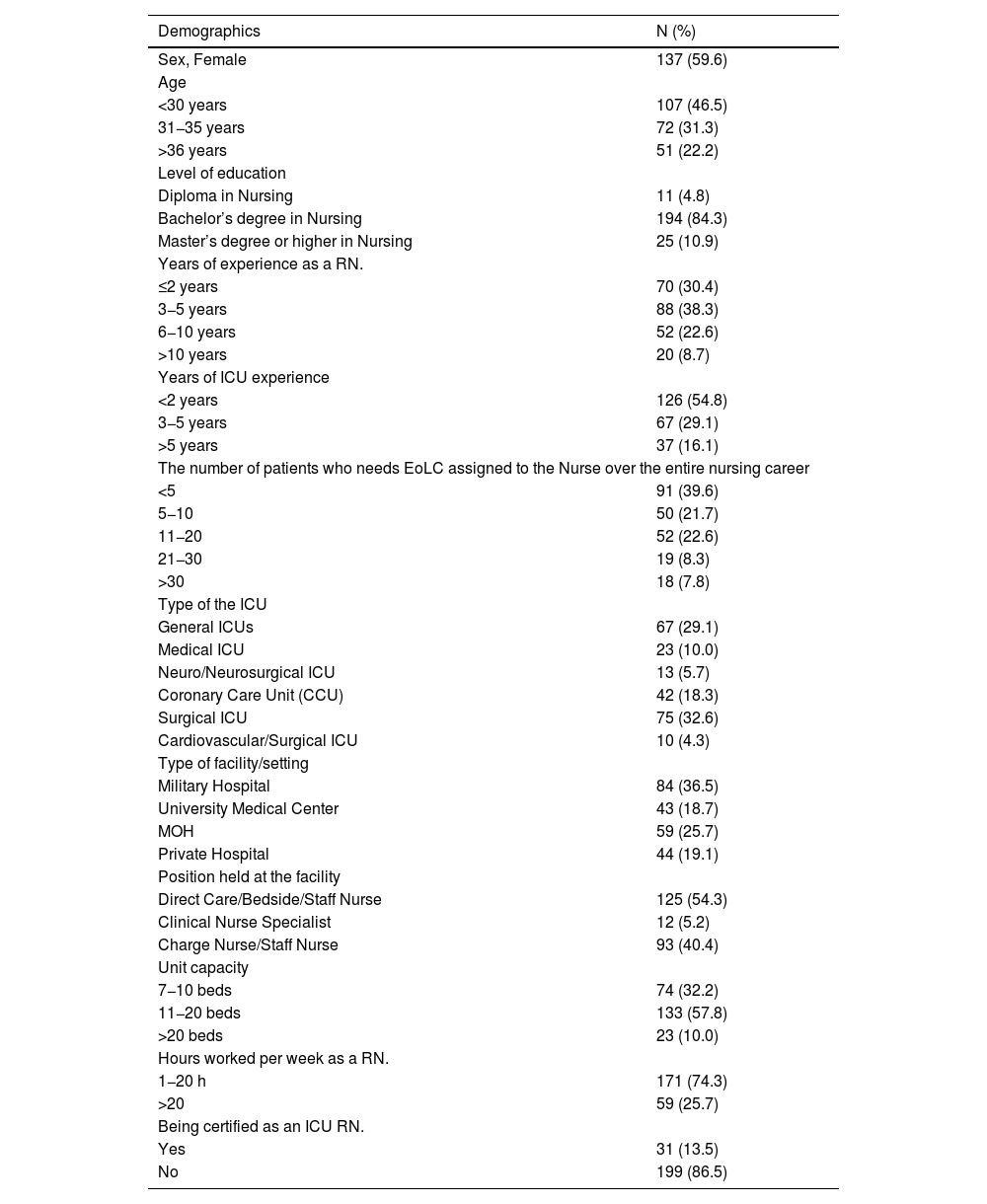
The sample included 230 nurses, with 59.6% of them female. Almost half of the responders were over 30 years old and worked as bedside staff nurses; most had bachelor’s degrees. Most respondents had worked as a RN and in ICUs for at least five years. In addition, 91 respondents (39.6%) reported caring for five or fewer dying patients, while 18(7.8%) reported caring for 30 or more dying patients. Table 1 contains demographic information about the sample, including frequencies and percentages.

Table 1.

Demographics of the sample (N = 230).

Demographics  N (%) 
Sex, Female  137 (59.6) 
Age   
<30 years  107 (46.5) 
31−35 years  72 (31.3) 
>36 years  51 (22.2) 
Level of education   
Diploma in Nursing  11 (4.8) 
Bachelor’s degree in Nursing  194 (84.3) 
Master’s degree or higher in Nursing  25 (10.9) 
Years of experience as a RN.   
≤2 years  70 (30.4) 
3−5 years  88 (38.3) 
6−10 years  52 (22.6) 
>10 years  20 (8.7) 
Years of ICU experience   
<2 years  126 (54.8) 
3−5 years  67 (29.1) 
>5 years  37 (16.1) 
The number of patients who needs EoLC assigned to the Nurse over the entire nursing career
<5  91 (39.6) 
5−10  50 (21.7) 
11−20  52 (22.6) 
21−30  19 (8.3) 
>30  18 (7.8) 
Type of the ICU   
General ICUs  67 (29.1) 
Medical ICU  23 (10.0) 
Neuro/Neurosurgical ICU  13 (5.7) 
Coronary Care Unit (CCU)  42 (18.3) 
Surgical ICU  75 (32.6) 
Cardiovascular/Surgical ICU  10 (4.3) 
Type of facility/setting   
Military Hospital  84 (36.5) 
University Medical Center  43 (18.7) 
MOH  59 (25.7) 
Private Hospital  44 (19.1) 
Position held at the facility   
Direct Care/Bedside/Staff Nurse  125 (54.3) 
Clinical Nurse Specialist  12 (5.2) 
Charge Nurse/Staff Nurse  93 (40.4) 
Unit capacity   
7−10 beds  74 (32.2) 
11−20 beds  133 (57.8) 
>20 beds  23 (10.0) 
Hours worked per week as a RN.   
1−20 h  171 (74.3) 
>20  59 (25.7) 
Being certified as an ICU RN.   
Yes  31 (13.5) 
No  199 (86.5) 

Perceived scores for obstacles in EoLC.

Perceived obstacles of EoLC

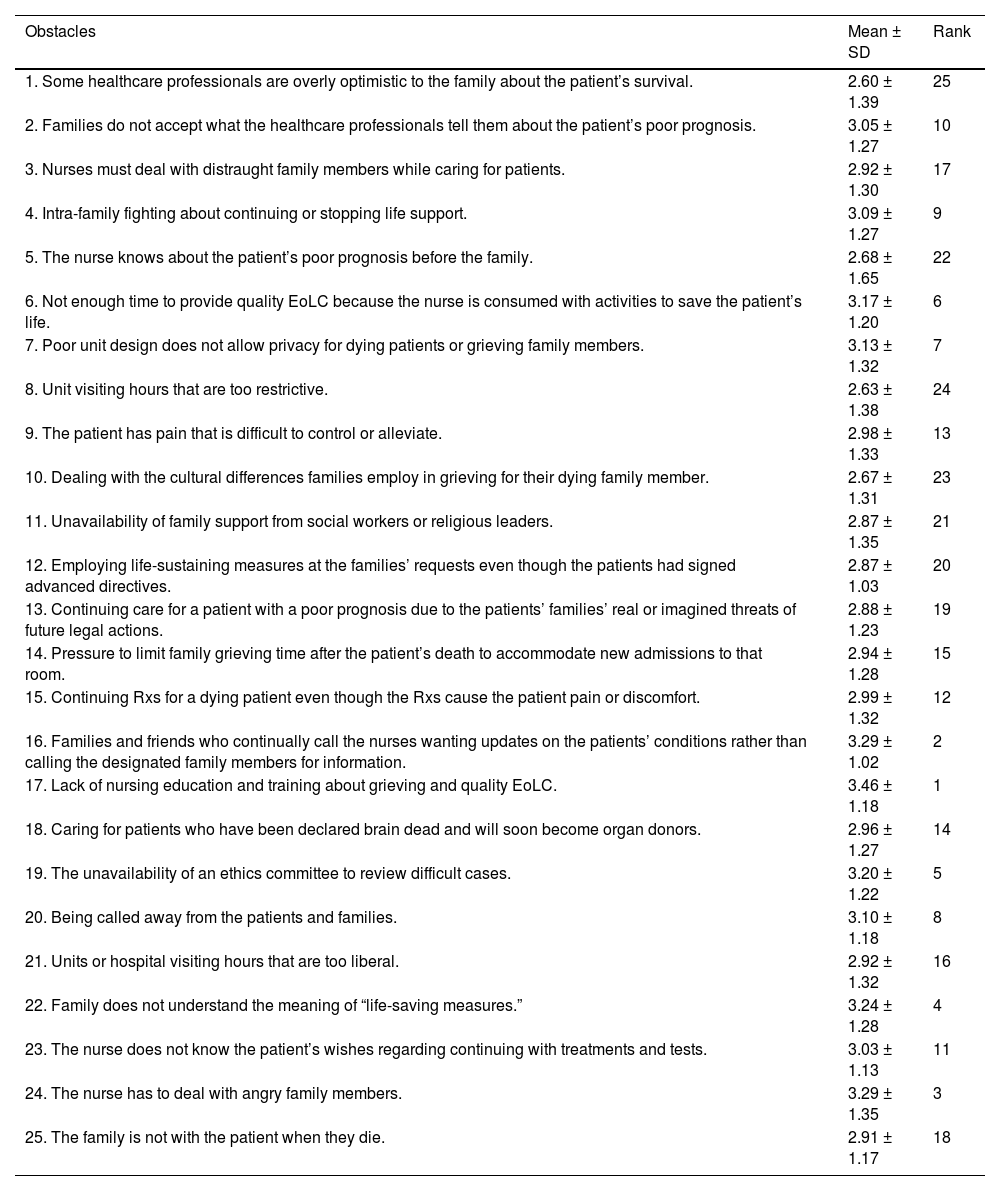
The total score on the obstacle subscale varied between 24 and 112, with 74.98(SD = 14.54). The mean scores for the obstacle subscale items ranged from 2.61(SD = 1.39) to 3.46(SD = 1.18), with a mean of 2.99(SD = 0.58). The obstacles with the highest mean scores that were perceived as the most significant obstacles were (a) a lack of nursing education and training about a family grieving and EoLC quality, (b) when family and friends repeatedly called the nurse for updates on the conditions of patients rather than calling the designated family members for information, (c) when the nurse had to deal with angry family members, and (d) when family members did not understand what the term “loneliness” meant (Table 2).

Table 2.

Perceived intensity scores for obstacles of the EoLC (N = 230).

Obstacles  Mean ± SD  Rank 
1. Some healthcare professionals are overly optimistic to the family about the patient’s survival.  2.60 ± 1.39  25 
2. Families do not accept what the healthcare professionals tell them about the patient’s poor prognosis.  3.05 ± 1.27  10 
3. Nurses must deal with distraught family members while caring for patients.  2.92 ± 1.30  17 
4. Intra-family fighting about continuing or stopping life support.  3.09 ± 1.27 
5. The nurse knows about the patient’s poor prognosis before the family.  2.68 ± 1.65  22 
6. Not enough time to provide quality EoLC because the nurse is consumed with activities to save the patient’s life.  3.17 ± 1.20 
7. Poor unit design does not allow privacy for dying patients or grieving family members.  3.13 ± 1.32 
8. Unit visiting hours that are too restrictive.  2.63 ± 1.38  24 
9. The patient has pain that is difficult to control or alleviate.  2.98 ± 1.33  13 
10. Dealing with the cultural differences families employ in grieving for their dying family member.  2.67 ± 1.31  23 
11. Unavailability of family support from social workers or religious leaders.  2.87 ± 1.35  21 
12. Employing life-sustaining measures at the families’ requests even though the patients had signed advanced directives.  2.87 ± 1.03  20 
13. Continuing care for a patient with a poor prognosis due to the patients’ families’ real or imagined threats of future legal actions.  2.88 ± 1.23  19 
14. Pressure to limit family grieving time after the patient’s death to accommodate new admissions to that room.  2.94 ± 1.28  15 
15. Continuing Rxs for a dying patient even though the Rxs cause the patient pain or discomfort.  2.99 ± 1.32  12 
16. Families and friends who continually call the nurses wanting updates on the patients’ conditions rather than calling the designated family members for information.  3.29 ± 1.02 
17. Lack of nursing education and training about grieving and quality EoLC.  3.46 ± 1.18 
18. Caring for patients who have been declared brain dead and will soon become organ donors.  2.96 ± 1.27  14 
19. The unavailability of an ethics committee to review difficult cases.  3.20 ± 1.22 
20. Being called away from the patients and families.  3.10 ± 1.18 
21. Units or hospital visiting hours that are too liberal.  2.92 ± 1.32  16 
22. Family does not understand the meaning of “life-saving measures.”  3.24 ± 1.28 
23. The nurse does not know the patient’s wishes regarding continuing with treatments and tests.  3.03 ± 1.13  11 
24. The nurse has to deal with angry family members.  3.29 ± 1.35 
25. The family is not with the patient when they die.  2.91 ± 1.17  18 

The perceived lowest obstacles were overly optimistic healthcare professionals about the patient’s survival, restrictive unit visiting hours, and cultural differences among grieving families of dying patients (Table 2).

Perceived supportive behaviors of EoLC

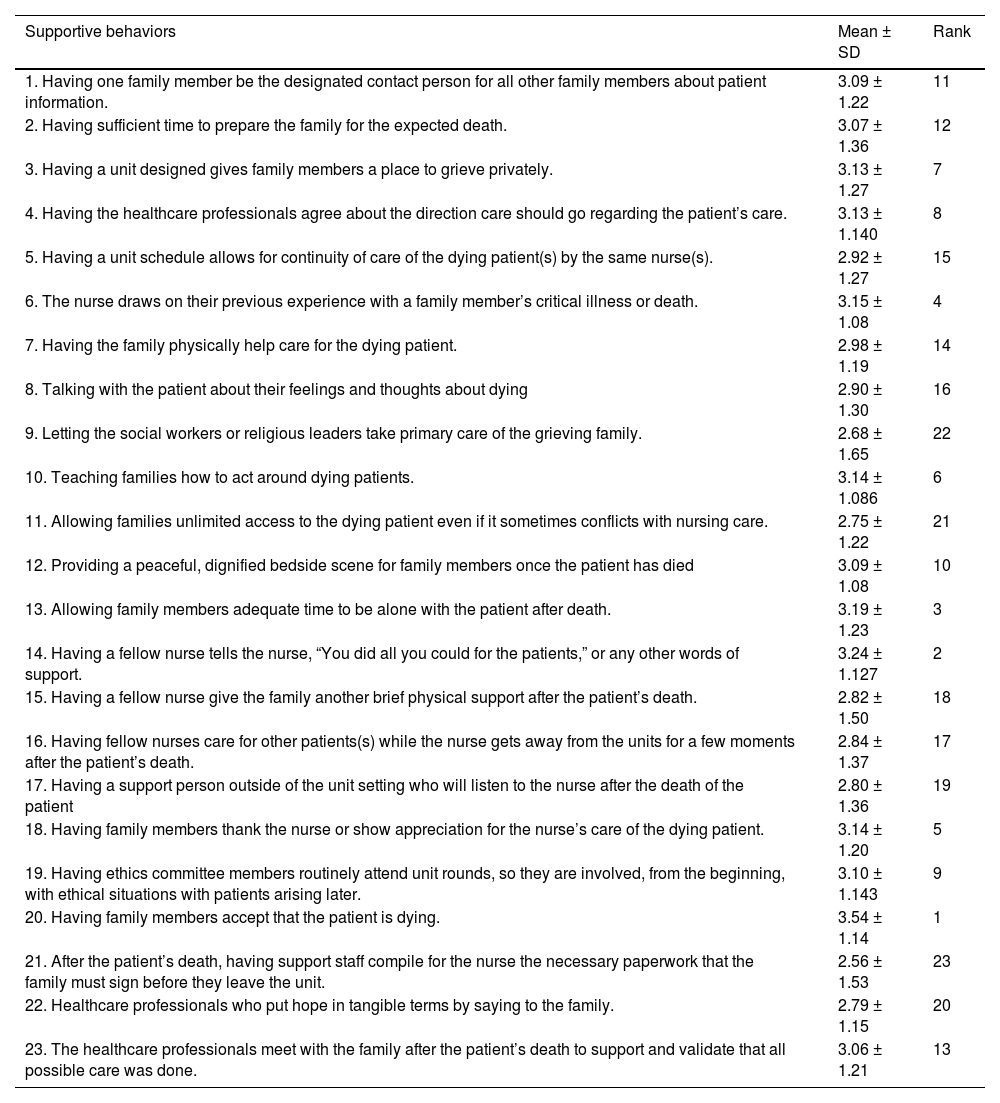
The supportive behaviors subscale had a total score of 0 to 115. Scores ranged from 29 to 105, with a mean of 69.22(SD = 4.84). A higher mean score on the scale indicated more supportive behaviors.

The current study ranked supportive behaviors based on means and standard deviations. The supportive behaviors subscale had mean scores ranging from 2.56(SD = 1.53) to 3.54(SD = 1.14), with a mean of 3.01(SD = 0.64). Family members accepted that the patient was dying when a nurse offered support to family members when a family member was given enough time to be with the patient after they died when a nurse drew on prior experiences with critically ill patients, and when family members expressed gratitude for nurses efforts were the supportive behaviors with the highest mean scores. Detailed means are listed in Table 3.

Table 3.

Perceived intensity scores for supportive behaviors of the EoLC (N = 230).

Supportive behaviors  Mean ± SD  Rank 
1. Having one family member be the designated contact person for all other family members about patient information.  3.09 ± 1.22  11 
2. Having sufficient time to prepare the family for the expected death.  3.07 ± 1.36  12 
3. Having a unit designed gives family members a place to grieve privately.  3.13 ± 1.27 
4. Having the healthcare professionals agree about the direction care should go regarding the patient’s care.  3.13 ± 1.140 
5. Having a unit schedule allows for continuity of care of the dying patient(s) by the same nurse(s).  2.92 ± 1.27  15 
6. The nurse draws on their previous experience with a family member’s critical illness or death.  3.15 ± 1.08 
7. Having the family physically help care for the dying patient.  2.98 ± 1.19  14 
8. Talking with the patient about their feelings and thoughts about dying  2.90 ± 1.30  16 
9. Letting the social workers or religious leaders take primary care of the grieving family.  2.68 ± 1.65  22 
10. Teaching families how to act around dying patients.  3.14 ± 1.086 
11. Allowing families unlimited access to the dying patient even if it sometimes conflicts with nursing care.  2.75 ± 1.22  21 
12. Providing a peaceful, dignified bedside scene for family members once the patient has died  3.09 ± 1.08  10 
13. Allowing family members adequate time to be alone with the patient after death.  3.19 ± 1.23 
14. Having a fellow nurse tells the nurse, “You did all you could for the patients,” or any other words of support.  3.24 ± 1.127 
15. Having a fellow nurse give the family another brief physical support after the patient’s death.  2.82 ± 1.50  18 
16. Having fellow nurses care for other patients(s) while the nurse gets away from the units for a few moments after the patient’s death.  2.84 ± 1.37  17 
17. Having a support person outside of the unit setting who will listen to the nurse after the death of the patient  2.80 ± 1.36  19 
18. Having family members thank the nurse or show appreciation for the nurse’s care of the dying patient.  3.14 ± 1.20 
19. Having ethics committee members routinely attend unit rounds, so they are involved, from the beginning, with ethical situations with patients arising later.  3.10 ± 1.143 
20. Having family members accept that the patient is dying.  3.54 ± 1.14 
21. After the patient’s death, having support staff compile for the nurse the necessary paperwork that the family must sign before they leave the unit.  2.56 ± 1.53  23 
22. Healthcare professionals who put hope in tangible terms by saying to the family.  2.79 ± 1.15  20 
23. The healthcare professionals meet with the family after the patient’s death to support and validate that all possible care was done.  3.06 ± 1.21  13 

The least supportive behaviors included unlimitedly allowing families access to the dying patient, even if it interfered with nursing care, prioritizing the care of the grieving family by the social worker or religious leader, and having the support staff prepare paperwork for family members to sign before leaving the unit. Detailed means are listed in Table 3.

Significant differences between EoLC obstacles and supportive behaviors

The independent-sample t-test indicated significant differences in EoLC obstacles mean scores were linked with ICU nurses’ certification and weekly work hours. There was a difference in EoLC obstacle scores between nurses working less than 20 h per week and those working more than 20 h per week. Nurses who were not certified had higher EoLC obstacle scores than certified nurses (3.04 ± 0.58 vs. 2.74 ± 0.49; (t(228) = 2.67, p = 0.008). Nurses who worked less than 20 h per week had higher mean EoLC obstacles scores (3.06 ± 0.56 vs. 2.81 ± 0.60; t(228) = 2.83, p = 0.005). The Coronary Care Unit (CCU) nurses had higher mean obstacles mean scores than the surgical ICU nurses (3.28 ± 0.34 vs. 2.86 ± 0.62; t(115) = 3.98, p < 0.001). Military hospital nurses had higher mean obstacle scores than private nurses (3.16 ± 0.59 vs. 2.77 ± 0.61; t(126) = 3.41, p < 0.001).

The one-way ANOVA test indicated a statistically significant difference between the obstacles’ mean scores according to the number of beds in the unit (F(3.977) = 3.078, p = 0.020). Scheffe’s post hoc test indicated that nurses working in units with 7−10 beds occupancy had higher mean obstacles mean scores compared to those working in units with more than 20 beds (3.07 ± 0.48 vs. 2.69 ± 0.48, t(95) = 3.356), p < 0.001).

The one-way ANOVA test revealed that the mean scores for EoLC supportive behaviors differ only by the nurses’ age (F(4.053) = 3.22, p = 0.019). Scheffe’s post hoc test revealed that nurses aged 36 or more had significantly higher mean scores for supportive behaviors than those aged 31–35 (3.22 ± 0.69 vs. 2.90 ± 0.64, t(121) = 2.62, p = 0.01). Details of ANOVAs, including means, standard deviations, F-tests, degrees of freedom, and p values; and details of Scheffe’s post hoc tests, including means, standard deviations, t-tests, degrees of freedom, and p values, and the 95% confidence intervals, are listed in Table 4.

Table 4.

Significant differences in perceived obstacles and supportive behaviors of the EoLC using ANOVA and Scheffe’s post hoc test.

Variables  Beds occupancy      **Scheffe’s post hoc test
  Mean ± SD  Mean ± SD  Mean ± SD  *F-Test  DF  P=  95% C.I. [Lower, Upper]), (p)  *t-Test (DF), **(p) 
Total score of EoLC obstacles  7−10 Beds (n = 74)  11−20 Beds (n = 133)  >20 Beds (n = 23)***           
  3.07 ± 0.48  3.00 ± 0.63  2.69 ± 0.48  3.977  2, 227  0.020  [0.047, 0.722], 0.021  3.356(95), p < 0.001 
Variables  Nurses’ Age (Years)     
Total score of EoLC supportive behaviors  ≤30 (n = 107)  31−35 (n = 72)  ≥36 (n = 51)****           
  2.97 ± 0.60  2.90 ± 0.64  3.22 ± 0.69  4.053  2, 227  0.019  [0.325, 0.607], 0.025  2.62(121), 0.01 

1-Reporting of a one-way ANOVA = (F(between groups df, within groups df) = (F-value), p = ()).

2-Reporting of Scheffe’s post hoc test = mean value (n) of [dependent variable], was significantly different between [group name] and [group name] (p = (), 95% C.I. = [lower, upper]).

*

Equal variance was not assumed; DF = degree of Freedom (within group, between group); C.I. = confidence interval.

**

Scheffe’s post hoc test.

***

Nurses working in units with more than 20 beds had higher mean scores than those with more than 20 beds (3.07 ± 0.48 vs. 2.69 ± 0.48).

****

Nurses aged 36 had significantly higher mean scores for supportive behaviors than those aged 31–35 (3.32 ± 0.69 vs. 2.90 ± 0.64).

There were no significant differences in educational attainment, years of experience as a RN, years of ICU experience, the number of ICU patients assigned to the nurse for EoLC throughout the nurse’s nursing career, the type of ICU, the type of facility, the position held, and the number of ICU beds.

Discussion

This study assessed RNs’ perceptions of and differences in the obstacles and supportive behaviors of EoLC in ICUs.

Obstacles of EoLC in ICUs

Nurses scored moderately on obstacles of EoLC in ICUs. Nursing education and training concerning family grieving and the quality of EoLC received the highest mean scores, consistent with prior research.2,5,7,13,30 This could be related to the lack of content about EoLC in most nursing curricula and the lack of EoLC-focused continuing education programs.13 Other reasons might include the topic’s intricacy and emotional cost, the lack of emphasis on EoLC by hospital management, and the inadequacy of experts in the field. Most nurses, however, are not certified as ICU nurses and may lack EoLC competencies.

In line with prior research, family and friends who constantly called the nurse to update the patient’s condition earned the second-highest mean score.5,30 Jordanians strongly emphasize family, and nurses were more aware of these considerations. Thus, the ICU nurses may expect phone calls from family and friends, diverting the nurse’s attention from the patient’s care.5

On the other hand, nurses had limited time to communicate with family members to convey the patient’s final words, deeds, and decisions. As a result, hiring a unit Clerk who is well-trained to manage the family’s phone calls would be a reasonable solution.5

Consistent with Dorsaa’s5 findings, the third obstacle with the highest mean score is when the nurse deals with angry family members. Families of dying patients frequently experience a combination of rage, anxiety, sadness, and miscommunication, impeding nurses’ ability to offer EoLC.2,5,7 This may be due to a lack of involvement of the patient’s family members in medical and nursing decision-making processes2,5,7 or to a lack of involvement of official social workers or religious leaders in supporting dying patients and their families. Furthermore, the cultural and spiritual beliefs of the healthcare providers may influence their choice of EoLC. These beliefs may impair ICU nurses’ ability to meet the needs of dying patients,2–4,7 thereby increasing the family’s rage.

Furthermore, it could be related to the patients’ families’ unwillingness to accept incurable prognoses or even discuss death and EoLC. In certain cultures, such as Jordan, people rely on the decisions of healthcare providers, who are frequently blamed for patients’ deaths or worsening conditions. Effective EoLC communication between healthcare professionals, patients, and their families is a strong supportive behavior that ensures exceptional EoLC while decreasing conflict, anger, anxiety, and emotional discomfort.2,5,7

When family members do not understand what the term “life-saving measures” means, they may choose to use aggressive treatment and life-saving measures regardless of the wishes and advanced directives of the patients.2–4 In Jordan, no clear laws or guidelines govern advanced directives. As a result, families may be unwilling to accept their patients’ poor prognosis. They may also have unrealistic expectations of the ICU’s role, interfering with appropriate medical and nursing care and depriving patients of adequate pain management.12 Educating families about prognosis and potential concerns about life-saving measures will give families insight into prioritizing care and comfort.1,21,23

Perceived supportive behaviors of EoLC in ICUs

Our nurses scored moderately on supportive behaviors of EoLC in ICUs. Because most nurses can moderate these behaviors and are deemed tremendously beneficial to their patients, supporting behaviors received higher mean scores than obstacles, similar to Tran (2020).34 It is clear from these scores that the nurses in this study prioritized the enabling factors over the impediments, similar to other ICU nurses in different studies.25,27,34

The highest mean scores for supportive behaviors went to (a) families accepting that their loved ones were dying; (b) nurses providing support to family members; and (c) allowing family members enough time to be with the patient before they died, in line with Xu et al.,1 and other research.2,7,8,11,30 Moreover, nurses learning from previous experiences when a critically ill patient dies, and families of dying patients showing appreciation for nurses’ efforts are among other highest supportive behaviors, supported by other research.2,7,8,11,30

In addition, many supportive behaviors are designated to assist the patient’s loved ones after a patient’s death, like Tran.34 After death, people tend to engage in more nurturing and caring behaviors, consistent with other studies.2–4

Differences between EoLC obstacles and supportive behaviors in ICUs

The perceived obstacles differ based on the RN’s certification as an ICU nurse, type of ICU, type of facility, number of beds in the unit, and the number of hours worked per week. In contrast, supportive behaviors only differ based on the RN’s age.

Our nurses who were not certified had higher EoLC obstacle scores than certified nurses.

Compared to uncertified nurses, Malik and Chapman31 reported that certified nurses communicate better with patients’ families and other nurses caring for dying patients. Moreover, the authors added that certified nurses had identified a need to increase their knowledge and skills in providing end-of-life care,31 supporting the current study’s results related to lack of knowledge and training related to EoCL, which is an issue that is not limited to Jordan.32 Lai et al.33 reported a lack of attention to palliative care and knowledge of patients’ treatment preferences are expected barriers to providing EoLC for non-certified nurses. It is expected that these nurses can not converse with deteriorating patients. As a result of their training and expertise in this context, certified nurses are expected to encounter fewer obstacles when delivering EoLC to patients.

Working more than 20 h per week was viewed as a significant obstacle to delivering EoLC, limiting the time to care for dying patients and families. Heavy workload may impact patients’ physical and mental well-being towards EoLC. The findings from the study were supported by Beckstrand’s27 research, which found that reducing nurses’ workload would allow them to spend more time with patients and provide better care. Further research revealed that critical care nurses attributed their hard work to the low nurse-patient ratio as being involved in more life-saving efforts for other patients.13 This result could be explained by decreased risk complications and produced positive and sensitive outcomes, such as decreasing medical errors and mortality. Furthermore, healthcare providers are frequently in a conflict between spending proper time with the dying patient and prioritizing care for other patients who require attention, making it difficult for nurses to dedicate their time to dying patients and their families.10

The CCU nurses had higher mean obstacles mean scores than the surgical ICU nurses in the current study. Because of the severity of the patient’s condition, the significant use of technology, and the requirement that nurses exhibit technical ability, CCU care is difficult.35 CCU nurses are responsible for saving patients’ lives with life-threatening or potentially life-threatening conditions requiring technical and/or artificial life support.36 Moreover, providing EoLC is hindered by the CCU design that does not allow patients or their loved ones to grieve in peace.36 Dying people want to be cared for by the people they love, but the design makes it difficult.37 Most nurses thought providing a private space for bereaved family members would benefit end-of-life care. According to Attia et al.,8 a lack of privacy may impair the quality of end-of-life care.

The current study also found that military hospital nurses had higher mean obstacle scores than private nurses. Most nurses in military hospitals have a diploma-level education, contrasting with nurses in private hospitals, where registered nurses with bachelor’s degrees provide direct patient care. Palliative care and EoLC are part of nurses’ bachelor’s degree curriculum but not the diploma level. This finding is unique to the current study. Hence, insufficient nurses’ fundamental educational preparation for EoLC was also an impediment to providing EoLC.38 This is supported by additional research indicating that nurses have identified a need to enhance their knowledge and skills in providing EoLC.34 This study drew its conclusions from the knowledge and practices of Jordanian nurses. The current study’s findings will provide a roadmap for training institutions and help nurse educators choose what should be incorporated into the nursing curriculum, especially clinical courses.

We found that nurses working in units with 7−10 beds had higher mean obstacle scores than those with 20 or more beds. This finding is also considered novel and unique, and this result could be attributed to these units’ high nursing workload and inadequate patient-nurse ratio. Workload and improper staffing would ultimately produce obstacles to EoLC, as supported by Omoya et al.32

Promoting the needed supportive behaviors would result in positive outcomes for patients and their families, nurses, and organizations; they would help overcome obstacles and, in turn, provide high-quality EoLC.

Limitations and implications

Despite providing a preliminary foundation for future research, the current study’s sampling procedure may limit its findings’ generalizability. Future studies should use a more extensive and random sample. One of the study’s limitations was that the concepts were measured among general ICU nurses rather than palliative care unit nurses.

Implications for practice: our results would help design interventions and supportive behaviors to help decrease or eliminate obstacles to EoLC. Many obstacles face EoLC in ICUs, mostly because of the lack of knowledge and skills related to EoLC, supported by Omoya et al.32 and Lai et al.33 Thus, to improve EoLC in the ICU, hospitals need to increase the knowledge and skills of nurses and other healthcare professionals by training them about EoLC in the ICU,2,5,7,8,39 including palliative care.

Other interventions might focus on the ICU orientation programs that should include EoLC issues and focus on EoLC competencies.2,5,7,8 In clinical settings, effective communication between nurses and healthcare professionals should be promoted, and nurses’ experience with dying patients should be utilized.

The next manuscript will develop an interventional protocol for the studied topics to carry these implications into practice. This protocol will be submitted to the Jordanian Nursing Council, the official governing body for nursing practice in Jordan. Protocolized approach to EoLC in the ICUs is advised,40 which is not common practice in Jordan.

Implications for research: EoLC-related obstacles and supportive behaviors should be studied with other healthcare professionals with a larger sample size, including palliative care unit nurses. Further qualitative studies may help understand the EoLC-related obstacles, such as the lack of EoLC content and supportive behaviors such as multidisciplinary and teamwork during nursing shortages and workload.

Implications for education: EoLC should be incorporated into the nursing undergraduate and graduate curricula; today’s students are tomorrow’s nurses.

The study findings can help healthcare providers, hospital administrators, nursing educators, and researchers who need to take crucial steps toward effective EoLC in ICUs by knowing the obstacles and supportive behaviors explored by the study.

Summary and conclusions

The RNs scored moderately on obstacles that warrant immediate intervention as on-job training and supportive behaviors, which mandate motivational interventions to sustain such behaviors. Differences in EoLC obstacles and supportive behaviors should be utilized to benefit patients, nurses, and organizations.

EoLC should be addressed to all healthcare professionals in all healthcare settings. The commonly perceived obstacle to EoLC in ICUs was the lack of education and training regarding grieving and the quality of EoLC. The commonly perceived supportive behavior to EoLC in ICUs was when family members accepted that the patient was dying through nurses who offered support to family members. The perceived obstacles differ based on the RN’s certification as an ICU nurse, type of ICU, type of facility, number of beds in the unit, and the number of hours worked per week. In contrast, supportive behaviors only differ based on the RN’s age.

This study was conducted in Jordan with unique cultural and spiritual entities. However, its findings are similar to those in other studies using the same survey, suggesting similar worldwide concerns about EoLC. Further studies are needed with other professionals and qualitative studies. According to the Islamic religion and Arabian culture, accepting interventions to overcome EoLC obstacles and promote EoLC-supportive behaviors should be considered.

Authors' contributions

Professor Mrayyan developed the study's conception and design; Professor Mrayyan, with a group of R.A.s, collected the data and revised and updated the literature review, and fixed all parts of the paper for consistency; Professor Mrayyan did the critical revisions for important intellectual content; Professor Mrayyan did the whole supervision, Dr. Sawalha wrote the literature review; Dr. Ashour and Dr. Alshraifeen analyzed the data; Dr. Ashour reviewed the whole paper; Dr. AL-Atiyyat and Algunmeeyn wrote the discussion and fix all paper for consistency and editorials and integrate the whole parts; Dr. Al-Rawashdeh and Dr. Abu Khait and Dr. Alfayoumi drafted the final version of the introduction section, proofread and integrate the whole parts, and critically reviewed different versions of the paper.

Authorship statement

The listed authors have contributed sufficiently to work and agree with the manuscript's content.

Ethical consideration

The study was conducted according to the guidelines of the Declaration of Helsinki and approved by the Institutional Review Board of Isra University- Jordan. IRB No. SREC/22/08/46 dated August 23rd, 2022.

Informed consent statement

Informed consent was obtained from all subjects involved in the study by stating on the front page of the survey, “answering this survey is your consent form to participate in the current study.”

Conflict of interest

No funding or conflicts of interest.

Acknowledgments

The researchers would like to acknowledge the input from all nurses who participated in the current study. We would also like to recognize the support provided by all research assistants who helped collect data.

References
[1]
D.D. Xu, D. Luo, J. Chen, J.L. Zeng, X.L. Cheng, J. Li, et al.
Nurses’ perceptions of barriers and supportive behaviors in end-of-life care in the intensive care unit: a cross-sectional study.
BMC Palliat Care, 21 (2022), pp. 1-10
[2]
J. Shepherd, A. Waller, R. Sanson-Fisher, K. Clark.
Nurses’ perceptions, experiences and involvement in the provision of end-of-life care in acute hospitals: a mapping review of research output, quality and effectiveness.
[3]
M. Ćurković, L. Brajković, A. Jozepović, D. Tonković, Ž Župan, N. Karanović, et al.
End-of-life decisions in intensive care units in Croatia—pre COVID-19 perspectives and experiences from nurses and physicians.
J Bioeth Inq, 18 (2021), pp. 629-643
[4]
M. Riegel, S. Randall, K. Ranse, T. Buckley.
Healthcare professionals’ values about and experience with facilitating end-of-life care in the adult intensive care unit.
Intensive Crit Care Nurs, 65 (2021),
[5]
P. Dorsaa.
Obstacles and supportive behaviors to end-of -life care in adult intensive care units: Perceptions of intensive care nurses [Master Thesis].
[6]
I. Griffiths.
What are the challenges for nurses when providing end-of-life care in intensive care units?.
Br J Nurs, 28 (2019), pp. 1047-1052
[7]
I. Almansour, J.E. Seymour, A. Aubeeluck.
Staff perception of obstacles and facilitators when providing end of life care in critical care units of two teaching hospitals: a survey design.
Intensive Crit Care Nurs, 53 (2019), pp. 8-14
[8]
A.K. Attia, W.W. Abd-Elaziz, N.A. Kandeel.
Critical care nurses’ perception of barriers and supportive behaviors in end-of-life care.
Am J Hosp Palliat Care, 30 (2013), pp. 297-304
[9]
A.A.E.A. Basal, G.A.E.H. Younis.
Critical care nurses’ knowledge, practice, obstacles and helpful measures towards palliative care for critically ill patients.
Am J Nurse, 6 (2017), pp. 293-303
[10]
M.E. Losa Iglesias, C. Pascual, R. Becerro de Bengoa Vallejo.
Obstacles and helpful behaviors in providing end-of-life care to dying patients in intensive care units.
Dimens Crit Care Nurs, 32 (2013), pp. 99-106
[11]
N. Lamoreaux.
Critical care nurses’ perceptions of end-of-life care: comparative 17-year data [Master Thesis].
Brigham Young University, (2016),
[12]
Z.A. Mani, M.A. Ibrahim.
Intensive care unit nurses’ perceptions of the obstacles to the end of life care in Saudi Arabia.
Saudi Med J, 38 (2017), pp. 715-720
[13]
O.M. Khraisat, N.A. Alakour, T.M. O’Neill.
Pediatric end-of-life care barriers and facilitators: perception of nursing professionals in Jordan.
Indian J Palliat Care, 23 (2017), pp. 199
[14]
L. Kisorio, G. Langley.
Intensive care nurses’ experiences of end-of-life care.
Intensive Crit Care Nurs., 33 (2016), pp. 30-38
[15]
K.W. Altaker, J. Howie-Esquivel, J.K. Cataldo.
Relationships among palliative care, ethical climate, empowerment, and moral distress in intensive care unit nurses.
Am J Crit Care, 27 (2018), pp. 295-302
[16]
I.M.A. Almansour.
Transitioning towards end-of-life care in Jordanian critical care units: health care professionals’ perspectives [Master Thesis].
The University of Nottingham, (2015),
[17]
N.M. Abdel Razeq.
End-of-life decisions at neonatal intensive care units: Jordanian nurses attitudes and viewpoints of who, when, and how.
J Pediatr Nurs, 44 (2019), pp. e36-e44
[18]
N.M. Abdel Razeq.
Physicians’ standpoints on end-of-life decisions at the neonatal intensive care units in Jordan.
J Child Health Care, 23 (2019), pp. 579-595
[19]
S. Eltaybani, A. Igarashi, N. Yamamoto‐Mitani.
Palliative care in adult intensive care units: a nationwide survey.
Nurs Crit Care, 26 (2021), pp. 315-325
[20]
L.A. Brooks, E. Manias, P. Nicholson.
Barriers, enablers and challenges to initiating end-of-life care in an Australian intensive care unit context.
Aust Crit Care, 30 (2017), pp. 161-166
[21]
S. Dalal, E. Bruera.
End-of-life care matters: palliative cancer care results in better care and lower costs.
[22]
E. Ivany, L. Aitken.
Challenges and facilitators in providing effective end of life care in intensive care units.
Nurs Stand, 34 (2019), pp. 44-50
[23]
M.S. Conlon, J.M. Caswell, S.A. Santi, B. Ballantyne, M.L. Meigs, A. Knight, et al.
Access to palliative care for cancer patients living in a northern and rural environment in Ontario, Canada: the effects of geographic region and rurality on end-of-life care in a population-based decedent cancer cohort.
Clin Med Insights Oncol, 13 (2019),
[24]
P. Farokhnezhad Afshar, P. Ashkanirad, S. Hosseini.
Critical care nurses views about obstacles and supportive behaviors of end-of-life care.
Cardiovasc Nurs J, 6 (2018), pp. 26-34
[25]
R.L. Beckstrand, N.L. Rawle, L. Callister, B.L. Mandleco.
Pediatric nurses’ perceptions of obstacles and supportive behaviors in end-of-life care.
Am J Crit Care, 19 (2010), pp. 543-552
[26]
J. Cohen.
Statistical power analysis for the behavioral sciences.
2nd ed., L. Erlbaum Associates, (1988),
[27]
R.L. Beckstrand, K.T. Kirchhoff.
Providing end-of-life care to patients: critical care nurses’ perceived obstacles and supportive behaviors.
Am J Crit Care, 14 (2005), pp. 395-403
[28]
K.T. Kirchhoff, R.L. Beckstrand.
Critical care nurses’ perceptions of obstacles and helpful behaviors in providing end-of-life care to dying patients.
Am J Crit Care, 9 (2000), pp. 96-105
[29]
IBM Corp.
IBM SPSS statistics for windows, version 25.0.
IBM Corp., (2017),
[30]
C. Karbasi, E. Pacheco, C. Bull, A. Evanson, W. Chaboyer.
Registered nurses’ provision of end-of-life care to hospitalised adults: a mixed studies review.
Nurse Educ Today, 71 (2018), pp. 60-74
[31]
M. Malik, W. Chapman.
Education and training in end-of-life care for certified nursing assistants in long-term care.
J Contin Educ Nurs, 48 (2017), pp. 81-85
[32]
O.T. Omoya, A. De Bellis, K. Breaden.
Death, dying, and end-of-life care provision by doctors and nurses in the emergency department: a phenomenological study.
J Hosp Palliat Nurs, 24 (2022), pp. E48-E57
[33]
D. Lai, K.G. Cloyes, M.F. Clayton, K. Doyon, M. Reblin, A.C. Beck, et al.
We’re the eyes and the ears, but we don’t have a voice: perspectives of hospice aides.
J Hosp Palliat Nurs, 20 (2018), pp. 47
[34]
N.M. Tran.
Critical care nurses’ attitudes towards end-of-life. Master’s Theses.
[35]
B. Stretch, S.J. Shepherd.
Criteria for intensive care unit admission and severity of illness.
Surgery (Oxf), 39 (2021), pp. 22-28
[36]
R. Gundo, G. Mearns, A. Dickinson, E. Chirwa, B. Gundo.
Patterns of knowing required for critical care nursing practice in Malawi.
Int J Afr Nurs Sci, 14 (2021),
[37]
Z. Rajaeian, N.M. Alavi.
Barriers to nursing performance from the perspective of nurses working in intensive care units.
J Crit Care Nurs, 11 (2018), pp. 1-6
[38]
S. Jakimowicz, L. Perry, J. Lewis.
An integrative review of supports, facilitators and barriers to patient-centred nursing in the intensive care unit.
J Clin Nurs, 26 (2017), pp. 4153-4171
[39]
R. Meilando, C.E. Kosasih, E. Emaliyawati.
Barriers and challenges of end-of-life care implementation in the intensive care unit: literature review.
Jurnal Keperawatan Komprehensif (Comprehensive Nursing Journal), 8 (2022),
[40]
A. Rajamani, E. Barrett, L. Weisbrodt, et al.
Protocolised approach to end-of-life care in the ICU-the ICU PALCare Pilot Project.
Anaesth Intensive Care, 43 (2015), pp. 335-340
Copyright © 2023. Sociedad Española de Enfermería Intensiva y Unidades Coronarias (SEEIUC)
Opciones de artículo
Herramientas