


metricas
covid
Endocrinología, Diabetes y Nutrición The impact of microscopic extrathyroidal extension on the prognosis of medullary...
Información de la revista
Compartir
Descargar PDF
Más opciones de artículo
Visitas
2
Original article
Disponible online el 25 de junio de 2025
The impact of microscopic extrathyroidal extension on the prognosis of medullary thyroid carcinoma: A multicenter cohort study
El impacto de la extensión microscópica extratiroidea en el pronóstico del carcinoma medular de tiroides: un estudio de cohorte multicéntrico
Visitas
2
Beyza Olcay Ozturka, Umran Keskinb, Serhat Uysalc, Aysa Hacioglud, Seda Karslie, Burak Andacf, Umit Nur Ozbayg, Hulyanur Sodanh, Sebnem Burhani, Coskun Atesj, Ugur Avcik, Faruk Kilincl, Selvinaz Erolm, Merve Catakn, Zafer Pekkolayo, Gulhan Akbabap, Goknur Yorulmazq, Sakin Tekinr, Birol Topcus, Mazhar Muslum Tunab..., Pinar Kadiogluc, Mustafa Sait Gonenc, Zuleyha Cihan Ozdamar Karacad, Sema Ciftcie, Mehmet Celikf, Sibel Guldikenf, Dilek Tuzung, Mujde Akturkh, Yuksel Altuntasm, Mutlu Niyazoglui, Nese Cinarp, Ozen Oz Gulj, Medine Nur Kebapciq, Aysen Akalinq, Taner Bayraktaroglur, Gulsah Elbukena, Sayid Shafi Zuhura,
Autor para correspondencia
zuhur744@gmail.com

Corresponding author.
Ver más
a Department of Endocrinology and Metabolism, Faculty of Medicine, Tekirdag Namik Kemal University, Tekirdag, Turkey
b Department of Endocrinology and Metabolism, University of Health Sciences, Umraniye Training and Research Hospital, Istanbul, Turkey
c Department of Endocrinology and Metabolism, Cerrahpasa Medical Faculty, Istanbul University-Cerrahpasa, Istanbul, Turkey
d Department of Endocrinology and Metabolism, Faculty of Medicine, Erciyes University, Kayseri, Turkey
e Department of Endocrinology and Metabolism, Bakirkoy Dr. Sadi Konuk Training and Research Hospital, Istanbul, Turkey
f Department of Endocrinology and Metabolism, Faculty of Medicine, Trakya University, Edirne, Turkey
g Department of Endocrinology and Metabolism, Faculty of Medicine, Kahramanmaras Sutcu Imam University, Kahramanmaras, Turkey
h Department of Endocrinology and Metabolism, Faculty of Medicine, Gazi University, Ankara, Turkey
i Department of Endocrinology and Metabolism, Basaksehir Cam and Sakura City Hospital, Istanbul, Turkey
j Department of Endocrinology and Metabolism, Faculty of Medicine, Uludag University, Bursa, Turkey
k Department of Endocrinology and Metabolism, Faculty of Medicine, Recep Tayyip Erdogan University, Rize, Turkey
l Department of Endocrinology and Metabolism, Faculty of Medicine, Fırat University, Elazig, Turkey
m Department of Endocrinology and Metabolism, University of Health Sciences, Sisli Hamidiye Etfal Training and Research Hospital, Istanbul, Turkey
n Department of Endocrinology and Metabolism, Faculty of Medicine, Tokat Gaziosmanpasa University, Tokat, Turkey
o Department of Endocrinology and Metabolism, Faculty of Medicine, Dicle University, Diyarbakir, Turkey
p Department of Endocrinology and Metabolism, Faculty of Medicine, Mugla Sitki Kocman University, Mugla, Turkey
q Department of Endocrinology and Metabolism, Faculty of Medicine, Eskisehir Osmangazi University, Eskisehir, Turkey
r Department of Endocrinology and Metabolism, Faculty of Medicine, Bulent Ecevit University, Zonguldak, Turkey
s Department of Biostatistics, Faculty of Medicine, Tekirdag Namik Kemal University, Tekirdag, Turkey
Ver más
Este artículo ha recibido
Información del artículo
Resumen
Texto completo
Bibliografía
Descargar PDF
Estadísticas
Figuras (1)
Tablas (4)
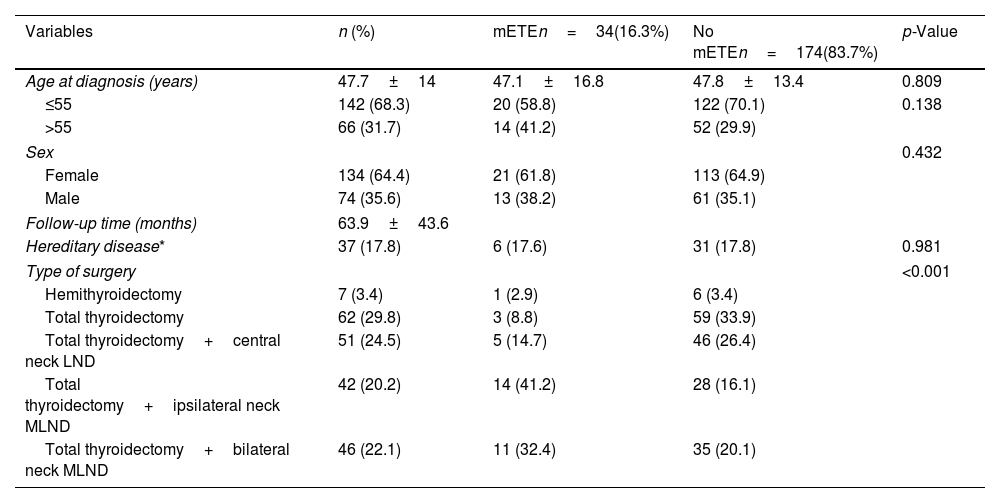
Table 1. Baseline characteristics of 208 medullary thyroid carcinoma patients with and without mETE.
Tablas
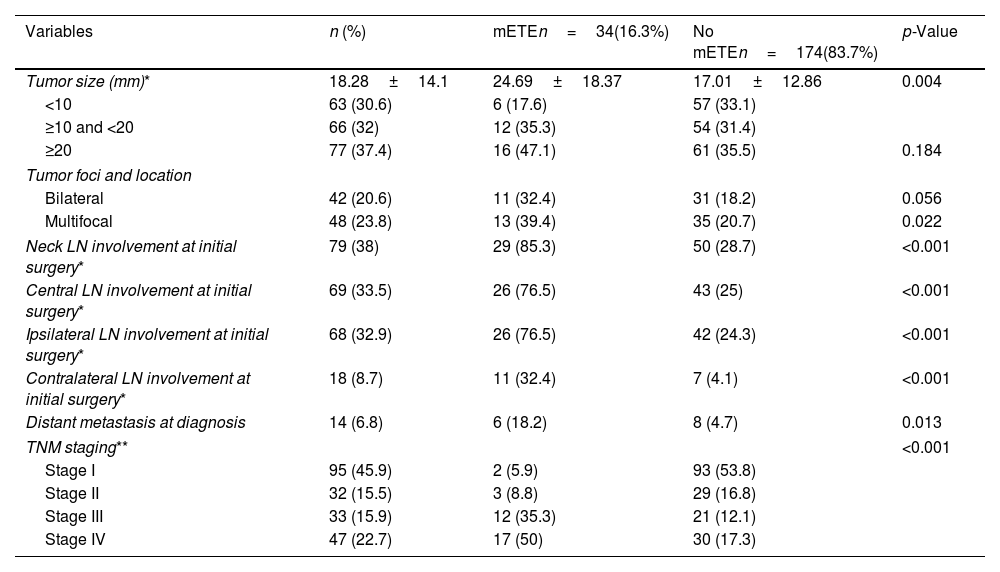
Table 2. The histopathological data and TNM staging of the 208 medullary thyroid carcinoma patients with and without mETE.
Tablas
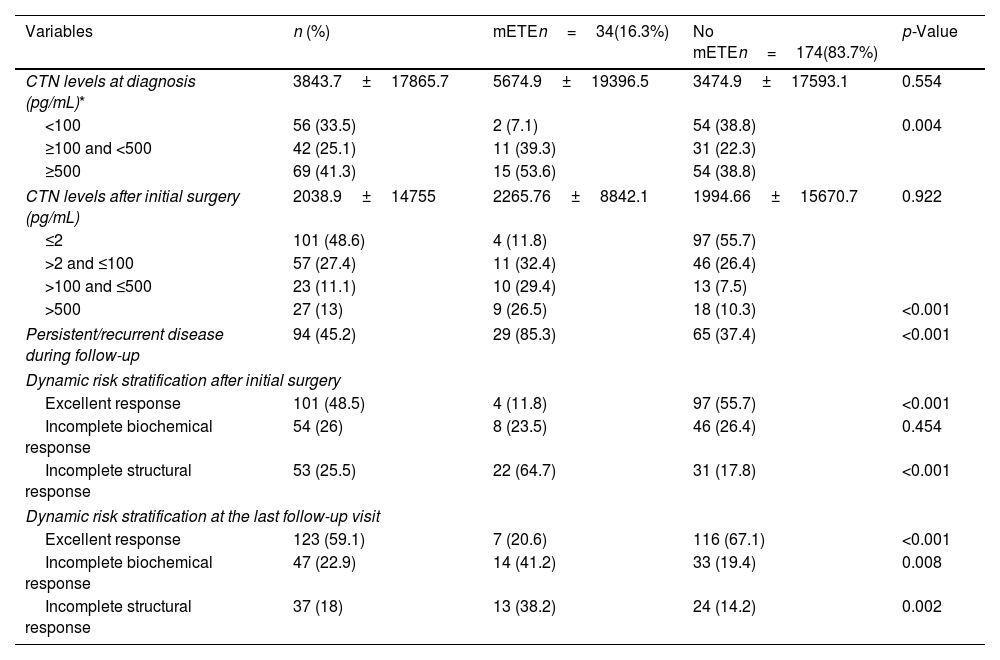
Table 3. Treatment outcomes of 208 medullary thyroid carcinoma patients with and without mETE.
Tablas
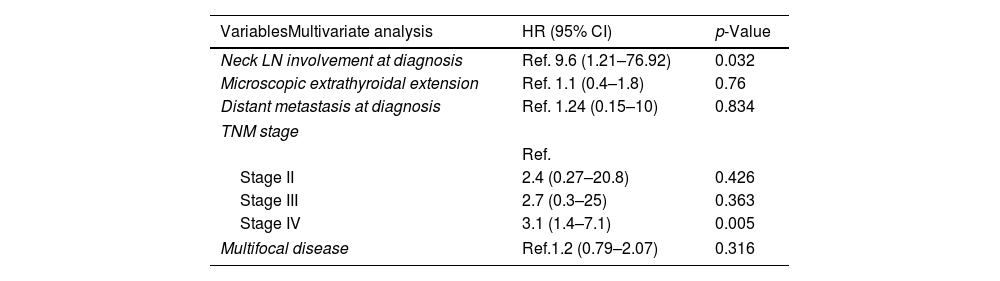
Table 4. The result of multivariate analysis using Cox's proportional hazard model for testing variables associated with persistent/recurrent disease during follow-up among 208 medullary thyroid carcinoma patients.
Tablas
Mostrar másMostrar menos
Abstract
Purpose

Despite several factors are associated with worse disease-free survival (DFS) and prognosis in medullary thyroid carcinoma (MTC) patients, the effect of microscopic extrathyroidal extension (mETE) on the prognosis and DFS is not well understood. This study aims to evaluate the impact of mETE on DFS and prognosis in patients with MTC.

Methods

This multicenter study included 208 patients with MTC (17.8% with hereditary disease). Patients with mETE were compared to those without mETE in terms of clinical and histopathological variables.

Results

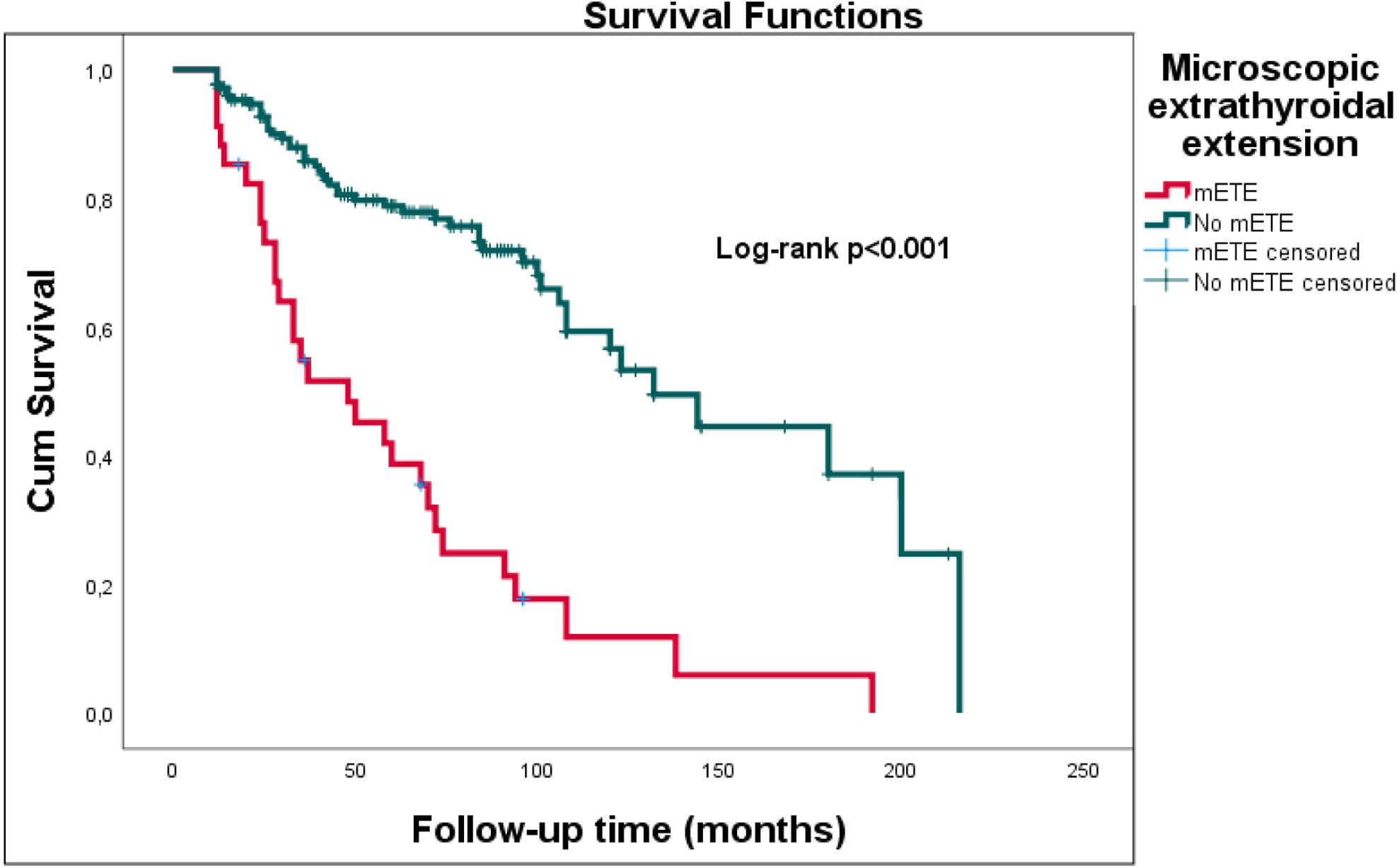
Among the 208 patients, 16.3% (n=34) had mETE on histopathological analysis. Patients with mETE were more likely to have larger tumors, higher serum calcitonin (CTN) levels before and after surgery, increased rates of neck lymph node (LN) and distant metastasis, multifocal disease, and advanced disease stage. Kaplan–Meier analysis showed a significantly lower DFS in patients with mETE than those without mETE (14.7% vs. 71.3%, log-rank p<0.001). However, mETE was not an independent contributing factor for persistent/recurrent disease, whereas neck LN involvement was the strongest independent contributing factor for persistent/recurrent disease (HR: 1.1; 95% CI 0.4–1.8, p=0.76 and HR: 9.6; 95% CI 1.21–76.9, p=0.03, respectively).

Conclusion

mETE in patients with MTC is associated with a lower DFS, larger tumor sizes, a higher likelihood of neck LN and distant metastasis, advanced stage, higher serum CTN levels, multifocality, and persistent/recurrent disease. However, mETE was not an independent predictor of persistent/recurrent disease. Further studies with a larger number of patients with mETE could further clarify the impact of mETE on the prognosis of MTC.

Keywords:
Medullary thyroid cancer
Microscopic extrathyroidal extension
Disease-free survival
Resumen
Objetivo

A pesar de que varios factores están asociados con una peor supervivencia libre de enfermedad (SLE) y pronóstico en pacientes con carcinoma medular de tiroides (CMT), el efecto de la extensión microscópica extratiroidea (mETE) sobre el pronóstico y la SLE no se conoce bien. Este estudio tiene como objetivo evaluar el impacto de la mETE en la SLE y el pronóstico en pacientes con CMT.

Métodos

Este estudio multicéntrico incluyó a 208 pacientes con CMT (17,8% con enfermedad hereditaria). Se compararon los pacientes con mETE y sin mETE en términos de variables clínicas e histopatológicas.

Resultados

Entre los 208 pacientes, el 16,3% (n=34) fueron diagnosticados de mETE. Los pacientes con mETE tenían más probabilidades de presentar tumores más grandes, niveles más altos de calcitonina sérica antes y después de la cirugía, tasas incrementadas de metástasis en ganglios linfáticos del cuello y metástasis a distancia, enfermedad multifocal y estadio avanzado. El análisis de Kaplan-Meier mostró una SLE significativamente menor en pacientes con mETE que en aquellos sin mETE (14,7 vs. 71,3%, log-rank p<0,001). Sin embargo, la mETE no fue un factor contribuyente independiente para la enfermedad persistente/recurrente, mientras que la afectación de ganglios linfáticos del cuello fue el factor contribuyente independiente más fuerte para la enfermedad persistente/recurrente (HR: 1,1; IC 95% 0,4-1,8, p=0,76 y HR: 9,6; IC 95% 1,21-76,9, p=0,032, respectivamente).

Conclusión

La mETE en pacientes con CMT está asociada con una menor SLE, tamaños tumorales más grandes, una mayor probabilidad de metástasis en ganglios linfáticos del cuello y metástasis a distancia, estadio avanzado, niveles más altos de calcitonina sérica, multifocalidad y enfermedad persistente/recurrente. Sin embargo, la mETE no fue un predictor independiente de enfermedad persistente/recurrente. Estudios adicionales con un mayor número de pacientes con mETE podrían aclarar aún más el impacto de la mETE en el pronóstico del CMT.

Palabras clave:
Cáncer medular de tiroides
Extensión microscópica extratiroidea
Supervivencia libre de enfermedad

Artículo

Opciones para acceder a los textos completos de la publicación Endocrinología, Diabetes y Nutrición
Suscriptor
Suscriptor de la revista

Si ya tiene sus datos de acceso, clique aquí.

Si olvidó su clave de acceso puede recuperarla clicando aquí y seleccionando la opción "He olvidado mi contraseña".
Suscribirse
Suscribirse a:

Endocrinología, Diabetes y Nutrición

Comprar
Comprar acceso al artículo

Comprando el artículo el PDF del mismo podrá ser descargado

Comprar ahora
Contactar
Teléfono para suscripciones e incidencias
De lunes a viernes de 9h a 18h (GMT+1) excepto los meses de julio y agosto que será de 9 a 15h
Llamadas desde España
932 415 960
Llamadas desde fuera de España
+34 932 415 960
E-mail
Opciones de artículo
Herramientas