


The implementation of flash glucose monitoring (FGM) in people with type 2 diabetes mellitus (T2DM) undergoing intensive insulin therapy represents an organizational challenge for health care systems.
ObjectiveTo evaluate the outcomes of the FGM system rollout in adults with T2DM within the Andalusian Public Health System.
MethodsWe conducted a cross-sectional, population-based descriptive study in Andalusia (Spain), analyzing the shared care model between Primary Care (PC) and Hospital Care (HC) for the implementation of FGM systems in adult patients with T2DM on intensive basal-bolus insulin therapy, 34 months after starting the program (program duration: from April 2022 to February 2025).
ResultsA total of 25,052 active FGM users were identified (48.6% women; mean age, 69.0±12.8 years) out of an estimated target population of 29,979 patients. The main indications for FGM use were functional disability or dependency (n=4283; 17%), severe hypoglycemia (n=1899; 7.4%), pregestational T2DM (n=266; 1%), and frequent non-severe hypoglycemia (n=9104; 36.2%). The remaining cohort (n=9683; 38.4%) included individuals without prioritization criteria. The main indication setting was PC, where 23,669 devices (80.2%) were initiated. The permanent discontinuation rate was 15%, with no serious adverse events being reported. A total of 9185 active users (36.4%) had their glucose monitoring data integrated into the electronic health record (EHR) of the Andalusian Public Health System.
ConclusionsCoordinated action across health care levels is an effective strategy for equitable access to technologies such as FGM among Andalusian patients with T2DM on intensive insulin therapy. Integration of glucose data into the EHR is a key tool for ensuring continuity of care.
Introducción La implementación del sistema de monitorización flash de glucosa (MFG) en las personas con diabetes mellitus tipo 2 (DM2) que reciben tratamiento intensivo con insulina representa un reto organizativo para los sistemas de salud.
ObjetivoEvaluar los resultados del despliegue del sistema de MFG en los adultos con DM2 dentro del Sistema Sanitario Público de Andalucía.
MétodosEstudio descriptivo transversal, de base poblacional, realizado en Andalucía (España), que analiza el modelo de atención compartida entre atención primaria (AP) y atención hospitalaria (AH) para la implementación del sistema de MFG en los pacientes adultos con DM2 en tratamiento intensivo con insulina basal-bolus, 34 meses después del inicio del programa (abril de 2022-febrero de 2025).
ResultadosSe identificaron 25.052 usuarios activos de MFG (48,6% mujeres; edad media 69,0±12,8 años), de una población diana estimada de 29.979 pacientes. Las principales indicaciones para el uso de MFG fueron: discapacidad funcional o dependencia (n=4.283; 17%), hipoglucemias graves (n=1.899; 7,4%), DM2 pregestacional (n=266; 1%) e hipoglucemias no graves frecuentes (n=9.104; 36,2%). El resto de la cohorte (n=9.683; 38,4%) incluía personas sin criterios de priorización. El ámbito principal de indicación fue AP, donde se iniciaron 23.669 dispositivos (80,2%). La tasa de suspensión definitiva fue del 12%, sin eventos adversos graves notificados. Un total de 9.185 usuarios activos (36,4%) tenían integrados sus datos de glucosa en la historia clínica electrónica (HCE) del Sistema Sanitario Público de Andalucía.
ConclusionesLa acción coordinada entre niveles asistenciales constituye una estrategia eficaz para garantizar el acceso equitativo a tecnologías como la MFG entre los pacientes andaluces con DM2 en tratamiento intensivo con insulina. La integración de los datos de glucosa en la HCE es una herramienta clave para asegurar la continuidad asistencial.

- •
Flash glucose monitoring (FGM) has proven clinical benefits in people with type 2 diabetes mellitus (T2DM) on intensive insulin therapy, including improved glycemic control and reduced hypoglycemia. However, prior evidence mainly comes from clinical trials or small-scale real-world studies, and no large-scale, population-based implementation programs had been described in this group.
- •
This study presents the first population-level analysis of a publicly funded FGM implementation program for adults with T2DM on intensive insulin therapy within a universal health care system. It demonstrates high device uptake, low discontinuation rates, effective professional training strategies, and partial integration of glucose data into the electronic health record.
- •
These findings support the feasibility and safety profile of large-scale FGM implementation in T2DM through shared care models. The program offers a scalable template for other health systems and highlights the importance of coordinated training and data integration for ensuring equitable access and continuity of care.
Intensive insulin therapy in people with diabetes mellitus (DM) is one of the fundamental treatment strategies for achieving optimal metabolic control and reducing chronic complications associated with the disease.1,2 In recent years, the application of advanced technologies to health care in general—and to diabetes management in particular—has enabled the development of new blood glucose self-monitoring tools, such as flash glucose monitoring (FGM) systems.3
FGM systems consist of a 14-day sensor that measures and records glucose levels in the subcutaneous interstitial fluid through a filament equipped with enzymatic technology. It performs multiple measurements every 5min, which are transferred to an external device carried by the patient (either a standalone reader or a mobile phone). Compared to the traditional method based on capillary blood glucose testing, FGM systems offer several advantages: quick and convenient (painless) access to reliable estimated glucose values, detailed information on glucose trends, and audible or vibrating alerts for predicted hypo- or hyperglycemia within predefined thresholds.
Numerous studies have shown that the use of this technological resource leads to significant improvements in glycemic control parameters in both type 1 diabetes mellitus (T1DM) and T2DM patients on intensive insulin therapy,4,5 with benefits observed in a wide range of clinical settings, including a significant reduction in the rate of hypoglycemia, a decrease in glycated hemoglobin (HbA1c) of approximately 0.5%, and fewer hospital admissions due to acute complications in patients with T1DM and T2DM on insulin therapy.6–9
Andalusia, in southern Spain, covers approximately 87,268km2 and has a population of 8.4 million, representing 17.2% of the national total. The prevalence of diabetes is higher than in the rest of Spain (15.3% vs 13.8%), according to data from the Di@bet.es study, which remains the most recent nationwide population-based estimate. This phenomenon is closely linked to socioeconomic factors and lifestyle.10
In recent years, both the Andalusian Public Health System (APHS) and the Spanish National Health System have incorporated FGM devices into their portfolio of services for people with DM on intensive insulin therapy. Within the APHS, the implementation process began in 2018 for T1DM, initially in pediatric patients and, since 2019, in adults. This process followed a standardized authorization and training strategy coordinated by the Andalusian Comprehensive Healthcare Plan for Diabetes,11 including a structured educational intervention and the creation of a corporate registry to identify all FGM users, their baseline clinical data, and the initiation date.12 Implementation among the T1DM population, given its management by pediatric and endocrinology departments, was conducted exclusively in the hospital setting. To date, a total of 25,969 individuals with T1DM are FGM users (source: Andalusian Comprehensive Healthcare Plan for Diabetes, Ministry of Health and Consumer Affairs, unpublished data, February 2025).
In April 2022, under the APHS framework, the authorization for FGM systems was extended to individuals with T2DM on intensive basal-bolus insulin therapy.13 Implementing FGM systems in this clinical scenario represents an organizational and management challenge, due to the large number of eligible patients and the characteristics of this population (advanced age and digital divide, geographic dispersion, specific training needs of health care personnel, and the overall frailty and chronic condition of the target group). This required the development of a new integrated model for indication, initiation, patient follow-up, and health care professional training.
The aim of this study is to evaluate the outcomes of the FGM implementation process in adults with T2DM in Andalusia through a shared model between PC and HC, respecting each patient's clinical context and reference care team. This constitutes the largest population-based analysis to date assessing the integration of FGM within a health care system.
Material and methodsStudy design and participantsWe conducted a cross-sectional, population-based descriptive study in Andalusia (Spain). We analyzed the outcomes of the strategic plan of the Andalusian Public Health System (APHS) for implementing flash glucose monitoring (FGM) systems in adults with T2DM on intensive basal-bolus insulin therapy, 34 months after its launch (April 2022 to February 2025), in terms of the beneficiary population, implementation rates and reasons for discontinuation, number of trained health care professionals, and satisfaction with the training received.
Inclusion criteria for analysis were T2DM on intensive basal-bolus insulin therapy, indication for performing ≥6 capillary blood glucose checks per day (requirement for public FGM funding in the APHS), age≥18 years, and initiation of publicly funded FGM use following the structured educational process during the study period. Exclusion criteria included T1DM or other insulinopenic types of DM, pediatric age (<18 years), use of FGM systems prior to public funding or under conditions not included in such funding, and use of real-time continuous glucose monitoring (CGM) during the study period.
Population estimates were obtained from the APHS User Database (BDU). The health care organizational structure and referral pathways between PC and HC were derived directly from the BDU structure module. Estimates of eligible population were based on data from the BDU, the Population Health Database (PHD) of Andalusia, and the corporate Pharmacy consumption databases from the Pharmacy and Benefits Subdirectorate of the Andalusian Health Service. These analyses estimate that 8% of the adult population in Andalusia with known T2DM is on intensive insulin therapy. The estimated candidate population was calculated assuming that 70% of the total would ultimately benefit, resulting in a target population of 29,979 individuals.
Individual clinical and sociodemographic variables were obtained from the PHD; FGM implantation dates and discontinuation reasons were obtained from a corporate registry specifically developed by the Andalusian Public Health System (APHS) to coordinate and monitor the deployment of these devices. In each center, health care professionals were responsible for registering patient inclusion and withdrawal. In cases of discontinuation, the reason for device withdrawal was recorded using a structured form with predefined categories. The existence of this standardized registry enabled systematic data collection and allowed for detailed analysis of discontinuation patterns.
The outcome variables defined for analysis were grouped as follows: (I) No. of T2DM patients using FGM systems, disaggregated by clinical indication; (II) No. of T2DM patients whose FGM systems were withdrawn, disaggregated by reason; (III) No. of T2DM patients with FGM data integrated into their electronic health records; (IV) No. and profile of health care professionals trained in FGM monitoring according to the corporate training strategy; (V) Health care professional satisfaction with corporate FGM training.
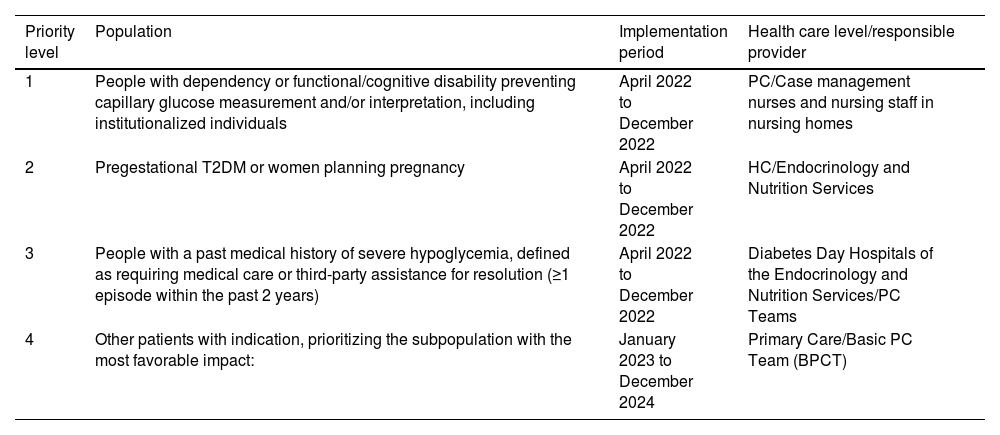
Implementation processThe implementation of FGM systems in T2DM patients was scheduled from April 2022 to December 2024. A prioritization system was designed based on clinical scenarios and shared responsibility among health care levels and services (PC, Endocrinology and Nutrition Departments, and Diabetes Day Hospitals) and professional roles (Case Manager Nurses, Nursing Home Nurses, PC teams, and HC teams) (Table 1).
Prioritization system by clinical scenarios and shared responsibility across different levels and health care providers.
| Priority level | Population | Implementation period | Health care level/responsible provider |
|---|---|---|---|
| 1 | People with dependency or functional/cognitive disability preventing capillary glucose measurement and/or interpretation, including institutionalized individuals | April 2022 to December 2022 | PC/Case management nurses and nursing staff in nursing homes |
| 2 | Pregestational T2DM or women planning pregnancy | April 2022 to December 2022 | HC/Endocrinology and Nutrition Services |
| 3 | People with a past medical history of severe hypoglycemia, defined as requiring medical care or third-party assistance for resolution (≥1 episode within the past 2 years) | April 2022 to December 2022 | Diabetes Day Hospitals of the Endocrinology and Nutrition Services/PC Teams |
| 4 | Other patients with indication, prioritizing the subpopulation with the most favorable impact: | January 2023 to December 2024 | Primary Care/Basic PC Team (BPCT) |
PC, Primary Care; HC, Hospital Care; BPCT, Basic Primary Care Team.
In all cases, the initial FGM system setup was accompanied by a structured educational program specifically designed to train patients in the use of these systems.
After initial FGM system setup and training within the organized care pathways, a periodic home delivery system was implemented for consumables and devices, with prior patient authorization. A home delivery management module was added to the corporate registry, enabling health care professionals to activate the delivery process.
Technological adaptation for implementing flash glucose monitoring in primary care was managed locally by each health district, following standard procedures for equipment and connectivity requests. No specific consultation room was created exclusively for FGM follow-up; instead, the program relied on a shared care model in which the patient's clinical reference team, maintained follow-up responsibilities according to the established clinical care pathway. Local adjustments were made in health centers to adapt consultation schedules and spaces, particularly for diabetes education sessions delivered by nursing staff.
Health care professional trainingTo ensure competence and shared responsibility across care levels, we developed a comprehensive training plan:
- •
Case Manager and Nursing Home Nurses (n=436): A blended theoretical-practical training was provided, consisting of (a) synchronous 3-h virtual “webinar”-style training sessions accredited with 0.34 credits conducted by advanced practice nurses (APNs) specialized in diabetes care; (b) in-person workshops in each APHS health area, led by APNs and diabetes education nurses from the Endocrinology and Nutrition Departments.
- •
PC Physicians responsible for in-center training (n=210): (a) Synchronous 3-hour virtual “webinar”-style sessions accredited with 0.34 credits, delivered by endocrinology specialists designated by the Andalusian Society of Endocrinology, Diabetes, and Nutrition.
- •
All APHS health care professionals (including the above): A 10-h open online course (Massive Open Online Course, MOOC) coordinated by the Andalusian Comprehensive Healthcare Plan for Diabetes and the Andalusian School of Public Health, including content on health care organization for FGM implementation in the APHS and basic to advanced technical content on FGM systems, provided by the Spanish Diabetes Society. A specific satisfaction survey was conducted for this training.
To enable viewing of glucose data in the patient's digital health record (Diraya, Andalusian Public Health System), access was provided through an application programming interface, allowing incorporation of a PDF summary report of the ambulatory glucose profile that updated automatically every 14 days. This report is viewable by any APHS health care professional from their workstation. Integration requires user activation through a virtual process that can be completed autonomously or, if needed, with health care professional support. Integration of glucose data began in January 2023.
In parallel, systematic downloads of 13 glucometric variables were incorporated into the corporate monitoring registry platform, enabling future analyses by the Business Intelligence Technical Office of the Andalusian Public Health System.
Statistical analysisDescriptive statistics are expressed as mean and standard deviation (SD) and/or median and interquartile range (IQR) for quantitative variables; and as number (n) and percentage for qualitative variables. Statistical analysis was conducted using SPSS Statistics software (version 27.0).
Ethical considerationsThis study was conducted in full compliance with the ethical principles outlined in the latest version of the Declaration of Helsinki (World Medical Association General Assembly, Fortaleza, Brazil, 2013) and with current legislation on biomedical research involving human subjects. The study protocol was reviewed and approved by the Coordinating Committee for Biomedical Research in Andalusia (CCEIBA), receiving a favorable opinion (code SICEIA-2024-003568; approval date 25/02/2025).
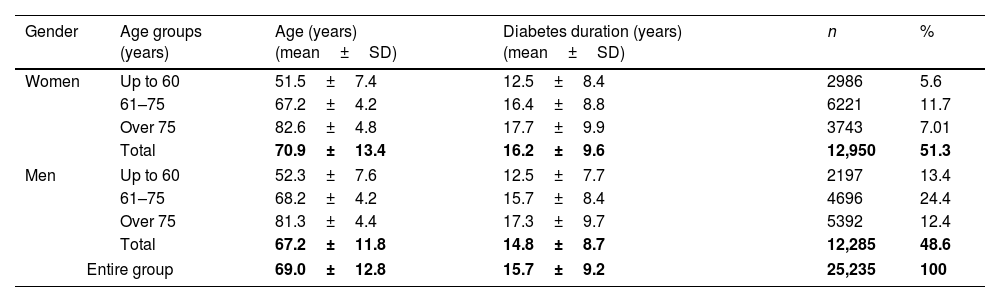
ResultsBeneficiary populationDuring the study period, 29,504 FGM devices were initiated in individuals with T2DM on intensive multiple daily insulin therapy, 25,052 of which remained active at the time of analysis. The basic clinical characteristics of active users are shown in Table 2.
Clinical and sociodemographic characteristics of the T2DM population using flash glucose monitoring (from April 2022 to February 2025).
| Gender | Age groups (years) | Age (years) (mean±SD) | Diabetes duration (years) (mean±SD) | n | % |
|---|---|---|---|---|---|
| Women | Up to 60 | 51.5±7.4 | 12.5±8.4 | 2986 | 5.6 |
| 61–75 | 67.2±4.2 | 16.4±8.8 | 6221 | 11.7 | |
| Over 75 | 82.6±4.8 | 17.7±9.9 | 3743 | 7.01 | |
| Total | 70.9±13.4 | 16.2±9.6 | 12,950 | 51.3 | |
| Men | Up to 60 | 52.3±7.6 | 12.5±7.7 | 2197 | 13.4 |
| 61–75 | 68.2±4.2 | 15.7±8.4 | 4696 | 24.4 | |
| Over 75 | 81.3±4.4 | 17.3±9.7 | 5392 | 12.4 | |
| Total | 67.2±11.8 | 14.8±8.7 | 12,285 | 48.6 | |
| Entire group | 69.0±12.8 | 15.7±9.2 | 25,235 | 100 | |
T2DM, type 2 diabetes mellitus; SD, standard deviation.
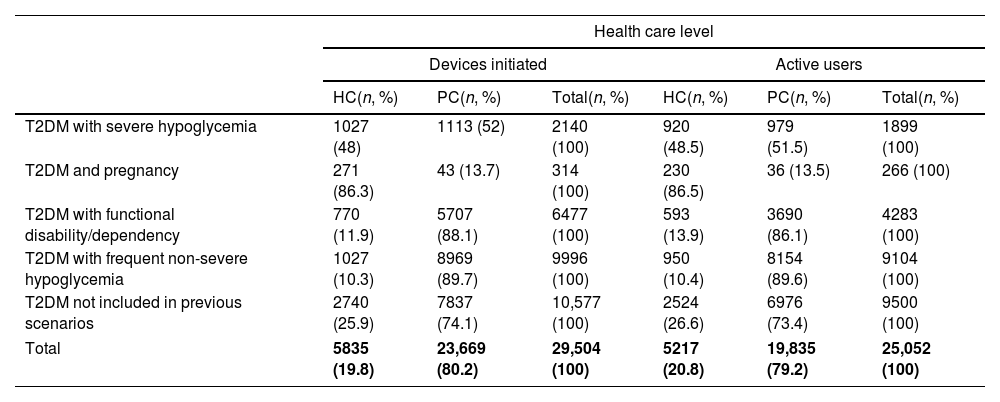
The main clinical indications for initiating FGM (out of the total 29,504 devices implanted) were functional disability or dependency (n=6477; 22%), severe hypoglycemia (n=1899; 7.3%), frequent non-severe hypoglycemia (n=9996; 33.8%), and pregestational T2DM (n=314; 1%); the remaining cohort corresponded to T2DM without prioritization criteria (n=10,577; 35.9%).
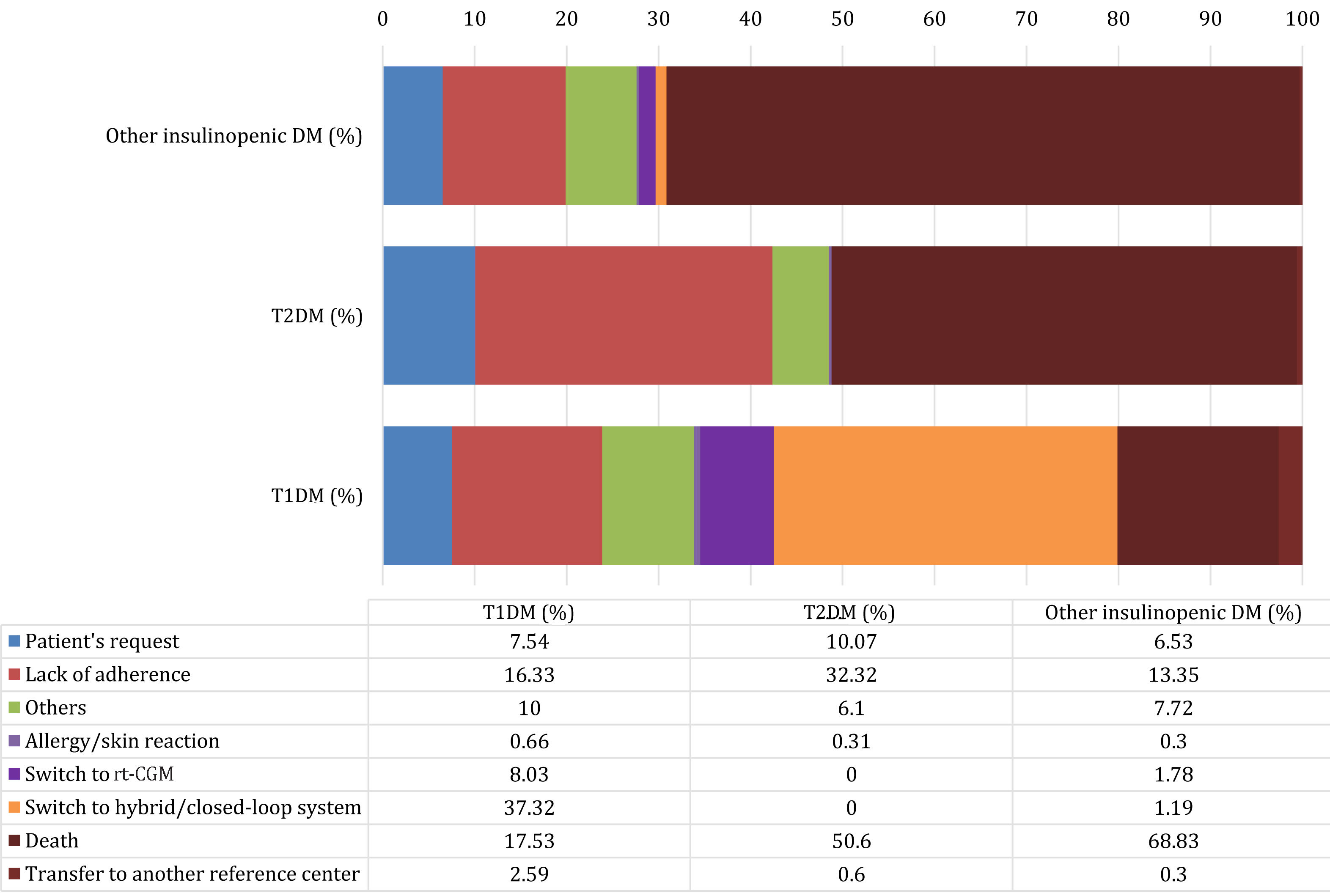
A total of 4269 patients (15%) permanently discontinued FGM use, while 389 (1%) did so temporarily. The most frequent reason for discontinuation was death (n=2106; 50.6%), followed by lack of treatment adherence (n=1379; 32.3%). Notable differences were observed across different types of diabetes. Lack of adherence was the most frequent reason among individuals with T2DM (32.32%), representing twice the percentage observed in those with T1DM (16.33%) and other insulinopenic forms (13.35%). Conversely, technological intensification—transitioning to real-time continuous glucose monitoring or hybrid closed-loop systems—was only reported among patients with T1DM (22.45%). Lastly, device withdrawal due to death was more frequent in individuals with other insulinopenic forms of diabetes (22.62%).
No device-related serious adverse events were reported. The various causes of discontinuation in the study population and their comparison with those reported in other types of diabetes are shown in Fig. 1.
Reasons for withdrawal of flash glucose monitoring system in population with T2DM and T1DM or insulinopenic forms. T1DM: type 1 diabetes mellitus, T2DM: type 2 diabetes mellitus, rt-CGM: real-time continuous glucose monitoring, DM: diabetes mellitus. Data are expressed as a percentage of the total number of users for each type of diabetes.
The main setting for FGM indication was PC, where 23,669 of the 29,504 devices (80.2%) were initiated. The most frequently addressed indications by PC teams were frequent non-severe hypoglycemia (89.7% of cases), followed by functional disability/dependency (88.1% of cases, mainly handled by case manager nurses and nursing home nurses), and general T2DM without prioritization criteria (74.1% of cases). The full distribution of clinical indications by care setting is shown in Table 3.
Number of patients included by clinical scenarios and health care teams responsible for indication and implementation.
| Health care level | ||||||
|---|---|---|---|---|---|---|
| Devices initiated | Active users | |||||
| HC(n, %) | PC(n, %) | Total(n, %) | HC(n, %) | PC(n, %) | Total(n, %) | |
| T2DM with severe hypoglycemia | 1027 (48) | 1113 (52) | 2140 (100) | 920 (48.5) | 979 (51.5) | 1899 (100) |
| T2DM and pregnancy | 271 (86.3) | 43 (13.7) | 314 (100) | 230 (86.5) | 36 (13.5) | 266 (100) |
| T2DM with functional disability/dependency | 770 (11.9) | 5707 (88.1) | 6477 (100) | 593 (13.9) | 3690 (86.1) | 4283 (100) |
| T2DM with frequent non-severe hypoglycemia | 1027 (10.3) | 8969 (89.7) | 9996 (100) | 950 (10.4) | 8154 (89.6) | 9104 (100) |
| T2DM not included in previous scenarios | 2740 (25.9) | 7837 (74.1) | 10,577 (100) | 2524 (26.6) | 6976 (73.4) | 9500 (100) |
| Total | 5835 (19.8) | 23,669 (80.2) | 29,504 (100) | 5217 (20.8) | 19,835 (79.2) | 25,052 (100) |
T2DM, type 2 diabetes mellitus; PC, primary care; HC, hospital care.
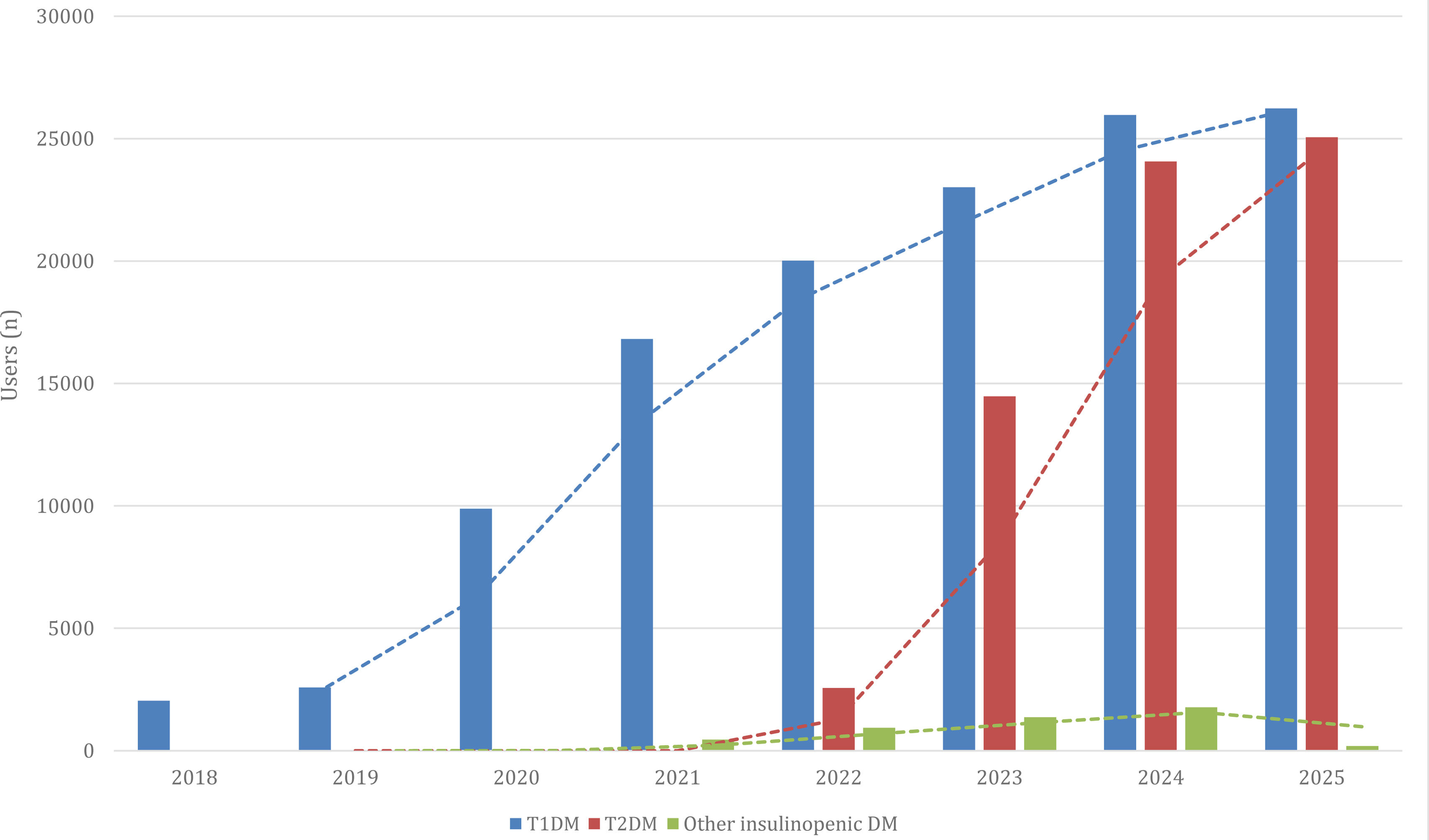
The higher number of FGM systems implanted since the beginning of the rollout is shown in Fig. 2. The number of devices implanted in 2023 for the T2DM population was nearly 5 times higher compared with 2022.
Integration of glucose monitoring data into the electronic health recordThe number of active FGM users who have initiated and maintained data integration into the electronic health record is 9185, representing 36.4% of all active users.
Health care professional training programA total of 424 out of 436 case manager and nursing home nurses (97.2%) completed and passed the standardized synchronous virtual “webinar” training. Among family physicians serving as training leads in their Health Centers, 201 out of 210 (95.7%) completed and passed the same training.
In the ongoing massive open online course, 4609 health care professionals enrolled, 2549 (55.3%) of whom completed the course. Among completers, 1881 (73.8%) were women. Most completions occurred from October 2022 to May 2023, during which 1827 (71.7%) were recorded. The most common professional profile was nursing staff (n=1977; 77.6%), followed by physicians (n=405; 15.9%) and health care trainees (n=86; 3.4%).
A satisfaction survey was made available at the end of the course and completed by 1384 participants during the study period (54.3%). The following mean scores (out of 10) were reported: content relevance (9.1), quality of didactic materials (9.1), ease of navigation on the online platform (9.1), and usefulness for daily professional practice (9.3). The overall satisfaction rating for the training activity was 9.2 out of 10.
DiscussionThis article presents the initial outcomes of the FGM implementation program in people with T2DM on intensive insulin therapy within a public health care system, launched in the Andalusian Public Health System (APHS) in April 2022. A total of 34 months after initiating the program, the analysis demonstrates a high implementation rate, with approximately 82.2% of the eligible population reached. In addition, a network-based training program was developed to equip health care professionals with the necessary competencies, achieving high coverage and high satisfaction.
There is strong clinical evidence supporting the benefits of FGM on insulin-treated individuals with DM, regardless of the type of diabetes. In patients on intensive insulin therapy, FGM has shown significant reductions in HbA1c, time in hypoglycemia, and severity of hypoglycemic episodes.8,14–17 The first evidence of improved glycemic control in individuals with T2DM on intensive insulin therapy after FGM initiation comes from the REPLACE study,8 a clinical trial conducted among 26 centers across the UK, France, and Germany. It demonstrated a significant reduction in HbA1c in FGM users younger than 65 years, fewer hypoglycemic events, and improved health-related quality of life. Improvements in metabolic control, measured by HbA1c, have been confirmed in real-world studies such as the REFER study, showing reductions of 0.8–0.9% 3 months after starting FGM.17 Regarding diabetes-related complications, studies such as the RELIEF report a significant decrease in acute events (hospital or outpatient admissions) within the first 6 months of FGM use, and fewer hospitalizations related to endocrine, nutritional, and metabolic disorders, resulting in enhanced health-related quality of life (HRQoL).9,15 Overall, FGM is an effective method for improving clinical outcomes in this population.
To date, no published studies have described or analyzed FGM rollout programs in patients with T2DM on multiple daily insulin injections. However, based on the inclusion of FGM as a publicly funded benefit for people with T1DM starting in 2018, studies have been conducted in larger T1DM populations. For example, both the APHS18 and the Catalonian Integrated Public Health System (SISCAT)19 implemented large-scale FGM rollouts based on educational interventions through group sessions, either in-person or virtual depending on the patient's digital literacy. However, implementation experiences reported in this clinical context have been exclusively hospital-based and conducted by nurses with extensive experience in diabetes education, which we believe are not directly applicable to the T2DM population.
Introducing FGM as a public health benefit for people with T2DM in a universal health care system represents a significant organizational challenge. Although the APHS had prior experience from its T1DM rollout—including a corporate registry for system use and follow-up and early pilot projects integrating glucose data into the electronic health record—the clinical landscape is markedly different and presents distinct challenges. These include responding to a large and heterogeneous population in terms of diabetes education, high rates of frailty and complex chronic conditions, and, in our setting, substantial geographic dispersion and rural distribution. Additionally, variability in training and experience among PC professionals and the extensive number of care facilities (1519 PC centers) required an organized and accessible training strategy.
The program we present for individuals with T2DM is based on 2 key principles: (i) a shared care model between HC and PC, and (ii) prioritization of the target population according to clinical criteria associated with vulnerability or risk of acute diabetes decompensation. Continuity in the management of chronic conditions has been shown to be strongly associated with improved health outcomes.20 Based on this, our program maintains each patient's regular care team as the lead in selecting, prescribing, educating, and following FGM use. Furthermore, the existence of referral pathways between PC and hospital Endocrinology and Nutrition Departments, especially via Diabetes Day Hospitals,21 has significantly facilitated rapid and comprehensive evaluation of acute decompensations (e.g., severe or frequent hypoglycemia) and complex scenarios such as pregestational T2DM. In our model, a procedure should not disrupt care processes.
Access to this technology has been high, and the discontinuation rate (15%)—although higher than that reported in users with T1DM—remains low and is primarily attributable to death. Substantial differences in the reasons for FGM discontinuation depending on the type of diabetes were observed. Lack of adherence was notably more common among individuals with T2DM, which may be explained by lower levels of digital health literacy, a more heterogeneous clinical profile, or a perceived lower benefit of FGM in the absence of intensive insulin therapy.5,8 In contrast, a high proportion of discontinuations due to technological intensification was observed in patients with T1DM, which is consistent with the specific funding policies of the Andalusian Public Health System supporting access to more advanced technologies—such as continuous glucose monitoring and hybrid closed-loop systems—for this population. Additionally, deaths were more frequently reported as a reason for device withdrawal among individuals with other insulinopenic forms of diabetes, likely reflecting a higher burden of systemic comorbidities and clinical complexity commonly observed in this subgroup. No serious adverse events related to device use were reported in this large cohort, supporting the safety and efficacy profile of the model.
Identifying care leaders for T2DM patients in each prioritized clinical scenario facilitated the stepwise rollout of training and knowledge sharing. Case manager and nursing home nurses—responsible for the first prioritized scenario (dependency, disability, and/or complex chronicity)—received comprehensive theoretical–practical training and served as educators and consultants for nursing teams in basic PC units. The role of APNs in hospitals was essential for delivering practical sessions to case managers and providing ongoing support to PC teams. The permanent open-access virtual training platform for health care professionals, developed with content approved by the Spanish Diabetes Society, is a fundamental tool for continuous professional development.
Continuity of care is essential in the management of chronic patients, and access to updated glucose monitoring data within the electronic health record—available to any health care provider in the APHS—is a key component to achieving it. Since January 2023, our program has enabled the integration of flash glucose monitoring data into the electronic health record, contingent upon patient authorization. Although the proportion of integrated users remains limited, specific measures have been implemented to increase uptake. These include the dissemination of corporate communication materials to health care professionals for opportunistic patient engagement, as well as the inclusion of user-friendly infographics in the home delivery kits. Currently, the integration allows visualization of static Ambulatory Glucose Profile reports. A 2nd phase is planned to enable the analysis of longitudinal glucometric data and access to raw glucose values, which will facilitate large-scale data analytics and improved clinical decision-making across the monitored population.
A key contribution of this study is to demonstrate that FGM can be broadly and equitably implemented in primary care settings within the APHS. The adopted model incorporated essential organizational elements, including clearly defined roles across care levels and universal public funding, which facilitated large-scale deployment. Nevertheless, several studies have identified common barriers that should be considered when interpreting outcomes and assessing the transferability of this strategy to other health care systems.6,7,16,22–24
Among the main obstacles described in the literature on FGM implementation in people with T2DM, several have been addressed within the APHS. Lack of technical training and low confidence in data interpretation among primary care professionals are among the most frequently cited barriers.22–24 This issue was addressed through an accredited, multi-level training program combining virtual sessions, in-person workshops, and a MOOC course accessible to all health care professionals. In addition, 100% public funding of the FGM device removed economic barriers that have been identified elsewhere as a source of inequity in access.24 The definition of care roles—often unclear in previous models—was resolved through a shared-care approach between primary and hospital care, with structured clinical pathways and prioritization criteria, allowing for phased implementation aligned with local capacity.22,23
Another barrier frequently reported in literature is limited digital literacy among patients, particularly older adults with T2DM.6,23 This challenge was addressed through individualized education sessions provided at the time of device initiation, with a key role played by community nurses, especially case managers.
With regard to technological infrastructure, one of the main limitations during implementation was the delayed availability of FGM data integration into the electronic health record. This functionality was launched 11 months after the program's initiation, and its uptake has been gradual. A critical factor limiting widespread integration is the requirement for explicit patient consent, which must be activated through a virtual process. This prerequisite, along with the profile of many users—older age, limited digital literacy, or low autonomy in using mobile devices—has hindered broader adoption. By the end of the study period, only 36.4% of active users had glucose data integrated into their electronic health record, although wider implementation is expected in the coming months. This situation underscores a relevant organizational challenge: digital health interventions must be designed from the outset to align with institutional information systems and be supported by strategies that ensure both technical interoperability and user-friendliness from the patient perspective.16,23
This study has limitations. While we thoroughly analyzed process indicators—such as the number of FGM users, implementation and withdrawal rates, and number of trained professionals—health outcomes have not yet been assessed. Longitudinal follow-up of this cohort, with sufficient numbers and time, will allow us to evaluate the impact on glycemic control and acute and chronic decompensations. Additionally, although we know the number of trained professionals and their satisfaction, we did not evaluate knowledge transfer, which could inform more effective training strategies and potentially address the lack of adherence, the leading cause of device discontinuation in this population. Another limitation that should be taken into consideration is that the implementation of FGM in primary care did not involve a formal adaptation of consultation times for patients with T2DM. Adjustments in consultation duration were made on a case-by-case basis based on each individual clinical need. However, allocating additional time—particularly during the initiation and learning phase—might have facilitated more systematic interpretation of glucose data and improved the quality of therapeutic interventions.
In conclusion, coordinated action across care levels, including a comprehensive training program for professionals, is an effective strategy for ensuring equitable access to FGM technology for the Andalusian population with T2DM on intensive insulin therapy. Integration of glucose data into the electronic health record is a key element of care continuity and offers future opportunities for data-driven health care management in this and other populations.
Conflicts of interestNone declared.


