

Incidental detection of paragangliomas (PGLs) is increasing due to the increased use and advancements in imaging modalities. Therefore, its clinical presentation is changing. We aimed to compare the clinical characteristics of incidentally discovered PGLs with the clinically suspected.
MethodsWe conducted a retrospective cohort study with patients diagnosed with PGLs between 2004 and 2023 at a tertiary referral center. Our cohort was divided into 2 groups: clinically suspected PGLs and incidentally discovered PGLs. Data on age, tumor location, size, symptoms, metastasis, and genetic testing were collected and compared between the groups. A subgroup analysis was conducted to evaluate adrenal and extra-adrenal PGLs separately.
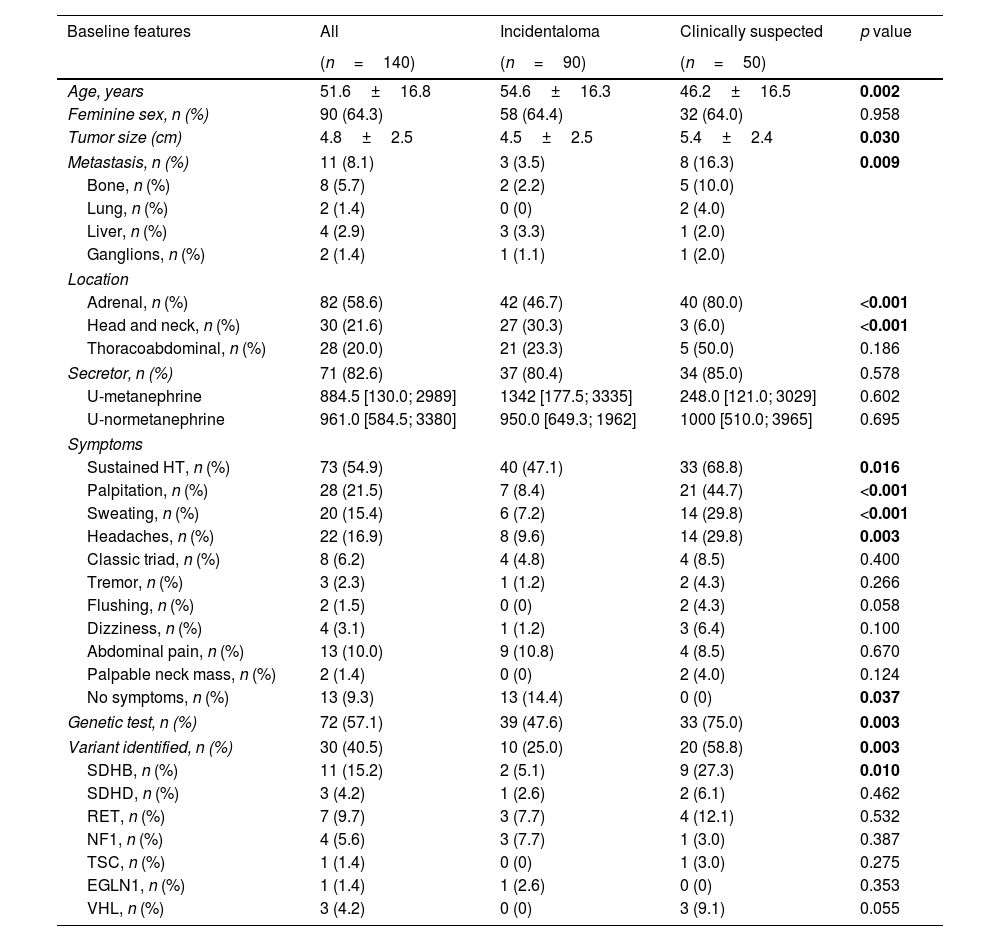
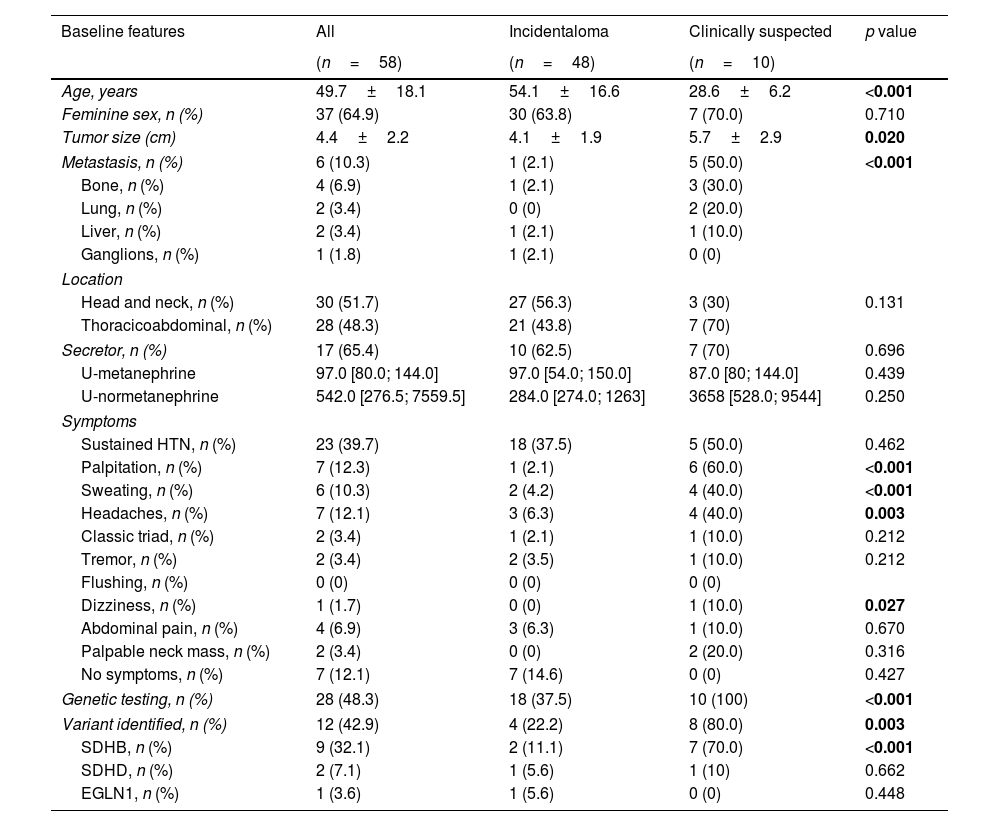
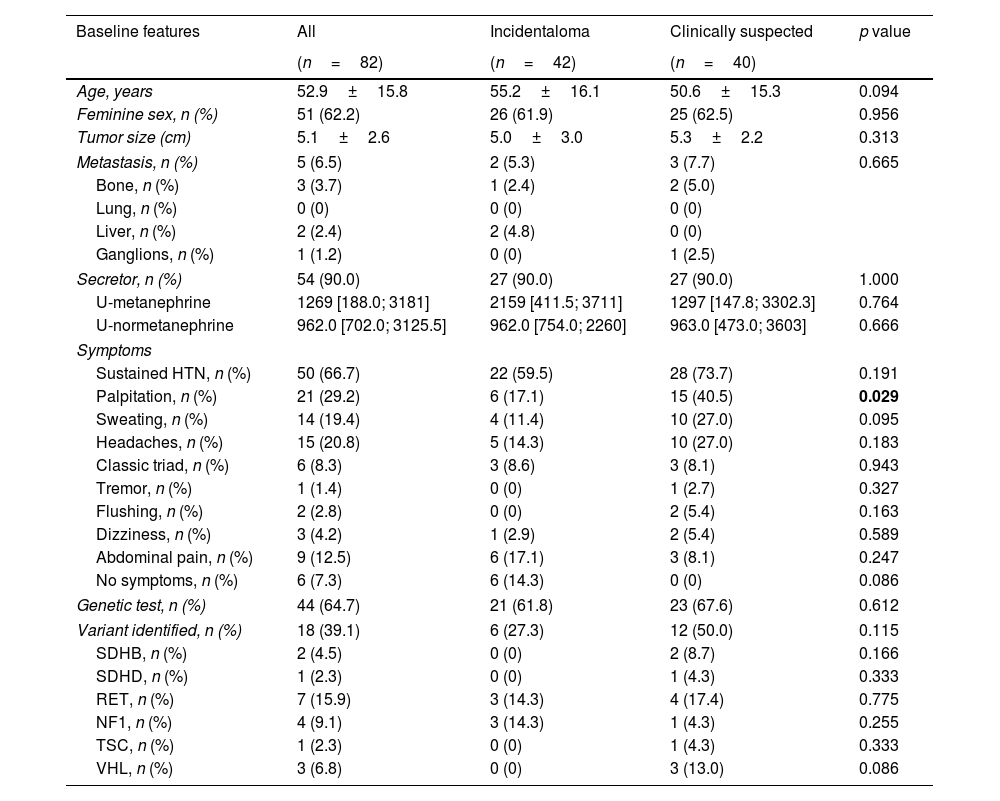
ResultsOf the 140 included patients, 64.3% were diagnosed incidentally and 35.7% through clinical suspicion. Incidentalomas were older at diagnosis (54.6±16.3 vs 46.2±16.5 years; p=0.002) and had smaller tumors (4.5±2.5cm vs 5.4±2.4cm; p=0.030). Clinically suspected cases were more likely to have metastatic disease (16.3% vs 3.5%; p=0.009) and exhibit classic symptoms, including palpitations (44.7% vs 8.4%; p<0.001), sweating (29.8% vs 7.2%; p<0.001), and headaches (29.8% vs 9.6%; p=0.003). In addition, sustained hypertension was more common in the clinically suspected group (68.8% vs 47.1%; p=0.016). In extra-adrenal PGLs, differences in tumor size and metastatic rates were more pronounced. Genetic testing showed a higher prevalence of mutations in the clinically suspected group (75% vs 47.6%; p=0.003).
ConclusionsThis study supports the shift in the predominant mode of paraganglioma presentation toward incidental findings. Enhanced recognition and proper follow up will refine the management of paragangliomas and ultimately improve patient outcomes.
La detección incidental de paragangliomas (PGLs) está aumentando por el mayor uso y avance de las técnicas de imagen, lo que está cambiando su forma de presentación clínica. Nuestro objetivo fue comparar las características clínicas de los PGLs descubiertos incidentalmente con los diagnosticados por sospecha clínica.
MétodosSe realizó un estudio retrospectivo en pacientes con PGLs diagnosticados entre 2004 y 2023 en un hospital terciario. Se dividieron en 2 grupos: PGLs sospechados clínicamente y PGLs descubiertos incidentalmente. Se recopilaron datos sobre edad, localización y tamaño tumoral, síntomas, metástasis y pruebas genéticas. Se realizó un análisis por subgrupos para PGLs adrenales y extraadrenales.
ResultadosDe los 140 pacientes, el 64,3% fueron diagnosticados incidentalmente y el 35,7% por sospecha clínica. Los incidentalomas eran de mayor edad (54,6±16,3 vs. 46,2±16,5 años; p=0,002), y tenían tumores más pequeños (4,5±2,5 vs. 5,4±2,4cm; p=0,030). Los casos sospechados clínicamente presentaban más metástasis (16,3 vs. 3,5%; p=0,009) y síntomas clásicos: palpitaciones (44,7 vs. 8,4%; p<0,001), sudoración (29,8 vs. 7,2%; p<0,001) y cefaleas (29,8 vs. 9,6%; p=0,003). La hipertensión arterial sostenida fue más común en el grupo con sospecha clínica (68,8 vs. 47,1%; p=0,016). En los PGLs extraadrenales, estas diferencias fueron aún más marcadas. Además, el grupo con sospecha clínica mostró mayor prevalencia de mutaciones genéticas (75 vs. 47,6%; p=0,003).
ConclusionesEste estudio confirma el cambio hacia hallazgos incidentales como forma predominante de presentación de los PGLs. Un mayor reconocimiento y seguimiento permitirán optimizar su manejo y mejorar los resultados clínicos.