
El tratamiento preoperatorio con toxina botulínica es un recurso frecuente en la cirugía de hernia incisional compleja, aunque carece de indicaciones claras.
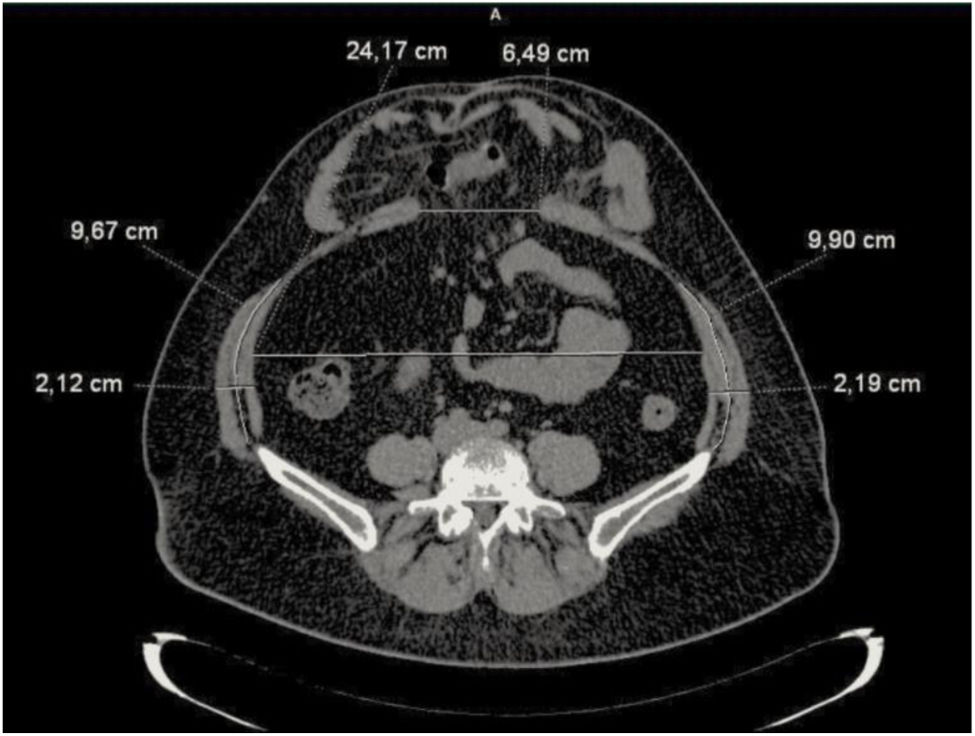
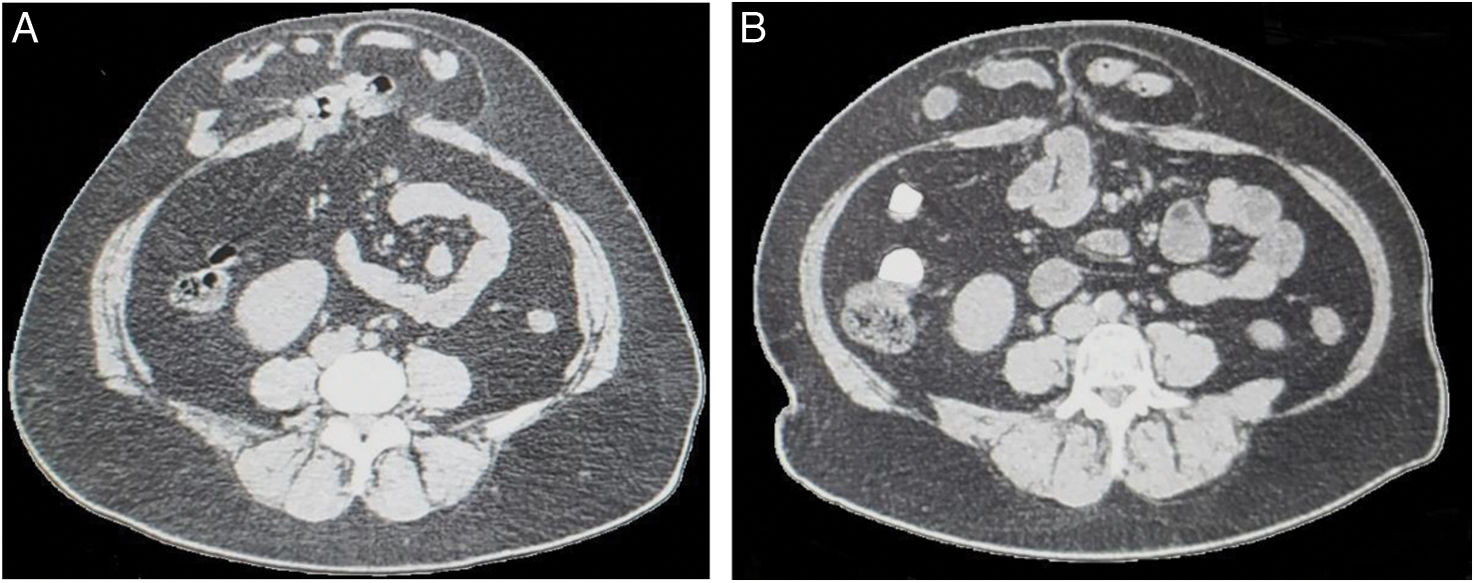
MétodosEntre julio de 2019 y mayo de 2022, se midió en nuestro centro el grosor y la longitud de la pared lateral del abdomen, y el diámetro transverso del abdomen y del defecto herniario en TC realizada a pacientes pre y postratamiento con toxina botulínica. Para establecer diferencias entre pacientes con hernia lateral y de línea media se realizó una regresión logística.
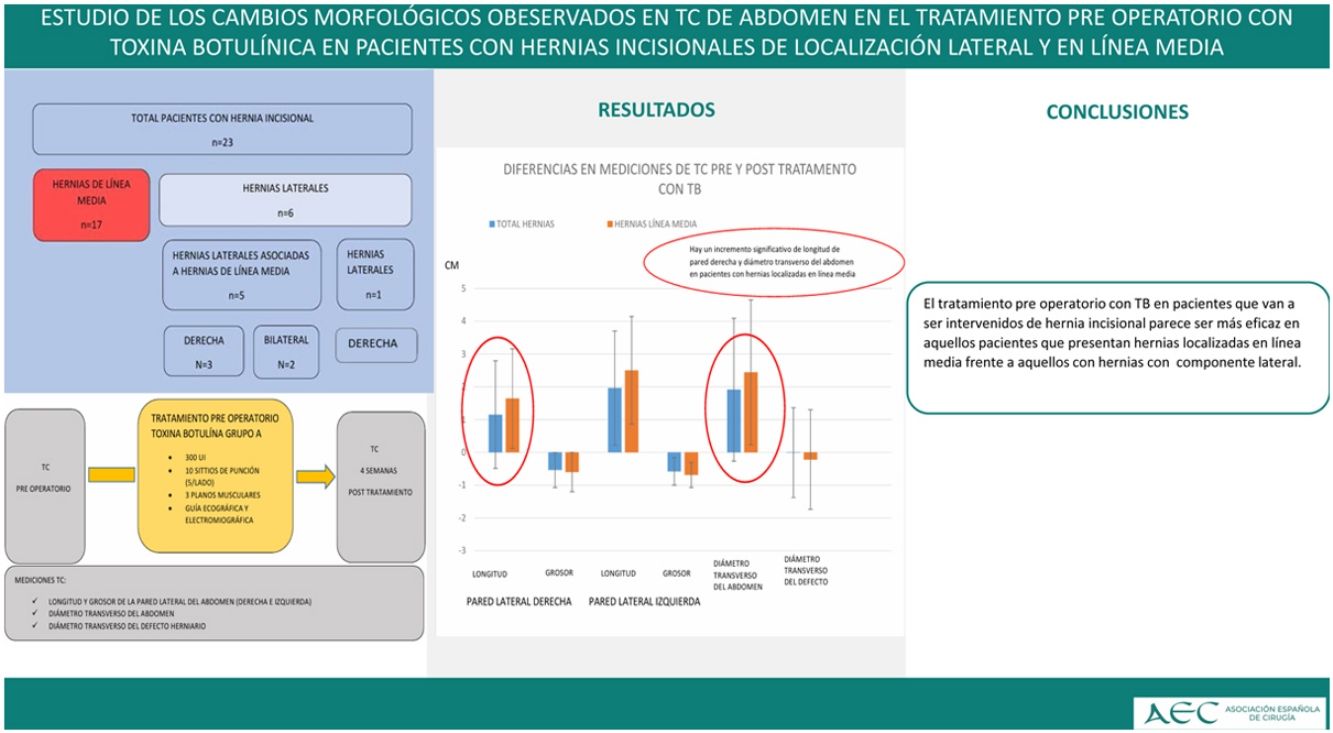
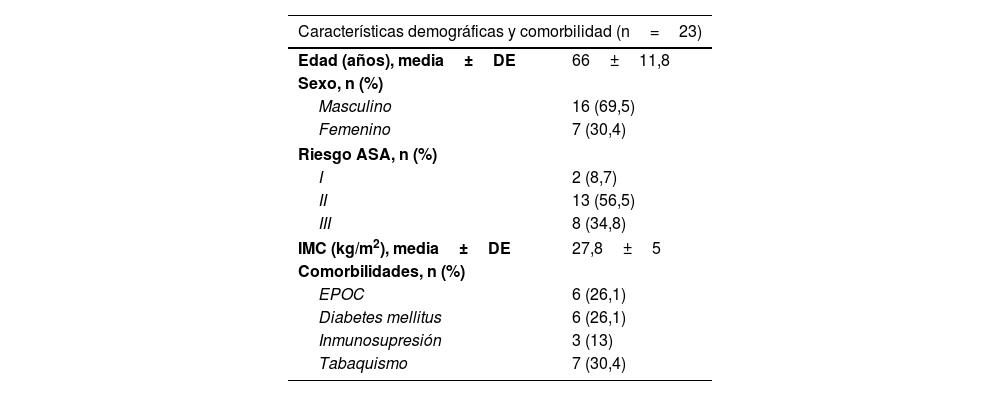
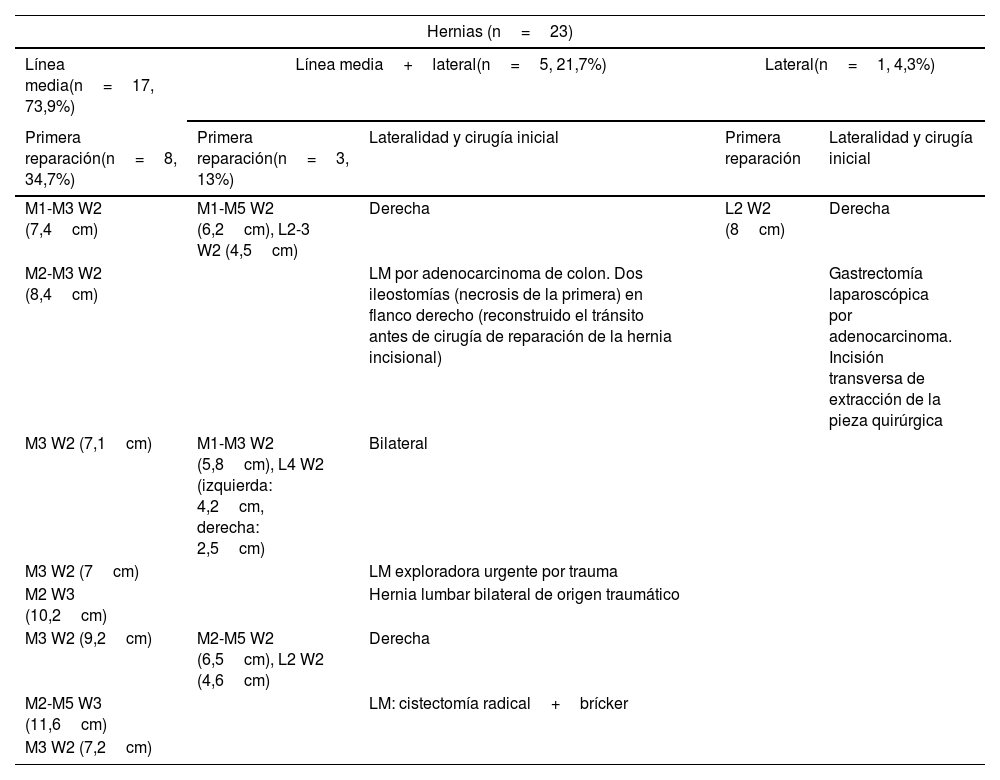
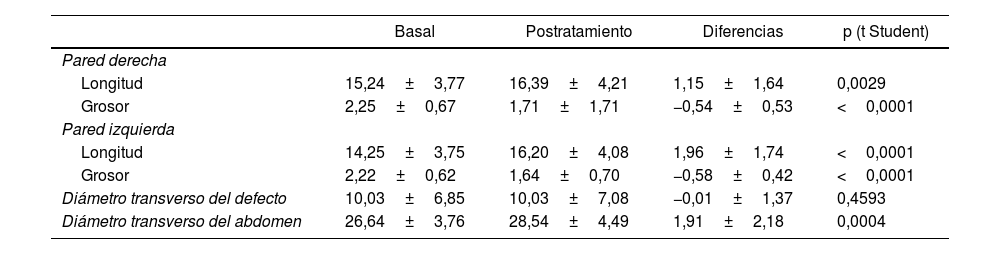
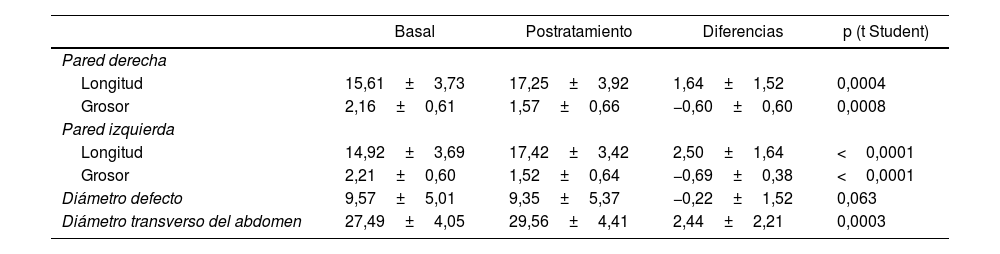
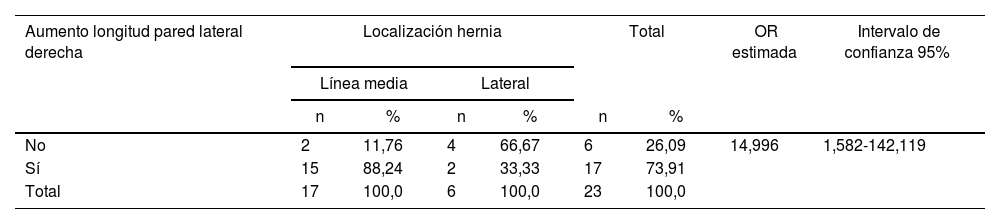
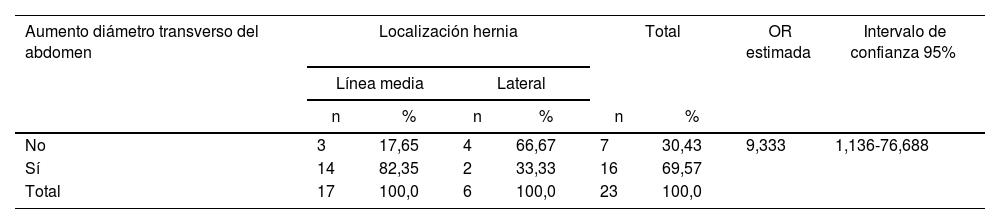
ResultadosSe incluyeron 23 pacientes: 17 presentaban hernia de línea media y 6 hernia lateral (4 derechas y 2 bilaterales). Se observó un incremento de la longitud de la pared derecha (1,15±1,64cm, p=0,0029), la pared izquierda (1,96±1,74cm, p<0,0001) y el diámetro transverso del abdomen (2,85±4,83cm, p<0,0001), y una reducción del grosor de la pared derecha (−0,54±0,53cm, p<0,0001) e izquierda (−0,58±0,42cm, p<0,0001). No hubo diferencias en el diámetro transverso del defecto (−0,01±1,37cm, p=0,4593). Tras la regresión logística, es más probable observar un aumento de la longitud de la pared derecha (OR 14,99, IC 95% 1,58-142,12) y del diámetro transverso del abdomen (OR 9,33, IC 95% 1,13-76,68) en los pacientes con hernias de línea media que en los de localización lateral.
ConclusionesEl tratamiento preoperatorio con toxina botulínica parece ser más eficaz en pacientes con hernias de línea media que en los que presentan componente lateral.
Preoperative treatment with botulinum toxin is very common in complex incisional hernias, although it lacks clear indications.
MethodsBetween July 2019 and May 2022, measurements of the thickness and length of the lateral abdominal wall, transverse diameter of the abdomen and diameter of the hernia defect were taken from patient CT scans both pre- and post-treatment with botulinum toxin at our hospital. In order to establish differences between patients with lateral and midline hernias, a logistic regression analysis was performed.
ResultsThe study included 23 patients: 17 had midline hernias, and 6 had lateral hernias (4 right and 2 bilateral). We observed increased length of the right wall (1.15±1.64cm; P=.0029), left wall (1.96±1.74cm; P<.0001) and transverse abdominal diameter (2.85±4.83cm; P<.0001), and a reduction in the thickness of the right (−0.54±0.53cm; P<.0001) and left walls (−0.58±0.42cm; P<.0001). There were no differences in the transverse diameter of the defect (−0.01±1.37cm; P=.4593). After logistic regression, increased right wall length (OR 14.99; 95%CI 1.58-142.12) and transverse abdominal diameter (OR 9.33; 95%CI 1.13-76.68) was more likely to be observed in patients with midline hernias than in those with lateral locations.
ConclusionsPreoperative treatment with botulinum toxin appears to be more effective in patients with midline hernias than in those with lateral locations.