




La retinitis pigmentaria (RP) representa un espectro de trastornos hereditarios del cono-bastón con síntomas característicos y alteraciones funcionales. La variante patogénica Asp-190-Tyr del gen RHO impide el transporte de rodopsina a través del retículo endoplásmico, induciendo citotoxicidad. Este informe presenta el fenotipo oftalmológico de esta rara variante.
Material y métodosEstudio retrospectivo que incluye pacientes de una familia extensa con RP y una variante autosómica dominante del gen RHO (Asp-190-Tyr). Se recogieron datos demográficos y pruebas auxiliares.
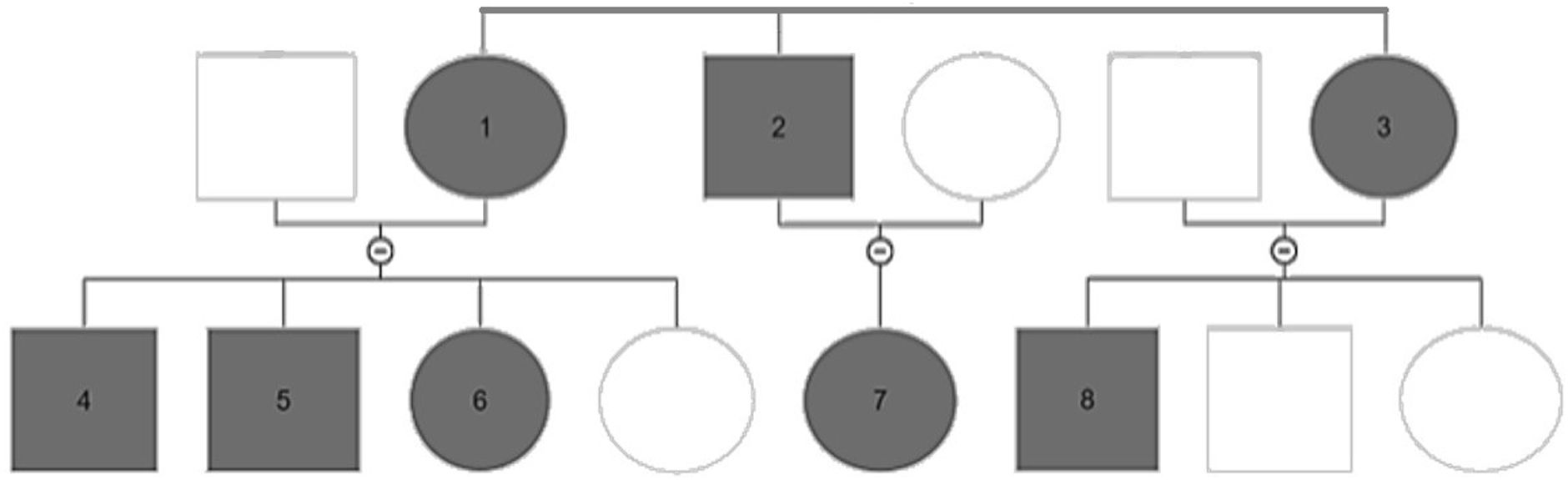
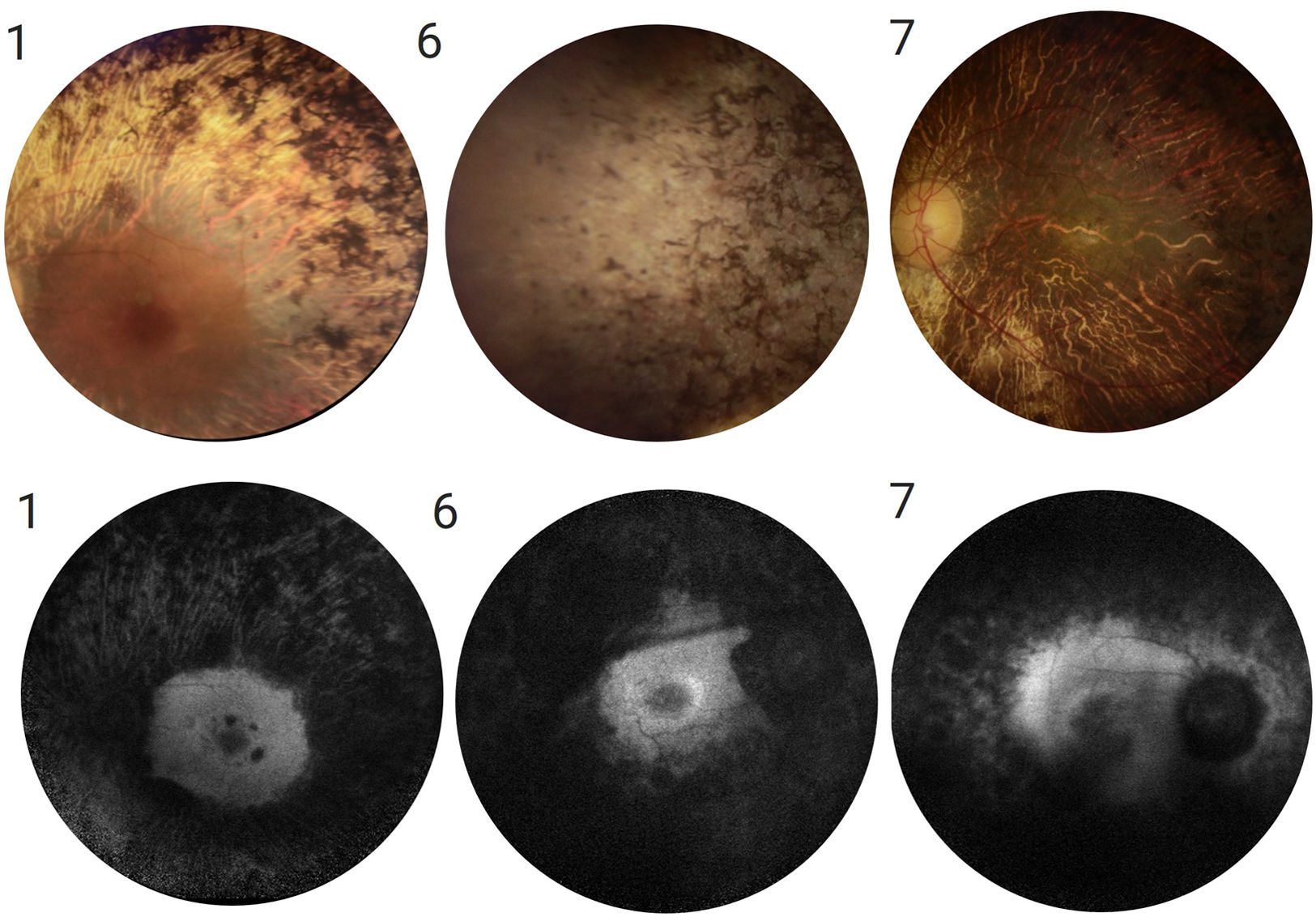
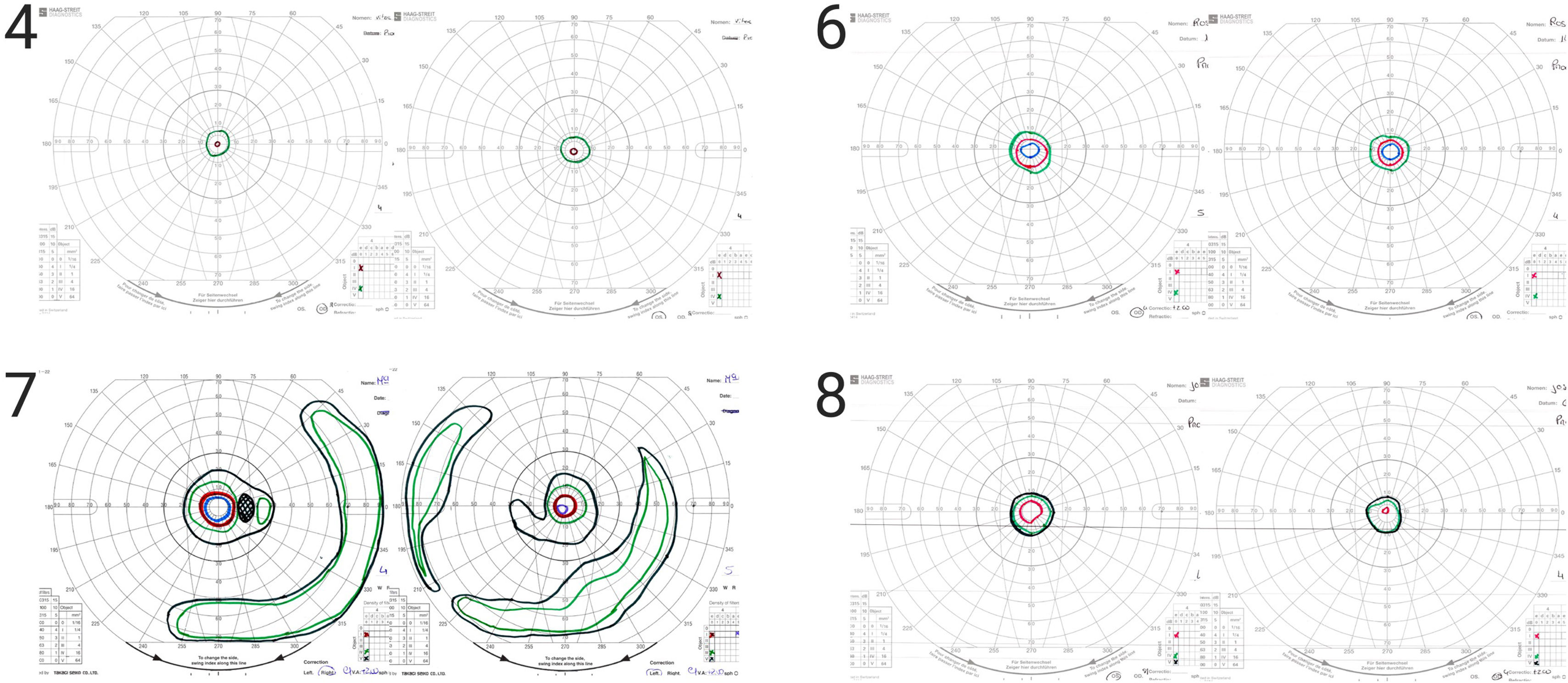
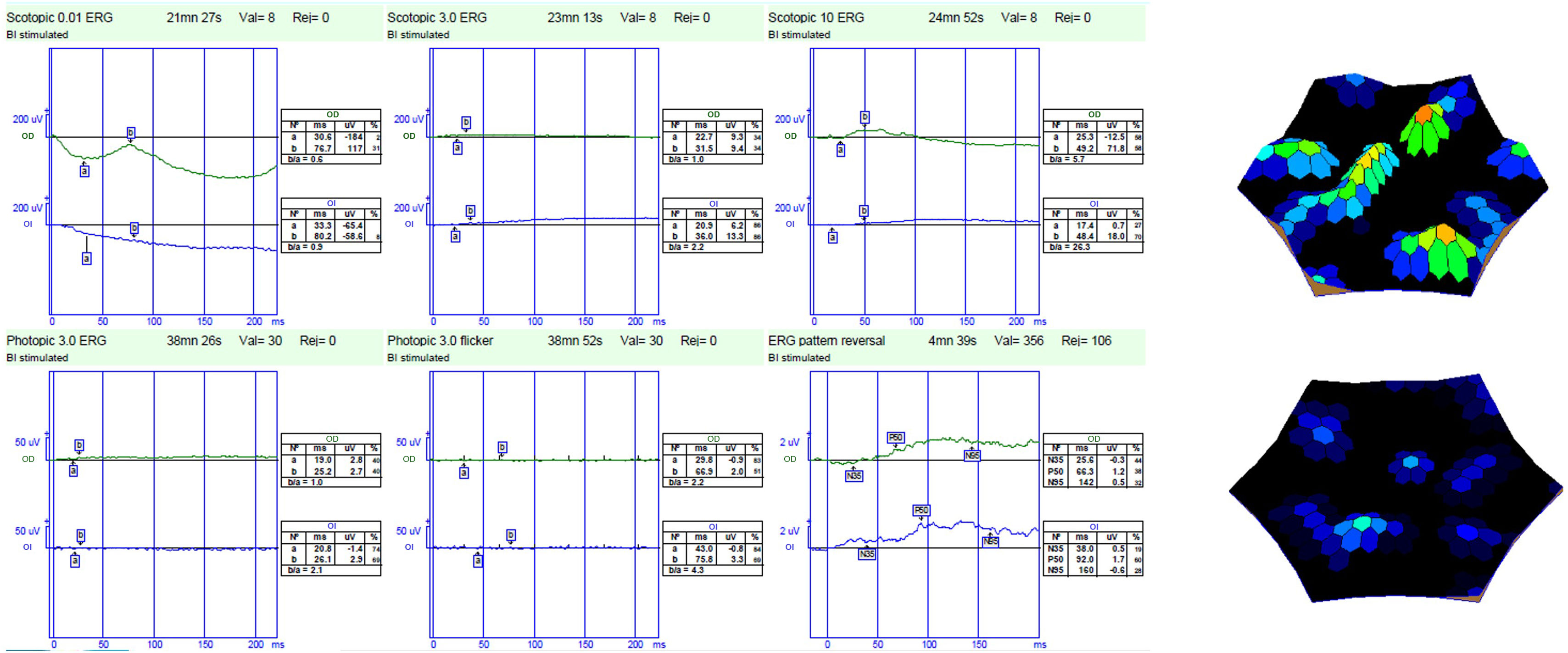
ResultadosSe incluyeron doce individuos; 8 tenían RP generalizada. Las pruebas genéticas en 5/8 pacientes con RP revelaron una variante autosómica dominante en el gen RHO, con sustitución de un ácido aspártico por tirosina (codón 190). La agudeza visual oscilaba entre la no percepción de luz y 6/10. La fundoscopia y autofluorescencia mostraron un patrón de RP bilateral generalizado: palidez del disco óptico, espículas óseas y estrechamiento arterial. La perimetría en 4 pacientes mostró visión en túnel. La electrofisiología reveló una marcada reducción de la onda en el ERG flash/pattern. En 4/8 pacientes se observó atrofia de las capas externas de la retina con edema macular cistoide.
ConclusionesEste estudio destaca el fenotipo de la variante Asp-190-Tyr. Anteriormente, se había descrito en una familia con un patrón regional de RP y función visual relativamente preservada. Nuestro estudio cambia este paradigma, los pacientes presentan un fenotipo generalizado de RP y un deterioro visual significativo. Los datos pueden ayudar a ofrecer información pronóstica precisa a los pacientes con esta variante.
Retinitis pigmentosa (RP) represents a spectrum of rod-cone inherited disorders with characteristic symptoms, and functional changes. The Asp-190-Tyr pathogenic variant of the RHO gene impairs rodopsin transport through the endoplasmic reticulum, leading to accumulation within photoreceptors, inducing cytotoxicity. This report presents the ophthalmologic phenotype of this rare variant.
Materials and MethodsRetrospective study including patients from one extended family presenting with RP, with an autosomal dominant variant of the RHO gene (Asp-190-tyr). Baseline demographic/ophthalmologic data and ancillary testing was collected.
ResultsTwelve individuals were included; eight had generalized RP. The mean age was 64 years - four were female. Genetic testing in 5/8 patients with RP revealed an autosomal dominant variant in the RHO gene, with replacement of an aspartic acid with tyrosine at codon 190. Visual acuity ranged from no light perception to 6/10. Fundoscopy and fundus autofluorescence showed bilateral generalized RP pattern: optic disc pallor, bone spicules, and arterial narrowing. Perimetry in four patients showed tunnel vision. Electrophysiology revealed marked wave reduction in both pattern and flash ERG. Severe atrophy of the outer retinal layers with cystoid macular oedema was observed in 4/8 patients.
ConclusionsThis study highlights the phenotype of the Asp-190-Tyr variant. Previously, it was described in a family with a regional pattern of RP and relatively preserved visual function. Our study changes this paradigm, with patients presenting with a generalized RP phenotype and significant visual impairment. The provided data may help offer accurate prognostic information to patients with this variant.

