


The occurrence of delirium casts a shadow over the prognosis of patients, especially the critically ill. Prevention and treatment of delirium is more effective and with fewer adverse effects with multicomponent interventions than with pharmacological measures alone. The objective was to assess whether a non-pharmacological care-related intervention can reduce the incidence of delirium in an acute cardiovascular care unit.
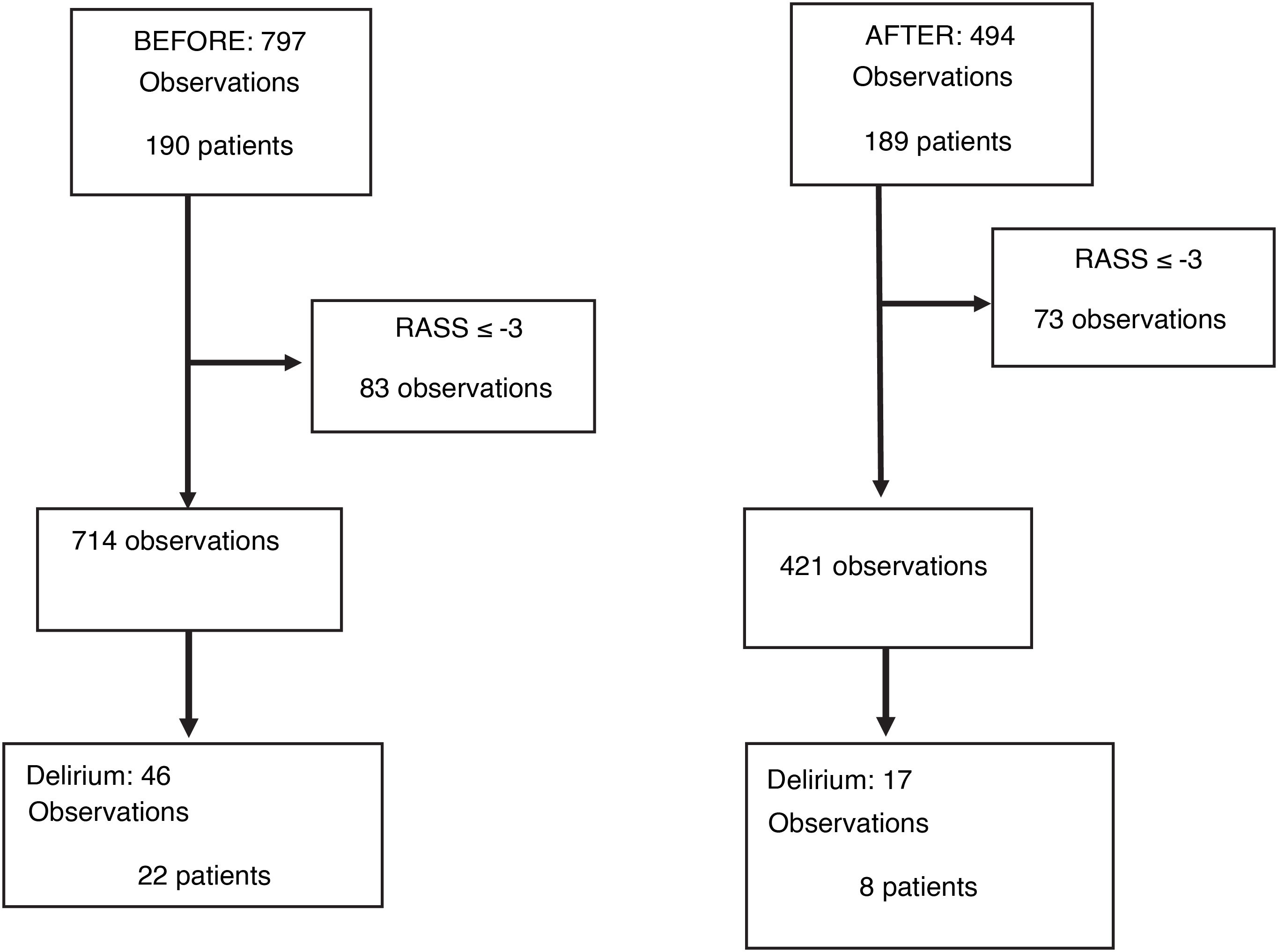
MethodsQuasi-experimental study (before/after). ‘Before’: From November 2018 to March 2019, 190 patients aged 18 years and older, admitted to an acute cardiovascular care unit, were assessed using the Confusion Assessment Method for the ICU. From April to November 2019, a series of actions related to the physical environment and accompaniment were implemented. The ‘after’ started in November 2019 and 189 patients were assessed until early March 2020.
ResultsThe incidence of delirium before introducing the actions was 11,6%, which fell to 4,2% (P = ,012) after the actions.
DiscussionManagement of delirium includes effective diagnosis, delirium prevention activities and treatment, which ideally should be free of side effects.
ConclusionsThe implementation of a bundle of measures related to environmental changes and involving the family, significantly reduced the incidence of delirium, to less than half.
La aparición de delirium ensombrece el pronóstico de los pacientes, especialmente de los críticamente enfermos. La prevención y tratamiento del delirium es más eficaz y con menores efectos adversos, con intervenciones multicomponente que con medidas exclusivamente farmacológicas. El objetivo fue evaluar si una intervención no farmacológica relacionada con los cuidados puede reducir la incidencia de delirium en una unidad de cuidados cardiovasculares agudos.
MétodosEstudio cuasi-experimental (antes/después). «Antes»: de noviembre de 2018 a marzo de 2019, 190 pacientes mayores de 18 años, ingresados en una unidad de cuidados cardiovasculares agudos, fueron evaluados mediante el Método de Evaluación de Confusión para la UCI. De abril a noviembre de 2019, se implementaron una serie de acciones relacionadas con el entorno físico y el acompañamiento. El «después» comenzó en noviembre de 2019 y se evaluaron 189 pacientes hasta principios de marzo de 2020.
ResultadosLa incidencia de delirium antes de introducir las acciones fue del 11,6%, y se redujo al 4,2% (P = ,012) después de introducirlas.
DiscusiónEl manejo del delirium incluye un diagnóstico eficaz, actividades para prevenirlo y un tratamiento, que en condiciones ideales debería estar libre de efectos secundarios.
ConclusionesLa implantación de un conjunto de medidas ambientales e implicación de la familia, redujo significativamente la incidencia de delirium, a menos de la mitad.
Article
Diríjase al área de socios de la web de la SEEIUC, (https://seeiuc.org/mi-cuenta/iniciar-sesion/) y autentifíquese.