


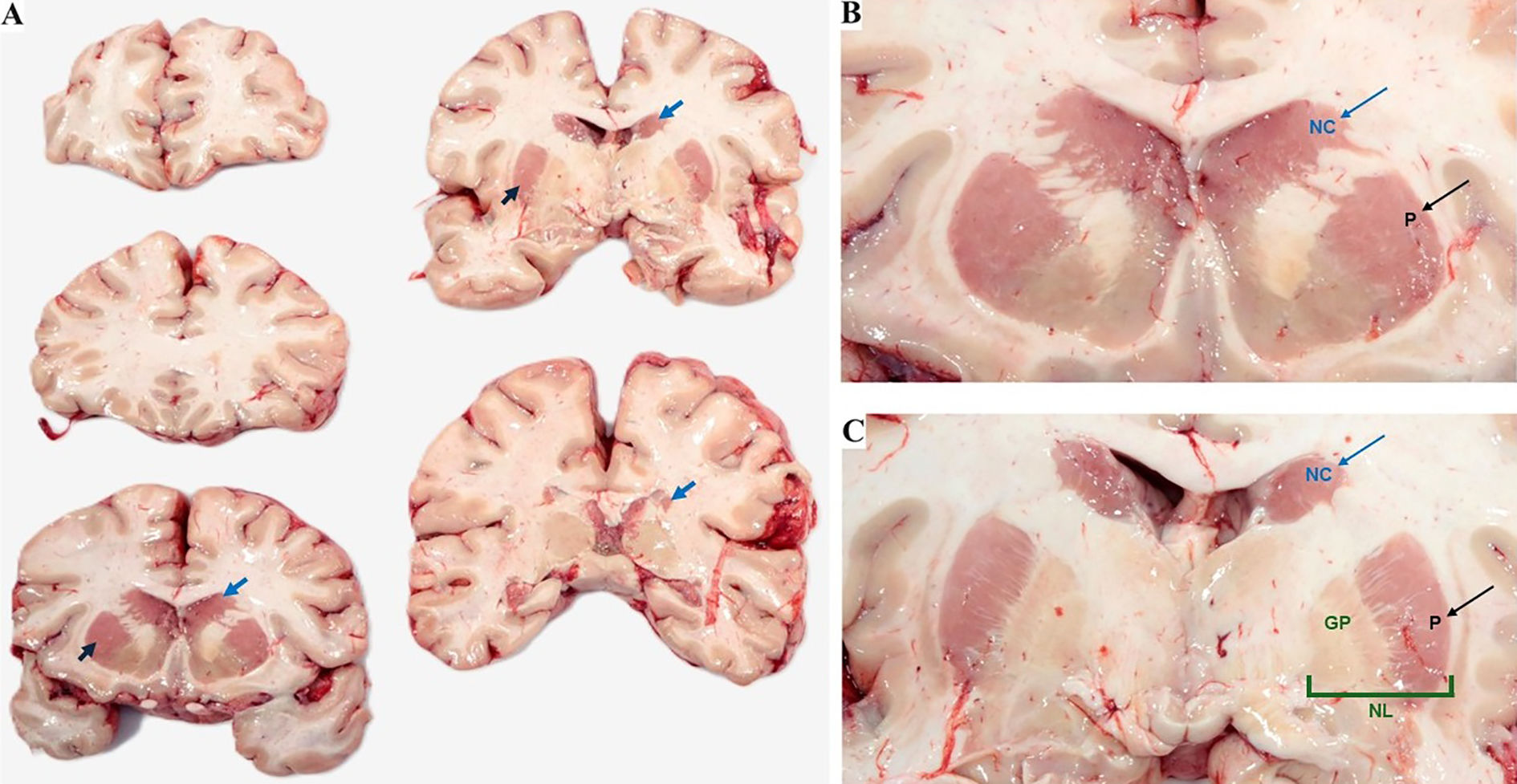
A 57-year-old man with a history of chronic alcoholism experienced a sudden episode of amaurosis with subsequent loss of consciousness, while consuming alcoholic beverages. He was taken to the hospital where laboratory tests revealed severe metabolic acidosis with a pH of 6.8 and an anion gap of 41 mEq/l. Qualitative toxicological analysis was positive for methanol. Before starting specific treatment for methanol poisoning, the patient suffered cardiorespiratory arrest and died. The forensic autopsy showed marked cerebral oedema with a brain weight of 1627 g. In the coronal section, a bilateral reddish colouration of the caudate nucleus and the putamen was evidenced, consistent with necrosis. The toxicology report confirmed the presence of methanol with a concentration of 273 mg of methanol in 100 ml of blood and 292 mg of methanol in 100 ml of vitreous humour, with no detection of any other substance. The cause of death was determined to be methanol poisoning from the consumption of adulterated liquor (Fig. 1).

(A) Serial section of the brain showing reddish discolouration in the putamen (black arrow) and caudate nucleus (blue arrow). (B and C) In greater detail, the reddish colouration due to necrosis in the putamen and caudate nucleus, bilaterally can be seen. GP: globus pallidus; CN: caudate nucleus; LN: lenticular nucleus; P: putamen. (For interpretation of the references to colour in this figure legend, the reader is referred to the web version of this article.)
Methanol is a potent toxicant for human beings, and the main cause of methanol poisoning is the consumption of adulterated alcoholic beverages.1 Although the macroscopic finding of putamen necrosis in deaths due to methanol2 poisoning is widely known, necrosis of the caudate nucleus is not usually found, so this image is highlighted as an important finding that can also guide diagnosis, particularly when clinical information is not available. Cerebellar tonsillar herniation, hippocampal necrosis, white matter necrosis, and isolated cortical ischemic lesions have also been described in methanol poisoning.3,4
Please cite this article as: Cárdenas Romero J, Díaz Pardo SP, Medina Rocha AH, Methanol poisoning: Hemorrhagic necrosis of the caudate and putamen. Revista Española de Medicina Legal. 2025. https://doi.org/10.1016/j.remle.2025.100418.
