
Candidiasis is a prevalent and clinically significant fungal infection. Candida auris has emerged as an important etiological agent due to its high transmissibility, potential to cause severe infections, and resistance to multiple antifungal drugs. Combining fluconazole with other compounds to achieve additive or synergistic antifungal effects has been proposed as a promising strategy for managing these infections.
AimsThis study aimed to evaluate the antifungal effects of fluconazole in combination with seven natural compounds (berberine chloride, caffeic acid phenethyl ester, catechin monohydrate, epigallocatechin gallate, magnolol, osthole, and quercetin hydrate) and seven drugs (amiodarone, amlodipine, budesonide, doxycycline, ibuprofen, minocycline, and tigecycline) against C. auris.
MethodsThe antifungal activity of fluconazole alone and in combination with selected compounds and drugs was analyzed to identify additive or synergistic interactions against 21 isolates of C. auris. Minimum inhibitory concentrations (MICs) of fluconazole were determined and compared across combinations.
ResultsFluconazole combined with magnolol, caffeic acid phenethyl ester, or quercetin hydrate showed additive effects against 38%, 9.5%, and 2% of isolates, respectively, and a synergistic effect with quercetin hydrate in 19% of isolates. Fluconazole MICs were reduced from >64μg/mL to 1–16μg/mL with magnolol in 19 isolates, to 1–32μg/mL with caffeic acid phenethyl ester in 17 isolates, and to 1–2μg/mL with quercetin hydrate in 8 isolates.
ConclusionsThese findings highlight the potential of fluconazole combined with magnolol, caffeic acid phenethyl ester, or quercetin hydrate for managing C. auris infections. Further in vivo studies are warranted to assess their therapeutic applicability.
La candidiasis es una infección fúngica prevalente y clínicamente significativa. Candida auris ha emergido como un agente etiológico importante debido a su alta transmisibilidad, su potencial para causar infecciones graves y su resistencia a múltiples antifúngicos. La combinación de fluconazol con otros compuestos para lograr efectos antifúngicos aditivos o sinérgicos se ha propuesto como una estrategia prometedora para tratar estas infecciones.
ObjetivosEste estudio tuvo como objetivo evaluar los efectos antifúngicos del fluconazol en combinación con siete compuestos de origen natural (cloruro de berberina, éster fenetílico del ácido cafeico, catequina monohidratada, galato de epigalocatequina, magnolol, ostol e hidrato de quercetina) y siete fármacos (amiodarona, amlodipina, budesonida, doxiciclina, ibuprofeno, minociclina y tigeciclina) frente a C. auris.
MétodosSe evaluó la actividad antifúngica del fluconazol solo y en combinación con los compuestos y fármacos seleccionados para identificar interacciones aditivas o sinérgicas frente a 21 aislamientos de C. auris. Se determinaron y compararon las concentraciones mínimas inhibitorias (CMI) de fluconazol en las diferentes combinaciones.
ResultadosEl fluconazol combinado con magnolol, éster fenetílico del ácido cafeico o quercetina hidratada mostró efectos aditivos frente al 38%, 9,5% y 2% de los aislamientos, respectivamente, y un efecto sinérgico con quercetina hidratada frente al 19% de los aislamientos. Los valores CMI de fluconazol se redujeron de >64μg/mL a 1-16μg/mL con magnolol en 19 aislamientos, a 1-32μg/mL con el éster fenetílico del ácido cafeico en 17 aislamientos, y a 1-2μg/mL con quercetina hidratada en 8 aislamientos.
ConclusionesEstos hallazgos destacan el potencial del fluconazol combinado con magnolol, éster fenetílico del ácido cafeico o hidrato de quercetina para tratar infecciones por C. auris. Se necesitan estudios adicionales in vivo para evaluar su aplicabilidad terapéutica.

Fungal infections affect more than one billion people each year with about 1.7 million deaths worldwide, mainly among immunocompromised individuals.19 Candidiasis is one of the most prevalent and clinically important of these infections. Although more than 200 Candida species have been described, only few of them are capable of causing infections in humans, with Candida albicans being the predominant agent in the cases of candidemia and invasive candidiasis.28 In the last decades, the emergence of other species of Candida causing candidemia has complicated the diagnosis and treatment of this invasive mycosis, as some of these species are associated with higher antifungal resistance rates.26 The main etiological agent, C. albicans, and other emerging species that can also cause systemic infections, such as Candida parapsilosis, Candida glabrata (currently Nakaseomyces glabratus), Candida tropicalis and Candida auris (currently Candidozyma auris), have been classified as high-, even critical-, priority pathogens by the World Health Organization (WHO) due to the increasing emergence of isolates resistant to antifungal treatments.6
Among them, C. auris has gained particular significance due to its high transmissibility and adaptability to multiple environments, its potential to produce severe infections with mortality rates up to 70%, and its multidrug resistance to antifungal drugs.30C. auris stands out due to its multidrug resistance profile, which involves various families of antifungal drugs.6 Cases of systemic infections caused by this species have been reported in many parts of the world, including countries in Africa, America, Asia and Europe.16 An initial genetic analysis identified five main clades, which were named according to their geographic location: South Asia, East Asia, Africa, South America and Iran, corresponding to clades I, II, III, IV and V, respectively.4,5,31
All these reports about the increase in resistance rates of the different Candida species, frequently due to prolonged treatment with the current antifungal drugs, underscores the urgent need to find new therapeutic alternatives. This is particularly urgent for treating infections caused by those Candida species resistant to different classes of antifungal drugs, such as C. auris. The combination of antifungal drugs with other compounds that do not, in theory, exhibit antifungal activity seeks potential synergistic effects as an alternative to treat C. auris invasive infections.
For this reason, the aim of this study was to test the activities of different molecules, such as natural compounds, calcineurin inhibitors, non-steroidal anti-inflammatory drugs, among others, to assess their efficacy in combination with fluconazole against clinical isolates of C. auris. This approach could potentially reduce the required dose of fluconazole and help to prevent the development of resistance to this drug.
2Materials and methods2.1Clinical isolatesThe current study included 21 clinical isolates of C. auris belonging to Clade III, which were obtained from blood (7), oropharynx (7), and urine (7) specimens from the Microbiology Service of La Fe University and Polytechnic Hospital, in Valencia, Spain (kindly submitted by Dr. Javier Pemán and Dr. Alba Ruiz-Gaitán). The C. auris isolates were initially identified based on their growth characteristics on chromogenic agar plates and further confirmed using API ID 32C yeast identification strips (bioMérieux, France). Additionally, reference strains C. parapsilosis ATCC 22019 and Pichia kudriavzevii ATCC 6258 from the American Type Culture Collection (ATCC) were used as quality controls in the experiments.
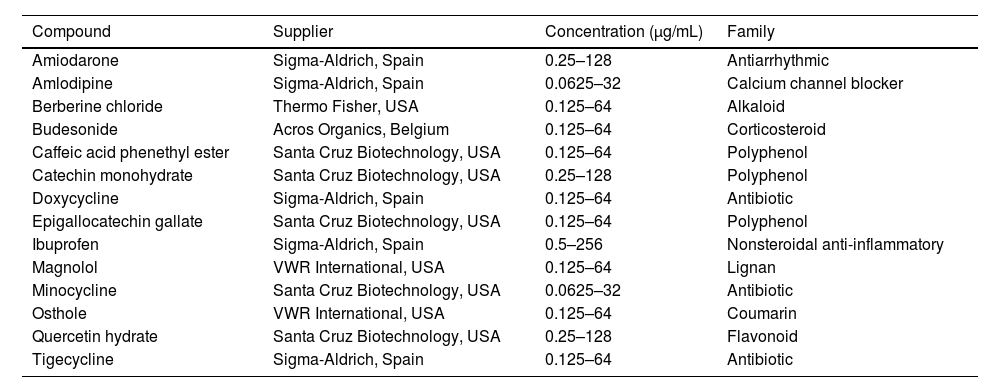
2.2Drugs testedFluconazole (FLZ, Pfizer, Spain) was used at a final concentration ranging from 1 to 64μg/mL. This antifungal was chosen as the reference antifungal compound due to its widespread clinical use against Candida infections and because it is one of the standards used in susceptibility and synergy studies. The other compounds tested in combination with fluconazole included seven compounds of natural origin and seven drugs not indicated for antifungal use, including alkaloids, coumarins, lignans, flavonoids and polyphenols, corticosteroids, antiarrhythmics, antibiotics, anti-inflammatories and calcium channel blockers. All the compounds are listed in Table 1, where it is also detailed the range of concentrations used in the assays, as well as the respective families and common uses of each compound. The selected concentration ranges for these compounds were based on previous studies demonstrating effective antifungal or synergistic activity within these ranges. These compounds exhibited different solubility properties; accordingly, DMSO was used as the solvent in all cases except for minocycline, which was dissolved in water.
Compounds used in combination with fluconazole.
| Compound | Supplier | Concentration (μg/mL) | Family |
|---|---|---|---|
| Amiodarone | Sigma-Aldrich, Spain | 0.25–128 | Antiarrhythmic |
| Amlodipine | Sigma-Aldrich, Spain | 0.0625–32 | Calcium channel blocker |
| Berberine chloride | Thermo Fisher, USA | 0.125–64 | Alkaloid |
| Budesonide | Acros Organics, Belgium | 0.125–64 | Corticosteroid |
| Caffeic acid phenethyl ester | Santa Cruz Biotechnology, USA | 0.125–64 | Polyphenol |
| Catechin monohydrate | Santa Cruz Biotechnology, USA | 0.25–128 | Polyphenol |
| Doxycycline | Sigma-Aldrich, Spain | 0.125–64 | Antibiotic |
| Epigallocatechin gallate | Santa Cruz Biotechnology, USA | 0.125–64 | Polyphenol |
| Ibuprofen | Sigma-Aldrich, Spain | 0.5–256 | Nonsteroidal anti-inflammatory |
| Magnolol | VWR International, USA | 0.125–64 | Lignan |
| Minocycline | Santa Cruz Biotechnology, USA | 0.0625–32 | Antibiotic |
| Osthole | VWR International, USA | 0.125–64 | Coumarin |
| Quercetin hydrate | Santa Cruz Biotechnology, USA | 0.25–128 | Flavonoid |
| Tigecycline | Sigma-Aldrich, Spain | 0.125–64 | Antibiotic |
The in vitro susceptibility testing of C. auris clinical isolates was carried out by determining the MIC following the checkerboard method according to the document EDef 7.3.1. of the European Committee on Antimicrobial Susceptibility Testing (EUCAST) and modified for drug combinations.2,3,13 The culture medium used was RPMI 1640 (Sigma-Aldrich, USA), supplemented with l-arginine and 2% glucose, and buffered with 0.165M morpholino propane sulfonic acid (MOPS). The pH was adjusted to 7.0±0.1, and the medium was then sterilized through filtration and stored at 4°C. Stock solutions of the compounds were prepared in dimethyl sulfoxide (DMSO).
Fluconazole was added to rows A–G in a 96-well flat-bottom microtiter plate at concentrations ranging from 1 to 64μg/mL, while the other compounds were added to columns 2–11 using the concentrations detailed in Table 1. Fifty microliters of the corresponding drug concentration were dispensed in each well. The wells in column 12 served as growth controls, and they were filled with 100μL of RPMI with 2% glucose and 2% DMSO, whereas wells H1 and H12 were used as sterility controls.
C. auris isolates, incubated overnight at 37°C, were suspended in ampoules containing 0.85% NaCl medium (bioMérieux) to obtain an initial inoculum of 0.5–2.5×10⁵CFU/mL. Each well of the microtiter plates, except for H1 and H12, was inoculated with 100μL of this suspension. Reference strains C. parapsilosis ATCC 22019 and P. kudriavzevii ATCC 6258 were included as quality controls. Then, the plates were incubated at 37°C for 48h and the absorbance was measured at 450nm using an Infinite F50 spectrophotometer (Tecan, Switzerland). The experiments were performed in triplicate, with each replicate conducted independently to ensure accuracy and reliability of the results.
2.3.2Data analysis and interpretation of resultsThe interactions between fluconazole and other compounds were evaluated using the non-interaction model, the Loewe additivity theory. This model is based on the fractional inhibitory concentration index (FICI). The FICI is calculated by adding together the fractional inhibitory concentrations (FICs) of each compound, where each FIC is the MIC of the drug in combination divided by the MIC of the drug in monotherapy. Based on the FICI values, interactions can be categorized as synergistic (FICI <0.5), additive (FICI ≥0.5 but <1), indifferent (FICI ≥1 but <4), or antagonistic (FICI ≥4).27
3ResultsThe results of the in vitro activity of the combination of fluconazole with the 14 compounds tested against the 21 isolates of C. auris are shown in Sections 3.1–3.4 and Annex 1. The effect of the combination proved to be additive or synergistic against some of the isolates when fluconazole was combined with caffeic acid phenethyl ester, magnolol, and quercetin hydrate.
The addition of the rest of the compounds tested did not significantly enhance the antifungal activity of fluconazole, as the results of the combinations were interpreted as indifferent.
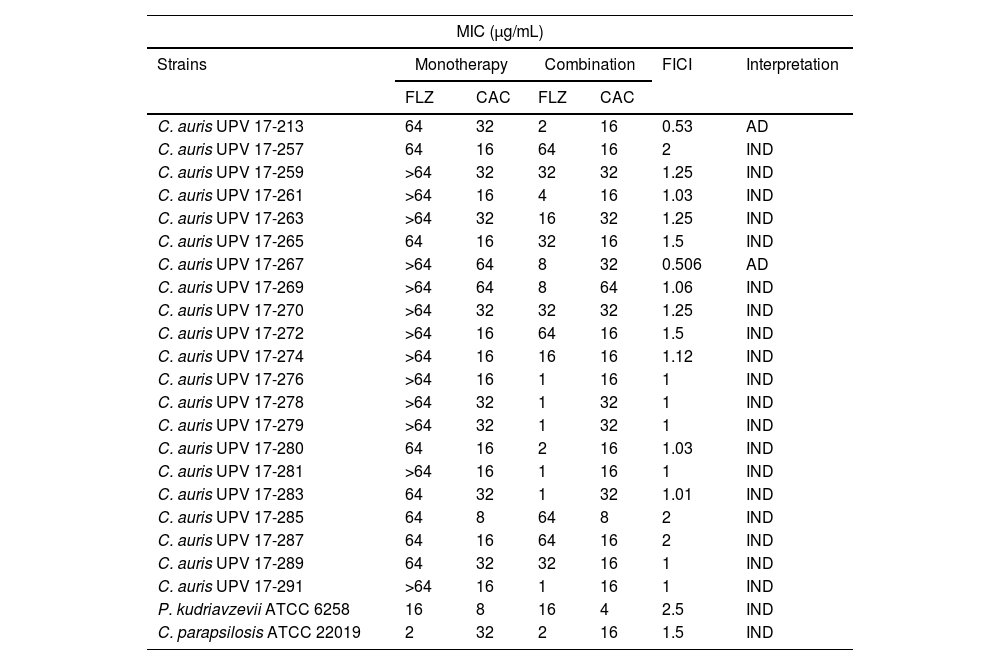
3.1Combination of fluconazole and caffeic acid phenethyl esterThe MICs of fluconazole against the C. auris isolates tested were ≥64μg/mL, whereas MICs of caffeic acid phenethyl ester ranged from 8 to 64μg/mL, both tested in monotherapy. When these compounds were combined, the MICs of fluconazole decreased to 1–32μg/mL against 17 isolates. Following the FICI model, the combination was interpreted as additive in two of the isolates studied, representing 9.52% of the total isolates studied (Table 2).
Antifungal activity, both in monotherapy and in combination, of caffeic acid phenethyl ester and fluconazole against C. auris isolates.
| MIC (μg/mL) | ||||||
|---|---|---|---|---|---|---|
| Strains | Monotherapy | Combination | FICI | Interpretation | ||
| FLZ | CAC | FLZ | CAC | |||
| C. auris UPV 17-213 | 64 | 32 | 2 | 16 | 0.53 | AD |
| C. auris UPV 17-257 | 64 | 16 | 64 | 16 | 2 | IND |
| C. auris UPV 17-259 | >64 | 32 | 32 | 32 | 1.25 | IND |
| C. auris UPV 17-261 | >64 | 16 | 4 | 16 | 1.03 | IND |
| C. auris UPV 17-263 | >64 | 32 | 16 | 32 | 1.25 | IND |
| C. auris UPV 17-265 | 64 | 16 | 32 | 16 | 1.5 | IND |
| C. auris UPV 17-267 | >64 | 64 | 8 | 32 | 0.506 | AD |
| C. auris UPV 17-269 | >64 | 64 | 8 | 64 | 1.06 | IND |
| C. auris UPV 17-270 | >64 | 32 | 32 | 32 | 1.25 | IND |
| C. auris UPV 17-272 | >64 | 16 | 64 | 16 | 1.5 | IND |
| C. auris UPV 17-274 | >64 | 16 | 16 | 16 | 1.12 | IND |
| C. auris UPV 17-276 | >64 | 16 | 1 | 16 | 1 | IND |
| C. auris UPV 17-278 | >64 | 32 | 1 | 32 | 1 | IND |
| C. auris UPV 17-279 | >64 | 32 | 1 | 32 | 1 | IND |
| C. auris UPV 17-280 | 64 | 16 | 2 | 16 | 1.03 | IND |
| C. auris UPV 17-281 | >64 | 16 | 1 | 16 | 1 | IND |
| C. auris UPV 17-283 | 64 | 32 | 1 | 32 | 1.01 | IND |
| C. auris UPV 17-285 | 64 | 8 | 64 | 8 | 2 | IND |
| C. auris UPV 17-287 | 64 | 16 | 64 | 16 | 2 | IND |
| C. auris UPV 17-289 | 64 | 32 | 32 | 16 | 1 | IND |
| C. auris UPV 17-291 | >64 | 16 | 1 | 16 | 1 | IND |
| P. kudriavzevii ATCC 6258 | 16 | 8 | 16 | 4 | 2.5 | IND |
| C. parapsilosis ATCC 22019 | 2 | 32 | 2 | 16 | 1.5 | IND |
FICI: fractional inhibitory concentration index; AD: additive interaction; IND: indifferent interaction; FLZ: fluconazole; CAC: caffeic acid phenethyl ester.
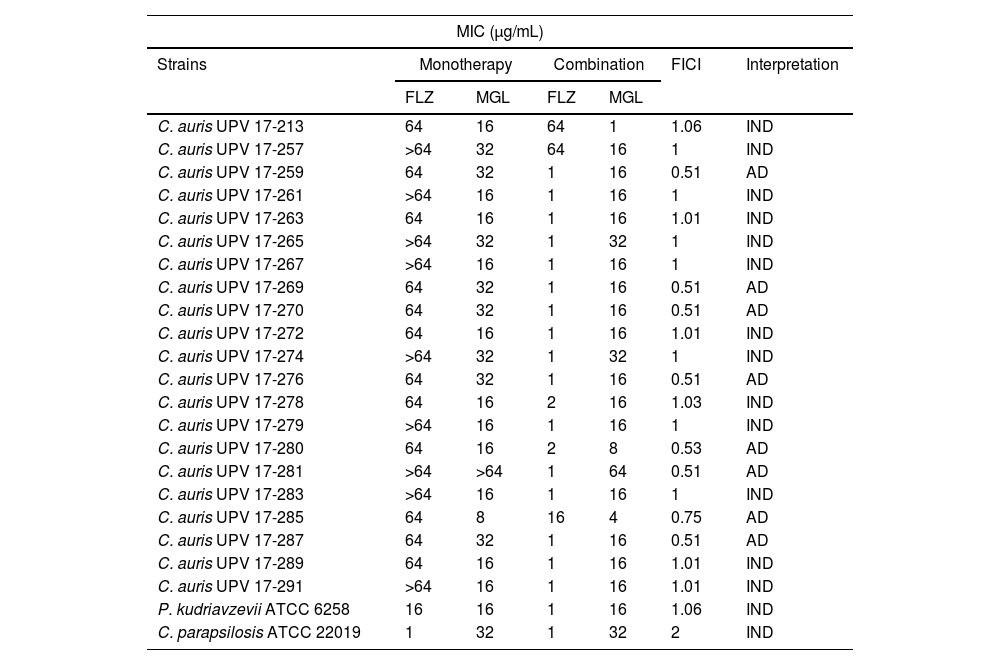
The combination of fluconazole with magnolol showed an additive effect against eight of the C. auris isolates studied, representing 38.09% of the total isolates (Table 3). The MICs of fluconazole were ≥64μg/mL in all cases, whereas the MICs of magnolol ranged from 16 to 32μg/mL, except for isolate C. auris UPV 17-281, with a MIC>64μg/mL. However, when both compounds were combined, although the additive effect was not observed in all cases, the combination succeeded in reducing MICs of fluconazole to 1–16μg/mL in 19 isolates.
Antifungal activity, both in monotherapy and in combination, of magnolol and fluconazole against C. auris isolates.
| MIC (μg/mL) | ||||||
|---|---|---|---|---|---|---|
| Strains | Monotherapy | Combination | FICI | Interpretation | ||
| FLZ | MGL | FLZ | MGL | |||
| C. auris UPV 17-213 | 64 | 16 | 64 | 1 | 1.06 | IND |
| C. auris UPV 17-257 | >64 | 32 | 64 | 16 | 1 | IND |
| C. auris UPV 17-259 | 64 | 32 | 1 | 16 | 0.51 | AD |
| C. auris UPV 17-261 | >64 | 16 | 1 | 16 | 1 | IND |
| C. auris UPV 17-263 | 64 | 16 | 1 | 16 | 1.01 | IND |
| C. auris UPV 17-265 | >64 | 32 | 1 | 32 | 1 | IND |
| C. auris UPV 17-267 | >64 | 16 | 1 | 16 | 1 | IND |
| C. auris UPV 17-269 | 64 | 32 | 1 | 16 | 0.51 | AD |
| C. auris UPV 17-270 | 64 | 32 | 1 | 16 | 0.51 | AD |
| C. auris UPV 17-272 | 64 | 16 | 1 | 16 | 1.01 | IND |
| C. auris UPV 17-274 | >64 | 32 | 1 | 32 | 1 | IND |
| C. auris UPV 17-276 | 64 | 32 | 1 | 16 | 0.51 | AD |
| C. auris UPV 17-278 | 64 | 16 | 2 | 16 | 1.03 | IND |
| C. auris UPV 17-279 | >64 | 16 | 1 | 16 | 1 | IND |
| C. auris UPV 17-280 | 64 | 16 | 2 | 8 | 0.53 | AD |
| C. auris UPV 17-281 | >64 | >64 | 1 | 64 | 0.51 | AD |
| C. auris UPV 17-283 | >64 | 16 | 1 | 16 | 1 | IND |
| C. auris UPV 17-285 | 64 | 8 | 16 | 4 | 0.75 | AD |
| C. auris UPV 17-287 | 64 | 32 | 1 | 16 | 0.51 | AD |
| C. auris UPV 17-289 | 64 | 16 | 1 | 16 | 1.01 | IND |
| C. auris UPV 17-291 | >64 | 16 | 1 | 16 | 1.01 | IND |
| P. kudriavzevii ATCC 6258 | 16 | 16 | 1 | 16 | 1.06 | IND |
| C. parapsilosis ATCC 22019 | 1 | 32 | 1 | 32 | 2 | IND |
FICI: fractional inhibitory concentration index; AD: additive interaction; IND: indifferent interaction; FLZ: fluconazole; MGL: magnolol.
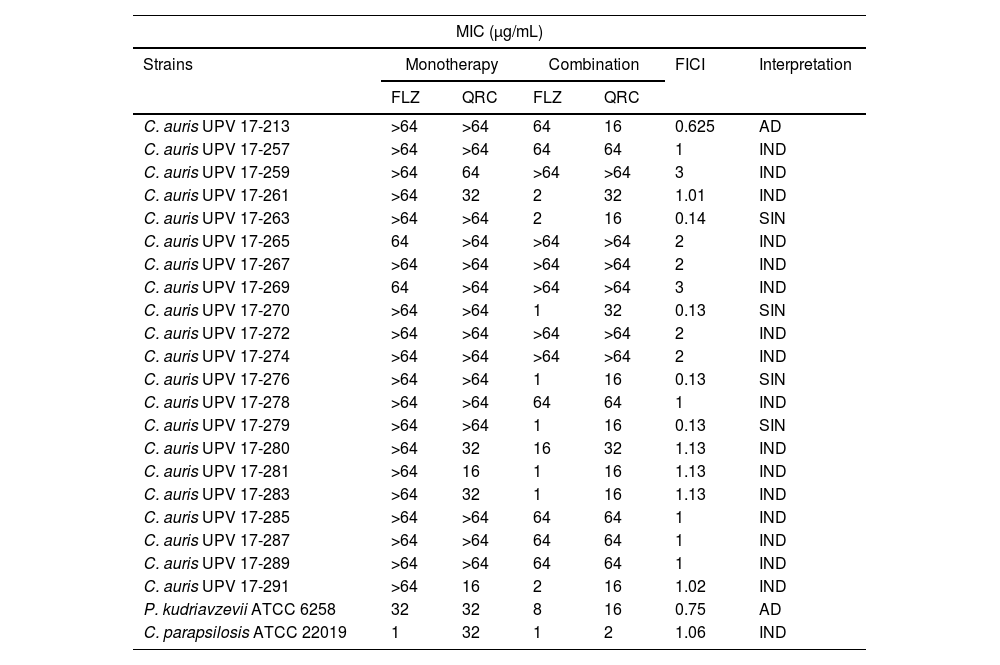
Quercetin exhibited antifungal activity against some of the C. auris isolates studied. The MICs of fluconazole in monotherapy were ≥64μg/mL for all isolates, while the MICs of quercetin ranged from 16 to >64μg/mL. When quercetin and fluconazole were combined, the MIC of fluconazole decreased to 1–2μg/mL in eight isolates (Table 4). The combination showed a synergistic effect in 19.04% of the isolates studied and an additive effect in 4.76% of them.
Antifungal activity, both in monotherapy and in combination, of quercetin hydrate and fluconazole against C. auris isolates.
| MIC (μg/mL) | ||||||
|---|---|---|---|---|---|---|
| Strains | Monotherapy | Combination | FICI | Interpretation | ||
| FLZ | QRC | FLZ | QRC | |||
| C. auris UPV 17-213 | >64 | >64 | 64 | 16 | 0.625 | AD |
| C. auris UPV 17-257 | >64 | >64 | 64 | 64 | 1 | IND |
| C. auris UPV 17-259 | >64 | 64 | >64 | >64 | 3 | IND |
| C. auris UPV 17-261 | >64 | 32 | 2 | 32 | 1.01 | IND |
| C. auris UPV 17-263 | >64 | >64 | 2 | 16 | 0.14 | SIN |
| C. auris UPV 17-265 | 64 | >64 | >64 | >64 | 2 | IND |
| C. auris UPV 17-267 | >64 | >64 | >64 | >64 | 2 | IND |
| C. auris UPV 17-269 | 64 | >64 | >64 | >64 | 3 | IND |
| C. auris UPV 17-270 | >64 | >64 | 1 | 32 | 0.13 | SIN |
| C. auris UPV 17-272 | >64 | >64 | >64 | >64 | 2 | IND |
| C. auris UPV 17-274 | >64 | >64 | >64 | >64 | 2 | IND |
| C. auris UPV 17-276 | >64 | >64 | 1 | 16 | 0.13 | SIN |
| C. auris UPV 17-278 | >64 | >64 | 64 | 64 | 1 | IND |
| C. auris UPV 17-279 | >64 | >64 | 1 | 16 | 0.13 | SIN |
| C. auris UPV 17-280 | >64 | 32 | 16 | 32 | 1.13 | IND |
| C. auris UPV 17-281 | >64 | 16 | 1 | 16 | 1.13 | IND |
| C. auris UPV 17-283 | >64 | 32 | 1 | 16 | 1.13 | IND |
| C. auris UPV 17-285 | >64 | >64 | 64 | 64 | 1 | IND |
| C. auris UPV 17-287 | >64 | >64 | 64 | 64 | 1 | IND |
| C. auris UPV 17-289 | >64 | >64 | 64 | 64 | 1 | IND |
| C. auris UPV 17-291 | >64 | 16 | 2 | 16 | 1.02 | IND |
| P. kudriavzevii ATCC 6258 | 32 | 32 | 8 | 16 | 0.75 | AD |
| C. parapsilosis ATCC 22019 | 1 | 32 | 1 | 2 | 1.06 | IND |
FICI: fractional inhibitory concentration index; AD: additive interaction; IND: indifferent interaction: SIN: synergic interaction; FLZ: fluconazole; QRC: quercetin hydrate.
When analysing the effect of the combination of fluconazole with the other compounds tested, including the drugs amiodarone, amlodipine, budesonide, doxycycline, ibuprofen, minocycline, osthole and tigecycline, or the molecules of natural origin berberine chloride, catechin monohydrate, and epigallocatechin gallate, no reduction in MIC values was observed when compared to the MICs obtained with each of the compounds in monotherapy. In all cases, the interaction was interpreted as indifferent. The MIC values for each of the compounds in monotherapy, as well as for the combinations, are shown in Annex 1.
In one case, in the combination of fluconazole with doxycycline, an additive effect was observed in the control strain C. parapsilosis ATCC 22019. Regarding the control strain P. kudriavzevii ATCC 6258 a synergistic effect was detected with the combination of fluconazole with minocycline and amlodipine.
4DiscussionOne of the major challenges in the treatment of invasive C. auris infections is the high level of drug resistance, along with the ability of this pathogen to develop resistance to the three major classes of antifungal drugs.7 In C. auris this resistance is due to several mechanisms, such as modifications in drug targets, increased efflux pumps activity, and activation of cellular stress response pathways.9 Despite the difficulty of treating these invasive mycoses, in vitro studies have shown promising initial results against multidrug-resistant C. auris isolates using a combination of antifungal drugs, including voriconazole and micafungin.14 This synergistic use of antifungal drugs suggests potential effectiveness in overcoming drug resistance.
In this study, 14 compounds, seven drugs and seven compounds from natural origin, in theory not indicated for antifungal use, were selected and tested for their potential antifungal activities to try to overcome the C. auris drug resistance. These compounds were evaluated, both as monotherapy and in combination, with a well-established antifungal drug as fluconazole, against 21 isolates of C. auris.
With regard to the compounds of natural origin, it is worth considering for combination therapy some purified plant components, many of which are used in traditional Chinese medicine. It has been discovered that more than 300 plants exhibit antimicrobial properties, and some of them have been used as antifungal agents for many years.25 In our study, although no synergistic effects were found when combining magnolol, a lignan derived from the Chinese medicinal plant Magnolia officinalis, with fluconazole, there was a notable decrease in fluconazole MICs for most C. auris isolates tested. The MIC of fluconazole alone, which was over 64μg/mL for all isolates, decreased to 1μg/mL when combined with magnolol. In addition, an additive effect was observed against eight isolates, although the combination did not show synergistic effects. Previous research conducted by Behbehani et al.1 observed that magnolol has antifungal activity against C. dubliniensis, C. albicans, and C. glabrata. Their findings regarding the MIC range for magnolol monotherapy (16–64μg/mL) align closely with our results. According to these researchers, magnolol interacts with ergosterol in the fungal cell membrane, disrupting its integrity and increasing intracellular concentration of fluconazole. This disruption not only enhances the antifungal activity of fluconazole, but also leads to fungal cell death. Furthermore, magnolol was found to be non-toxic to human blood cells, making it a promising compound for combination therapy with fluconazole in treating C. auris infections.
Flavonoids, a group of naturally occurring compounds with diverse phenolic structures, are widely recognized for their significant scientific and therapeutic potential. Notably, compounds like catechin monohydrate, quercetin hydrate, and epigallocatechin gallate have demonstrated antioxidant, antimicrobial, and anti-inflammatory properties.20,21 In this study, the combination of catechin monohydrate and epigallocatechin gallate with fluconazole showed an indifferent effect against all of the 21 isolates of C. auris. However, the combination of quercetin hydrate with fluconazole was synergistic against four of the isolates studied and had an additive effect against one. This outcome aligns with the findings of da Silva et al., who reported a synergistic effect against six C. glabrata isolates they tested.12 The researchers attributed the activity of these flavonoids to an increase in intracellular reactive oxygen species, which can alter cell and mitochondrial membrane permeability, cause DNA damage, and induce apoptosis. Caffeic acid phenethyl ester is another flavonoid compound known for its antibacterial, antiviral, antioxidant, anti-inflammatory, and anticancer properties. It is one of the most extensively studied active components of propolis, a resinous mixture produced by bees. While it did not exhibit antifungal properties as a single agent in this study, combining it with fluconazole reduced fluconazole MIC from ≥64μg/mL to ≥16μg/mL in 13 isolates; in 6 of these isolates, the fluconazole MIC was reduced to 1μg/mL. This combination showed an additive effect against two of the C. auris isolates. Sun et al.32 also found that, although caffeic acid alone was ineffective, its combination with fluconazole reduced MIC values from 64–256μg/mL to 1μg/mL. They observed a synergistic effect against four of the eight C. albicans isolates studied.
Berberine, the primary alkaloid extracted from Rhizoma coptidis, is another extract included in this study. It has shown activity against viruses, protozoa, fungi, and yeasts in previous studies.10 In our work, both berberine alone and in combination with fluconazole showed an indifferent effect against all C. auris isolates. These findings contrast with the results reported by Quan et al.,18 who observed a synergistic effect against 32 out of 40 C. albicans isolates. According to these authors, this interaction might inhibit the enzyme sterol 24-methyltransferase and affect certain resistance factors. Additionally, Xu et al.33 have recently demonstrated that combining berberine with fluconazole increases the production of reactive oxygen species by enhancing the tricarboxylic acid cycle and inhibiting ATP synthase activity.
With regard to the drugs of pharmacological origin tested in combination with fluconazole, although previous publications (which will be cited in each case) report an increase in the effect of the combination compared to fluconazole in monotherapy, this MIC reduction was not detected in our study analyzing C. auris, which gives an idea of the resistance of this species compared to others, such as C. albicans. Amiodarone belongs to class III antiarrhythmics and represents a promising new class of antifungal drugs.11 Despite being considered a potential alternative to currently available treatments, all C. auris isolates in this study were resistant to amiodarone when used both alone or in combination with fluconazole. These results are not in concordance with the findings of da Silva et al.,11 who reported synergistic effects between amiodarone and fluconazole against six C. tropicalis isolates, or Gamarra et al.,15 who observed a synergistic effect of the combination against azole-resistant C. albicans strains. They attributed this synergy to mitochondrial dysfunction caused by the drug combination, suggesting an impact on mitochondrial respiratory function. Although the divergence in results between these studies and ours may be attributable to the different methodologies used, being the Clinical and Laboratory Standards Institute (CLSI) protocol – with visual reading of the results – the methodology in those studies, as opposed to spectrophotometric measurements in ours, the choice of the species C. auris, which has been shown to exhibit a higher degree of resistance compared to C. tropicalis and C. albicans, could be a pivotal factor.
The present study also evaluated the effect of amlodipine when combined with fluconazole. Amlodipine, known for blocking calcium channels, targets the Cch1-Mid1 protein involved in calcium ion regulation.23 When combined with fluconazole, amlodipine showed an indifferent effect against C. auris isolates. This outcome contrasts with findings by Liu et al.,24 who studied the same combination against resistant C. albicans strains. Liu et al. attributed the synergistic effect to the inhibition of calcineurin by suppressing the expression of the CNA1 and CNB1 genes and affecting the YVC1 gene, which encodes the calcium channel protein in the vacuole membrane. This mechanism results in increased intracellular calcium levels, leading to the inhibition of C. albicans growth,24 effect that has not been observed in this work.
This research also studied the combination of fluconazole with three tetracyclines, doxycycline, minocycline, and tigecycline, against C. auris isolates. Tetracyclines are known for their broad antimicrobial properties. The combination of doxycycline and fluconazole against C. auris was indifferent. This is in contrasts with the results of synergy against C. glabrata observed by Hooper et al.,17 which may be attributable to potential efflux pump interference. Tigecycline, though its ability to inhibit biofilm formation, showed no effect against C. auris when combined with fluconazole, differing from the results obtained by Hooper et al.29 in C. glabrata. Minocycline also showed no synergistic effect when combined with fluconazole against C. auris, in contrast to the synergistic effect found by Shi et al. against C. albicans. These discrepancies may stem from behavioral differences in species, resistance levels, and testing methods.
The combination of fluconazole with ibuprofen, a well-known non-steroidal anti-inflammatory drug used as an analgesic and antipyretic, was also tested. In our study the combination showed indifferent effects against all tested C. auris isolates. This finding differs from the results obtained by Costa de Oliveira et al.,8 who reported a synergistic effect when treating experimental candidiasis with two C. albicans isolates in mice. According to these authors, ibuprofen can reverse azole resistance and decrease the virulence of C. albicans. The observed differences may be attributed to the greater susceptibility of C. albicans to fluconazole compared to C. auris, as well as potential variations between in vitro and in vivo studies, where additional factors, such as the immune response to Candida of the murine host, play a crucial role.
Glucocorticoids, a drug group not commonly used to treat infections, are typically reserved for severe infections and septic shock due to their potent anti-inflammatory effects. In our research, a compound that belongs to this family, budesonide, did not exhibit antifungal activity in monotherapy or in combination with fluconazole against C. auris isolates, with MICs exceeding 64μg/mL for all isolates. This finding is not consistent with the study developed by Li et al.,22 who reported a synergistic effect in two out of four C. albicans isolates. They suggested that budesonide might increase in vitro sensitivity by inhibiting the expression of transporter genes CDR1, CDR2, MDR1, and FLU1 in fluconazole-resistant C. albicans.22
The ability of C. auris species to show resistance to different compounds is evident in this work, especially when comparing our results to those obtained with the same compound combinations against other species, such as C. albicans or C. tropicalis. The fact that compounds such as quercetin hydrate, caffeic acid phenethyl ester and magnolol, have offered additive or synergistic results when combined with fluconazole opens up a field of study to elucidate whether this effect is maintained in in vivo models such as Caenorhabditis elegans or Galleria mellonella, and thus provide therapeutic alternatives for the treatment of infections caused by this species. These findings highlight the importance of investigating novel therapies, including unconventional drug combinations, to improve treatment outcomes and efficacy.
CRediT authorship contribution statementConceptualization: Elena Sevillano, Andrea Guridi, Elena Eraso and Guillermo Quindós. Methodology: Iñigo de la Fuente, Andrea Guridi and Elena Sevillano. Formal analysis and investigation: Iñigo de la Fuente, Andrea Guridi and Elena Sevillano. Writing – original draft preparation: Iñigo de la Fuente, Andrea Guridi and Elena Sevillano. Writing – review and editing: Andrea Guridi, Elena Sevillano, Elena Eraso and Guillermo Quindós. Funding acquisition: Andrea Guridi, Elena Sevillano, Elena Eraso and Guillermo Quindós. Resources: Elena Sevillano, Elena Eraso and Guillermo Quindós. Supervision: Elena Sevillano, Elena Eraso and Guillermo Quindós. All authors commented on previous versions of the manuscript. All authors read and approved the final manuscript.
Ethical approvalThis project has received approval from the Ethical Committee of the University of the Basque Country UPV/EHU (M30/2023/256 and M30/2023/257).
FundingThis work was supported by grants PID2020-117983RB-I00 from the Spanish Government MCIN/AEI/10.13039/501100011033 and GIC21/24 IT1607-22 from the Gobierno Vasco-Eusko Jaurlaritza.
Declaration of competing interestsOutside the current study, we declare the following potential conflicts: Guillermo Quindós has received research grants from Astellas Pharma, Pfizer, Merck, Sharp and Dohme, and Scynexis. Guillermo Quindós has served on advisory/consultant boards for Merck, Sharp and Dohme and Scynexis, and he has received speaker honoraria from Abbvie, Astellas Pharma, Merck, Sharp and Dohme, Pfizer, and Synesis. All authors declare no other competing interests.
The authors thank Javier Pemán and Alba Ruiz-Gaitán (Hospital Universitario y Politécnico La Fe, Valencia, Spain) for kindly providing clinical Candida auris isolates.