


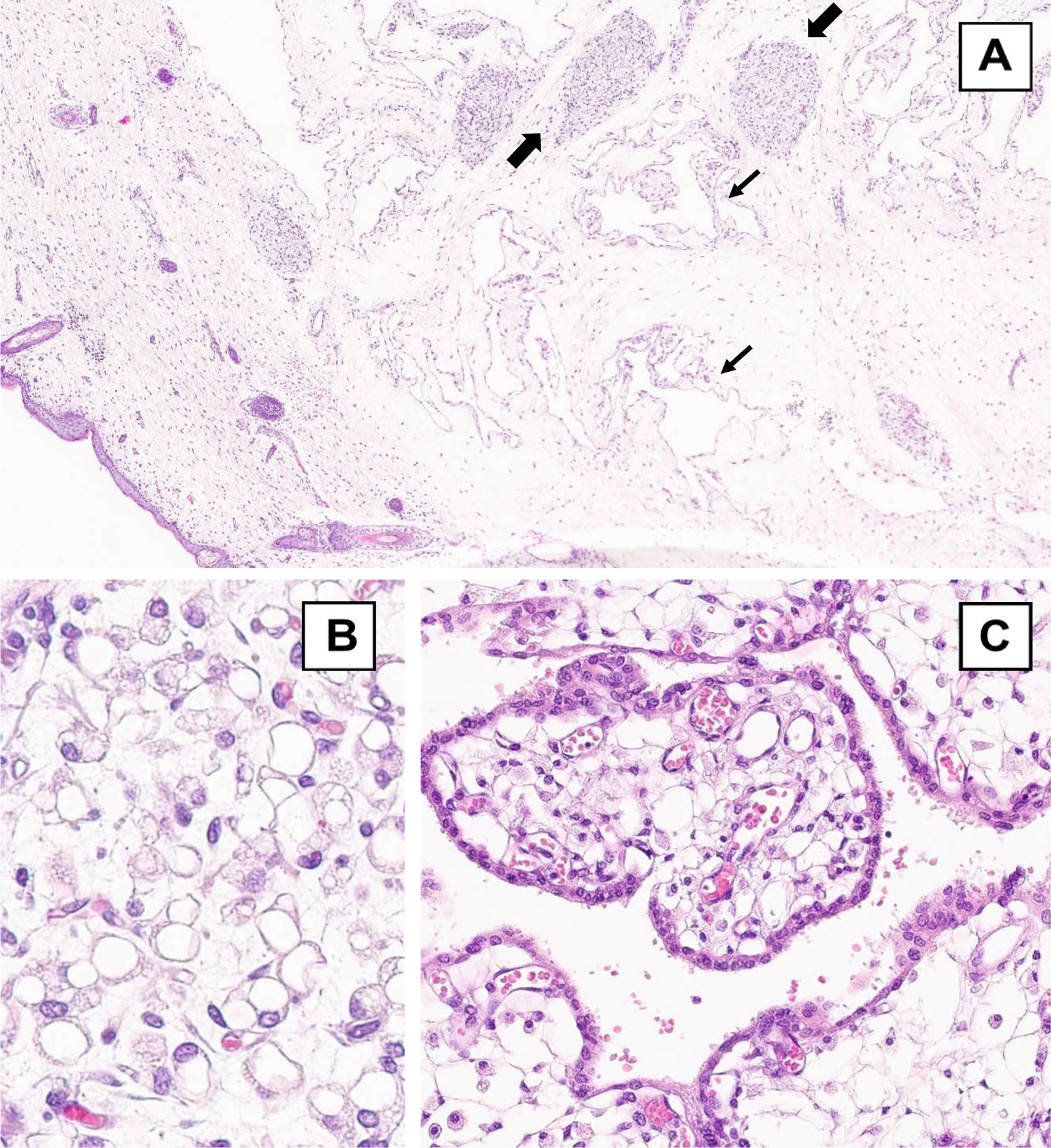


Mucopolysaccharidoses (MPS) are a group of diseases caused by the accumulation of glycosaminoglycans (GAGs). Currently, eleven enzyme deficiencies have been described, with eight different MPS subtypes reported. MPS VII, also known as Sly syndrome, is a recessive disorder caused by pathogenic variants in the GUSB gene. This results in dysfunction of the enzyme β-glucuronidase, which can lead to non-immune hydrops fetalis (NIHF). The patient was a 22-week foetus with pathological nuchal translucency and unfavourable prognosis based on radiological criteria; as a result, both parents opted to terminate the pregnancy. Post mortem examination revealed several hallmarks of NIHF. Moreover, microscopic examination showed widespread histiocytes with microvacuolated cytoplasm. Genetic testing demonstrated biallelic variants in exon 8 of the GUSB gene, but both of uncertain meaning. Subsequent histological findings suggested that these GUSB gene variants resulted in MPS VII.
Las mucopolisacaridosis (MPS) son un grupo de enfermedades causadas por la acumulación de glucosaminoglicanos (GAG). Se han descrito once deficiencias enzimáticas, con ocho subtipos diferentes de MPS. La MPSVII, también conocida como síndrome de Sly, es un trastorno autosómico recesivo causado por variantes patogénicas en el gen GUSB. Esto provoca una disfunción de la enzima β-glucuronidasa, que puede llevar a hidropesía fetal no inmunitaria (HFNI). El paciente era un feto de 22 semanas con translucencia nucal patológica y un pronóstico desfavorable basado en criterios radiológicos; como resultado, ambos progenitores decidieron interrumpir el embarazo. La autopsia reveló varios indicios de HFNI. Además, el examen microscópico mostró histiocitos de distribución amplia con citoplasma microvacuolado. Las pruebas genéticas revelaron variantes bialélicas en el exón8 del gen GUSB, ambas de significado incierto. Los hallazgos histológicos posteriores sugirieron que estas variantes del gen GUSB dieron lugar a MPSVII.