



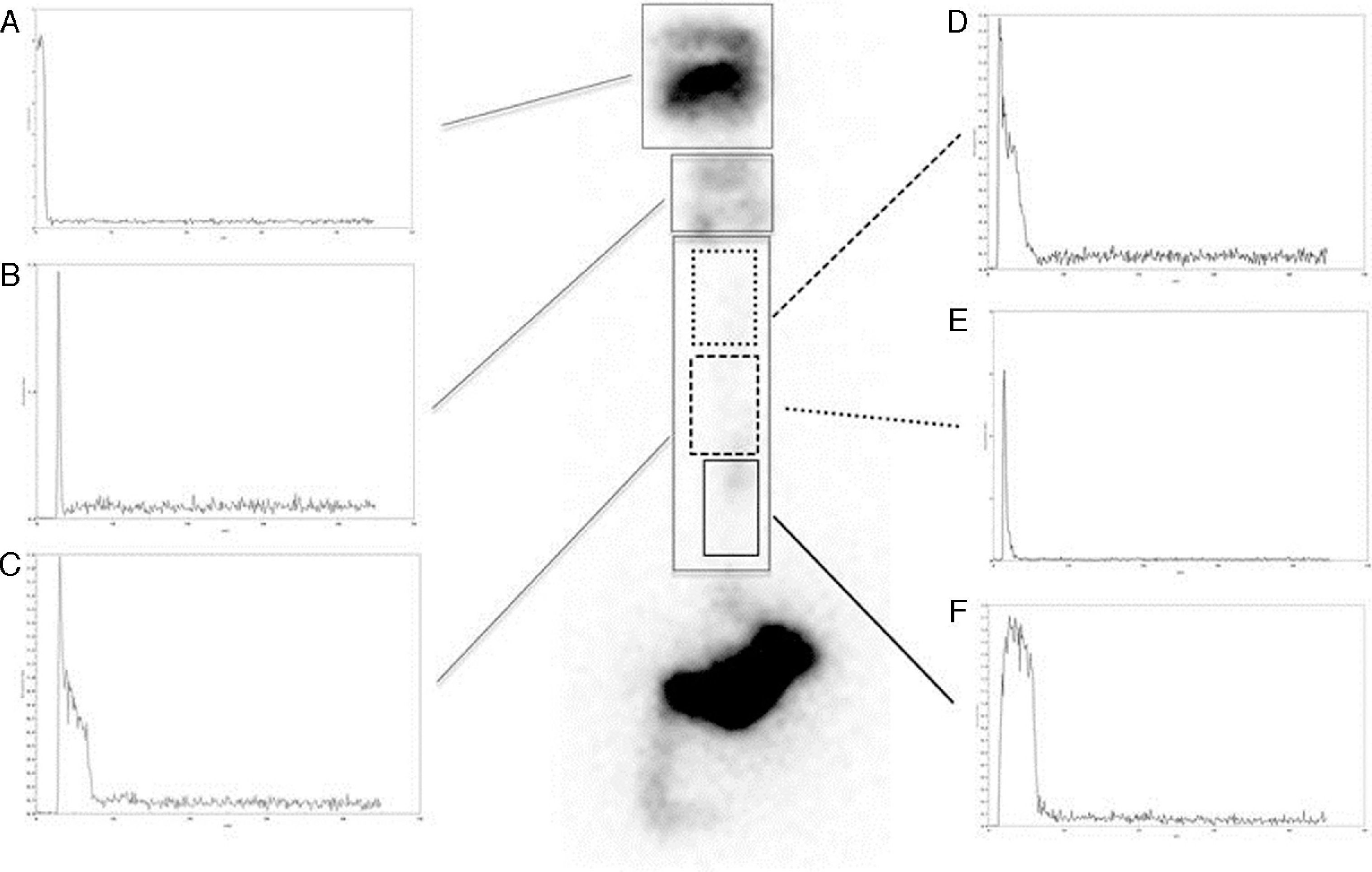
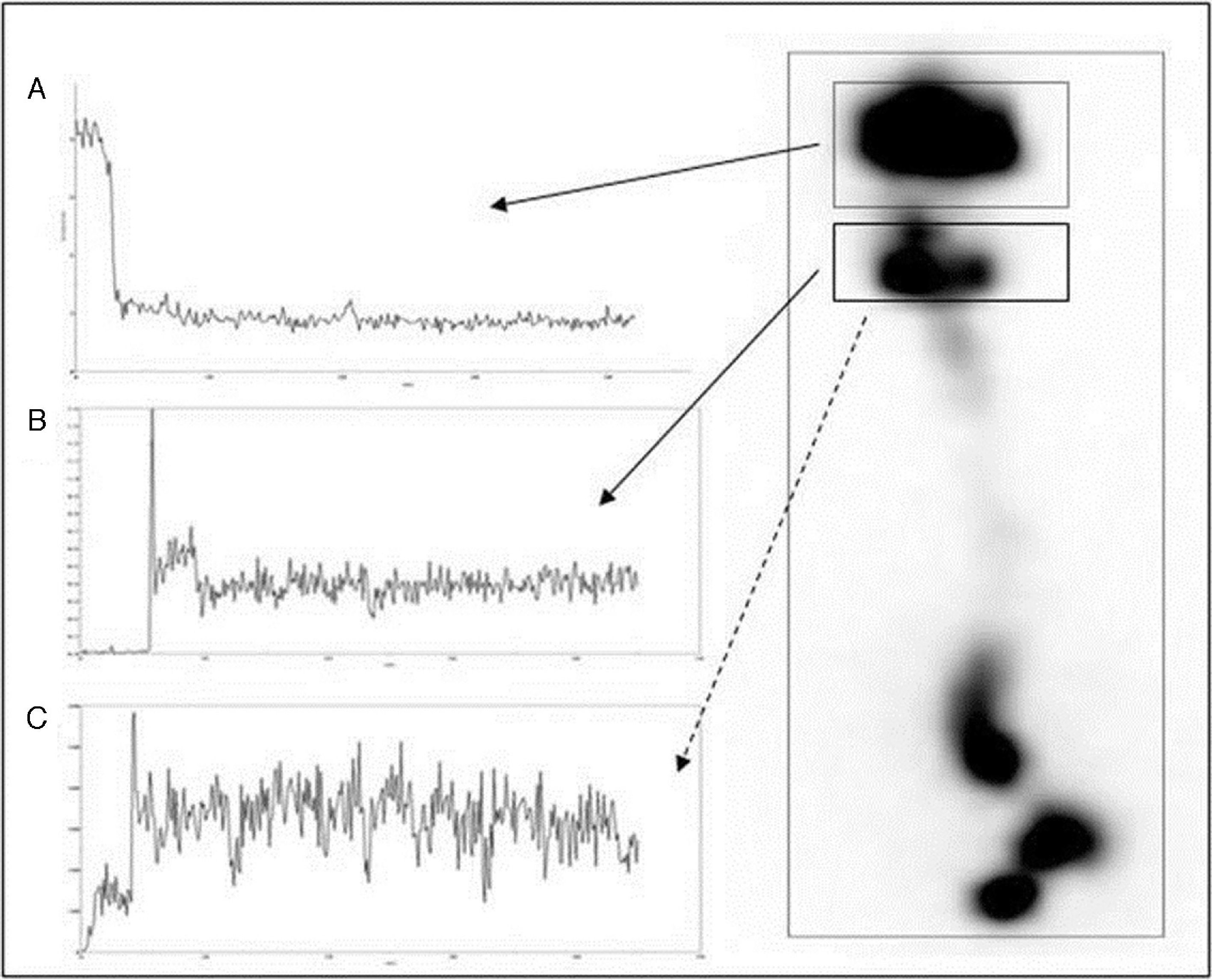
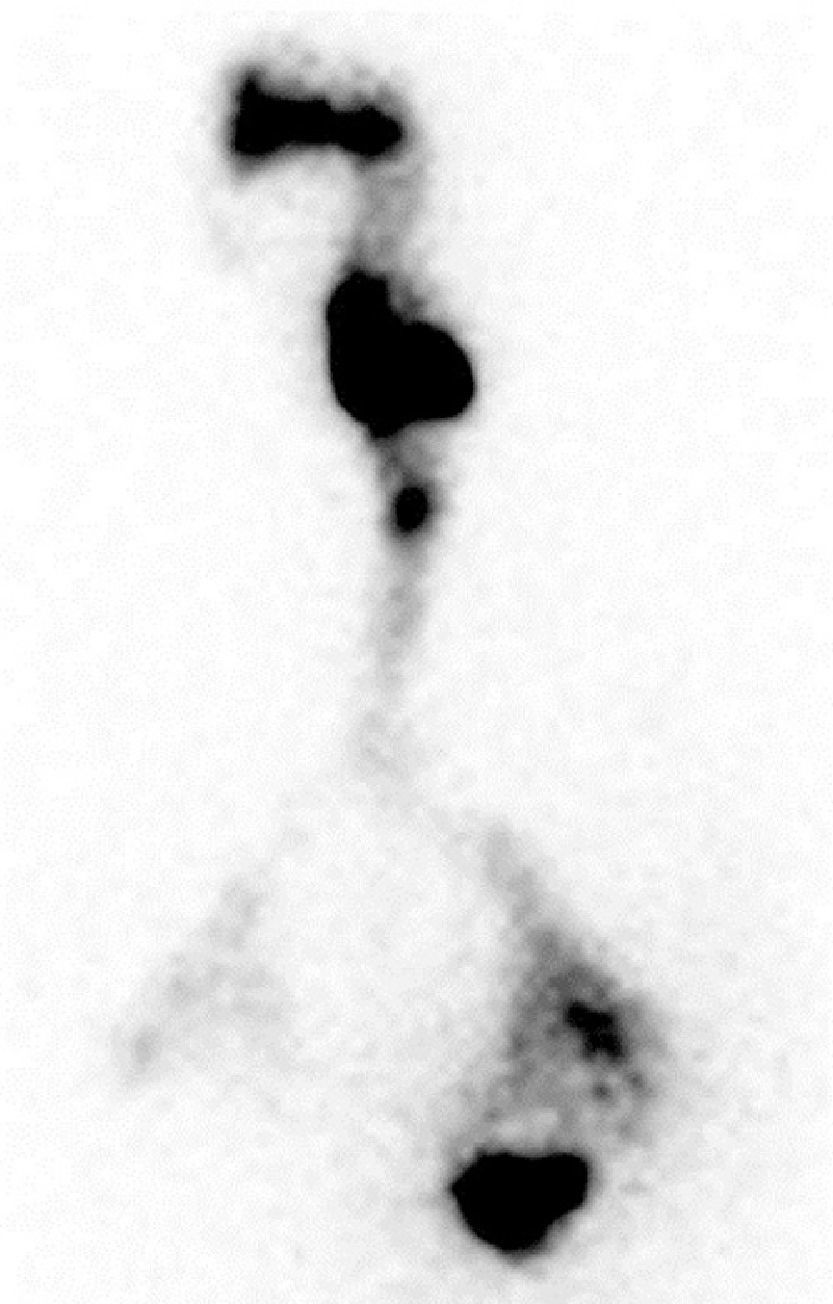
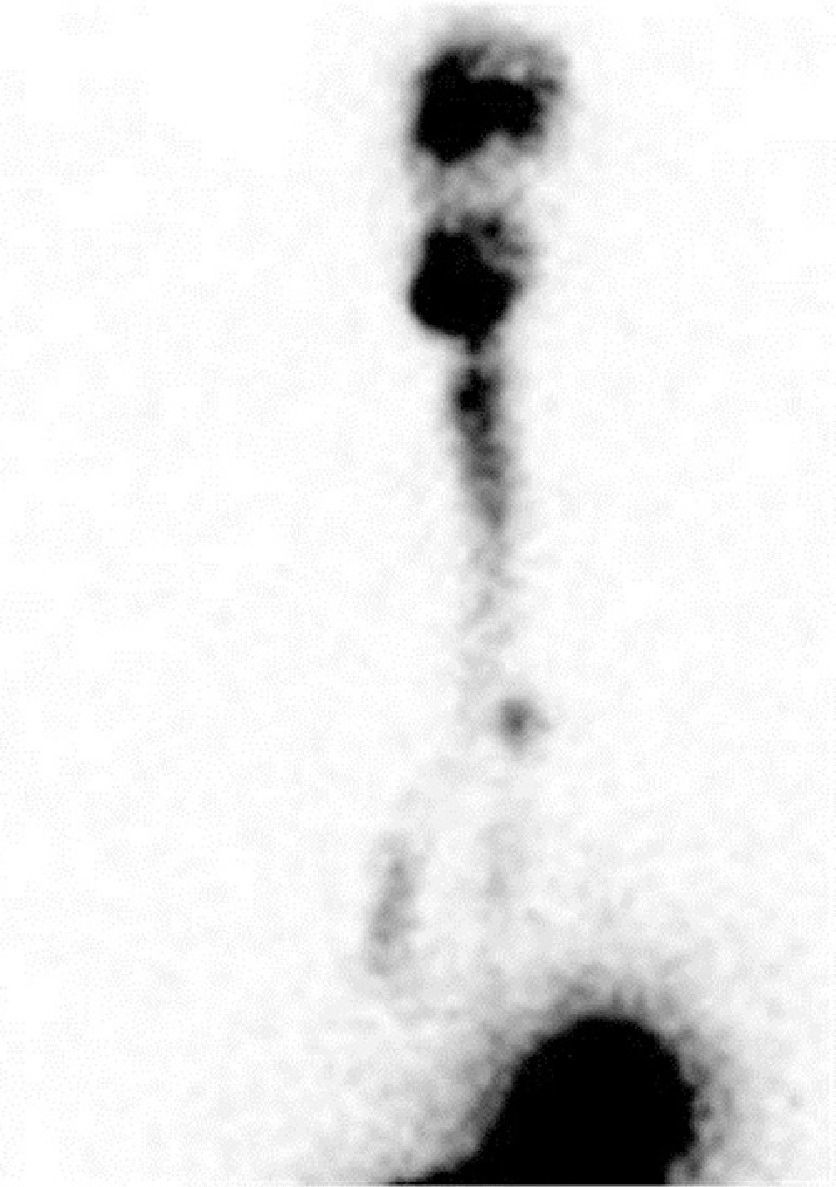
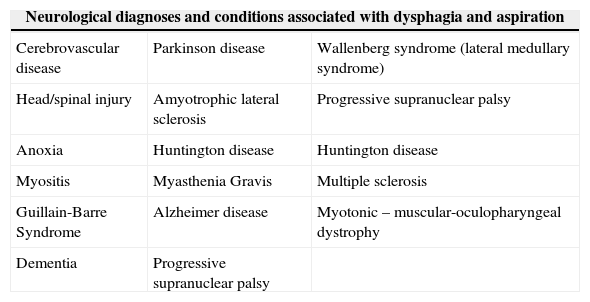
Dysphagia and bolus aspiration are two of the most frequent and invalidating symptoms of various neurological diseases. Swallowing disorders often lead to tracheobronchial aspiration with consequent pneumonia episodes. Aspiration pneumonia per se constitutes the most frequent cause of death in these patients, with mortality rate ranging from 20% to 62%. Oropharyngoesophageal scintigraphy (OPES) permits functional quantitative assessment of the different stages of swallowing, together with the detection and quantitative measurement of bolus aspiration. In this work, we analyzed the role of OPES in patients with different neurological conditions to evaluate swallowing and to detect and quantify bolus aspiration.
Material and methodsWe enrolled 43 neurological patients (25 women and 18 men, mean age 67.3±12.4 yr) complaining of dysphagia with suspected inhalation. All patients underwent OPES with 99mTc-nanocolloid using a liquid bolus first, followed by a semi-solid bolus. We evaluated the following parameters: Oral, Pharyngeal and Esophageal Transit Time, Oro-Pharyngeal Retention Index, Esophageal Emptying Rate, and Aspiration Rate (% AR).
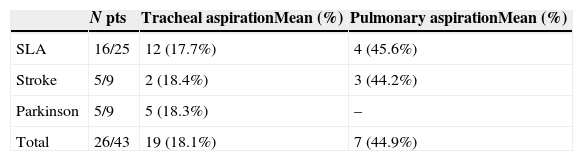
ResultsOPES detected some airway aspiration in 26/43 patients. 19 patients had tracheal aspiration (with a mean 18.1% AR) and the remaining 7 patients had bilateral broncho-pulmonary aspiration (mean 44.9% AR).
ConclusionsOPES is a feasible, repeatable and noninvasive method that allows quantitative assessment of bolus aspiration into the tracheobronchial tract, thus representing a useful and accurate tool to guide the most appropriate treatment and to monitor response to therapy in neurological patients with dysphagia.
La disfagia y la broncoaspiración de comida son 2 de los síntomas más frecuentes e invalidantes de diversas enfermedades neurológicas. Los trastornos de deglución producen una aspiración traqueobronquial y episodios de neumonía. La neumonía por aspiración constituye en sí misma la causa más frecuente de muerte en estos pacientes, con tasas de mortalidad entre 20–62%. La gammagrafía orofaringeoesofágica (OPES) permite la evaluación funcional cuantitativa de los diferentes estadios de la deglución, junto con la detección y la cuantificación de la broncoaspiración. En este trabajo analizamos el papel de la OPES para evaluar la deglución y para detectar y cuantificar la broncoaspiración de comida en pacientes con variadas situaciones neurológicas.
Material y métodosSe estudiaron 43 pacientes neurológicos (25 mujeres y 18 hombres, edad media 67,3+12,4 años) que presentaban disfagia y sospecha de inhalación. A todos los pacientes se les realizó OPES con 99mTc-nanocoloide usando primero un bolo líquido y después un bolo semisólido. Se evaluaron los siguientes parámetros: tiempos de tránsito oral, faríngeo y esofágico, índice de retención orofaríngea, tasa de vaciamiento esofágico, índice de retención orofaríngea, tasa de vaciamiento esofágico y tasa de aspiración (%AR).
ResultadosLa OPES detectó broncoaspiración en 26/43 pacientes. Diecinueve pacientes tuvieron aspiración traqueal (media AR 18,1%) y los restantes 7 pacientes aspiración broncopulmonar bilateral (media AR 44,9%).
ConclusionesLa OPES es un método no invasivo, factible y repetible que permite la evaluación cuantitativa de la aspiración de comida en el tracto traqueobronquial. Por ello, representa un procedimiento útil y exacto para guiar el tratamiento más apropiado y para monitorizar la respuesta terapéutica en pacientes neurológicos con disfagia.
Article
If you experience access problems, you can contact the SEMNIM Technical Secretariat by email at secretaria.tecnica@semnim.es or by phone at +34 619 594 780.
Revista Española de Medicina Nuclear e Imagen Molecular (English Edition)

