





Coronary artery disease is a complex, multifactorial process with high prevalence and morbidity-mortality. Single photon emission computed tomography (SPECT) myocardial perfusion imaging synchronized with the electrocardiogram (gated-SPECT) is a non-invasive imaging technique that has demonstrated high sensitivity and specificity for diagnosis and staging.
To better predict the risk of adverse events, it is necessary to analyze the simultaneous behavior of clinical elements and diagnostic tests, a type of study that is scarce in the current literature.
This research evaluated the relationship between clinical characteristics and gated-SPECT myocardial perfusion parameters with progression to cardiac death; subsequently, a model was built to predict the risk of such an outcome.
MethodsAn observational, longitudinal, and retrospective study was conducted with 2 230 patients who underwent this test due to suspected coronary artery disease.
Clinical characteristics, test parameters, and progression to cardiac death were collected and the relationships between them were studied.
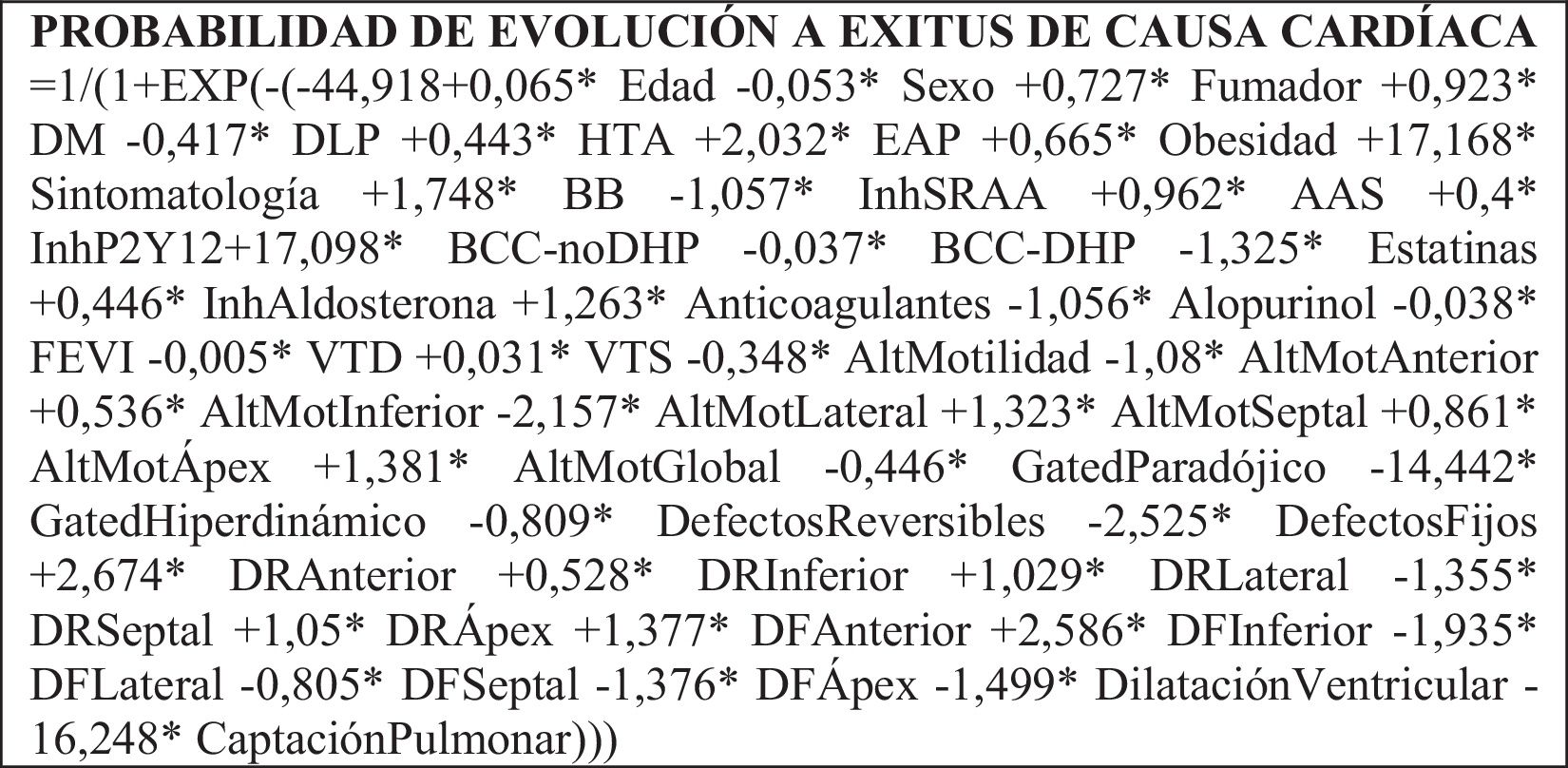
A logistic regression model was built to study the relationships between the variables and their influence on the probability of progression to cardiac death.
ResultsClinical characteristics associated with a higher probability of cardiac death were male sex (OR = 5.104, p = 0.004), peripheral arterial disease (OR = 7.175, p < 0.001), and diabetes mellitus (OR = 3.159, p = 0.013). The gated-SPECT parameters associated with a higher risk of this outcome were VTS ≥70 ml (OR = 12.257, p < 0.001), EF < 50% (OR = 10.757, p < 0.001), VTD ≥140 ml (OR = 8.884, p < 0.001), ventricular dilation (OR = 8.959, p < 0.001), and reversible defects (OR = 7.454, p = 0.001). Fixed defects, parietal motility abnormalities, the presence of both reversible and fixed defects, and the hyperdynamic gated state were also associated with a higher risk of cardiac death but with lower ORs.
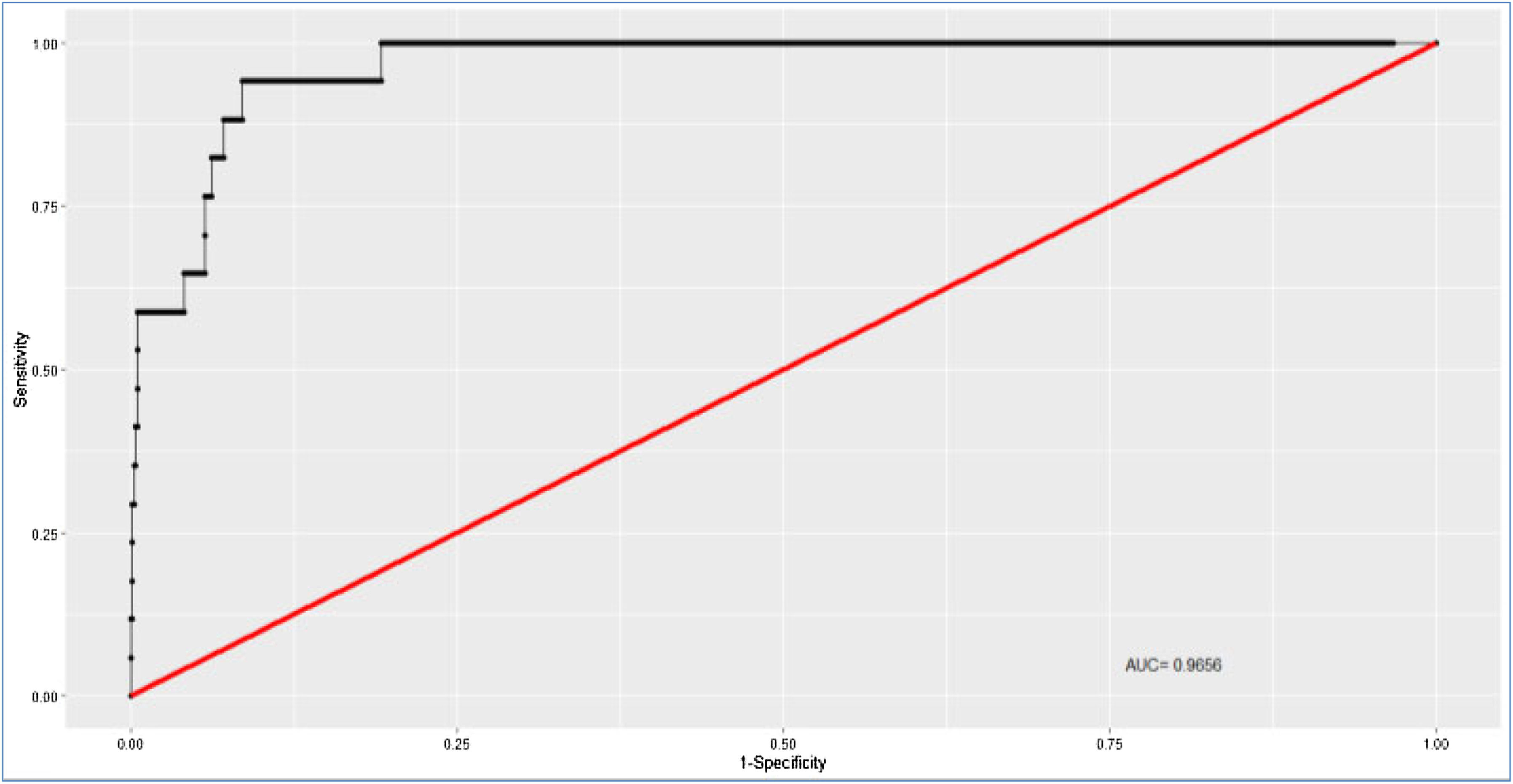
The logistic regression model showed good overall performance and high ability to determine progression to cardiac death, close to perfect predictive capacity (AUC = 0.9656).
La enfermedad arterial coronaria es un proceso complejo y multifactorial con alta prevalencia y morbimortalidad. La tomografía computarizada por emisión de fotón único de perfusión miocárdica sincronizada con el electrocardiograma (gated-SPECT), es una técnica de imagen no invasiva que ha demostrado una alta sensibilidad y especificidad para su diagnóstico y estadificación.
Para predecir mejor el riesgo de acontecimientos adversos hay que analizar el comportamiento simultáneo de elementos clínicos y pruebas diagnósticas, un tipo de estudio que escasea en la literatura actual.
Esta investigación evaluó la relación entre las características clínicas y los parámetros de la gated-SPECT de perfusión miocárdica con la evolución a exitus de causa cardíaca; posteriormente se construyó un modelo para predecir el riesgo de presentar dicha evolución.
MétodosSe efectuó un estudio observacional, longitudinal y retrospectivo de 2 230 pacientes a los que se le realizó dicha prueba por sospecha de enfermedad de la arteria coronaria.
Se recogieron las características clínicas, los parámetros de la prueba y la evolución a exitus de causa cardíaca; se estudiaron las relaciones entre ellas.
Se construyó un modelo de regresión logística para estudiar las relaciones entre las variables y su influencia en la probabilidad de evolucionar a exitus de causa cardíaca.
ResultadosLas características clínicas asociadas a mayor probabilidad de exitus de causa cardíaca fueron el sexo masculino (OR = 5,104, p = 0,004), la enfermedad arterial periférica (OR = 7,175, p < 0,001), y la diabetes mellitus (OR = 3,159, p = 0,013).
Los parámetros de la gated-SPECT que se relacionaron con mayor riesgo de presentar dicha evolución fueron el VTS≥70 ml (OR = 12,257, p < 0,001), la FEVI < 50% (OR = 10,757, p < 0,001), el VTD≥140 ml (OR = 8,884, p < 0,001), la dilatación ventricular (OR = 8,959, p < 0,001), y los defectos reversibles (OR = 7,454, p = 0,001); los defectos fijos, las alteraciones de la motilidad parietal, la presencia de defectos reversibles y fijos a la vez, y el gated hiperdinámico también se asociaron a un mayor riesgo pero con OR menores.
El modelo de regresión logística mostró un buen rendimiento global y una alta capacidad para determinar una evolución a exitus de causa cardíaca; cercana a la capacidad predictiva perfecta (AUC = 0,9656).
ConclusionesEs necesario emplear modelos de riesgo cardiovascular total, que incluyan resultados de pruebas diagnósticas como la gated-SPECT de perfusión miocárdica. El modelo construido presentó buen rendimiento global y es una propuesta válida para predecir el riesgo de fallecer por causa cardíaca.
Article
If you experience access problems, you can contact the SEMNIM Technical Secretariat by email at secretaria.tecnica@semnim.es or by phone at +34 619 594 780.
Revista Española de Medicina Nuclear e Imagen Molecular (English Edition)

