



metricas
Revista Española de Geriatría y Gerontología Demographic, functional and clinical characteristics in hip fracture patients ac...
Información de la revista
Vol. 59. Núm. 3.
(Mayo - Junio 2024)
Cita
Cita
Compartir
Descargar PDF
Más opciones de artículo
Visitas
560
Vol. 59. Núm. 3.
(Mayo - Junio 2024)
Original Article
Acceso a texto completo

Demographic, functional and clinical characteristics in hip fracture patients according to mental status of the Spanish National Hip Fracture Registry

Características demográficas, funcionales y clínicas de los pacientes con fractura de cadera según el estado cognitivo del registro nacional de fractura de cadera
Visitas
560
Elena Romero Pisoneroa,
Autor para correspondencia
, Jesús Mora-Fernándezb, Rocío Queipo Matasc,d, Juan Ignacio González Montalvod,e,f, Marta Neira Álvarezg, Cristina Ojeda Thiesh, Pilar Sáez Lópezd,i, Vincenzo Malafarinaj, on behalf of the participants in the Spanish National Hip Fracture Registry 1
a Geriatrics Section, Hospital la Fuenfría, Cercedilla, Madrid, Spain
b Department of Geriatrics, Health Research Institute of the Hospital Clínico San Carlos (IdISSC), Complutense University, Madrid, Spain
c Europea University, Madrid, Spain
d La Paz Hospital Research Institute (IdiPAZ), Madrid, Spain
e Department of Geriatrics, La Paz University Hospital, Madrid, Spain
f Department of Medicine, Faculty of Medicine, Autonoma University, Madrid, Spain
g Geriatrics Unit, Infanta Sofia University Hospital, Madrid, Spain
h Department of Traumatology and Orthopaedic Surgery, 12 de Octubre University Hospital, Madrid, Spain
i Geriatrics Unit, Fundación Alcorcón University Hospital, Alcorcón, Madrid, Spain
j Department of Geriatrics, Navarra Universitary Hospital, Pamplona, Spain
Ver más
Este artículo ha recibido
Información del artículo
Resumen
Texto completo
Bibliografía
Descargar PDF
Estadísticas
Figuras (1)
fig0005
Tablas (2)
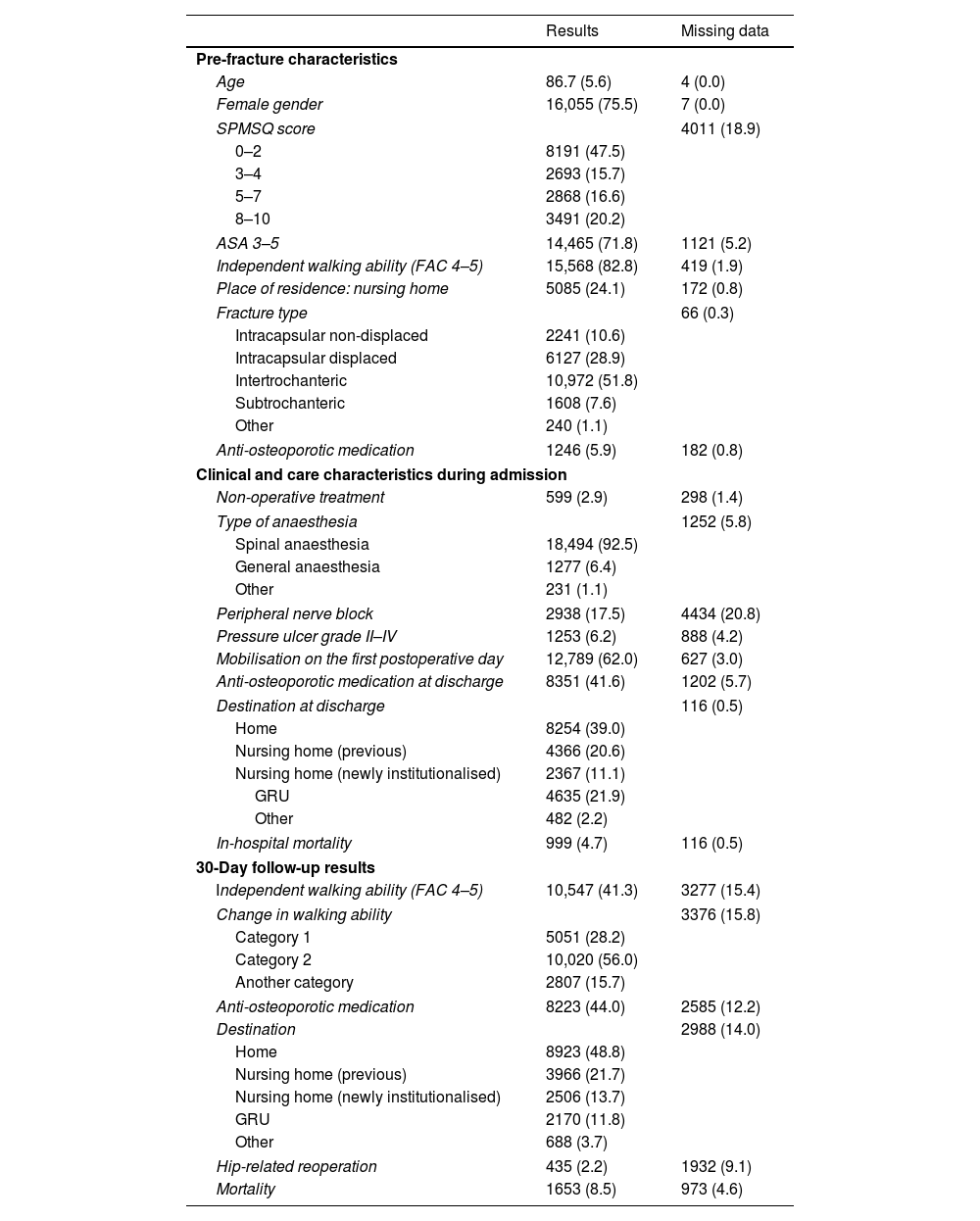
Table 1. Overview of the characteristics of the 21,254 RNFC patients and missing data.
Tablas
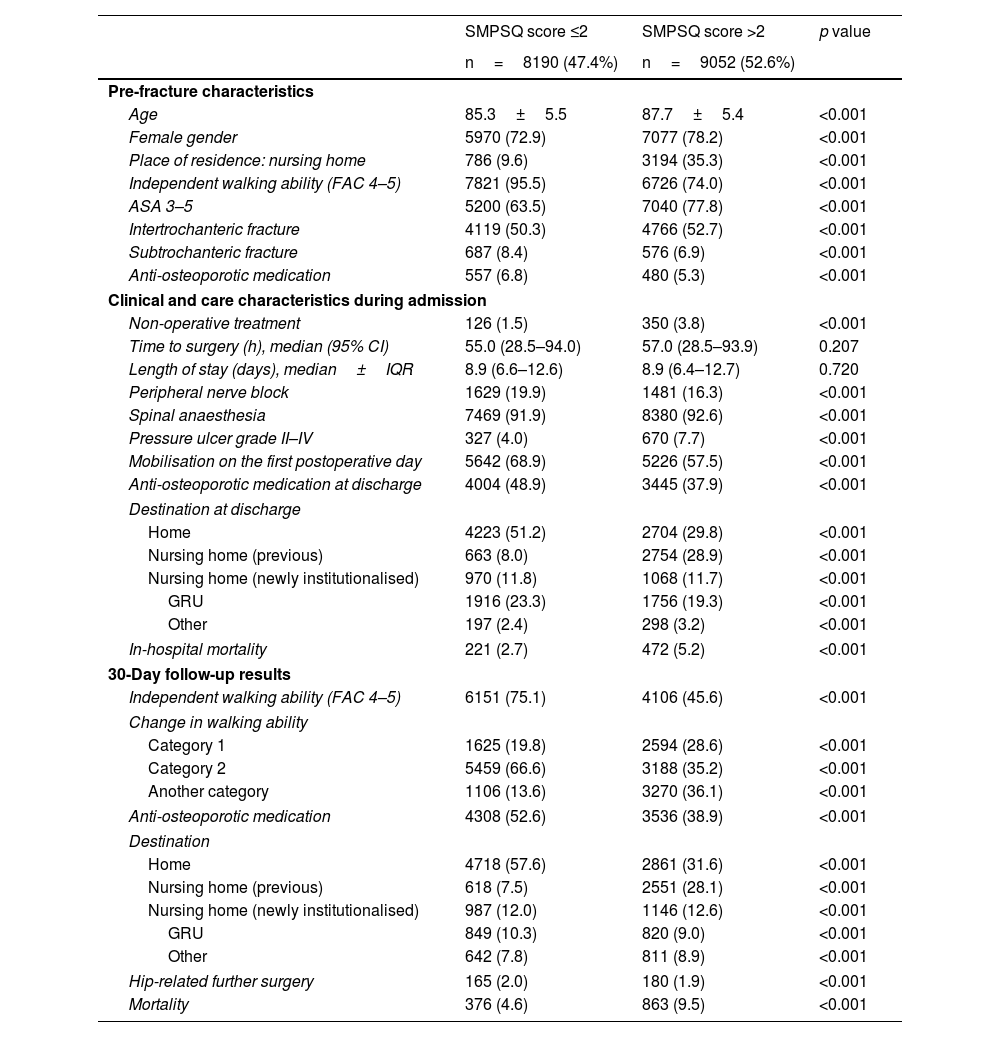
Table 2. Differences in the 17,242 RNFC patients according SPMSQ score: baseline characteristics, in-hospital management, and outcomes at discharge and at 30 days.
Tablas
Abstract
Objective

To describe the differences according to mental status at admission on the care process and 30-day outcomes in hip fracture patients, mainly regarding the use of rehabilitation resources and anti-osteoporotic medication, by analysing data from the Spanish National Hip Fracture Registry (RNFC, “Registro Nacional de Fracturas de Cadera” in Spanish).

Methods

We analysed prospectively collected data from a cohort of patients admitted participating in the Spanish National Hip Fracture Registry (RNFC) in 76 Spanish hospitals between 2017 and 2019. We classified participants using Short Portable Mental Status Questionnaire (SPMSQ), defining two groups: patients with ≤2 SPMSQ score and patients with >2 SPMSQ score.

Results

Of 21,254 patients was recorded SPMSQ in 17,242 patients, 9052 were >2 SPMSQ score (52.6%). These were older (87.7 vs. 85.3 years; p<0.001), had worse mobility (no-independent walking ability 26.0% vs. 4.5%; p<0.001) and were more likely to be living in nursing homes (35.3% vs. 9.6%; p<0.001). They were more likely to be treated nonoperatively (3.8% vs. 1.5%; p>0.001), less early mobilisation (57.5% vs. 68.9%; p<0.001) and suffered higher in-hospital mortality (5.2% vs. 2.7%; p<0.001). At discharge, they received less anti-osteoporotic medication (37.9% vs. 48.9%; p<0.001) and returned home less often (29.8%% vs. 51.2%; p<0.001). One month after fracture, patients with >2 SPMSQ score had poorer mobility (no-independent walking ability 44.4% vs. 24.9%; p<0.001) and were newly institutionalised in a nursing home more (12.6% vs. 12.0%; p<0.001) and were more likely to die by one-month post-fracture (9.5% vs. 4.6%; p<0.001).

Conclusion

RNFC patients with >2 SPMSQ score were more vulnerable and had poorer outcomes than patients with ≤2 SPMSQ score, suggesting that they need specialised care in-hospital and in the recovery phase.

Keywords:
Mental status
Hip fracture
Older people
National registry
Resumen
Objetivo

Describir las diferencias al ingreso, durante el proceso asistencial y a los 30 días del alta, en el paciente con fractura de cadera según el estado cognitivo al ingreso, principalmente en el uso de recursos rehabilitadores y tratamiento antiosteoporótico, mediante el análisis de datos del Registro Nacional de Fractura de Cadera (RNFC).

Método

Analizamos los datos recogidos prospectivamente de la cohorte de pacientes que participaron en el RNFC en 76 hospitales españoles entre los años 2017 y 2019. Clasificamos a los participantes mediante el Short Portable Mental Status Questionnaire (SPMSQ), definiendo 2 grupos: pacientes con puntuación ≤2 SPMSQ y >2 SPMSQ.

Resultados

De 21.254 pacientes se registró el SPMSQ, en 17.242 pacientes, 9.052 tuvieron una puntuación >2 SPMSQ (52,6%). Estos eran mayores (87,7 frente a 85,3 años; p<0,001), tenían peor movilidad (sin capacidad para caminar de forma independiente 26,0 frente al 4,5%; p<0,001) y tenían más probabilidades de vivir en residencia (35,3 frente al 9,6%); p<0,001). Tenían más probabilidades de recibir tratamiento conservador (3,8 frente al 1,5%; p>0,001), menor movilización temprana (57,5 frente al 68,9%; p<0,001) y sufrieron mayor mortalidad hospitalaria (5,2 frente al 2,7%; p<0,.001). Al alta, recibieron menos tratamiento antiosteoporótico (37,9 frente al 48,9%; p<0,001) y regresaron a domicilio con menor frecuencia (29,8 frente al 51,2%; p<0,001). Un mes después de la fractura, los pacientes con puntuación SPMSQ>2 tenían peor movilidad (sin capacidad para caminar de forma independiente 44,4 frente al 24,9%; p<0,001) y fueron institucionalizados recientemente en residencia con mayor frecuencia (12,6 frente al 12,0%; p<0,001), y tenían mayor probabilidad de fallecer al mes de la fractura (9,5 frente al 4,6%; p<0,001).

Conclusión

Los pacientes del RNFC con puntuación en el SPMSQ>2 fueron más vulnerables y tuvieron peores resultados que los pacientes con una puntuación en el SPMSQ2, lo que sugiere que necesitan atención especializada tanto en el hospital como en la fase de rehabilitación.


Palabras clave:
Estado cognitivo
Fractura de cadera
Adulto mayor
Registro nacional
Texto completo
Introduction

People with cognitively impaired are up to three times more likely to sustain a hip fracture than cognitively intact older adults, due to an increased risk of osteoporosis, frailty, and falls.1 The estimated prevalence of hip fracture patients with cognitive impairment was 20–45% according to geographical region and diagnostic criteria.2 It presents a challenge to healthcare system which must respond to their specific needs such as a high dependency, mortality, and use of rehabilitative resources.

Incidence rate of cognitive impairment increases exponentially from the age of 65 onwards, and the proportion of women affected increases in older age groups. The number of individuals with cognitive impairment is predicted to triple worldwide by 2050, from 55.2 million to 130 million.3 The prevalence of cognitive impairment in Spain has been estimated at 45% in community-dwelling adults older than 85 years.4

There are few Spanish studies that analyses baseline intrahospital and follow-up differences according to cognitive status. In addition, these are small studies and use different diagnostic tool. In the first published studies,5,6 a relationship was found between mental status and functional recovery, mortality, and institutionalisation. Subsequently, studies focused on patients with cognitive impairment have emerged,7,8 which also point out differences between the different degrees of cognitive impairment.

In the last years the interest of cognitive impairment impact has increased along with the creation of international hip fracture registries, but in Spain there are very few local studies describing these differences at baseline, during hospitalisation and at follow-up according to their cognitive status.

The aim of these study is to determine the differences according to mental status at admission on their care process and outcomes, mainly regarding the use of rehabilitation resources and anti-osteoporotic medication, by analysing data from the Spanish National Hip Fracture Registry (RNFC, “Registro Nacional de Fracturas de Cadera”).

Methods

The RNFC is a multicentre, observational study of patients admitted with hip fracture. This national registry started in 2017 from the participating voluntary hospitals, most of them included in the National Health Service Network, and it represents 30% of all regions nationally. The inclusion criteria was: having been admitted to one of the participating hospitals with the diagnosis of hip fracture due to fragility (due to a fall from standing height), being older than 74 years of age (75 years or older) and understanding and signing an informed consent (by the patient or their next of kin). The exclusion criterion was any hip fracture occurring as a result of high energy trauma as well as pathologic fractures due to cancer.

Data collection took place in two phases. In the hospital phase, the data corresponding to baseline status and those referring to the process until the time of discharge will be collected by the physician in charge of the patient. In the post-discharge phase, data was collected one month after the fracture by telephone interview or at a follow-up visit by a team member.9 The following variables were analysed: (1) Data on admission: demographics (age and sex), place of residence (own home or institution), mental status (Short Portable Mental State Questionnaire; SPMSQ), anaesthetic risk (ASA risk score; American Society of Anaesthesiologists), mobility (FAC; Functional Ambulation Categories), pre-fracture anti-osteoporotic medication and type of fracture; (2) Data during hospitalisation: surgical treatment, time to surgery, type of anaesthesia, use of peripheral nerve blocks, early mobilisation (mobilisation on the first postoperative day), development of at least grade II pressure ulcers during hospitalisation, and in-hospital mortality; (3) Data at discharge: length of hospital stay, prescription of anti-osteoporotic medication and destination at discharge; and (4) Follow-up at 30 days post-fracture: mortality, place of residence, mobility, anti-osteoporotic medication and fracture-related hospital readmissions.

Cognitive status was assessed at admission using the screening scale SPMSQ with 10 questions and scores between 0 and 10 errors, validated in Spanish by Martínez de la Iglesia et al.10 The evaluation was performed at the situation closest to the patient's baseline, and if in doubt, repeated twice, choosing the result with the best score. We classified participants defining two groups: patients with ≤2 SPMSQ score and patients with >2 SPMSQ score.11–13

Mobility (walking ability) was assessed using the FAC scale, with values between 0 and 5; 0 (not walking or needing help from two people), 1 (walking with full help from one person), 2 (walking with partial help from one person), 3 (walking with supervision from one person), 4 (independent walking on level ground, but needing help to negotiate stairs), and 5 (independent walking on level ground and stairs). The variable “change in walking ability” was created by comparing baseline mobility with mobility 30 days post-fracture, and was classified into two categories: category 1 (functional loss from previous independent walking ability) when changing from FAC 4–5 to FAC 0–3; category 2 (recovery or maintenance of previous independent walking ability) when changing from FAC 4–5 to FAC 4–5; other category included: category 3 (recovery or maintenance of previous independent walking ability) when changing from FAC 4–5 to FAC 4–5 and category 4 (functional gain, recovery of non-independent walking ability) when changing from FAC 0–3 to FAC 4–5.

For this study we analysed patients included between 2017 and 2019. Quantitative variables were described using means and standard deviations if normally distributed and with median values and interquartile ranges (IQR) if not; qualitative variables were described through absolute and relative frequencies. Adjustment to normality was checked by graphical methods. A bivariate analysis was performed comparing mental status and the demographic and clinical characteristics of the patients, time to surgery and hospital stay, mortality, location at discharge and mobility at follow-up. Student's t-test or Mann–Whitney's U test was used to compare dichotomous qualitative variables with quantitative variables, and the Chi-square test to measure the association of two qualitative variables. In all cases, statistical significance was set at a 95% confidence interval (p<0.05). Data were analysed using the SPSS 24.0 statistical package (IBM, Armonk, NY, USA).

Results

A total of 21,254 patients were included on the RNFC during the study period. The mean age was 86.7±5.6 years, 75.6% were female and 24.1% lived in a nursing home. Intertrochanteric fractures were the most common fracture type (51.8%), and 97.1% of patients underwent surgery after an average of 79.0h (95% CI 27.6–94.1h), with a median length of stay of 10.4 days (95% CI 6.6–12.8 days). Demographic, clinical, management and follow-up characteristics as well as the percentage of lost cases for each variable are shown in Table 1. SPMSQ score was recorded in 81.1% of patients, leaving a valid study sample of 17,242 patients. The mean score was 3.7 score (3.4 DS) with 8190 patients (47.4%) with 0–2 SPMSQ score and 9052 patients (52.6%) with more than 2 SPMSQ score; 20.2% (3491 patients) had more than 8 SPMSQ score.

Table 1.

Overview of the characteristics of the 21,254 RNFC patients and missing data.

  Results  Missing data 
Pre-fracture characteristics
Age  86.7 (5.6)  4 (0.0) 
Female gender  16,055 (75.5)  7 (0.0) 
SPMSQ score    4011 (18.9) 
0–2  8191 (47.5)   
3–4  2693 (15.7)   
5–7  2868 (16.6)   
8–10  3491 (20.2)   
ASA 3–5  14,465 (71.8)  1121 (5.2) 
Independent walking ability (FAC 4–5)  15,568 (82.8)  419 (1.9) 
Place of residence: nursing home  5085 (24.1)  172 (0.8) 
Fracture type    66 (0.3) 
Intracapsular non-displaced  2241 (10.6)   
Intracapsular displaced  6127 (28.9)   
Intertrochanteric  10,972 (51.8)   
Subtrochanteric  1608 (7.6)   
Other  240 (1.1)   
Anti-osteoporotic medication  1246 (5.9)  182 (0.8) 
Clinical and care characteristics during admission
Non-operative treatment  599 (2.9)  298 (1.4) 
Type of anaesthesia    1252 (5.8) 
Spinal anaesthesia  18,494 (92.5)   
General anaesthesia  1277 (6.4)   
Other  231 (1.1)   
Peripheral nerve block  2938 (17.5)  4434 (20.8) 
Pressure ulcer grade II–IV  1253 (6.2)  888 (4.2) 
Mobilisation on the first postoperative day  12,789 (62.0)  627 (3.0) 
Anti-osteoporotic medication at discharge  8351 (41.6)  1202 (5.7) 
Destination at discharge    116 (0.5) 
Home  8254 (39.0)   
Nursing home (previous)  4366 (20.6)   
Nursing home (newly institutionalised)  2367 (11.1)   
GRU  4635 (21.9)   
Other  482 (2.2)   
In-hospital mortality  999 (4.7)  116 (0.5) 
30-Day follow-up results
Independent walking ability (FAC 4–5)  10,547 (41.3)  3277 (15.4) 
Change in walking ability    3376 (15.8) 
Category 1  5051 (28.2)   
Category 2  10,020 (56.0)   
Another category  2807 (15.7)   
Anti-osteoporotic medication  8223 (44.0)  2585 (12.2) 
Destination    2988 (14.0) 
Home  8923 (48.8)   
Nursing home (previous)  3966 (21.7)   
Nursing home (newly institutionalised)  2506 (13.7)   
GRU  2170 (11.8)   
Other  688 (3.7)   
Hip-related reoperation  435 (2.2)  1932 (9.1) 
Mortality  1653 (8.5)  973 (4.6) 

Data are expressed as a number (percentage), except for age, which is expressed as a mean (standard deviation).

ASA: American Society of Anaesthesiologists; FAC: Functional Ambulation Categories; GRU: geriatric rehabilitation unit; SPMSQ: Short Portable Mental Status Questionnaire.

Pre-fracture characteristics

Demographic, clinical, and functional differences between hip fracture patients according SPMSQ score are shown in Table 2. Patients with >2 SPMSQ score were older (87.7 vs. 85.3 years; p<0.001), had less independent walking ability (FAC 4–5) (45.6% vs. 75.1%; p<0.001), higher anaesthetic risk (77.8% vs. 63.5%; p<0.001), were more likely to live in a nursing home (35.3% vs. 9.6%; p<0.001) and were received less anti-osteoporotic medication (37.9% vs. 48.9%; p>0.001), compared to those who were ≤2 SPMSQ score. Patients from nursing homes had twice as many cases with >2 SPMSQ score as those living in the community (80.3% vs. 44.1%; p<0.001).

Table 2.

Differences in the 17,242 RNFC patients according SPMSQ score: baseline characteristics, in-hospital management, and outcomes at discharge and at 30 days.

  SMPSQ score ≤2  SMPSQ score >2  p value 
  n=8190 (47.4%)  n=9052 (52.6%)   
Pre-fracture characteristics
Age  85.3±5.5  87.7±5.4  <0.001 
Female gender  5970 (72.9)  7077 (78.2)  <0.001 
Place of residence: nursing home  786 (9.6)  3194 (35.3)  <0.001 
Independent walking ability (FAC 4–5)  7821 (95.5)  6726 (74.0)  <0.001 
ASA 3–5  5200 (63.5)  7040 (77.8)  <0.001 
Intertrochanteric fracture  4119 (50.3)  4766 (52.7)  <0.001 
Subtrochanteric fracture  687 (8.4)  576 (6.9)  <0.001 
Anti-osteoporotic medication  557 (6.8)  480 (5.3)  <0.001 
Clinical and care characteristics during admission
Non-operative treatment  126 (1.5)  350 (3.8)  <0.001 
Time to surgery (h), median (95% CI)  55.0 (28.5–94.0)  57.0 (28.5–93.9)  0.207 
Length of stay (days), median±IQR  8.9 (6.6–12.6)  8.9 (6.4–12.7)  0.720 
Peripheral nerve block  1629 (19.9)  1481 (16.3)  <0.001 
Spinal anaesthesia  7469 (91.9)  8380 (92.6)  <0.001 
Pressure ulcer grade II–IV  327 (4.0)  670 (7.7)  <0.001 
Mobilisation on the first postoperative day  5642 (68.9)  5226 (57.5)  <0.001 
Anti-osteoporotic medication at discharge  4004 (48.9)  3445 (37.9)  <0.001 
Destination at discharge
Home  4223 (51.2)  2704 (29.8)  <0.001 
Nursing home (previous)  663 (8.0)  2754 (28.9)  <0.001 
Nursing home (newly institutionalised)  970 (11.8)  1068 (11.7)  <0.001 
GRU  1916 (23.3)  1756 (19.3)  <0.001 
Other  197 (2.4)  298 (3.2)  <0.001 
In-hospital mortality  221 (2.7)  472 (5.2)  <0.001 
30-Day follow-up results
Independent walking ability (FAC 4–5)  6151 (75.1)  4106 (45.6)  <0.001 
Change in walking ability
Category 1  1625 (19.8)  2594 (28.6)  <0.001 
Category 2  5459 (66.6)  3188 (35.2)  <0.001 
Another category  1106 (13.6)  3270 (36.1)  <0.001 
Anti-osteoporotic medication  4308 (52.6)  3536 (38.9)  <0.001 
Destination
Home  4718 (57.6)  2861 (31.6)  <0.001 
Nursing home (previous)  618 (7.5)  2551 (28.1)  <0.001 
Nursing home (newly institutionalised)  987 (12.0)  1146 (12.6)  <0.001 
GRU  849 (10.3)  820 (9.0)  <0.001 
Other  642 (7.8)  811 (8.9)  <0.001 
Hip-related further surgery  165 (2.0)  180 (1.9)  <0.001 
Mortality  376 (4.6)  863 (9.5)  <0.001 

Data are expressed as number (percentage), or as mean standard deviation.

CI: confidence interval; ASA: American Society of Anaesthesiologists; FAC: Functional Ambulation Categories; GRU: geriatric rehabilitation unit; SPMSQ: Short Portable Mental Status Questionnaire.

Clinical and care characteristics during admission

The differences between the two groups during the acute hospitalisation phase are shown in Table 2. Patients with >2 SPMSQ score were more likely to receive non-operative treatment (3.8% vs. 1.5%; p<0.001), and of those treated surgically, less were mobilised on the first postoperative day (57.5% vs. 68.9%; p<0.001); patients with >2 SPMSQ score also developed more pressure ulcers (7.7% vs. 4.0%; p<0.001) and suffered higher in-hospital mortality (5.2% vs. 2.7%; p<0.001). No differences were found regarding time to surgery and length of stay. At discharge, they were prescribed less anti-osteoporotic medication (37.9% vs. 48.9%; p<0.001) and were less frequently transferred to geriatric rehabilitation units (GRU) (19.3% vs. 23.3%; p<0.001). They also returned home less frequently (29.8% vs. 51.2%; p<0.001).

30-Day follow-up results

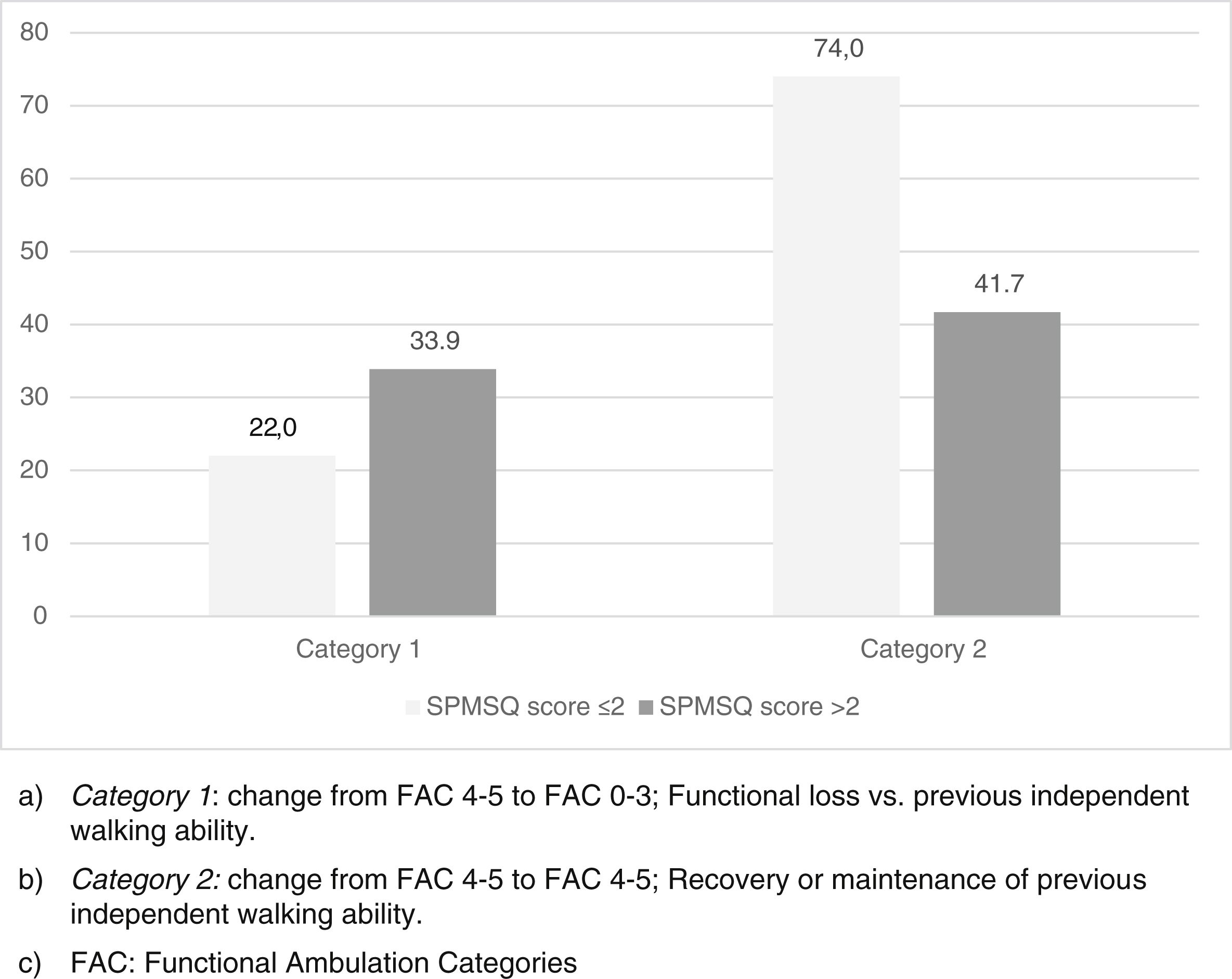
Information at 30-day follow-up in both groups is shown in Table 2. Information on complications related to surgery is collected, requiring more frequent surgical reintervention patients with ≤2 SPMSQ score (2.0% vs. 1.9%; p<0.001). One-month mortality was higher among patients with >2 SPMSQ score (9.5% vs. 4.6%; p<0.001). Regarding mobility at 30 days, Fig. 1 shows that patients with >2 SPMSQ score had worse functional recovery (category 1) than those patients with ≤2 SPMSQ score (33.9% vs. 22.0%; p<0.001). Patients with >2 SPMSQ score able to walk independently at baseline (category 2) maintained or recovered their previous situation less frequently.

Fig. 1.

Differences in the 17,242 RNFC patients with a change in mobility status at 30-day follow-up, among two groups according to SPMSQ score. Category 1: change from FAC 4–5 to FAC 0–3; functional loss vs. previous independent walking ability. Category 2: change from FAC 4–5 to FAC 4–5; recovery or maintenance of previous independent walking ability. FAC: Functional Ambulation Categories.

Discussion

In this multicentre cohort study, we observed that individuals with >2 SPMSQ score were older, more likely to live at nursing home and presented a higher surgical risk compared to patients with ≤2 SPMSQ score. Furthermore, they did not receive the same intensity of medical, surgical or rehabilitation treatment. Patients with >2 SPMSQ score received more non-operative treatment, were less frequently transferred to geriatric rehabilitation units, and were prescribed less anti-osteoporotic medication. Non-recovery of independent walking ability was more common, with higher in-hospital and one-month mortality in this group. These findings are providing new information concerning the treatment and follow-up of people with cognitively impaired cognitive and hip fracture. We explain some of the characteristics studied in more detail.

Pre-fracture characteristics

Firstly, we would like to stress the proportion of patients with >2 SPMSQ score, over half of the sample. In fact, in patients hospitalised for hip fracture, it is recommended by different clinical practice guidelines14,15 to carry out a preoperative medical assessment, including a cognitive assessment, although they do not usually comment how this is to be performed. Other international registers report a decline in mental status between 26% and 39%, using the Abbreviated Mental Test (AMT) screening test, with a cut-off for cognitive impairment of >6 out of 10 correct scores.16 Although in the Italian registry used SPMSQ, with 50% using the same cut-off point >2 out of 10 errors, like our study.11

Additionally, people with cognitive impairment are older, have more risk factors for falls associated with gait disorders, instability, sarcopenia, as well as bone fragility due to osteoporosis. Our results are consistent with these facts (older patients with worse previous functional status), so is important more efforts towards strategies to study and reduce the risk of falls and to improve the prescription of anti-osteoporotic.

Clinical and care characteristics during admission

The results of this study suggest that hip fracture patients with >2 SPMSQ score are more likely be managed conservatively, despite the recommendations of clinical practice guidelines of not performing surgery exceptionally in: patients with a very short life expectancy who will not receive any benefit of surgery, or the risk is greater with a surgical intervention; patients with subacute hip fractures with signs of consolidation, and patients unwilling to undergo surgery. Ethical implications may arise, as different studies,17 show that patients managed nonoperatively have worse results in terms of hospital stay, delayed weight bearing, increased risk of fracture displacement, worse satisfaction, greater functional and cognitive decline, and higher mortality.

On the other side, patients treated surgically are mobilised later compared to patients with <2 SPMSQ score. Analysis of the National Hip Fracture Database and hospital records for 126,897 patients in the United Kingdom's National Hip Fracture Database by Goubar et al.18 show that patients with cognitive impairment were less likely to mobilise early despite observed associations with survival and ambulation recovery for those with and without cognitive impairment. However, they also have a higher prevalence of pressure ulcers, and we cannot exclude the influence of other factors not analysed such as poorer nutritional status, presence of sarcopenia, intercurrent infectious, comorbidities, or delirium. The appearance of ulcers during the postoperative period has been shown to be a risk factor for further complications.19

Regarding pain control and anaesthetic management, there are evidence on the benefits of peripheral nerve blockade, which is recommended to be performed early; it has been shown to reduce the use of opiates, hospital stay, the risk of developing delirium and to favour returning home.20 However, we found it to be used less frequently in patients with >2 SPMSQ score in our study. Although spinal anaesthesia has not been found to outperform general anaesthesia in terms of survival, functional recovery, and occurrence of delirium,21 in our sample it was used more in patients with >2 SPMSQ score.

Also, the mental status influence on hospital length of stay and surgical delay is a matter of controversy. Authors such as Tomioka et al.22 suggest that shorter stays may be associated with a more proactive attitude from healthcare professionals to prevent the onset of delirium during hospitalisation, thus favouring early discharge. Other authors such as Mitchell et al.23 suggest that coming from nursing home may favour early return.

30-Day follow-up results

Patients with cognitive impairment suffer more medical complications, including delirium, as well as surgical complications, with a greater risk of hip dislocation24; we observed greater readmission rates for fracture-related surgical complications.

Among the multiple factors associated with worse functional recovery one month after fracture are mental status, deteriorated baseline functional status, living in a nursing home and less early mobilisation, as observed in our study. The study by González de Villaumbrosia et al.25 conducted on a large RNFC population, describes a predictive tool for functional recovery (HF-prognosis) that includes the SPMSQ score as a negative factor in recovery. In our study, the greatest functional recovery among both groups of patients was in those with better previous functional status, as shown in Fig. 1. The proven benefits of physical rehabilitation in patients with cognitive impairment guide us to facilitate admitting them to an appropriate rehabilitation resource. However, resources are limited and have a variable geographic distribution, as well as differing hospital organisation, patient characteristics, and caregiver preferences. Several studies have observed that patients with cognitive impairment were less likely to have access to rehabilitation resources and received lower-intensity rehabilitation, influencing not functional recovery but also the risk of readmission and mortality.26 Considering these results, we suggest that referral to GRU should be more conditioned by the pre-fracture functional status, regardless of the patient's cognitive status.

Hip fracture is a serious and common problem for older people living in nursing homes, with a greater impact on morbidity and mortality compared community dwellers. Ríos-Germán et al.,27 analysed a large sample of RNFC data and observed that those living in nursing homes were also more vulnerable: they were older, less independently mobile, had higher SPMSQ score and were managed very differently during hospitalisation and at discharge, with poorer outcomes and less use of rehabilitative resources. This was also observed in the Australian and New Zealand Hip Fracture Registry, where patients coming from nursing homes were less likely to receive rehabilitation, and the rehabilitation received varied depending on the presence of cognitive impairment and/or delirium.24 The risk of new institutionalisation in patients with cognitively impaired suffering fractures was higher in our study. The Danish Multidisciplinary Hip Fracture Registry found that age, living alone and having cognitive impairment were the key factors for institutionalisation after fracture, independently of comorbidity.28 Support in nursing homes by professionals from Orthogeriatric Units has been shown to improve mobility and quality of life and to reduce both mortality and readmission rates and could, therefore, be considered a valid alternative. The Norwegian Hip Fracture Register (NHFR) is one of the few registries that routinely collect patient reported outcome measures (PROMs) like pain/discomfort or anxiety/depression of EuroQol five dimension, from patients including cognitively impaired patients and reported lower health-related quality of life pre-fracture, at four and 12 months after the hip fracture.29

Although cognitively impaired patients fit the profile of those at high risk of new fractures (older patients, living in nursing homes, with a high risk of falls and a greater risk of imminent fracture after the first fracture), under-treatment in primary and secondary prevention of osteoporosis is still observed, increasing morbidity, mortality, and healthcare costs.30 In the RNFC study by Alarcón et al.,31 the prescription of anti-osteoporotic medication at discharge was 36.5% with a wide variability between hospitals. Patients with better functional and mental status were more likely to receive anti-osteoporotic medication after hip fracture. The implementation in recent years of the Fracture Liaison Services (FLS) could favour adherence to these treatments, although Moral-Cuesta et al.32 observed that the inclusion of cognitively impaired patients in these programmes is lower. Decisions for initiating and continuing treatment should reflect a patient-centred approach incorporating life expectancy, goals of care, and the potential burden of treatment, not only mental status or living in nursing home. Possibly the under-treatment in these patients could be motivated to believe it has no health benefit or for adverse effects risk.33 But there are studies had proven anti-osteoporosis medication was associated with similar trends in reduced risk of subsequent fracture in frail and non-frail persons.34

Most predictive models show that cognitive impairment is a risk factor for mortality in hip fracture patients. Hou et al.35 showed a two-fold increase of mortality in patients with cognitive impairment compared to those without, in their meta-analysis by causes in the first 30 days post-surgery have been related to cardiovascular, respiratory, and cerebrovascular events. The Nottingham hip fracture score (NHFS) which predicts 30-day mortality and includes cognitive status among other items (age, place of residence and cognitive impairment using the AMT score).36 The Danish Register analysed the excess mortality risk in patients with cognitive impairment and concluded that it could not be explained by clinical management factors such as time to surgery.37 Other authors point out a possible connection with less access to rehabilitation resources,26 the presence of behavioural disorders38 or severity of cognitive impairment as shown in the study by Tarazona-Santalbina et al.,8 with poorer functional and mortality outcomes at higher disease stages.

Among the limitations of the study is the fact that, being carried out at national and multicentre level, participating hospitals did not necessarily apply the same care protocol everywhere. Furthermore, we used a screening cognitive test, and the risk of misclassification with perioperative delirium. For this reason, since 2022 the RNFC use on preoperative and postoperative the 4 AT-ES to be able to detect not only the possible cognitive decline but also the presence of delirium.39

In conclusion, this study shows that the profile of patients with >2 SPMSQ score admitted for hip fracture are vulnerable patients and have a worse previous functional and mental status, and we found differences in terms of the model of care (later mobilisation, lower percentage of surgical treatment, less prescription anti-osteoporotic medication), and worse clinical results as well (higher mortality, worse functional recovery and more pressure injuries). These results guide us to implement measures on modifiable factors such as surgery, early mobilisation, secondary prevention of new fractures, rehabilitation, and quality multidisciplinary care to prevent complications and avoidable mortality.

Informed consent

subjects gave informed consent (patient or relatives).

Ethical approval

This research project was approved by the Ethics Committee of the Hospital Universitario La Paz, Madrid (IdiPAZ project number 2574) and was ratified by the review committees of all participating hospitals.

Funding

The National Hip Fracture Registry was funded by research grant number AP169672018 from the Mutua Madrileña Foundation (call for applications 2018), the Primitivo de Vega grant from the Mapfre Foundation (call for applications 2018), Health research projects (AES 2020), file PI20/00158 and donations to the registry project (PI: 2574) to the IdiPAZ Research Institute by UCB Pharma, AMGEN, Abbott and FAES Farma.

Conflicts of interest

The authors declare that they have no conflicts of interest.

References
[1]
C. Downey, A. Young, E. Burton, S. Graham, R. Macfarlane, E. Tsapakis, et al.
Dementia and osteoporosis in a geriatric population: is there a common link?.
World J Orthop, 8 (2017), pp. 412-423
[2]
D.P. Seitz, N. Adunuri, S.S. Gill, P.A. Rochon.
Prevalence of dementia and cognitive impairment among older adults with hip fractures.
J Am Med Dir Assoc, 12 (2011), pp. 556-564
[3]
GBD 2019 Diseases and Injuries Collaborators.
Global burden of 369 diseases and injuries in 204 countries and territories, 1990–2019: a systematic analysis for the Global Burden of Disease Study 2019.
Lancet, 396 (2020), pp. 1204-1222
[4]
T. Vega, M. Miralles, J.M. Mangas, D. Castrillejo, M. Rivas, M. Gil, et al.
Prevalencia del deterioro cognitivo en España. Estudio Gómez de Caso en redes centinelas sanitarias.
Neurologia, 33 (2018), pp. 491-498
[5]
M. Vidán, J.A. Serra, C. Moreno, G. Riquelme, J. Ortiz.
Efficacy of a comprehensive geriatric intervention in older patients hospitalized for hip fracture: a randomized, controlled trial.
J Am Geriatr Soc, 53 (2005), pp. 1476-1478
[6]
T. Alarcón, J.I. Gonzalez-Montalvo, P. Gotor, R. Madero, A. Otero.
A new hierarchical classification for prognosis of hip fracture after 2 years’ follow-up.
J Nutr Health Aging, 15 (2011), pp. 919-923
[7]
F. Uriz, J.I. Uriz, V. Malafarina.
Factors associated with short-term functional recovery in elderly people with a hip fracture. Influence of cognitive impairment.
J Am Med Dir Assoc, 16 (2015), pp. 215-220
[8]
F.J. Tarazona-Santabalbina, Á. Belenguer-Varea, E. Rovira, E. Salcedo, D. Cuesta, J.R. Doménech-Pascual, et al.
Severity of cognitive impairment as a prognostic factor for mortality and functional recovery of geriatric patients with hip fracture.
Geriatr Gerontol Int, 15 (2015), pp. 289-295
[9]
P. Sáez-López, F. Brañas, N. Sánchez-Hernández, N. Alonso-García, J.I. González-Montalvo.
Hip fracture registries: utility, description, and comparison.
Osteoporos Int, 28 (2017), pp. 1157-1166
[10]
J. Martínez de la Iglesia, R. Dueñas, C. Onís, C. Aguado, A. Colomer, R. Luque.
Adaptación y validación al castellano del cuestionario de Pfeiffer (SPMSQ) para detectar la existencia de deterioro cognitivo en personas mayores de 65 año.
Med Clin, 117 (2001), pp. 129-134
[11]
M.C. Ferrara, A. Andreano, E. Tassistro, P. Rapazzini, A. Zurlo, S. Volpato, et al.
Three-year national report from the Gruppo Italiano di Ortogeriatria (GIOG) in the management of hip-fractured patients.
Aging Clin Exp Res, 32 (2020), pp. 1245-1253
[12]
P. Ariza-Vega, M. Lozano-Lozano, R. Olmedo-Requena, L. Martín-Martín, J.J. Jiménez-Moleón.
Influence of cognitive impairment on mobility recovery of patients with hip fracture.
Am J Phys Med Rehabil, 96 (2017), pp. 109-115
[13]
M.G. Benedetti, V. Ginex, E. Mariani, A. Zati, A. Cotti, E. Pignotti, et al.
Cognitive impairment is a negative short-term and long-term prognostic factor in elderly patients with hip fracture.
Eur J Phys Rehabil Med, 51 (2015), pp. 815-823
[14]
M. Kennedy, D.S.L. Shirley.
Improving identification of cognitive impairment in fragility fracture patients: impact of educational guidelines on current practice.
Geriatr Orthop Surg Rehabil, 11 (2020),
[15]
J.S.L. Partridge, J. Ryan, J.K. Dhesi.
CPOC-BGS perioperative frailty guideline group. New guidelines for the perioperative care of people living with frailty undergoing elective and emergency surgery – a commentary.
Age Ageing, 51 (2022), pp. afac237
[16]
C. Ojeda-Thies, P. Sáez-López, C.T. Currie, F.J. Tarazona-Santalbina, T. Alarcón, A. Muñoz-Pascual, et al.
Spanish National Hip Fracture Registry (RNFC): analysis of its first annual report and international comparison with other established registries.
Osteoporos Int, 30 (2019), pp. 1243-1254
[17]
P. Cserháti, G. Kazár, J. Manninger, K. Fekete, S. Frenyó.
Non-operative or operative treatment for undisplaced femoral neck fractures: a comparative study of 122 non-operative and 125 operatively treated cases.
[18]
A. Goubar, F.C. Martin, C. Potter, G.D. Jones, C. Sackley, S. Ayis, et al.
The 30-day survival and recovery after hip fracture by timing of mobilization and dementia: a UK database study.
Bone Joint J, 103B (2021), pp. 1317-1324
[19]
A.R. Galivanche, K.J. Kebaish, M. Adrados, T.D. Ottesen, A.G. Varthi, L.E. Rubin, et al.
Postoperative pressure ulcers after geriatric hip fracture surgery are predicted by defined preoperative comorbidities and postoperative complications.
J Am Acad Orthop Surg, 28 (2020), pp. 342-435
[20]
C.H. Kim, J.Y. Yang, C.H. Min, H.C. Shon, J.W. Kim, E.J. Lim.
The effect of regional nerve block on perioperative delirium in hip fracture surgery for the elderly: a systematic review and meta-analysis of randomized controlled trials.
Orthop Traumatol Surg Res, 108 (2022), pp. 103151
[21]
T. Li, J. Li, L. Yuan, J. Wu, C. Jiang, J. Daniels, et al.
Effect of regional vs general anesthesia on incidence of postoperative delirium in older patients undergoing hip fracture surgery: the RAGA Randomized Trial.
[22]
S. Tomioka, M. Rosenberg, K. Fushimi, S. Matsuda.
An analysis of equity in treatment of hip fractures for older patients with dementia in acute care hospitals: observational study using nationwide hospital claims data in Japan.
BMC Health Serv Res, 20 (2020), pp. 830
[23]
R. Mitchell, B. Draper, H. Brodaty, J. Close, H.P. Ting, R. Lystad, et al.
An 11-year review of hip fracture hospitalisations, health outcomes, and predictors of access to in-hospital rehabilitation for adults ≥65 years living with and without dementia: a population-based cohort study.
Osteoporos Int, 31 (2020), pp. 465-474
[24]
Y. Tsuda, H. Yasunaga, H. Horiguchi, S. Ogawa, H. Kawano, S. Tanaka.
Association between dementia and postoperative complications after hip fracture surgery in the elderly: analysis of 87,654 patients using a national administrative database.
Arch Orthop Trauma Surg, 135 (2015), pp. 1511-1517
[25]
C. González de Villaumbrosia, P. Sáez López, I. Martín de Diego, C. Lancho Martín, M. Cuesta Santa Teresa, T. Alarcón, et al.
Predictive model of gait recovery at one month after hip fracture from a national cohort of 25,607 patients: the hip fracture prognosis (HF-prognosis) tool.
Int J Environ Res Public Health, 18 (2021), pp. 380
[26]
R. Mitchell, L. Harvey, H. Brodaty, B. Draper, J. Close.
Hip fracture and the influence of dementia on health outcomes and access to hospital-based rehabilitation for older individuals.
Disabil Rehabil, 38 (2016), pp. 2286-2295
[27]
P.P. Ríos-Germán, A. Gutierrez-Misis, R. Queipo, C. Ojeda-Thies, P. Sáez-López, T. Alarcón, et al.
Differences in the baseline characteristics, management and outcomes of patients with hip fractures depending on their pre-fracture place of residence: the Spanish National Hip Fracture Registry (RNFC) cohort.
Eur Geriatr Med, 12 (2021), pp. 1021-1029
[28]
L.R. Wahlsten, L. Smedegaard, S. Brorson, G. Gislason, H. Palm.
Living settings and cognitive impairment are stronger predictors of nursing home admission after hip fracture surgery than physical comorbidities A nationwide Danish cohort study.
Injury, 51 (2020), pp. 2289-2294
[29]
M.H. Kristoffersen, E.H. Dybvik, O.M. Steihaug, T.B. Kristensen, L.B. Engesæter, A.H. Ranhoff, et al.
Patient-reported outcome measures after hip fracture in patients with chronic cognitive impairment: results from 34,675 patients in the Norwegian Hip Fracture Register.
Bone Jt Open, 2 (2021), pp. 454-465
[30]
N. Mughal, A.J. Inderjeeth, C.A. Inderjeeth.
Osteoporosis in patients with dementia is associated with high morbidity and mortality: findings from a single orthogeriatric unit.
Aust J Gen Pract, 48 (2019), pp. 53-55
[31]
T. Alarcon, C. Ojeda-Thies, P. Sáez-López, P. Gomez-Campelo, L. Navarro-Castellanos, A. Otero-Puime, et al.
Usefulness of a National Hip Fracture Registry to evaluate the profile of patients in whom antiosteoporotic treatment is prescribed following hospital discharge.
Osteoporos Int, 31 (2020), pp. 1369-1375
[32]
D. Moral-Cuesta, A. Gutiérrez-Misis, B.A.C. Veloz, P. Matovelle-Ochoa, I.M. Epelde, T.A. Alarcón, et al.
Profile and 3-month evolution of geriatric patients after a hip fracture followed-up at a Fracture Liaison Service (FLS).
Rev Esp Geriatr Gerontol, 57 (2022), pp. 205-211
[33]
Y. Haasum, J. Fastbom, L. Fratiglioni, K. Johnell.
Undertreatment of osteoporosis in persons with dementia? A population-based study.
Osteoporos Int, 23 (2012), pp. 1061-1068
[34]
T. Chattaris, G. Oh, N.A. Gouskova, D.H. Kim, D.P. Kiel, S.D. Berry.
Osteoporosis medications prevent subsequent fracture in frail older adults.
J Bone Miner Res, 37 (2022), pp. 2103-2111
[35]
M. Hou, Y. Zhang, A.C. Chen, T. Liu, H. Yang, X. Zhu, et al.
The effects of dementia on the prognosis and mortality of hip fracture surgery: a systematic review and meta-analysis.
Aging Clin Exp Res, 33 (2021), pp. 3161-3172
[36]
B. Pallardo Rodil, J. Gómez Pavón, P. Menéndez Martínez.
Hip fracture mortality: predictive models.
Med Clin (Barc), 27 (2020), pp. 221-231
[37]
J.D. Petersen, V.D. Siersma, S. Wehberg, C.T. Nielsen, B. Viberg, F.B. Waldorff.
Clinical management of hip fractures in elderly patients with dementia and postoperative 30-day mortality: a population-based cohort study.
Brain Behav, 10 (2020), pp. e01823
[38]
V. Bränsvik, E. Granvik, L. Minthon, P. Nordström, K. Nägga.
Mortality in patients with behavioural and psychological symptoms of dementia: a registry-based study.
Aging Ment Health, 25 (2021), pp. 1101-1109
[39]
E. Delgado-Parada, D. Morillo-Cuadrado, J. Saiz-Ruiz, A. Cebollada-Garcia, J.L. Ayuso-Mateos, A.J. Cruz-Jentoft.
Diagnostic accuracy of the Spanish version of the 4AT scale (4AT-ES) for delirium screening in older inpatients.
Eur J Psychiatry, 36 (2022), pp. 182-190

See http://rnfc.es/wp-content/uploads/2019/12/Organigrama-RNFC_1.pdf.

Copyright © 2023. SEGG
asdasdasd
Opciones de artículo
Herramientas