

La determinación de la resistencia a la insulina (RI) es esencial para identificar sujetos con riesgo de enfermedad de hígado graso no alcohólica (NAFLD). Un área particular de interés es la capacidad de identificar pacientes con NAFLD mediante biomarcadores no invasivos. El objetivo de este estudio fue evaluar la sensibilidad, especificidad y valor predictivo del índice metabólico para detectar NAFLD.
Materiales y métodosSe realizó un estudio retrospectivo. Los individuos elegibles para la inclusión fueron adultos de ambos sexos de 18 a 85 años con y sin NAFLD. La medición de la esteatosis hepática se realizó utilizando el parámetro de atenuación controlada (CAP) a través de FibroScan®. Se calculó el índice metabólico a través de la fórmula (glucosa en ayunas x TG/HDL-C2). El estudio se llevó a cabo en la Clínica de Especialidad Gastrointestinal y Hepática en Yucatán, México, entre enero de 2014 y noviembre de 2020 en una muestra seleccionada por conveniencia. En un total de 138 sujetos (32 sanos y 106 pacientes con NAFLD) se obtuvieron medidas antropométricas y pruebas de laboratorio para determinar niveles de triglicéridos (TG), glucosa, colesterol total (CT), HDL-C, LDL-C, AST y ALT.
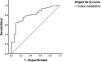
ResultadosEl índice metabólico presentó un punto de corte óptimo de ≥7,38; una especificidad de 90,6% (IC 95% [80,5-100]), sensibilidad de 64,2% (IC 95% [55-73,3]), valor predictivo positivo (VPP) 95,8%, valor predictivo negativo (VPN) 43,3%, un índice de probabilidad positivo de 6,83 y un índice de probabilidad negativo de 0,40 para identificar NAFLD.
ConclusiónEl índice metabólico mostró una alta especificidad para detectar NAFLD y podría usarse en pacientes adultos con sospecha de NAFLD observada en atención primaria de la salud.
Determining insulin resistance (IR) is essential to identify subjects at risk for non-alcoholic fatty liver disease (NAFLD). A particular area of interest is the ability to detect patients with NAFLD using non-invasive biomarkers. This study aimed to evaluate the sensitivity, specificity, and predictive value of the metabolic index for detecting NAFLD.
Materials and methodsA retrospective study was conducted in adults of both sexes eligible for inclusion were adults of both sexes aged 18 to 85 years with and without NAFLD. Liver steatosis was measured using the controlled attenuation parameter (CAP) through FibroScan®. The metabolic index was calculated using the formula: Fasting Glucose x TG/HDL-C2. The study was carried out at the Gastrointestinal and Liver Specialty Clinic in Yucatán, Mexico, between January 2014 and November 2020, using a convenience sampling method. In a total of 138 subjects (32 healthy and 106 patients with NAFLD), anthropometric measures and laboratory tests were obtained to determine levels of triglycerides (TG), glucose, total cholesterol (TC), HDL-C, LDL-C, AST, and ALT.
ResultsThe metabolic index showed a specificity of 90,6% (95% CI [80,5-100]), sensitivity of 64.2% (95% CI [55-73,3]), a positive predictive value of 95,8%, a negative predictive value of 43,3%, a positive likelihood ratio of 6,83, and a negative likelihood ratio of 0,40 for detecting NAFLD.
ConclusionThe metabolic index showed high specificity for detecting NAFLD and could be used in adult patients with suspected NAFLD seen in primary health care.