







This study explores the under-researched area of cognitive-affective trust transference within the context of short-form videos (SFV) on the TikTok platform. It also provides new insights into the impact of source homophily that arises from viewing SFV. The study incorporates trust transfer theory into the Stimulus-Organism-Response (SOR) model perspective to examine trust transference. Data were gathered from 411 online users in Malaysia using a purposive sampling technique. Partial least squares structural equation modeling has been used to analyze the data via SmartPLS. The findings suggest that video characteristics, platform trust, and source credibility of SFVs on TikTok affect affective trust and perceived homophily. Additionally, affective trust mediates the impact of perceived homophily on purchase intention. Furthermore, perceived homophily moderates the relationship between affective trust and purchase intention. This study offers original insights into how cognitive trust influences affective trust and purchase intention in TikTok SFVs. It examines trust transfer in livestreams and how perceived source homophily can serve as an effective intervention. The findings have novel theoretical implications, advancing our understanding of trust mechanisms in social media and e-commerce.
At a time when consumer attention spans are shrinking, short-form videos are emerging as a powerful engagement tool (Brabandere et al., 2025). These short videos, typically 15 to 60 s long, suit busy consumer lives by providing precise and powerful brand messages. SFV has consistently influenced the purchase intention of consumers, especially among the new generation (Plötz et al., 2023). However, TikTok is not immune to criticism, as it is considered more of a social entertainment tool than a reliable source of product information. A general lack of trust in social media platforms is linked to their susceptibility to imitation and spreading fake information, undermining credibility (Lan & Tung, 2024). In the case of TikTok, this aspect of information compromise and susceptibility to misinformation has been highlighted across various studies (Jalli, 2025; Lan & Tung, 2024), necessitating further examination of its trust transfer capability. Moreover, in livestream commerce, this becomes even more evident as the ambiguity between content trust and trust in the streamer or platform becomes clearer (Che et al., 2024).
TikTok SFV is considered an effective source of information dissemination, such as health-related messages (Song et al., 2021). Kirkpatrick and Lawrie (2024) utilized source (credibility) and autonomy support (language and message characteristics) of pap test videos on TikTok to gain insights into consumer attitudes. Similarly, the originating source of SFV (user-generated/professional) was found to influence user engagement and visit intention of destinations (hedonic/utilitarian) (Li & Tu, 2024). This demonstrates the value of SFV content in providing helpful information and its relative strength in driving e-commerce. Although the trust issues of the platforms have been prominently highlighted with negative attributions of fake and addiction (Caponnetto et al., 2025), very few studies have tried to address this issue and what leads to such prejudiced behavior. Specifically, the impact of platform trust (the cognitive component) on affective trust (as demonstrated in the video) in the SFV livestream, considering the source homophily effect, remains unclear.
This is a pertinent gap, as recent studies on engagement have associated it with key aspects of the TikTok SFV format, including what consumers expect from its selling approach (Archer et al., 2025; Xiao et al., 2023). Furthermore, given the importance of trust in the context of e-commerce platforms, which involves ascertaining the credibility of the source (Tseng, 2023), effective introspection of cognitive (platform) and affective (trust) interactions that allow trust transference is deemed essential. This prompts a foray into the transition of perceived trust through the theoretical lens of trust transference. The perceptive interpretation of individual trust and its eventual transition in an audiovisual setting requires a practical framework involving the trust transference theory (Stewart, 2003), effectively manifesting differential cognitive and affective trust orientations. This is further supported by multiple studies utilizing this theory to gauge cognitive-affective trust interaction in platform marketing (Zhang et al., 2024) and transference in various situational modes, such as the individual-level brand trust (Soren & Chakraborty, 2025) and interpersonal trust on team performance (Qu et al., 2025). Additionally, since transitions in a visual interaction act as a stimulus, adopting the stimulus organism response model as the foundation is deemed suitable. The multidimensional aspect of trust orientation has been captured through combining these two theoretical paradigms in livestream commerce (Duong et al., 2025). Nevertheless, the source and homophily intervening effects in this transference process have not been explored. This is considered an essential aspect, as in trust perceptuality of a streaming media content, the strength of message congruence acts as a strong believability component (Wang et al., 2025).
Source homophily is a natural tendency of individuals that, to some extent, governs their choices and associations in both physical and online contexts (Gallen & Wasserman, 2023). In e-commerce, source homophily reinforces the perceived similarity between the message, product, or sender and the receiver, enhancing trust and identification. Though it is considered an essential aspect of inducing credibility in the context of social media affiliation and source perceptibility (Cha, 2025), its inclusivity in livestream assessment has received little attention (Li et al., 2024).
Additionally, perceived source homophily has influenced consumer engagement and information sharing regarding service offerings, such as housing accommodations (Cho et al., 2022). However, no prior studies have examined the interrelationship between source homophily, as an affective component, and platform trust, as a cognitive component, for livestream platforms, specifically for TikTok SFV viewership. This study addresses key gaps in cognitive-affective trust transference by posing the following research questions: (RQ1) How does cognitive (platform) trust influence affective (video) trust in the context of SFV to enable purchase intention? Investigating TikTok in relation to the cognitive-affective trust dichotomy is considered appropriate, as recent studies have highlighted the platform's negligence in sharing trust-oriented knowledge (Kaňková et al., 2025).
The magnitude of perceived source homophily intervening in transference and its impact on the believability of the SFV content requires further exploration. Henceforth, (RQ2) What is the pivotal role of source homophily as a credibility factor in SFV, and how does it shape the interaction between cognitive and affective trust? Lastly, though the cognitive-affective trust dichotomy and privacy influences on TikTok have been explored (Putri et al., 2024), it is a platform-specific observation. This study adopts a novel approach to interpret the influence of trust dichotomy on the delivered video content. Thus, (RQ3) To what extent do the two trust transference paths impact the purchase intention? It addresses the cognitive-affective trust dichotomy using the Stimulus-Organism-Response model.
The study mainly relies on the web-based trust transfer theory (Stewart, 2003), which posits that individuals' trust in a familiar object can be transferred to another object based on their relationship with the source of the typical trust (Park & Tussyadiah, 2020). Prior studies have also utilized this theoretical underpinning to examine the interplay between cognitive and emotional trust during the web-to-mobile payment transition (Gong et al., 2020). The current study, which explores video content-based trust transference, asserts that this transference follows a definitive pathway, further influenced by the perceived homophily (source) of the content and the inherent video characteristics.
More importantly, this study investigates the nexus between TikTok platform characteristics, trust formation, and purchase intention from a Malaysian perspective. Given its vast user base, the ephemeral nature of its content, and its profound influence on factors affecting purchase intentions, assessing TikTok as a short-form video platform in Malaysia is highly significant. Such an assessment can provide valuable insights into contemporary behavioral trends, enabling businesses and marketers to harness TikTok's potential for marketing initiatives and consumer engagement. With over 800 million monthly active users globally as of 2020, TikTok exerts considerable influence, particularly among young people, who are especially susceptible to media and advertising strategies on social networks. According to the Digital Malaysia Report 2025, 97.7 % of the population uses the internet, while 70.2 % use social media for entertainment and shopping. Therefore, it is essential to investigate the key factors influencing consumers' purchase behavior on TikTok, as this will be highly beneficial for both digital marketers and policymakers.
The current research provides several contributions to the livestream literature. First, this is a pioneering attempt to elaborate on the influence of cognitive trust on affective trust and how this relationship affects the resulting purchase intention of consumers through SFV-based content on TikTok. The study extends the applicability of trust transfer theory by ascertaining the cognitive (platform trust) and affective trust impacts in livestreams. It investigates the mediating impact of affective trust on perceived source homophily related to the video content. Secondly, the perceived source homophily as an emotive intervention in the context of social media video has not been undertaken. This contributes to a better understanding of the perceived impact of identity on trust in content. Lastly, this research provides valuable insights for content creators, developers, and e-commerce vendors on the intrinsic trust and pervasiveness of content and its impact on the audience.
Theoretical backgroundTrust transfer theoryAccording to Stewart (2003), trust transfer theory provides two broad mechanisms of trust development, cognitive-based trust and trust transference, involving five categorical mechanisms: source, target, target intention trust, source-target relationship, and associated boundary conditions (Gong et al., 2020). The role of trust in social media platforms has been gaining prominence, as the proliferation of fake and unwarranted information becomes more obvious. Additionally, as these platforms involve financial transactions and sharing sensitive information, trust in the platform and the seller content helps alleviate the perceived uncertainty and vulnerability associated with the purchase.
Furthermore, in social media e-commerce, the ambivalence surrounding trust transference between individuals and firms influences the continued use of essential financial tools, such as mobile payment systems (Handarkho, 2021) and new applications, such as online food delivery (Raza et al., 2023). In the Livestream context, the cognitive product trust transference is observed in the "trust of the streamer," representing affective trust. Similarly, the trust of co-viewers of the livestream content, as well as the trust of the streamer and product, is considered a determining factor of the trust transference pathway to the viewer's purchase intention (Chen et al., 2024). As this study involves observing cognitive and affective trust transference in livestream commerce, the applicability of this theory is very relevant.
Stimulus organism response (SOR) modelThe stimulus organism response model, conceptualized by Merabian and Russel (1974), has been a cornerstone framework for observing the cognitive-affective dichotomy and its final conative outcome that transcends both physical and online boundaries of consumer buying behavior. According to the framework, the cognitive antecedent (S) has an impact on the related mental associations (O), which in turn produce a decisive outcome (R) for the consumer. Several studies have observed trust in the context of the SOR framework, where both cognitive and affective trust dimensions have been included to gauge consumer responses. In consumer-to-consumer platforms, the confidence in the seller and trust in the platform mediated the influence of online cognitive and affective interactions between consumers and their purchase decisions (Ting & Ahn, 2023).
In a study conducted by J. Wang et al. (2023) on online consumer decision influences, both cognitive and affective trust in the SOR framework design were observed to mediate the consumer purchase intention. This study applies the SOR model to examine trust transference in TikTok SFVs. Video characteristics, platform trust, and source credibility are stimuli shaping consumer perceptions and engagement. Video quality and creativity enhance engagement, and platform trust ensures a secure user experience. Whereas, source credibility determines the persuasiveness of the content (Pang & Ruan, 2024). As the organism, affective trust and perceived homophily mediate how consumers emotionally connect with the content, fostering trust and relatability with the creator. This emotional bond influences the response (i.e., purchase intention), driving consumer willingness to buy. By structuring the study within the SOR framework, we highlight how SFV elements shape trust formation and consumer behavior in TikTok's e-commerce environment.
Video characteristicsExisting literature has demonstrated that video advertising is becoming increasingly important within the broader digital escape (Mulier et al., 2021; Wei, 2025). The emergence of platforms for short-form videos, like TikTok and Instagram reels, has changed the behavior of consumers in terms of how they engage with content. The findings of multimedia video marketing on consumer psychology and behavior depict that they can form customer beliefs and secure feelings to stimulate buying activities (Haq & Chiu, 2024). Zhang et al. (2023) highlighted that creating and disseminating high-quality content influences users' cognitive preference for TikTok short videos. Rizomyliotis et al. (2024) highlighted short-form video marketing's ability to target audiences, diversify content, and improve product understanding in Singapore's cosmetics sector. Moreover, it has been demonstrated that the social aspect of short-form video platforms affects emotional trust, which might affect purchase intention (Haq & Chiu, 2024; Pang & Wang, 2025).
Perceived homophily is the tendency for individuals to measure and build social relationships with others who share common attributes like age, gender, ethnicity, education level, or hobbies (Shoenberger & Kim, 2023). Williams et al. (2024) contend that social media influencers influence consumer perceptions and lead to purchases through Instagram reels. Additionally, the extent to which a platform fosters genuine self-expression and community will influence behaviors such as increased user activity and impact. Additionally, Pang et al. (2024) suggest that perceptions of homophily may be influenced by the broader social dynamics throughout TikTok. The platform's algorithm and "For You" page personalize content, creating a bubble of user interests and social circles (Duffy & Meisner, 2023). This may influence buying behavior as consumers develop greater trust and a sense of belonging within their curated TikTok community. Han and Balabanis (2024) suggested that understanding TikTok's impact on homophily and how people prefer to connect is crucial. We therefore propose that:
H1 Video characteristics positively impact the affective trust (a) and perceived homophily (b) of the SFV.
Barta et al. (2023) revealed that one group uses TikTok for entertainment and fun, while another uses it as an information-seeking and socialization platform. Similarly, Chen et al. (2024) confirm that trust in the platform shapes users' confidence in an information provider's reliability and ability to offer valuable suggestions. As consumers increasingly lose physical interaction with sellers and products in the online environment, platform trust becomes a crucial factor in shaping their shopping intentions (Putri et al., 2024). Additionally, Chu et al. (2024) highlight that trust in word of mouth can significantly influence consumer behavior and purchase tendencies. In the case of TikTok, it is imperative that users feel confident because part of their affective trust can directly influence content and recommendations by influencers (Alcántara-Pilar et al., 2024).
Yu et al. (2024) demonstrate that the tendency to socialize with similar others is a highly influential factor for external stability in consumer behavior and decision-making on social media platforms. The authors also argued that if users added positive reviews on both service and virtual platforms, others might develop a more positive view about online shopping. Similarly, Chu et al. (2024) conclude that the reliability and honesty of a social media channel influence perceptions of engagement through TikTok. Specifically, users' trust in the platform's ability to provide valuable and relevant information can impact their perceived homophily or the sense of similarity and connection with other users (Zhao & Wagner, 2023). Similarly, Luo et al. (2025) argue that trust is an internal psychological factor that affects Chinese consumers' purchase intention from the TikTok platform. So, we posit the following:
H2 TikTok's Platform trust positively impacts the affective trust (a) and perceived homophily (b) of the SFV.
According to Chu et al. (2024), in the context of social media marketing platforms, source credibility indicates the platform's authentic and lawful information from influencers and online retailers, which ultimately forms a positive trust in the potential customers and hence purchases from the respective online platform. Furthermore, Song et al. (2022) argue that online users tend to view TikTok as a platform not only for entertainment and socialization but also for information-seeking, highlighting the importance of source credibility. Congruent with Song et al. (2021), Jiang et al. (2025) confirmed that the credibility of information sources on TikTok significantly shapes user perceptions and behaviors. On the other hand, Barta et al. (2023) accentuate that trust is essential for virtual marketing, as customers cannot directly engage with products or vendors online. However, Lan and Tung (2024) underline that the degree of trust related to favorable recommendations is an essential predictor of purchase intentions in university students.
Based on a meticulous literature review, Ha and Yang (2023) identified the influence of TikTok influencers as a salient cue shaping users' perceptions and purchase intentions. Furthermore, the psychological effects of TikTok on adolescents have been acknowledged as the virtual marketing platform's content can inventively influence an individual's identity and value formation (Chu et al., 2024). Similarly, online purchase intentions have been suggested to be shaped by the perceived degree of similarity and relatability that users attach to an influencer (Han & Balabasnis, 2024; Pang et al., 2025). When users perceive an influencer as relatable, they are more likely to believe the influencer's suggestions and endorsements, which can encourage them to make a purchase (Putri et al., 2024). Therefore, we theorize the following hypotheses:
H3 TikTok's source credibility positively impacts the affective trust (a) and perceived homophily (b) of the SFV.
Perceived homophily in livestream commerce leads to affective trust because it provides a sense of similarity and shared commonalities between content producers and audiences (Cao et al., 2025). Research states that emotional trust builds the confidence of viewers to consider product recommendations from TikTok, which increases their intentions to purchase (Zhao & Wagner, 2023). Likewise, Chu et al. (2024) note that viewers sense a stronger connection with TikTok content creators when they see that both parties have similarities. These similarities could be in fashion style, age, interests, likes, dislikes, education, humor, hobbies, and other areas. Additionally, researchers accentuate the association between this perceived similarity, greater engagement with content, and stronger emotional attachment to the creator. Homophily perception on TikTok would positively impact consumers' purchase intention because it leads content creators and viewers to relate to each other (Duffy & Meisner, 2023).
The relationship cultivates trust and credibility, producing positive brand attitudes and higher purchase intent for the endorsed products. Through homophily, content creators can influence consumer behavior and create sales (Han & Balabanis, 2024). Furthermore, by utilizing TikTok in social media marketing employment, Wahid et al. (2023) verified that TikTok traits have differential consequences on customers' purchase intention. For instance, emotional content features like dancing and photo slideshows had a more positive impact on user expectations than conventional informational displays. Whereas, Wahid and Gunarto (2022) demonstrated that emotional content features are not a significant factor in determining social media engagement. Therefore, these contradictory findings motivate us to investigate the phenomenon further:
H4 Perceived homophily of the SFV positively impacts the affective trust (a) and consumers' purchase intention (b).
Applying the Affective Trust Theory and SOR model, Alcántara-Pilar et al. (2024) found that TikTok's trust-based shopping positively influences purchasing behavior through affective trust, driven by emotional bonds and content creator credibility. Equally, Barta et al. (2023) recommend that this trust increases the credibility of the creator's recommendations, decreases perceived risks associated with purchasing, and generates a more favorable attitude toward endorsed products. Hence, a creator's recommendation is more likely to influence viewers and increase the likelihood of a purchase (Putri et al., 2024). On the other hand, S. S. Wang et al. (2023) highlight that intelligent recommendation by the TikTok platform negatively modulates consumer purchase intention.
Extant literature suggests that perceived homophily impacts purchase intention via affective trust, translating relatability and emotional connection into credibility and trust (Pang et al., 2024; Zhang et al., 2023). The chances of buying are higher because trust lowers perceived risks and fosters more favorable feelings towards content creators and the TikTok platform. Therefore, we propose:
H5 Affective trust of the SFV positively mediates the impact of perceived homophily on purchase intention.
Perceived homophily accentuates liking and preference for an information source, augmenting source trust (Leonhardt et al., 2020). According to social impact theory, the social presence of an interface includes the trust component in the information, which is moderated by the degree of perceived background homophily (Park et al., 2021). In fact, in a recent study on social media influencer effects, the impact of perceived influencer trust (treated as a cognitive component) on the credibility assessment of the post was found to have a moderating impact on perceived homophily (Khan et al., 2024).
Perceived homophily strengthens trust by making an information source more relatable and likable (Pang et al., 2024). Likewise, Cao et al. (2025) argue that users are more likely to trust content when it is presented by someone they perceive as similar to themselves. This effect is further influenced by social presence and the credibility of influencers, which in turn shapes how people assess online content. Hence, the following hypothesis is undertaken, as presented in Fig. 1:

H6 Perceived homophily moderates the relationship between affective trust and purchase intention.
This study adopted a survey research design to collect data in line with the research objectives. A quantitative approach was deemed appropriate given the scope and focus of the study. Since the research investigates the impact of trust transition through an endogenous variable structure, quantitative data analysis using the PLS-SEM analytical method was deemed suitable (Hult et al., 2018). The choice of this analysis method is further substantiated by the fact that this method allows for coping with greater data variability and does not require multivariate normality, which does not perfectly fit the normality curve (Chatterjee et al., 2025).
Purposive sampling was applied to ensure data validity and impartiality and minimize analysis bias. The strength of this method lies in its accuracy, which enables demographic modalities to be effectively covered, particularly in a multicultural and multilingual society such as Malaysia (Hameed et al., 2024). The study was conducted in the Klang Valley, Malaysia, selected for its high concentration of youth, driven by rapid urbanization and the presence of numerous industries. This demographic trend made the area a suitable location for the study. The target respondents were young online shoppers, aged between 18 and 30, with prior experience purchasing through the TikTok platform. Data were collected using a self-administered online survey distributed via social media platforms, which was appropriate given the similarity of TikTok to other social platforms. Participation was voluntary, and informed consent was obtained before completing the survey. A total of 419 responses were received, with 411 deemed valid for further analysis. The demographic profile of respondents was assessed based on age, income, and education (Table 1).
Demographic Characteristics.
In line with Podsakoff et al. (2003) recommendations regarding ethical considerations, the questionnaire included a cover letter that ensured informed consent and provided a detailed overview of the study's objectives. The cover letter also detailed their rights and the confidentiality of their responses. A 5-point Likert scale was used to measure the items, ranging from strongly disagree (1) to strongly agree (5). The items for each construct were adopted from prior studies relevant to the current research domain. The video characteristics consisted of eight items adapted from Dong et al. (2024). Five items for purchase intention were adapted from the study of Zhang et al. (2023). Source credibility and affective trust each consisted of four items, taken from Dedeoglu (2019) and Dowell et al. (2015). Wongkitrungrueng and Assarut's (2020) study has been used for a four-item scale of platform trust. Lastly, perceived homophily consisted of six items, adapted from Jaiswal et al. (2024) (Appendix A). A pilot test was conducted with 47 respondents to assess the content validity of the items. This was undertaken to test the construct validity, ensuring that the attenuated measurement items align with the constructs being measured (Lim, 2024). In response to the feedback received from the respondents, minor amendments were made to the items. All the items were found to be suitable for further analysis based on the pilot test results. The final questionnaire was reviewed by three faculty members and two PhD students to confirm content and face validity.
ResultsDescriptive statistics were utilized to comprehend the basic measures of the data. The normality of the data is indicated by the skewness and kurtosis values, whereby all items range between −1 and +1 except PT1 (−1.327), VC1 (−1.864), VC2 (−2.127), and VC6 (2.211). The mean values range between 3.927 (highest) and 2.141 (lowest). It is also derived from the mean values, where video characteristics exhibit a relatively high average value, and source credibility indicates a relatively low average value. Furthermore, in line with the objective of this study, a predictive analysis of the observations is required, and the explanatory power of the data is to be estimated. PLS-SEM was selected for several reasons. First, it is well-suited for prediction-oriented research and exploratory model testing. Second, the SOR framework employed involves multiple latent constructs and mediating variables, making PLS-SEM appropriate for analyzing such complex models. Additionally, the data exhibited moderate non-normality, which PLS-SEM can handle more effectively than CB-SEM. Given the study's focus on explained variance and theoretical development, PLS-SEM was deemed the most appropriate analytical method.
Measurement modelThe reliability was assessed using the composite reliability measurements of the constructs and Cronbach's alpha values. The results indicate that all the values are above the minimum acceptable range of 0.70. Convergent validity was also established, as the average variance extracted (AVE) values for each construct exceeded 0.50. Additionally, the factor loading values were also examined to meet the requirements of convergent validity. The results indicate that the factor loadings of all items exceed the threshold requirement of 0.50 (Table 2).
Reliability and Validity Assessment.
AT- Affective Trust, pH- Perceived Homophily, PI- Purchase Intention, PT- Platform Trust, SC-Source Credibility, VC- Video Characteristics.
The discriminant validity was examined by utilizing two different measurement criteria. The first method involved calculating the heterotrait–monotrait (HTMT) ratio, with the bootstrapping analysis set to 10,000 subsamples. The results were generated using PLS set to slow (complete) mode, with the "percentile-bootstrapping" method used as the confidence interval. The results show that the upper bound values of the HTMT ratios (at the 95 % confidence level) are below the threshold of 0.85, confirming discriminant validity (Table 3). The second method involved testing Fornell and Larcker (1981) criterion, which infers that the squared values of all constructs should be greater than the squared values of inter-item constructs. The results show that all the constructs meet the requirement.
Discriminant Validity.
The bootstrapping method was used to test the direct effects, with 10,000 subsamples to establish the impact of the hypotheses. The p-values for all path coefficients in the total effect table are significant (i.e., p < 0.05), indicating that all hypotheses are accepted. Specifically, the results show that all the cognitive factors, namely video characteristics (H1a: β=0.243; p = 0.000), platform trust (H2a: β=0.538; p = 0.000), and source credibility (H3a: β=0.149; p = 0.000) have a direct impact on affective trust. Similarly the direct effect of video characteristics (H1b: β=0.292; p = 0.000), platform trust (H2b: β=0.163; p = 0.005), and source credibility (H3b: β=0.219; p = 0.000) on perceived homophily is also significant. The results also indicate a strong direct impact of perceived homophily on affective trust (H4a: β=0.303; p = 0.000) and purchase intention (H4b: β=0.519; p = 0.000).
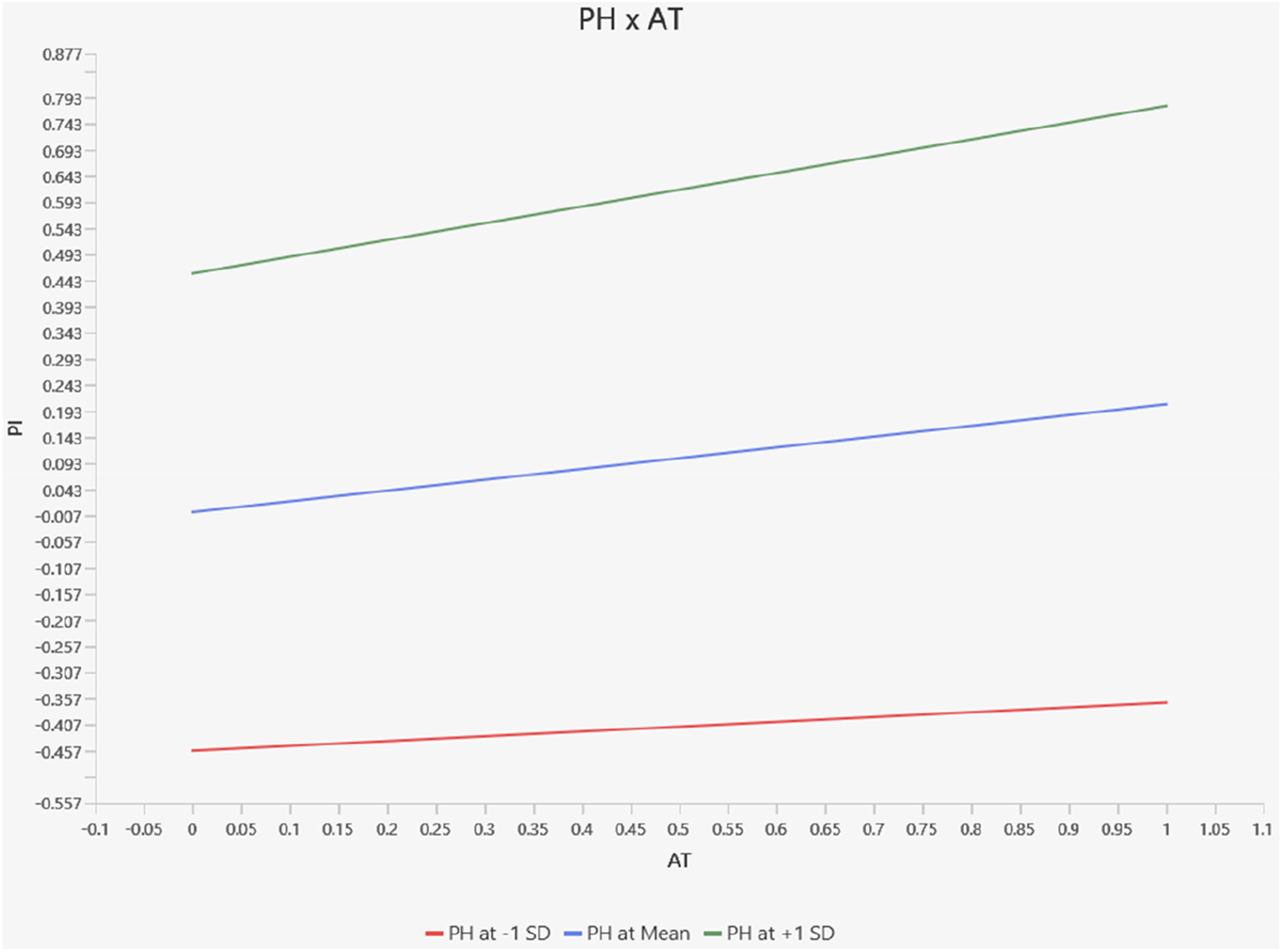
The mediation effect of perceived homophily on the relationship between affective trust and purchase intention was examined in H5. The results indicate a partial mediation effect across the observed construct because AT and pH significantly affect PI (H5: β=0.063; p = 0.002). Furthermore, the moderation effect of perceived homophily on the relationship between affective trust and purchase intention was observed. The results indicate a significant moderating impact (H6: β=0.114; p = 0.001) (Table 4 and Fig. 2).
Model Testing.

The moderating effect of perceived homophily on the relationship between affective trust and purchase intention was examined through slope analysis. The results indicate a steeper slope line of pH with an increasing degree of AT of respondents towards the PI, indicating the moderating impact (Fig. 3). It also suggests that at lower levels of pH, even the increase in PI does not create a significant change in AT The f2 value was observed to be 0.032 for the moderating effect. An f2 value of 0.02 is considered small, 0.15 is medium, and 0.25 is large. Hence, it can be concluded that the effect of pH on AT and PI is within the small to medium acceptable range.
Moderation Effect Slope
This study examines the relative impact of cognitive exogenous factors (video characteristics, platform trust, and source credibility) on the emotionally associative components (affective trust and perceived homophily) of the TikTok platform and their effect on users' purchase intentions. Video characteristics influence viewers' intentions to watch content or act on recommendations. Scholars have demonstrated that high-quality videos with visually appealing content, clear messages, and relatable stories enhance viewers' trust and emotional engagement (Luo et al., 2025). The more engaging the video content, the more viewers are likely to relate to the influencer, enhancing their perception of homophily. The effect is more evident among younger generations who can distinguish video attributes and respond to influencer content (Kumar & Shankar, 2024). However, it is interesting that platform trust has a substantial impact on affective trust over other cognitive factors. Similar outcomes in the context of social media sharing have been envisioned in a recent study by Muliadi et al. (2024), and the phenomenon has been coined "cognitive-affective trust transference across social media" (Putri et al., 2024).
Our findings suggest that source credibility significantly impacts both affective trust and perceived homophily on TikTok, primarily through the establishment of emotional connections and the deepening of user engagement. In a content-saturated environment, the perceived credibility of the source becomes a key factor influencing users' trust and interaction with the content and the community. The double impact of credibility on both emotional trust and perceived similarity highlights the value of authenticity for creators and brands in developing an active and loyal following on social media platforms. The results indicate a substantial impact of all the cognitive factors on affective trust and perceived homophily.
Furthermore, the concurrent positive impact on perceived homophily is a pioneer contribution of this study that supports the recent observation linking heightened platform usage and platform-based association to the consumer's pH (Pang et al., 2024). Perceived homophily facilitates trust building between influencers and consumers. Consumers are more inclined to trust influencers when they perceive similarities in values, lifestyle, or experiences (Rambocas & Metivier, 2024). This suggests that people are drawn to individuals who share their characteristics, leading to increased trust and emotional bonds (Machado Carvalho, 2024). This increased trust directly impacts the intention to purchase products or services endorsed by these influencers, as indicated by studies demonstrating that perceived source credibility and homophily positively relate to attitudes toward user-generated content (Leonhardt et al., 2020). Another critical aspect of the result is the mediating role of affective trust on perceived homophily. This proves that content familiarity heightens the level of emotional association. Homophily and trust are also connected in other ways, such as trust-mediated demographic homophily impacting organizational relationships (Ahlf et al., 2019), peer-to-peer consumer homophily impacting the trust of the accommodation provider (Cho et al., 2022), and homophily as the homophily-to-trust pathway leading to heightened information-seeking behavior (Leonhardt et al., 2020).
However, in observations of social media platforms, trust and homophily are conjoint antecedent factors that impact attitude or purchase behavior (Rajput & Gandhi, 2024), rather than intervening with each other in terms of their relative impact. This fact is further supported by the moderation analysis results, which show that attachment to the viewed content either heightens or reduces the intervening effect of trust on purchase intention. This is a novel outcome in digital content-based analysis. However, the recent moderation impact of pH has been identified in the context of social media influencers and the credibility of social posts (Khan et al., 2024).
Theoretical implicationsThis study explores the significance of trust transference in short-form video content on a social media platform (i.e., TikTok) and provides several novel implications. The trust transfer theory traditionally focuses on trust within a specific domain, such as a platform (Gong et al., 2020), particular media influences (Kim et al., 2025), or the influence of a product or brand (Ali et al., 2025). The study extends the applicability of this theory through a platform for evaluating SFV content-based trust transfer. Secondly, the study enhances the applicability of the stimulus organism response model in trust observance of livestream-based content, highlighting the significant intervening role of affective trust. This is a novel finding as recent studies have either focused on cognitive trust in streamers (Imanuddin & Handayani, 2025), the effect of trust on internal perceptual processes (Hameed et al., 2025), or trust transfer through hierarchical flow model structures (Chen et al., 2025; Ding et al., 2025).
Another interesting and noteworthy contribution of this research is the role of perceived source homophily, which emerges as a key factor in influencing trust and, in turn, purchase intention. Homophily acts as both a bridge (mediator) and a catalyst (moderator), enhancing the consumer's positivity towards taking action. The role of perceived source homophily has been strongly recognized across social media content as a component that induces favorable thought toward the content due to perceived source similarity (Figeac & Favre, 2023; Filieri et al., 2023). However, few observations of source homophily have been made to assess its versatility and effectiveness. (Machado Carvalho, 2024). Furthermore, this study provides a new understanding of the intervening relationship between trust and source homophily on livestream-based content.
Practical implicationsFrom a practical perspective, this research offers several actionable insights for marketers, content creators, and digital platforms. First, marketers can take guides to optimize video characteristics to enhance consumer engagement. The results revealed that the video characteristics are the core and can impact affective trust and perceived homophily. Therefore, marketers should focus on content like relatable messaging, authentic visuals, or storytelling that aligns with consumer values and preferences. The major takeaways from this research are that digital platforms should enhance their trustworthiness. Platforms like TikTok must work towards building user trust. This can be done by providing a reliable and user-friendly environment. Incorporating transparency in data handling, securing payments, and implementing content regulation will help foster a trustworthy ecosystem.
Building consumer trust is crucial for effective marketing, and it can be achieved by engaging with credible influencers. Their credibility helps brands establish trust with their audiences, making their marketing strategies and messages more effective. Brands should focus on creating content that aligns with the values and preferences of their target audience to establish trust. This approach helps increase the consumer's intention to make purchases. Brands should also try creative marketing techniques beyond functional messaging to create an experience of homophily. Trust-based marketing campaigns should be the focus, as they can create emotional connections and encourage users.
Limitations and future researchThe study was conducted carefully; however, a few limitations require careful attention in future studies. The current research focuses on livestreaming selling through TikTok, considering the users in Malaysia. Although TikTok has recently gained significant attention, further studies can still concentrate on various live-streaming platforms, particularly those available in specific regions, such as Douyin, Kuaishou, Taobao, JD.com, and Pinduoduo Live, to yield more generalizable findings.
Furthermore, the data were collected using a cross-sectional research design, which cannot predict changes in user preferences over time. Therefore, it is suggested that future studies employ a longitudinal research design to capture behavioral changes over several months. Lastly, the study utilized video characteristics, platform trust, and source credibility as stimuli; future studies can also explore the importance of other users' comments (i.e., user-generated content) in shaping purchase decisions.
ConclusionsThis study applies the Stimulus-Organism-Response framework to examine the cognitive and emotional factors that influence purchase intention on TikTok. The results confirm that video characteristics, platform trust, and source credibility significantly influence affective trust and perceived homophily, which in turn influence purchase intentions. Notably, the findings highlight the critical role of platform trust in building affective trust and the unique mediating and moderating roles of perceived homophily, offering a new perspective in the context of livestream-based content.
Based on these findings and comparison with existing literature, this study offers several new contributions. First, it extends the application of trust transfer theory by demonstrating its relevance in short-form video content environments. Second, it enriches the SOR framework by identifying affective trust as a key intervening variable, which has largely been overlooked in prior research. Third, the study introduces perceived homophily as a mediator and moderator, offering new theoretical and empirical insights into how content relatability can enhance trust and influence consumer behavior.
Unlike prior studies that mainly looked at either cognitive trust factors or influencer credibility in isolation, this research integrates cognitive (video characteristics, platform trust, and source credibility) and emotional (affective trust and perceived homophily) dimensions within the SOR framework, thereby offering a more holistic view of purchase intention in livestream contexts. In doing so, it introduces the novel finding that platform trust exerts a stronger role in affective trust formation than previously recognized, and it establishes perceived homophily as both a mediator and moderator, an aspect overlooked mainly in earlier work. These contributions advance trust transfer theory in the short-form video environment and broaden the theoretical and practical understanding of how relatability and emotional engagement shape consumer decision-making in digital platforms.
Conflict of interestThe authors declare no competing or financial conflict of interest.
CRediT authorship contribution statementRajat Subhra Chatterjee: Writing – original draft. Mosharrof Hosen: Visualization, Investigation, Conceptualization. Irfan Hameed: Writing – review & editing, Software, Project administration. Hafiz Mudassir Rehman: Writing – review & editing, Validation, Funding acquisition.