






This study examines how six different competencies or soft skills (leadership, critical thinking, teamwork, communication, resilience, and problem-solving) contribute to innovation in the workplace. Partial least squares structural equation modeling (PLS-SEM) was used to analyze a sample of 125 professionals. The analysis reveals that leadership has the most significant influence on innovation, followed by problem-solving, with the other competencies showing less meaningful effects. The results suggest that organizations that foster strong leadership and practical problem-solving skills are better equipped to innovate and adapt to the challenges of today’s marketplace. This study sheds light on the internal dynamics of organizational competencies and explains how these competencies can be targeted more effectively to foster an innovative and proactive workplace.
Today’s society is characterized by digital transformation and an increasingly dynamic business environment. In such a society, soft skills are critical for individuals and organizations. Skills such as effective communication (Carranza et al., 2020), teamwork (Friedrich et al., 2016), and leadership (McMurray et al., 2013; Muenjohn et al., 2024) not only contribute to professional and interpersonal development but also help drive innovation and creativity in the workplace (Khan et al., 2022; Stoffers et al., 2021). The rapid expansion of remote and hybrid work models and the increasing use of artificial intelligence (AI) in organizations are other trends that highlight the need for employees to develop their digital and communication skills to adapt to these changing environments (Obreja et al., 2024; Xiong et al., 2023).
Soft skills form a set of interpersonal, communicative, emotional, and cognitive competencies that enable people to interact effectively with their environment, tackle complex challenges, and adapt to changing contexts (Muenjohn et al., 2024). Unlike technical skills, which relate to specific operational knowledge, soft skills are linked to people’s emotional and relational development.
The literature has partially explored the link between some soft skills and innovation capacity, especially in educational or general leadership settings. However, there are research gaps in terms of empirical analysis and in terms of examining the combined links between several such competencies and organizational innovation. This study seeks to fill these gaps by analyzing how six soft skills (leadership, critical thinking, teamwork, communication, resilience, and problem-solving) influence innovation in the workplace.
The outcome of workplace innovation is relevant because organizational competitiveness is strongly enhanced when employees are able to innovate in their work roles (Atatsi et al., 2024; Wipulanusat et al., 2020). In this study, workplace innovation is understood as organizational innovation. This form of innovation is defined by the Oslo Manual (OECD, 2018) as the implementation of new organizational practices for internal processes, knowledge management, or the organization’s external relations. This form of innovation improves efficiency, fosters creativity, and increases the competitiveness of organizations.
The structure of the paper is presented in Fig. 1. First, the theoretical framework and hypotheses are developed. Next, the partial least squares structural equation modeling (PLS-SEM) methodology used for the data analysis is described. Then, the results are presented, followed by a discussion of these results. The managerial implications are outlined, focusing specifically on the soft skills of leadership and problem-solving. Finally, the limitations and conclusions are outlined.
Theoretical framework
The selection of these six skills is based on their prominent presence in the literature, where they are frequently described as determinants of innovation in the workplace (Friedrich et al., 2016; Muenjohn et al., 2024). Psychological empowerment was also identified during the literature review as a mediator through which leadership behaviors enhance innovation, especially in knowledge-intensive environments such as universities (Toufighi et al., 2024). Although other skills such as emotional agility and cultural intelligence are relevant, their applicability tends to be limited to global or multicultural contexts (Chua et al., 2023). In contrast, this study focuses on soft skills that are widely recognized as being applicable in a broad range of organizational environments.
The impact of leadership on innovation in the workplaceOver the years, scholars have examined the theories applied to the concept of leadership, as well as its dimensions and influence on organizational innovation. Leadership fosters disruption and creativity in organizations (Cheng & Yang, 2024). Moreover, creativity encouraged by leadership is linked to motivation to act sustainably, meaning that leadership may be accompanied by the intrinsic goal of benefiting society and businesses (Usman et al., 2024). To analyze the role of leadership within organizations, a company’s context and line of business are crucial considerations (Michalova et al., 2024). For instance, in highly digitalized organizational contexts, leadership enhances the effectiveness of models and strengthens organizations’ ability to adapt to change (Chatterjee et al., 2023; Hüttemann et al., 2024).
In organizational leadership, team dynamics are crucial, with a key distinction existing between shared and vertical leadership (Van Knippenberg et al., 2024). Research has highlighted the importance of shared leadership in promoting innovation in the workplace because it improves knowledge sharing among team members and fosters a culture of open thinking that encourages new ideas (Soomro et al., 2024). Similarly, studies have shown that transformational leadership can also promote innovation by introducing sustainability-oriented practices and digital transformation tools that improve organizational performance (Tian et al., 2023).
Organizational culture is cited in the literature as a key element for understanding how leadership influences workplace innovation (Chua et al., 2023). Leadership has been shown to enhance employee interactions and performance (Chang et al., 2024), thereby improving the efficiency and innovation of organizational structures. Thus, leadership plays a crucial role in workplace innovation, in the sense that leaders can directly influence organizational culture, foster creativity, and guide teams toward exploring new ideas. Effective leadership creates an environment of trust and collaboration, where employees are motivated to share innovative ideas without fear of failure. These effective leaders can guide their teams toward disruptive solutions and greater proactivity.
H1 Effective leadership in digitalized organizational environments significantly enhances innovativeness by strengthening adaptability and interaction among employees.
Critical thinking is the process of conceptualizing, applying, analyzing, and synthesizing information gathered by observation, experience, or reflection on something specific. It is also a key cognitive skill that involves rigorous evaluation of information and arguments, reflective thinking, and constructive skepticism. It enables individuals to make informed judgments and fosters complex mental processes such as analysis, synthesis, and evaluation, which are crucial for innovation in the work environment (Paul & Elder, 2019).
From an analytical point of view, critical thinking involves analytical skills. It enables individuals to decompose complex problems and evaluate potential solutions. At the same time, attributes such as open-mindedness, fairness, and curiosity motivate the effective use of critical thinking skills. These attributes are important to foster an inquisitive, exploratory attitude in projects and to underpin the ability to evaluate information thoroughly.
Dumitru and Halpern (2023) argued that critical thinking is vital for many reasons, noting for example that analytical thinking skills are essential for adapting to transformations and driving innovation in the workplace. This perspective aligns with the view that critical thinking enables employees to question existing norms and evaluate a variety of solutions to complex problems, thus fostering a culture of continuous innovation (Jones, 2023). Xu and Yang (2024) supported this view by reporting that a critical thinking disposition significantly affects employees’ innovative behavior from the perspective of personality theory. Furthermore, a critical disposition is directly related to employees’ ability to implement and adapt new innovative solutions within the work environment.
H2 Critical thinking increases innovation in the workplace by enabling employees to evaluate and apply innovative solutions to complex challenges.
Teamwork is fundamental to organizational success. Research indicates that the quality of teamwork and team-centered transformational leadership are crucial (Greimel et al., 2023) to foster innovation and learning within teams (Klaic et al., 2020). Effective teams not only accomplish assigned tasks but also have high-quality interactions, which are important for innovation in work environments (Friedrich et al., 2016).
Effective teams are strong in communication, collaboration, and coordination. These dimensions enable teams to face complex challenges and adapt to new situations, in turn fostering an innovation-friendly environment. Task complexity and team learning drive team proactivity, thus facilitating continuous innovation (Friedrich et al., 2016).
The relationship between teamwork and workplace innovation is reflected by the moderating role of teamwork in the relationship between team-centered transformational leadership and team innovation (Martín-Hernández et al., 2022). Linhardt and Salas (2023) provided a conceptual framework to understand the fluidity of innovative teams, highlighting the importance of team adaptability and dynamics in changing and highly innovative environments. Along these lines, transformational leadership also reinforces the performance of virtual teamwork within organizations (Greimel et al., 2023).
H3 High-quality teamwork drives organizational innovation by facilitating adaptation and responses to complex challenges.
Communication skills are essential for organizational success, especially in technical fields such as construction engineering. Coffelt et al. (2024) conducted a multi-method study to identify the communication skills that are needed in this sector. They found that both verbal and non-verbal skills are crucial for effective project execution. In contrast, common barriers include a lack of clarity in communication and cultural misunderstandings, which can hinder effective collaboration.
Organizational communication models vary by context and industry. Beebe and Frei (2016) discussed how to teach communication skills to working adults, emphasizing the need to adapt teaching strategies to the specific needs of the work environment (Beebe & Frei, 2016). Such teaching helps improve both interpersonal effectiveness and group communication in organizations. Scholars also suggest that employees’ acceptance and effective use of remote working technologies primarily depend on their digital communication skills and their confidence in using online tools (Xiong et al., 2023).
Effective communication is fundamental to create an innovative environment. Difficulties in communication within the workplace have been reported to play a negative mediating role in the relationship between knowledge sharing and innovation (Khizar et al., 2024). Chen et al. (2005) explored differences in perceptions of the importance of and proficiency in communication skills between information systems staff and users. They observed that communication effectiveness can enhance collaboration and facilitate innovation in technological contexts. Neiroukh et al. (2024) explored how the communication skills of secondary school principals through WhatsApp affect school administration. Their study reflects how communication technologies can be powerful tools for innovation in educational and administrative practices.
H4 Communication skills significantly improve innovation in the workplace by strengthening collaboration and overcoming barriers related to culture and understanding.
Resilience is a key soft skill. It enables better adaptation to change, making it valuable at both the personal and organizational levels in today’s ever-changing world. Resilience is conceptualized as dealing with changes and adverse situations while maintaining a positive attitude throughout.
The literature on organizational resilience suggests that resilient individuals are better equipped to develop creative and disruptive solutions than those without this skill, with tools such as design thinking playing a fundamental role (Bertão et al., 2023). Thus, companies should develop organizational resilience to cope with the dynamic environment. Tools such as corporate social responsibility (CSR) can promote company resilience (Zheng & Lin, 2024). The dynamism of the environment can cause stress for work teams, where resilience enhances the ability to manage daily challenges, supports continuous improvement, and encourages innovation (Myers & Sutcliffe, 2022).
In this regard, collaboration and networks within organizations are important for fostering innovation (Li et al., 2024). Scholars argue that resilience is necessary for workplace innovation, particularly in turbulent technological and social contexts (Xie et al., 2022). Resilience also creates a healthier, more innovative work environment and may even help minimize the effects of workplace harassment (Mahmood & Rashid, 2023), stimulating sustainable innovation.
H5 Resilience fosters innovation at work by facilitating adaptation and creative responses to changes and challenges.
Problem-solving skills have been studied extensively using different theories. They refer to techniques to optimize decision-making in complex and changing environments. Key dimensions of problem-solving skills include analytical skills, creativity, critical thinking, and data-driven decision-making, all of which are essential for addressing highly complex problems in modern organizations (Baird & Parayitam, 2019).
Practical problem-solving not only improves operational efficiency but also acts as a catalyst for innovation in the workplace, strengthening the adaptability of organizations to new market demands and disruptive technological breakthroughs. Also, education, culture, and psychological factors can positively or negatively influence problem-solving skills, depending on the context (Herrera et al., 2021). Zhao et al. (2021) highlighted the importance of these contextual or situational factors in problem-solving skills, particularly in education. In short, problem-solving skills improve individual and collective performance and promote organizational transformation and success in dynamic and competitive environments.
H6 Problem-solving skills increase innovation by improving adaptability and operational efficiency in dynamic environments.
Innovation in the workplace is broadly defined as the implementation of new ideas, processes, products, or services to improve organizational performance and effectiveness. This concept ranges from renewal and change to the adoption of approaches that seek improvement by deviating from established practices (Stoffers et al., 2021).
Innovation can be further classified into several categories, including product innovation, process innovation, and organizational innovation. Each category has a specific focus. Product innovation focuses on the development of new goods or services, process innovation improves the way these goods and services are created and delivered, and organizational innovation transforms internal structures and procedures to support creativity and efficiency (Carranza et al., 2020). Such organizational innovation leads to competitive advantages (Hooi & Chan, 2023) and can support the achievement of the Sustainable Development Goals (SDGs) by organizations (Dzhunushalieva & Teuber, 2024; Hisyam & Lin, 2023).
Each key skill (leadership, critical thinking, teamwork, communication, resilience, and problem-solving) has been shown to play an important role in fostering innovation within organizations. Leadership, especially transformational and visionary leadership, nurtures innovative environments by inspiring and motivating employees to explore new ideas and processes (Li et al., 2024; Usman et al., 2024). Likewise, critical thinking helps individuals evaluate complex situations and find innovative solutions, which are essential to adapt to market challenges and improve internal processes (Dumitru & Halpern, 2023; Xu & Yang, 2024). Teamwork promotes effective collaboration for innovation because teams that work well together often achieve better innovative outcomes by combining diverse skills and perspectives (Klaic et al., 2020). Communication is essential to ensure that innovative ideas are understood and adopted throughout the organization, thus facilitating the smooth exchange of information that can lead to the successful implementation of new initiatives (Coffelt et al., 2024; Neiroukh et al., 2024). Resilience helps organizations navigate the inevitable challenges and failures that accompany innovation, allowing for adaptability, which is crucial to sustain innovative efforts in the long term (Zheng & Lin, 2024). Finally, creative and effective problem-solving enables employees to overcome obstacles and continually refine their approaches, resulting in improvements and innovative developments (Bertão et al., 2023).
The interplay between these skills creates a context where innovation is possible and becomes integrated into the organizational culture. The combination of inspirational leadership, sharp critical thinking, collaborative teamwork, effective communication, high resilience, and excellent problem-solving skills creates an environment where individuals and teams can devise innovative solutions and implement them effectively.
The modelThis synergy between these skills enhances an organization’s innovation capacity, enabling rapid adaptations to changing market conditions and maintaining the organization’s competitiveness in a constantly evolving business environment. Effective leadership aligns and mobilizes resources, whereas critical thinking and problem-solving provide the tools to address technical and operational challenges, ensuring that innovative ideas are not only creative but also feasible and sustainable in practice. Fig. 2 shows the hypotheses that make up the theoretical model based on the literature review.
Research methodStudy design and scales
The methods proposed by Devellis and Thorpe (2021) and the steps listed by Noar (2003) were followed to develop the scale. This method entailed (1) defining the concept to be measured, (2) creating a list of items, (3) determining the measurement format, (4) asking experts to review the scale, (5) considering the addition of reliability items, (6) selecting a sample to pretest the items, (7) evaluating the items, and (8) deciding on the length of the scale. The final version of the questionnaire had 21 items (see Appendix A), selected from seven validated scales.
To measure critical thinking, three items from the Critical Thinking Motivational Scale (CTMS) proposed by Valenzuela et al. (2017) were selected. The scale consists of 19 items that refer to the expectancy and value of critical thinking. The chosen items were relevant to the development and application of critical thinking skills in a professional context. Specifically, the selected items related to expectations about thinking in a critical or rigorous way and about the cost of thinking in that way.
Three items from the Metacognition in Creative Problem-Solving (MCPS) scale (Urban & Urban, 2023) were selected. This scale measures the metacognitive skills involved in solving problems creatively. The scale is an adaptation of the Motivated Strategies for Learning Questionnaire (MSLQ) proposed by Pintrich (1991). It consists of 11 items capturing four dimensions: planning, monitoring, regulation, and evaluation. From the scale, items were chosen that were relevant to planning, metacognitive monitoring, and regulation. Items that focused on novelty were selected over items that did not.
To evaluate resilience, the Spanish version of the Perceived Stress Scale (PSS) devised by Cohen and Mermelstein (1983) was used. This classic nine-item stress assessment instrument is a popular scale to evaluate perceived stress. People with high resilience tend to perceive less stress in similar situations than those with low resilience. The three selected items were related to scenarios that could arise in the workplace, such as unexpectedness and a lack of control over the environment.
The Teamwork Scale for Youth (Lower et al., 2017) was selected to evaluate teamwork. It consists of 10 items that evaluate self-perceptions of teamwork. Individuals with strong teamwork skills tend to collaborate more effectively and navigate group challenges with greater ease. The selected items focused on key aspects of teamwork such as cooperation and shared responsibility, making them relevant for evaluating team dynamics in the target context.
The 20-item communication scale developed by Tanković et al. (2023) was selected to assess communication. Individuals with strong communication skills tend to express ideas clearly, adapt their messages to different audiences, and engage effectively in conversations. The selected items focused on key aspects of communication that are relevant to professional and social settings, such as the logical structuring of ideas, adaptability in writing, fluency in complex discussions, message comprehension, and eye contact, making them relevant for evaluating communication effectiveness in the target context.
Three items were selected from the Leadership Self-Efficacy Scale (Bobbio & Manganelli, 2009). This validated instrument uses 21 items to evaluate individuals’ confidence in their leadership abilities across different dimensions. In the present study, items were selected that referred to leading change in groups, managing interpersonal relationships, being self-confident, motivating people, and gaining consensus among group members.
Finally, the aim of this study was to explore whether the six skills (critical thinking, problem-solving, resilience, teamwork, communication, and leadership) were related to workplace innovation. Therefore, the validated 24-item Workplace Innovation Scale (McMurray et al., 2023) was used to evaluate workplace innovation capacity. The workplace innovation construct had four dimensions: individual innovation, team innovation, organizational innovation, and innovation climate.
Sample and data collectionData for the study were collected through an online questionnaire administered to a sample of 205 students from different postgraduate and executive programs in November 2024. Students were prompted to answer the questionnaires after an informative session about professional competencies and their impact on the students’ futures. This study explores the relationship between six competencies and workplace innovation. Therefore, only responses from students that reported having work experience were considered. This selection criterion ensured that the data reflected perspectives from individuals with practical insights into workplace dynamics and innovation. The final sample consisted of 125 students, including 72 women. The sample had a mean age 35.3 years, with a standard deviation of 11.9 years.
Measurement modelThe model was studied using partial least squares structural equation modeling (PLS-SEM). Exploratory factor analysis (EFA) was performed on the items that formed the chosen scales for the study. PLS-SEM was then used to analyze the data and test Hypotheses 1 to 6. Composite reliability was used to evaluate the internal consistency of the measures.
Table 1 shows the results of the EFA. The correlations or simple loadings of each indicator were examined to evaluate the individual reliability of the items for each of the seven constructs. A commonly accepted threshold is 0.707 for an indicator to be included in a construct (Carmines & Zeller, 1979). However, during the initial development of scales, lower loadings of 0.5 or 0.6 may still be considered acceptable (Chin, 1998).
Analysis of scale dimensionality, reliability, and validity.
Notes. AVE = average variance extracted; CR = composite reliability.
Internal consistency was estimated using composite reliability (CR). No CR value was below 0.6. Therefore, internal consistency was confirmed. Furthermore, no value was above 0.9. Therefore, the results ruled out the possibility of redundant items that would indicate a negative effect on content validity (Rossiter, 2002) and could artificially increase correlations (Drolet & Morrison, 2001; Hayduk & Littvay, 2012).
For convergent validity, the average variance extracted (AVE) was calculated. An AVE score greater than 0.5 indicates that the construct explains more than half of the variance of the indicators. A lower score indicates that the variance in the errors of the items is higher than the explained variance. As Table 1 shows, almost all AVE values were greater than 0.5. Only problem-solving had lower scores. However, they were close to the desired minimum value of 0.5. Moreover, all individual indicators had significant loadings above 0.5 (Hair et al., 2019).
Construct discriminant validity was evaluated using the AVE value (Fornell & Larcker, 1981). Discriminant validity indicates that a construct is unique and captures phenomena not represented by other constructs in the model. Table 2 shows that the square root of the AVE for each construct was greater than the estimated correlation with any of the other constructs, thus confirming discriminant validity.
Discriminant validity of the scales associated with the model.
Notes. Values below the diagonal are the estimated correlations between factors. Values on the diagonal are the square root of the AVE.
A further test of discriminant validity was performed using the heterotrait-monotrait ratio (HTMT). Henseler et al. (2015) empirically demonstrated that HTMT outperforms traditional methods in identifying problems of discriminant validity. Using simulations and practical applications, they showed that constructs with HTMT greater than 0.85 or 0.90 often lack discriminant validity, whereas those with lower values have discriminant validity. Table 3 presents the results of the HTMT analysis for the sample, again confirming discriminant validity.
Discriminant validity of the scales associated with the model.
Notes. Values indicate the HTMT between factors.
Once the convergent and discriminant validity and reliability of the proposed model had been confirmed, causal relationship analysis was performed to test Hypotheses 1 to 6. Fig. 3 summarizes the results of the analysis. The coefficient of determination (R2) represents the combined amount of variance of a dependent variable (i.e., workplace innovation) explained by all exogenous latent variables (i.e., the six competencies included in the model). The model had an R2 value of 0.435. In this type of social study, an R2 value close to 0.5 is considered to indicate moderate predictive accuracy (Hair et al., 2011; Henseler et al., 2009).

PLS-SEM does not require the assumption that the data follow a normal distribution to be met. Therefore, non-parametric bootstrapping was performed to test coefficient significance (Efron & Tibshirani, 1986). Results for Hypotheses 1 to 6 are presented in Table 4. As shown in Fig. 3, the significant relationships were for leadership and workplace innovation (t = 5.232; p < 0.001) and problem-solving and workplace innovation (t = 3.743; p < 0.001).
Coefficient significance.
Notes. O = Original sample; M = Sample mean; STDEV = standard deviation.
The standardized root mean square residual (SRMR) provides a measure of overall fit. The SRMR value was 0.096 for this model. Values under 0.10 indicate acceptable fit (Williams et al., 2009).
Finally, to evaluate the impact of each of competency on workplace innovation, the effect size (f2) was calculated. This measure evaluates the impact of an endogenous construct by calculating the change in R2 when that construct is omitted from the model. As presented in Table 5, leadership and problem-solving, the two competencies with a significant relationship with workplace innovation, had small to moderate f2 effect sizes.
Analysis of effect size (f2).
Notes. f² = effect size; ΔR² = change in R² when the construct is excluded.
This study contributes to the debate on the impact of soft skills on innovation in the workplace. The results confirm the relationship of leadership and problem-solving abilities with workplace innovation. The data show a positive significant relationship between leadership and innovation in the workplace, confirming H1 (t = 5.232⁎⁎⁎). Problem-solving was also found to be significantly positively related to workplace innovation, supporting H6 (t = 3.743⁎⁎⁎).
As mentioned in the theoretical framework, recent studies have validated the relationship between leadership and innovation in the workplace (Chang et al., 2024). Research has shown that instrumental leadership is more effective in dynamic environments (Hüttemann et al., 2024). Scholars have also noted that leadership not only has a positive impact on innovation in the workplace but also fosters creativity (Cheng & Yang, 2024; Van Knippenberg et al., 2024). Moreover, shared leadership is crucial for knowledge exchange within organizations (Yin et al., 2024). These prior studies suggest that leadership influences team creativity, which leads to new, disruptive solutions within organizations.
Focusing on the relationship between problem-solving skills and workplace innovation, Zhao et al. (2021) reported that effective teaching and higher-order learning are crucial. Likewise, Cengiz et al. (2023) found that self-efficacy improves problem-solving skills in workplace innovation. However, anxiety and stress have been shown to be obstacles (Korkmaz et al., 2020), with problem-solving potentially acting as a facilitator. Therefore, problem-solving skills play a crucial role in organizational innovation. Bertão et al. (2023) argued that problem-solving skills improve operational efficiency and drive innovation, enabling organizations to adapt to new market demands and disruptive technological contexts.
The study’s results also indicate a non-significant link of critical thinking, teamwork, communication, and resilience with workplace innovation, leading to the rejection of H2, H3, H4, and H5, respectively. Other studies have also rejected hypotheses proposing these relationships. For instance, Xu and Yang (2024) suggested that the willingness to think critically only positively influences employees’ innovative behavior if there is a high level of support from supervisors. Despite not explicitly finding evidence to reject the hypothesis of a relationship between resilience and innovativeness in the workplace, Li et al. (2024) reported that resilience in relation to innovation in companies is fully conditioned by technological development and investment in research and development (R&D). Their findings therefore indicate that resilience influences innovation to a lesser extent in contexts with low digitalization.
Managerial implicationsAt the organizational level, innovation is found to be a crucial element for improving the performance and effectiveness of organizations. According to Stoffers et al. (2021), workplace innovation refers not only to introducing new products or services but also to renewing and transforming organizational processes and structures to improve creativity and efficiency. Innovation in organizations is classified into product, process, and organizational innovation. Each has a specific focus on how to improve companies’ performance (Carranza et al., 2020) and create competitive advantages (Hooi & Chan, 2023). Accordingly, the managerial implications of innovation in the workplace are important to help organizations grow. Table 6 lists the practical implications of these six competencies for workplace innovation.
Practical implications of the relationships between competencies and workplace innovation.
Notes. *p < 0.05.
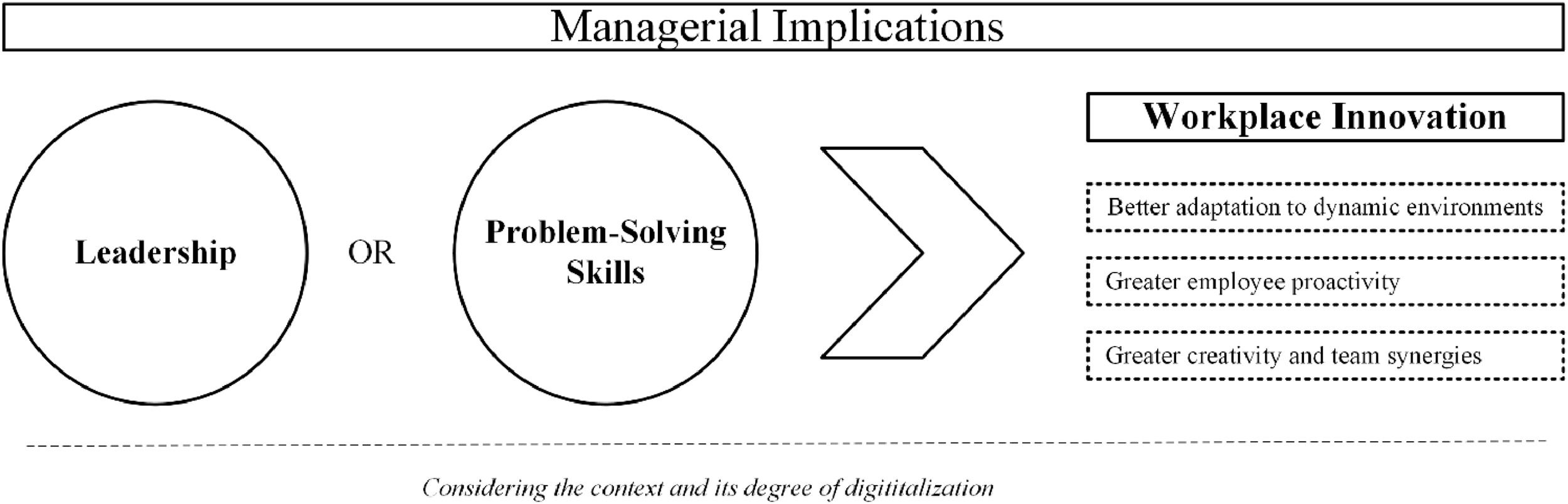
Table 6 shows that leadership has major practical implications, given its coefficient of 0.453. Problem-solving (with a coefficient of 0.266) is found to have moderate implications. In terms of managerial implications, fostering both these competencies in organizations can transform work practices, by creating disruptive solutions and encouraging employees to be proactive. This proactivity helps companies adapt to the current dynamic market.
Effective leadership and problem-solving skills are both crucial in creating an innovative workplace. They are important to guide teams toward the discovery of disruptive solutions and to increase motivation among employees. For example, in leading innovative companies such as Google and Apple, effective leadership and problem-solving skills have been critical for them to stay competitive and maintain their position as market leaders. These companies have shown that strategic investment in the development of key competencies can improve innovation capacity and can therefore result in long-term organizational success (Acharya, 2024).
The evidence from the literature also suggests that transformational leadership enhances innovation by stimulating employee creativity. This creativity is a key link between leadership behaviors and superior organizational performance (Ribeiro et al., 2024). This evidence implies that empowering employees to think creatively strengthens innovation and contributes to more sustainable and adaptive management practices.
To outline how to adopt a practical approach to innovation in the workplace, three desirable strategic lines are shown in Fig. 4. These strategic lines are enhanced through leadership, problem-solving skills, or a combination of both. (1) The first corresponds to how organizations can adapt more effectively in dynamic environments. (2) The second describes how to increase employee proactivity. The third (3) shows how to enhance creativity and create synergies between teams, which is central to innovation in the workplace.

In relation to the first strategic line, the proposal is to support the general training of employees using tools such as design thinking (Rylander, 2009; Wang, 2024). In addition, for intermediate or senior positions, it is advisable to promote agile leadership (Uhl-Bien & Arena, 2017) to help people in these positions adapt their management style to each situation depending on the context. Such an approach can promote flexibility and innovation within teams.
In relation to the second strategic line, gamification can prove useful (Hamari, Koivisto and Sarsa, 2014) thanks to its ability to improve problem-solving skills. In addition, mentoring and coaching programs, where leaders facilitate growth and empower their teams, can prove beneficial. These mentoring programs are important to foster innovation in organizations.
Finally, in relation to the third strategic line, organizations should seek to create multidisciplinary teams (McMurray et al., 2023) and incentivize cross-departmental collaboration to leverage different perspectives and skills. One specific action in this strategic line could be to develop internal hackathons (Edmondson & Harvey, 2018) and to organize intensive work sessions for teams to solve challenges using innovative solutions. Multiculturalism, combined with the formation of multidisciplinary teams, fosters innovation and improves the problem-solving skills of individuals and groups.
Limitations and future research linesThis study focused on how key soft skills influence innovation in the workplace. Despite its important implications for organizational practice, it has certain limitations that should be addressed in future research. The main limitation is the narrow scope to generalize the results beyond the specific context and sample considered in this study. Contexts vary greatly, so future studies should broaden the scope of this research to different industries and cultural contexts in an attempt to generalize its findings.
From a methodological point of view, although validated scales were used to measure soft skills and workplace innovation, self-perceptions may introduce biases. Therefore, it would be beneficial to complement self-reported data with objective assessments or feedback from third parties. In addition, external factors such as economic, political, or technological changes may have influenced the results. Including these variables in future studies as control variables could help address this limitation. To improve the model, it would be helpful to introduce mediating variables such as organizational culture or digitalization.
Future lines of research should explore other competencies that could significantly influence innovation. Examples include emotional agility and cultural intelligence, which is especially useful in globalized contexts. Longitudinal studies that track how the influences of these competencies on innovation vary over time could also provide valuable insights, especially given the current context of rapid market change and emerging technologies. In addition, comparisons across different economic sectors could show whether the influence of competencies on innovation varies across sectors. These findings could help tailor skills development strategies more effectively.
The practical implications of these soft skills in smaller organizations and academia also merit further exploration. For example, studies could look at how effective problem-solving and inspirational leadership can facilitate adaptation and innovation in small companies and startups, where resources are often limited but innovation is equally critical.
Future research should also increase the sample size and apply mixed methods by combining qualitative and quantitative approaches to give a deeper understanding of how competencies affect innovation in diverse organizational settings. Such approaches would address the identified limitations and would enrich the understanding of the real impact of these competencies on the innovation capacity of organizations in a constantly evolving business environment.
ConclusionsThis study highlights the prominent role of specific soft skills in innovation within work contexts. It thus creates opportunities for future research in the field of organizational management. As suggested by Gonzalez (2021), an organization can strengthen its ability to innovate by helping its employees develop individual competencies and by creating an ecosystem that fosters interactions and synergies among diverse skills. Given the value of such an integrative approach, additional insights into how organizations can structure talent management practices to maximize innovative potential would prove useful.
Moreover, exploring how organizational setups and power structures influence the development and effectiveness of these competencies could offer a deeper understanding of the underlying mechanisms that facilitate or inhibit innovation. For instance, Horvat et al. (2024) reported that organizational context, including culture and incentive systems, plays a critical role in how competencies are applied and valued within firms. Examining these aspects could open new avenues of study to understand the dynamic relationships between individual competencies, organizational context, and innovation.
This study focused on the influence of six soft skills (leadership, critical thinking, teamwork, communication, resilience, and problem-solving) on innovation in the workplace (organizational innovation). The PLS-SEM results confirmed that leadership is the most relevant skill in relation to the ability to innovate in professional environments (Li et al., 2024; Muenjohn et al., 2024), followed by problem-solving (Bertão et al., 2023). Despite also aiding organizational development, the other competencies appear to play a more limited role in terms of their direct correlation with innovation (Dumitru & Halpern, 2023; Friedrich et al., 2016; Stoffers et al., 2021).
These findings advance the empirical evidence of how specific personal skills contribute to creating more innovative work environments. In particular, they highlight the need for transformational leadership programs (Usman et al., 2024) and methodologies to improve problem-solving skills through training and talent management policies (Mumford et al., 2024). In addition, the findings offer practical implications for the design of organizational strategies that promote a culture of continuous improvement, creativity, and adaptation to change (Carranza et al., 2020; Stoffers et al., 2021).
Finally, this research fills a gap in the literature by providing empirical evidence of the specific impact of soft skills on organizational innovation. This gap is particularly relevant in a business context characterized by complexity, digitalization, and the constant need for transformation (OECD, 2018).
CRediT authorship contribution statementJose Carlos Ballester-Miquel: Methodology, Formal analysis. Pilar Perez-Ruiz: Writing – original draft, Validation, Software, Formal analysis. Sandra Gisbert-Muñoz: Writing – review & editing, Methodology, Formal analysis. Sandra Enri-Peiró: Writing – original draft, Resources, Project administration, Conceptualization.
| Teamwork | |
|---|---|
| TW1 | I value the contributions of my team members. |
| TW2 | I know how to give my team members feedback that will not hurt their feelings. |
| TW3 | I am good at communicating with my team members. |
