



To estimate the incidence of complications following ileostomy reversal and to identify associated risk factors.
Patients and methodsA retrospective cohort study was conducted, including patients who underwent rectal cancer surgery with a protective ileostomy. The minimum follow-up period was one year. A univariate analysis was performed to identify potential risk factors for complications, and variables with p < 0.1 were included in a multivariate analysis.
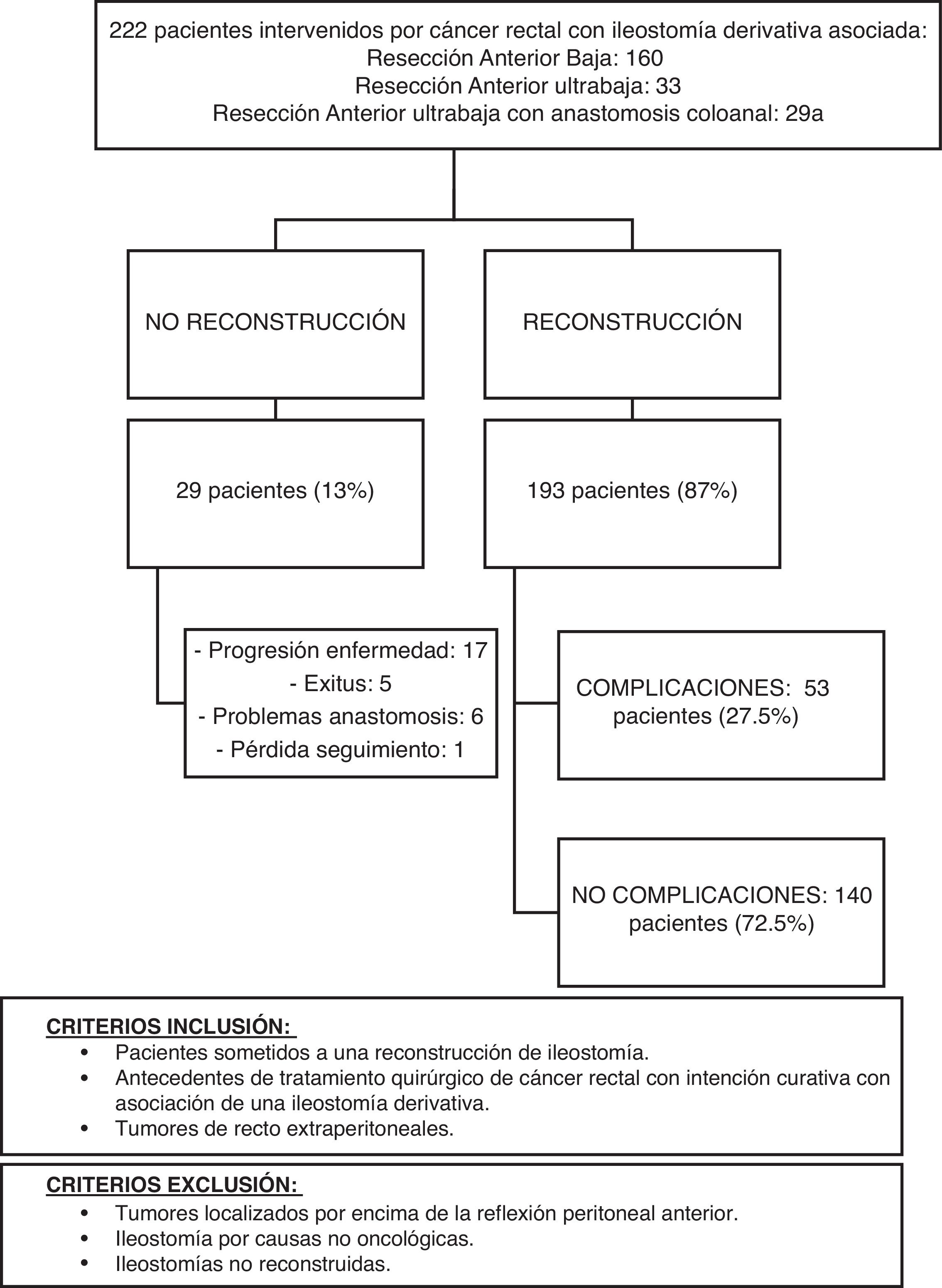
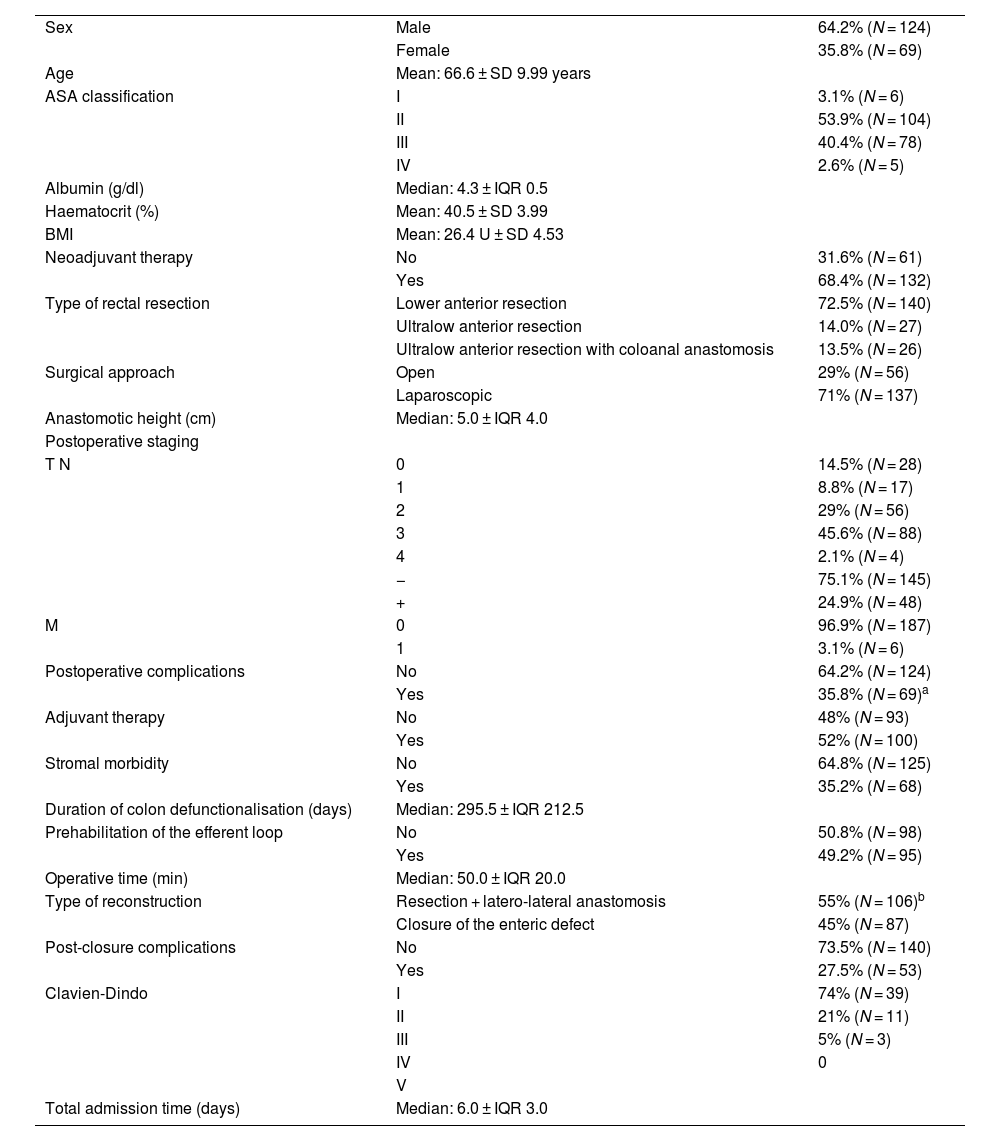
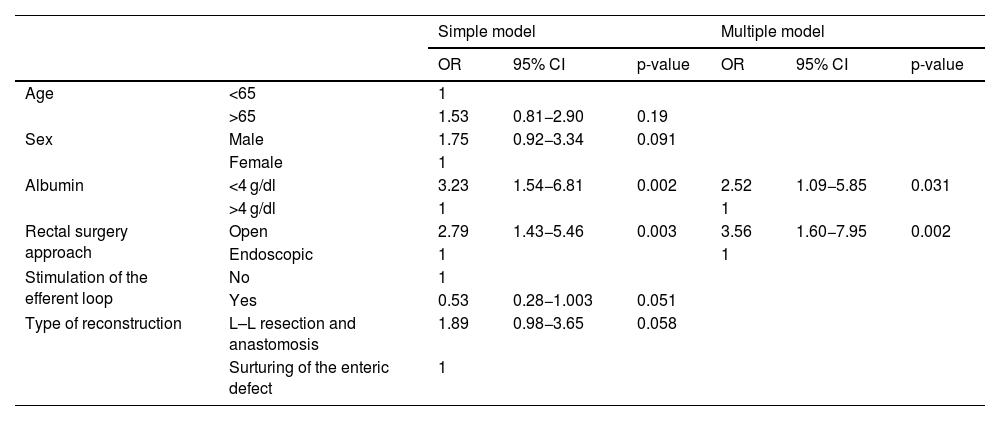
ResultsBetween January 1, 2015, and December 31, 2023, a total of 220 patients underwent surgery. Thirteen percent did not undergo ileostomy reversal. Thus, 193 patients were included in the final analysis. The median time to ileostomy reversal was 292 days. Postoperative complications occurred in approximately 27.5% of cases. Among the potential risk factors, albumin levels < 4 g/dl, open surgical approach for rectal pathology, absence of efferent loop stimulation, and side-to-side anastomosis were associated with p < 0.1 in univariate analysis. In the multivariate analysis, only low albumin levels and the open surgical approach for rectal pathology remained significantly associated with an increased risk of complications.
ConclusionModifiable factors such as the use of a laparoscopic approach for rectal surgery, stimulation of the efferent loop, and optimization of preoperative nutritional status may help reduce the incidence of postoperative complications.
Estimar el porcentaje de complicaciones existentes tras la reconstrucción de ileostomía en pacientes intervenidos previamente por cáncer de recto e identificar los factores de riesgo que traen consigo un incremento de dichas complicaciones.
Pacientes y métodosEstudio de cohortes retrospectivo en el que se han incluido pacientes intervenidos por cáncer rectal con una ileostomía derivativa asociada. El seguimiento mínimo ha sido de un año. Se ha realizado un análisis univariante de los factores de riesgo y, los que presentaron una p < 0,1 se incluyeron en el análisis multivariante.
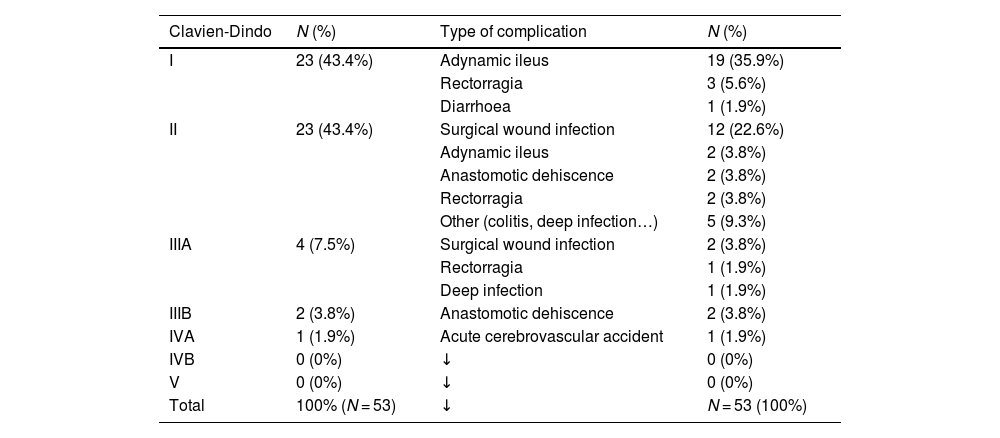
ResultadosEntre el 1 de enero de 2015 y el 31 de diciembre de 2023 se han intervenido 220 pacientes. A un 87% (n = 193) de estos pacientes se les ha reconstruido la ostomía por lo que se han incluido en el análisis estadístico final. La mediana de tiempo hasta la reconstrucción fue de 292 días. Un 27,5 % (n = 53) de los pacientes ha presentado algún tipo de complicación en el postoperatorio. Los niveles bajos de albúmina preoperatoria (<4 g/dL) y el abordaje abierto del tumor rectal se han asociado de forma independiente con un mayor riesgo de complicaciones (p < 0,05).
ConclusiónLa reconstrucción estomal presenta un porcentaje no desdeñable de complicaciones. Factores modificables como el abordaje laparoscópico de la patología rectal y el correcto estado nutricional prequirúrgico podrían minimizarlas.

