


Traditionally, anorectal abscesses and anal fistulas have been considered to originate from a common site within the fistula tract (the intersphincteric space), according to the cryptoglandular hypothesis. Understanding the distribution of cells and inflammatory mediators in different parts of the anal fistula tract is of significant interest. This study aimed to analyze the inflammatory characteristics of anal fistula tract specimens.
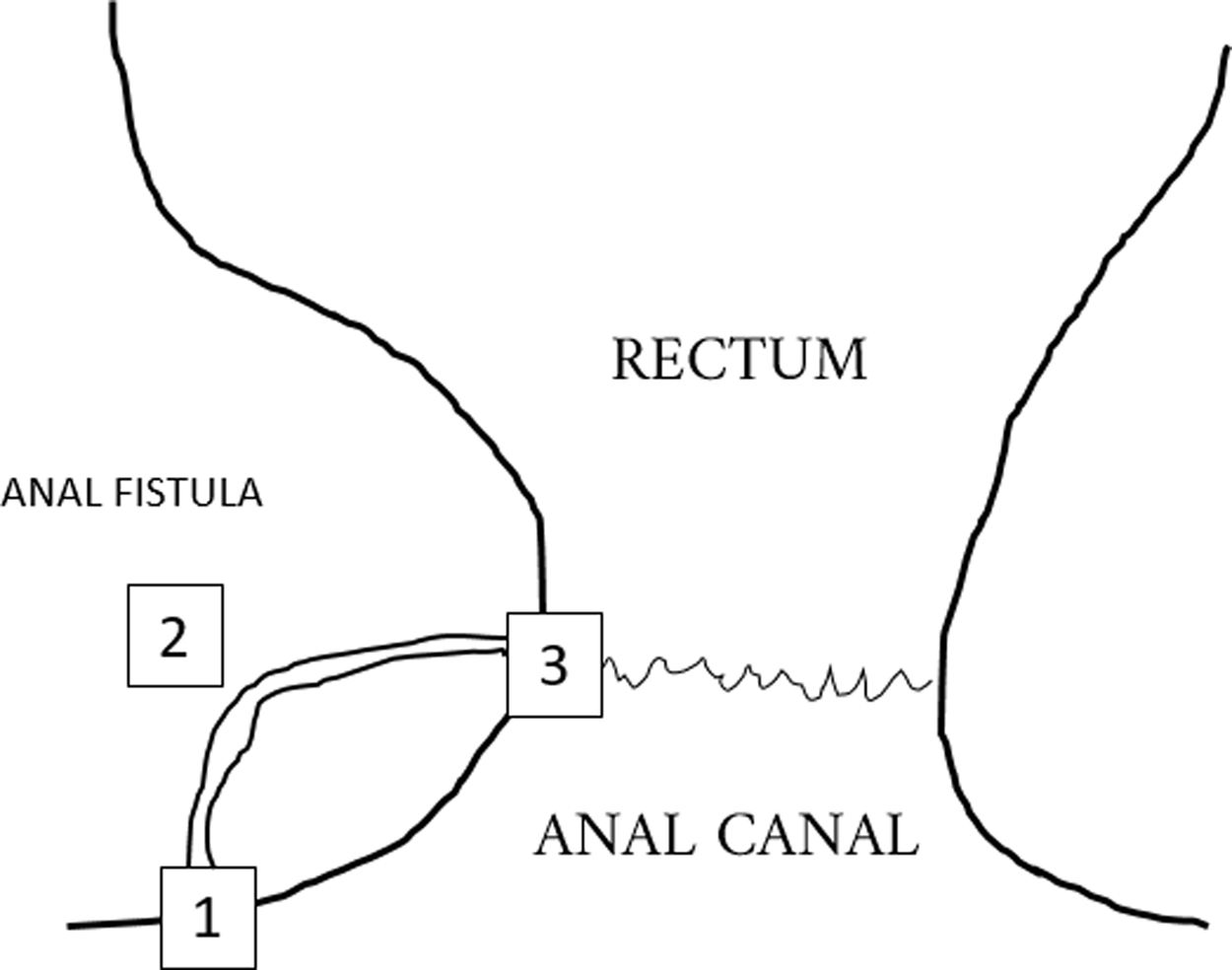
MethodsAn observational study was conducted on specimens retrieved from consecutive cases. We analyzed samples of chronic anorectal fistulas, which were topographically divided into three parts: superficial part (including the external fistula opening, close to the perianal skin), middle (including the intersphincteric space), and deep part (close to the anal canal, including the internal fistula opening). These samples were reviewed under microscopy to describe cell types using hematoxylin–eosin staining and the presence of pro-inflammatory cytokines TNF-alpha and IL-36 using immunohistochemical staining.
ResultsFistula tract samples were obtained surgically from 15 patients. No epithelial lining was observed in any part of the samples. We found a predominance of granulation tissue with chronic inflammatory components and no signs of acute inflammation, with no differences among the different parts of each sample studied. Immunohistochemistry revealed the presence of TNF-alpha throughout the fistulous tract, with an increasing trend towards the deep third (internal opening), although this was not statistically significant. In contrast, IL-36 was uniformly distributed across all three parts of the fistula tract.
ConclusionsThere is no specific site within the anal fistula tract that shows distinct findings related to the inflammatory process.
Tradicionalmente, se ha considerado que los abscesos anorrectales y las fístulas anales se originan en un sitio común (espacio interesfintérico), según la hipótesis criptoglandular. Comprender la distribución de células y mediadores inflamatorios en diferentes partes del tracto fistuloso anal es de gran interés. Este estudio tuvo como objetivo analizar las características inflamatorias de las muestras del tracto fistuloso anal.
MétodosSe realizó un estudio observacional en muestras obtenidas de casos consecutivos. Analizamos muestras de fístula anal, divididas en: parte superficial (orificio externo de la fístula, cerca de la piel perianal), media (espacio interesfintérico) y profunda (cerca del canal anal, incluyendo el orificio interno de la fístula). Estas muestras se revisaron bajo microscopía para describir los tipos de células utilizando tinción de hematoxilina-eosina y la presencia de citocinas proinflamatorias TNF-alfa e IL-36 mediante tinción inmunohistoquímica.
ResultadosLas muestras del tracto fistuloso se obtuvieron quirúrgicamente de 15 pacientes. No se observó revestimiento epitelial en ninguna parte de las muestras. Encontramos un predominio de tejido de granulación con componentes inflamatorios crónicos y sin signos de inflamación aguda, sin diferencias entre las diferentes partes de cada tracto fistuloso estudiado. La inmunohistoquímica reveló la presencia de TNF-alfa en todo el tracto fistuloso, con una tendencia creciente hacia el tercio profundo (orificio interno), aunque los cambios no fueron estadísticamente significativos. En contraste, la IL-36 se distribuyó uniformemente en las tres partes del tracto fistuloso.
ConclusionesNo hay un sitio específico dentro del tracto fistuloso anal que muestre hallazgos distintivos relacionados con el proceso inflamatorio.