
The most common causes for elevation of serum alpha-fetoprotein are hepatocellular carcinoma and germ cell tumors.1 Less commonly, it may be associated with alpha-fetoprotein producing gastric cancer, a rare subtype of gastric adenocarcinoma (2–15%) that is usually diagnosed in advanced stage and typically associated with poor prognosis and higher rates of lymphatic and venous invasion, lymph node metastasis and liver metastasis than conventional gastric cancer. Accordingly, it is demonstrated that increased alpha-fetoprotein is associated with overall poorer prognosis in gastric adenocarcinoma.2
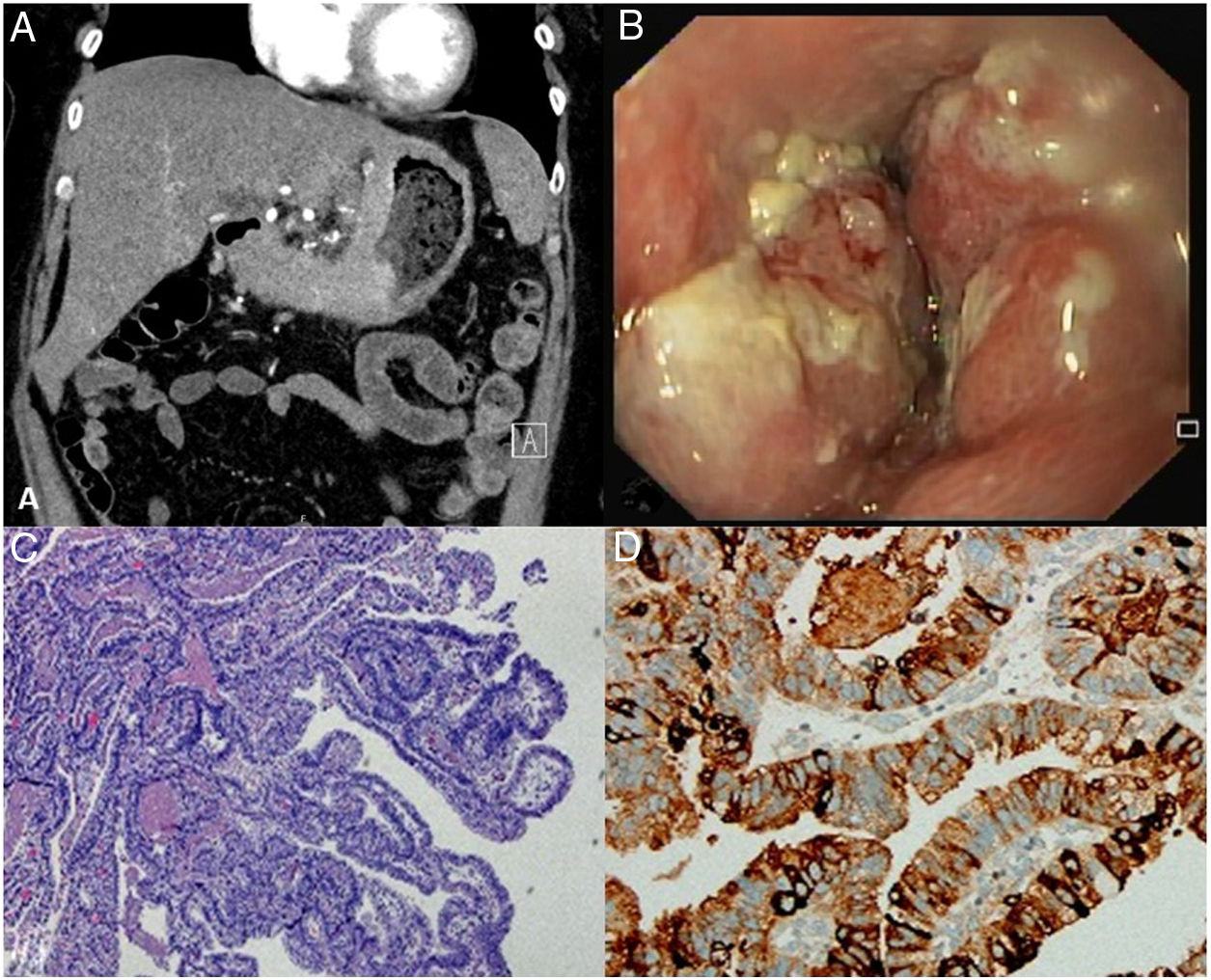
We report the case of a 39-year-old female with previous medical history of liver transplantation for alcoholic liver cirrhosis performed 4 years earlier, and abstinent since then, who was referred to our hospital for investigation of a progressive rise of serum alpha-fetoprotein (peak: 1100mg/dL). Since liver transplantation, she had been under immunosuppression with tacrolimus without any signs of graft rejection. She referred asthenia, post-prandial fullness, nausea and vomiting. Abdominal computed tomography scan revealed gastric parietal thickening suggestive of malignancy (Fig. 1A) associated with peri-gastric lymphadenopathy and two hypodense liver nodules with 10 and 32mm, both located in segment II and demonstrating peripheral hyperenhancement during arterial phase without evident washout during portal phase, suggestive of liver metastasis. Liver allograft did not display signs of cirrhotic transformation. Therefore, she undergone upper digestive endoscopy that showed a large ulcerated polypoid lesion involving the smaller curvature along body and antrum (Fig. 1B). Biopsies of the lesion were performed and histopathological examination revealed adenocarcinoma (Fig. 1C), with strong immunohistochemical positivity for alpha-fetoprotein (Fig. 1D), consistent with alpha-fetoprotein producing gastric cancer (stage IV). After multidisciplinary discussion, palliative chemotherapy was started. Additionally, because of food intolerance and vomiting, a palliative endoscopic stent was placed. However, the patient evolved unfavorably and died after 4 months.

(A) Abdominal computed tomography scan revealed gastric parietal thickening and a luminal protrusion suggestive of malignancy. (B) Esophagogastroduodenoscopy revealed a large protruding ulcerated lesion extending along the smaller curvature of antrum and body. (C) Histopathological examination revealed a solid neoplasia forming glandular structures consistent with adenocarcinoma. (D) Immunohistochemistry showed strong positivity for alpha-fetoprotein in neoplastic cells.
Alpha-fetoprotein producing gastric cancer has been previously described in patients with chronic liver disease,3–5 including cases associated with liver cirrhosis secondary to chronic hepatitis B3 or unknown etiology4 or with noncirrhotic chronic hepatitis C.5 However, to the best of our knowledge, we describe the first case in association with liver transplantation. Even though this association could be coincidental, it is possible that post-transplant immunosuppression may have played a role in the development of malignancy. Further studies are needed to determine whether immunosuppression is effectively a risk factor for this uncommon malignancy.
In conclusion, this case demonstrates that alpha-fetoprotein producing gastric cancer must be considered in the differential diagnosis of elevated alpha-fetoprotein, particularly in the presence of associated dyspeptic symptoms. Although the incidence of this malignancy does not appear to be increased in patients with liver disease, hepatologists should be aware of its existence when following these patients due to frequent use of alpha-fetoprotein in this setting.
Conflict of interestThe authors declare that they have no conflict of interest.