



This study aimed to explore the clinical and pathological differences between microsatellite instability-high (MSI-H) and microsatellite stable (MSS) tumors in right-sided colon cancer patients, as well as to evaluate the prognostic significance of MSI status on survival outcomes.
MethodsHistorical records of patients who underwent surgery for right-sided colon cancer between 2016 and 2024 were evaluated retrospectively. Immunohistochemistry was used for the determination of MSI status, and data on tumor characteristics, lymph node metastasis, carcinoembryonic antigen (CEA) levels, and survival outcomes were analyzed. Comparisons were performed to assess differences between the MSI-H and MSS groups, where P < .05 was considered statistically significant.
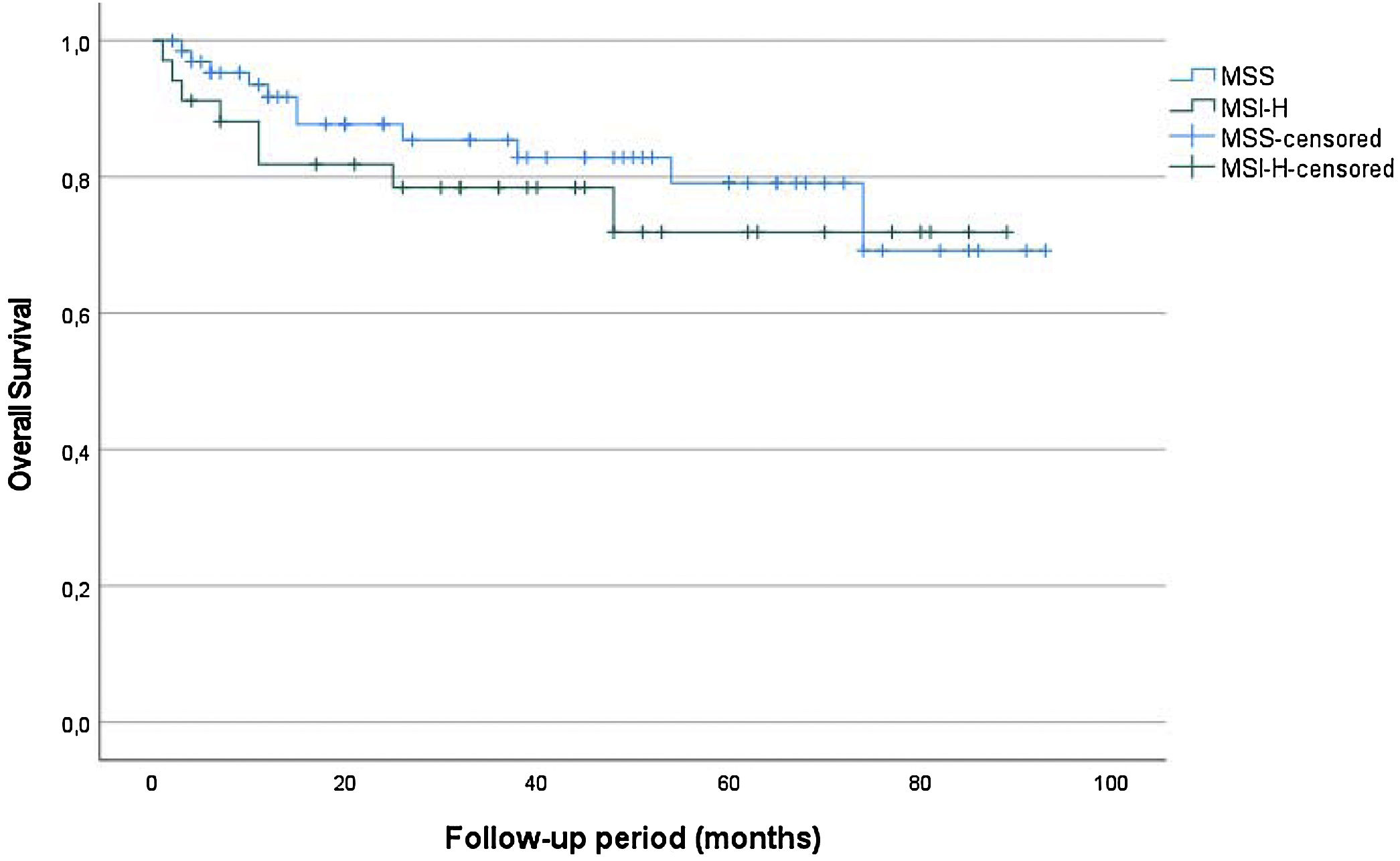
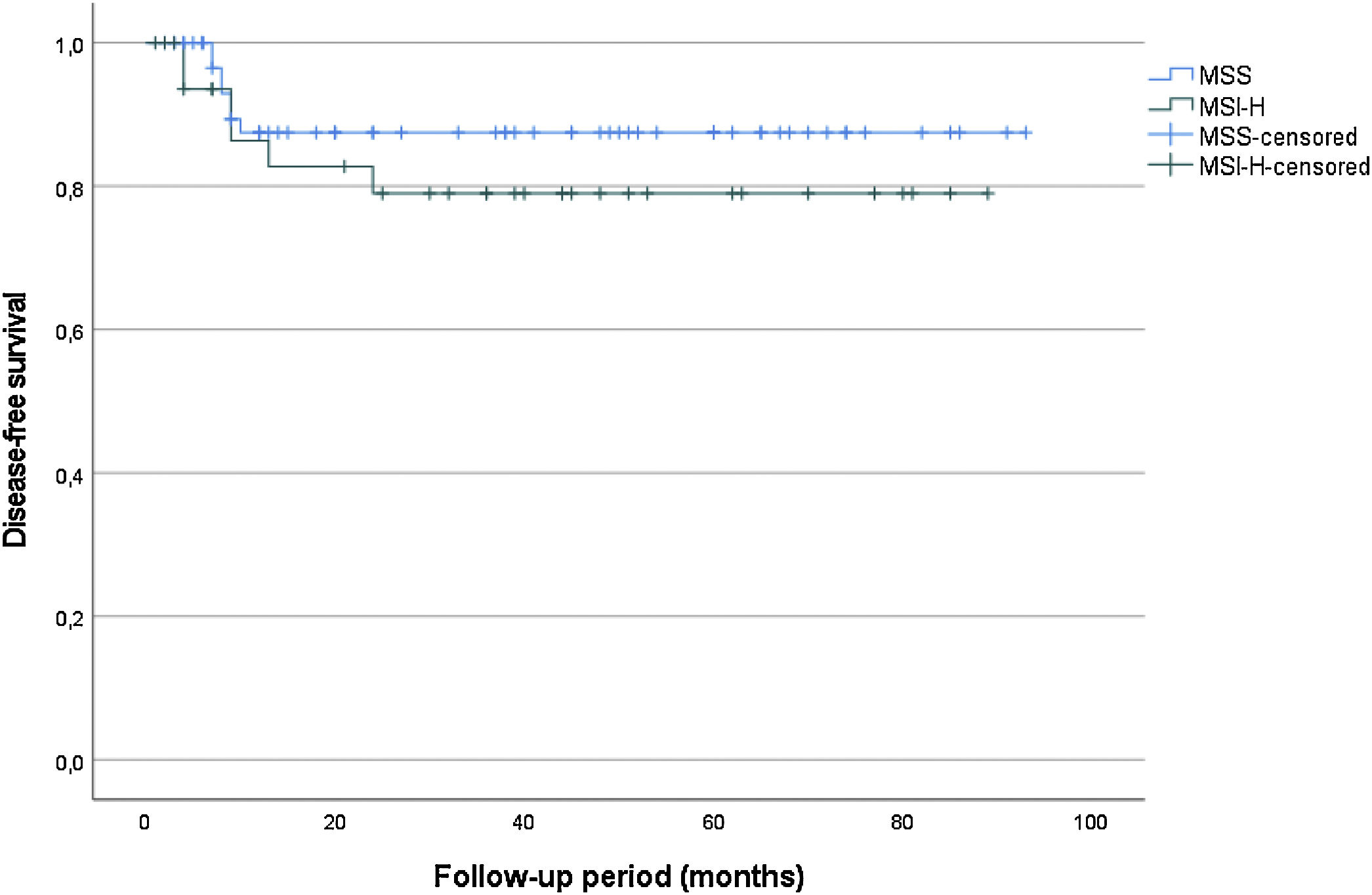
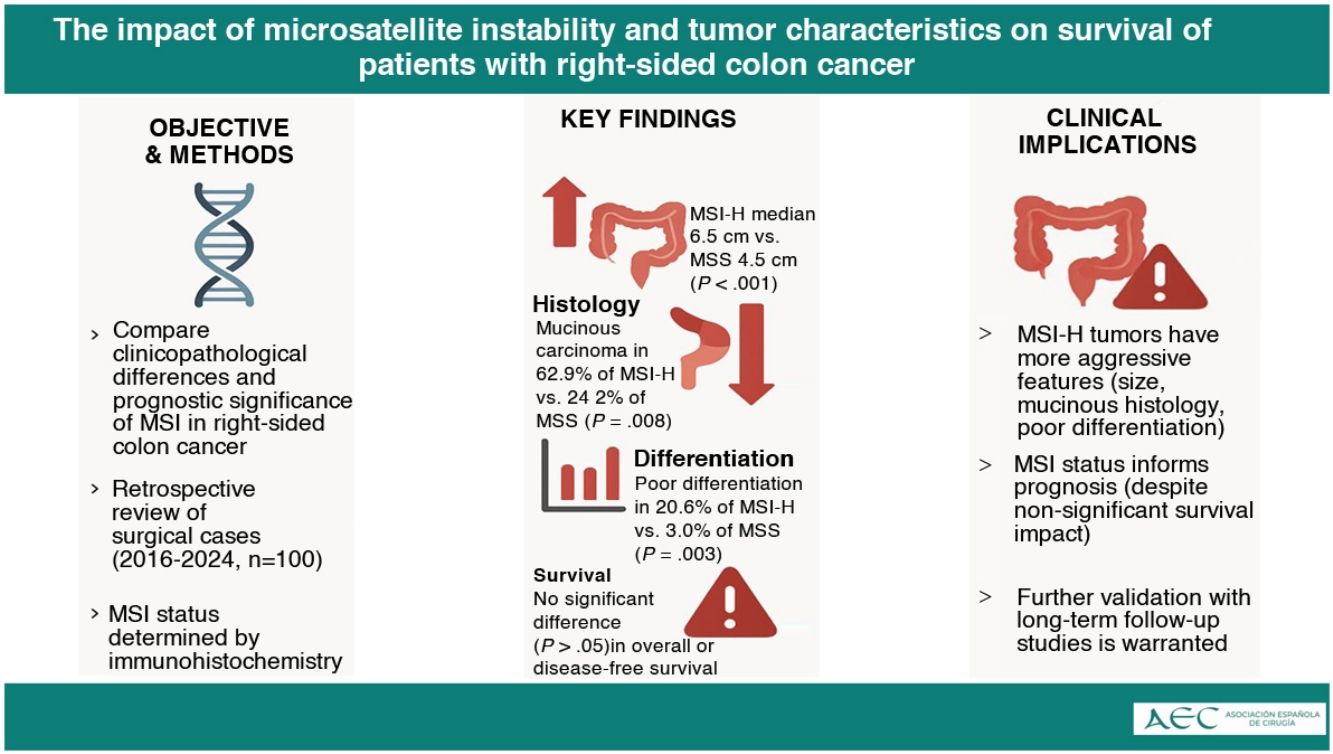
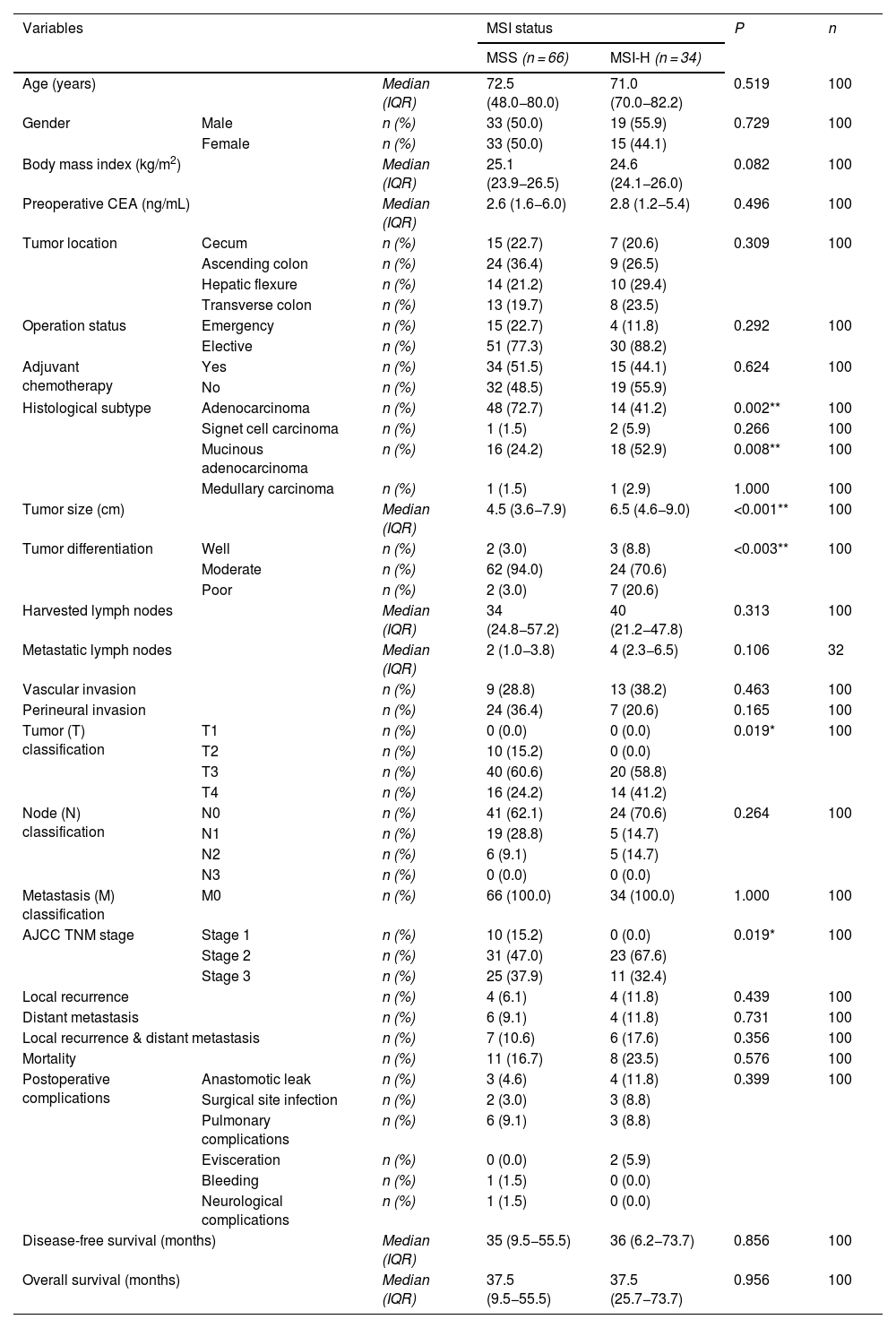
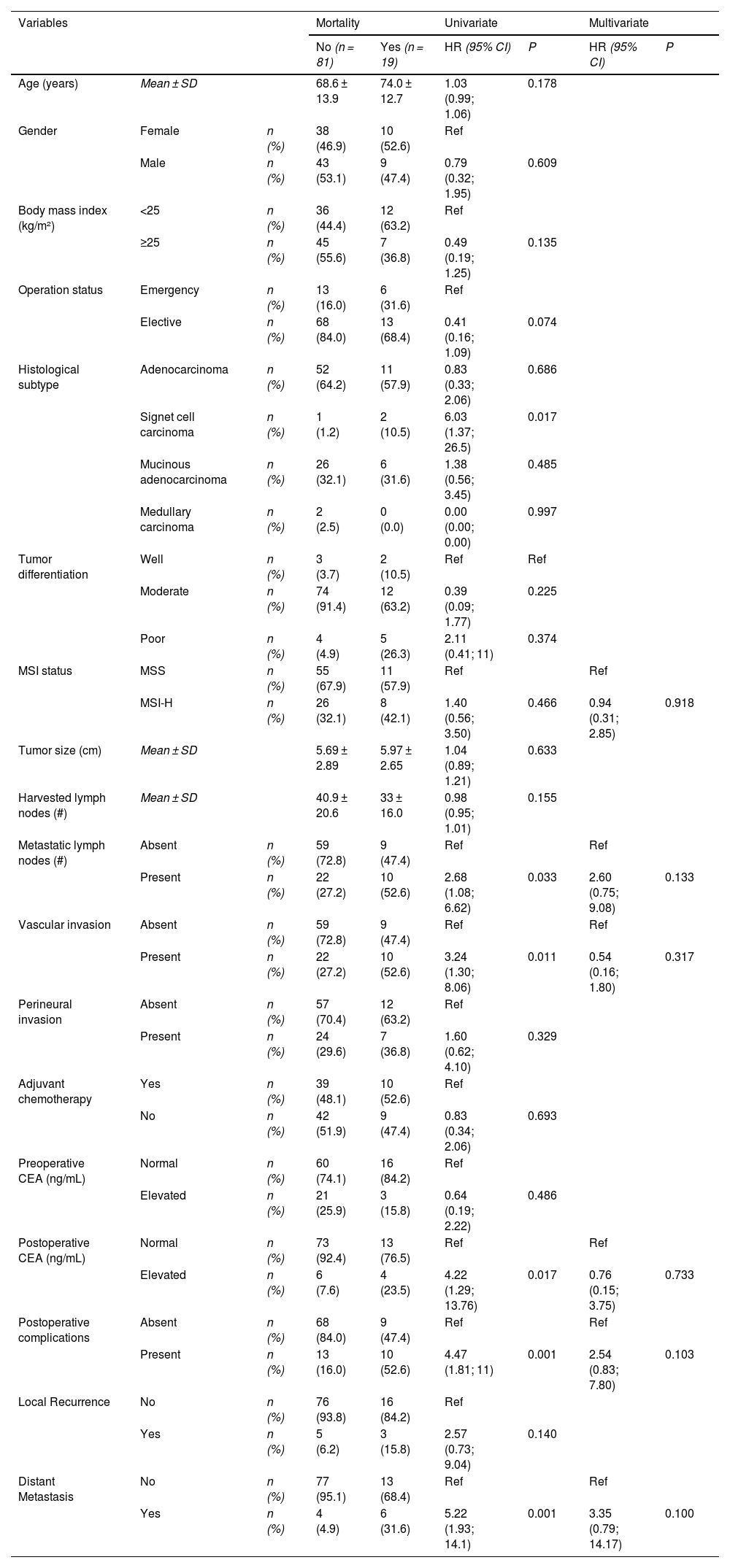
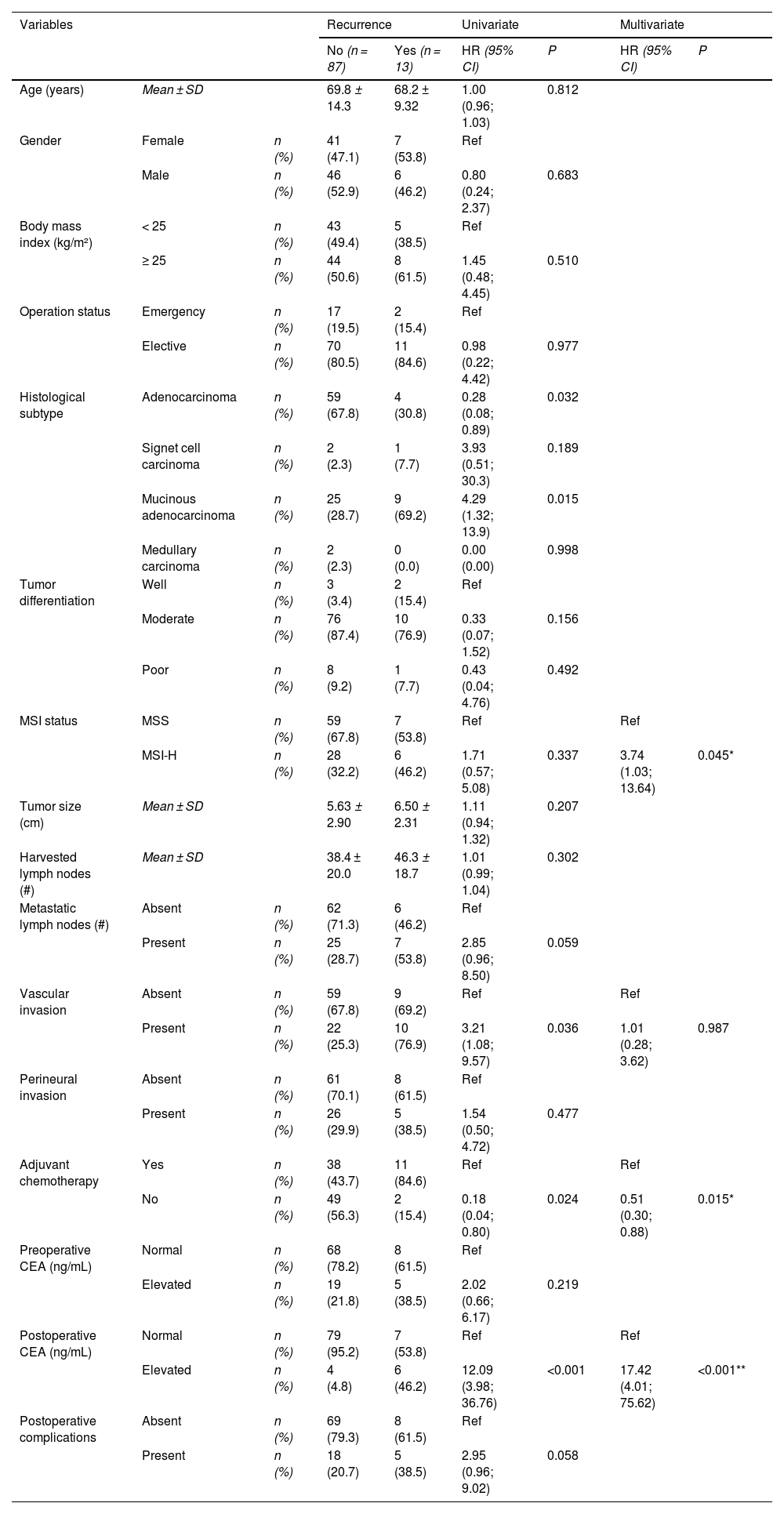
ResultsThe study included 100 patients, consisting of 52 men and 48 women with a median age of 72 (range: 63–79). Tumors with MSI-H status were significantly larger (median: 6.50 cm vs 4.50 cm; P < .001) and demonstrated higher rates of mucinous carcinoma (52.9% vs 24.2%; P = .008) compared to MSS tumors. Poor differentiation was more common in MSI-H tumors (20.6% vs 3.03%: P = .003). Overall survival (OS) and disease-free survival (DFS) did not differ significantly between MSI-H and MSS groups (P = .466 and P = .337, respectively). Elevated postoperative CEA levels at 6, 12, 18 and 24 months were significantly associated with poorer survival outcomes (P < .01).
ConclusionRight-sided colon cancers with MSI-H status were associated with larger tumor size, mucinous histology, and poor differentiation but did not significantly affect survival outcomes. Postoperative CEA monitoring provides critical prognostic information. Further large-scale studies are required to confirm these findings and refine therapeutic approaches.
Analizar las diferencias clínico-patológicas entre tumores con inestabilidad de microsatélites alta (MSI-H) y microsatélites estables (MSS) en pacientes con cáncer de colon derecho, y evaluar el valor pronóstico del estado MSI en la supervivencia. Métodos: Se revisaron retrospectivamente los datos de pacientes operados por cáncer de colon derecho entre 2016 y 2024. El estado MSI se determinó mediante inmunohistoquímica. Se recopilaron características tumorales, metástasis ganglionares, niveles de antígeno carcinoembrionario (CEA) y desenlaces de supervivencia. Las comparaciones entre grupos MSI-H y MSS se realizaron con significancia estadística fijada en p < 0,05.
ResultadosSe incluyeron 100 pacientes (52 hombres, 48 mujeres), edad mediana 72 años (rango: 63–79). Los tumores MSI-H presentaron mayor tamaño (mediana: 6,5 cm vs. 4,5 cm; p < 0,001), mayor frecuencia de carcinoma mucinoso (52,9% vs. 24,2%; p = 0,008) y diferenciación pobre (20,6% vs. 3,03%; p = 0,003). No se observaron diferencias significativas en la supervivencia global (p = 0,466) ni libre de enfermedad (p = 0,337). Sin embargo, niveles elevados de CEA posoperatorios a los 6, 12, 18 y 24 meses se asociaron con peor pronóstico (p < 0,01).
ConclusiónAunque los tumores MSI-H del colon derecho presentan rasgos histológicos más agresivos, no se tradujeron en diferencias significativas en la supervivencia. La vigilancia de CEA posquirúrgico aporta información pronóstica relevante. Se requieren estudios más amplios para confirmar estos hallazgos.


