metricas

Cirugía Española

Sugerencias
Cirugía Española Laparoscopic resection of splenic artery aneurysm with splenic preservation
Información de la revista
Cita
Cita
Compartir
Descargar PDF
Más opciones de artículo
Visitas
508
Video of the month
Acceso a texto completo

Laparoscopic resection of splenic artery aneurysm with splenic preservation

Resección laparoscópica de aneurisma de la arteria esplénica con preservación esplénica
Visitas
508
Alberto Gallego Velaa,
Autor para correspondencia
albertogv89@gmail.com

Corresponding author.
, Jose Luis Guerrero Ramírezb, María Fernández Ramosb, Jesús Cañete Gómeza,b
a General and Digestive Surgery Department, Valme University Hospital, Ctra. de Cádiz Km. 548.9, 41014 Seville, Seville, Spain
b General and Digestive Surgery Department, Viamed Fátima Hospital, Av. de la Palmera, 2, 41012 Seville, Seville, Spain
Este artículo ha recibido
Información del artículo
Texto completo
Descargar PDF
Estadísticas
Material adicional (1)
Texto completo

All authors listed at the end of this letter contributed to the work and agree to its submission to the journal. The article has not been previously published and is not under review with any other journal. The authors have no conflicts of interest, and there were no financial or personal relationships with other individuals or organizations that could inappropriately influence our work. The authors meet the ICMJE authorship criteria.

Splenic artery aneurysms are typically asymptomatic and generally diagnosed as incidental findings during imaging studies.

A 36-year-old woman with a desire for pregnancy was incidentally diagnosed with a 3.5-cm splenic artery aneurysm during abdominal ultrasound, which was later confirmed via angiography. Due to arterial tortuosity, embolization was not feasible. The aneurysm size, combined with a family history of splenic artery aneurysm rupture (father) and her reproductive plans, warranted surgical intervention.

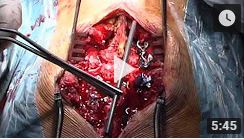
Laparoscopic resection of the splenic artery aneurysm with splenic preservation was performed using proximal and distal ligation, followed by aneurysm sectioning and removal. The postoperative course was uneventful.

Ethics statement

Consent was obtained from the patient. No local ethics committee was needed.

Funding information

This research did not receive any grants or funding.

Acknowledgments

We would like to extend our gratitude to all the participants in this study for their contribution.

Appendix A
Supplementary data

The following is Supplementary data to this article:

Copyright © 2025. AEC
asdasdasd
Opciones de artículo
Herramientas
Material suplementario