Abstracts of the 2025 Annual Meeting of the ALEH
More infoHealth literacy (HL) refers to a patient’s ability to obtain, process, and understand medical information needed to make informed health decisions. Low HL is associated with increased healthcare costs, higher hospitalization rates, reduced access to transplantation, and increased mortality—especially among vulnerable populations. In patients with cirrhosis, HL has been linked to sex, education, employment, and disease etiology in other countries, but data are scarce in Latin America. This study aimed to identify factors associated with HL in patients with liver cirrhosis in Cartagena, Colombia.
Patients and MethodsWe conducted a cross-sectional, analytical study between September and December 2024. Adults with a confirmed diagnosis of cirrhosis completed the validated Spanish version of the Short Assessment of Health Literacy (SAHL-S). Scores below 14 indicated inadequate HL. A separate, validated questionnaire assessed disease-specific knowledge across four domains: diagnosis, signs/symptoms, treatment, and medication.
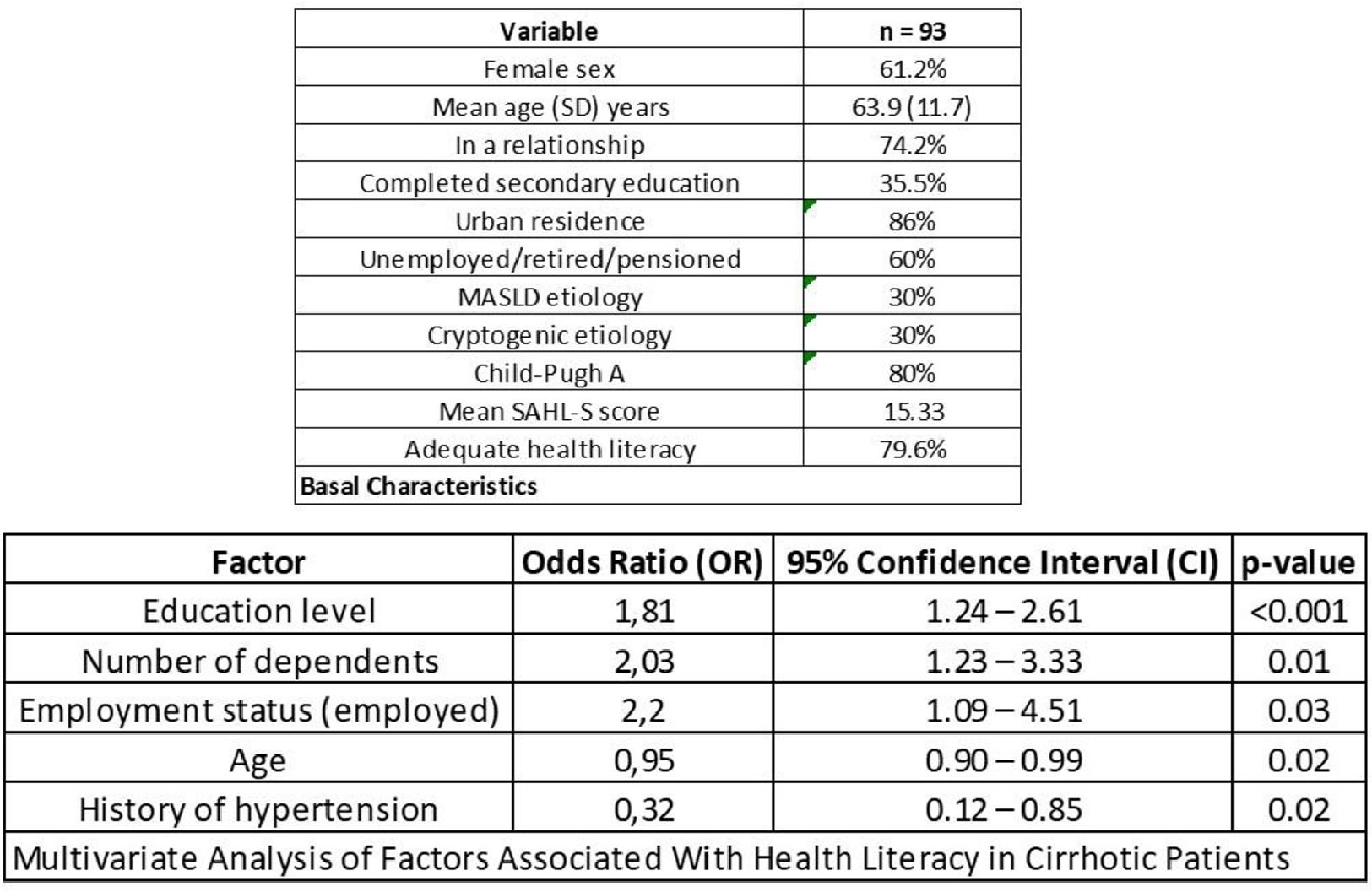
ResultsA total of 93 patients were analyzed (61.2% female; mean age: 63.9±11.7 years). MASLD and cryptogenic cirrhosis were the most common etiologies (30% each), and 80% were Child-Pugh A. Adequate HL was found in 79.6% (mean SAHL-S score: 15.3). Knowledge was highest for treatment (77%) and lowest for signs/symptoms (65%).
Multivariable analysis identified higher education (OR 1.81), number of dependents (OR 2.03), and employment (OR 2.2) as positive predictors of HL. Older age (OR 0.95) and hypertension (OR 0.32) were negatively associated.
ConclusionsOne in five cirrhotic patients had suboptimal HL, especially regarding symptom recognition. Sociodemographic and clinical factors should guide patient-centered interventions.