Abstracts of the 2025 Annual Meeting of the ALEH
More infoMetabolic dysfunction-associated steatotic liver disease (MASLD) includes patients with hepatic steatosis and at least one cardiometabolic risk factor (CMRF). However, the influence of individual CMRFs and their interactions on disease progression remains unclear.
To assess the association between CMRFs, their interactions (including with alcohol consumption), and liver stiffness in MASLD
Patients and MethodsThis multicenter study included patients with MASLD from four Colombian cities. Transient elastography was used to assess liver stiffness. Other causes of chronic liver disease were excluded. Patients with significant alcohol intake (≥30 g/day for men, ≥20 g/day for women) were excluded. CMRFs were defined using ATP III criteria. Alcohol consumption was estimated as grams per week based on standard drink units. A multivariate linear regression model evaluated associations with liver stiffness, including interaction terms between CMRFs and with alcohol. Statistical significance was set at p ≤ 0.05
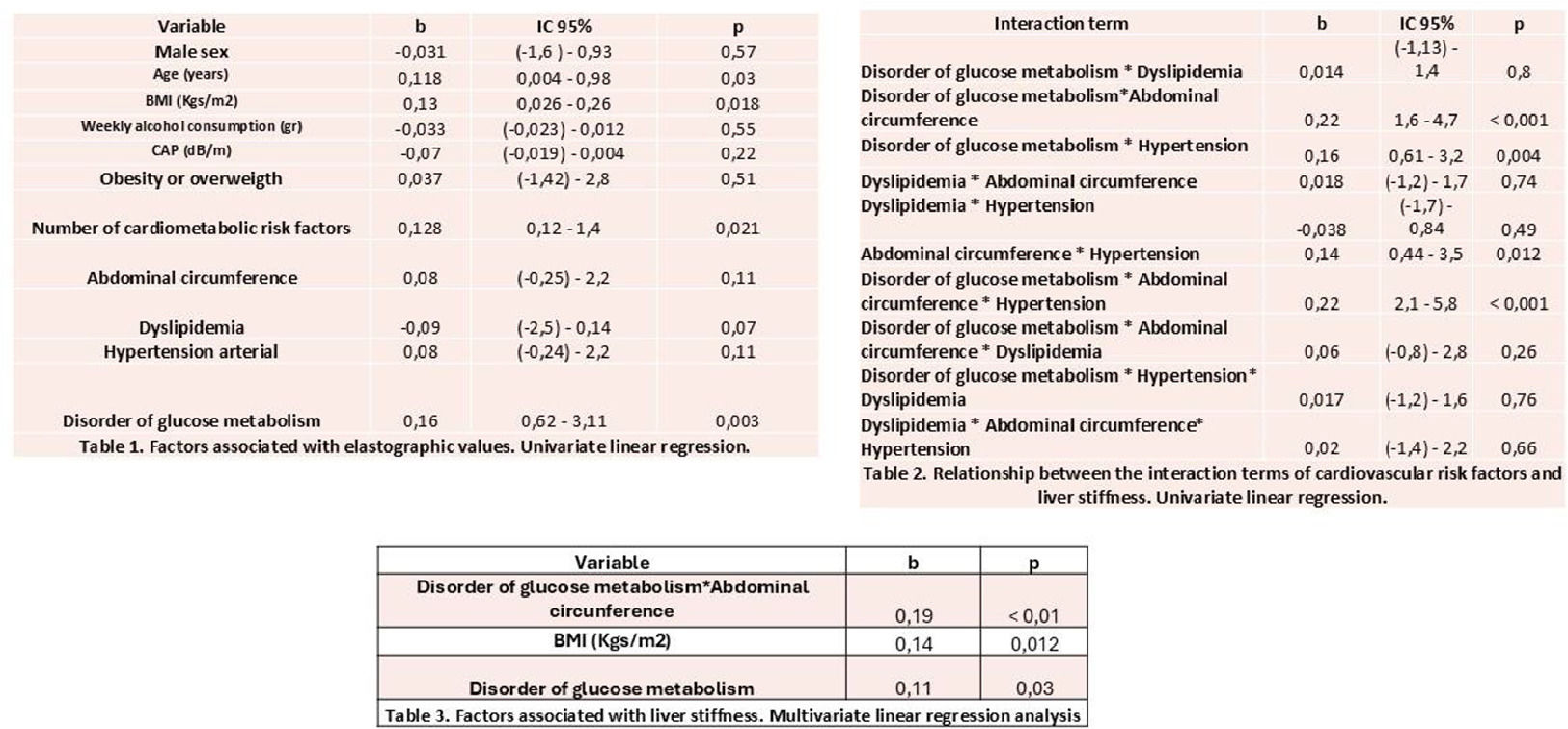
ResultsA total of 354 patients were included (mean age: 54 years; 39.3% male). CMRF distribution: 1 (30.2%), 2 (31.9%), 3 (29.4%), and 4 (8.5%). The most prevalent CMRFs were dyslipidemia (68.6%) and hypertension (54.2%). In multivariate analysis, BMI (β = 0.14; 95% CI: 0.03–0.27; p = 0.012) and impaired glucose metabolism (β = 0.11; 95% CI: 0.08–2.6; p = 0.03) were independently associated with liver stiffness. Among interaction terms, only the diabetes–waist circumference interaction remained significant (β = 0.19; 95% CI: 1.15–4.4; p < 0.01). Alcohol consumption showed no association.
ConclusionsDiabetes and its interaction with waist circumference are key drivers of liver stiffness in MASLD, independent of alcohol intake.