



La terapia focal (TF) ha emergido como una estrategia terapéutica intermedia entre la vigilancia activa (VA) y los tratamientos radicales en el manejo del cáncer de próstata (CP) localizado, dirigida a pacientes con enfermedad clínicamente significativa y lesión índice (LI) bien definida. Gracias al desarrollo de técnicas ablativas e imagen avanzada, permite tratar selectivamente la LI, preservando el tejido sano y reduciendo los efectos adversos.
ObjetivosRevisar la evidencia actual sobre la TF en el CP localizado, incluyendo modalidades tecnológicas, criterios de selección, herramientas diagnósticas, estrategias de seguimiento postratamiento y barreras para su implementación clínica en el contexto español.
Material y métodosSe realizó una revisión narrativa estructurada mediante búsqueda en PubMed®, Scopus® y Web of Science®, incluyendo estudios publicados hasta abril de 2025. Se seleccionaron artículos originales, revisiones, guías clínicas y metaanálisis centrados en TF para CP localizado. Se priorizaron estudios prospectivos y comparativos que abordaran resultados oncológicos, funcionales y tecnologías asociadas como la biopsia por fusión, la resonancia magnética multiparamétrica (RMmp), la tomografía por emisión de positrones con antígeno prostático específico de membrana (PET-PSMA) y la inteligencia artificial (IA).
ResultadosLa TF ofrece resultados oncológicos alentadores a corto y medio plazo, con preservación funcional destacada. Modalidades como el ultrasonido focalizado de alta intensidad (HIFU) y la crioterapia, son actualmente las más utilizadas y con mayor trayectoria clínica, junto con la electroporación irreversible (IRE), que destaca entre las técnicas emergentes con resultados prometedores.
El seguimiento post-TF debe ser multifactorial e incluye la monitorización seriada del PSA, la realización de biopsias sistemáticas y dirigidas, y el uso de técnicas de imagen como la RMmp. Herramientas específicas como Prostate Imaging after Focal Ablation (PI-FAB) y Transatlantic Recommendations for MRI Evaluation after Focal Therapy (TARGET) permiten estandarizar la interpretación de la RMmp tras TF. En España, su adopción aún es limitada, lo que refuerza la necesidad de guías adaptadas y registros multicéntricos.
Focal therapy (FT) has emerged as an intermediate therapeutic strategy between active surveillance (AS) and radical treatments for the management of localized prostate cancer (PCa) in patients with clinically significant disease and a well-defined index lesion (IL). The development of ablative and imaging techniques has enabled the selective treatment of the IL, preserving healthy tissue and reducing adverse effects.
Objectiveso review the current evidence on FT in localized PCa, including technological modalities, selection criteria, diagnostic tools, post-treatment surveillance strategies, and barriers to its clinical implementation in the Spanish healthcare setting.
Materials and methodsA structured narrative review was conducted through a search in PubMed, Scopus, and Web of Science, including studies published up to April 2025. Original articles, reviews, clinical guidelines, and meta-analyses focusing on FT for localized PCa were selected. Prospective and comparative studies addressing oncological and functional outcomes, as well as associated technologies such as fusion biopsy, multiparametric magnetic resonance imaging (mpMRI), prostate-specific membrane antigen positron emission tomography (PSMA-PET), and artificial intelligence (AI), were prioritized.
ResultsFT offers encouraging short- and medium-term oncological outcomes, with notable functional preservation. Modalities such as high-intensity focused ultrasound (HIFU) and cryotherapy are currently the most widely used and have the longest clinical trajectory, while irreversible electroporation (IRE) stands out among emerging techniques with results.
Surveillance after FT should be multifactorial and include serial PSA monitoring, systematic and targeted biopsies, as well as imaging techniques such as mpMRI. Specific tools such as PI-FAB (Prostate Imaging after Focal Ablation) and TARGET (Transatlantic Recommendations for MRI Evaluation after Focal Therapy) systems allow for standardized interpretation of mpMRI after FT. In Spain, its adoption remains limited, reinforcing the need for specific guidelines and multicenter registries.
El tratamiento del cáncer de próstata (CP) ha evolucionado, pero sigue siendo controvertido por su alta prevalencia y los efectos secundarios de las terapias tradicionales [1]. La terapia focal (TF) surge como una opción intermedia entre la vigilancia activa (VA) y el tratamiento radical, destinada a pacientes con CP clínicamente significativo y lesión índice (LI) bien caracterizada, gracias a los avances en el diagnóstico de precisión, como consecuencia de mejoras en las técnicas de imagen (resonancia magnética multiparamétrica [RMmp]), así como en las biopsias dirigidas a la lesión diana, y al mismo tiempo al progreso en las técnicas ablativas, tanto desde el punto de vista tecnológico como en términos de experiencia clínica [2–4].
ObjetivoEsta revisión narrativa tiene como objetivo ofrecer una visión actualizada, crítica y estructurada del papel de la TF en el CP localizado. Se abordan sus fundamentos conceptuales, principales modalidades tecnológicas, criterios de selección de pacientes, herramientas diagnósticas, resultados oncológicos y funcionales, estrategias de seguimiento postratamiento, así como los retos y barreras para su implementación clínica en el contexto español.
Adquisición de evidenciaSe realizó una revisión narrativa estructurada de la literatura siguiendo un enfoque reproducible y orientado a la práctica clínica. Se efectuó una búsqueda bibliográfica en las bases de datos PubMed®, Scopus® y Web of Science®, abarcando estudios publicados hasta abril de 2025.
Se emplearon combinaciones de términos MeSH y texto libre como: «focal therapy», «localized prostate cancer», «systematic review», «meta-analysis», «erectile dysfunction», «urinary incontinence», «multiparametric MRI», «micro-ultrasound» y «PSMA PET», utilizando operadores booleanos (AND, OR) para optimizar la búsqueda.
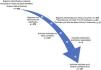
Se identificaron inicialmente 428 registros, de los cuales, tras eliminar duplicados y estudios no relacionados con el tema, se incluyeron 127 artículos en la síntesis cualitativa final. El proceso completo de identificación, cribado y selección de estudios se resume en la figura 1.

Se consideraron artículos originales, revisiones, metaanálisis y guías clínicas que abordaran directamente la TF para CP localizado, priorizando estudios prospectivos y comparativos, y que evaluaran resultados oncológicos (reducción de PSA, recurrencia, supervivencia libre de tratamiento), funcionales (disfunción eréctil, incontinencia urinaria mediante cuestionarios validados) y el uso de tecnologías asociadas (biopsia por fusión, RMmp, la tomografía por emisión de positrones con antígeno prostático específico de membrana [PET-PSMA], y la inteligencia artificial [IA]).
Se excluyeron estudios preclínicos, editoriales, duplicados, publicaciones sin relevancia clínica y artículos sin datos sobre resultados clínicos. La selección de los estudios fue realizada manualmente por 2 revisores de forma independiente, siguiendo criterios de calidad y aplicabilidad clínica.
Síntesis de la evidenciaEl manejo del CP ha evolucionado considerablemente en las últimas décadas. Las diferentes alternativas, siguen siendo objeto de debate, sobre todo a expensas del impacto que éstos tienen en la calidad de vida de los pacientes. En España en 2024 se diagnosticaron 30.316 nuevos casos, siendo el tumor más frecuente en varones [5]. Su manejo ha pasado de enfoques radicales como la prostatectomía radical (PR) y la radioterapia (RT) a técnicas menos invasivas que pretenden disminuir el impacto en la función urinaria y la función eréctil. Como respuesta a la necesidad de equilibrar eficacia oncológica y funcional, han surgido enfoques terapéuticos como la TF [6], que permite eliminar de manera selectiva las áreas neoplásicas de la próstata, preservando el parénquima sano y minimizando riesgos.
Esta revisión analiza las principales modalidades de TF en el CP localizado, junto con la evidencia clínica, los resultados oncológicos y funcionales, y los avances tecnológicos recientes. También se destacan los desafíos actuales y el potencial de esta estrategia como opción efectiva y menos invasiva.
Definición de la terapia focal en el cáncer de próstataLa TF en el CP se define como la «ablación guiada de una lesión cancerosa identificada mediante una prueba de imagen y confirmada por biopsia, incluyendo un margen de seguridad alrededor del foco tratado» [7].
Aunque el CP puede ser una enfermedad multifocal, cada vez hay más evidencia que sugiere que la lesión de mayor tamaño y grado histológico —conocida como LI— es la más agresiva y principal responsable de la progresión de la enfermedad [8]. Por lo tanto, una localización precisa de la LI es esencial para el éxito del tratamiento focal [9].
Teoría de la lesión índiceLa base conceptual de la TF reside en la teoría de la LI, que sostiene que la progresión del cáncer está impulsada principalmente por la lesión más agresiva dentro de la próstata, mientras que los focos secundarios podrían tener un papel marginal en la diseminación metastásica. Esta LI puede representar el 80% del volumen tumoral, y el grado Gleason dominante hasta en el 92% de las ocasiones [10], siendo el tamaño medio del resto de las lesiones no-índice de un 0,3mm.
Una validación sólida de este modelo se observa en el ensayo clínico aleatorizado FLAME, en el que pacientes con CP localizado de intermedio y alto riesgo, fueron tratados con RT convencional (77Gy) o con un refuerzo focal adicional (hasta 95Gy) dirigido a la lesión dominante. Los resultados mostraron una mejora significativa en la supervivencia libre de progresión bioquímica sin aumentar la toxicidad ni comprometer la calidad de vida en aquellos que recibieron el refuerzo focal adicional [11].
Resultados similares se observaron en el trabajo de Zhang et al., donde se comparó la ablación focal con electroporación irreversible (IRE) frente a una estrategia de tratamiento extendida. Ambas mostraron resultados oncológicos comparables, sin embargo, la preservación funcional fue superior en el grupo tratado exclusivamente sobre la LI [12].
El papel de la resonancia magnética multiparamétrica y la biopsia por fusión en la terapia focalEl avance en el diagnóstico basado en la imagen obtenida por RMmp y la incorporación de la biopsia de fusión, mejora la selección de pacientes gracias a la localización más precisa de la LI. La RMmp junto con el sistema de clasificación PI-RADS ha permitido optimizar el diagnóstico, alcanzando una sensibilidad del 90% y una especificidad del 80,1% para el CP clínicamente significativo (CPCS) [2]. Se ha observado además que estas lesiones visibles en la RMmp se asocian con características patológicas y perfiles genéticos más agresivos [13].
Si bien las biopsias dirigidas por RMmp son más efectivas que las biopsias sistemáticas tradicionales, la combinación de ambas modalidades ofrece las mayores tasas de detección, minimizando el riesgo de infradiagnóstico e infragradación [14]. Esta ventaja ha sido ampliamente respaldada por estudios comparativos como el ensayo PERFECT y el PREVENT, que han explorado rutas transperineales (TP) y transrectales (TR), y sus implicaciones en términos de eficacia diagnóstica y complicaciones infecciosas [15,16]. Ambos ensayos demostraron que la eficacia diagnóstica de la vía TP y TR es similar, con tasas de detección de CPCS cercanas al 50%. Además, la vía TP presenta ventajas respecto a la TR ya que disminuye el riesgo de infección y presenta un mayor rendimiento para la detección de lesiones en la cara anterior de la próstata [17].
Investigaciones recientes han introducido los conceptos de umbra (lesión visible en RMmp) y penumbra (zona de hasta 10mm alrededor) para describir la distribución del CPCS. Se ha observado que el 90% de los focos de CPCS se localizan dentro de esta región ampliada, lo que respalda el muestreo dirigido de la zona perilesional, también llamado saturación focal, como estrategia para mejorar la detección de CPCS [18].
Además, la incorporación de la imagen PET-PSMA permite mejorar sensibilidad diagnóstica, especialmente en tumores de alto riesgo o enfermedad recurrente. Las biopsias dirigidas con 68Ga-PSMA PET/TC han mostrado sensibilidades entre el 84-100% y especificidades entre 76-100%, correlacionándose además con la agresividad tumoral [4].
El microultrasonidos (MUS), con una frecuencia de 29MHz, ha emergido como una herramienta de imagen en tiempo real de alta resolución, con una capacidad 3 veces superior al ultrasonido TR convencional. Su sistema de puntuación PRI-MUS, equivalente al PI-RADS, ha estandarizado la evaluación de lesiones durante biopsias dirigidas, y ensayos clínicos recientes confirman su sensibilidad comparable a la RMmp, con el beneficio añadido de una guía inmediata durante procedimientos de TF [19].
Finalmente, la IA está desempeñando un papel creciente en la TF, desde el análisis de imagen y la caracterización de lesiones, hasta la planificación de zonas de ablación [20]. Basándose en estos avances, se publicaron recientemente los resultados del estudio PI-CAI, en el que se analizaron más de 10.000 RMmp de 9.129 pacientes. En un subgrupo de 400 casos, el sistema de IA alcanzó un área bajo la curva ROC (AUROC) de 0,91, superando significativamente el rendimiento promedio de 62 radiólogos (AUROC 0,86; p<0,0001). Estos hallazgos refuerzan el potencial de la IA como herramienta de apoyo en flujos de trabajo de TF asistida por IA [21].
Criterios de selecciónEl éxito de la TF depende fundamentalmente de una adecuada y rigurosa selección de pacientes, ya que esto determina en gran medida su eficacia clínica. No obstante, aún no existen guías estandarizadas, y los criterios utilizados varían considerablemente entre estudios e instituciones.
Según el consenso internacional FocAL therapy CONsensus (FALCON) [22], la TF está indicada en pacientes con:
- •
Lesión visible en la RMmp, confirmada mediante biopsia por fusión y sistemática.
- •
Enfermedad ISUP 2–3 → Aunque no existe un umbral consensuado de proporción de patrón Gleason 4 para indicar TF, las guías de la European Association of Urology (EAU) 2025 señalan que la VA puede considerarse en casos seleccionados de ISUP 2 con un componente de patrón 4≤10% [23]. Este criterio delimita de forma indirecta la frontera entre pacientes candidatos a VA y aquellos que podrían beneficiarse de un tratamiento focal o radical.
- •
No hubo consenso respecto a un límite del nivel de PSA al diagnóstico.
- •
La presencia de enfermedad fuera de la LI no constituye una contraindicación para TF.
La TF representa un enfoque mínimamente invasivo que puede aplicarse mediante diversas fuentes de energía, cada una con mecanismos de acción y beneficios específicos.
Según las guías de la EAU 2025 [23], entre las modalidades más consolidadas y ampliamente utilizadas, el ultrasonido focalizado de alta intensidad (HIFU) y la crioterapia, pueden emplearse como modalidades ablativas focales en el contexto de registros prospectivos. Otras técnicas emergentes, y con resultados alentadores como la IRE [1], la ablación focal con láser (FLA), la ablación con vapor de agua (WVA) o la ablación transuretral con ultrasonidos (TULSA), deben reservarse a ensayos clínicos o a su utilización dentro de registros prospectivos monitorizados.
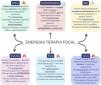
La figura 2 muestra el los mecanismos de acción de estas energías, vías de aplicación, requerimientos anestésicos y ventajas específicas según cada tecnología [6].

Principales fuentes de energía utilizadas en terapia focal para el tratamiento del cáncer de próstata localizado. Cada modalidad difiere en su mecanismo de acción (térmico vs. no térmico), vía de abordaje, requisitos anestésicos y localización tumoral preferente.
FLA: focal laser ablation; HBP: hiperplasia benigna de próstata; HIFU: high-intensity focused ultrasound; IRE: irreversible electroporation; TULSA: transurethral ultrasound ablation; WVA: water vapor ablation.
El estudio PROTECT, comparó la motorización activa, la PR y la RT en los pacientes con CP localizado de bajo riesgo o intermedio favorable, sugiere que la mortalidad por CP a 15 años fue baja e independiente del tratamiento inicial, lo que pone en duda la necesidad de terapias radicales en todos los casos [24]. Sin embargo, una proporción considerable de pacientes inicialmente manejados con monitorización activa, alrededor de un 60%, acaban recibiendo tratamiento radical en el seguimiento, ya sea por progresión clínica o por ansiedad del paciente. En este contexto, la TF podría representar una alternativa intermedia atractiva, al ofrecer control local con menor impacto funcional, en pacientes con baja probabilidad de fallecer por esta causa. Estudios recientes destacan el papel emergente de la RMmp como herramienta clave para seleccionar candidatos adecuados para TF, permitiendo una mejor caracterización de la localización, extensión y agresividad tumoral [25].
Cuando aplicamos TF es importante comprender el concepto de fracaso terapéutico, que puede distinguirse en 2 categorías principales: recurrencia en el lecho de tratamiento (in-field) o enfermedad fuera del lecho de tratamiento (out-of-field)[6]. Estas categorías permiten identificar las limitaciones del procedimiento y comprender mejor sus alcances clínicos.
Las recurrencias in-field ocurren cuando el tumor tratado no es completamente erradicado, ya sea por una entrega de energía insuficiente o por una localización imprecisa del área de tratamiento. Este tipo de fracaso representa un verdadero fallo del procedimiento y se denomina también fallo de ablación. En cambio, la enfermedad fuera del lecho del tratamiento (out-of-field) ocurre cuando la lesión persiste o se desarrolla fuera de la zona tratada. Esto puede deberse a focos tumorales no detectados durante la evaluación inicial o a la aparición de nuevas lesiones.
Según la última revisión sistemática y metaanálisis a base de estudios prospectivos, se detallan tasas de recurrencia in-field entre el 5 y el 22%, mientras que las out-of-field se sitúan entre el 2 y el 29% [26]. No obstante, uno de los principales desafíos actuales de la TF es la falta de consenso en los criterios y metodologías utilizados para evaluar los resultados oncológicos, y la evaluación del fracaso terapéutico.
La tabla 1 resume los resultados oncológicos y funcionales reportados en revisiones sistemáticas y metaanálisis recientes sobre TF en CP localizado, publicados entre 2018 y 2025 [1,26–30].
Resumen de los resultados oncológicos y funcionales provenientes de revisiones sistemáticas y metaanálisis realizados entre el 2018 y 2025 sobre terapia focal para el cáncer de próstata localizado, que abarcan una amplia población de pacientes
| Estudio | Fuente energía | Biopsia | Prueba de imagen | Reducción de PSA | Resultados oncológicos | Resultados funcionales | Evaluación de resultados funcionales | Seguimiento (meses) |
|---|---|---|---|---|---|---|---|---|
| Bakavicius et al. [30] (20 estudios, 4.209 pacientes) | HIFU | Dirigida y sistemática | RMNmp | Reducción mediana de PSA del 53 al 84% | Recurrencia in-field: 5-22%; progresión out-of-field 2-29% | 20% DE2% IU | IPSS, ICSmaleSF, IIEF, EPIC, FACT-P | 6 a 56m |
| Cribbs et al. [27] (55 estudios, 12.655 pacientes) | IRE y HIFU | — | RMNmp | Reducción media PSA 74,7% HIFU vs. 57,3% IRE | IRE: menor reducción media de PSA, mayores tasas de biopsia negativa in-field y mejor preservación de la potencia | DE: menos con IRE vs. HIFU.IU:IRE: 94% continente (3m), 100% (7m)HIFU: 100% continente (3m) | IPSS, IIEF, EPIC | — |
| Hopstaken et al. [1] (72 estudios, 5.827 pacientes) | 8 fuentes de energía | Dirigida y sistemática | RMNmp | No detallado; monitorización de PSA en el seguimiento | Mediana de csPCa in-field: HIFU 14,7%, IRE 8,5%, PDT 10%, Crioterapia 15%, FLA 17% | DE 0-40% en función de la energía.IU<1% al año | IPSS, ICSmaleSF, IIEF-5, EPIC | Corto |
| Nicoletti et al. [28,29] (124 estudios +8.000 pacientes) | 10 fuentes de energía | Dirigida y sistemática | RMNmp | Rango de RB: 2% (braquiterapia focal) al 67,5% (HIFU) | Tasas de tratamiento de rescate del 1% (IRE) al 54% (HIFU) | Continencia 92-100%. DE variable según técnica: desde el 0 hasta el 94,4% (crioterapia) | IPSS, IIEF/IIEF-5, SHIM, EPIC, AUA, ICSmaleSF, FACT-P, CTCAE, Clavien-Dindo | Varía entre estudios (mediana de 24m) |
| Slusarczyk et al. [26](50 estudios, 4.615 pacientes) | 7 fuentes de energía | Dirigida y sistemática | RMNmp | No especificado; mediana basal PSA 6,5ng/ml | SLR CPcs: 86% a los 12 meses; 81% a los 24 meses. SLT radical o sistémico a 5 años: 82% | DE de novo en 11% (IC 4-18%).IU 3% (IC 0-6%) | — | Mediana 21m (IC 12-34) |
La tabla incluye detalles sobre las fuentes de energía utilizadas en los estudios, métodos de evaluación mediante biopsia e imagen, reducción del PSA tras el tratamiento, resultados relacionados con la recurrencia, tasas de incontinencia y disfunción eréctil, cuestionarios validados para su evaluación y duración del seguimiento.
CP: cáncer de próstata; CPcs: cáncer de próstata clínicamente significativo; DE: disfunción eréctil; EPIC: Expanded Prostate Cancer Index Composite; FACT-P: Functional Assessment of Cancer Therapy-Prostate; FLA: ablación focal con láser; HIFU: ultrasonido focalizado de alta intensidad; IC: intervalo de confianza al 95%; ICSmaleSF: International Continence Society male short form; IIEF/IIEF-5/15: International Index of Erectile Function (versiones abreviada y completa); IPSS: International Prostate Symptom Score; IRE: electroporación irreversible; IU: incontinencia urinaria; m: meses; PDT: terapia fotodinámica; PSA: antígeno prostático específico; RMNmp: resonancia magnética multiparamétrica; SLR: supervivencia libre de recaída; SLT: supervivencia libre de tratamiento; TF: terapia focal.
En casos seleccionados de recurrencia localizada tras tratamiento no quirúrgico, la TF puede constituir una opción terapéutica válida de rescate.
Según una revisión sistemática y metaanálisis reciente que incluyó 990 pacientes, la TF de rescate se asoció con tasas aceptables de control oncológico y mejores resultados funcionales, especialmente en términos de continencia urinaria, en comparación con la PR de rescate y la RT de rescate [31].
La indicación de TF de rescate debe plantearse en el marco de un comité multidisciplinar, con una cuidadosa reevaluación de la extensión tumoral mediante RMmp, biopsias dirigidas y estudio de diseminación, y tras una discusión detallada con el paciente sobre los riesgos, beneficios y alternativas disponibles.
Idealmente, estos tratamientos deberían realizarse en centros con experiencia en TF y formar parte de registros prospectivos multicéntricos que permitan evaluar sus resultados a largo plazo y generar evidencia robusta.
El papel de la respuesta inmune en la terapia focalEn los últimos años, se ha incrementado el interés por el impacto inmunológico de las ablaciones focales más allá de la eliminación del tumor. Tras un tratamiento de TF se destruyen células tumorales, que liberan antígenos tumorales y señales de daño celular, que son recogidas por células presentadoras de antígeno. Estas células migran a los ganglios linfáticos y permiten desarrollar linfocitos T específicos contra esas células tumorales. Este proceso se denomina activación primaria del sistema inmune (SI) y es un paso esencial para desarrollar una respuesta inmune específica y duradera [32].
Estudios recientes sugieren que modalidades como la IRE, gracias a su mecanismo de apoptosis sin daño térmico, no produce una desnaturalización de las proteínas y antígenos tumorales, siendo ideal para la activación del SI antitumoral. Este proceso podría favorecer la vigilancia inmunológica e incluso aportar un efecto abscopal, que produzca la regresión de lesiones a distancia. Aunque este fenómeno ha sido descrito tras RT combinada con inmunoterapia, no se ha demostrado clínicamente tras TF en CP [33].
Otra área de desarrollo la representan las estrategias que combinan la TF con moduladores del SI para aumentar la respuesta antitumoral. Un enfoque novedoso utiliza IRE para facilitar la administración focal de virus oncolíticos, aprovechando la integridad membranosa alterada del tejido ablacionado. Al combinar la ablación focal con administración local de virus oncolíticos, se busca amplificar el efecto inmunogénico del tumor tratado, transformando la lesión residual en un nicho más visible al SI, creando una respuesta duradera y adaptativa [34].
Aunque la evidencia clínica directa aún es limitada, el paradigma emergente sugiere que la TF podría actuar como un inmunoestimulador local dentro de estrategias más amplias de tratamiento combinado. Al modificar el microambiente tumoral y promover una mayor infiltración de células inmunitarias, en especial linfocitos T citotóxicos, se favorece un entorno propicio para respuestas sistémicas. Este enfoque es particularmente relevante en el contexto de pacientes con enfermedad localizada, pero con riesgo de diseminación microscópica, donde el potencial efecto abscopal podría tener un valor terapéutico añadido. Así, la TF podría no solo controlar la LI, sino también contribuir a la inmunovigilancia frente a focos tumorales ocultos o emergentes [35].
Seguimiento tras la terapia focalEl seguimiento de los pacientes que han recibido TF para CP localizado representa uno de los principales retos actuales, debido a la falta de criterios estandarizados y a la complejidad de interpretar los cambios postratamiento. A diferencia de las terapias radicales, donde el descenso de PSA es claro y esperado, la presencia de tejido prostático remanente tras TF produce niveles de PSA fluctuantes, lo cual limita su utilidad como único marcador de recurrencia [36].
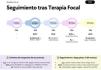
Actualmente se recomienda de forma generalizada una estrategia combinada basada en la monitorización del PSA, la RMmp y las biopsias sistemáticas y dirigidas para la vigilancia tras la TF. Herramientas específicas como PI-FAB y TARGET permiten estandarizar la interpretación de la RMmp en este contexto. En base a estos principios, proponemos el siguiente algoritmo estructurado, que contempla el uso de PSA, RMmp y biopsia según el momento postratamiento y el perfil de riesgo del paciente (fig. 3).

Algoritmo propuesto de seguimiento tras terapia focal para cáncer de próstata localizado, basado en la revisión narrativa de Koehler et al. (2025). El seguimiento combina PSA seriado, imagen por RMN y biopsias dirigidas o sistemáticas según los hallazgos clínicos y bioquímicos. Se detallan también los criterios de sospecha de recurrencia y recomendaciones para el seguimiento a largo plazo.
Bx: biopsia; ISUP: International Society of Urological Pathology; PI-FAB: Prostate Imaging-Focal Ablation Criteria; PI-RADS: Prostate Imaging Reporting and Data System; PSA: antígeno prostático específico; RMN: resonancia magnética nuclear; TARGET: standardized reporting tool para TF.
La RMmp permite monitorizar la eficacia del tratamiento, evaluar la recurrencia in situ e identificar focos de enfermedad fuera del área tratada. Sin embargo, los patrones de señal postablación (fibrosis, necrosis, hemorragia) pueden dificultar la distinción entre cambios benignos y enfermedad residual [37]. Para superar estas limitaciones, se han desarrollado 2 sistemas de puntuación radiológica específicos para la evaluación tras TF: PI-FAB y TARGET, donde la secuencia con contraste (DCE) supone un rol fundamental.
Prostate Imaging after Focal Ablation (PI-FAB)El sistema PI-FAB propone una evaluación secuencial basada en 3 secuencias clave de la RMmp: DCE, DWI (incluyendo mapa ADC), y T2 ponderada.
Cada secuencia se puntúa en una escala de 3 puntos, permitiendo una evaluación estructurada de la probabilidad de recurrencia. El sistema enfatiza la necesidad de comparar con imágenes previas al tratamiento y de integrar datos clínicos y de PSA [38].
Transatlantic Recommendations for Prostate Gland Evaluation (TARGET) with MRI after Focal TherapyTARGET es un sistema de consenso internacional que proporciona una estructura más amplia para la evaluación post-TF. Integra las 3 secuencias clásicas de la RMmp (DCE, DWI y T2) con una puntuación final de uno a 5, donde:
- •
Lesiones dentro de la zona tratada se puntúan con el sistema TARGET.
- •
Lesiones fuera de la zona tratada se valoran con PI-RADS v2.1.
TARGET recomienda realizar una RMmp de control a los 12 meses y posteriormente de forma anual [39].
La tabla 2 presenta una comparativa entre los 2 sistemas propuestos para la interpretación de la RMmp tras TF en CP: PI-FAB y TARGET.
Comparativa entre los sistemas de puntuación radiológica PI-FAB y TARGET utilizados para la evaluación con RMNmp tras TF en CP
| PI-FAB | TARGET | |
|---|---|---|
| Secuencia dominante | DCE | DCE |
| Otras secuencias evaluadas | DWI (alta b y ADC), T2 | DWI, T2 |
| Tipo de escala | 3 puntos por secuencia | Puntaje final de 1 a 5 |
| Ámbito de aplicación | Lesiones dentro de zona tratada | Lesiones dentro y fuera de zona tratada |
| Evaluación de lesiones fuera de la zona tratada | No definido | PI-RADS para lesiones fuera de zona ablativa |
| Necesidad de comparar con RMN previa | Sí | Sí |
| Requiere PSA y datos clínicos | Sí | Sí |
La tabla resume las diferencias clave en cuanto a la secuencia dominante, criterios de puntuación, ámbito de aplicación, y requerimientos técnicos y clínicos que deben considerarse durante el seguimiento.
ADC: apparent diffusion coefficient; DCE: dynamic contrast-enhanced; DWI: diffusion-weighted imaging; PI-RADS: Prostate Imaging Reporting and Data System; PSA: antígeno prostático específico; RMN: resonancia magnética nuclear.
El PET-PSMA está aumentando como una herramienta complementaria para mejorar la evaluación post-TF. Aunque no está aprobada universalmente para este uso, su alta sensibilidad y especificidad permiten detectar recurrencias locales y metástasis precoces, particularmente en casos donde la RMmp es indeterminada o contradictoria con el PSA. Además, podría reducir la necesidad de biopsias protocolizadas, disminuyendo así el riesgo de complicaciones [40].
Retos y consideraciones para la puesta en marcha de un programa de terapia focalA pesar de los avances recientes, existen múltiples barreras que limitan la adopción generalizada de la TF como tratamiento estándar del CP localizado. Uno de los principales desafíos es la escasez de datos a largo plazo, ya que la mayoría de los disponibles se centran en resultados a corto y medio plazo, dificultando la evaluación definitiva de su eficacia oncológica y durabilidad.
Una vía fundamental para fortalecer la evidencia es la creación de registros multicéntricos prospectivos. En este contexto, la formación reciente de un grupo específico sobre TF dentro de la Asociación Española de Urología representa un avance clave, al promover la formación, generar consenso profesional y sentar las bases para un registro nacional adaptado a la práctica clínica local.
En España, la adopción de la TF sigue siendo limitada y desigual, concentrada principalmente en centros de tercer nivel o privados con acceso a tecnologías como HIFU, crioterapia o IRE. Aunque hubo experiencias iniciales con diferentes técnicas ablativas basadas en la información insuficiente proporcionada por las biopsias transrectales, estas dieron lugar a hemiablaciones o tratamientos de toda la glándula. El inicio de la TF en España se corresponde con el uso sistemático de la RMmp y las biopsias con fusión a partir de mediados de la década 2010-20 que permitieron caracterizar la LI, surgiendo las primeras series españolas cuando alcanzaron una mediana de seguimiento significativa [41].
La puesta en marcha de un programa de TF requiere un enfoque estructurado y multidisciplinar, que combine experiencia en imagen, criterios precisos de selección y procedimientos estandarizados. Elementos clave incluyen:
- •
Adecuada selección de casos (con RMmp y biopsia dirigida).
- •
Acceso a plataformas tecnológicas validadas.
- •
Protocolos de seguimiento consistentes y reproducibles.
La colaboración entre urólogos, radiólogos y patólogos es esencial para asegurar resultados oncológicos y funcionales adecuados. Asimismo, es fundamental definir una misión clara y unos principios rectores, como el compromiso con la evidencia científica, el trabajo colaborativo, la autonomía del paciente a través de información transparente, y el principio ético de «no hacer daño».
La sostenibilidad de un programa de TF requiere planificación financiera, conocimiento del marco normativo y comprensión del modelo de reembolso. Desde 2024, técnicas como el HIFU, la IRE y la crioterapia han sido reconocidas por agencias como la FDA bajo la categoría de «ablación tisular prostática», tanto en contextos de tratamiento primario como de rescate.
Finalmente, contar con un conjunto de herramientas adecuadas —que incluya programas de biopsia dirigida, formación en al menos una técnica de TF y la correcta elección del entorno asistencial— refuerza la calidad del programa. La participación activa en sociedades científicas, programas formativos y cursos especializados resulta fundamental para fomentar la mejora continua, favorecer el intercambio de experiencias y alcanzar la excelencia clínica en el ámbito de la terapia focal.
ConclusionesLa TF representa una estrategia terapéutica intermedia cada vez más consolidada para el manejo del CP localizado en pacientes con LI bien definida, especialmente en pacientes de riesgo intermedio. Su implementación permite reducir significativamente los efectos adversos asociados a los tratamientos radicales, manteniendo tasas aceptables de control oncológico en el corto y medio plazo. El avance en técnicas de imagen, especialmente la RMmp —que cuenta con la mayor evidencia y uso consolidado—, junto con el desarrollo de herramientas específicas como PI-RADS v2.1, PI-FAB y TARGET, han mejorado la precisión diagnóstica y el seguimiento. No obstante, persisten retos relevantes como la falta de datos a largo plazo, la ausencia de guías estandarizadas y las barreras logísticas y económicas para su integración en el sistema público. El fortalecimiento de grupos de trabajo, el desarrollo de registros multicéntricos y la formación multidisciplinar serán claves para su consolidación en la práctica clínica, especialmente en el contexto del sistema sanitario español.
FinanciaciónEste trabajo no ha recibido financiación específica de agencias del sector público, comercial o sin ánimo de lucro.
Conflicto de interesesLos autores declaran no tener ningún conflicto de intereses.