





Hearing loss is highly prevalent among older adults, affecting their quality of life. The aim of this study was to evaluate the audiological effectiveness of unilateral cochlear implantation (CI) in individuals over 60 years of age and to identify clinical and demographic factors influencing outcomes.
Material and methodsA single-center, longitudinal, observational, retrospective cohort study was conducted at a tertiary care hospital. Pure-tone average (PTA) thresholds and speech intelligibility (speech audiometry) were analyzed, complemented with the SSQ-12 and HISQUI-19 sound quality questionnaires. Non-parametric tests (Mann–Whitney, Kruskal–Wallis) were applied in the absence of normality, as well as Spearman’s rho correlation and linear regression to examine associations between clinical and demographic variables and audiological outcomes.
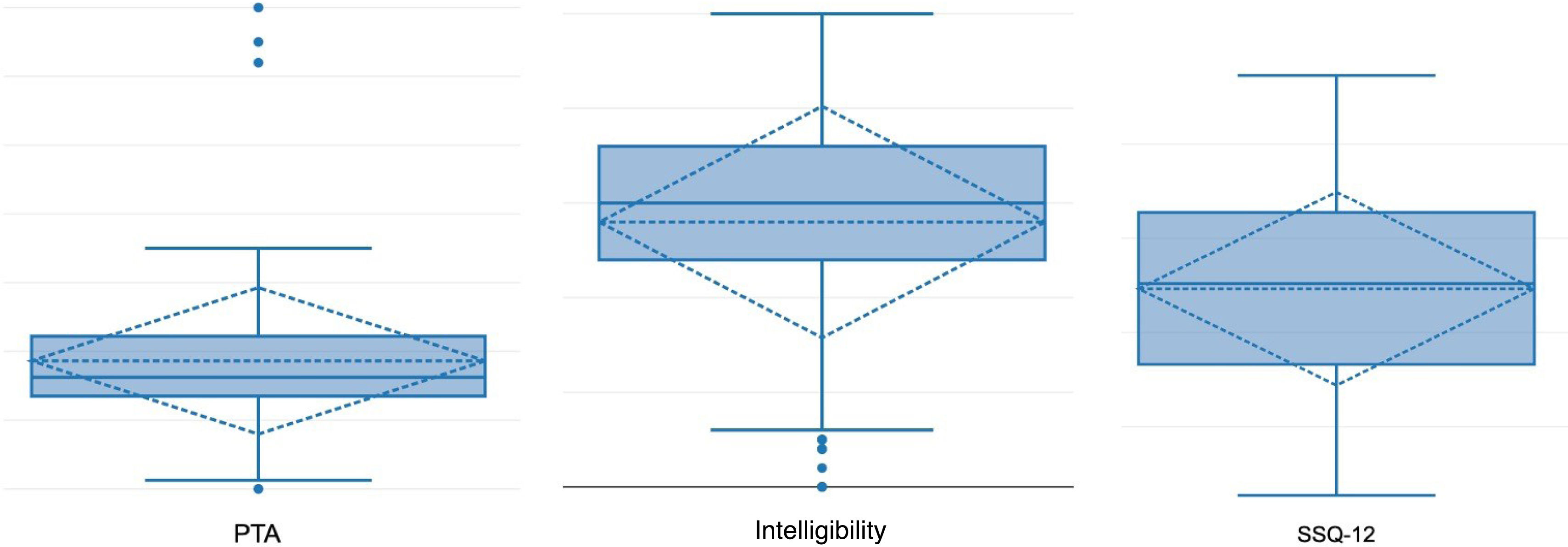
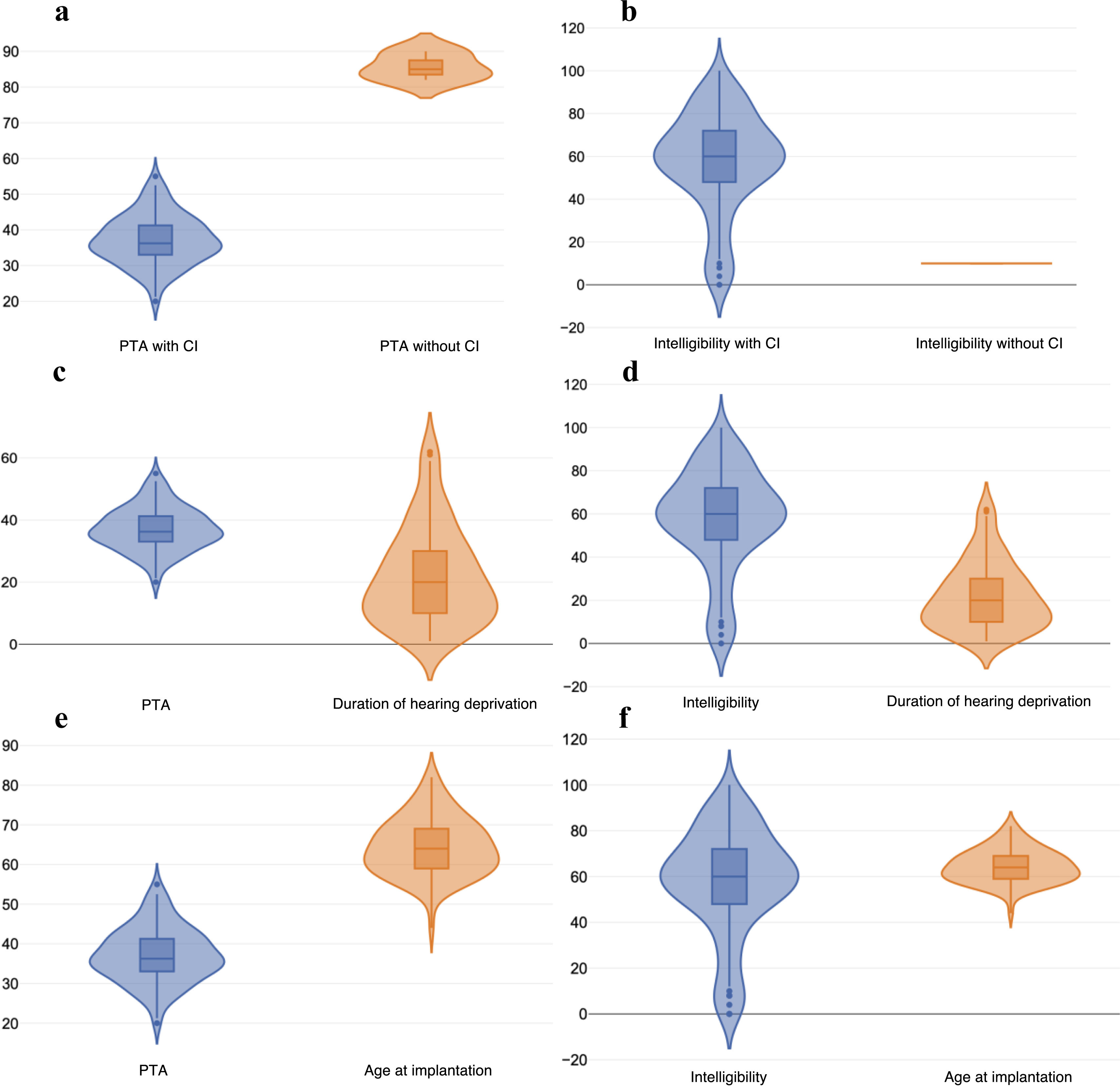
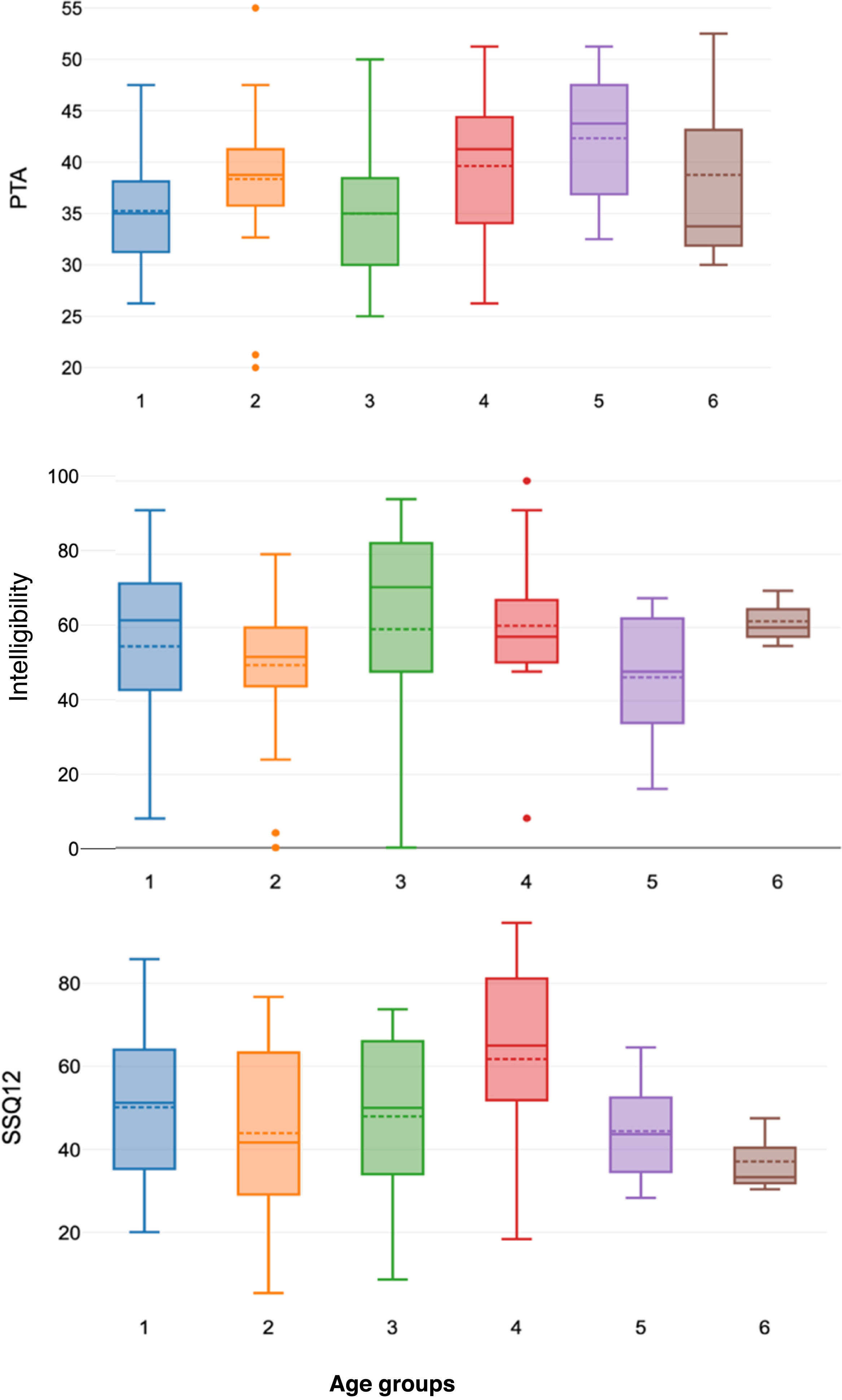
ResultsA cohort of 278 cochlear implant recipients aged 60 years or older was assessed. The final sample included 99 participants (71 implanted at ≥ 60 years after stratified random sampling; 28 implanted between 55–59 years). The mean implantation age was 67.7 ± 5.8 years. The mean postoperative PTA was 37.65 ± 10.71 dB, with a functional gain of 63.6 dB compared to preoperative levels. Mean speech intelligibility reached 53 ± 24.57%. Although initial associations suggested that younger implantation age and shorter duration of auditory deprivation correlated with better audiological outcomes, subsequent regression analyses did not confirm a statistically significant independent association for these variables. Non-native Spanish language use was identified as a significant negative predictor of intelligibility. Poorer thresholds were associated with family history of hearing loss (p = 0.01) and lower body mass index (p = 0.005). Among complications (8.4%), the most relevant were three CI explantation/reimplantation cases (3%).
ConclusionsUnilateral cochlear implantation is highly effective in adults over 60 years, restoring functional hearing. Overall results are comparable to younger populations, supporting the indication of cochlear implantation in older adults. Speech intelligibility showed high interindividual variability, partially explained by non-native Spanish language use. Regression analysis showed that neither implantation age nor duration of auditory deprivation had an independent association with outcomes in this cohort, and therefore should not be considered contraindications for CI. The finding that 50.5% of cases had a family history of hearing loss suggests the need to expand genetic testing in adult CI candidates. The low complication rate (8.4%) confirms the safety of cochlear implantation.
La hipoacusia es muy prevalente en adultos mayores, afectando su calidad de vida. El objetivo de este estudio fue evaluar la efectividad audiológica del implante coclear (IC) unilateral en mayores de 60 años e identificar factores clínico-demográficos que influyeran en los resultados.
Material y métodosEstudio unicéntrico, observacional longitudinal de cohortes retrospectivo en un hospital de tercer nivel. Se analizaron el promedio de umbrales tonales (PTA) y la inteligibilidad del habla (logoaudiometría), complementados con los cuestionarios de calidad del sonido SSQ-12 e HISQUI-19. Se aplicaron pruebas no paramétricas (Mann–Whitney, Kruskal–Wallis), correlación (Rho de Spearman) y regresión lineal para asociar variables clínicas y demográficas con los resultados audiológicos.
ResultadosSe estudió una cohorte de 278 personas implantadas cocleares con 60 años o más. La muestra final la constituyeron 99 personas (71 con IC ≥ 60 años tras un muestreo aleatorio estratificado; 28 con IC entre 55-59 años). La edad media de implantación fue 67,7 ± 5,8 años. El PTA postoperatorio medio fue 37,65 ± 10,71 dB, con una ganancia funcional de 63,6 dB respecto al preoperatorio. La inteligibilidad media alcanzó el 53 ± 24,57%. Aunque se observaron asociaciones iniciales entre una menor edad de implantación y un menor tiempo de deprivación auditiva con mejores resultados audiológicos, los análisis de regresión posteriores no encontraron una relación de asociación estadísticamente significativa para estas variables. La lengua española no nativa se encontró como un predictor estadísticamente significativo negativo de la inteligibilidad. Peores umbrales se vincularon a patologías auditivas familiares (p = 0,01) y a menor índice de masa corporal (p = 0,005). Entre el 8,4% de las complicaciones, las más relevantes fueron las 3 explantaciones/reimplantaciones de IC (3%).
ConclusionesEl implante coclear unilateral es muy efectivo en mayores de 60 años, restaurando una audición funcional. Los resultados globales son comparables a poblaciones más jóvenes, respaldando la indicación de implante coclear en adultos mayores. La inteligibilidad del habla mostró gran variabilidad. Peor inteligibilidad es parcialmente explicable por el uso de la lengua española no nativa. Tras un análisis de regresión, ni la edad de implantación ni el tiempo de deprivación auditiva demostraron una asociación independiente con los resultados en esta cohorte, por lo que no deberían ser una contraindicación para el IC. El 50,5% de casos con antecedentes familiares de hipoacusia sugiere ampliar estudios genéticos en candidatos adultos a un IC. La baja tasa de complicaciones (8,4%) confirma la seguridad del IC.
